

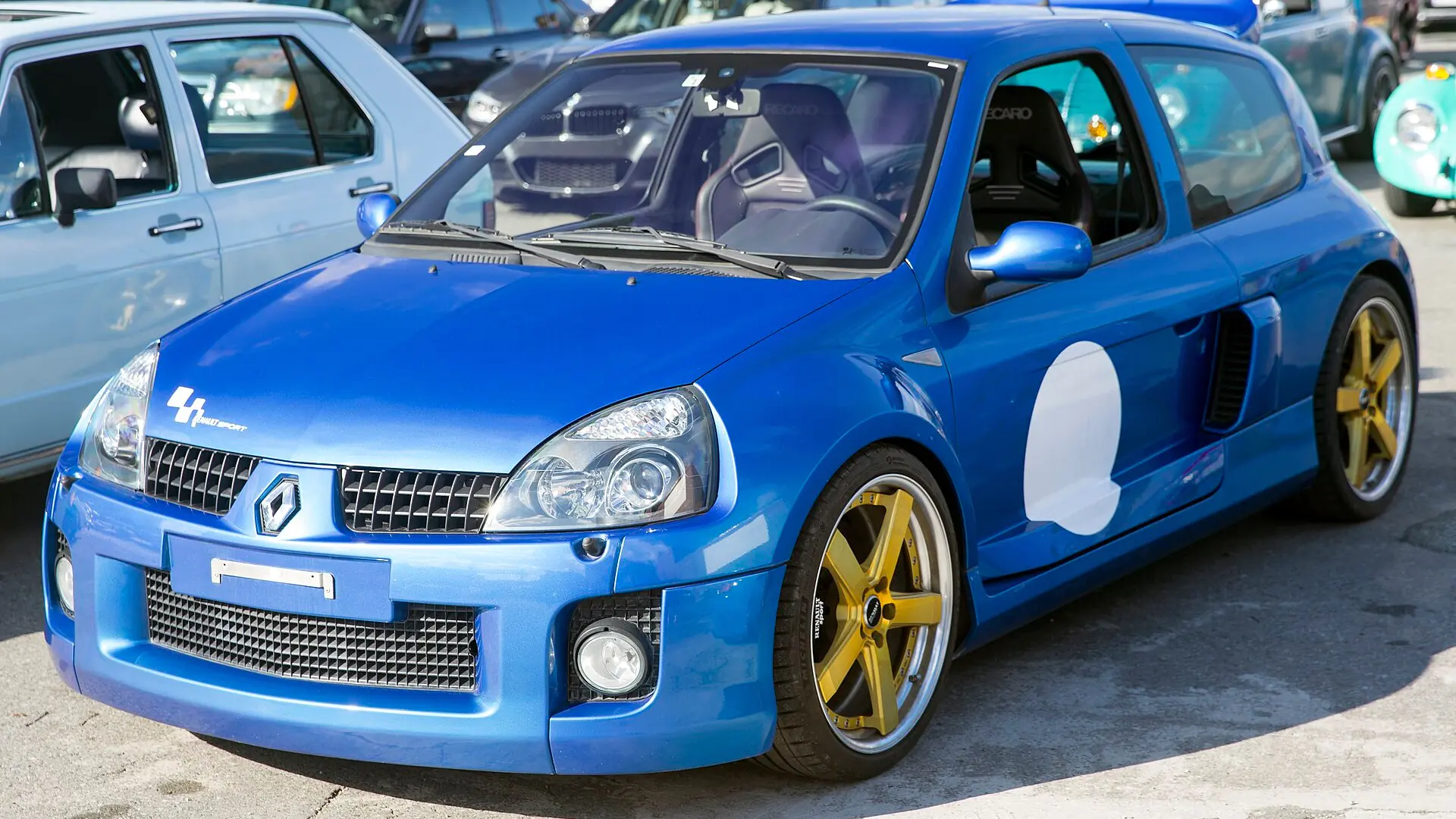
The Renault Clio V6 sold for $90,000 on Cars & Bids on October 17, and that number needs context before it becomes a headline. The car was a Japanese-market 2001 Phase 1 with about 18,800 miles, brought to the United States under the 25-year import rule. It closed well above the range of roughly €27,000 to £57,500 at which European examples changed hands this summer. That gap is the story. In Europe, the Clio V6 is an established collector car with a price history, a specialist network and a recognized hierarchy of good and bad examples. In the United States, it is a first draft.
This deep dive separates what is already established from what is still speculative. The established part is a small, fixed production run, a distinctive mechanical layout and a European market that, according to PistonHeads, roughly doubled between 2009 and early 2023. The speculative part is whether American buyers, newly able to import these cars, will sustain prices that the European record does not by itself justify.
What the Renault Clio V6 Actually Is
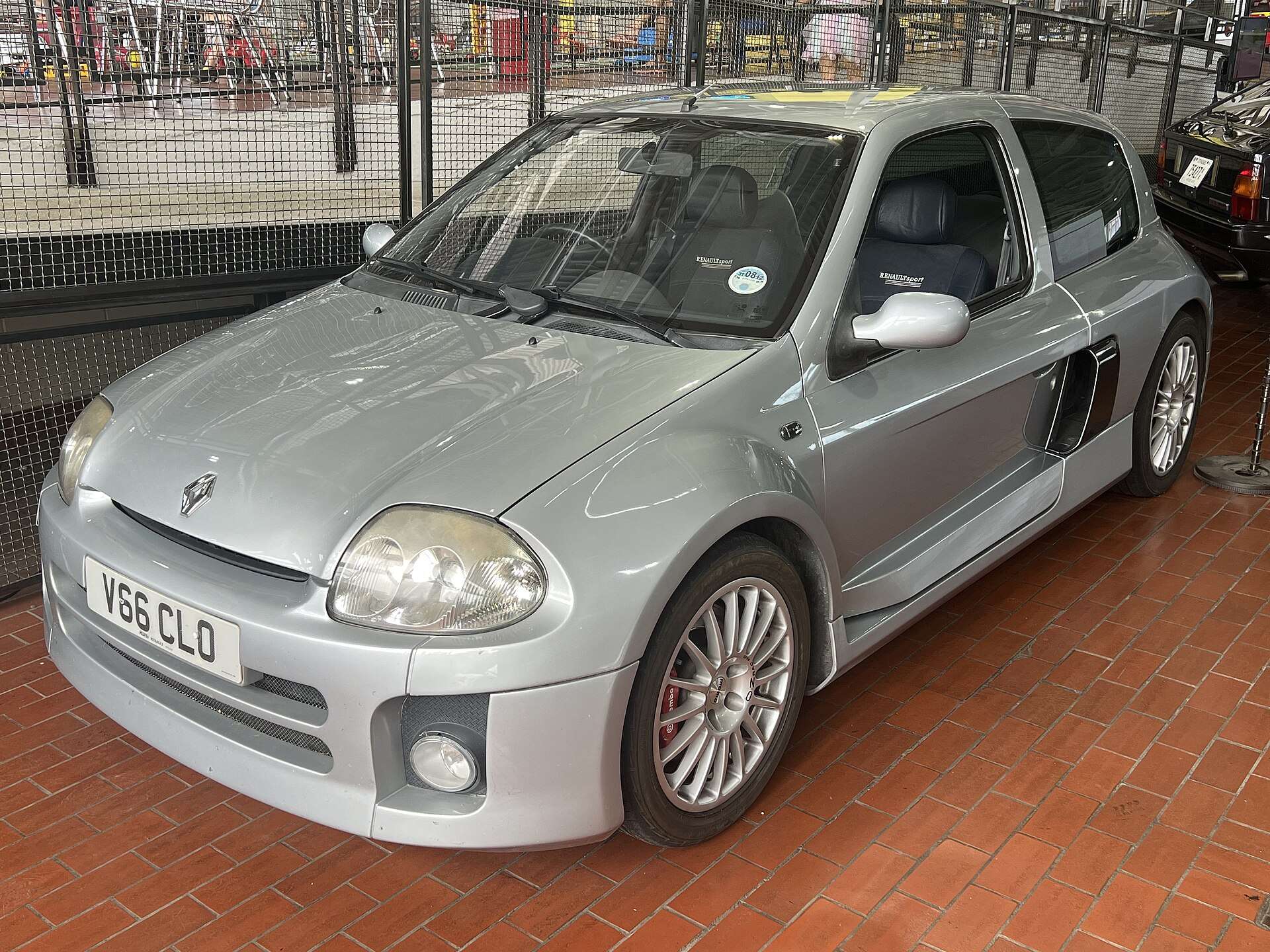
Renault showed the Clio V6 as a concept at the 1998 Paris Motor Show during its centenary year: a two-seat, mid-engine, rear-drive Clio tied to a one-make race series. Customer reaction was strong enough that Renault Sport pursued a road car. Tom Walkinshaw Racing (TWR) developed it and built the Phase 1 cars at Uddevalla, Sweden, using Clio shells shipped from the former Alpine factory in Dieppe, France. For the Phase 2 of 2003, Renault Sport moved assembly to Dieppe. (Secret Classics, Car & Classic)
The conversion was structural, not cosmetic. The rear seat gave way to a 2,946cc, 24-valve V6 related to the engine used in the Laguna, Safrane and Vel Satis. Car & Classic reports the body is about 171 mm wider and 66 mm lower than a standard Clio, with the rear track widened by 138 mm, and that the Phase 1 has no traction control. Front brakes are 330 mm discs with four-piston AP Racing calipers.
Renault Clio V6 Specifications and Production Numbers
| Specification | Phase 1 (2001–2003) | Phase 2 (2003–2005) |
|---|---|---|
| Assembly | TWR, Uddevalla, Sweden | Renault Sport, Dieppe, France |
| Production | About 1,513 (derived from Renault’s totals) | 1,309 |
| Engine | 2,946cc 24-valve V6, mid-mounted | Same, revised |
| Power | 230 PS (about 227 bhp) | 255 PS (about 252 bhp) |
| Torque | 300 Nm (221 lb-ft) | 300 Nm (221 lb-ft) |
| Rev limit | 7,100 rpm | 7,500 rpm |
| Transmission | Six-speed manual, limited-slip differential | Six-speed manual |
| 0–62 mph (claimed) | About 6.4 seconds | About 5.8–5.9 seconds |
| Top speed (claimed) | About 146–147 mph | About 153 mph |
| Weight | About 1,335–1,355 kg | About 1,400 kg |
| Wheels | 17-inch OZ | 18-inch |
| New UK price | £25,995 | £27,125 |
| UK-market cars | 256 | 354 |
Sources disagree at the margins, so treat the figures as approximate. Renault’s own heritage material gives 2,822 cars in total and 1,309 for Phase 2, which implies roughly 1,513 Phase 1 cars. Some references list about 1,630 Phase 1 cars instead. The 159 Clio V6 Trophy race cars built between 1999 and 2003 are counted separately. Performance and weight figures vary slightly between Renault, evo and PistonHeads, and the ranges above reflect that.
Mechanical Uniqueness: A Hatchback With the Engine Behind the Driver
The layout is the point. Rear-wheel drive, a V6 behind the seats and a hatchback silhouette are not a combination any other manufacturer sold in this era. The consequence is a car that behaves like a mid-engine sports car in a body that looks like a supermini, and the early cars were not forgiving about it. Evo describes the Phase 1 as tail-happy at the limit, with roll oversteer and rear toe change under lateral load, a product of a rushed development schedule.
Phase 2 addressed that. Evo lists a longer wheelbase, a wider front track, stiffer subframes, revised suspension geometry, new gear ratios and a recalibrated engine, and calls it the better car to drive. It is still demanding in the wet, which is part of the appeal for the buyers this car attracts. The collector question is whether the market will pay for the rawer Phase 1 or the better-resolved Phase 2. So far, aggregate data favors Phase 2: Classic.com’s benchmarks put it at about $67,900 against about $48,900 for Phase 1. The $90,000 Phase 1 sale is the exception to that pattern, and exceptions are what this article is careful about.
Identifying Details, Colors and Factory Options
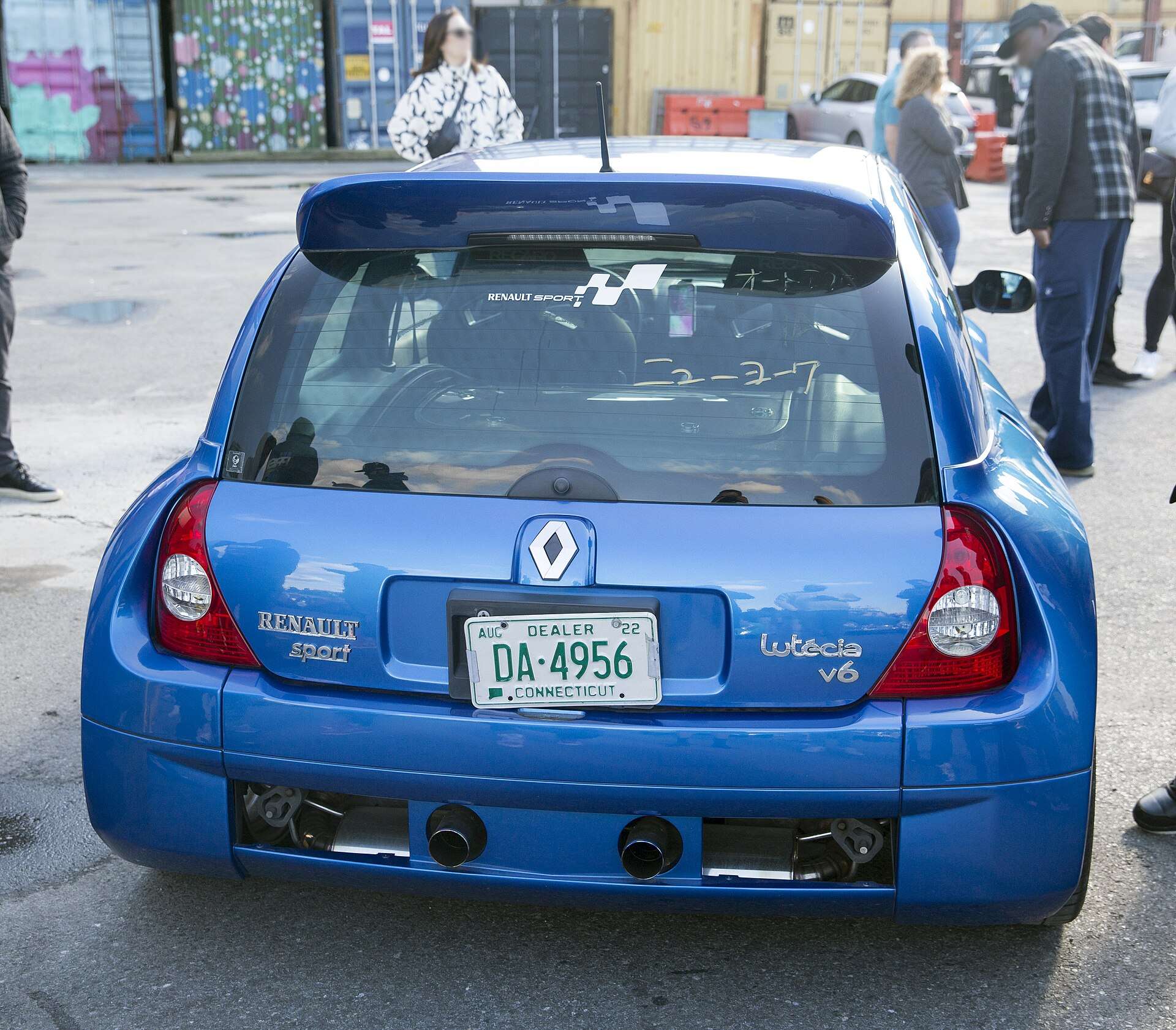
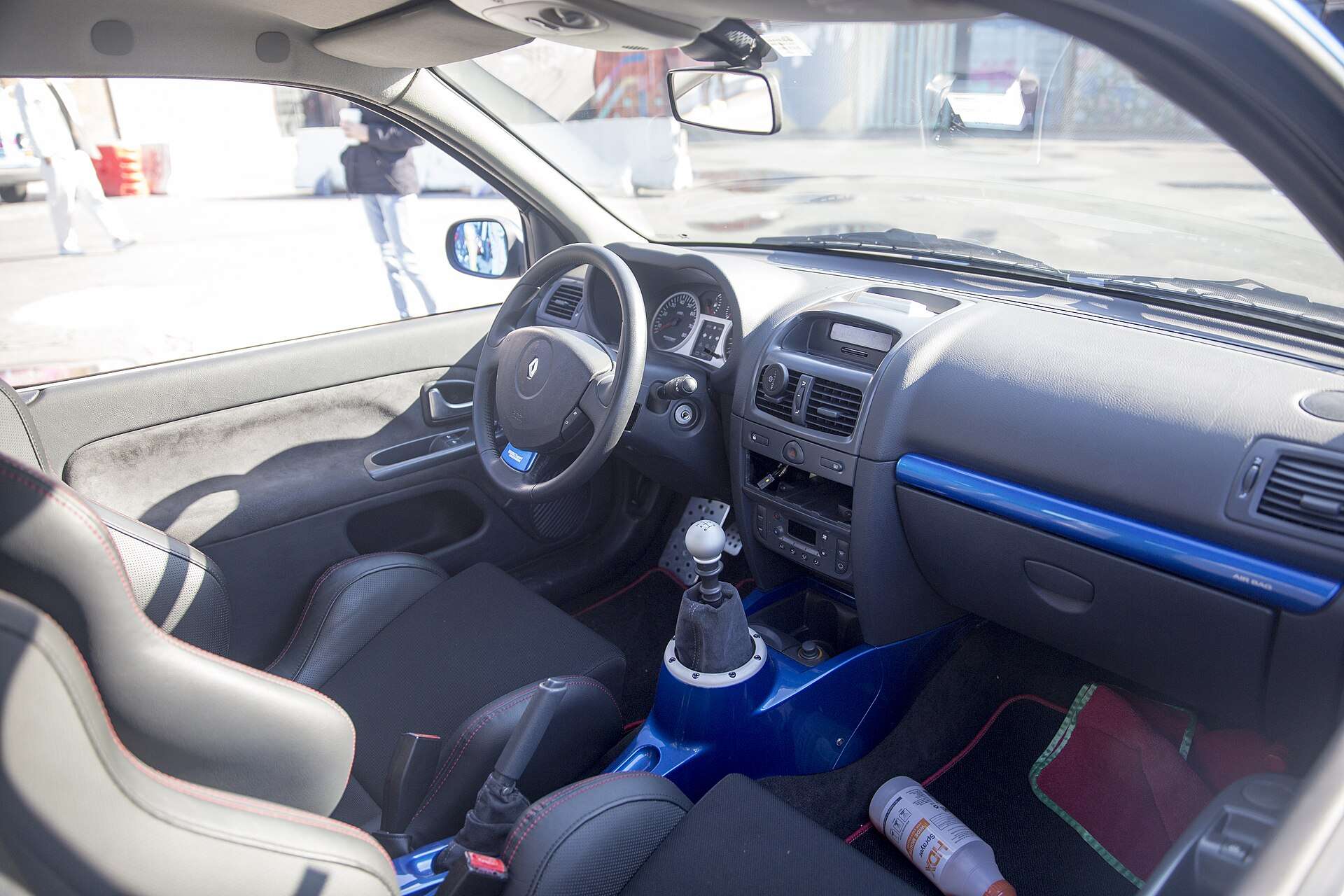
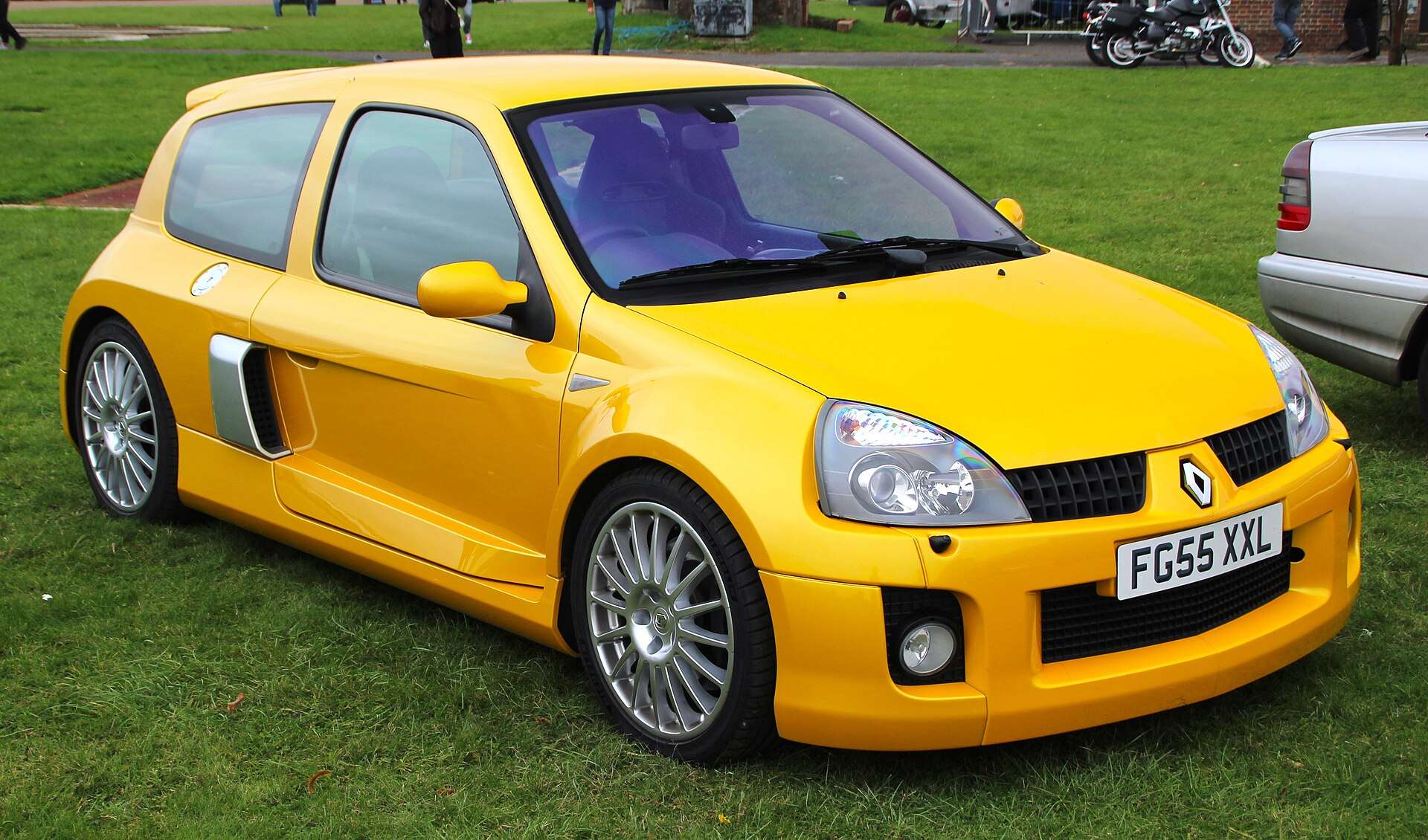
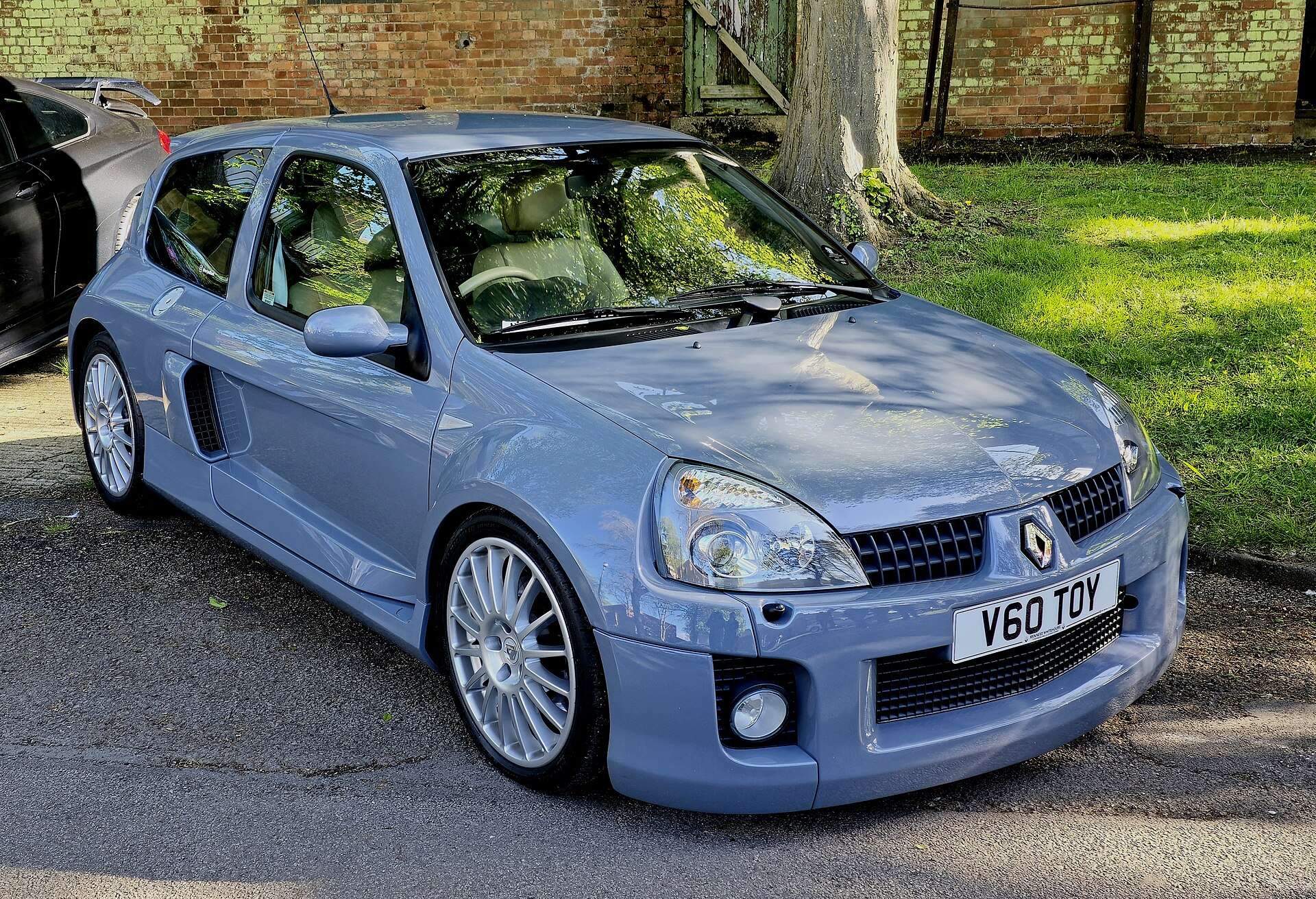
Phase 1 cars carry 17-inch OZ wheels and a 7,100 rpm limit. Phase 2 cars have the facelifted Clio nose, automatic xenon headlamps, a 7,500 rpm limit and, according to PistonHeads, Recaro seats as standard. Color is the quickest way to read rarity. PistonHeads reports that Phase 1 cars came mainly in Iceberg Silver, Mars Red and Illiad Blue, with silver outnumbering red and blue combined by roughly seven to one. On Phase 2, Illiad Blue accounts for more than half of cars, followed by Black Gold and Titanium. Renault’s heritage archive lists 13 body colors for the Phase 2 range.
The scarce specifications are on the Phase 2 side. Top Gear reported that a leather option pack, priced at £3,900 when new, was fitted to only 18 cars, and that just 21 Clio V6s were built in Acid Yellow, eight of them right-hand drive. Japanese-market cars were sold as the Lutécia V6, and that badge is a quick tell for a car that did not come through Renault’s European distribution.
Historical Significance and Rarity
Renault had put a turbocharged engine behind the seats of a supermini before, with the Renault 5 Turbo. The Clio V6 belongs to that tradition, but it was not a homologation special like the French Group B cars we covered in our recent market brief that included the Peugeot 205 T16. It was a series-production road car built to support a customer racing series, and that is a more unusual origin story for a car at this price.
It also marks the end of a recipe. The Clio V6 combined a naturally aspirated six-cylinder, a six-speed manual and minimal electronic intervention, and production ended in July 2005 with 2,822 cars built. Britain took 256 Phase 1 and 354 Phase 2 cars by evo’s count. Renault did not sell it in North America, which is exactly why American examples are arriving only now.
Market Values and Comparable Sales
| Date | Car | Mileage | Venue | Result |
|---|---|---|---|---|
| Oct 17, 2026 | 2001 Phase 1, Japan-market, U.S. title | About 18,800 mi | Cars & Bids | $90,000 |
| Aug 11, 2026 | 2001 Phase 1, Germany | About 41,000 mi | Collecting Cars | €52,000 |
| Jul 16, 2026 | 2004 Phase 2, UK | About 11,000 mi | Collecting Cars | £57,500 |
| Jun 21, 2026 | 2003 Phase 2, UK | About 31,000 mi | Collecting Cars | £48,000 |
| Jun 12, 2026 | 2001 Phase 1, Sweden | About 87,000 mi (140,000 km) | Collecting Cars | €27,000 |
| Nov 8, 2025 | 2002 Phase 1, UK | About 21,000 mi | Iconic Auctioneers | £37,083 |
| Mar 2022 | 2004 Phase 2, Acid Yellow, UK | About 17,000 mi | Collecting Cars | £90,000 |
| Mar 2022 | 2005 Phase 2, Liquid Yellow, UK | Not stated | Collecting Cars | £87,654 |
Summer 2026 European results are as logged by Classic.com. The Cars & Bids result is reported by autoevolution, with listing details from Autoblog. The 2022 results come from Top Gear and Hagerty UK. Currencies are not converted, and Classic.com is an aggregator, so verify individual results before relying on them.
The pattern is a mainstream band of roughly €27,000 to £58,000 for ordinary driver-quality and good cars, with the highs reserved for low mileage, rare color or novelty. A 140,000-km Swedish Phase 1 and an 18,800-mile Japanese-market Phase 1 are the same model four months apart in this data set, and they sit more than three times apart in price. Condition and provenance, not the nameplate, are doing the pricing. At the March 2022 Renault Collection sale, a 1997 Renault Sport Spider made £45,500, roughly half of what the yellow Clio V6 achieved that day.
One caution applies. A single strong result describes a car, not a market. The same discipline we applied to the Ferrari Enzo price surge applies here: the $90,000 sale shows that one buyer was willing to pay that much for a fresh, low-mile, documented example. It does not show that the next ordinary U.S. car will.
Ownership Costs and Known Mechanical Weaknesses
The V6 itself is considered robust because it is only mildly tuned. The expense lies in access and in the chassis. The details below come from PistonHeads and evo’s checkpoints.
- Service and belts: servicing is due every 12,000 miles or two years. The cambelt and dephaser are due every five years or 72,000 miles. A 2010 dealer quote was about £1,500 without lowering the engine, and many specialists recommend dropping it and replacing the water pump and clutch at the same time.
- Suspension: Phase 1 rear bushes can need replacing within about 15,000 miles, which changes how the car handles. Rear tyres may need replacing every 7,500 miles with hard use.
- Drivetrain: synchromesh wears under abuse, and crunching on fast shifts is a warning sign. Failing ignition coils cause misfires and are a cheap fix.
- Recall: the Phase 2 had a recall to reprogram the injection computer over a mismatch between expected and actual engine speed. Confirm it was done.
- Body and trim: the fiberglass chin spoiler cracks on speed humps, the front boot can leak, and the boot catches are fragile. Original bumpers were costly and scarce even in 2015, at about £1,700 rear and £900 front, and many Phase 1 cars have accident histories.
- Running costs: fuel economy is in the low 20s mpg in normal use, and the engine position makes oil checks fiddly enough that owners skip them.
- U.S. ownership: the Cars & Bids listing noted that the car may not pass emissions testing in some states, and parts and specialist knowledge sit mostly in Europe.
What Separates an Exceptional Clio V6 From an Average One
- Mileage and condition: the spread in the table is the clearest evidence. Low-mile, unmarked cars set the headline prices, while high-mileage cars trade at a fraction of them.
- Originality: coilovers (a KW V3 set cost just over £2,000) and Quaife differentials are common upgrades per PistonHeads. They may be reversible, but original bumpers, suspension and wheels are hard to replace, and buyers should ask what was removed and where it is.
- Accident history: an expert inspection and a history check matter more than on most cars of this value, because repair costs are high and the structure is unusual.
- Documentation: a dated cambelt and dephaser service, proof of the Phase 2 recall and specialist invoices. The $90,000 car came with Japanese service records covering a timing belt, water pump, coils and plugs.
- Specification and color: Phase 2 yellows and the leather pack are genuinely scarce. Silver Phase 1 cars are the common color, so their premium comes from condition rather than rarity.
- Phase: Phase 2 is the better driver’s car, and Phase 1 carries the first-run TWR story. Buy the one that matches why you want the car.
Competing Vehicles and Where the Clio V6 Fits
Buyers cross-shopping the Clio V6 are usually choosing between three things: a mid-engine layout, a French identity and a small footprint. The modern French answer is the Alpine A110, which we examined in Is the Alpine A110 a Future Collector Car?. The Group B homologation cars such as the Peugeot 205 T16 occupy a different price and rarity tier entirely. Purpose-built mid-engine sports cars from Lotus and Porsche offer sharper packaging, and Renault’s own Sport Spider offers a lighter, more open take. What none of them offers is a hatchback with a V6 behind the seats, and that exclusivity is what the Clio V6 sells. For a different kind of newer-car evaluation, see our look at the Morgan Midsummer Coupe.
Established Collector Value vs. Speculative Future Potential
Established: a fixed production run of 2,822 cars, a consistent presence at Collecting Cars, Iconic Auctioneers and Cars & Bids, a European price base that rose substantially from 2009 to 2023, recognition from Renault’s own heritage program, and a developed specialist knowledge base.
Speculative: the depth of U.S. demand, which rests on one reported sale; whether Phase 1’s premium in this one sale holds against aggregate data that favors Phase 2; and the effect of supply. NHTSA counts the 25 years from the date of manufacture, so cars built in 2001 are becoming eligible through 2026, and Phase 2 cars from 2003 become eligible from 2028. Each wave brings more cars within reach, which can sustain demand or soften the scarcity premium that early imports enjoy.
Factors That Could Strengthen or Weaken Future Desirability
Strengthening: a shrinking pool of unmodified, documented cars; a growing appreciation for naturally aspirated, manual, low-intervention performance cars; further high-profile U.S. results that confirm the first one; and continued European demand, which keeps a floor under Phase 2.
Weakening: thin U.S. parts and specialist support; state emissions complications; the handling reputation of the Phase 1, which limits the buyer pool; the high cost of bumpers and body panels; currency swings between European and American sellers; and the risk that early import premiums fade once more cars arrive.
The Bottom Line
The Renault Clio V6 is already a collector car in Europe, and the evidence is the volume and consistency of its auction record. Its American chapter has barely started, and one $90,000 result cannot settle it. The sensible reading is narrow: buy the individual car, on condition, originality and paperwork, and treat any model-wide upside as unproven. Nothing here is a prediction of future values.
Additional sources: Renault Originals, Renault UK press, NHTSA importation FAQ. Photos are licensed under Creative Commons Attribution-ShareAlike and credited in each caption.
The collector car market, every weekday morning.
Auction results, price moves and what’s crossing the block, read in four minutes. Free, from Modern Car Collector.
No spam, unsubscribe in one click. Or read more about the Brief.





 Shawn Henry
 Eve Nowell