

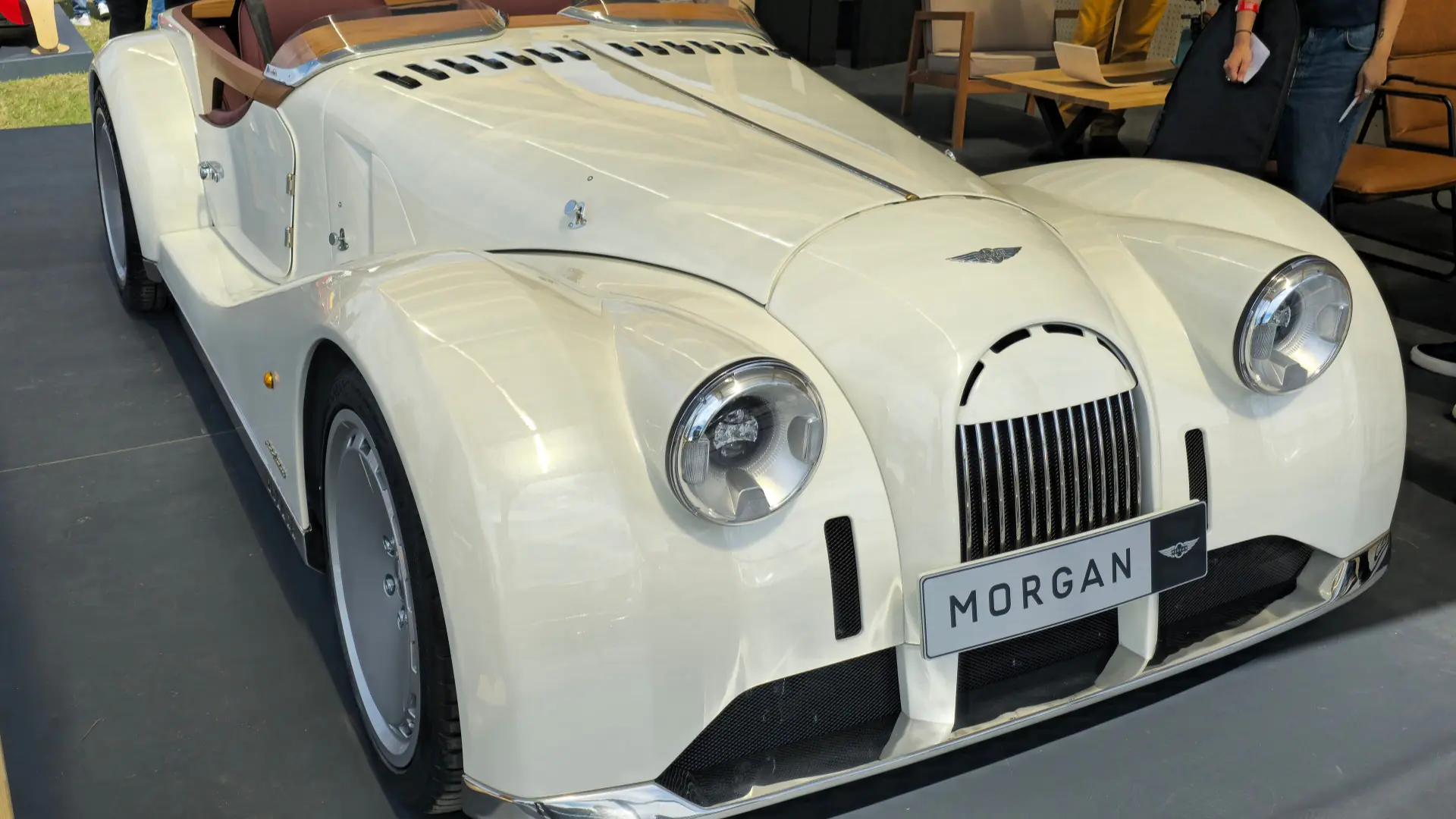
Morgan has built its cars around an ash frame since long before anyone thought to ask whether they would be collected. The Midsummer Coupe asks a newer question: what happens when that tradition meets an Italian design house, a glass roof, and a production run of ten? That combination, a very small number of cars from a maker whose open roadsters already carry a following, is the whole proposition, and it is the right place to start asking whether this car can be collected.
Morgan revealed the Coupe on June 24, 2026, as a closed-roof version of the Pininfarina-designed Midsummer roadster. The Coupe is only a few months old and the coverage we reviewed gives no delivery dates, so this is an evaluation of potential, not of a track record. We separate what has been reported from what has not.
The Numbers: Ten Cars, One of Them a Prototype
Auto Express and Top Gear both put the Coupe run at ten cars. Top Gear explains the split: the car in the launch photographs is the prototype and “artists’ proof,” and the other nine are personalised client commissions. Carscoops reports that all nine client cars are already sold, and that the prototype is headed for display at the Louwman Collection in The Hague. Some secondary sources round this to nine total, and Wikipedia’s count of 59 Midsummers (50 roadsters plus nine coupes) uses the client-car figure alone. The reconciliation is simple: ten cars, nine for customers.
- Coupe run: ten cars, including one prototype, per Auto Express and Top Gear.
- Roadster run: 50 cars, which Hagerty UK reports sold out immediately.
- Status: all nine client cars sold, per Carscoops. Delivery dates were not stated in the coverage we reviewed.
Ten is five times rarer than the roadster, as Auto Express notes. But the roadster is the car that defined the project, and the Coupe is a derivative of it. Rarity helps only when buyers also want the specific car that is rare.
Price: Not Disclosed, and That Is Part of the Story
Morgan has not published a price for the Coupe. Carscoops says the figure was kept private and expects it to sit above the roadster, which Hagerty UK reports at more than £200,000 depending on specification, making it the most expensive Morgan to date. Carscoops converts that to roughly $260,000. Treat any Coupe figure you see as speculation.
Price is not the story. The absence of a public price is. All nine client cars sold privately, and Hagerty reports the roadsters sold out before the market had time to react. That means no public price discovery exists for either car, and the first resale at a named auction house will matter more than any launch figure.
Mechanical Uniqueness: A Wooden Frame Under a Glass Roof
The Midsummer’s mechanical story is mostly traditional Morgan. The roadster sits on Morgan’s aluminium CX platform, weighs about 1,000 kg, and uses a BMW 3.0-liter turbocharged inline-six rated at 335 hp, with an eight-speed automatic borrowed from the Plus Six, according to Hagerty UK. Hagerty also notes that its exposed teak is laminated by hand from hundreds of layers, with a traditional ash frame hidden under the aluminium.
The Coupe is where the engineering gets interesting. Adding a fixed roof to a car with an open-car structure was not a styling exercise. Carscoops reports “significant structural development,” including billet-machined aluminium A-pillars, bonded structural glazing and countersunk riveted construction. Top Gear describes a glass roof with a stainless steel central strip, full weather sealing, climate control and fitted luggage. Morgan says the Coupe is only 2.5 percent heavier than a Supersport fitted with a hardtop.
Power is less settled. Auto Express reports that the Coupe uses the latest BMW six from the Supersport 400, at 402 hp and 500 Nm, but Top Gear says the engine was not stated, and Carscoops gives no output. Until Morgan confirms it, the safest description is a BMW-sourced turbocharged six with an eight-speed automatic.
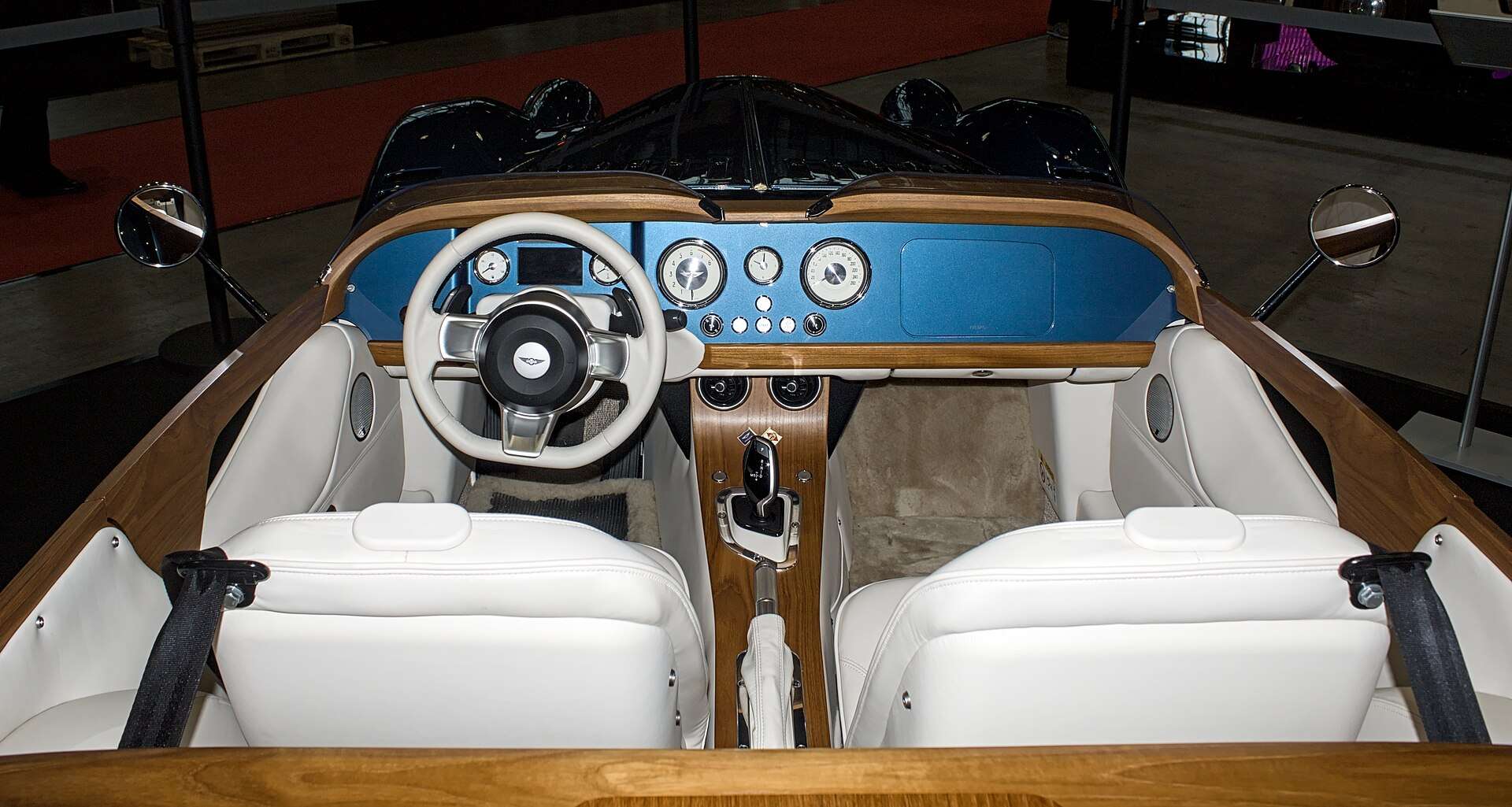
For collectors, the wooden frame is the point. Few cars with a glass roof, climate control and luggage still hide hand-shaped aluminium over timber. The drawback is just as clear: a BMW turbocharged engine and automatic gearbox are not the ingredients that usually define a collectible driver’s car, a contrast we drew in our look at the JAS Tensei, which pairs a naturally aspirated engine with a manual.
Historical Context: A Closed Car From a Maker of Open Ones
Morgan was founded in 1909 and has built its reputation on open cars. A closed, glass-roofed car that Morgan says was “conceived with touring in mind” is a departure from that history. The company’s CEO announced the Pininfarina collaboration in November 2023. According to Wikipedia, the roadster was unveiled on May 16, 2024, and the first two production cars were finished that October. Hagerty UK traces the partnership to a conversation in a pub after the two companies visited each other’s facilities.
Pininfarina is the second half of the story. The Turin firm has a long coachbuilding tradition, and it designed the Ferrari 550 Barchetta, a limited open car that MCC has covered, including a low-mileage 2001 example. Top Gear says the Coupe’s side-window shape draws on 1960s Italian sports cars. MCC has also examined the marque’s direction in our analysis of why the Supersport 400 may be the last of its kind, and in the earlier report on how Morgan teased a new flagship and a new era.
Alternatives Collectors Will Compare It To
- The Midsummer roadster: 50 cars, the original design, and the car most likely to set the benchmark for the Coupe’s value.
- Ferrari 550 Barchetta: a Pininfarina-built open Ferrari, covered in our 550 Barchetta report. It has a manufacturer’s badge and a documented market.
- Morgan Supersport 400: the mechanical sibling, explored in our collector analysis. It shares its engineering with the Coupe, which makes it the natural point of comparison.
- JAS Tensei: a Pininfarina-styled 35-car NSX restomod, assessed in our Future Collector Car verdict. It is more expensive, and it asks the same question about a small builder and a design partner.
- Singer’s DLS Turbo: a proven small-run brand with auction history, as in MCC’s look at the Firefly commission at RM Sotheby’s.
The Coupe differs from each of these in one respect: it is the only one that combines a hand-built timber frame, an Italian design partner and a production run in the single digits.
Risks to the Morgan Midsummer Coupe Collector Car Case
- No public price or resale record. The cars sold privately, so there is no comparable sale to anchor value.
- The roadster may remain the benchmark. Collectors often favor the original open car; a coupe built from it risks being a footnote rather than a rarity.
- Specification gaps. Delivery dates are unstated and the power figure is reported inconsistently.
- Powertrain choices. A turbocharged BMW six and an automatic are less likely to excite collectors than a naturally aspirated engine and a manual.
- Brand depth. Morgan’s name carries weight among enthusiasts, but a ten-car Morgan has no auction record to point to.
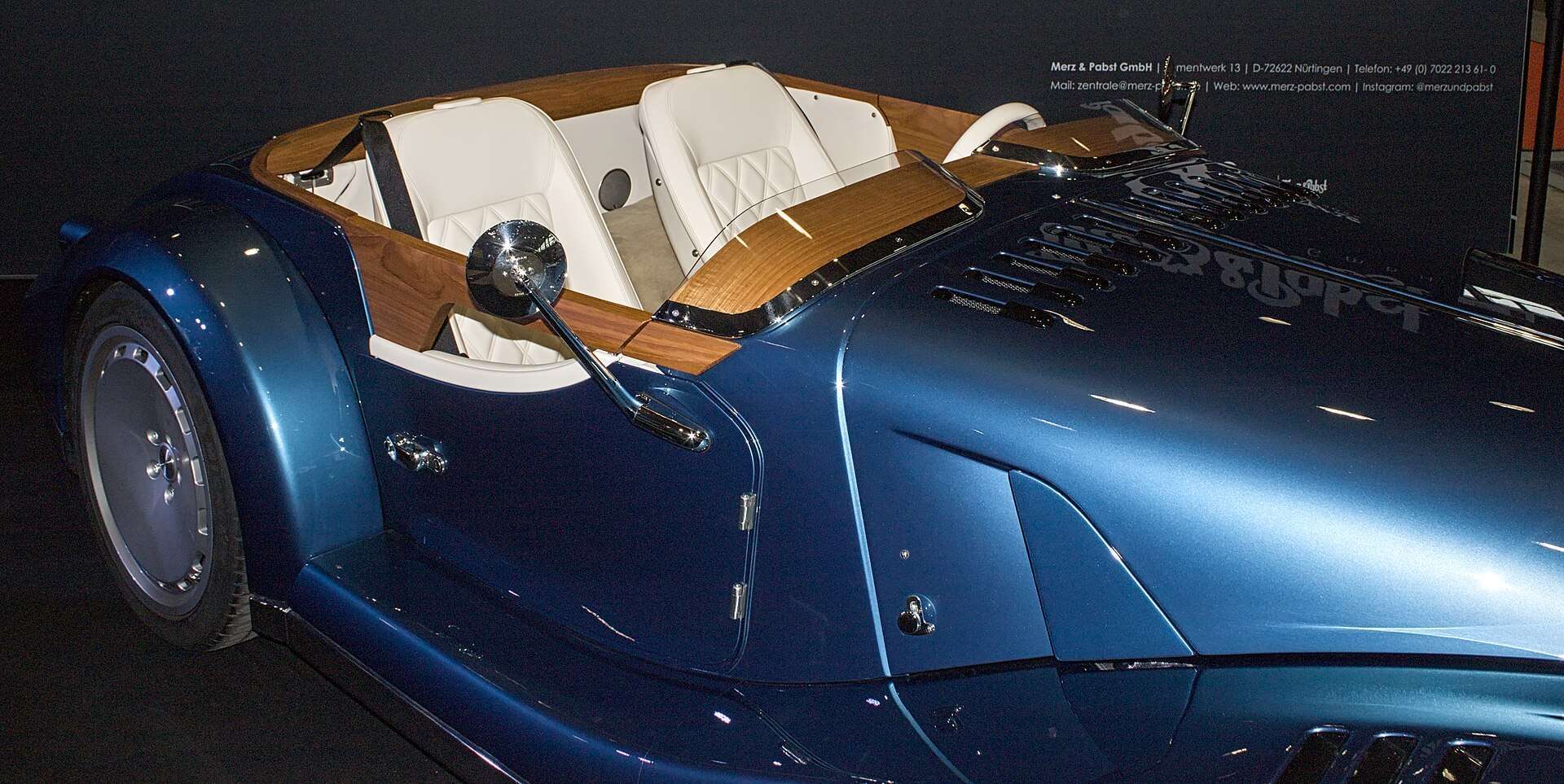
- Bespoke builds. Highly personalised cars, including buyer-chosen teak trim, are harder to value as a series.
- Wood and glass. A timber frame and a bonded glass roof are unusual in combination, and long-term ownership will depend on Morgan’s continued support.
What Would Need to Happen
- A confirmed ten-car total and a published chassis list, so scarcity is documented rather than assumed.
- Delivered cars that independent testers can drive, with the power and weight figures finally stated by Morgan.
- A first resale at or above the original price at a named auction house, ideally within a few years.
- A visible place in Morgan’s own heritage, such as the Louwman Collection display, then a museum or concours appearance.
- Roadster values holding or rising, since the Coupe will be priced against them.
- Careful documentation of every car’s specification, so buyers can compare the personalised builds.
The Verdict: Is the Morgan Midsummer Coupe a Future Collector Car?
Plausibly, with conditions. The ingredients are better than most new limited cars have at launch: ten cars, a timber frame, a recognized Italian design partner and a roof that took real engineering. But today it is a promise, not a market. There is no published price, no resale and no delivered car to judge.
Our view: the strongest case rests on the Coupe being the rarest expression of one of the most distinctive Morgans ever built, not on its mechanical specification. Early, well-documented cars with unusual commissions stand the best chance. And Morgan, not Pininfarina, will decide how the car is remembered.
If you could place one order, would you take one of the 50 open roadsters that already exist, or wait for a closed car that only nine customers will own?
The collector car market, every weekday morning.
Auction results, price moves and what’s crossing the block, read in four minutes. Free, from Modern Car Collector.
No spam, unsubscribe in one click. Or read more about the Brief.



 Eve Nowell
  Shawn Henry