

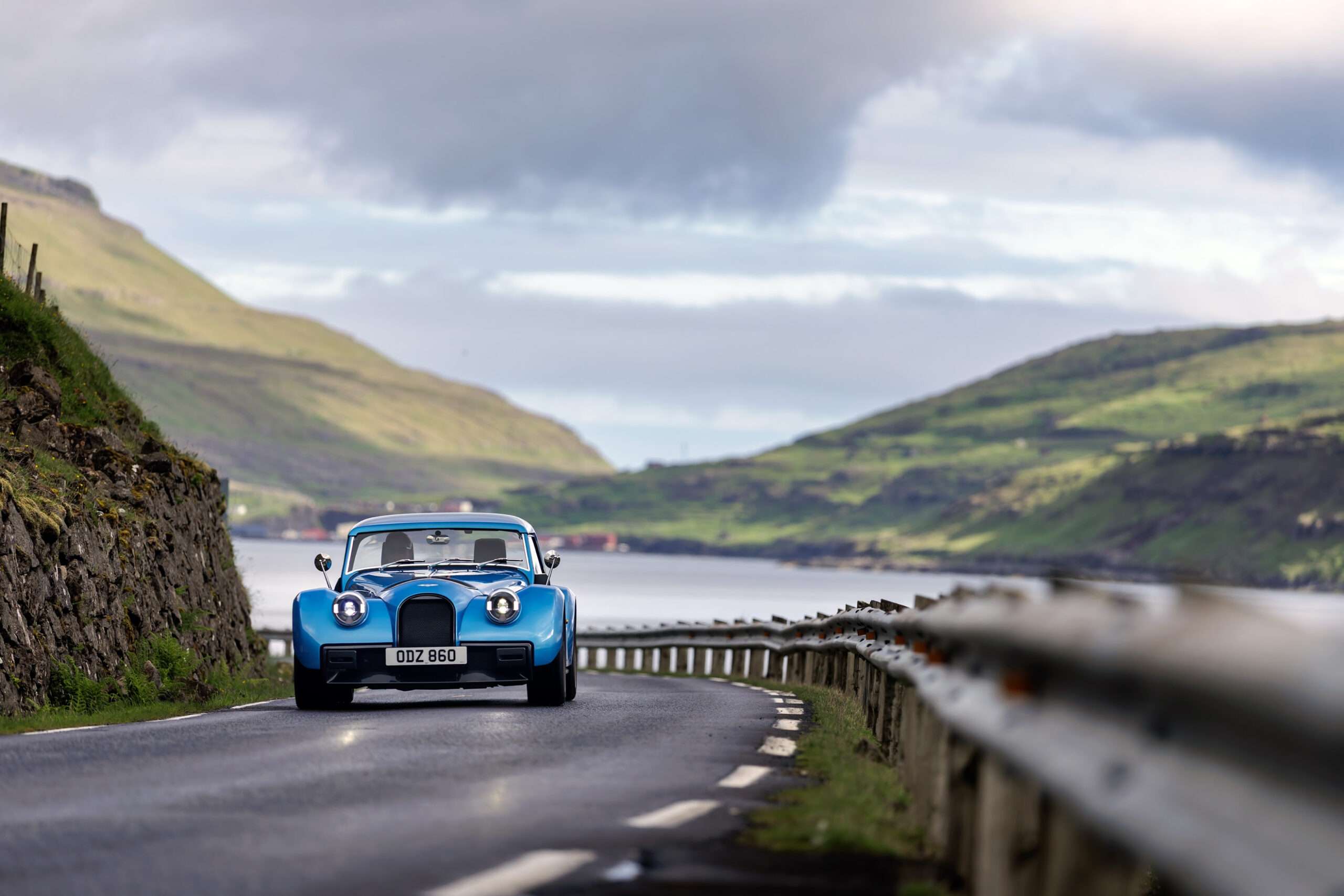
The first customer-commissioned Morgan Supersport 400s have left the assembly benches at Pickersleigh Road in Malvern, and demonstrator cars are now reaching retailers across the UK, Europe and the rest of the world outside North America. On paper, this reads as routine model-year news: a British sports car manufacturer’s flagship gets a new engine variant, a new platform, a new top speed. But treat this as just another launch story and you miss what is actually happening at the oldest continuously operating independent car manufacturer in Britain.
Every Supersport 400 is built to individual commission, meaning the questions that usually take collectors decades to answer — what did this car leave the factory with, who specified it, and can that be proven — are being answered on day one, in the build sheet, before the car has covered a single mile in private hands. That is the real story here. Not the horsepower.
A New Ceiling for Morgan Performance
Supersport 400 is the first Morgan road car in the company’s 117-year history to exceed 400 brake horsepower, drawing 402 bhp from a BMW-sourced B58 “O1” turbocharged inline-six tuned specifically for this application. It sits atop Morgan’s CXV aluminium platform, the architecture underpinning the modern Plus Four and Supersport range, and represents what Morgan describes as the fullest realization of that platform’s potential to date. An Active Performance Exhaust, forged 19-inch Sportlite wheels, revised front wing venting and a Dynamic Handling Pack differentiate it from the standard Supersport, along with a more focused cabin featuring Alcantara trim options and an optional aluminium gear selector.
Before customer production began, Morgan validated the car on a road journey from Malvern to the Faroe Islands, covering thousands of miles through motorway touring, mountain roads and coastal weather extremes. That is a meaningful detail for anyone assessing long-term ownership: this is a platform Morgan stress-tested for real-world durability, not simply a specification sheet exercise.
Provenance Before the First Mile
Morgan has handcrafted sports cars at Pickersleigh Road since 1909, and it remains one of the very few manufacturers left that can genuinely be called a coachbuilder rather than a mass producer. Chassis are still formed from ash, aluminium and leather by craftspeople whose skills have been passed down through generations, and every car is built to the specification of the person who ordered it. More than 90 percent of components are sourced within the UK, and Morgan exports over 80 percent of what it builds through a network of roughly 60 retailers worldwide, yet the entire company still produces its cars from a single site.
That matters to collectors in a way that is easy to overlook. Rarity by itself has never been a reliable indicator of long-term value, and Modern Car Collector has made that case before, most notably in examining why a 1930 Packard 734 Speedster commanded attention not for its scarcity but for the strength of who owned it and how well that story could be documented. The Supersport 400 inverts the usual collector timeline. Instead of provenance accumulating slowly over fifty years of ownership changes and fading paperwork, it begins fully formed: a factory build sheet, an individual commission, a documented specification, all captured at the point of sale rather than reconstructed decades later by a marque registrar.
Built to Order, Not Built to Stock
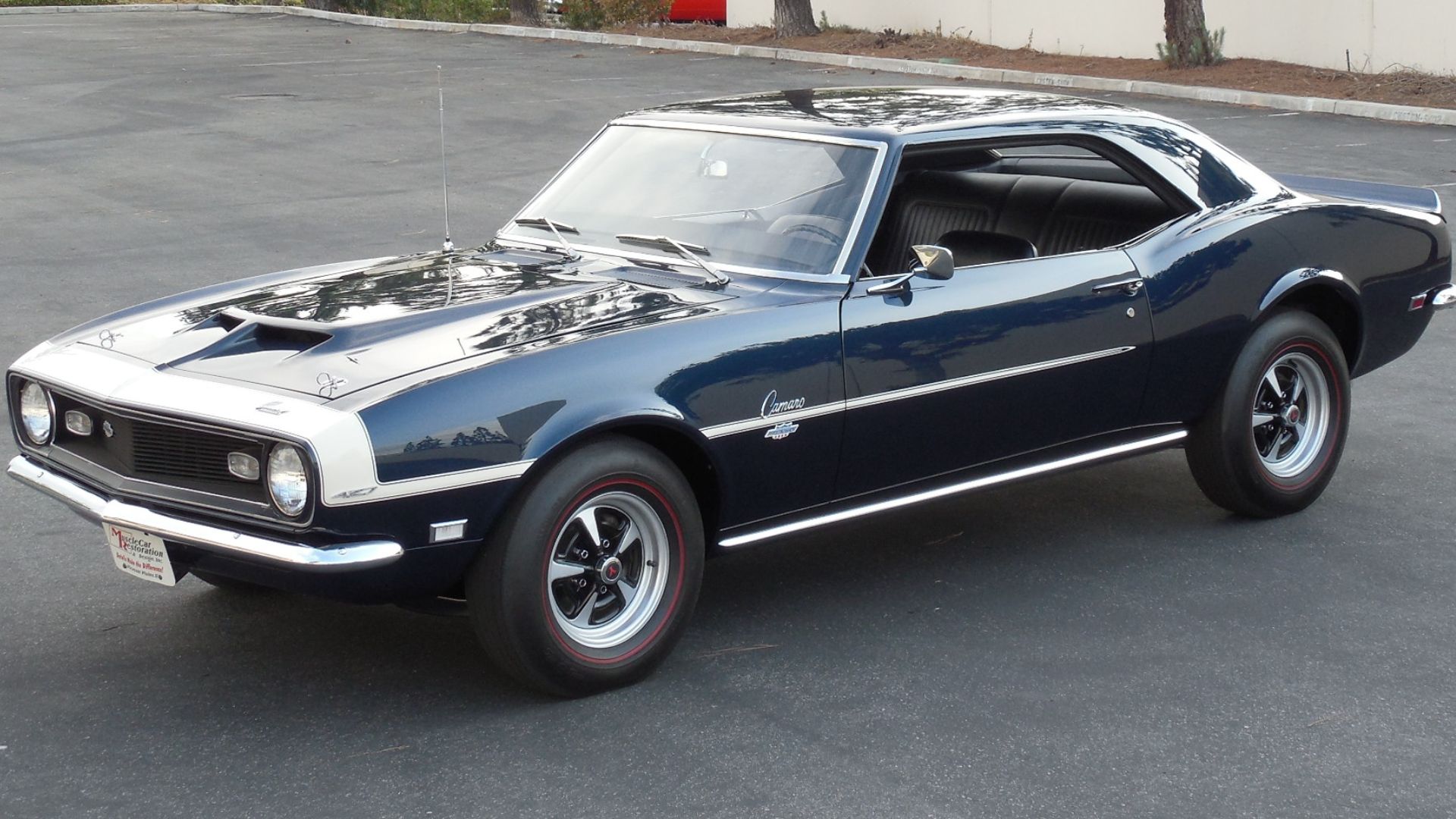
This is worth separating from the broader debate over modern tribute and commemorative vehicles, which Modern Car Collector explored recently through the case of the GMMG Dick Harrell Camaro, a car whose value rests on paperwork and traceable authenticity rather than nostalgia alone. The Supersport 400 is not a tribute to anything. It is Morgan’s current, flagship, in-production model, but the underlying collector principle is identical: documentation created at the moment of manufacture is worth more than documentation reconstructed later, and low-volume manufacturers building to individual order are, whether they intend it or not, manufacturing future collector paperwork alongside the cars themselves.
It is also worth noting what Morgan has not done. Other manufacturers have used limited production and bespoke commissioning as leverage, tying access to future halo models to ownership of a current one, a strategy Ferrari has had to publicly address amid questions over whether its Luce EV would gate access to future limited-edition cars. Morgan’s approach is more straightforward: build what is ordered, to the standard the customer specifies, and let the car’s own merits carry its future collectability.
The Question of Timing
Supersport 400 arrives at a genuinely interesting moment for the analog, combustion-powered sports car. Across the industry, manufacturers are wrestling publicly with how far and how fast to electrify their halo models, and not always smoothly; Lamborghini’s decision to abandon its own fully electric flagship plans, even as Ferrari absorbed criticism over its electric Luce debut, illustrates how unsettled that transition still is. Morgan has not made an electric sports car and has given no public indication that Supersport 400 is a bridge to one. What it has done is build the most powerful, most track-focused six-cylinder Morgan the company has ever produced, at precisely the moment the rest of the industry is asking whether cars like this can keep being built at all.
That context does not guarantee Supersport 400 will appreciate. It does mean that early, well-documented, correctly specified examples are being created in a window that collectors may look back on as the last stretch of a particular kind of ownership experience: hand-formed aluminium and ash construction, a naturally aspirated feel from a turbocharged engine tuned for character rather than outright efficiency, and a manufacturer still willing to build one car at a time for one buyer at a time.
What Serious Collectors Should Watch
Supersport 400 is not currently offered in the United States, which means American collectors interested in the model are, for now, watching from outside the market rather than configuring one through a local retailer. That is worth tracking rather than lamenting. Morgan has a real, if modest, following in the United States built on Plus Four and Super 3 sales, and history suggests that when Morgan does bring six-cylinder models stateside, or when early examples eventually become eligible for import, well-optioned cars with clean commission paperwork are the ones that command attention. Buyers who wait should be paying attention now to which specifications, colors and options retailers are actually building, not just what the configurator allows.
Specification will matter more here than with most modern performance cars, precisely because Morgan builds so few of them and varies so much between commissions. The exterior finishes, interior trim combinations, and optional details such as the aluminium gear selector or two-tone Alcantara are not simply personalization choices; on a car built in these volumes, they are the closest thing to factory options that will later separate an unremarkable example from a genuinely desirable one.
The headline number is 402 horsepower. It is not the reason this car matters. Collectors rarely pay a lasting premium for a horsepower figure alone; they pay for cars that captured a specific, unrepeatable moment in how they were made. Supersport 400 is Morgan’s clearest statement yet that handcraft and modern performance can still coexist — and the value of that statement will only become obvious in hindsight, once we know how much longer that coexistence lasts.
The collector car market, every weekday morning.
Auction results, price moves and what’s crossing the block, read in four minutes. Free, from Modern Car Collector.
No spam, unsubscribe in one click. Or read more about the Brief.



 Elizabeth Puckett
  John Lloyd
  Kyle Matthews