

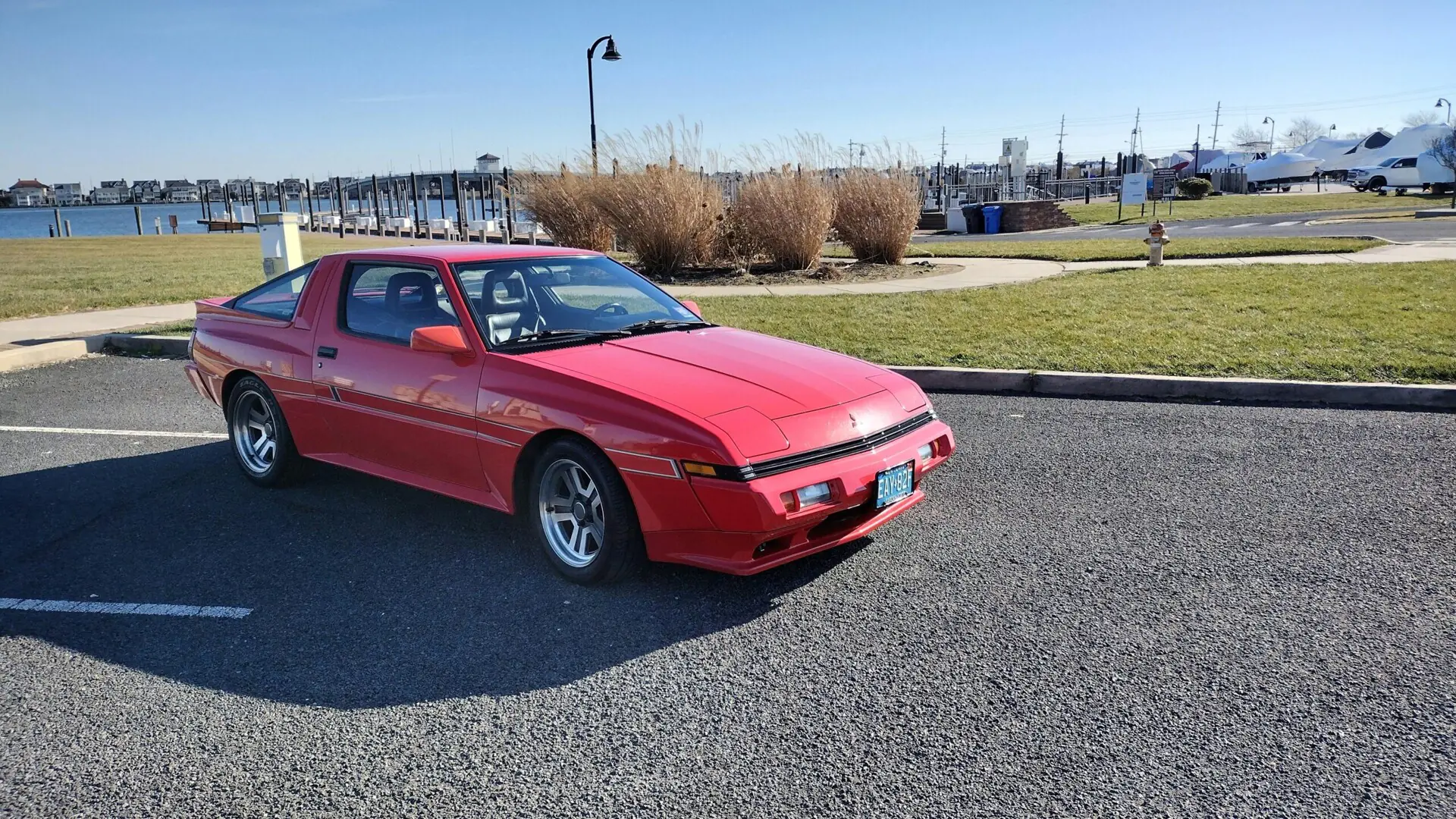
The Mitsubishi Starion has spent four decades as the Japanese turbo coupe that enthusiasts admire and the market mostly ignores. That is changing slowly, and unevenly. A 38,300-mile 1988 ESI-R, bought new by one New Jersey owner and sold through a Hagerty Marketplace listing in January 2026, shows both the opportunity and the limit: the car was unmodified and documented from new, yet it was an automatic and the result stopped at $15,500. Our thesis is that the Starion is an established cult car with a narrow, unproven collector market, and that the price premium belongs to originality, a manual gearbox and paperwork, not to the badge.
Two names, one car: Starion ESI-R and Conquest TSi
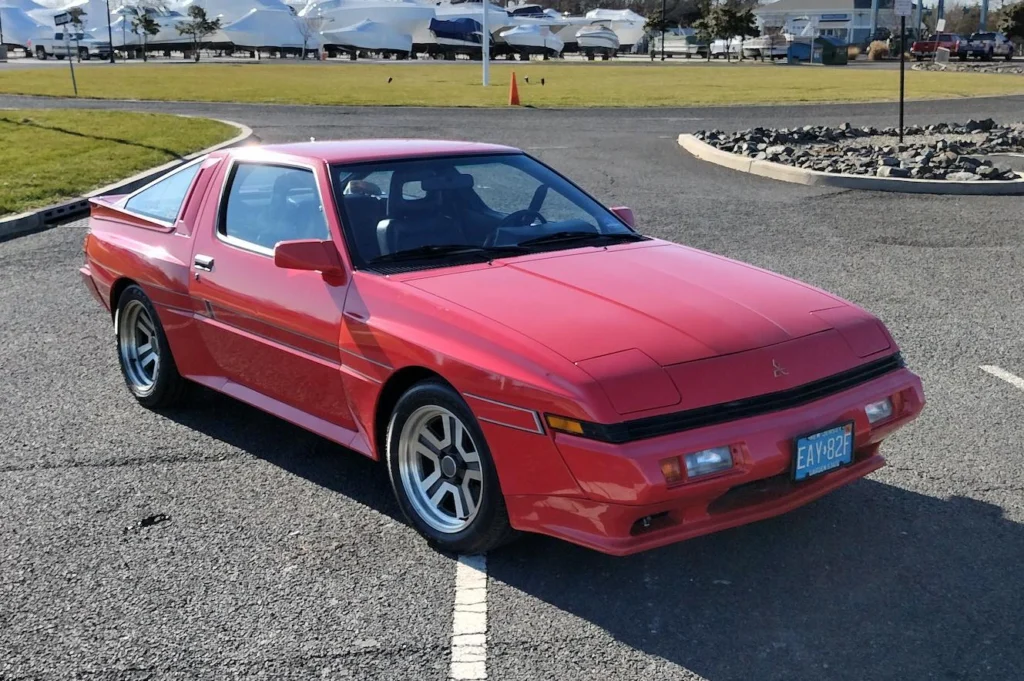
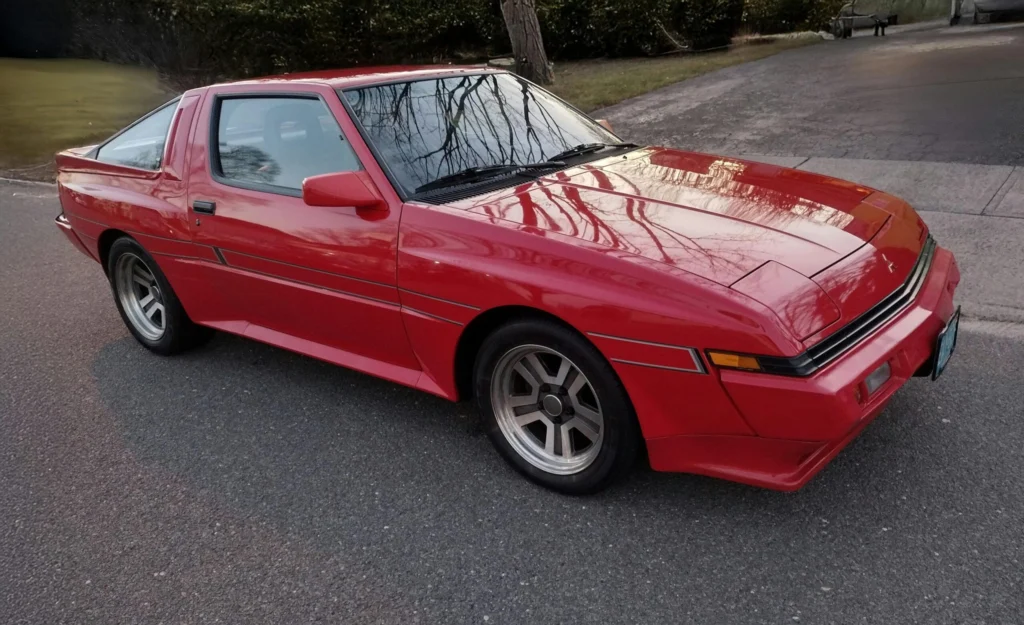
Mitsubishi began selling the Starion in the United States for the 1983 model year, and the same car was sold through Chrysler dealers as the Plymouth and Dodge Conquest, later simply the Chrysler Conquest. Hagerty Media notes that the Chrysler-badged cars are mechanically identical to the Starion, differing in trim and badging. The change that matters to collectors came for 1986: the top ESI-R and Conquest TSi trims gained box fender flares, 16-inch wheels and an intercooler, according to Grassroots Motorsports. Cars through the 1985.5 model year were narrow-bodied; the widebody is the version most buyers now want.
The Starion earned real credentials. Hagerty Media reports that a 1987 ESI-R won the SCCA Escort Endurance Series and the 24 Hour race at Nelson Ledges, and Grassroots Motorsports says the car dominated SCCA Solo G Stock from 1989 to 1993. It also had a Hollywood turn: Jackie Chan drove one in Cannonball Run II. It is a more interesting history than its price suggests, and it sits in the same Mitsubishi lineage as the 3000GT VR-4, which replaced it in the showroom after 1989.
Production and rarity: the numbers are softer than collectors assume
There is no authoritative public split of ESI-R and TSi production, and readers should be wary of any source that claims one. Two figures can be verified. Wikipedia, citing Mitsubishi, lists total Starion-line output across all markets and both body styles at 19,438 in 1986, 17,605 in 1987, 10,655 in 1988 and 1,961 in 1989. GoodCarBadCar lists U.S. sales of the Mitsubishi-badged car at 5,792 in 1986, 5,084 in 1987, 3,016 in 1988 and just 686 in 1989, which sums to 14,578 for the widebody years. Those U.S. figures exclude the Conquest and are sales, not production, so they are a ceiling on the Starion-badged count, not a census of surviving cars.
The useful takeaway is the shape of the curve. Volume fell sharply after 1987, and 1989 was a tiny final year. That points collectors toward 1988 and 1989 cars, which also carry the strongest engine tune.
Engine, drivetrain and what is mechanically distinctive
| Item | Detail |
|---|---|
| Engine | 2.6-liter single-cam turbocharged four (G54B), electronic fuel injection, intercooled on 1986–89 ESI-R and TSi |
| Output | 178 hp and 223 lb-ft for 1986–87; about 188 hp and 234 lb-ft from 1988 (the listing and Hagerty Media agree) |
| Transmission | Five-speed manual standard; four-speed automatic optional |
| Chassis | Independent rear suspension, limited-slip differential, four-wheel discs, staggered 16-inch wheels |
| Weight | About 2,954 lb for the widebody (Wikipedia) |
| Performance | 0–60 mph in about 8.1 seconds for the widebody (Hagerty Media) |
| Price new | About $17,500 (Hagerty Media) |
The mechanical story is a big-displacement, low-revving turbo four with a character closer to a muscle car than to a Japanese twin-cam. Hagerty notes that Mitsubishi’s balance-shaft technology was licensed to Porsche for the 944 and 968, though many owners delete the shafts during rebuilds. Grassroots Motorsports adds that 1988–89 cars can run far more boost on the stock computer than earlier cars, which cut out at around 10 psi.
Factory options and how to identify the right car
The most important option is the 1988–89 Sport Handling Package, which Hagerty Media describes as eight-way adjustable shocks and wheels one inch wider. Leather upholstery, power equipment, cruise control and a premium stereo were common on well-equipped cars, and the January 2026 listing shows a typical full-option 1988 ESI-R. Sampled sales records show Starion VINs beginning JA3 and Conquest TSi VINs beginning JJ3; the tenth character is the model-year code (H for 1987, J for 1988, K for 1989). Verify those against the car in front of you, and confirm the box flares and 16-inch wheels that identify the 1986-on cars.
Market values and comparable sales
Values are real but modest, and the spread is wide. Hagerty’s valuation page for a 1987 ESI-R showed $20,700 as of April 2024, though the page did not state which condition grade that figure represents. Back in 2021 Hagerty Media quoted #2 (Excellent) values of $18,600 for the Starion and $21,700 for the Conquest, with the Conquest carrying a premium. Recorded sales follow.
| Date | Car | Miles | Result | Source |
|---|---|---|---|---|
| Jan 2026 | 1988 ESI-R, automatic | 38,300 | $15,500 (high bid $13,600; listed as sold after) | Hagerty Marketplace |
| Jun 2025 | 1987 ESI-R, manual | 83,000 | $19,850 | Classic.com |
| Mar 2024 | 1987 ESI-R, manual | 158,000 | $15,100 | Classic.com |
| Jan 2023 | 1988, listed as base | 54,000 | $40,700 (outlier; trim unconfirmed) | Classic.com |
| Jan 2023 | 1988 ESI-R, five-speed | 62,000 | $8,500 | Classic.com |
| Dec 2022 | 1988 ESI-R | 67,000 | $18,500 | Classic.com |
| May 2021 | 1988 Conquest TSi, Fiji Blue | — | $33,365 | Bring a Trailer, via Hagerty Media |
| Mar 2019 | 1988 Conquest TSi, Sport Handling | About 40,000 | $27,000 | Bring a Trailer, via Hagerty Media |
One outlier does not make a market. The $40,700 result and the $33,365 Conquest are real, but they sit next to an $8,500 five-speed with 62,000 miles. The honest reading is a floor in the low-to-mid teens for sound cars, with a small premium band for exceptional, low-mile and documented ones.
What the Hagerty listing tells us
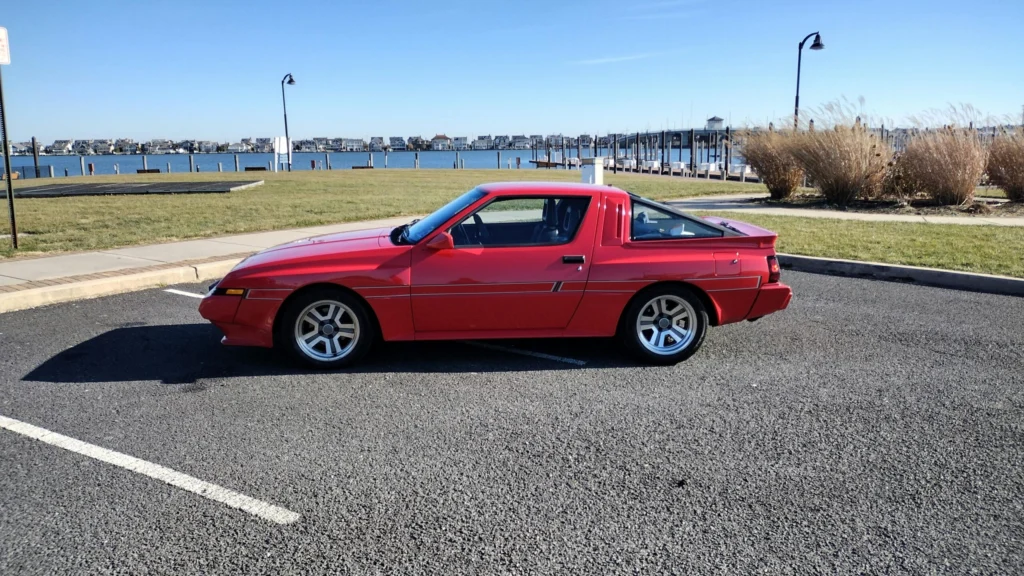
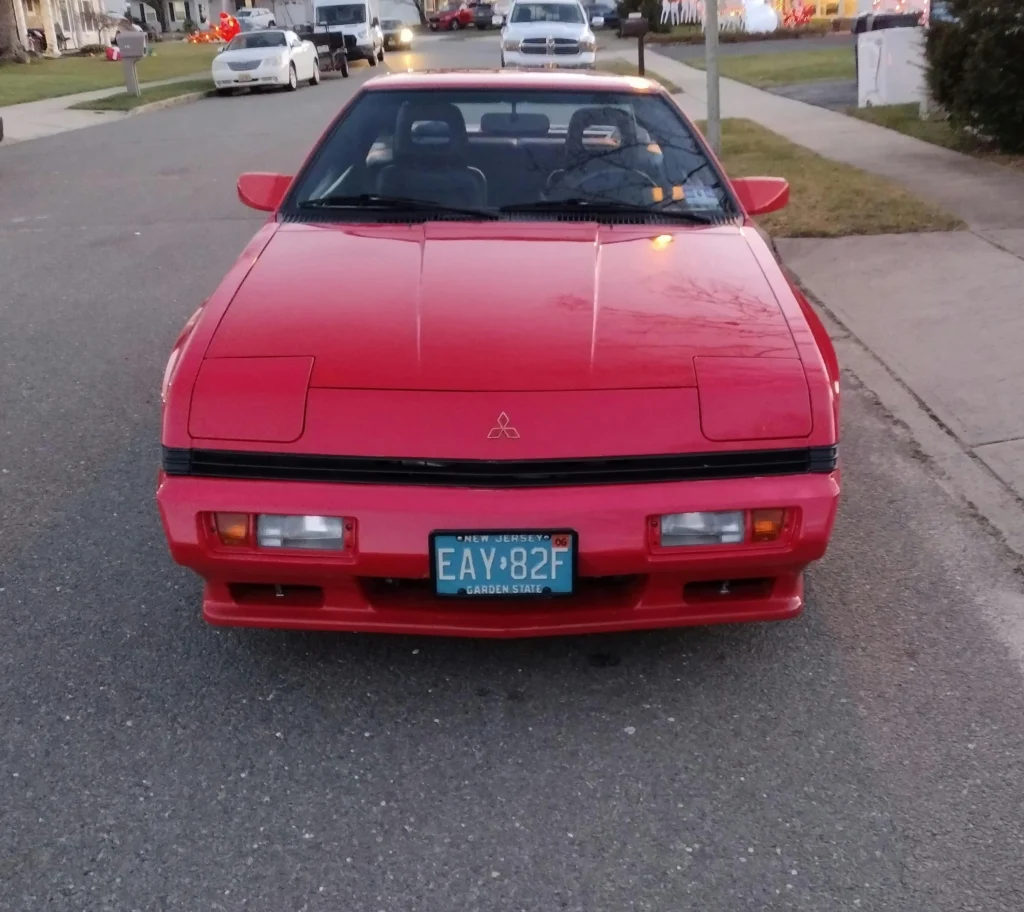
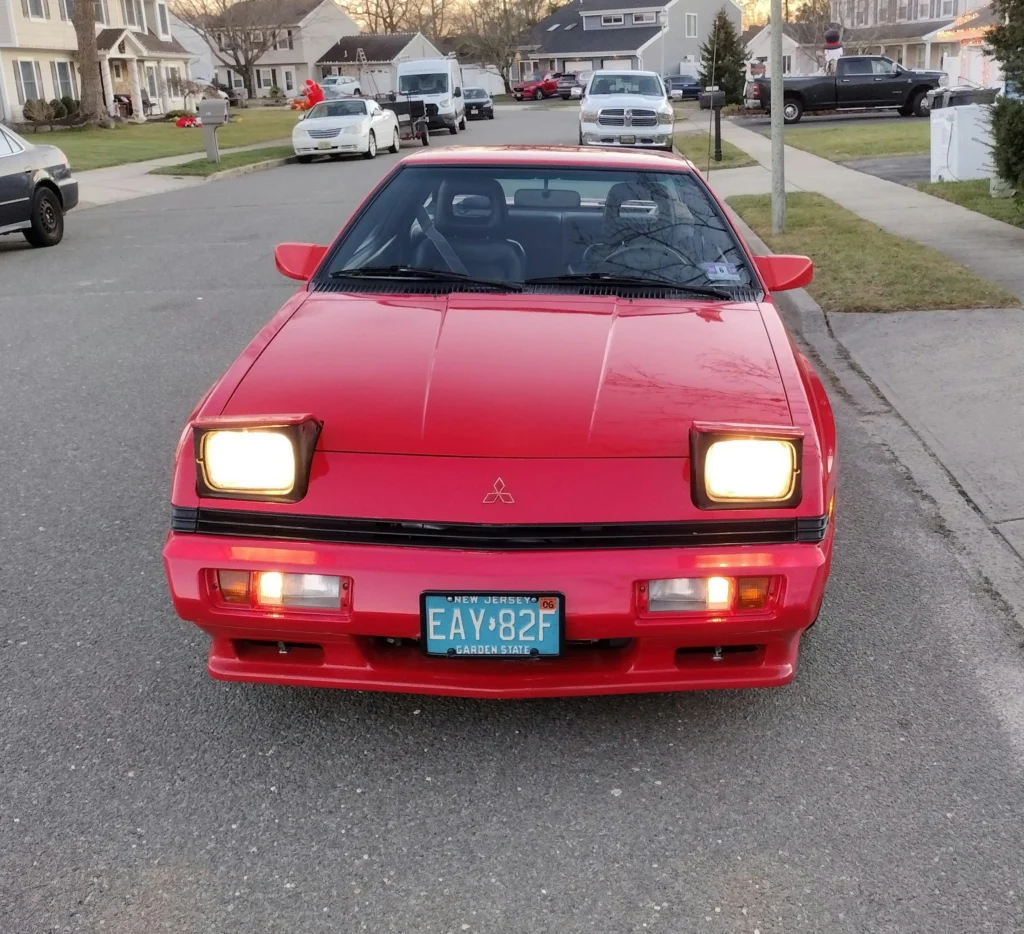
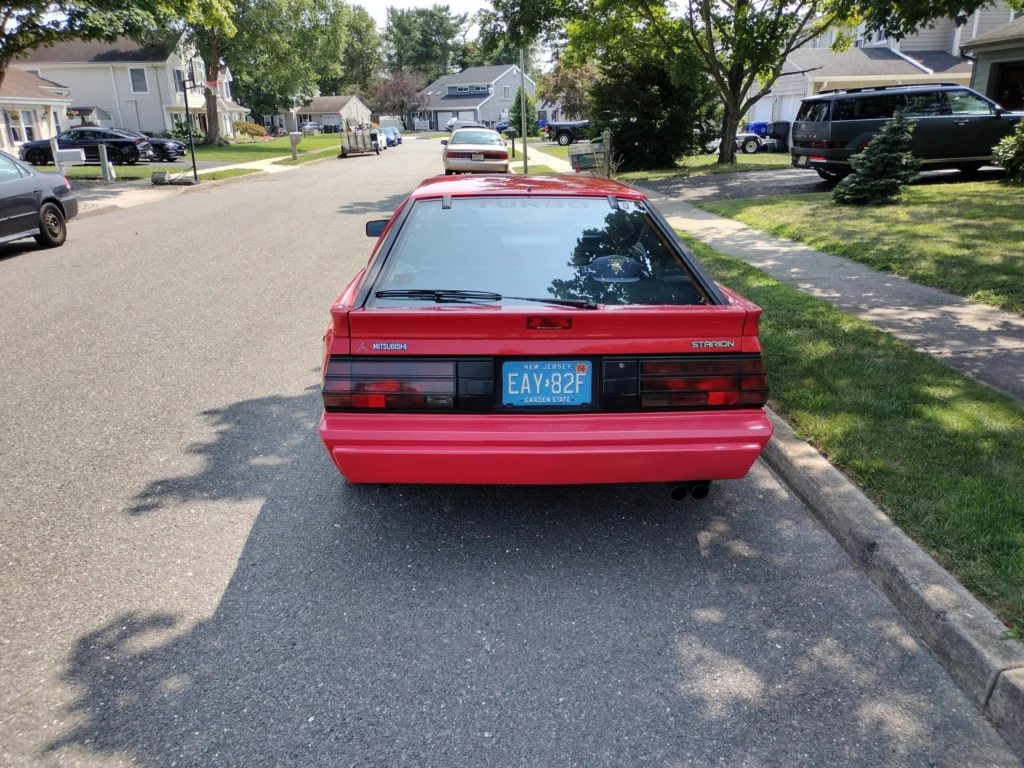
The Hagerty Marketplace listing described a Rio Red 1988 ESI-R with black interior, 38,300 miles, a clean New Jersey title in the original owner’s name, a hand-written maintenance log from new and a clean CARFAX. The seller, executor of the original owner’s estate, reported an oil change at 38,082 miles in June 2024 and the only blemish as turn-signal stalk wear. It ended January 14, 2026 with 29 bids; the page shows a high bid of $13,600 and the car listed as sold after for $15,500.
Why does that matter? Everything that collectors say they want was present, and the price was still under the $19,850 paid for an 83,000-mile manual in 2025. The likely explanation is the four-speed automatic, which gives up the car’s enthusiast appeal. It is an interpretation, not a proven cause, but it is consistent with the fact that every recorded sale in the Classic.com table above was a manual.
Known weaknesses and ownership costs
Grassroots Motorsports is blunt: the car needs a hands-on owner. The common faults are fuel-injection related, including worn injectors, failing injector connectors and mass-airflow sensors, and new injectors are available only for 1987–89 cars. Electrical faults can be prohibitively expensive. Heads can fail when power is pushed beyond what the internals support, so modified cars deserve extra scrutiny. Parts support is limited, with very few specialist suppliers left. Hagerty Media adds that owners often raise boost and fit lighter flywheels, and one owner reverted to factory parts after aftermarket ones failed. Rust is a factor in project-car pricing. Ownership costs are therefore driven by specialist labor and part scarcity, not by purchase price, and we could not find a credible published running-cost benchmark.
Originality: what separates exceptional examples from average ones
The exceptional car is unmodified, has a five-speed, the original computer, the Sport Handling Package if a 1988–89, original paint and interior, and service records from new. Grassroots Motorsports warns that 1988–89 computers are nearly impossible to find, which makes a car still wearing its original unit unusually valuable. The average car has been boosted, re-tuned with standalone management and fitted with aftermarket wheels and exhaust; many sensible owners did so, and the market prices it that way.
Before buying, verify the VIN and model-year code, check that the flares and wheels match the specification, inspect the injectors and wiring harness, confirm the headlights and electronics work, and ask for documentation of any engine work.
Competing vehicles
In period the Starion competed with turbocharged Japanese coupes such as the Mazda RX-7 Turbo, the Nissan 300ZX Turbo and the Toyota Supra Turbo, and today it also sits under newer Japanese turbo cars covered in our RX-7, 300ZX and MR2 comparison and the Supra Mk IV spec sheet. Its closest American cousin in spirit is the Mustang SVO, another turbocharged four with a thin production run and a market still deciding. For the Chrysler connection, see the 1,100-mile Shelby Lancer and Chrysler’s first minivan; for a wagon-shaped Japanese turbo that raises the same collectability question, see the Nissan Stagea 260RS Autech.
Established value versus speculative potential
The established part is modest: a cult following, a competition record, a distinctive design, and a floor for clean manual cars. The speculative part is a broader repricing like the one Hagerty reported for the Eclipse GSX, where the gains concentrated in low-mile cars. The Starion could follow if clean, unmodified examples become scarce enough to anchor a premium. Three things would strengthen demand: more documented low-mile cars crossing the block, a visible price band for manuals, and renewed brand attention for Mitsubishi’s turbo history. Three would weaken it: the thin parts supply, hard-to-fix electrical problems, and the sheer number of modified cars diluting the pool of original ones.
Bottom line
Buy a Starion ESI-R or Conquest TSi because you want a rare-feeling, characterful ’80s turbo coupe, and pay up only for originality, a manual and documents. Treat appreciation as a possibility, not a plan. Prices are not a guarantee and nothing here is investment advice.
Sources: Hagerty Marketplace listing; Hagerty Media, “Reach for the Star(rion)s”; Hagerty Media, “Why Are Mitsubishi Starions Still So Cheap?”; Grassroots Motorsports buyer’s guide; Wikipedia; GoodCarBadCar; Classic.com; Hagerty valuation tool.
The collector car market, every weekday morning.
Auction results, price moves and what’s crossing the block, read in four minutes. Free, from Modern Car Collector.
No spam, unsubscribe in one click. Or read more about the Brief.
 Kyle Matthews
 Shawn Henry