

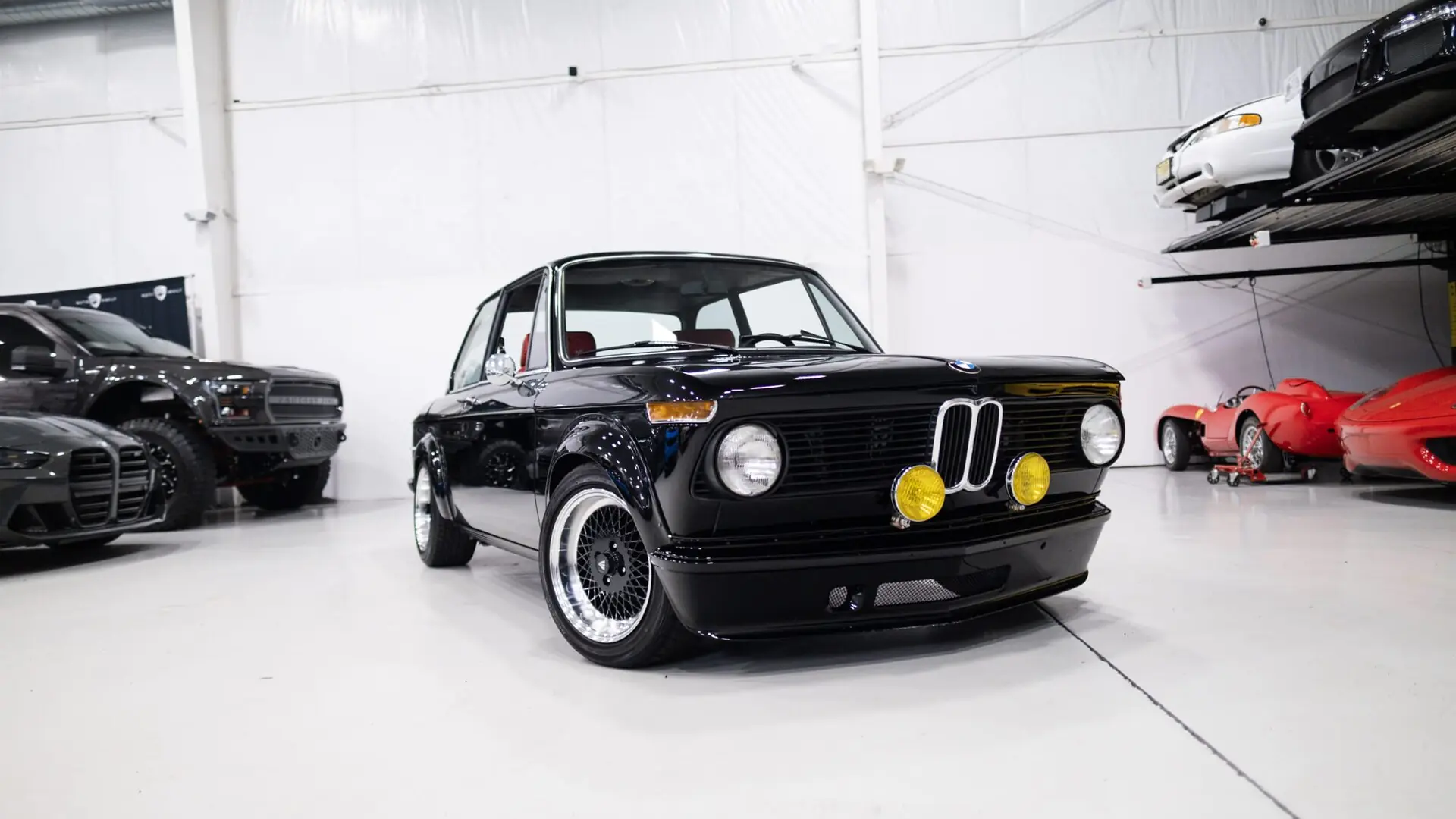
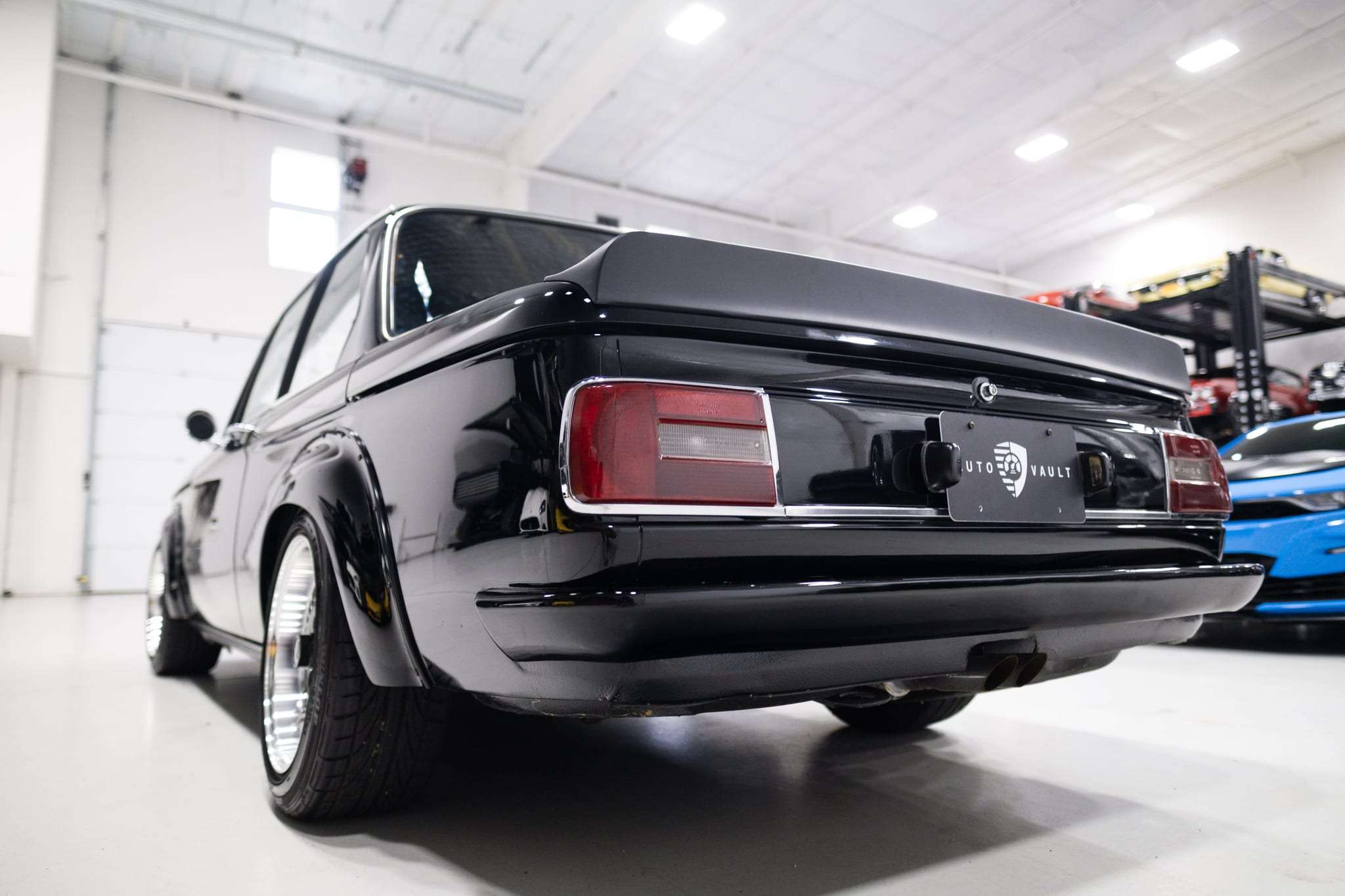
A black 1975 BMW 2002 wearing Turbo-style flares, a deep front valance and spoilers sold on Bring a Trailer on September 9, 2026 for $34,500. Its listing was labeled “Turbo-Look,” and it said plainly that the body parts were added and the 2.0-liter M10 runs a Weber carburetor. That honesty is the point. On a BMW 2002 Turbo, the visible parts are the easiest things to copy, and they prove nothing.
BMW built 1,672 genuine 2002 Turbos. RM Sotheby’s sold one for $168,000 in Arizona in 2021 and another for €126,500 in Munich in 2025. The gap between those results and a $34,500 look-alike is a gap in originality, and it is measured in chassis numbers, engine numbers and factory paperwork rather than in fiberglass.
Why the BMW 2002 Turbo matters to collectors
The 2002 Turbo, unveiled at the 1973 Frankfurt Motor Show, was BMW’s first turbocharged production car. It took the 2002 tii’s mechanically injected engine, added a KKK turbocharger, lowered the compression ratio and made about 170 PS. Wider arches, a front air dam, a rear spoiler, ventilated front discs and a boost gauge completed the package. It arrived just before the 1973 oil crisis, which is a large part of why so few were built.
Scarcity and a devoted following have made it one of the most valuable small BMWs. Hagerty reported in 2018 that average Turbo values had risen 201% over five years, when a 1974 car in #2 condition sold for $145,600. Because the money is real, so is the incentive to make a standard 2002 look like one.
What separates a real Turbo from a Turbo-look 2002
The two cars can look similar from ten feet away. The table below sets the factory Turbo against the Turbo-look car from the Bring a Trailer listing.
| Feature | Factory 2002 Turbo | Turbo-look car in the BaT listing |
|---|---|---|
| Chassis number | Catalogued Turbos carry 4290xxx or 4291xxx numbers, such as 4290001, 4290089, 4290162, 4290709 and 4291147 | 2361547, which BaT says fits July to December 1974 production of the standard car |
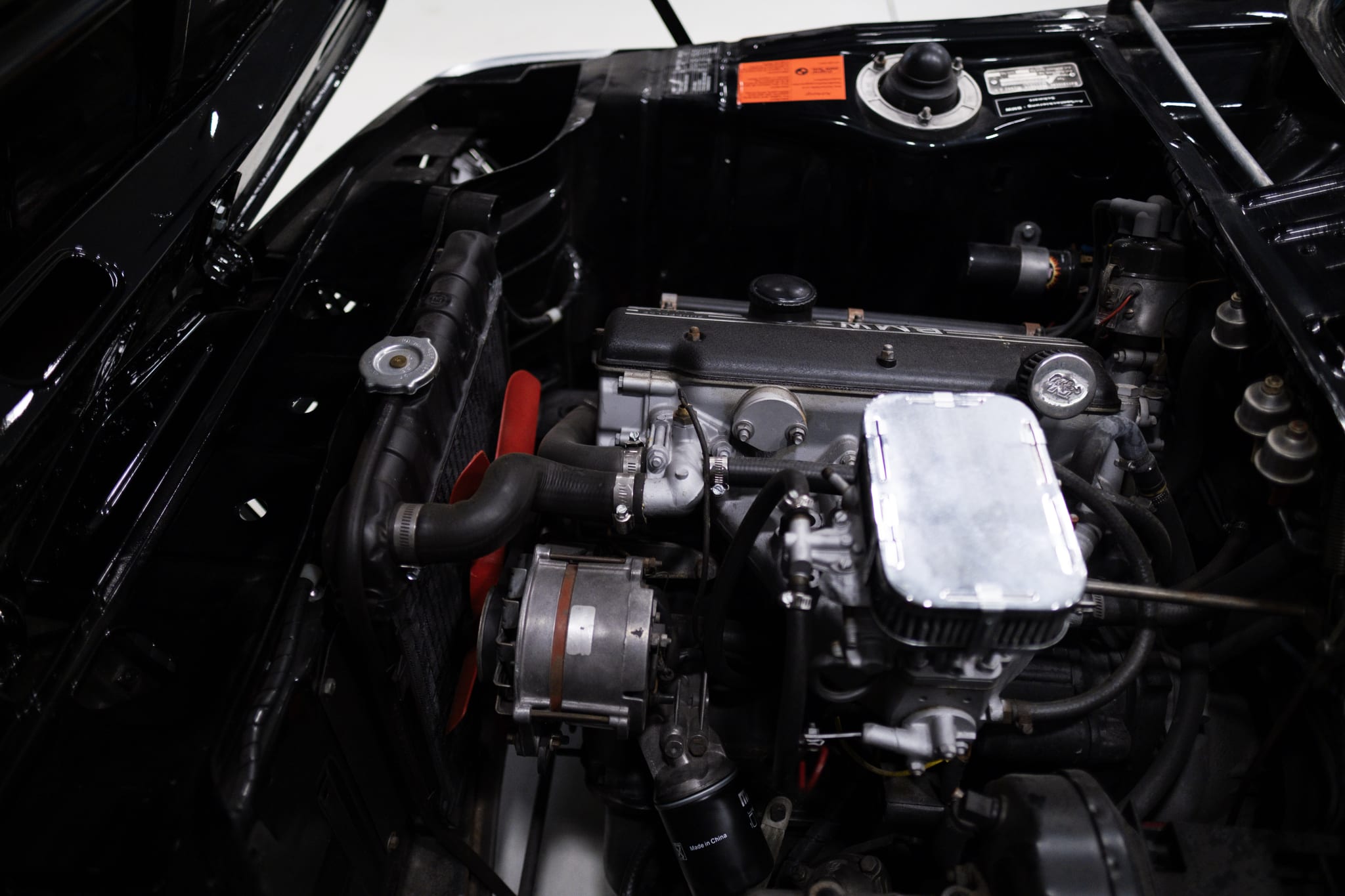
| Engine | 1,990 cc M10 with a KKK turbocharger and mechanical fuel injection, rated at 170 PS | 2.0-liter M10 with a Weber carburetor conversion and no turbo |
| Paint | Chamonix white or Polaris silver | Repainted black |
| Body | Bolt-on arch extensions, front air dam, rear spoiler and reversed “2002 turbo” lettering | Turbo-style flares, front valance and spoilers added by a previous owner |
| Paperwork | BMW Classic certificates appear in the RM Sotheby’s catalogs | Records dating to the 1970s and a New Jersey title |
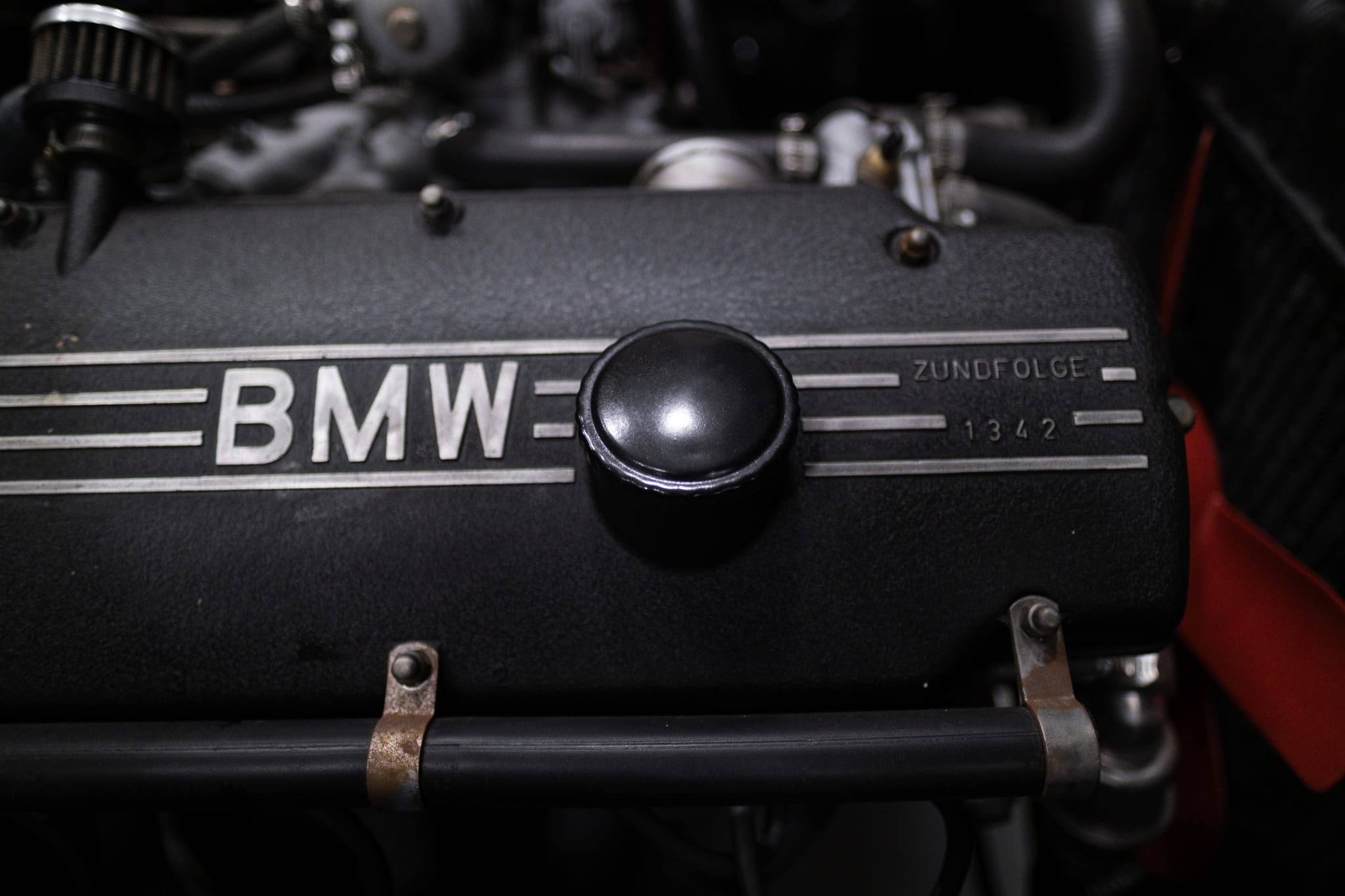
Auction catalogs also point to a matching-numbers check. The RM Sotheby’s lots for chassis 4290089, 4290162, 4290709 and 4291147 each list an engine number identical to the chassis number, and the Bonhams catalog title for the first car built pairs chassis and engine number 4290001. That pattern is a strong clue to look for, though it is not a guarantee, so treat it as a question to ask rather than an assumption.
How originality affects BMW 2002 Turbo values
Other 1975 BMW 2002s sold on Bring a Trailer in August and September 2026 for between $14,250 and $32,000, so the Turbo-look car’s $34,500 was a modest premium for modifications that the market could see and price. The real-car results are several times higher. Those results span different auctions, years and currencies, so they are not a like-for-like comparison, but the direction is clear.
Even among genuine cars, documentation moves the needle. The RM Sotheby’s catalog for the Munich car, chassis 4291147, says that after consulting BMW Classic the auction house believes earlier bodywork repairs removed the original chassis stamp, and that the car is identified by a new stamping on a replacement panel. It still sold for €126,500, but it shows why buyers should ask exactly how a Turbo is identified, not just what it looks like.
What to verify before buying a BMW 2002 Turbo
- Read the chassis number on the car and on the title or registration, and confirm it falls in the Turbo series seen in catalogs (4290xxx or 4291xxx). A standard 2002 number, such as the 2361547 on the look-alike, cannot be converted into a Turbo.
- Compare the engine’s own number with the chassis number. Matching numbers are the pattern in the RM Sotheby’s catalogs. One published listing pairs a Turbo chassis number with a different engine number, so ask for an explanation of any difference.
- Request BMW Classic documentation tied to the chassis number. RM Sotheby’s lots for these cars cite BMW Classic certificates, and the paperwork is what ties the car to the factory record, much as it does on an E46 M3 CSL.
- Ask whether the chassis stamp is original or has been re-stamped on a replacement panel, and get any bodywork repair history in writing.
- Check the engine specification. A factory Turbo has a turbocharged, mechanically injected M10. A carburetor, as on the look-alike, is a clear red flag.
- Check the color against the factory choices, Chamonix white or Polaris silver, and ask whether any other color is a repaint.
- Look for the factory details RM Sotheby’s catalogs describe, including the boost gauge, the Turbo sport seats and the reversed lettering. Treat each as supporting evidence only, since parts and decals can be added to any 2002.
Common misrepresentations on BMW 2002 Turbo listings
- Listing a standard 2002 or 2002 tii as a “Turbo” because it wears the flares, spoilers and decals.
- Using vague phrases such as “Turbo-look,” “Turbo-style” or “tribute” in the description but a bare “Turbo” in the title or the search tags.
- Describing a replaced or re-stamped body as original without saying how the chassis number was carried over.
- Leaving out the engine and chassis numbers, as in one Barn Finds listing that lacked a VIN, documentation and engine photos.
- Presenting a car with a different engine or a non-factory conversion as matching-numbers.
Honest tributes are not the problem. The Bring a Trailer car was disclosed as modified, and it sold in line with that. The problem begins when a Turbo-look car is priced or described as a Turbo.
The bottom line
A real BMW 2002 Turbo is defined by its factory identity: a Turbo-series chassis number, the correct engine, factory colors and documentation that ties them together. Flares, spoilers and decals are only decoration. Before paying Turbo money, get the numbers, the BMW Classic paperwork and a clear account of any bodywork or engine replacement. For more on how a BMW engine can matter apart from its chassis, see our look at the collectible M10, and for another turbo icon where a chassis suffix alone does not settle the question, see our Renault 5 Turbo originality check.
Sources: Bring a Trailer listing, Turbo-Look 1975 BMW 2002; RM Sotheby’s lots for chassis 4290089, 4290709, 4290162 and 4291147; Wikipedia, BMW 02 Series; Hagerty Media, 2018.
The collector car market, every weekday morning.
Auction results, price moves and what’s crossing the block, read in four minutes. Free, from Modern Car Collector.
No spam, unsubscribe in one click. Or read more about the Brief.
Related Posts:
- Record Ferraris, Rare Icons and 15,000 RPM: The Week…

- The Complete Guide to the Yenko Camaro
- Scout II vs. K5 Blazer vs. Bronco: Three 1970s 4x4…

- 190E Evo II vs. Sierra RS500 vs. M3 Sport Evolution:…
- Toyota Supra Mk IV Turbo (1993–1998): Collector Spec Sheet
- A 240Z Owned Since 1975 Proves the Odometer Is the…
 Shawn Henry
 Eve Nowell