

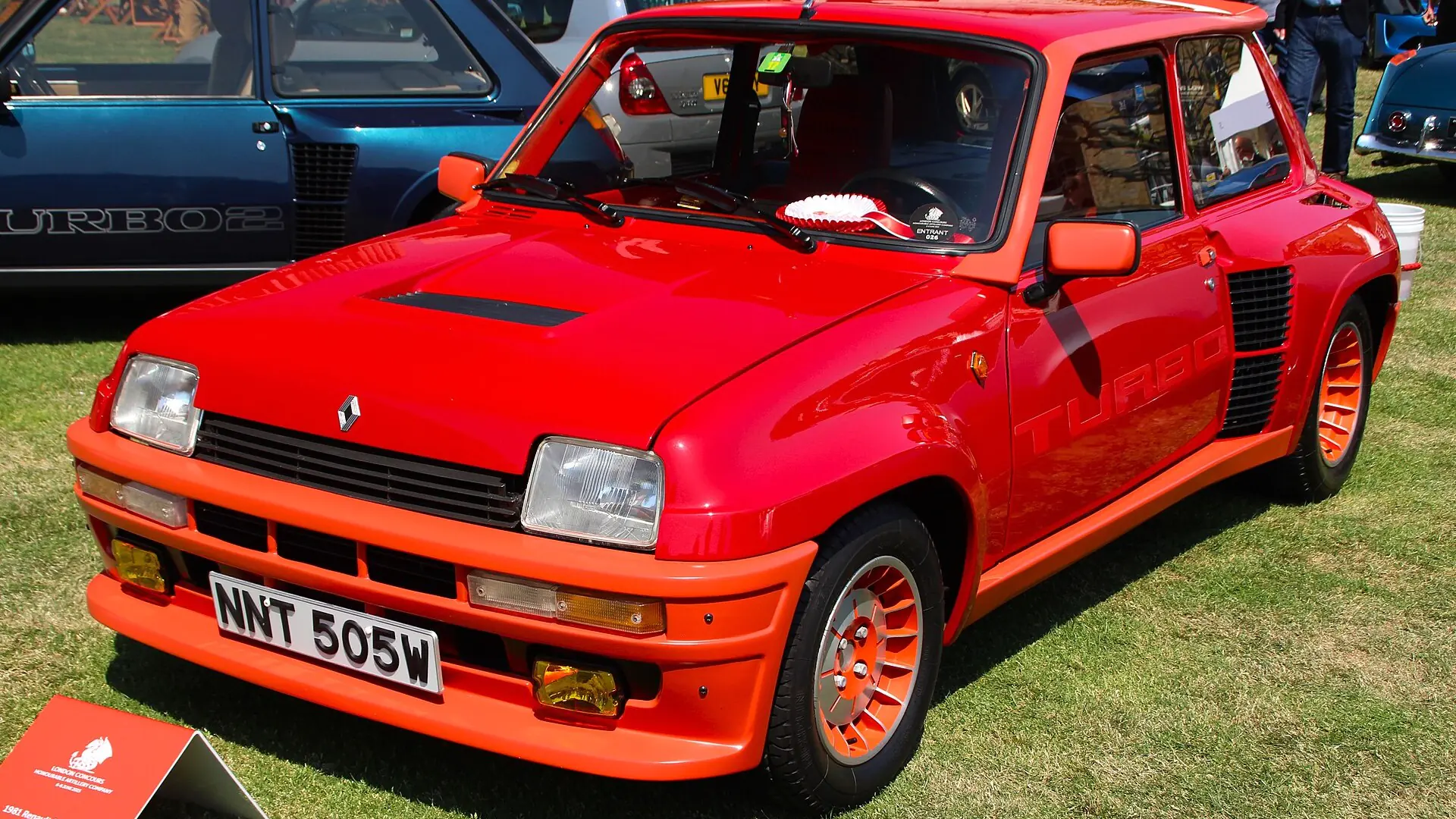
Alpine assembled 4,987 mid-engine Renault 5 Turbos in Dieppe, and collectors do not value them equally. The Renault 5 Turbo 1 has historically sold for about 30% more than the later Turbo 2, according to Sports Car Market, even though both were rated at 160 horsepower and look nearly alike from across a car park. That gap is the whole originality question. The premium pays for what a Turbo 1 is made of and how it was trimmed, and both can be replaced, reproduced or misdescribed.
The detail that separates the two cars is physical: aluminum body panels and a Bertone-designed interior. The detail buyers reach for first, the chassis number, is useful but less decisive than it looks, and the published sources do not fully agree on how to read it.
What makes a Renault 5 Turbo 1 a Turbo 1
Renault needed 400 road cars to homologate the 5 Turbo for Group 4 rallying, and the early cars were built to be light. Sports Car Market reports that the Turbo 1 used an aluminum roof and tailgate, and that the first 400 also had aluminum doors with manual windows. Classic Driver and Hagerty’s past-sales record both describe the Turbo 1 as having aluminum doors, roof and tailgate. The Turbo 2 replaced the roof and hatch with steel from series production.
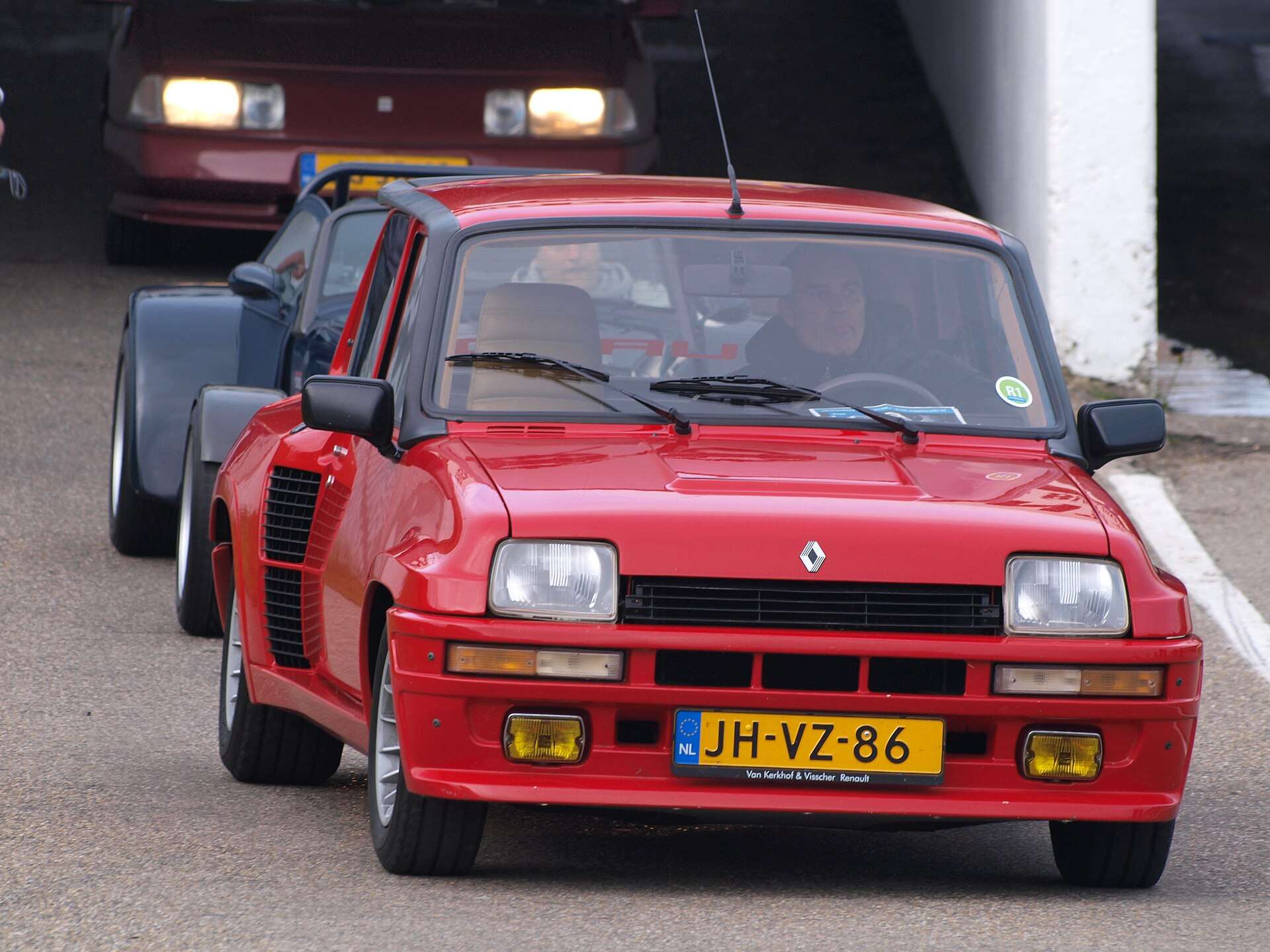
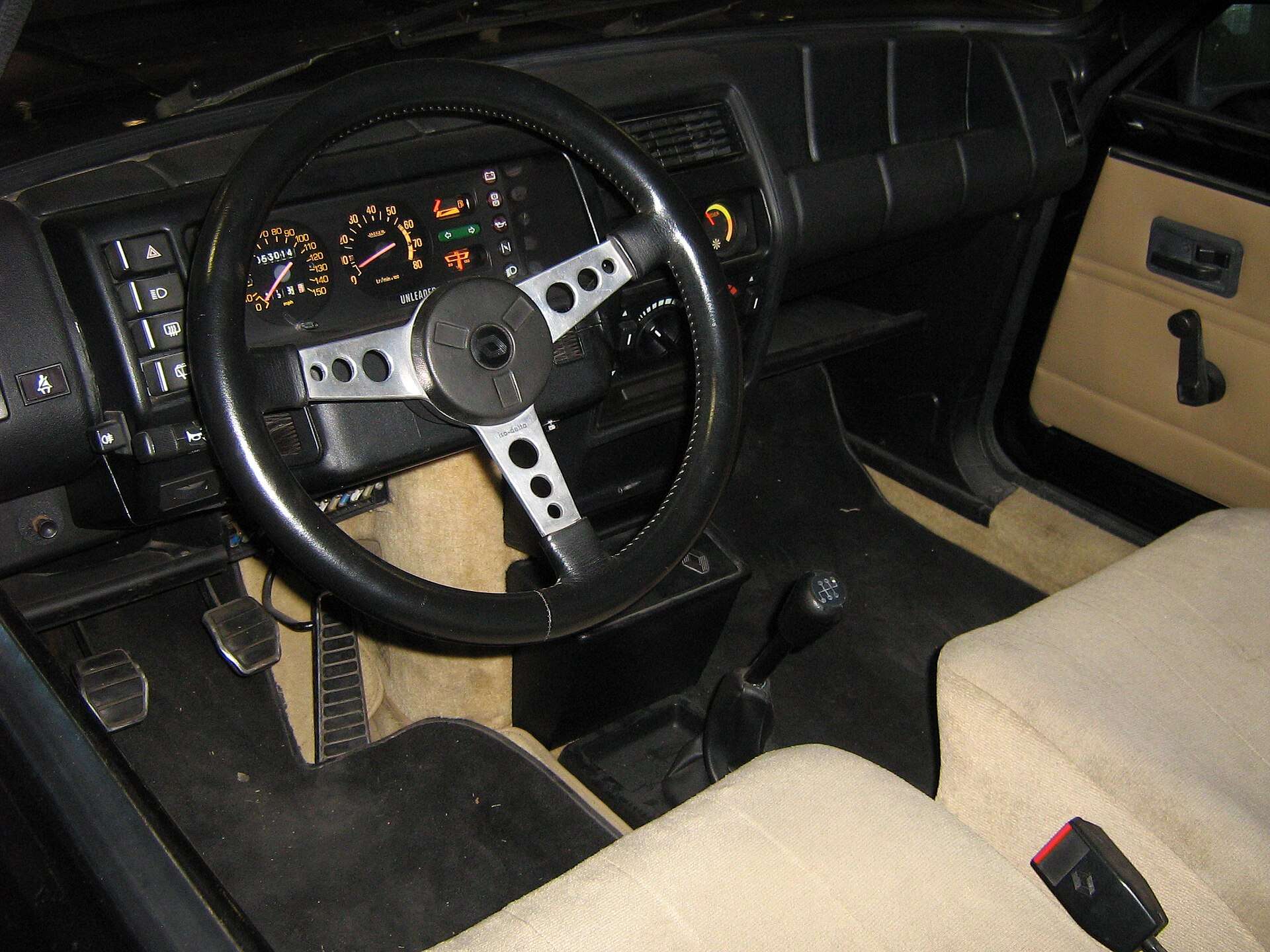
The cabin is the second tell. According to Wikipedia’s summary of the model, the Turbo 1 had Bertone-designed seats and an avant-garde dashboard with an asymmetrical steering wheel, and early cars were typically red with blue upholstery or the reverse. The Turbo 2 dropped those parts for the Renault 5 Alpine interior. Secret Classics adds that the Bertone instrument panel carried ten round gauges.
The mechanical package does not help. Both cars use the 1,397 cc Garrett-turbocharged four rated at 160 horsepower, and Classic Trader calls their driving performance virtually identical. No road test separates a Turbo 1 from a Turbo 2. Materials, trim and paper do.
Why the Renault 5 Turbo 1 premium is a tendency, not a rule
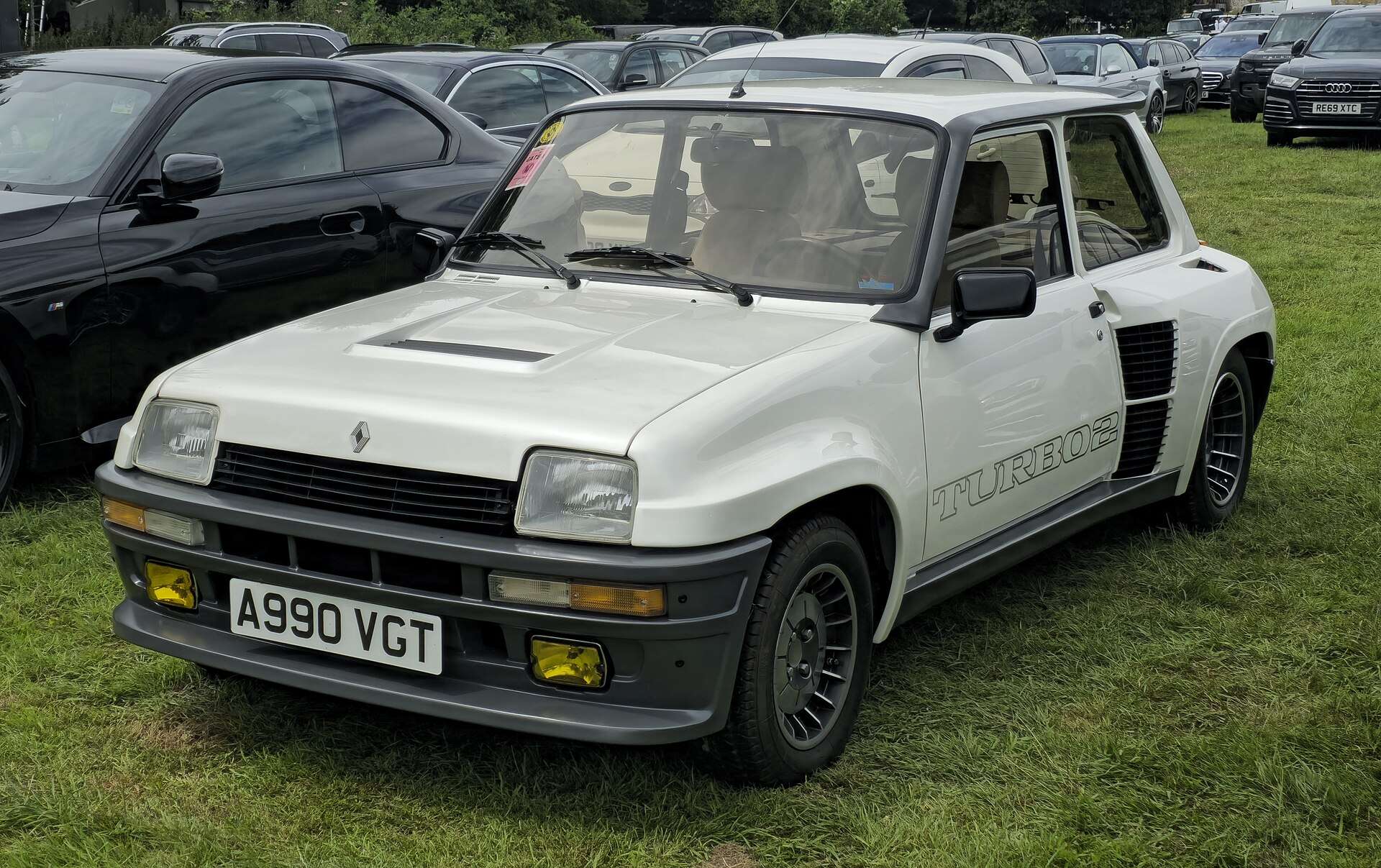
The 30% figure describes how the two versions have traded on average, not a fixed ratio. When Bonhams sold a Turbo 1 at its Bonmont sale in June 2021, the price was $125,059 (CHF 115,000) including premium. In August 2016, Hagerty records a 1983 Turbo 2 at $132,000 at Bonhams Carmel, about $40,000 above the high estimate. Different years, different rooms and very different cars: the Turbo 2 was a well-presented example with air conditioning and a very good older repaint, and the Turbo 1 carried some reproduction interior trim. One pair of results proves nothing about direction, but it does show that condition and presentation can outweigh the badge on a given day.
That cuts both ways for buyers. A Turbo 2 that is correctly described is a legitimate collector car. The risk is paying Turbo 1 money for a car whose panels, interior or paperwork do not support it. Production totals are also not settled: Wikipedia and Sports Car Market give 1,820 Turbo 1s and 3,167 Turbo 2s, while Classic Trader and Secret Classics give 1,690 and 3,180. Treat any claim of an exact number with caution.
The chassis plate: a prompt for questions, not proof
Sports Car Market’s Bonhams Bonmont analysis points buyers to the chassis plate riveted to the right front inner fender and the engine number at the rear of the rocker cover. It lists the prefix VF18220 for both Turbo 1 and Turbo 2, with a B or C suffix for the Turbo 1 and an F suffix for the Turbo 2, and VF18221 for the roughly 200 Evolution cars built for Group B. That agrees with Wikipedia’s note that Group B homologation cars carry “8221” in the VIN.
The suffix is where caution is needed. Sports Car Market’s profiled cars, VF1822000B000159 and VF1822000C0001504, fit the Turbo 1 pattern. But Hagerty lists a 1983 Turbo 2 sold at Bonhams Carmel as VF1822000D0000912, with a D suffix rather than the F that the Bonmont analysis describes. This article could not verify which letters Renault assigned to which versions against Renault’s own records. Use the plate as a starting point, then ask the seller for Renault or Alpine documentation, a history file or specialist confirmation that the number, panels and trim agree.
Where Renault 5 Turbo 1 cars drift from original
Not every departure means a bad car, and the sources are careful about that. Sports Car Market’s Bonmont car had steel doors and electric windows, which the analysis describes as a later-build feature, so “steel doors” does not automatically disqualify a Turbo 1. Its 2015 profile of an earlier car noted electric windows were unusual on early homologation cars but that this did not mean the car was fake, and it flagged an aftermarket pop-up glass sunroof that the factory would never have cut into the roof.
Interiors are the harder area. The Bonmont car’s blue carpet was judged among the best the expert had seen, but some of the colorful trim was reproduction, and the expert noted the blue elements should technically have been orange. Power is the other drift. Sports Car Market warns that raising boost toward 220 horsepower is risky on this engine, and Hagerty’s record of a 1983 Turbo 1 lists a 210-horsepower specification with a Renault Sport camshaft and intercooler, which is a long way from the factory 160. Modifications like that can be well done, but they change what the car is and what it should sell for.
The same logic applies to other aluminum-bodied classics. On an Alfa Romeo Giulia Sprint GTA the aluminum panels prove little until the chassis, engine and archive paper agree, and the Subaru Impreza 22B STi shows the same pattern with a plaque. For other rally-homologation cars with different ownership profiles, see our comparison of the Delta Integrale, Escort Cosworth and Celica GT-Four.
What buyers should verify before paying
- Chassis plate and engine number. Check the plate on the right front inner fender and the number at the rear of the rocker cover, then compare both with the registration and any Renault documentation. Do not accept a suffix letter alone as proof of version.
- Roof and tailgate material. On a car sold as a Turbo 1, have a Renault specialist confirm the roof and tailgate are aluminum and ask whether either has ever been replaced or repaired.
- Doors and windows. Match the door material and window type to the build date and the seller’s claim, remembering that later Turbo 1s are reported with steel doors and electric windows.
- Interior parts. Confirm the Bertone seats, ten-gauge dashboard and trim colors, and ask exactly which pieces are reproduction. Plain Alpine-style trim on a car sold as a Turbo 1 is a question to resolve before the price is.
- Roof cutouts and body changes. Look for aftermarket sunroofs or other panel modifications the factory would not have made.
- Power and history. Ask for the engine specification, any boost or camshaft changes, service invoices and the ownership chain. The Renault Turbo Owners Club (rtoc.org), named in the Sports Car Market analysis, is a sensible place to seek an independent opinion.
The bottom line on the Renault 5 Turbo 1
A Renault 5 Turbo 1 is valuable because it is the lighter, more eccentrically trimmed car that Renault built to go rallying, and most of that character lives in parts that are easy to swap and hard to prove. The sensible approach is to pay for the evidence rather than the label. A documented Turbo 2 in honest condition can be the better buy than a Turbo 1 whose panels, trim and plate cannot be reconciled. Renault’s later mid-engine hot hatch, the Clio V6, and the Alpine A110 from the same Dieppe factory are worth reading for other French performance cars, but neither removes the need to check the car in front of you.
Sources and limits: figures above come from the linked Sports Car Market, Hagerty, Classic Driver, Classic Trader, Secret Classics and Wikipedia pages. Production totals and VIN suffix conventions differ between them, and this article did not have access to Renault’s own factory records.
The collector car market, every weekday morning.
Auction results, price moves and what’s crossing the block, read in four minutes. Free, from Modern Car Collector.
No spam, unsubscribe in one click. Or read more about the Brief.
Related Posts:
- Renault Clio V6 Deep Dive: Europe Priced It Years…
- Is the Alpine A110 a Future Collector Car? Only Some of Them

- The Complete Guide to the Yenko Camaro
- Alpine's One-Off A390 Art Car Is the Headline at…

- How Alpine's Split-Battery EV Platform Attacks the…

- Toyota Supra Mk IV Turbo (1993–1998): Collector Spec Sheet
 Eve Nowell
 Kyle Matthews