

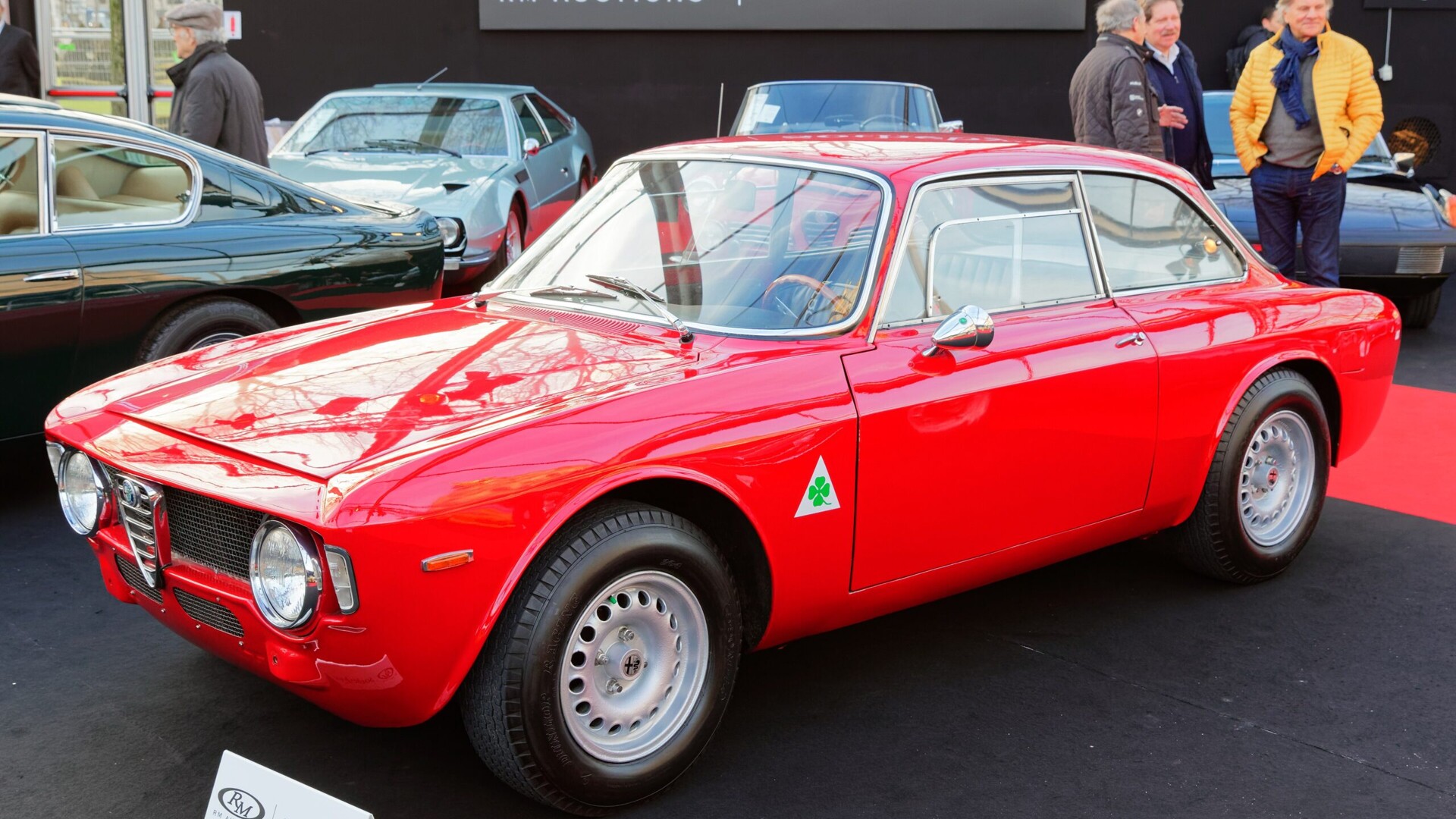
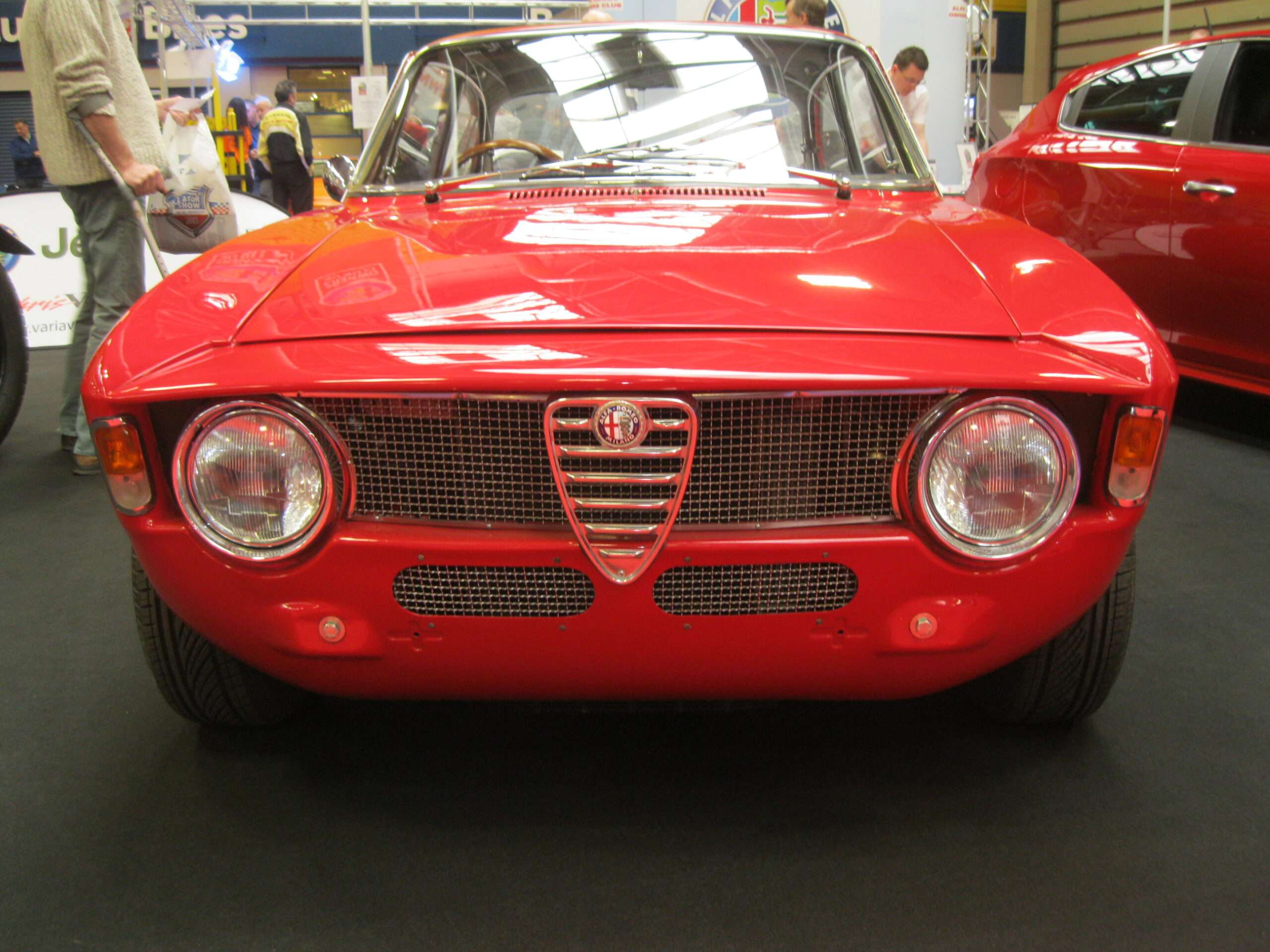
A 1965 Alfa Romeo Giulia Sprint GTA is sold as a lightweight Bertone coupe with an aluminum body, but Giulia Sprint GTA originality is not a matter of what the car looks like. It is a matter of whether the chassis, the engine and the factory record describe the same car. Buying guides warn that modified steel-bodied Giulia GTs are passed off as the real thing, and that genuine cars, many with hard racing lives behind them, have had parts swapped. For a buyer, the question is not “is it a GTA?” but “which GTA is it, and can the paper prove it?”
Giulia Sprint GTA originality starts with the body
The “A” in GTA stands for Alleggerita, Italian for lightened. According to the reference summary of the model on Wikipedia, the road-and-race GTA 1600 replaced the steel outer panels of the Giulia Sprint GT with aluminum, while the inner panels were thinner steel, and the two were bonded and pop-riveted together. A catalog text from dealer Girardo & Co. names the alloy as Peraluman 25 and gives the weight of one car at 745 kg, 205 kg less than the standard GT. RM Sotheby’s, citing Stellantis Heritage, puts total GTA 1600 production at 500 cars, ending in 1969.
That figure matters because it caps the supply of the real thing. The related models are far easier to confuse with it than a casual buyer assumes. The reference summary lists a GTA 1300 Junior (450 built from 1968), a small run of GTAm cars (roughly 40, which it says is hard to verify) and ten supercharged GTA-SA cars. The GTAm, according to the same source, used a full steel body modified with aluminum and plastic parts rather than the aluminum skin of the GTA 1600. Petrolicious’s buying guide makes the same point about the GTAm’s steel shell.
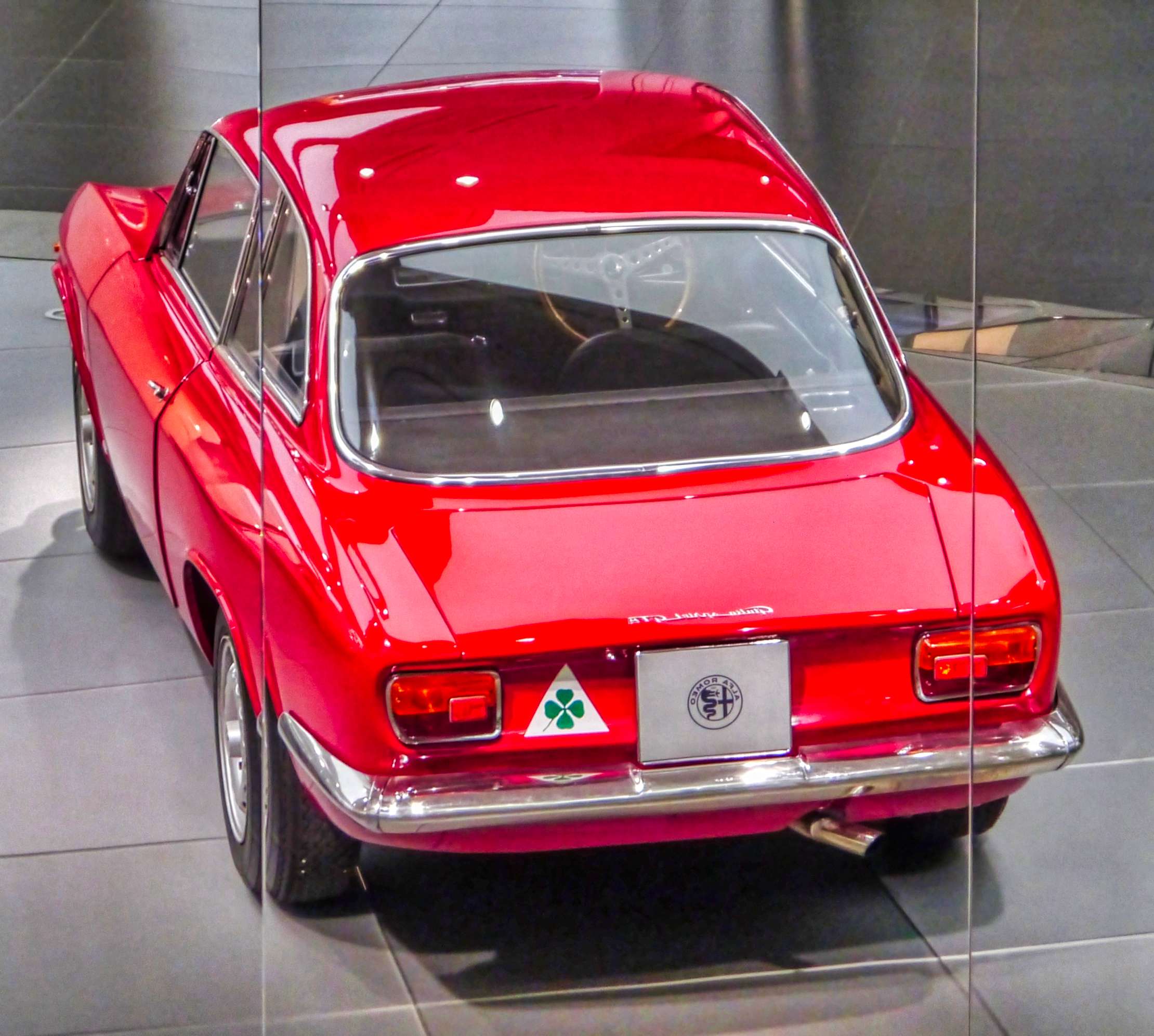
What separates an authentic GTA 1600 from an imitation
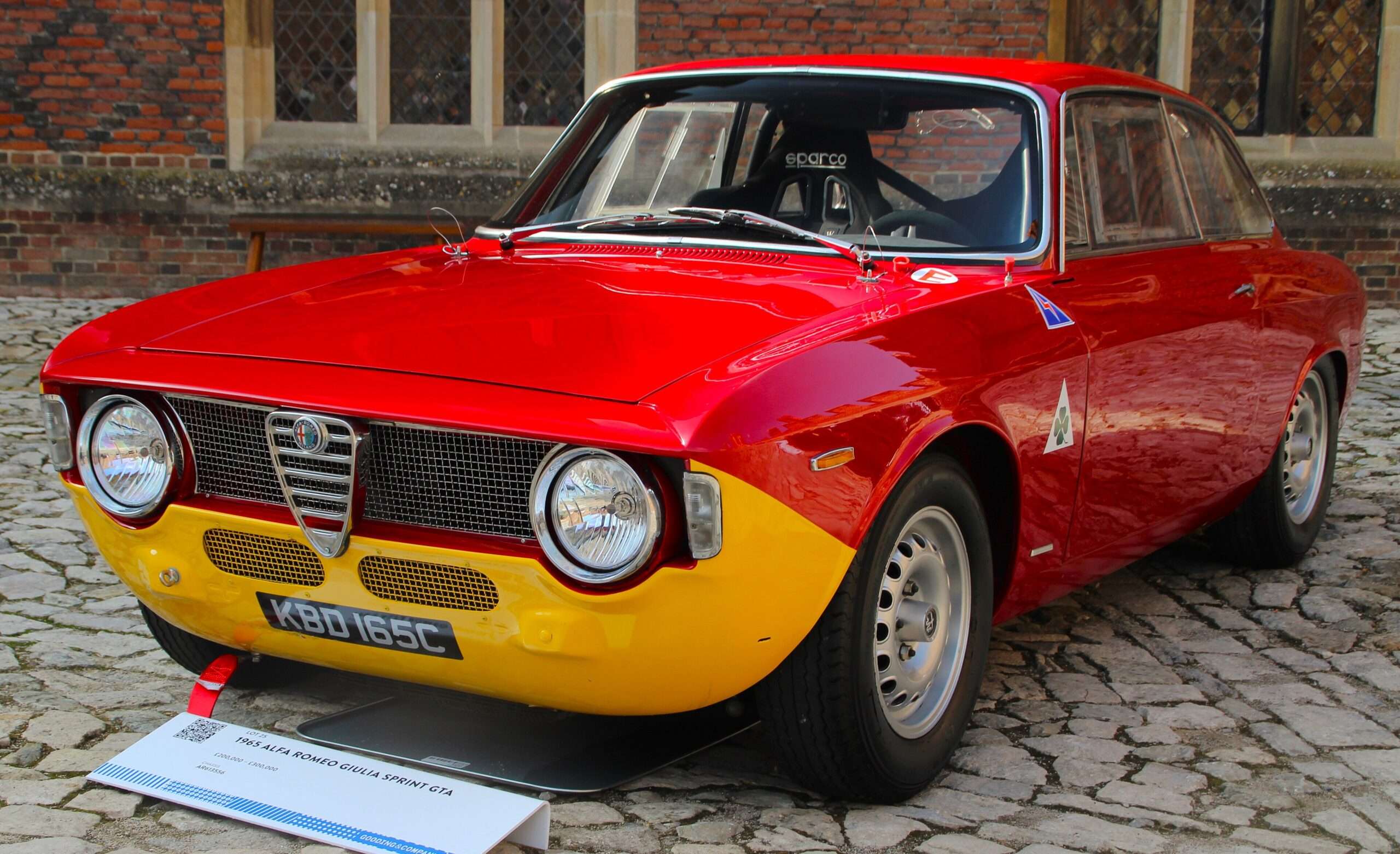
The mechanical signature of the GTA 1600 is a 1,570 cc twin-cam four with twin spark plugs per cylinder and two twin-choke 45 mm Weber carburetors. Girardo lists Elektron magnesium alloy for the cam cover, sump, timing cover, bell housing and rear gearbox cover. The Wikipedia summary adds magnesium alloy wheels and clear plastic side windows to the lightweight parts list, and Petrolicious notes that plastic side windows were common on track cars but not universal. Gooding & Company’s catalog for one car gives road output at 113 bhp.
None of that is difficult to copy. Petrolicious warns that many modified Giulia GTs are “masquerading as the real thing,” that specialists build modern clones from bespoke parts, and that “Evocazione” cars are built to original specification. It also says original cars have been modified and that parts from other models turn up in them, with a later Alfa 75 twin-spark engine a commonly fitted transplant. A convincing body and a correct-looking engine bay, in other words, are the minimum entry ticket and not the proof.
A real example: the engine that did not belong
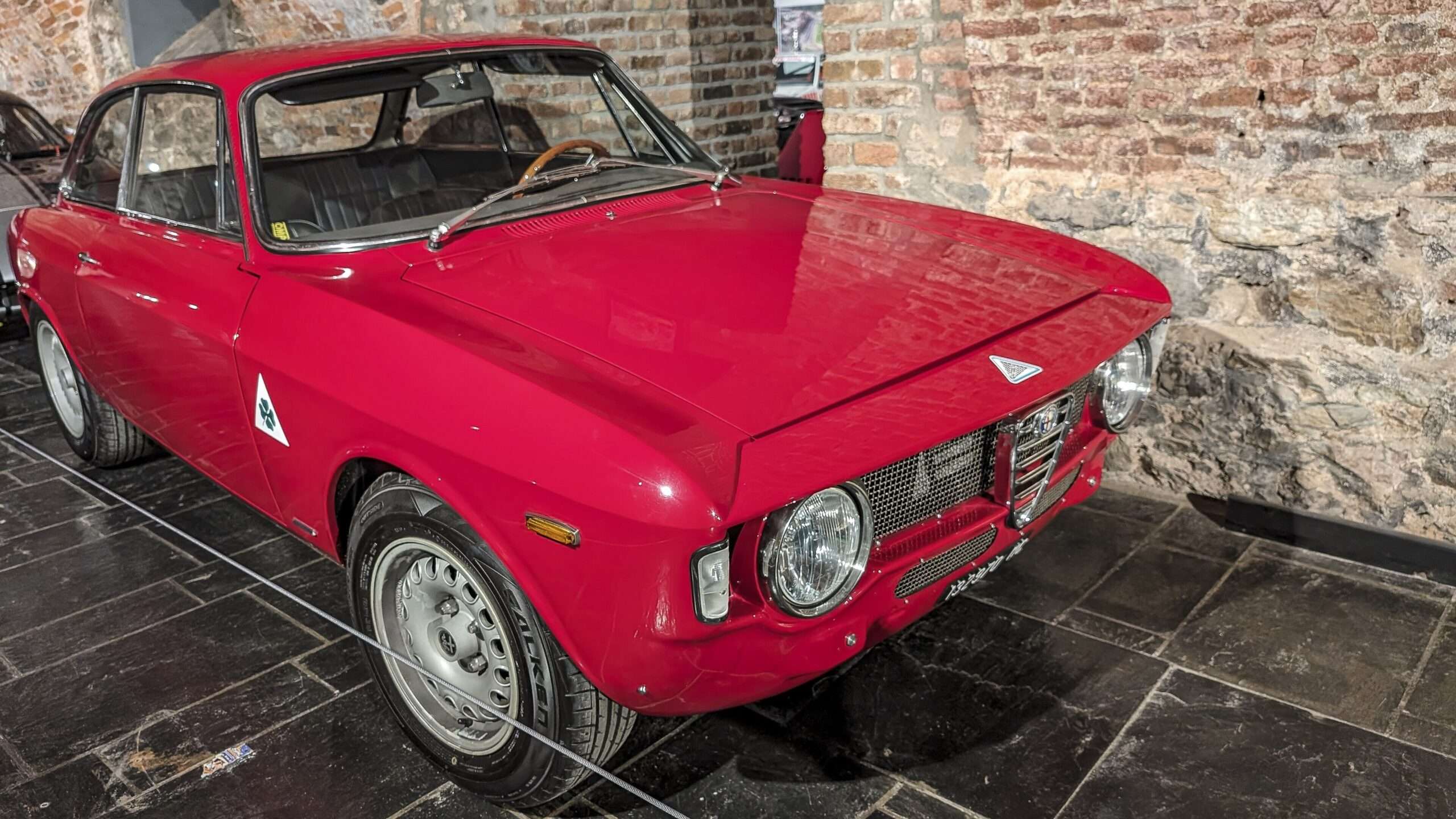
A 1966 Giulia Sprint GTA sold at RM Sotheby’s Monterey in August 2025 shows how this plays out. RM’s catalog lists the car as chassis AR 613790 and calls it one of 500 lightweight cars built. It then notes that the engine fitted, number AR00502 15828, appears to come from a 1965 Giulia GTC, and that a restoration certificate lists a different engine number. Registration was by bill of sale only. The car sold for $140,000. The documentation RM lists includes a purchase agreement, restoration photos, shipping documents, a racing logbook, restoration invoices and a restoration completion certificate, but no factory record tying the chassis to a specific original engine is listed.
Compare it with RM Sotheby’s Paris sale in 2021, where an early “pre-series” GTA, chassis AR 613015, sold for €270,000. The catalog says the car left Autodelta on 3 August 1965, was delivered to Alfa Romeo Brussels and then to Team Lucien Bianchi in March 1966, and was the fifteenth known car of the first batch, with the engine recorded as AR00502/A 18600. The two sales are not like-for-like: one is an early works-prepared car with a documented race history, the other a later car with a replaced engine. Both prices should be read as evidence about how the market treats provenance, not as a measured discount for one missing number.
What the factory record can tell you
Alfa Romeo’s archive is the reference that matters. A catalog for one GTA, chassis AR 613556, cites a letter on file from the Alfa Romeo archives confirming that it was built on 25 August 1965 in white with a black interior and delivered to the French importer in Paris. Alfa Romeo Classiche, run by Stellantis Heritage at the Alfa Romeo Museum in Arese, describes two services. A Certificate of Origin reconstructs a car’s history and, where archive records exist, confirms the chassis number, production year, original configuration, engine serial number, and bodywork and interior details. A Certification of Authenticity is a technical and documentary inspection that checks production data against the archives and examines mechanical and aesthetic components, producing a dossier and a certification plaque. The company’s 2019 announcement of the Arese service describes the same process.
The principle is the same one we have covered on other marques. On a Series 1 E-Type, the Heritage Certificate is the test of the plate; on a 1964–65 GTO, the PHS paperwork proves what the VIN cannot; and a Mercedes birth certificate documents how the car left the factory without authenticating what it has become. Our matching-numbers explainer and guide to reading collector-car documentation set out the general method.
How originality moves the Giulia Sprint GTA price
Market data from The Classic Valuer covers 31 sold GTAs. It gives a median of £172,703, an all-time range of £45,500 (Bonhams, UK, September 2008) to £326,621 (Artcurial, France, February 2016), and a lowest price since 2020 of £105,980 at RM Sotheby’s in the US on 16 August 2025. That last figure appears to be the Monterey car described above, although the database page does not identify the lot. The site also reports a 61 percent sell-through rate, 31 sold of 51 offered, which it describes as below its average. Those numbers show the spread but not the cause: condition, restoration quality, race history and location all move a GTA’s price, and one result cannot isolate the value of a matching engine.
What the evidence does support is narrower. A GTA that can be tied to its archive record can be sold as a documented car. One that cannot has to be sold on condition and on the buyer’s willingness to accept risk.
What buyers should verify before paying
- Confirm the variant. Establish that the car is a GTA 1600 and not a GTA 1300 Junior, a GTAm, or a steel Giulia Sprint GT Veloce made up to look like one. Check the engine capacity (1,570 cc), twin-plug head and magnesium covers.
- Check the outer skin and the rivets. The outer panels should be aluminum riveted over thinner steel inner panels. Petrolicious says rivet points can corrode and attack the steel beneath, so they deserve close inspection by someone who knows the car.
- Match the chassis number to an archive record. The GTA 1600 chassis numbers cited in the catalogs reviewed for this article all carry an AR 613 prefix, but a chassis number is only a claim until Alfa Romeo’s records support it. Ask for a Certificate of Origin or archive letter.
- Match the engine number to the same record. Do not accept the engine number as proof of the engine’s identity. RM’s Monterey catalog shows that an engine from another model can sit in a GTA with a restoration file that points elsewhere.
- Read the history for gaps. Look for continuous ownership, period invoices, competition records and any restoration certificate whose numbers disagree with the car.
- Consider a Certification of Authenticity if the car has no clean archive paper, and ask the seller whether it has been or can be submitted to Alfa Romeo Classiche before you commit.
- Do not rely on a registry list alone. One owners’ forum thread cautions that a widely used registry table contains errors and omissions, so treat any list as a starting point.
What we could not verify
We did not find a public, authoritative chassis-number range for the GTA 1600, a published method for testing aluminum panels, or a reliable public list that separates the first pre-series cars from later production. Those are questions for Alfa Romeo Classiche and an established marque specialist, and we have not invented an answer. Where this article cites auction catalogs, the statements are the auction houses’ own, not independent findings.
Sources: RM Sotheby’s Monterey 2025; RM Sotheby’s Paris 2021; Gooding & Company; Girardo & Co.; Wikipedia, Alfa Romeo GTA; Petrolicious buying guide; The Classic Valuer; Stellantis Heritage (Alfa Romeo Classiche services, Arese certification).
The collector car market, every weekday morning.
Auction results, price moves and what’s crossing the block, read in four minutes. Free, from Modern Car Collector.
No spam, unsubscribe in one click. Or read more about the Brief.

 EL Puckett