

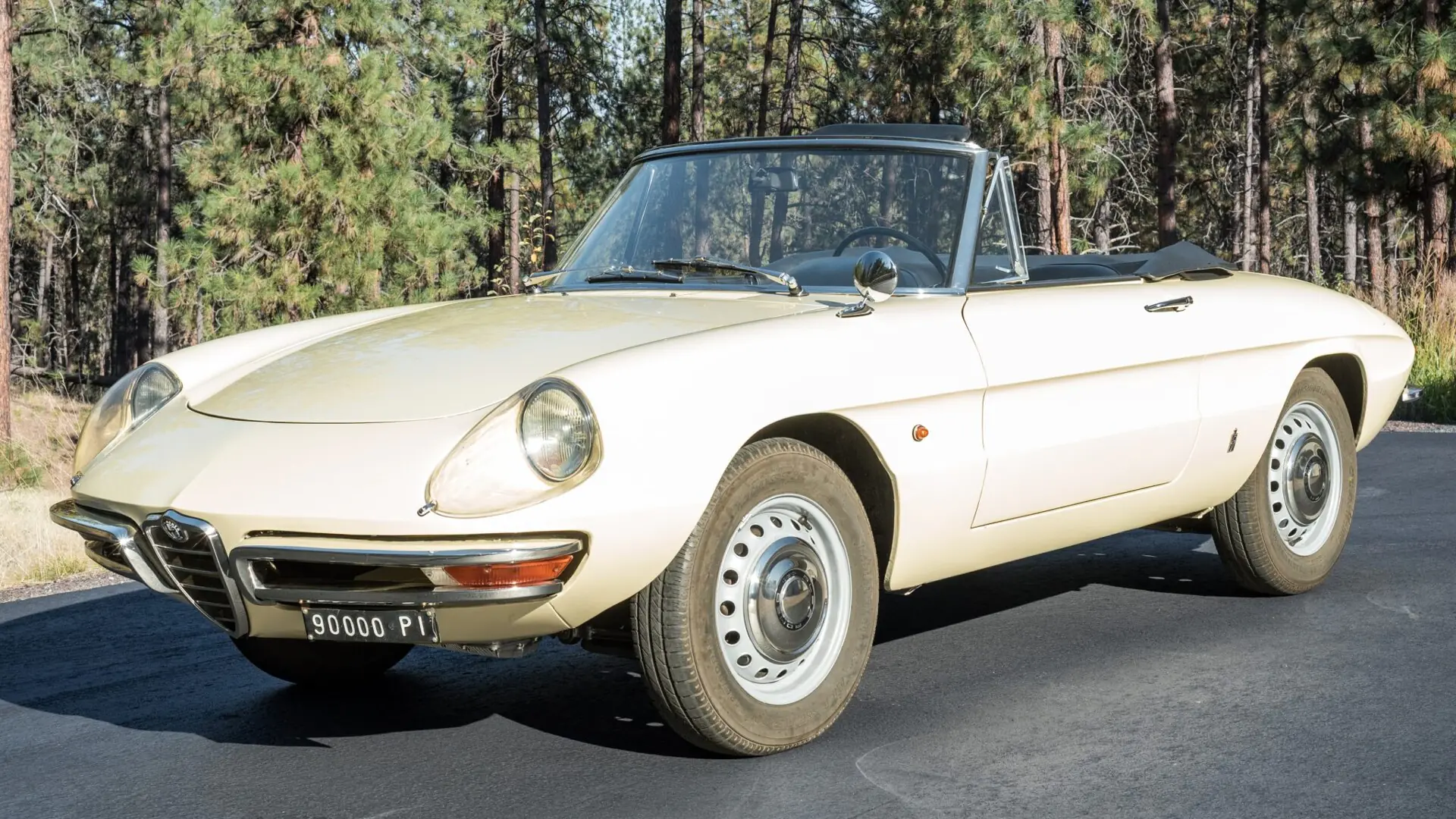
Collectors say “Duetto” and mean one car: the 1966–67 Alfa Romeo Spider 1600, the round-tailed Pininfarina roadster. Alfa Romeo never officially used the name, and the market now stretches it over cars that have not earned it. Alfa Romeo Duetto originality therefore comes down to one question: is this a true 1600, with the engine, type code and specification it left the factory with, or a later 1750 Veloce, or a 1600 that has been given a different heart?
A 1966 car offered by a seller in Spokane, Washington on Bring a Trailer puts the evidence in one place: a stamped chassis number, a data plate and a Certificato di Origine from Alfa Romeo Classiche. It also shows what that evidence does not settle. At the time of writing on October 30, the bid stood at $16,000 with the reserve not met, and the auction was scheduled to close at 11:43 a.m. Pacific.
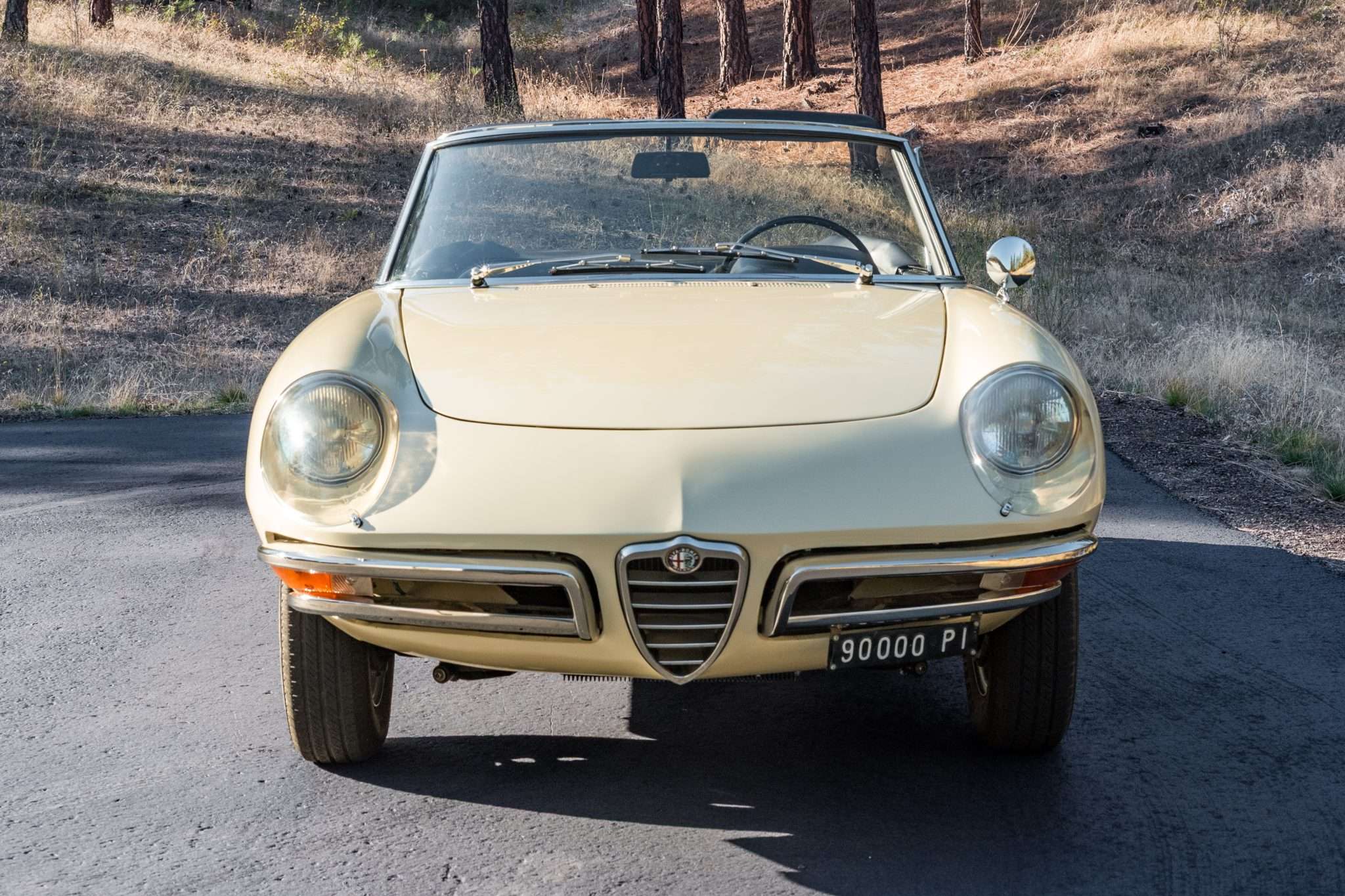
Why a Duetto has to be a 1600
The Spider debuted at the 1966 Geneva show, and Stellantis Heritage describes it as the last project Battista “Pinin” Farina led personally. Alfa ran a public naming contest that drew more than 100,000 entries, and “Duetto” won, but the confectioner Pavesi held the rights to the name, so the car went on sale simply as the Spider 1600. The nickname outlived the dispute.
That history defines the population. The Spider 1600 was built in 1966 and 1967, in a run that published sources put at 6,324 or 6,325 cars. The 1750 Spider Veloce replaced it in January 1968 with the same Series 1 round-tail body, a 1,779cc engine and a long list of mechanical revisions. A 1750 is a collectible car in its own right, but it is a different car, with its own type codes, and it is not what collectors mean by a Duetto.
Alfa Romeo Duetto originality starts with the 1600 engine
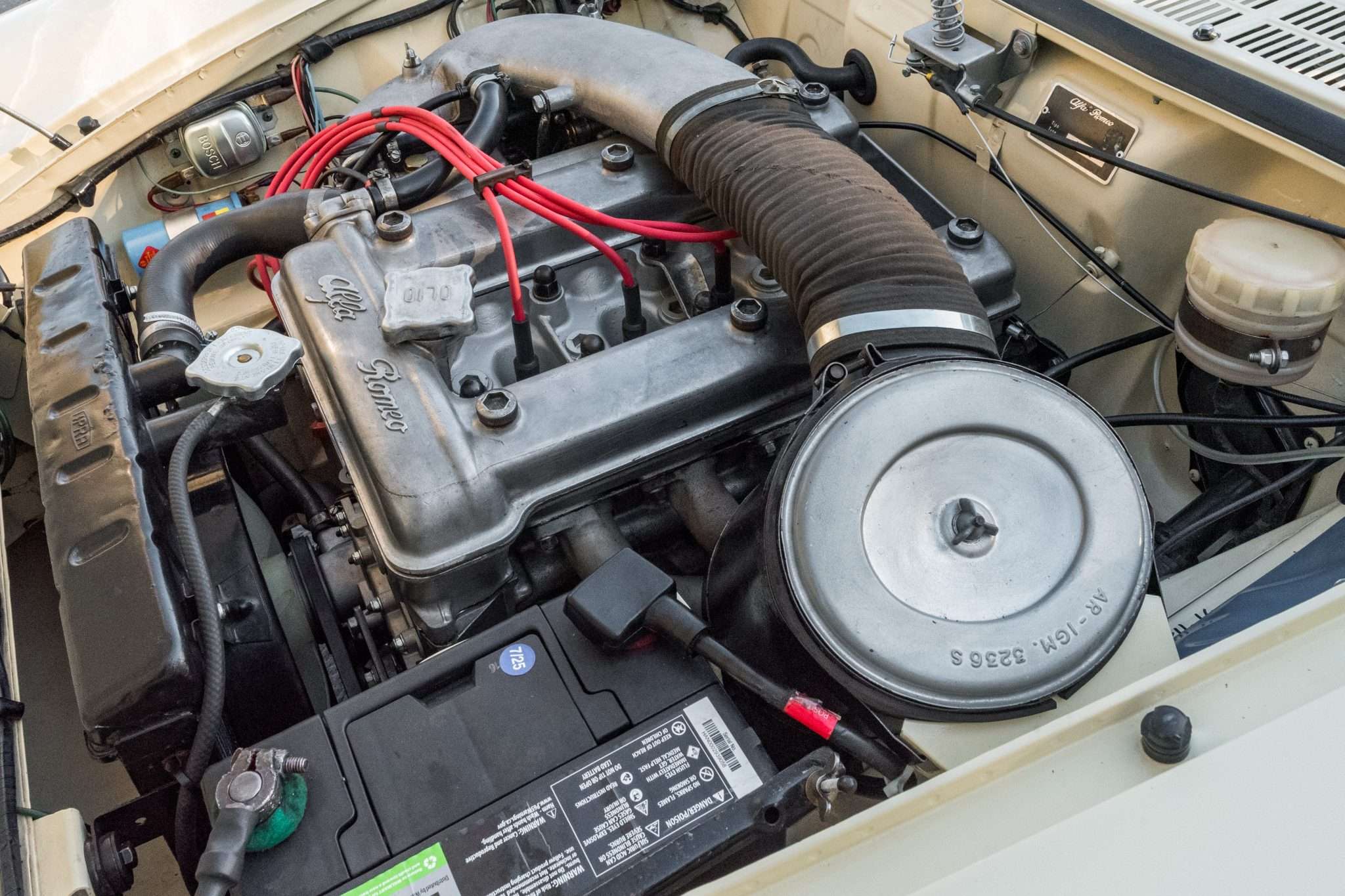
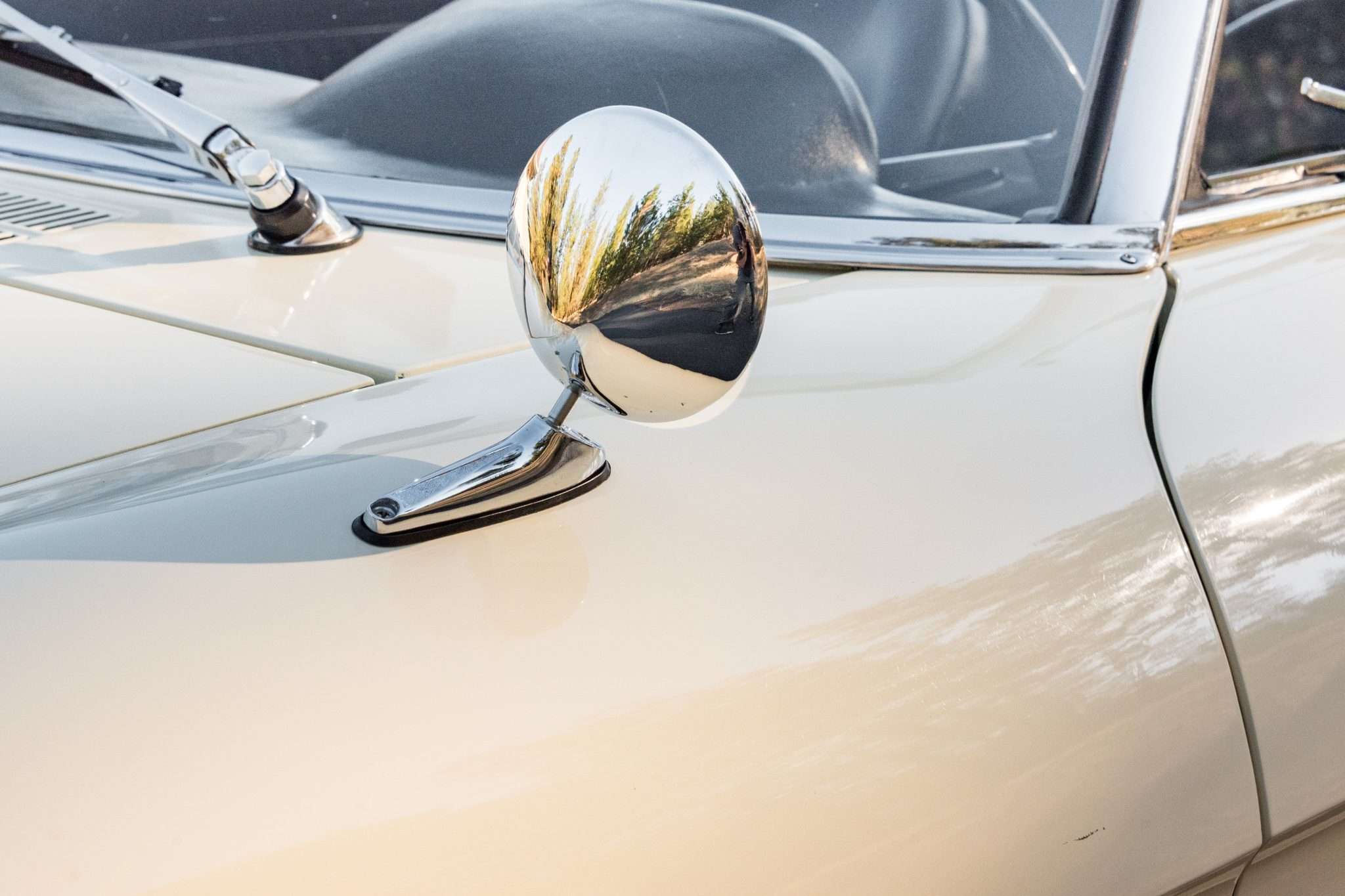
The 1600 uses a 1,570cc twin-cam four, Tipo 00536, with two Weber 40 DCOE 27 carburetors. The 1750 Veloce uses the larger Tipo 00548 at 1,779cc. The two cars also differ in ways that are easier to check on a driveway than an engine number.
| Detail | Spider 1600 (“Duetto”) | 1750 Spider Veloce |
|---|---|---|
| Introduced | Geneva, March 1966 | January 1968 |
| Engine | 1,570cc, Tipo 00536, two Weber 40 DCOE 27 | 1,779cc, Tipo 00548, two Weber 40 DCOE 32 |
| Type codes | 105.03, 105.05 | 105.57, 105.58 |
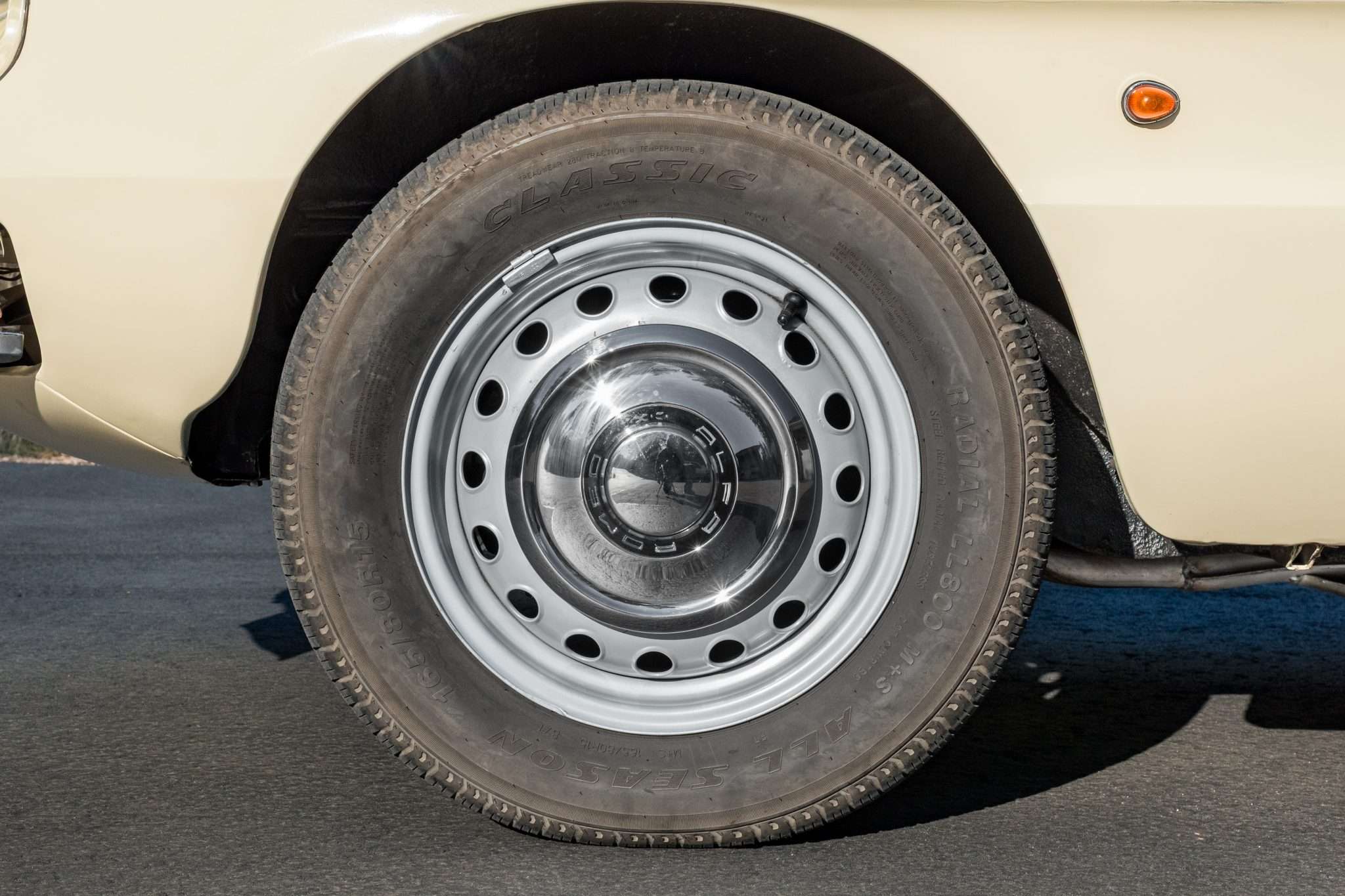
| Wheels | 15-inch | 14-inch |
| Clutch | Mechanical | Hydraulic |
| Charging | Dynamo | Bosch alternator |
| Mirror | Fender | Door |
| Rear script | No “1750” | “1750” script |
Treat wheels, mirrors, clutch and badges as supporting evidence, not proof. Several are easy to change, and a 1600 re-equipped with later parts can look right from the sidewalk. The type code, the engine and the chassis record are the harder evidence.
What the chassis number, plate and certificate prove
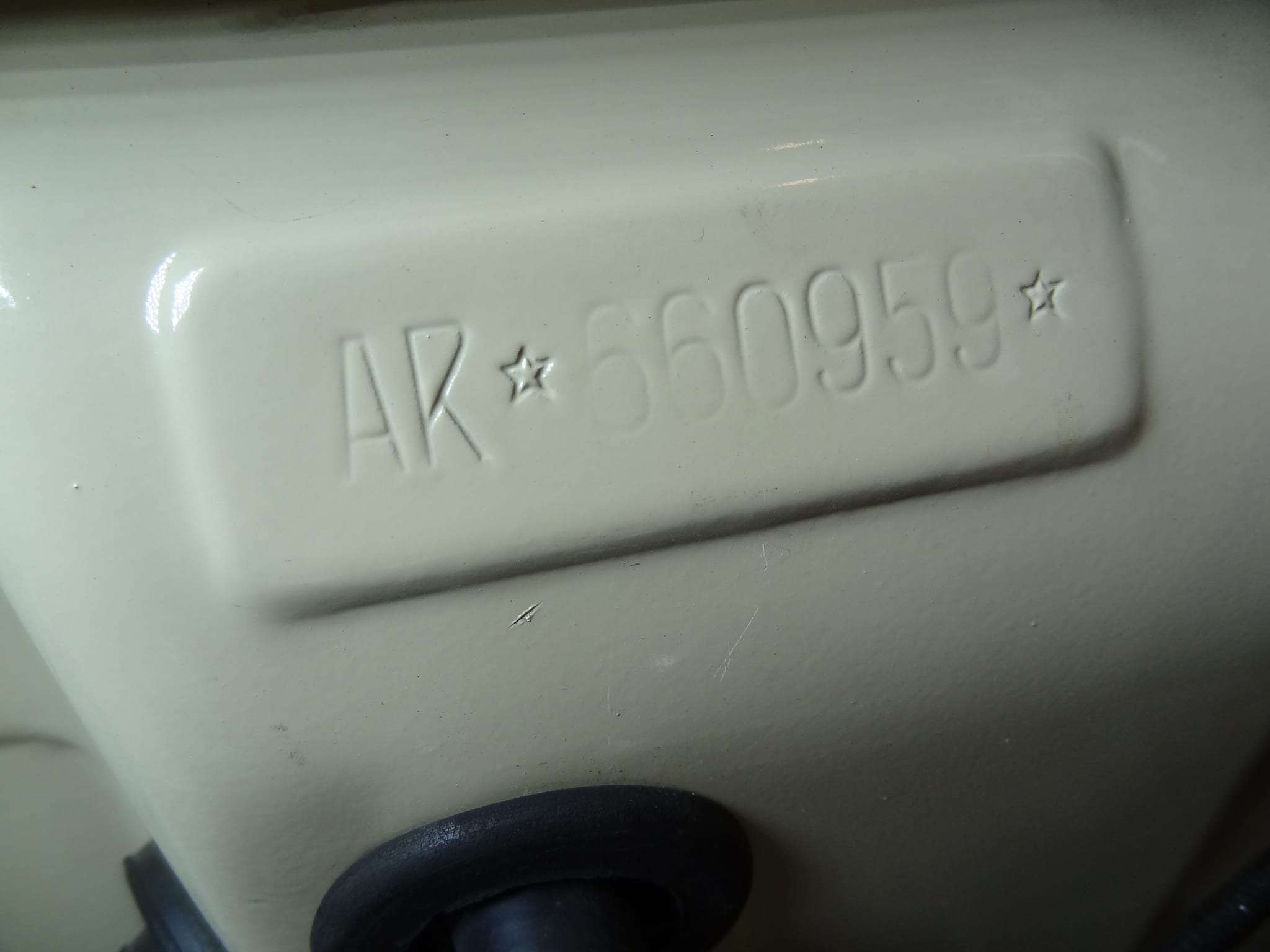
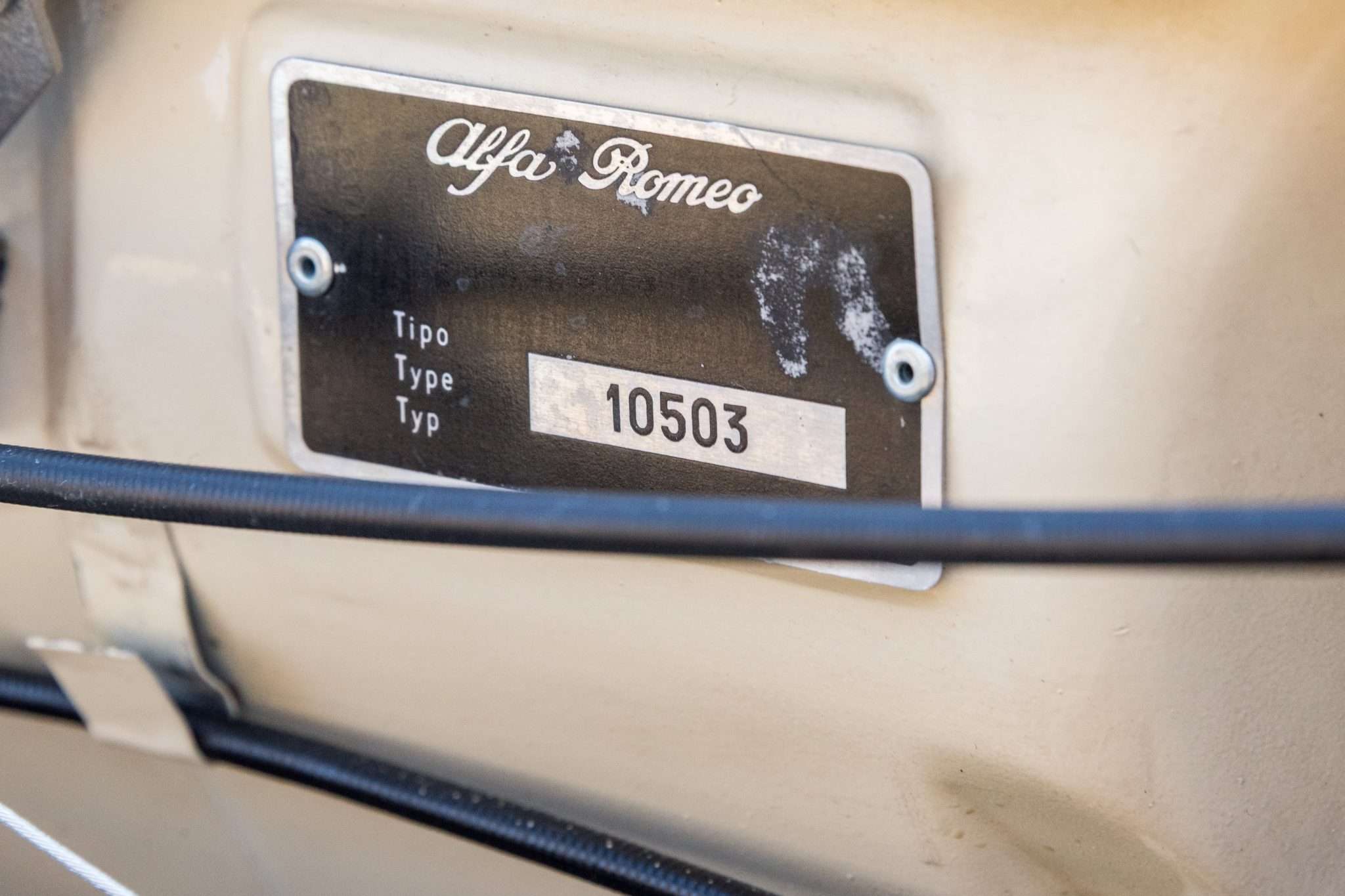
On this car the documents line up. The chassis number stamped into the body reads AR 660959. The data plate reads Tipo 10503, which corresponds to the 105.03 code that Supercar Nostalgia lists, along with 105.05, for the Spider 1600; the 1750 Veloce carries 105.57 or 105.58. The Certificato di Origine, dated at Arese on November 12, 2020, identifies chassis AR 660959 as an Alfa Romeo 1600 Spider, type code 105.03, produced June 17, 1966 and sold June 30, 1966, with a destination of Santa Croce sull’Arno, Italy, in Avorio with black Skai trim.
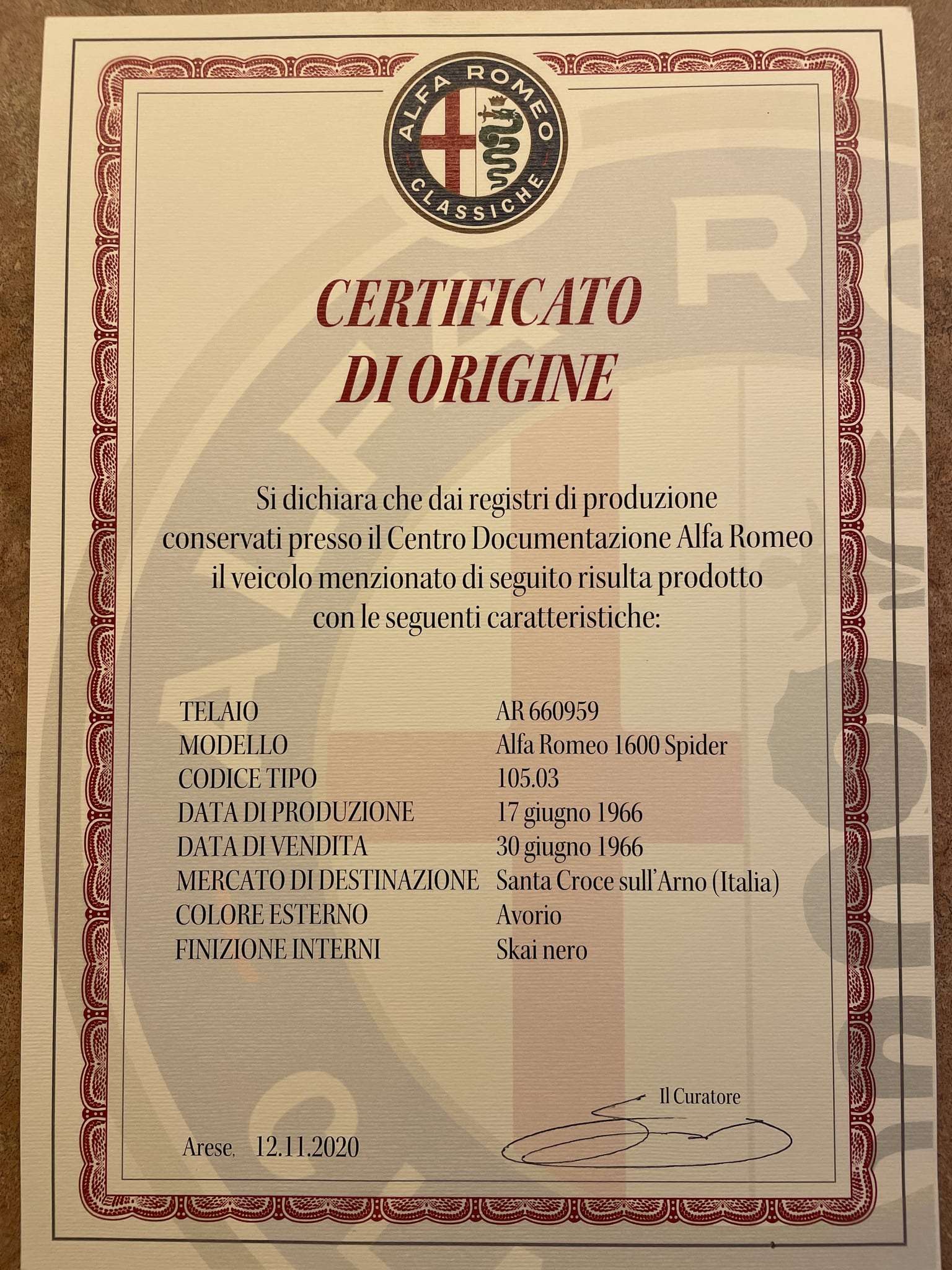
It helps to be precise about what that paper is. Alfa Romeo describes two Classiche services. A Certificate of Origin is a review of the company’s production registers: it records what a chassis number was built as. A Certificate of Authenticity adds an inspection by a specialist team that checks the car’s components and the function of its main mechanical parts against the archives. This car has the first. The certificate proves what AR 660959 left the factory as; it does not certify the car now sitting in the driveway. Our Giulia Sprint GTA originality check covers the same distinction for another Alfa where paper and metal have to agree, and the pattern will be familiar from our checks on the Series 1 E-Type Heritage Certificate and Austin-Healey 100S recreations: documents and visible tells prove nothing until they agree with the stamped metal.
One gap is visible in the photographed certificate: it lists no engine number. That leaves the engine as the open question. The seller reports a 2008 rebuild and a 2026 cylinder-head overhaul. That is good news for use, but it means the engine has been apart, so a buyer should ask for the engine number and type to be photographed and checked against the 1,570cc Tipo 00536 specification.
What the listing discloses about originality
The seller’s description is candid, which makes the car easier to judge. It was acquired in 2006 and refurbished over the next two years, with a repaint, bodywork, suspension overhaul and engine rebuild. The factory color was Ivory (AR104), and the 2008 single-stage repaint followed rust remediation that included replacement of the floors, parcel trays and center nose section. Later work includes a replacement soft top in 2018, electronic ignition and a gear-reduction starter. The wheels are powder-coated with reproduction hubcaps, and the odometer shows about 43,000 kilometers, roughly 4,000 of them added under the current owner.
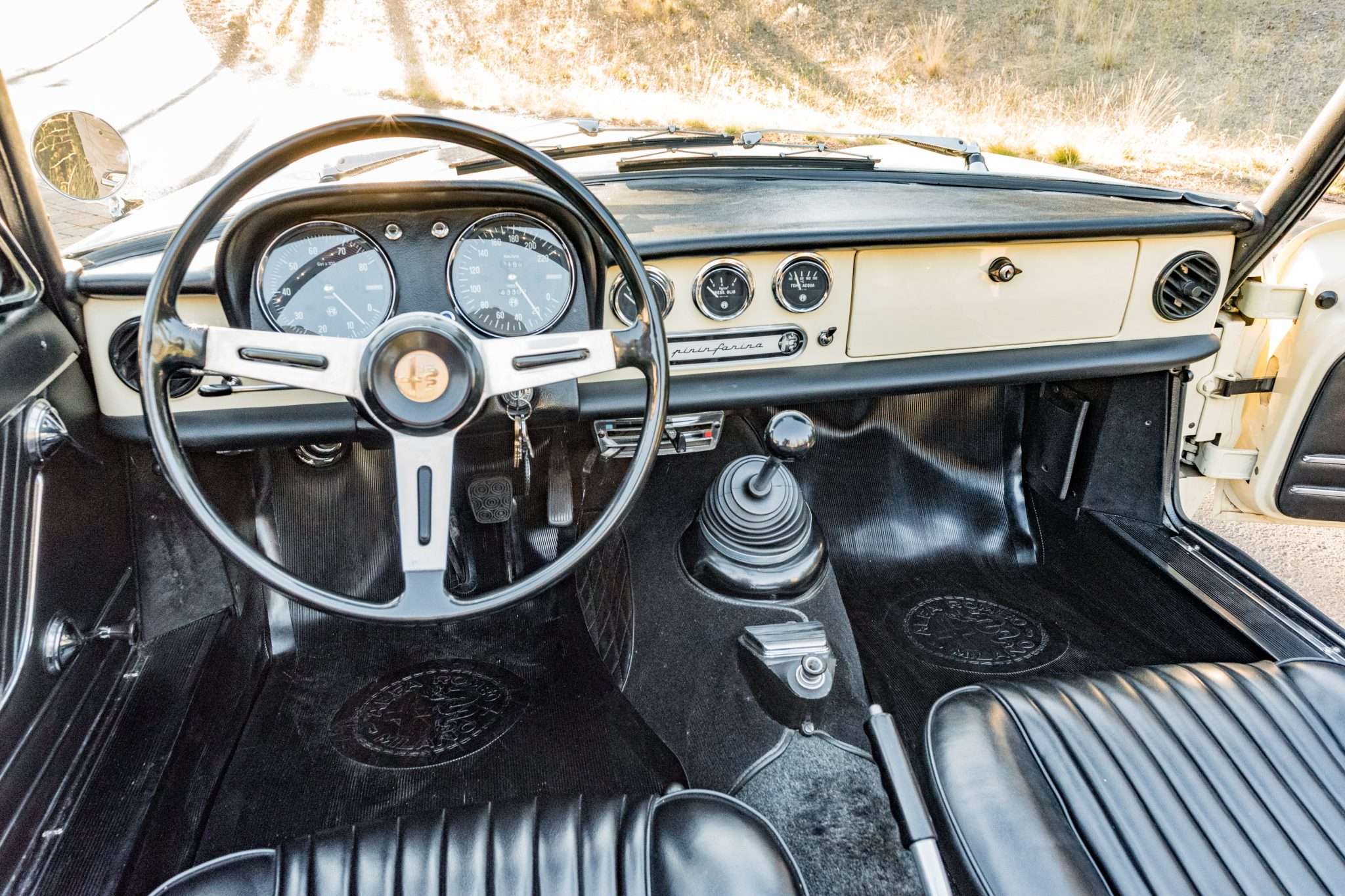
None of that is disqualifying, and the paint matches the color on the certificate. But it places the car in a specific category: a well-documented 1600 that has been refreshed, not an unrestored survivor. Collectors weigh those two categories differently, and the refurbishment photos in the listing gallery, which show the rust repairs, deserve as much study as the glamour shots.
How originality moves value
Specialist guidance has long treated the engine as a value line. Sports Car Market’s Duetto profile, written in 1999 and therefore dated on prices, noted that fitting a later 1750cc engine makes the car slightly easier to drive but reduces its collectible value, and it stressed that the 1750 Spider Veloce is a separate model with nearly identical bodywork. Rust-free, properly built cars were the baseline.
Current data is thin. On Classic.com, the Series 1 sales visible between May and September 2026 included a handful of 1600-labeled results ranging from roughly $2,700 to $51,500. A spread that wide says condition, rust history and documentation dominate the price, and the badge alone is worth little. It is a small sample, and we draw no trend from it.
Common misrepresentations
Four claims deserve scrutiny. The first is the word Duetto itself, which listings routinely stretch to cover 1750 cars; one database record we found pairs a 1967 “Spider 1600 Duetto” with 1750cc. The second is a 1600 whose engine has been replaced with a 1750, the swap Sports Car Market flagged decades ago. The third is paper presented as proof of the whole car: a Certificate of Origin confirms a chassis record, not the engine, paint or condition today. The fourth is a refurbishment described as original. A 2008 repaint in the factory color is correct to the record, but it is not original paint.
What buyers should verify before purchase
- Match the stamped chassis number, the data plate and the certificate. On this car they read AR 660959, Tipo 10503 and 105.03. A 1600 should show 105.03 or 105.05; 105.57 or 105.58 points to a 1750.
- Get the engine number and type photographed. Confirm it is a 1,570cc Tipo 00536, and ask whether it is the engine the car left the factory with. The certificate here does not say.
- Ask what level of Classiche documentation exists. A Certificate of Origin is a records check; a Certificate of Authenticity involves a physical inspection.
- Check the supporting tells: 15-inch wheels, a fender-mounted mirror, a mechanical rather than hydraulic clutch, a dynamo rather than a Bosch alternator, and no “1750” script on the tail. Ask about anything that does not match.
- Compare color and trim with the record. This certificate says Avorio over Skai nero, which matches the seller’s Ivory and black vinyl, but the paint dates from 2008.
- Inspect the rust-prone areas Sports Car Market names (rear fender arches, rocker panels, floor pan and rear trailing-arm mounts) and ask for photos and invoices for any panels replaced, as this seller’s gallery supplies.
What we could not verify
We could not confirm this car’s engine number, because it does not appear on the certificate and we did not find it in the listing’s photographs. Published production totals for the Spider 1600 differ by one car between sources. We did not retrieve a current Hagerty valuation for the model, and the sales data cited above is a partial sample. The auction had not closed when this was written.
Sources
- Alfa Romeo Classiche heritage program, Stellantis Media
- Alfa Romeo 1600 Spider “Duetto,” Stellantis Heritage
- Alfa Romeo Tipo 105 Spider Series 1 guide, Supercar Nostalgia
- Alfa Romeo Spider, Wikipedia
- 1750 Veloce notes, AROC 105 Register
- Alfa Romeo Duetto profile, Sports Car Market (1999)
- Series 1 Spider market, Classic.com
- 1966 Alfa Romeo 1600 Spider Duetto listing, Bring a Trailer
The collector car market, every weekday morning.
Auction results, price moves and what’s crossing the block, read in four minutes. Free, from Modern Car Collector.
No spam, unsubscribe in one click. Or read more about the Brief.
 Eve Nowell
 Kyle Matthews