

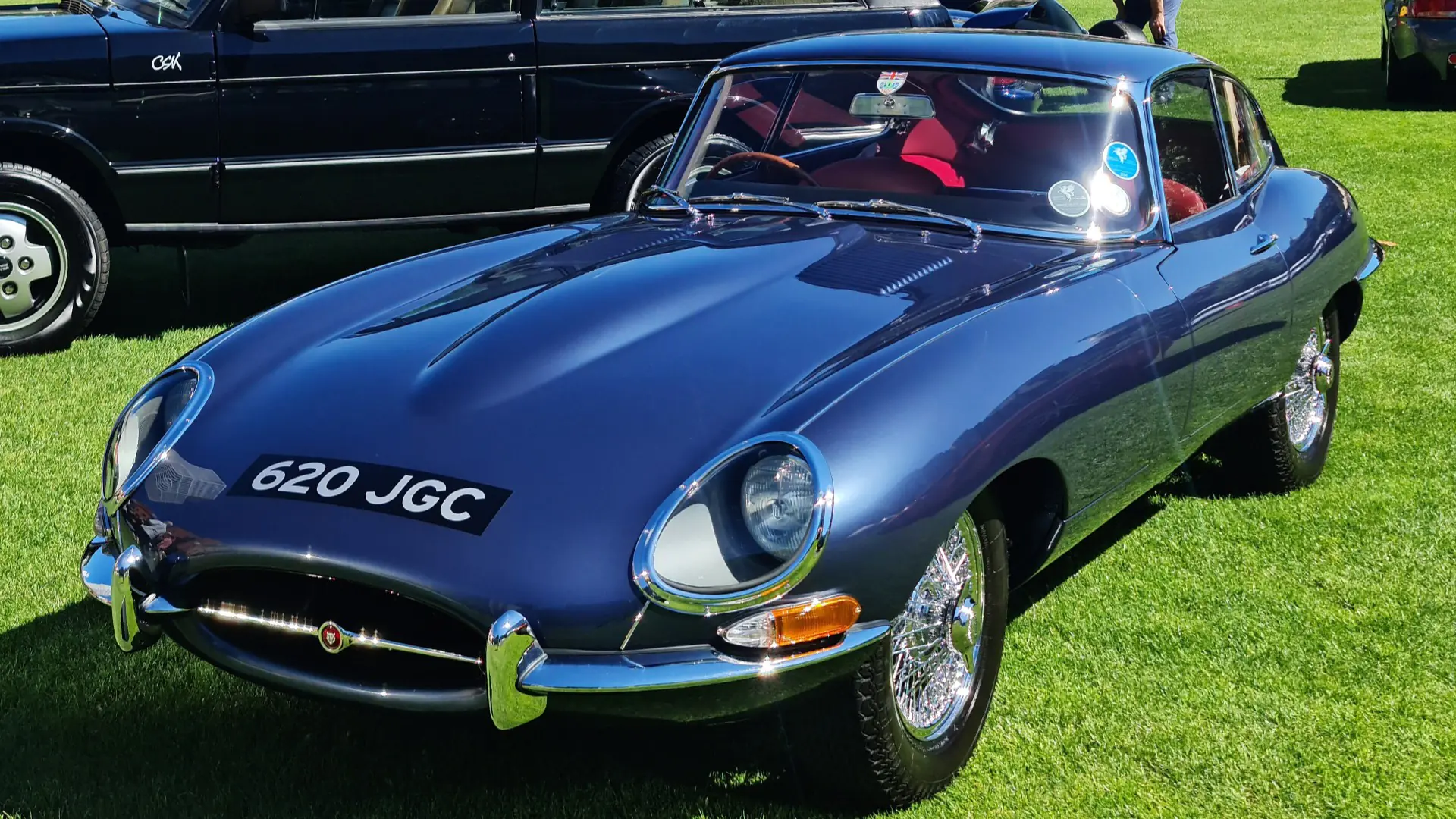
Every Series 1 Jaguar E-Type carries a builder’s plate with four numbers on it: car, engine, body and gearbox. The plate tells a buyer what the car claims to be. The Heritage Certificate issued by the Jaguar Daimler Heritage Trust (JDHT) says what left Browns Lane. On a 3.8-litre car, Jaguar E-Type matching numbers come down to one question: do the engine, body and gearbox in the car agree with the factory record? Where they do, the car can be sold on its originality. Where they do not, it has to be sold on condition and price alone.
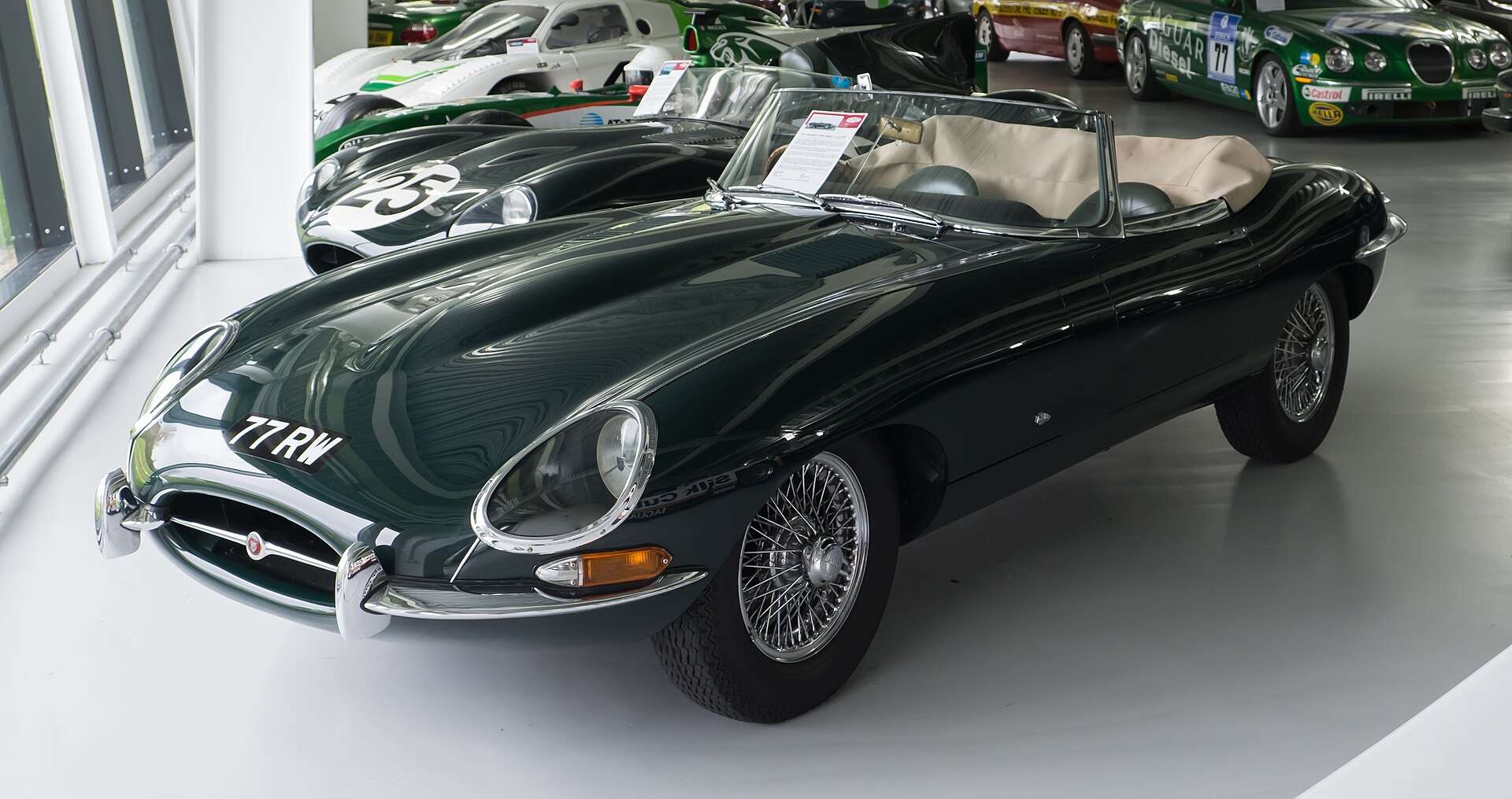
What Jaguar E-Type matching numbers actually prove
The distinction matters because the two documents answer different questions. The plate is the most reliable source on the car itself, according to the XKE Data E-Type reference site, but it is still a metal tag. It can be replaced, restamped or simply wrong, and owners report plates whose body or gearbox numbers disagree with factory records. The certificate is the factory’s own record. It lists the chassis, engine, body and gearbox numbers, plus transmission, exterior, interior and hood colours, original distributor and dealer, date of despatch, first owner and registration mark. It also shows whether a car was converted from left- to right-hand drive and whether its engine and gearbox are original, according to Classic Car Hub.
Neither document authenticates the car in front of you. Both describe the car as built. The buyer’s job is to tie the numbers physically stamped on the car to them. The same principle runs through MCC’s work on the Porsche 911 engine number, the 300 SL data card and C2 Corvette matching numbers. The Jaguar adds a wrinkle: it has a body number as well as an engine number, and it is the one most often overlooked.
A worked example: engine R 1255-9, body R 1251
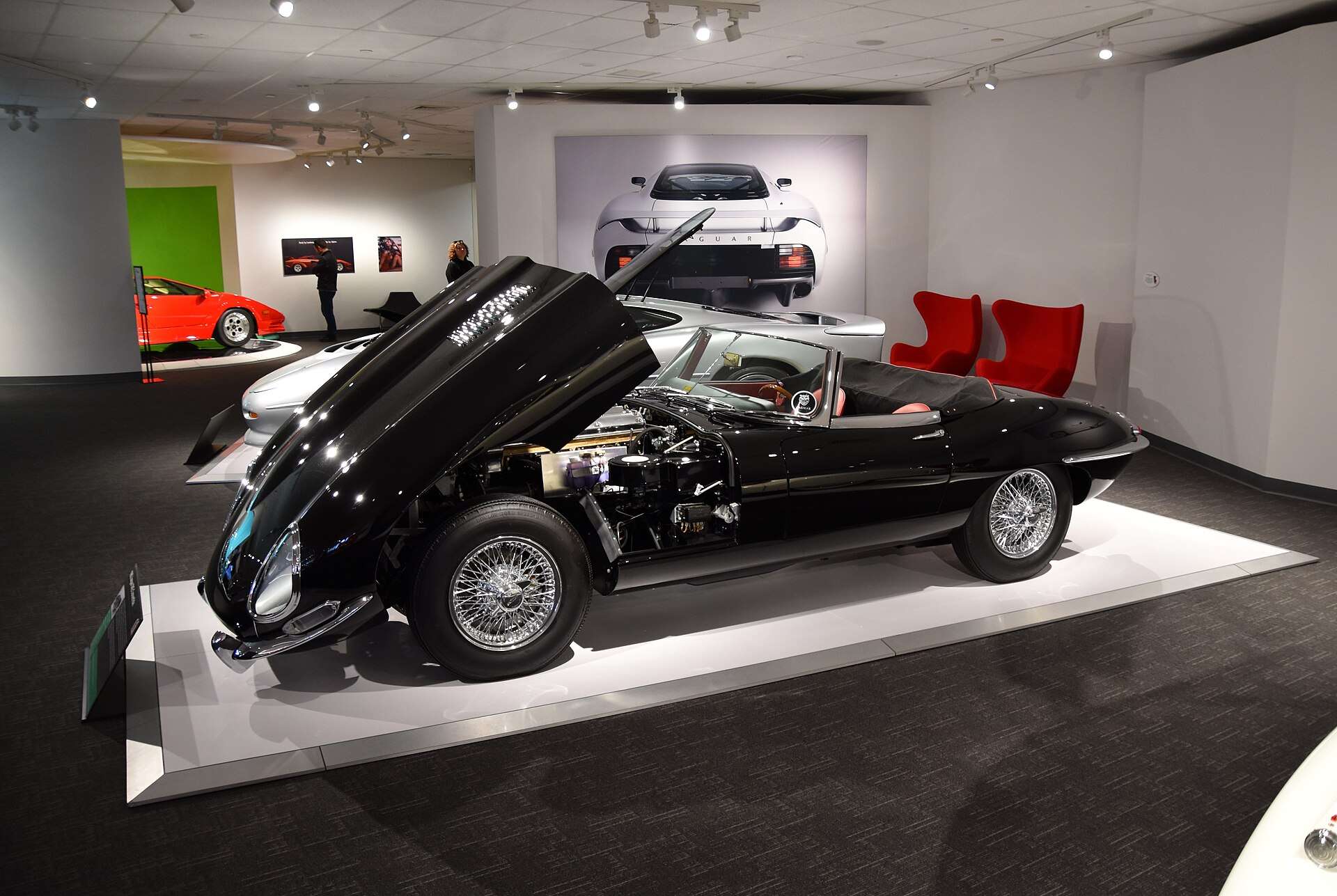
The verified facts. A 1961 Series 1 3.8-litre roadster offered by RM Sotheby’s at Monterey in 2025 carried engine number R 1255-9 and body number R 1251. RM’s catalog says the engine block and bodywork match according to inspection and JDHT records. The JDHT certificate records completion at Browns Lane on 30 June 1961 and shipment to the United States on 26 July 1961 through Jaguar Cars of New York. RM lists the car as sold at US$324,000. The catalog also says the car’s original colour was Opalescent Dark Blue over red leather, and that it is now black over red. It describes a complete restoration but gives no detail of the work, and says early history is unknown.
The interpretation. Two things are worth noting. First, the engine and body numbers sit four digits apart, which is consistent with the factory building them in rough step, though owners report drift of a few hundred on other cars. Second, a repaint does not break matching numbers. It does change the story. The certificate lets a buyer separate what is original (the drivetrain and body) from what a previous owner chose (the colour), and price that difference deliberately instead of discovering it at resale.
Why it moves value
Published figures on the premium are scarce. Classic Car Hub says only that matching-numbers cars carry a meaningful premium over cars with replacement engines or gearboxes, and MCC will not invent a percentage. The logic is clear enough. On a Series 1 the engine, body and gearbox are the components a marque specialist will ask about first. A car whose set agrees with the certificate can be documented once and sold on that document. A car whose set does not will be discounted by this buyer and by every buyer after. The most valuable number on a Series 1 E-Type is the one that appears twice, once on the car and once on the certificate.
What buyers should verify before purchase
- Get the certificate for this chassis number. Inspect the original or order one from JDHT, then confirm the chassis, engine, body and gearbox numbers and the date of manufacture.
- Read the builder’s plate. Photograph all four numbers and compare each one to the certificate.
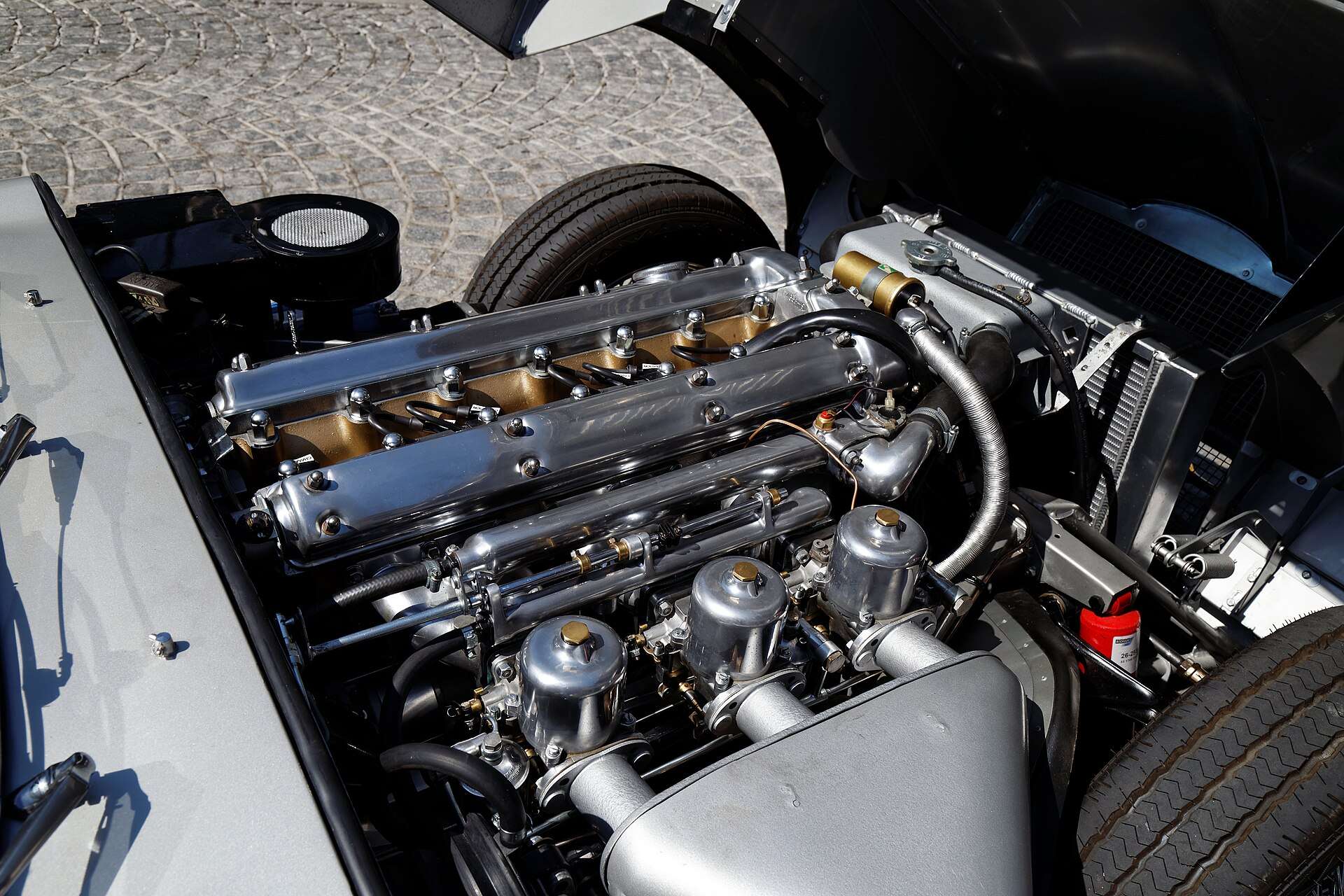
- Check the stamps on the car. The car number is stamped on the engine “picture frame” next to the right front wheel. On older engines the engine number is stamped on the block above the oil filter housing. Both should agree with the plate and the certificate.
- Find the body number. Owners report it on a tag riveted to the body behind the rear licence plate, or, on earlier fixed-head coupes, riveted inside on the vertical member on the fuel tank side. Published sources are less clear on where the gearbox number is stamped, so ask a marque specialist to locate and record it.
- Test the chassis number against the build. Series 1 3.8-litre cars run 850001 to 850943 for right-hand-drive roadsters, 860001 to 861799 for right-hand-drive coupes, 875001 to 881887 for left-hand-drive roadsters and 885001 to 890873 for left-hand-drive coupes. A number that contradicts the body style, or a certificate noting a drive-side conversion, changes the car’s story.
- Allow for factory drift, not for disagreement. Owners report engine and gearbox numbers out of sequence by up to a few hundred and body numbers by about 100. That is normal. A number that contradicts the certificate is not.
- Compare colours. Check exterior, interior and hood colour against the certificate. Ask for photographs of any repaint and use a magnet to check for filler.
- Ignore the title numbers. Titles can add letters or prefixes, or carry the wrong number, so they prove nothing on their own.
- Demand records for any “restored” claim. A restoration without documentation needs closer scrutiny. Early-production details that RM’s catalog lists, such as outside bonnet latches, flat floors and welded bonnet louvres, should agree with the manufacture date on the certificate.
The certificate is the yardstick, not the verdict. The same caveat applies to any factory document. See MCC’s coverage of the Ferrari Classiche program and its guide to reading a collector car’s documentation. A certificate describes the car as built and says nothing about the half-century since. A buyer who has done the nine checks above knows which parts of the car are the factory’s and which are someone else’s. Related reading: what “matching numbers” really means and restoration versus preservation.
Sources: RM Sotheby’s, 1961 Jaguar E-Type Series 1 3.8-Litre Roadster; XKE Data, E-Type car numbers; Classic Car Hub, Jaguar E-Type buyer’s guide; sample JDHT Heritage Certificate, Series 1 3.8-litre.
The collector car market, every weekday morning.
Auction results, price moves and what’s crossing the block, read in four minutes. Free, from Modern Car Collector.
No spam, unsubscribe in one click. Or read more about the Brief.
Related Posts:
- On a Jaguar E-Type, the Heritage Certificate Tells…
- Record Ferraris, Rare Icons and 15,000 RPM: The Week…

- The Collector Car Market Paid Up for Certainty This…
- On a 1970 Datsun 240Z, the Number Plates and Hatch…
- A 22,874 km Lamborghini Diablo VT Roadster Is…
- On an Early 911, the Certificate Proves the Spec.…
 Eve Nowell