

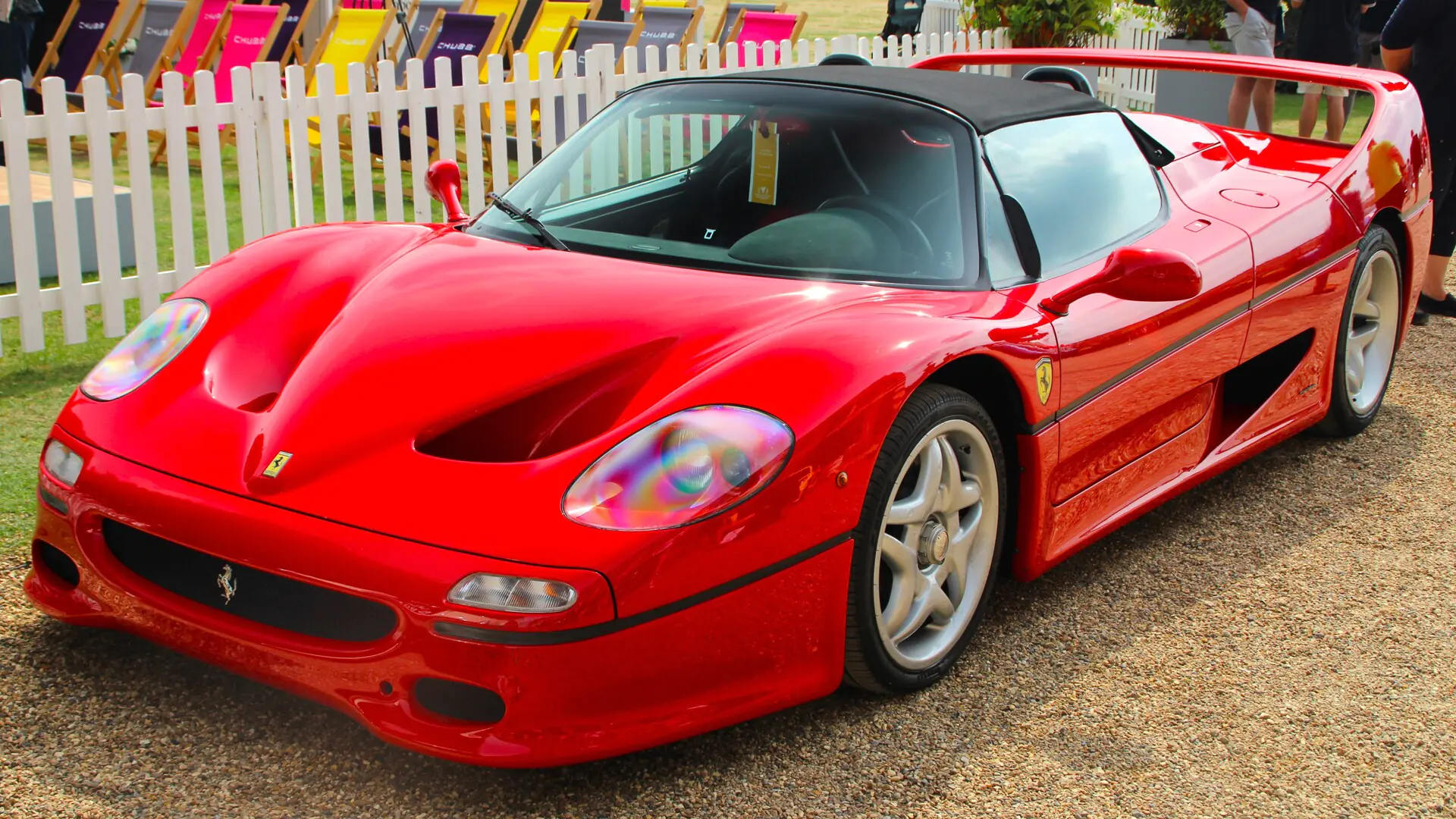
Collectors have spent two years arguing about what the Ferrari F50 is worth. On October 31 at Wynn Las Vegas, a 1997 car with 106 miles on its odometer gave the clearest answer yet, and the answer came with a footnote. Chassis 107165 sold for $18,705,000 including buyer’s premium, more than $4 million above the previous public-auction record for the model. It also sold below its pre-sale estimate of “in excess of $20,000,000.”
That combination is the story. The record is real. So is the ceiling.
Not a better F50. A different object.
The previous benchmark was the $14.575 million paid for a Giallo Modena car at Mecum Monterey in August, a result we examined at the time. That car was rare for its color and had been driven, which is to say it had been used the way the factory intended. The Las Vegas car is a different category of asset. Its odometer reads 106 miles. It retains its original Rosso Corsa paint over Nero leather with Rosso inserts, and it still carries the factory removable hardtop and its flight case, the driving shoes, the Schedoni luggage set, the tool roll and the covers it left Maranello with.
Broad Arrow’s Alexander Weaver called it “certainly the lowest mileage example of an end-of-an-era supercar.” The qualifier that matters is “end-of-an-era.” The F50 was the last Ferrari flagship of its kind: a 4.7-liter V12 descended from the company’s 1990 Formula 1 engine, bolted directly to a carbon-fiber tub as a stressed member, with a six-speed gated manual and no driver aids to speak of. Ferrari built 349 of them. This one was the 334th, delivered through Maranello Sales Ltd in Egham, Surrey, one of roughly 25 cars that went new to the United Kingdom.
We made the argument before the sale that a car like this does not compete with other F50s. The result supports it. Roughly 28 percent separates this sale from the Monterey record, a gap that cannot be explained by chassis number, color or even condition in the ordinary sense. Collectors paid for something no amount of money can manufacture afterward: the fact that nobody drove it.
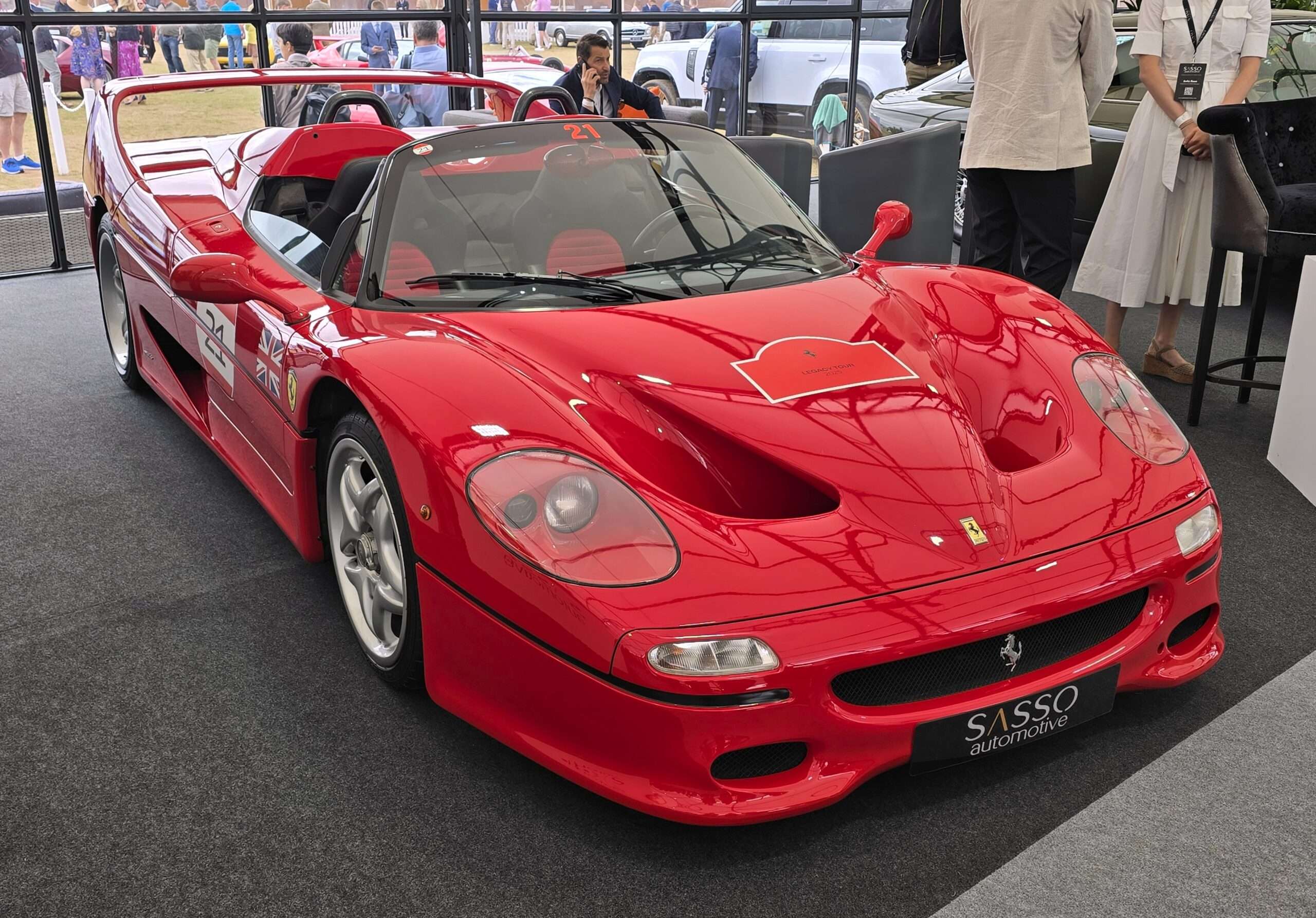
Why the miss on the estimate matters
Auction estimates are an opinion, and this one was ambitious. Falling short of $20 million on a record-setting lot is not a failure, but it is information. Preservation commands a premium, and the premium has a limit. Buyers in the room were willing to pay a multiple of what a well-kept F50 brought a few years ago. They were not willing to treat a number a consignor hoped for as a number the market owed.
That discipline is healthy. We have already examined how quickly F50 values have moved. One extraordinary car does not reprice a model. It does, however, establish how far the top of the range can stretch when originality, documentation and mileage all point the same direction.
The F50 and the SP3 landed in the same place
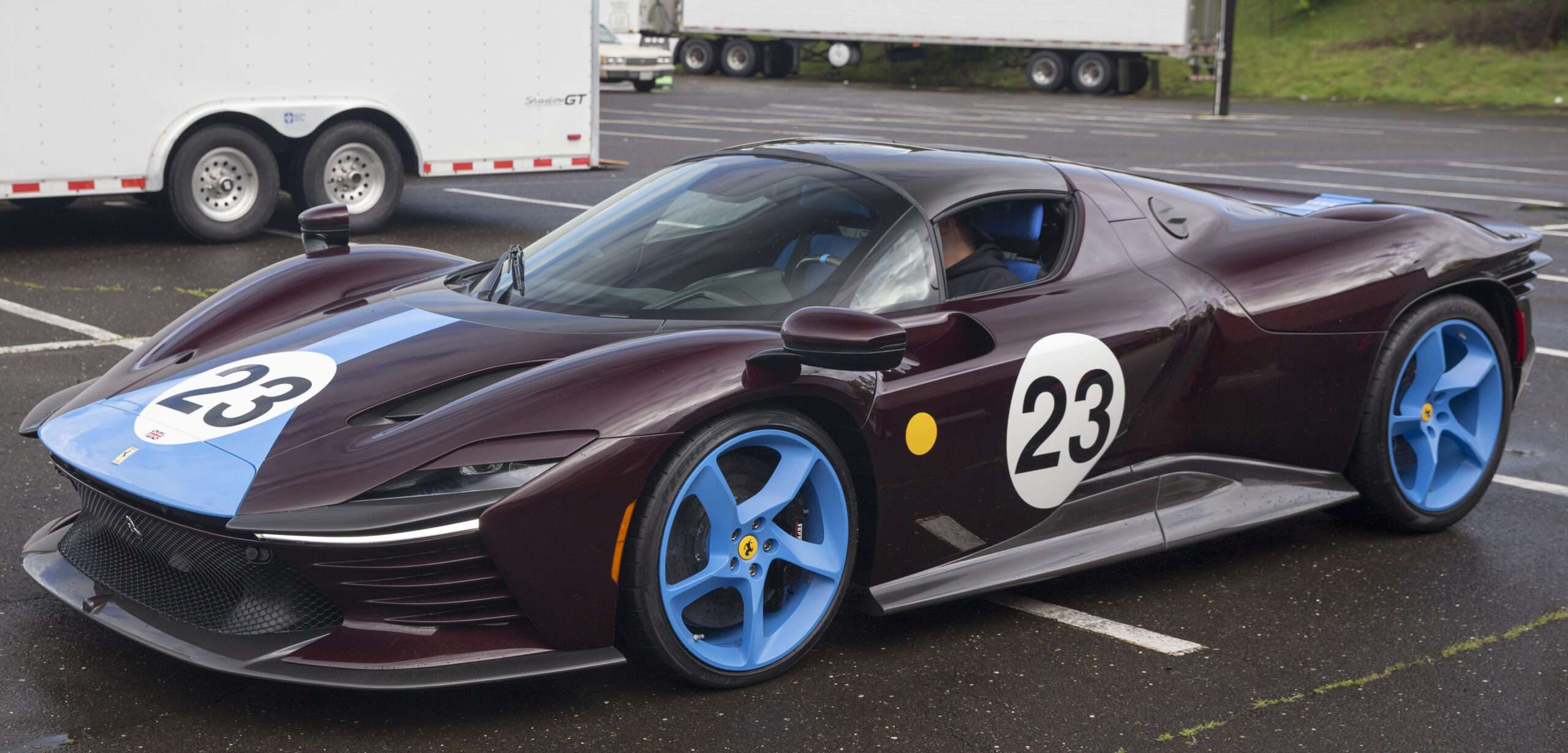
The sale’s second-highest result is the detail experienced buyers will remember. A 2025 Ferrari Daytona SP3, one of 599 Icona cars, sold for $18,540,000, a non-charity record for the model and only $165,000 below the F50. A 29-year-old car and a 1-year-old car cleared within one percent of each other.
They are not competing for the same reasons. The SP3 is priced on access: Ferrari decides who is invited to buy one, and a secondary-market premium reflects a buyer who would rather skip the line. The F50 is priced on finality: the car cannot be made again, and this specific example cannot be made again either. Two different scarcities arrived at nearly the same figure in the same sale, which suggests the top of the market is pricing the impossibility of acquiring a thing, not the thing itself.
What the rest of the room says
Broad Arrow reports $92.8 million in total sales, the highest-grossing collector car auction ever held in Las Vegas, with 64 of 84 lots sold, a 76 percent sell-through. Registered bidders rose 63 percent over last year, and 35 percent were new to the house. At least ten world records fell, including a Lanzante-built McLaren P1 GTR at $3.415 million.
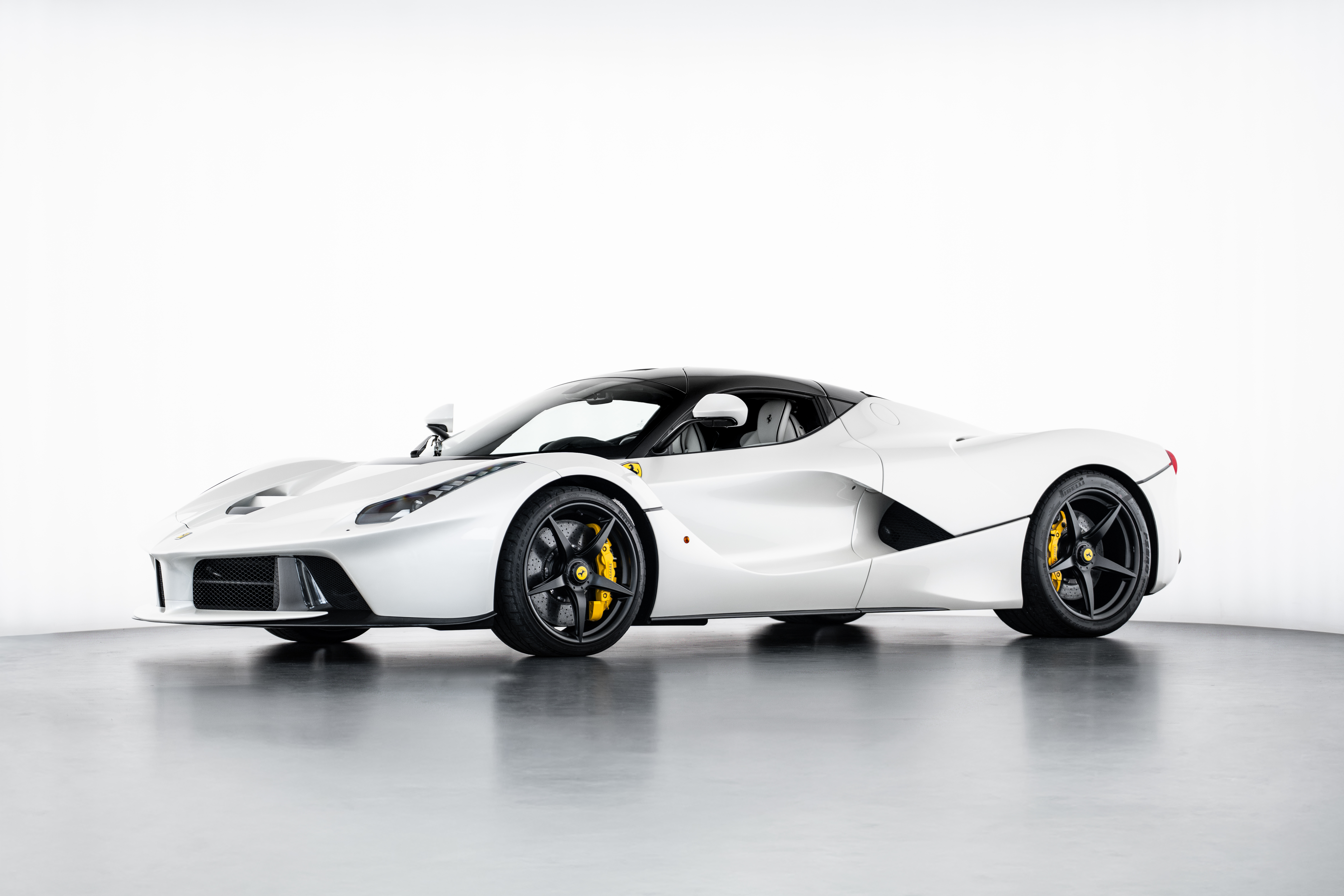
Behind the two headline cars, the modern Ferrari halo ladder was orderly. A 2014 LaFerrari brought $8.805 million and a 2003 Enzo $6.55 million, with a 2023 Bugatti Chiron Super Sport, one of 80, at $4.57 million. That spacing is worth studying. It suggests buyers are separating cars by what is original and unrepeatable rather than lumping every halo car into one trade, a question we also raised around a low-mileage LaFerrari headed to Zürich.
For a wider read on the week, see our Collector Car Market Brief.
What serious buyers should take from it
Mileage is the one specification that can only ever move in one direction. Every other attribute of a collector car, from paint to documentation, can in theory be restored, corrected or reassembled. Zero-use cannot. That is why a handful of cars each cycle trade in a category of their own, and why the existence of a record does not tell you what a good, driven F50 is worth tomorrow.
The practical lesson is narrower and more useful. Verify the story behind the odometer: delivery documents, service history, and evidence that the car has been kept and, where necessary, maintained correctly while stored. Understand that a record sets the ceiling for the best example, not the floor for the rest. And treat the estimate, as the room did, as an opening position.
The headline price will be quoted for years. The better lesson is that in today’s market, the most valuable thing a collector can own is a car that no one else can ever replicate.
Figures are from Broad Arrow Auctions’ post-sale reporting for The Las Vegas Auction, October 31, 2026, and include buyer’s premium. The prior record references the Mecum Monterey 2026 result.
The collector car market, every weekday morning.
Auction results, price moves and what’s crossing the block, read in four minutes. Free, from Modern Car Collector.
No spam, unsubscribe in one click. Or read more about the Brief.
Related Posts:
- A Ferrari F50 With 106 Miles Isn’t Competing With Other F50s

- Three LaFerraris, Three Rooms, and the Estimate That…
- The Collector Car Market Paid Up for Certainty This…

- Collector Car Market Brief: A $6–7 Million Miura SV,…
- A €5.2M LaFerrari, a Valkyrie With a Haircut, and…
- A €5.2M LaFerrari, a Valkyrie With a Haircut, and…
 Eve Nowell