
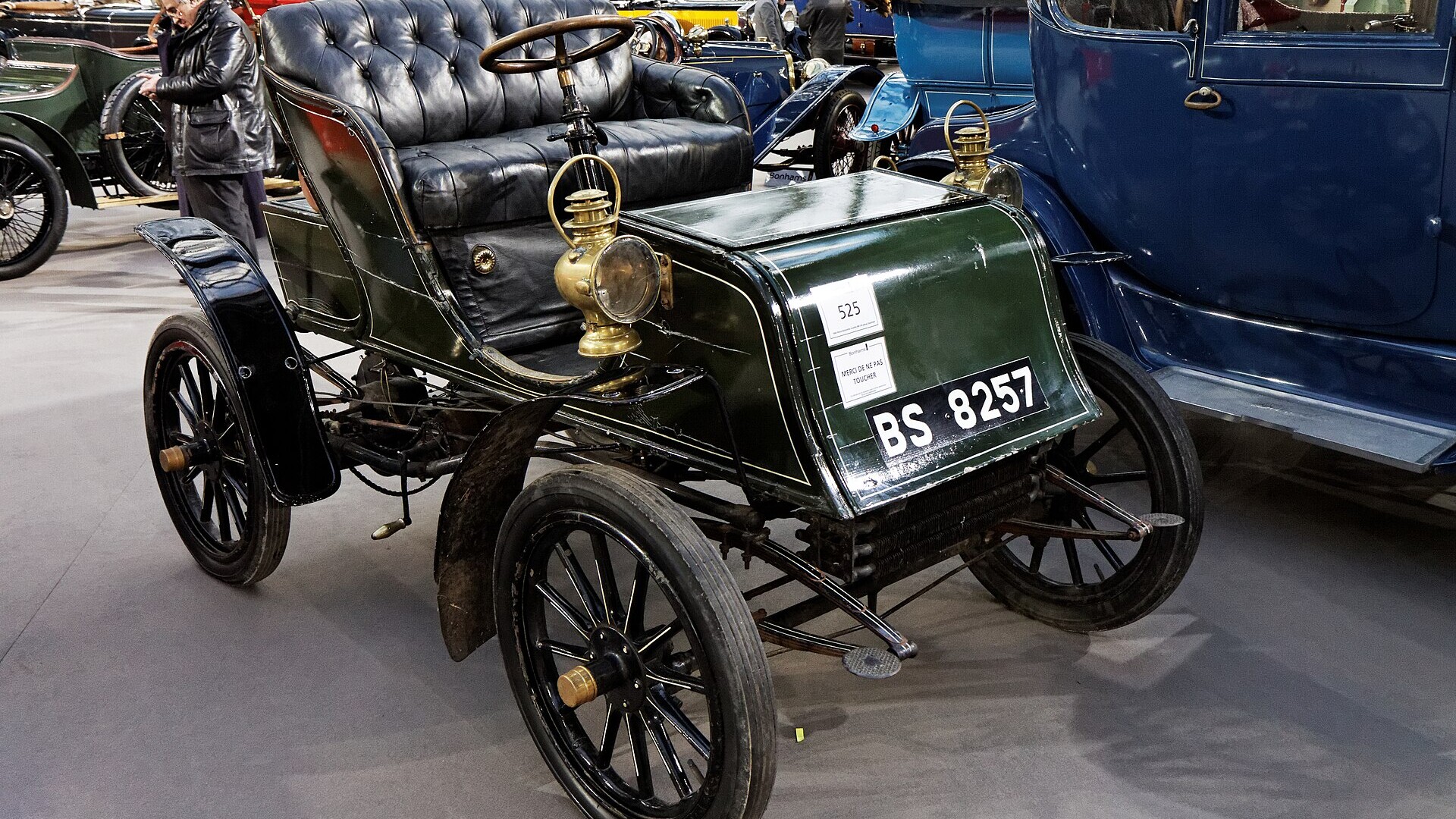
Collectors who know Pierce through the big, silent Twelves, like the car behind the 1932 Pierce-Arrow Twelve’s Bonneville record run, rarely start where the company did: with a one-cylinder runabout of about three horsepower. That story has a date. On Nov. 24, 1900, the George N. Pierce Company of Buffalo, New York, a firm better known for bicycles and household hardware, test-drove its first gasoline-powered car through the city’s streets.
A Steam Car That Failed, and a De Dion Engine That Did Not
According to RM Sotheby’s account of the company’s history, Pierce’s first attempt was a steam car, and it failed. The firm then turned to a gasoline engine modeled on the French De Dion-Bouton single-cylinder. Business history accounts and Hagerty both place the first road test of that modified De Dion-powered car on Nov. 24, 1900.
The engineering matured quickly. Pierce hired an English engineer, David Fergusson, in early 1901, and the production Motorette followed in late 1901. Roughly 170 were built between 1901 and 1903. Two Pierce cars were shown at the 1901 Pan-American Exposition in Buffalo, which gave the young product a hometown audience.
Why a Three-Horsepower Runabout Matters
The thesis for collectors is simple: the Motorette is the root of one of America’s great luxury marques, and almost none of it survives. The company adopted the Pierce-Arrow name only in 1909, and the large, quiet cars that built its reputation came after this humble start.
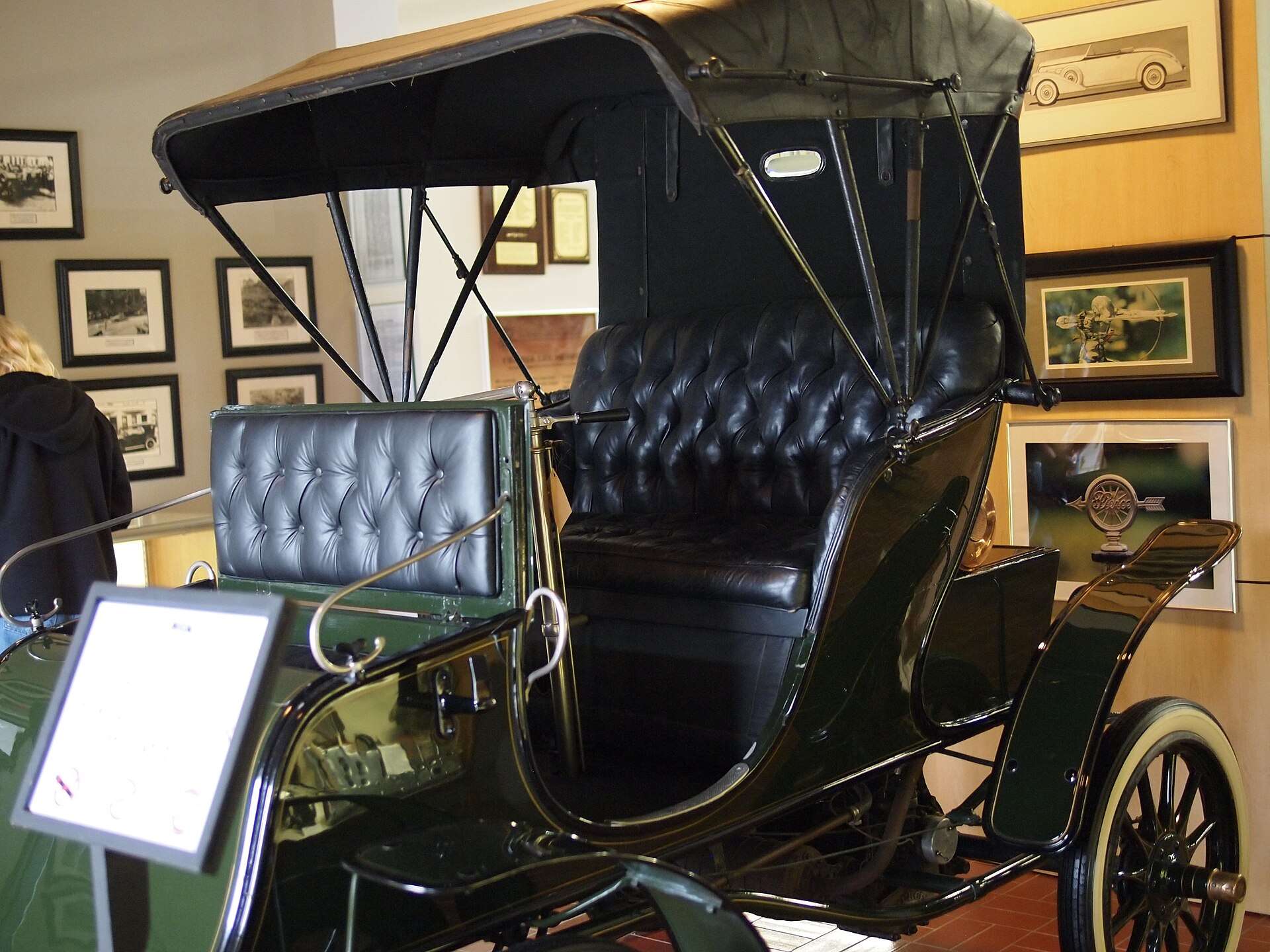
Survival rates tell the story. RM Sotheby’s describes a 1902 Motorette offered from the James G. Robinson Collection as one of just four known survivors, with an estimate of $60,000 to $80,000 and no reserve. A 1904 Pierce Stanhope was catalogued as one of roughly 35 known single-cylinder Pierces, with an $80,000 to $100,000 estimate; it did not sell. For a price benchmark, Classic.com records a 1904 Model 8M selling for $87,360 on May 20, 2021. The Smithsonian holds a 1901 Motorette in its collection, though it is not on view.
What to Take From It
These are modest numbers next to a Pierce-Arrow Twelve, and that is the point for a brass-era buyer. Single-cylinder Pierces have a documented origin date and a continuous corporate lineage, and the sales above sit in the price range of many ordinary collector cars rather than the six- and seven-figure range of the later Twelves. Provenance and completeness matter more than polish, and with only a handful of Motorettes known, any new example that surfaces should be examined closely.
Sources: Pierce-Arrow overview (Wikipedia); RM Sotheby’s catalog entries for the 1902 Pierce Motorette and 1904 Pierce Stanhope; Hagerty’s history of the Pierce Motorette; Classic.com sales records; Smithsonian National Museum of American History.
The collector car market, every weekday morning.
Auction results, price moves and what’s crossing the block, read in four minutes. Free, from Modern Car Collector.
No spam, unsubscribe in one click. Or read more about the Brief.


 Kyle Matthews
 Shawn Henry