

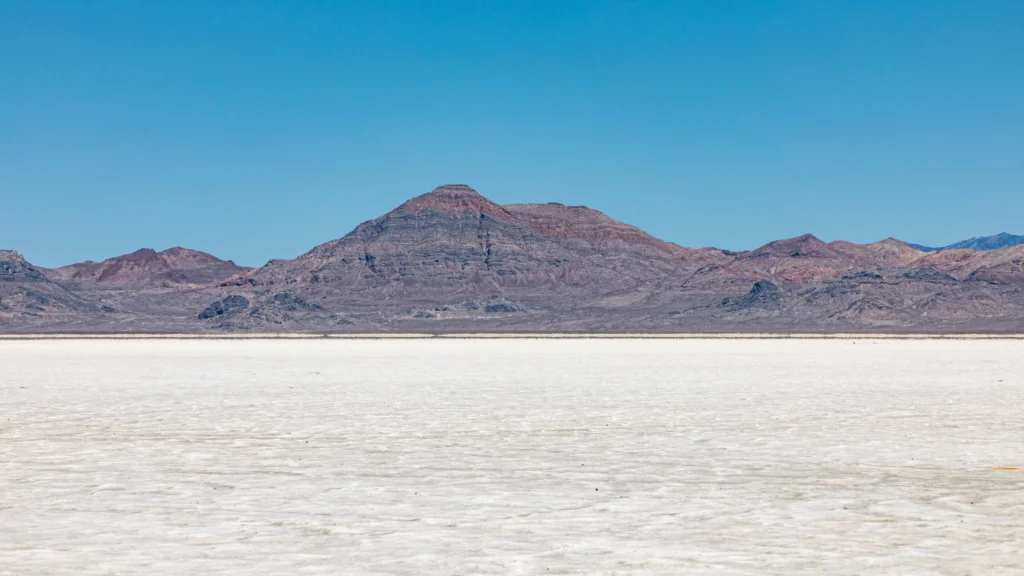
On September 18, 1932, on a graded loop of hard-packed salt west of Salt Lake City, a Pierce-Arrow test driver named Ab Jenkins climbed into a stripped Pierce-Arrow Twelve roadster and drove it in circles for 24 straight hours. When he finally climbed out, he had covered 2,710 miles at an average of 112.91 mph. The run was unsanctioned, physically brutal, and staged for one reason: to convince a Depression-era public that Pierce-Arrow’s brand-new V-12 engine could be trusted with their money. It worked well enough that, almost a century later, the story still shapes how collectors value one of the great orphaned American luxury marques.
A Company Betting Everything on One Engine
By 1932, Pierce-Arrow was four years into ownership by Studebaker and fighting for relevance against Cadillac’s new V-16 and Packard’s Twin Six. The Buffalo, New York company answered with its own twelve-cylinder engine, a 462-cubic-inch L-head unit that chief engineer Karl Wise eventually pushed to 175 horsepower. An engine on paper meant nothing to buyers in the depths of the Depression, so Pierce-Arrow turned to Jenkins, a Utah driver already known for long-distance stunts, to prove it on the Bonneville Salt Flats before the car ever reached a showroom.
Twenty-Four Hours, 2,710 Miles, No Sanction
Jenkins and his crew stripped the Twelve of its fenders and running boards and laid out a 10-mile circular course on the salt. Because Jenkins was then under suspension by the AAA Contest Board, the run carried no official sanction; timing was done by hand with pocket watches, and instructions were passed to Jenkins on notes dropped from a chase vehicle as crews wiped corrosive salt residue from the car at every pit stop. None of that improvised, low-budget staging mattered to the newspapers. A 462-cubic-inch American V-12 had just covered more than 2,700 miles in a single day at nearly 113 mph, and Pierce-Arrow had its proof.
From Publicity Stunt to Legitimate Record
The unofficial run was only the opening act. In 1933, Jenkins returned to Bonneville with AAA officials present and drove a Pierce-Arrow Twelve 3,000 miles in 25.5 hours at an average of 117 mph, breaking 66 AAA-certified records in a single outing. In 1934, another Pierce-Arrow-backed run pushed the 24-hour average to 127 mph, a world record. Those sanctioned runs did what the 1932 stunt could not: they gave Pierce-Arrow’s V-12 a paper trail of verified performance, and they cemented Bonneville’s reputation as the country’s premier speed-record venue. Jenkins used that credibility to move on to the Duesenberg-based Mormon Meteor cars later in the decade, but the Pierce-Arrow Twelve was where his Bonneville career, and the salt flats’ modern identity, began.
Where the Pierce-Arrow Twelve Stands in Today’s Collector Market
Pierce-Arrow itself did not survive the decade; Studebaker’s own financial troubles forced a split in 1933, and the independent Pierce-Arrow Motor Car Company folded into bankruptcy by 1938. That closure is exactly why the marque matters to serious pre-war collectors today. Pierce-Arrow is a recognized CCCA Full Classic, its surviving cars are scarce, and the Buffalo Transportation Pierce-Arrow Museum keeps the factory’s engineering record intact for buyers doing due diligence. It sits in the same conversation as other independent luxury makes from the same Depression-era shakeout, including the Nash, Frazer, and Studebaker orphan cars that regularly cross the block at specialty sales.
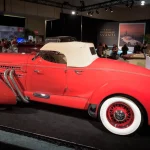
That context also explains why a 1930 Packard 745 Sport Phaeton with a Pebble Beach Best in Class win on its résumé commands such attention when it comes to market: for pre-war American luxury cars, documented history and concours pedigree move the needle far more than raw cylinder count ever did.
Value Context: What Pierce-Arrow Twelves Are Actually Bringing
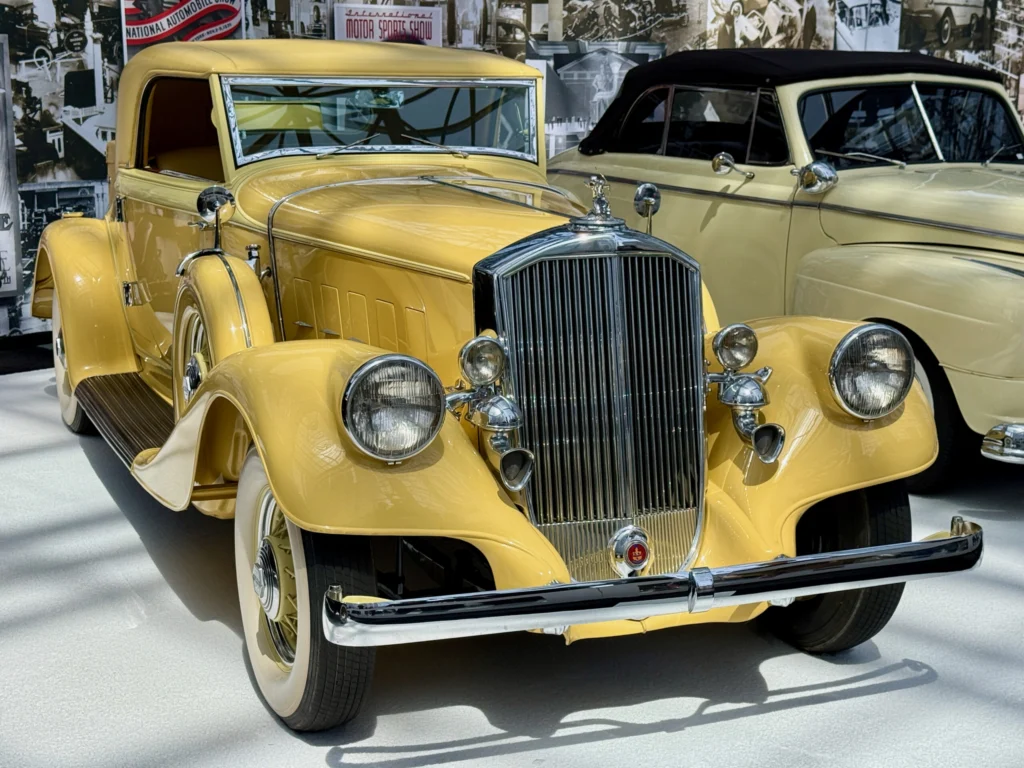
Market tracking from Classic.com puts the average sale price for a Pierce-Arrow Twelve at roughly $133,000, but the spread around that number is wide. A well-documented, low-mileage 1933 example brought $151,200 at a Kruse auction in Auburn, Indiana, in September 2026. A 1936 Pierce-Arrow 1603 Twelve sold for $57,200 at RM Sotheby’s Hershey sale in October 2025, and a higher-mileage 1934 1240A brought $40,700 at Mecum the same month. Body style, originality, and paperwork explain most of that gap far more than horsepower does. For comparison, a 1932 Delage D8 S Roadster with coachwork by Marcel Pourtout carried an estimate of $4 million to $6 million at RM Sotheby’s Monterey sale, a reminder of how much further top-tier, coachbuilt European pre-war cars have run from their American V-12 contemporaries, even when the underlying engineering ambition was comparable.
What Collectors Should Know
Originality carries outsized weight on an orphan marque like Pierce-Arrow, where reproduction parts and factory-trained expertise are both scarce; buyers should verify matching engine and chassis numbers and lean on the Pierce-Arrow Society for authentication before committing. A car with any documented tie to the 1932-1934 record era, even indirectly through its Series 54 or Model 1240 sibling, carries a story premium that a generic Twelve does not. None of that changes the basic advice that applies across pre-war collecting: buy the best-documented example you can afford, and treat the purchase as a passion buy first, the way we’ve outlined for smart versus emotional classic car purchases generally.
The record run itself did not save Pierce-Arrow; the company was liquidated barely six years later. But the engineering it proved outlasted the business by decades. A version of the same L-head V-12 stayed in production for Seagrave fire apparatus into the 1970s, running reliably on American fire trucks nearly 40 years after the parent company that developed it went bankrupt. That is the real lesson for today’s collectors: the Bonneville stunt was marketing, but the durability underneath it was not, and it is that kind of verified, outlasting engineering that still commands a premium on an auction stage a century on.
The collector car market, every weekday morning.
Auction results, price moves and what’s crossing the block, read in four minutes. Free, from Modern Car Collector.
No spam, unsubscribe in one click. Or read more about the Brief.
 Kyle Matthews
  Eve Nowell