

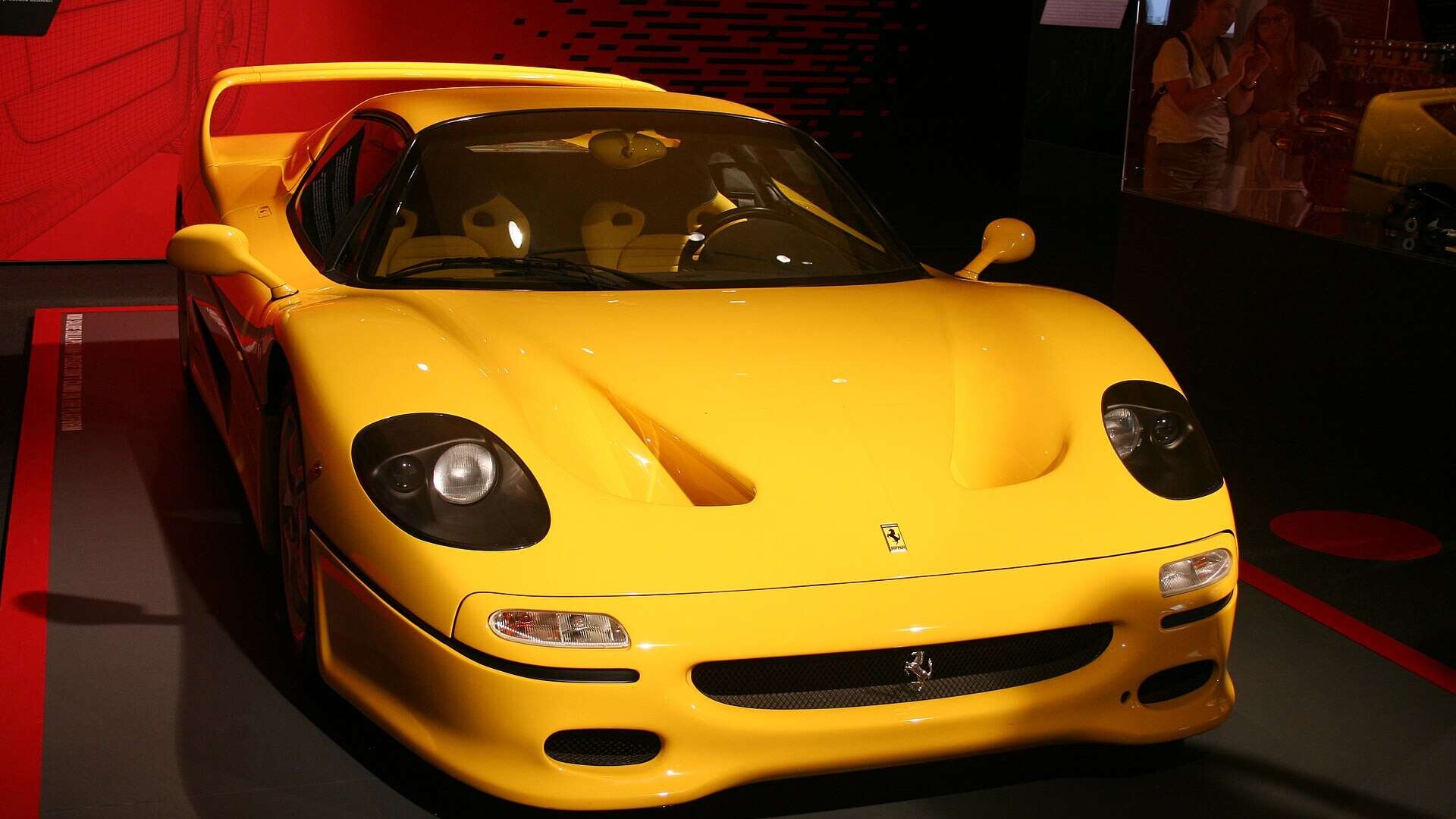
In August 2024, a Ferrari F50 sold for $5.505 million at RM Sotheby’s Monterey and set a new auction record for the model. Two years later, almost to the day, a Giallo Modena F50 brought $14.575 million at Mecum Monterey. That is a 165 percent rise in the top public price in 24 months. Few collector-car movements in this market cycle are as large, as fast, or as well documented. The harder question is what the jump says about Ferrari F50 value for the typical car, and whether it will hold.
The short answer: the ceiling has moved, clearly and more than once. The floor has moved less, and the distance between the two is the real story.
What the record shows: verified facts
Ferrari built 349 F50s between 1995 and 1997, about 55 of them to US specification. At least ten have sold at major public auctions since August 2024. Every figure below comes from the auction houses’ published results.
| Date | Auction | Car | Result (incl. premium) | Note |
|---|---|---|---|---|
| Aug 2024 | RM Sotheby’s Monterey | 1995, chassis 103921 | $5,505,000 | Then a public-auction record |
| Feb 2025 | RM Sotheby’s Miami | Chassis 105768, European spec | $5,532,500 | Essentially flat on the 2024 record |
| Aug 2025 | RM Sotheby’s Monterey | Ex-Ralph Lauren, Giallo Modena, US spec | $9,245,000 | Record; celebrity first owner |
| Oct 2025 | RM Sotheby’s Munich | Italian delivery, ~37,000 miles | €4,842,500 | Driven car; well below the headline trend |
| Jan 2026 | RM Sotheby’s Arizona | Early car, ~8,000 miles | $8,805,000 | Fresh fuel cell service |
| Jan 2026 | Mecum Kissimmee | Bachman car, 252 miles | $12,210,000 | Record; no-reserve single-owner collection |
| Jan 2026 | RM Sotheby’s Paris | Single owner, 1,680 km, Tod’s shoes | €7,598,750 | European market follows the US move |
| May 2026 | Mecum Indianapolis | 1995, 843 miles | $9,790,000 | Low miles, no marquee provenance |
| Aug 2026 | RM Sotheby’s Monterey | Ex-Mike Tyson, 6,196 miles | $12,105,000 | Celebrity provenance, higher miles |
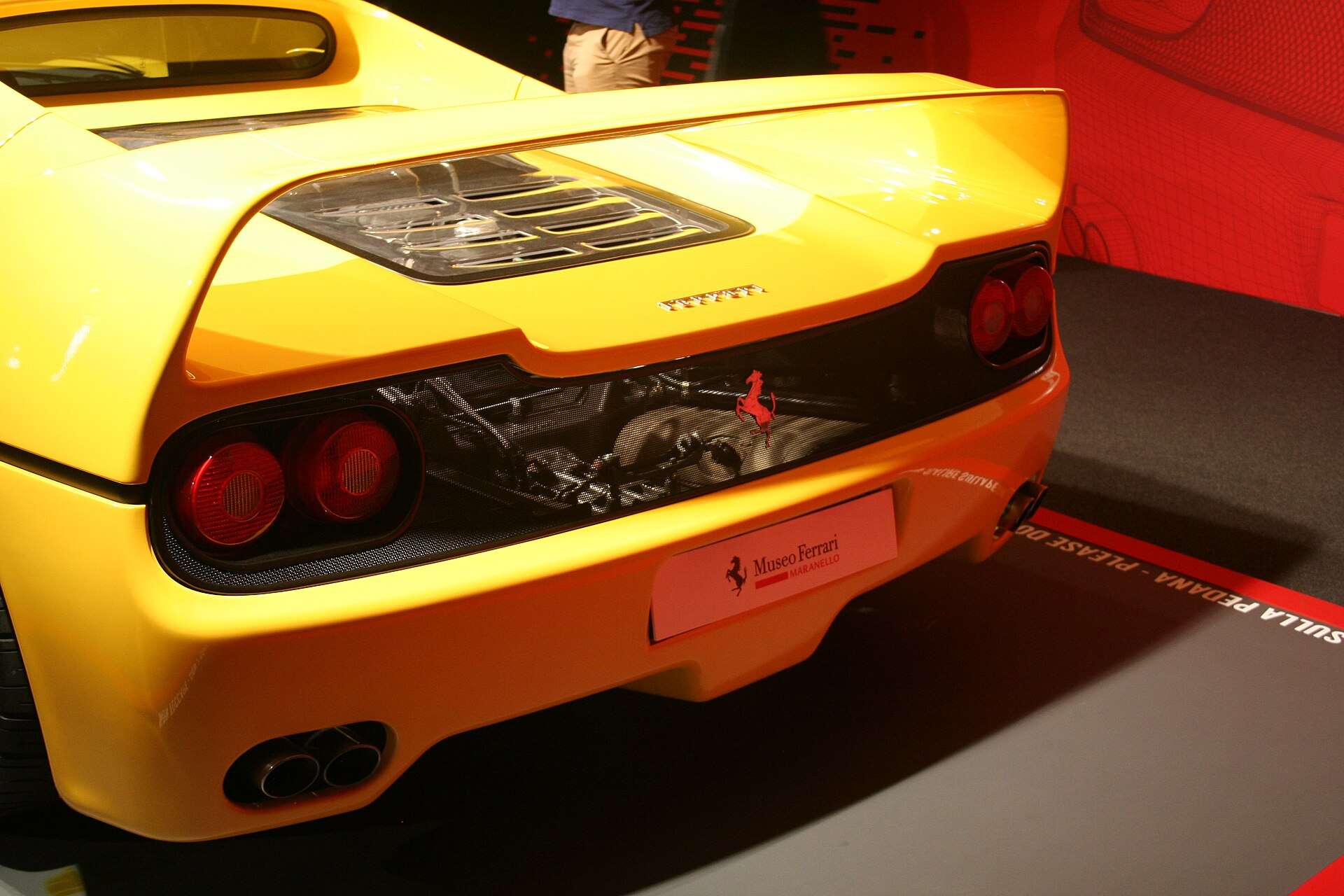
| Aug 2026 | Mecum Monterey | Giallo Modena, 7,253 km, Tod’s boots | $14,575,000 | Current public-auction record |
Other facts from the record:
- The model record has been broken four times in two years: $5.505 million (August 2024), $9.245 million for the ex-Ralph Lauren car (August 2025), $12.21 million at Mecum Kissimmee (January 2026), and $14.575 million at Mecum Monterey (August 2026).
- Two F50s sold during the same Monterey weekend, and they were $2.47 million apart. The ex-Mike Tyson car (RM Sotheby’s lot page) is a Classiche-certified, matching-numbers US car with 6,196 miles. It brought $12.105 million. The Mecum car is one of 31 F50s finished in Giallo Modena, with 7,253 km and its original Tod’s driving boots, and it brought $14.575 million.
- The October 2025 Munich car (RM Sotheby’s lot page) is an Italian-delivery car with long first ownership and Classiche certification. It sold for €4,842,500, roughly a third of the current record.
- CLASSIC.COM’s F50 market benchmark stood at about $8.04 million in late September 2026. Its average across tracked sales was about $6.64 million.
Comparables: the entire Ferrari halo line moved
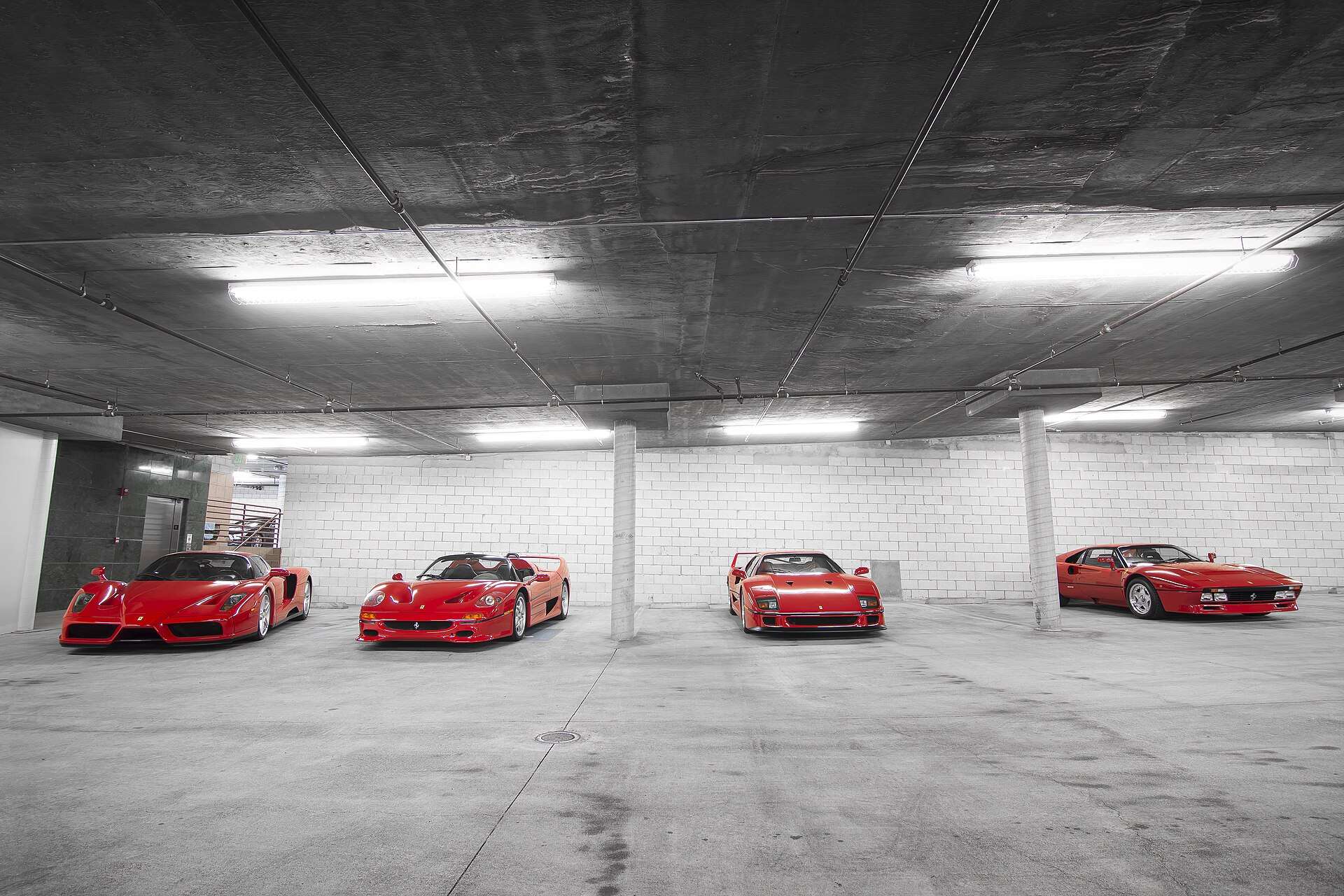
The F50 did not move alone. It belongs to a lineage of five limited-production Ferrari halo cars, and all of them repriced over the same 18 months:
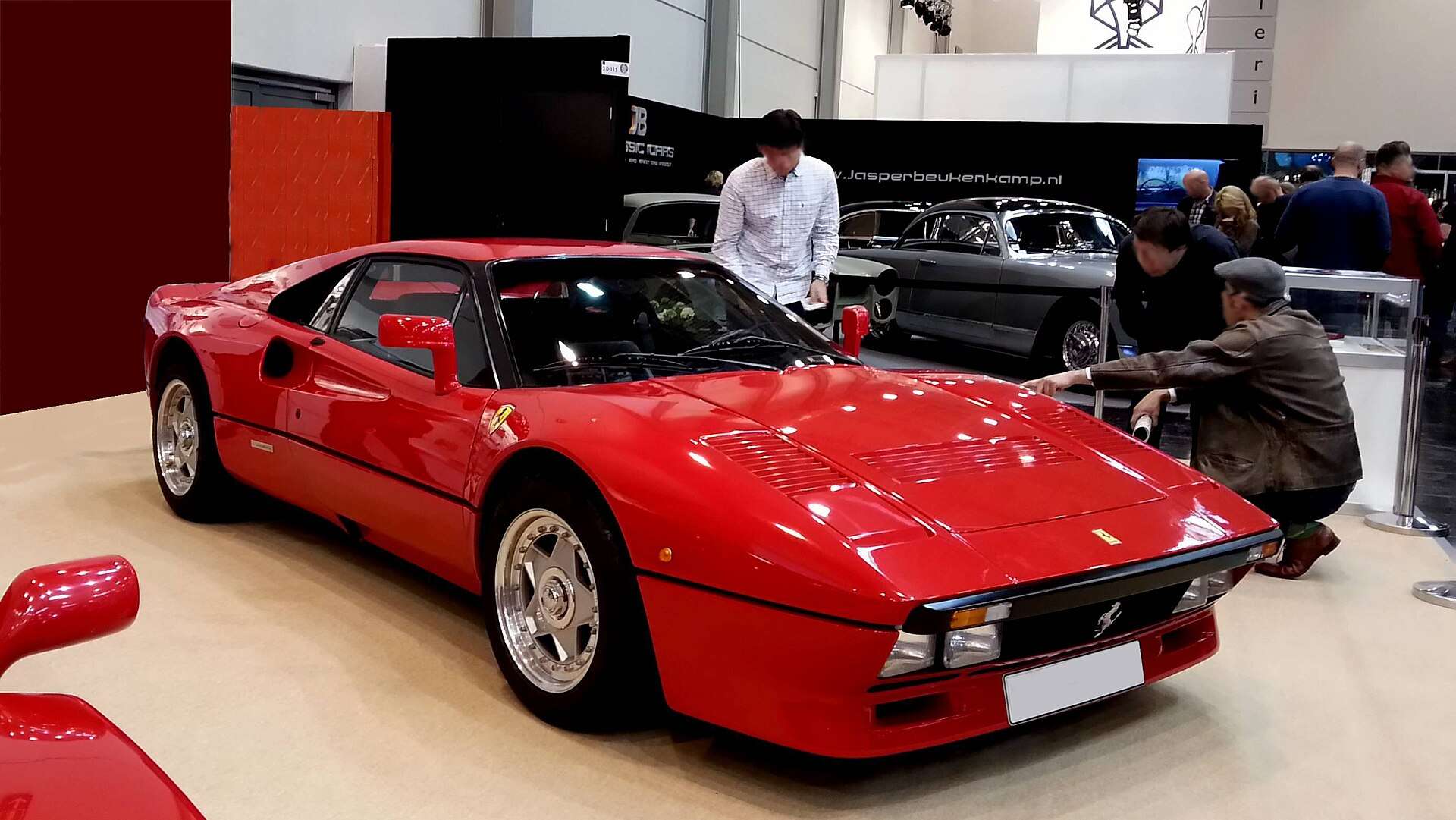
- 288 GTO: the public record was about $4.4 million in 2022. A Bachman-collection car sold for $8.525 million at Kissimmee in January 2026, and RM Sotheby’s got $11.555 million at Monterey in August, against a $9 million to $11 million estimate. (We previewed that 958-mile car before the sale.)
- F40: a 458-mile car sold for $6.6 million at Kissimmee, a record for a standard F40. It lasted seven months, until RM Sotheby’s sold a 1991 car for $8.365 million at Monterey.
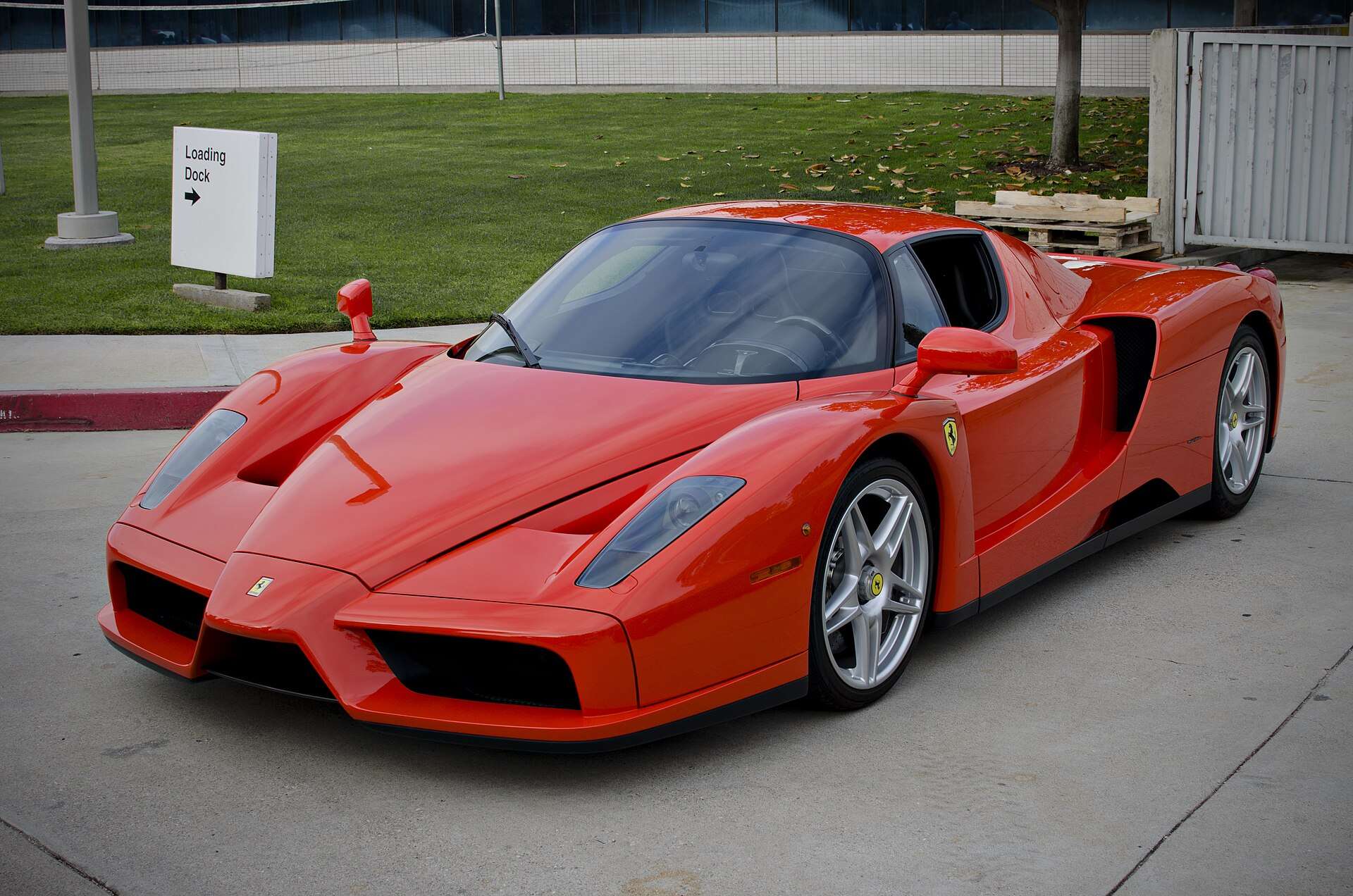
- Enzo: a yellow Bachman car made $17.875 million in January. Standard red Enzos brought $9.41 million (RM Sotheby’s), $10.675 million (Broad Arrow) and $12.1 million (Mecum) during Monterey week. The Mecum car had been a no-sale at the same auction in 2017, with a high bid of $2.7 million.
- LaFerrari: $8.58 million for a coupe at Mecum Indianapolis in May, a model record. A final-production Aperta made $11 million at Kissimmee.
The contrast matters too. At the same Monterey week, several conventional 1950s and 1960s road cars sold flat or lower. One 1964 Ferrari 250 GT Lusso sold for $1.27 million, below the $1.43 million it brought in 2020. The money is not flowing into “old Ferraris” in general. It is flowing into one narrow group: limited-production, halo-model Ferraris from the 1980s to the 2010s.
Possible causes: market interpretation
Everything in this section is interpretation. It is our reading of the evidence, not established fact.
1. A generational handoff
Buyers who were teenagers when these cars were new now have peak spending power. The same pattern re-rated the 1960s Ferraris a generation ago. What stands out is how fast it happened. The whole halo group moved within about 18 months rather than over a decade.
2. The F50 has been re-cast as the last analog halo Ferrari
For 25 years, the F50 was the unloved middle child between the F40 and the Enzo. It was criticized as less raw than one and less advanced than the other. Today, its specification reads differently. It has a naturally aspirated V12 derived from Ferrari’s 1990 Formula 1 engine, a gated six-speed manual, no driver aids and a removable roof. Ferrari will not build that combination again. The car has not changed, but the story buyers tell about it has.
3. A single collection reset the ceiling
The January jump came mostly from the Phil and Martha Bachman collection, sold at no reserve at Kissimmee. Several of those cars were the best of their kind: low mileage, single family ownership, and often unusual colors. A group of best-in-class cars offered at no reserve draws competing bidders who may not face each other again. Those prices then become the reference point for every later consignor’s reserve.
4. Provenance and “completeness” premiums
The two most expensive F50s both had something extra. One had celebrity ownership (Ralph Lauren). The record car had a rare color and its original Tod’s driving boots. The Tyson car also had celebrity provenance, but it had more miles and sold for less. Buyers are paying separately for rarity inside a rare model. That means part of the headline number belongs to the individual car, not the model.
5. Currency and the nature of auction prices
Some European dealers argue that part of the dollar-denominated rise reflects a weaker US dollar, not higher real value. They also note that public auction results can run above private-sale prices because of publicity and bidding momentum. Both points are fair warnings. Neither accounts for a move of 165 percent.
Durable or temporary? How we read the F50 price movement
Likely durable: the re-rating of the category. Five related models repriced at once, at different auction houses, on two continents, within one year. Several different buyers, not one, have now paid $9 million or more for an F50. That kind of broad confirmation is what a structural change looks like. It is unlikely that F50 values return to $5 million soon.
Likely temporary or overstated: the $14.575 million figure as a guide to ordinary cars. The Munich result (€4.84 million for a driven car) and the Indianapolis result ($9.79 million for an 843-mile car with no marquee provenance) show how wide the range still is. The data set is also thin: ten public sales in two years. A few strong consignments can move the average a long way. Once the Bachman-era records become the new reserves, the market will likely see more no-sales before it finds its level.
What would confirm the move: a mid-mileage F50 with complete Classiche documentation and no celebrity or color premium selling at or above $9 million. What would undercut it: a run of F50s, F40s or Enzos failing to sell at estimates based on the 2026 records, or sellers quietly accepting post-sale offers below them.
What collectors should take from it
- Owners: an appraisal based on the record car overstates what most F50s are worth. Condition, mileage, color, Classiche status and the original accessories now explain several million dollars of difference between cars. Our car valuation guide covers how to build a defensible number.
- Buyers: the premium is highest for the most complete cars. A well-documented driver-quality car may be the more rational purchase if the category re-rating holds.
- Market watchers: watch the F50 and the F40 together. The F40 was built in far larger numbers, about 1,300 cars, so its market is deeper. If F40s hold near $8 million on repeat sales, the halo-car re-rating is real. If they fall back, the F50’s ceiling will be tested next.
For the wider context, see our analysis of why Monterey Car Week 2026’s record total isn’t the real story.
Sources: auction results published by RM Sotheby’s (Monterey 2024 and 2025, Miami 2025, Munich 2025, Arizona and Paris 2026, Monterey 2026) and Mecum (Kissimmee, Indianapolis and Monterey 2026); CLASSIC.COM F50 market data. Prices include buyer’s premium.
The collector car market, every weekday morning.
Auction results, price moves and what’s crossing the block, read in four minutes. Free, from Modern Car Collector.
No spam, unsubscribe in one click. Or read more about the Brief.
Related Posts:
- Ferrari Daytona SP3 Value Jumped 168% in Ten Months.…

- The Porsche Carrera GT Doubled in 2026. The $6.7…

- Record Ferraris, Rare Icons and 15,000 RPM: The Week…

- Mecum Monterey 2026 Delivers a Record $14.575…

- Ferrari Monza SP2 Value Nearly Doubled in Three…

- The Collector Car Market Paid Up for Certainty This…

 Kyle Matthews