

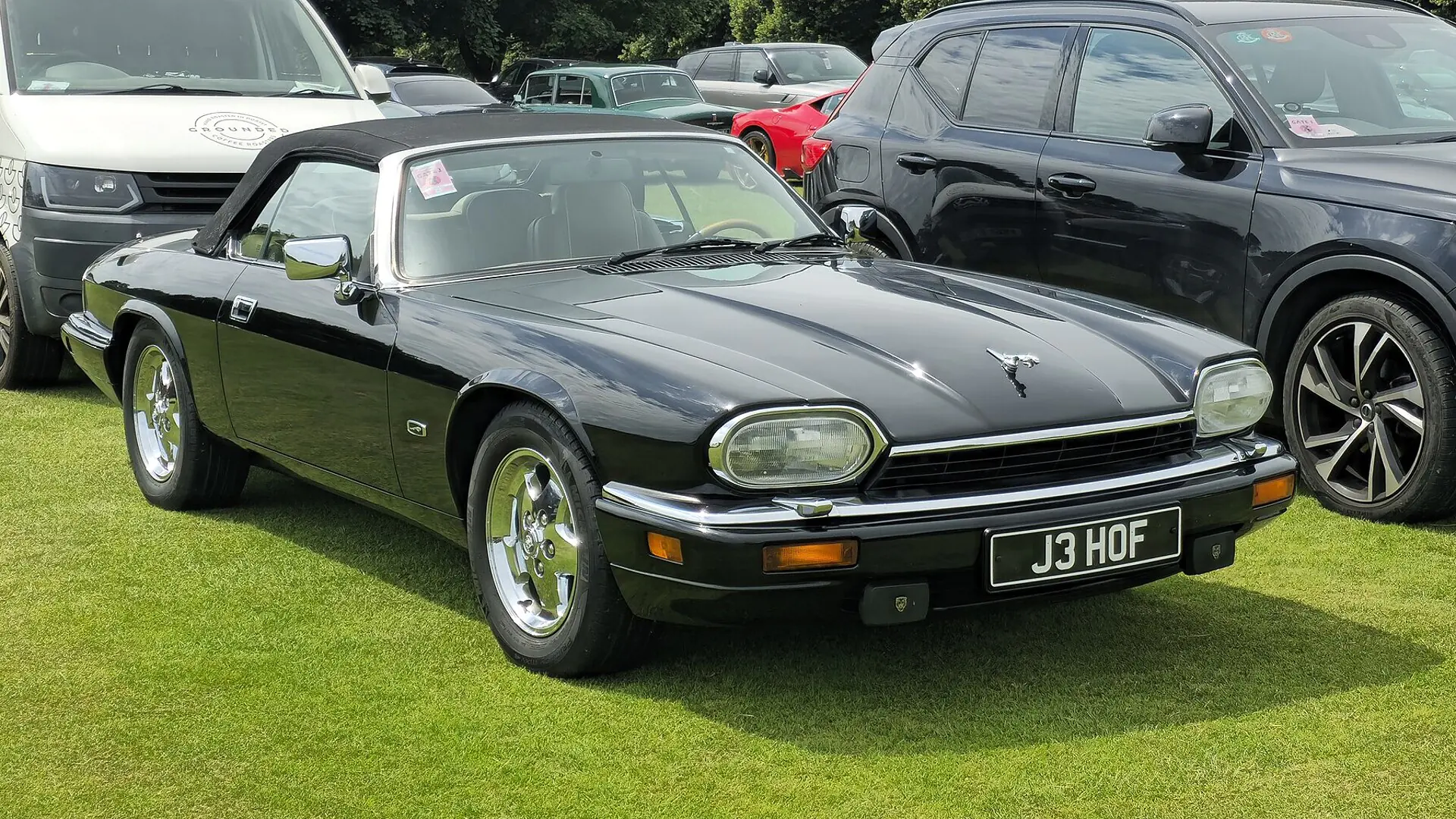
The Jaguar XJ-S is priced like a used car and owned like a classic. In the Bring a Trailer results for Jaguar XJS listings, sales in September and October 2026 ran from $3,500 for a no-reserve 1996 2+2 convertible to $26,750 for a 20,000-mile 1995 V12 convertible. That spread is the whole buying story: the car on offer matters far less than the paper, the rust and the wiring behind it.
This guide is for buyers choosing between a V12 and a six, a coupe and a convertible, and a cheap project and a car that has already been fixed. It separates the versions, the failure points that decide the price of a bad purchase, and what recent sales say each type costs. It is not a forecast. Nothing here suggests the market will move in any direction.
Why the XJ-S matters to collectors
Jaguar introduced the XJ-S on September 10, 1975, as the grand-touring successor to the E-Type, and kept building it for 21 years. Wikipedia’s production summary puts the total at 115,413 cars between 1975 and 1996, so this is not a rare model in the Ferrari sense. Its collector case rests on the 5.3-litre V12, a touring-car competition record, and a run of special versions that were genuinely built in small numbers.
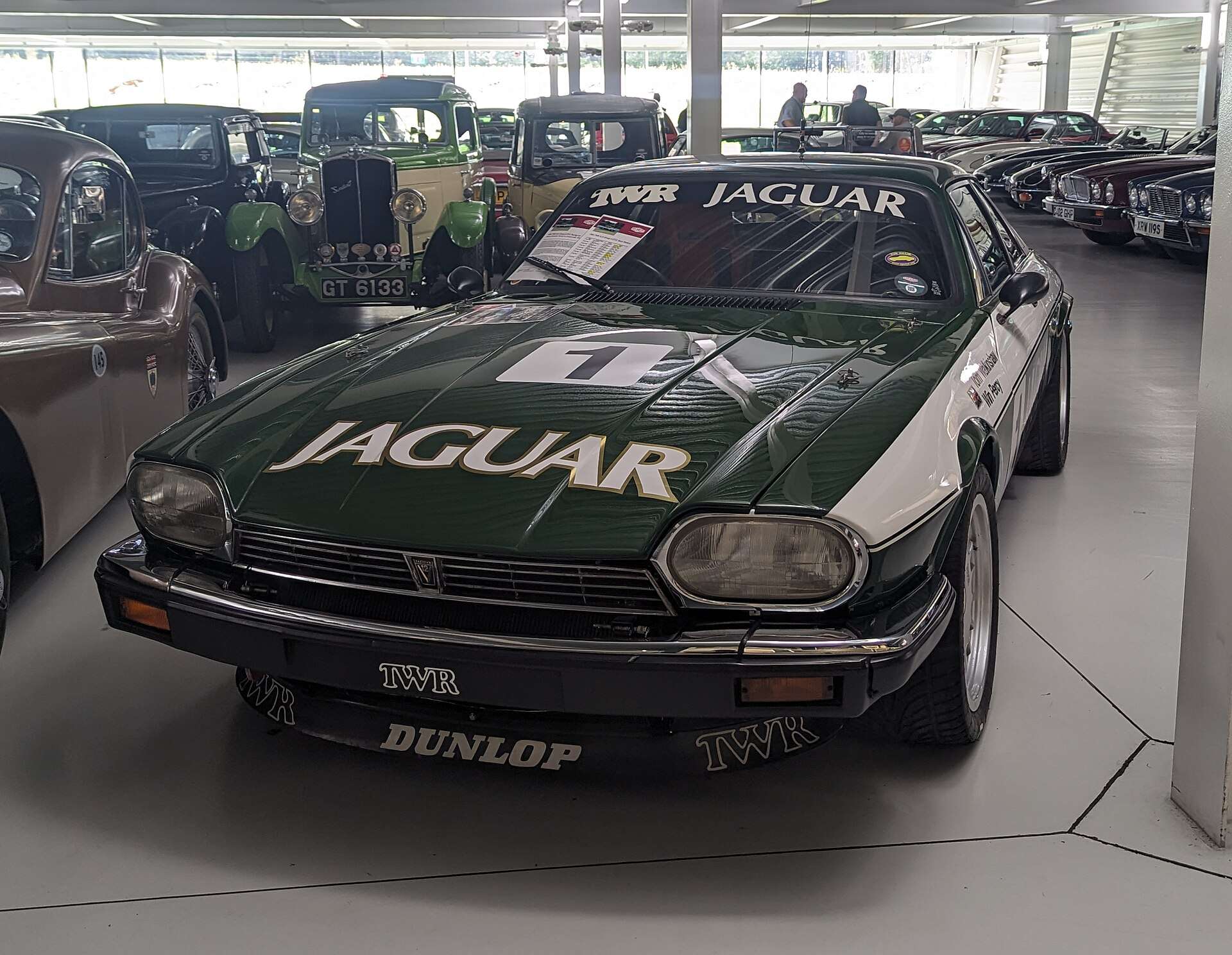
Tom Walkinshaw Racing took the car racing in the 1980s, including a 1984 European Touring Car Championship driver’s title for Walkinshaw, and that work fed directly into the JaguarSport XJR-S. Under Ford ownership the car got a 1991 facelift and lost its hyphen, so late cars are badged XJS rather than XJ-S. This guide uses XJ-S for the whole family and XJS where it names a late car.
The versions that matter
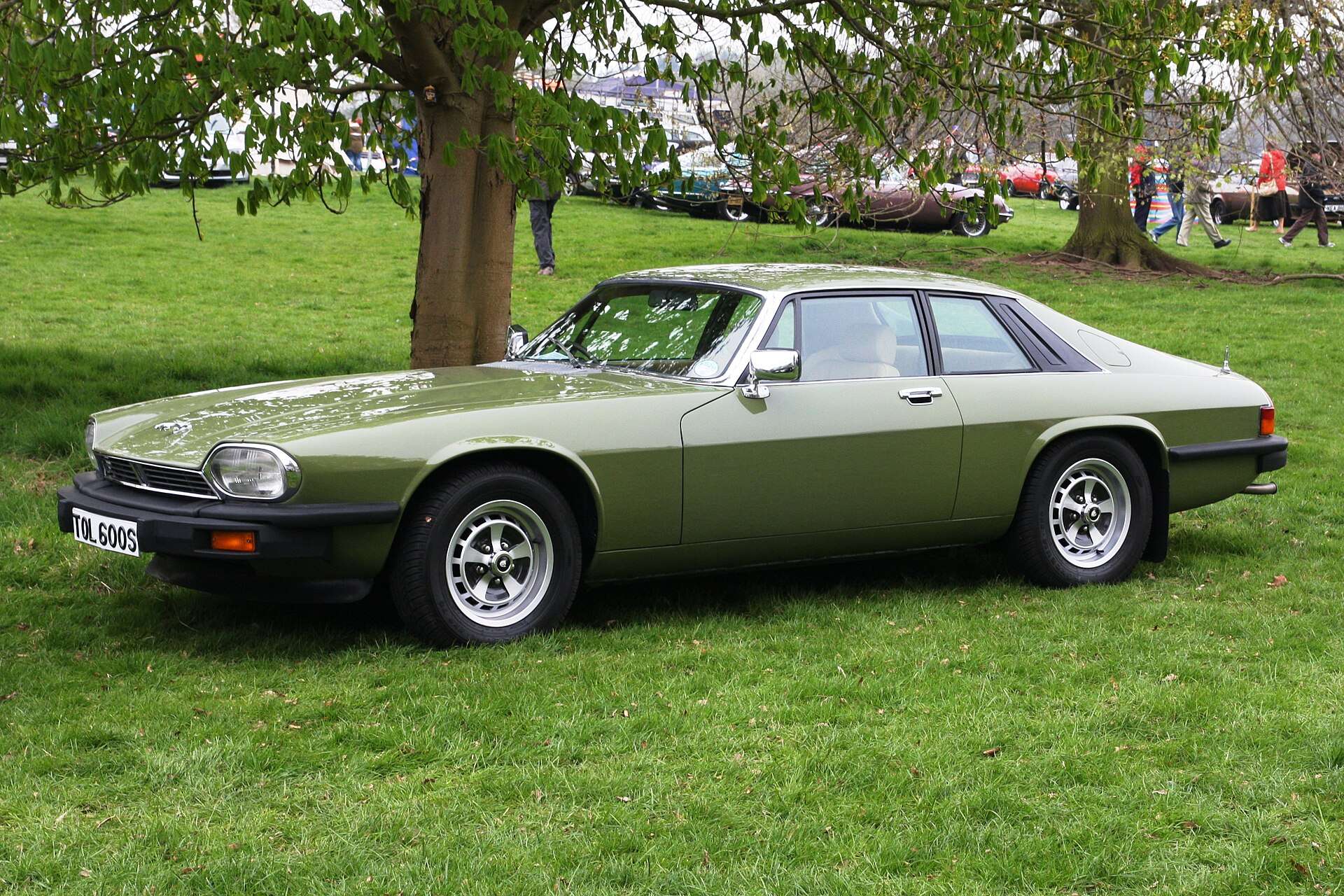
Production figures from the same summary split the car into three broad phases: about 14,800 original cars from 1975 to 1981, 73,207 H.E., 3.6 and XJ-SC cars from 1981 to 1991, and 27,406 facelifted XJS cars from 1991 to 1996. Within those, the variants below decide what you are actually buying.
| Version | Years | Powertrain | Buyer’s note |
|---|---|---|---|
| Original V12 coupe | 1975–81 | 5.3-litre V12; BorgWarner automatic early, GM Turbo-Hydramatic 400 from 1977 | Earliest cars carry the Leyland-era build-quality reputation. One UK guide says pre-1982 cars need more work and money. |
| H.E. V12 | 1981–91 | 5.3-litre H.E. V12; Wikipedia lists 295 hp for the European rating and 263 hp for North America | The Fireball combustion chamber cut fuel consumption, and the H.E. and later Coventry-built cars were better built than the first ones. |
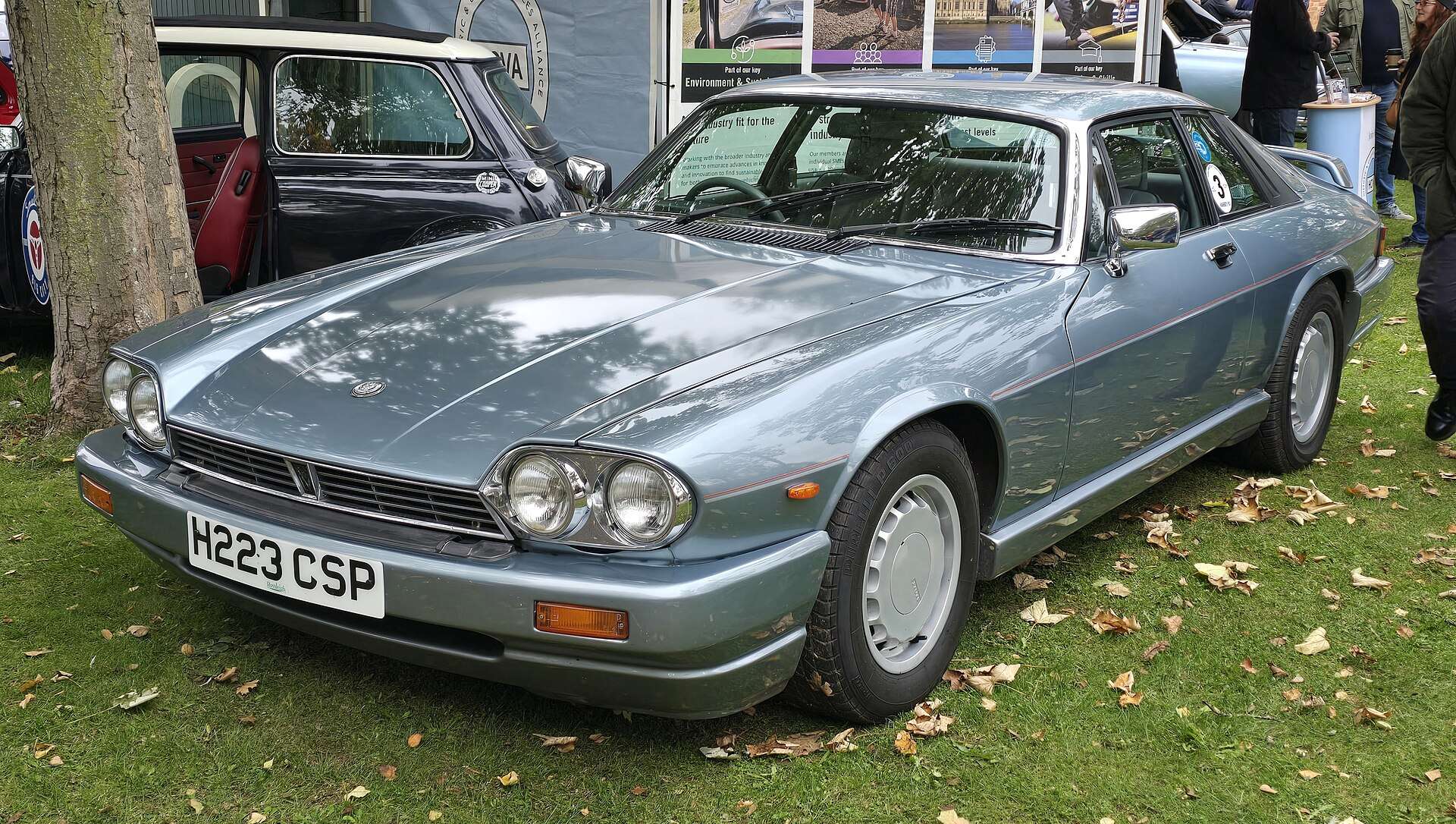
| 3.6 and XJ-SC | 1983–91 | 3.6-litre AJ6 six, five-speed Getrag 265 manual until 1987, then ZF four-speed automatic | The cheaper, simpler engine. The targa-style XJ-SC totals 5,013 cars (1982–88). |
| Full convertible and Hess & Eisenhardt | 1988 on | V12 or six | Jaguar’s own full convertible arrived in 1988 with a strengthened shell. Hess & Eisenhardt coachbuilt convertibles are a separate, uncertain count, cited at about 2,100. |
| Facelift XJS 4.0 and 6.0 | 1991–96 | 4.0-litre AJ6 with ZF automatic; 6.0-litre V12 from 1992 with GM 4L80E automatic | 2+2 convertible added in 1992; coil-on-plug ignition on the 4.0 from 1994; outboard rear brakes replaced the inboard design in May 1993. |
| XJR-S | 1988–93 | 5.3 V12 (318 hp), later 6.0 V12 (333 PS) | 787 coupes and 50 convertibles for the world market, plus a separate US-only run of 100 commemorative cars in 1992, which the source does not clearly separate. |
| Celebration | 1995–96 | Engine varies by car; confirm from the listing and VIN | Final-year 60th-anniversary edition. BaT results include 1996 Celebration convertibles. |
| Lynx Eventer | Conversion | Built on XJ-S and XJS coupes | Shooting brake with 67 built, of which 52 were pre-facelift and 15 post-facelift. |
Engines and transmissions: what actually fails
The V12 has a reputation for being fragile, but specialist advice is consistent: it is durable when serviced and costly when it is not. Autocar’s buying guide notes that the V12 needs its coolant replaced every two years, and Classics World says brown coolant is a reason to walk away. A start-up rattle can mean a timing-chain problem, and hesitation 20 to 30 seconds after a cold start can point to the auxiliary air valve. The Motorious guide adds that you should confirm the hard-to-reach rear spark plugs have actually been changed.
The fuel-injector wiring harness is the less obvious risk. An enthusiast technical write-up on the V12 harness describes PVC-insulated wire that hardens and cracks near the engine, leading to dropped cylinders and, in the worst case it describes, a short that melted insulation and an injector and raised a fire risk. The remedy it recommends is a rebuild in heat-resistant wire or relocating the harness away from the hottest areas. Ask whether this has been done, and look at the harness yourself.
The AJ6 six is simpler. Guides put oil pressure at 40 to 50 psi at operating temperature, warn about timing-chain rattle, and flag head-gasket failures from around 50,000 miles, so check for coolant in the oil and oil in the coolant. On manual 3.6 cars, crunching first and second gears or a slipping clutch are the faults to test for. On any automatic, a knock from underneath is often a worn gearbox mount rather than a gearbox.
Inspection priorities: start with the metal
Rust is the single biggest expense, and it is worse on earlier cars. Autocar points to pre-1991 cars as the ones without galvanised panels. Check the jacking points, sills and their closing plates, the bottoms of the front wings and doors, the wheelarches, the boot-lid edges and the subframes. On coupés, water can collect around the seatbelt reinforcement plate and rot the floor, and on late cars it can attack the windscreen scuttle. Fresh underseal or inconsistent filler is a warning, not a reassurance. The same walk-through applies to a Volvo 1800 or other cars of that era, where rust repairs often cost more than the mechanical ones.
Underneath, the upper inner front wishbone bushes tend to wear around 50,000 miles, which causes uneven tyre wear. Rock each rear wheel to test hub bearings and inspect the rear subframe mounts. Check the differential for whine and fluid leaks, because Autocar notes leaks can reach the brakes. Inboard rear brakes, fitted until May 1993, make that more than a cosmetic concern. Calipers and handbrakes can seize, so a car that pulls under braking needs a closer look.
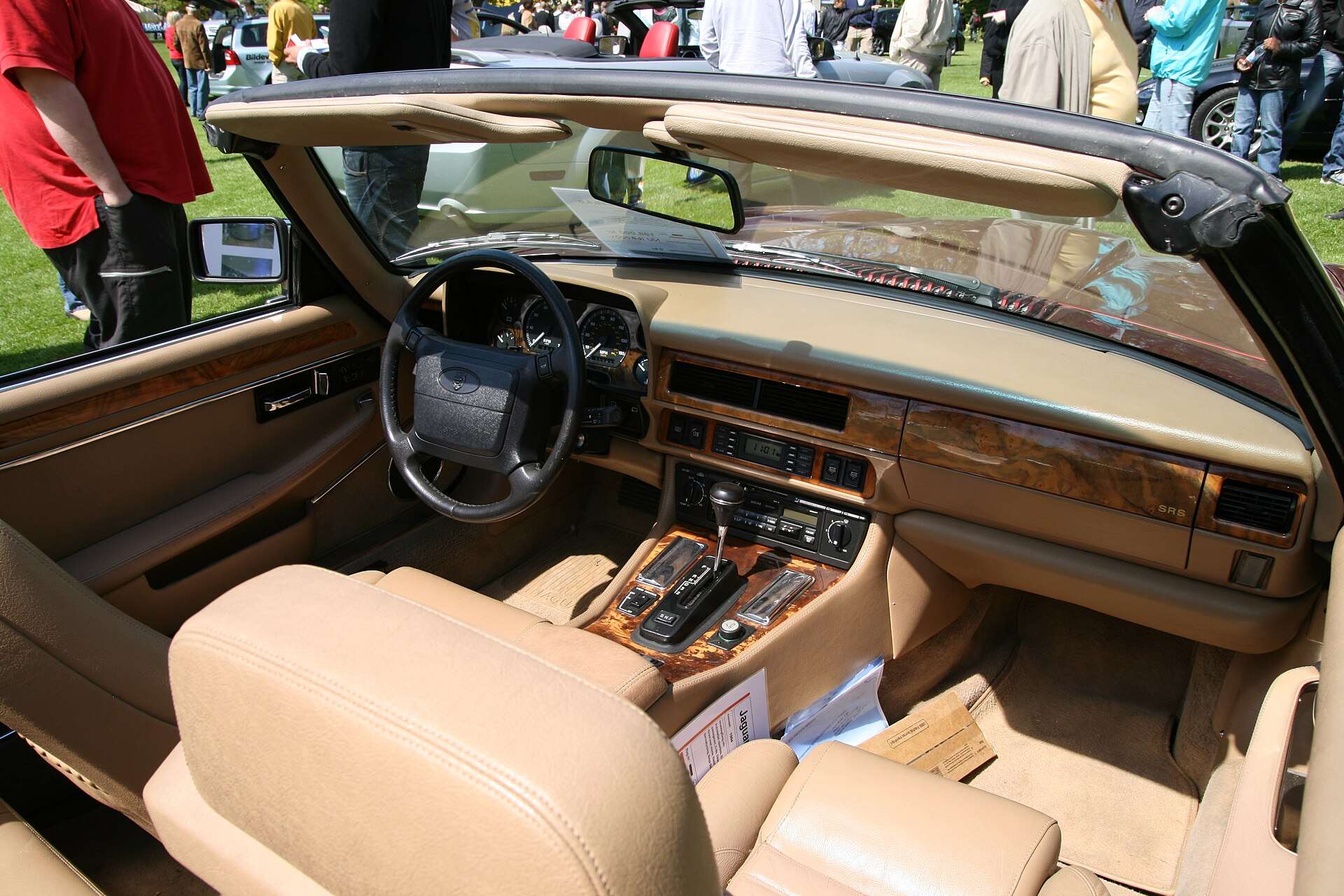
Inside, test every window, gauge, mirror and warning light, plus the air-conditioning flaps and motors. The ABS light should come on at ignition and then go out. Look at the driver’s seat bolster, which wears quickly, and at the wood veneer, which can crack or flake and is expensive to repair. Damp carpets suggest a leaking screen, scuttle or, on a convertible, hood. The boot-mounted battery can leak acid and rot the boot floor. On open cars, inspect the hood mechanism and fabric for splits, and remember the full convertible’s strengthened shell was introduced in 1988.
Cost and parts
The clearest cost figures available are British. Classics World puts front wings at about £500 to £700 per side and door skins at £200 to £300, and Autocar describes one car’s recommissioning bill as exceeding £4,000. Those are British prices and exchange rates and local labour will change the US picture, but they show the scale: a cheap car with rusty sills and a long-parked V12 can cost more to fix than to buy.
Parts support is uneven. Autocar says rubber bumpers for early cars are no longer available new, and original alloy wheels are scarce but refurbishable. Classics World reports that manual gearbox parts can be hard to source and clutch work is expensive.
Originality, documentation and modifications
Service history carries more weight on an XJ-S than on most cars. Classics World calls missing service history a major warning sign. For a V12, look for dated coolant changes, evidence of plug and harness work, and any recommissioning invoices. Where Jaguar’s heritage archive can supply a factory build record, it helps confirm that a car sold as an XJR-S or a special edition is what it claims to be.
Modified cars are common and sell on their own terms. Recent BaT live listings and related stories include a 454-powered 1983 car with a Tremec six-speed, a Tremec TKX manual conversion kit for V12 cars, a Chevrolet small-block swap and a Viper V10 swap. A manual conversion can make a V12 car more usable, but every swap trades originality for preference, so price it as a custom car and insist on clean wiring and documentation.
What recent sales show
The Bring a Trailer results page for Jaguar XJS lists 686 results at the time of writing. The table below samples completed sales from September 2 to October 30, 2026, using the titles as listed, so engine type is stated only where the title gives it.
| Date (2026) | Car as titled | Result |
|---|---|---|
| Oct 30 | 20k-mile 1995 XJS 2+2 V12 convertible | $26,750 |
| Oct 29 | 27k-mile 1991 XJ-S Classic Collection V12 convertible (no reserve) | $6,600 |
| Oct 23 | 24k-mile 1992 XJS 2+2 V12 coupe | $20,750 |
| Oct 21 | 25k-mile 1995 XJS 2+2 convertible (no reserve) | $9,100 |
| Oct 19 | 1996 XJS 2+2 Celebration Edition convertible | $17,000 |
| Oct 16 | 1996 XJS 2+2 convertible (no reserve) | $3,500 |
| Oct 14 | 1988 XJ-S V12 Hess & Eisenhardt (no reserve) | $8,700 |
| Oct 13 | 1992 XJS V12 convertible project (no reserve) | $8,900 |
| Sep 24 | 1990 XJ-S Classic Collection V12 coupe (no reserve) | $10,922 |
| Sep 13 | 29k-mile 1994 XJS 2+2 convertible | $22,250 |
| Sep 11 | 22k-mile 1990 XJ-S V12 convertible | $15,500 |
| Sep 3 | 31-years-owned 1989 XJ-S V12 convertible (no reserve) | $19,750 |
Two unsold results show where bidders stopped: a 22k-mile 1991 Classic Collection V12 convertible reached $20,777 and a 9k-mile 1995 2+2 convertible reached $17,250, and both failed to meet their reserves. Do not treat these as sale prices.
The pattern is worth reading carefully. Cars in the $15,000 to $27,000 range tend to combine low stated mileage with a long-ownership or late-model story. But mileage alone does not set the price: a 27k-mile 1991 V12 convertible sold for $6,600, and the 20,000-mile 1995 V12 convertible sold for four times that. The title cannot tell you why, which is exactly why you must read the full listing, history and inspection photos before using any single sale as a comp. At the other end, project cars changed hands at $8,900 and, for a no-reserve 1987 XJ-SC V12 in Canada, $5,500.
The JaguarSport cars sit in a different range. A 1992 XJR-S coupe with about 73,000 miles sold for $26,750 on Hagerty Marketplace in October 2023, and Classic.com records a 14,000-mile 1993 XJR-S at $54,500 in February 2020. Those are older results, not current ones, but they show that low-mileage, documented XJR-S cars were priced separately from ordinary XJ-S sales. One source says a 1994-or-later 6.0 V12 convertible can reach roughly £50,000 in the UK. That is an upper-bound claim from one guide, not a US norm.
Which XJ-S to buy, by type of buyer
| Buyer | Best fit | Why | Check hardest |
|---|---|---|---|
| First classic on a modest budget | Facelift 4.0 coupe or convertible, 1992–96 | Simpler AJ6 engine, later body, and recent sales for cars titled XJS 2+2 ranged from $3,500 to $22,250 | Head gaskets, scuttle rust, hood condition, service history |
| V12 driver | 1992–96 6.0 V12 or a well-documented H.E. coupe | V12 character with a four-speed automatic on 6.0 cars | Coolant records, harness work, rear plugs, brake and differential leaks |
| Open-air buyer | 1988-on convertible or 2+2 convertible | Jaguar’s strengthened convertible shell and the 2+2’s extra room | Hood fabric, damp carpets, floor and scuttle rust |
| Collector | XJR-S, Celebration Edition or a documented low-mile late V12 | Small production numbers and clear specification | Build record, originality, matching paper, modifications |
| Project buyer | Any car under about $9,000 that recent project sales support | Cheap entry if you budget for the first year | Rusted structure, parked V12s, missing history |
| Avoid | Undocumented V12 with rust or brown coolant | Repair bills can exceed the car’s value | Walk away and wait for a better car |
For many buyers the cleanest answer is a late facelift car with a full history, because the later body is less exposed to the earliest rust and build-quality problems. Buyers who want the V12 should pay for the evidence of maintenance, not the odometer. If a documented JaguarSport car appeals, remember it is a separate market from the ordinary XJ-S. Anyone comparing it with rivals of the era can read how the XJ-S fared against the Cadillac Allanté and Mercedes 560 SL in our three-way comparison, and how a modern V12 conversion looks in TWR’s Supercat restomod. For another British V8 with its own risks, see the Esprit V8 and TVR Griffith 500 comparison, and for a German V8 sedan with a comparable maintenance profile, our Mercedes 500E buying guide.
The bottom line
An exceptional XJ-S has a solid, unmodified shell, a full record of coolant and electrical work, original or correct interior trim and a clear explanation for any gap in its history. An average one has cosmetic tidiness and a thin file, and a problem car has neither. The market sample above suggests buyers will pay several times more for the first than the last, even at similar mileage. For a car built for 21 years that still trades from single-digit to low-five-figure sums, that is the argument for buying carefully.
Sources and notes: sales data from Bring a Trailer’s Jaguar XJS results page (accessed November 3, 2026), Hagerty Marketplace and Classic.com. Production and specification figures from Wikipedia. Buying advice from Autocar, Classics World (the guide notes it is sponsored by a dealer), Motorious, PistonHeads and an enthusiast harness write-up. Hagerty’s value-guide figures could not be retrieved, so no Hagerty condition-grade values are quoted. This is a market sample, not a price guarantee.
The collector car market, every weekday morning.
Auction results, price moves and what’s crossing the block, read in four minutes. Free, from Modern Car Collector.
No spam, unsubscribe in one click. Or read more about the Brief.
 Kyle Matthews