

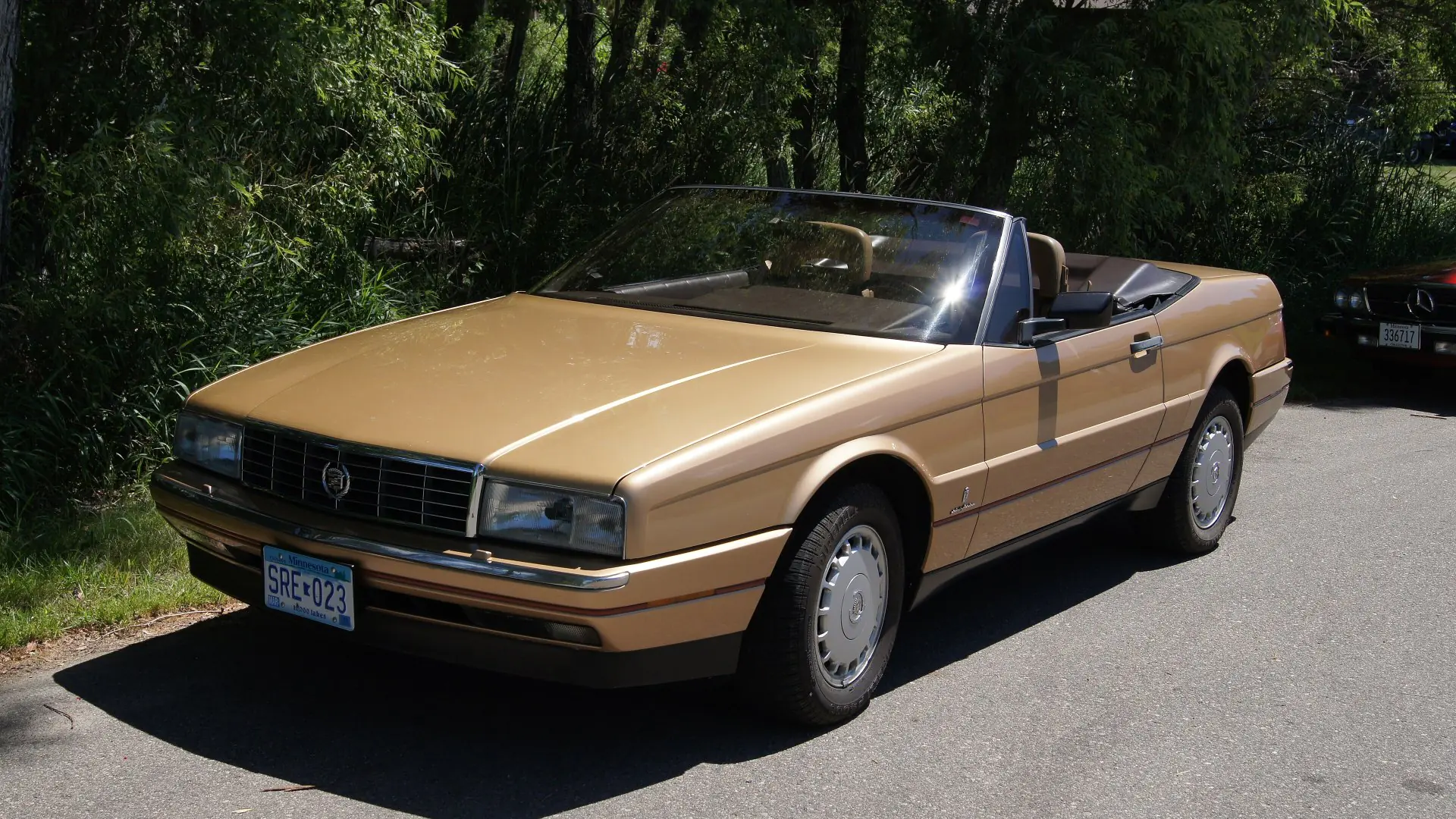
In 1987, Cadillac asked $54,700 for an Allanté. Hagerty notes that a Mercedes-Benz 560 SL of the same year listed at $57,980, and Jaguar would follow in 1988 with a V12 convertible of its own. Three expensive, softly sprung, two-seat luxury convertibles aimed at the same buyer. Today the Allanté vs XJ-S vs 560 SL question is no longer about the showroom. It is about what a collector wants to own, service and eventually resell for a budget that, on the evidence below, runs from roughly $10,000 to $25,000.
The thesis of this comparison is simple and a little counterintuitive: scarcity did not set these prices. The two scarcer cars, the Allanté and the V12 XJ-S convertible, trade at or below the money the far more numerous 560 SL commands. What separates them is the depth of the buyer pool, the parts ecosystem behind each badge, and how forgiving each car is when something goes wrong.
Why these three belong together
All three are 1980s luxury convertibles from three different countries: a front-drive American with an Italian-built body, a German roadster that was the benchmark of the class, and a British grand tourer with a twelve-cylinder engine. They overlap in era, original positioning and, now, in the low-to-mid five-figure price range where a buyer can reasonably consider any of them. They are not performance cars in the way the rivals in our earlier S2000 vs. Z4 M Roadster or Esprit V8 vs. Griffith 500 comparisons are. They are cars for people who want to cover distance in comfort with the top down, and that changes how each should be judged.
Cadillac Allanté: the expensive idea
The Allanté (1987 to 1993) was General Motors’ answer to the European luxury roadster, and its manufacturing story is the reason collectors remember it. Pininfarina built and trimmed the bodies at a purpose-built plant at San Giorgio Canavese, outside Turin. Boeing 747s then carried 56 bodies at a time to Detroit City Airport, a shuttle known as the “Allanté Air Bridge,” for final assembly at Hamtramck. The last car left Turin on July 2, 1993 and was completed 14 days later (Wikipedia, citing GM and Pininfarina records).
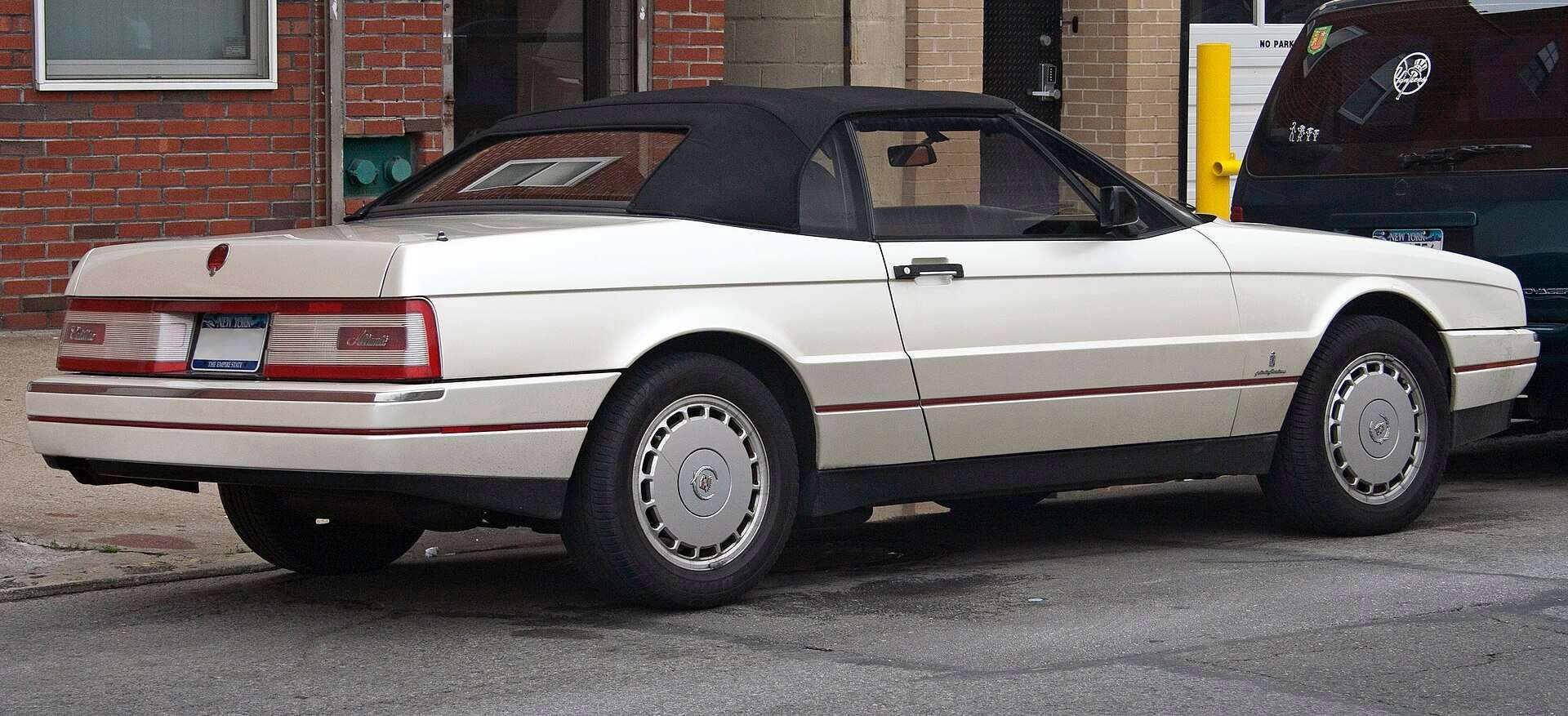
Production totals vary by source. Wikipedia’s table sums to 21,430 cars, with Pininfarina records showing 21,395 bodies; Hagerty’s coverage cites 21,106. Annual output peaked in the final year, at 4,670 for 1993. The powertrain changed three times: the 4.1-liter HT4100 V8 (170 hp, 235 lb-ft) in 1987 and 1988, a 4.5-liter V8 (200 hp, 270 lb-ft) from 1989 through 1992, and the 32-valve 4.6-liter Northstar V8 (295 hp, 290 lb-ft) in 1993 only. All were front-drive with a four-speed automatic.
For collectors, that engine split is the main originality and desirability question. The 1993 Northstar car is the most powerful of the three Allanté engines, and Hagerty’s reported concours value for a 1993 car is $30,800. The removable aluminum hardtop was standard on the 1987 car and later became an option on hardtop/convertible versions, so a car that still has its original hardtop and a documented set of the correct accessories is worth more of your attention than one without. A 1993 Allanté was also the pace car for the 1992 Indianapolis 500 (driven by Bobby Unser), and pace and festival editions exist in small numbers. We covered one of the lowest-mileage examples to reach auction in our report on a 1987 Allanté on Bring a Trailer.
Mercedes-Benz 560 SL: the default answer
The 560 SL was the last and strongest evolution of the R107 line. It was built from 1985 to 1989, sold as a 1986 to 1989 model in the United States, and never offered in Europe. Total production was 49,347 cars, of which 46,263 went to the U.S.; the remainder went to Australia, Canada and Japan (auto-forever.com production tables). Output peaked at 14,770 in 1987 and fell to 5,351 in 1989. The U.S.-spec 5.5-liter V8 made 227 hp, and a four-speed automatic with a limited-slip differential was standard, along with ABS and a driver’s airbag.
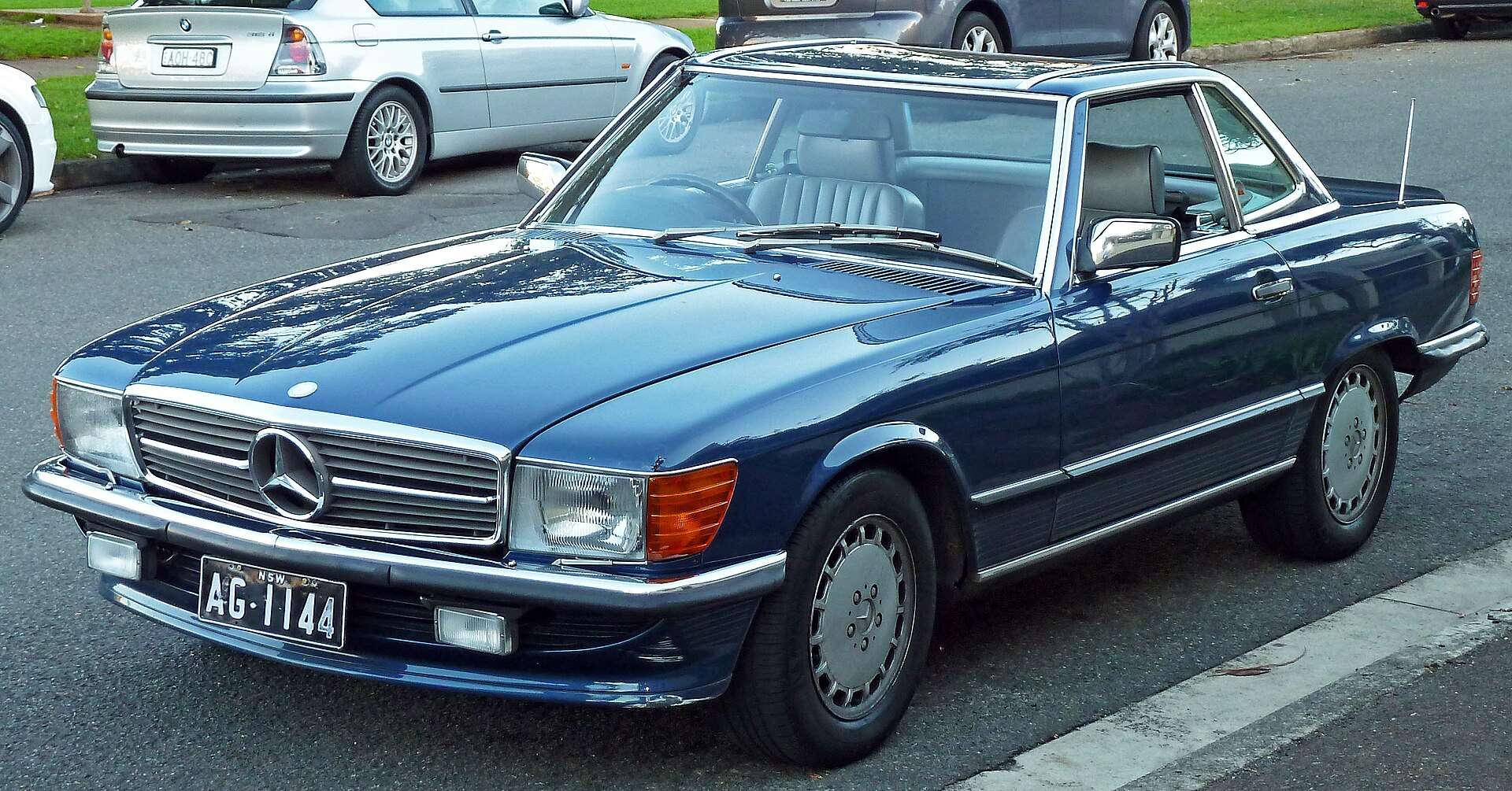
The 560 SL’s options list is short, which simplifies originality checks. Power front seats, lumbar support and heated seats were the notable extras; leather, climate control, cruise control and 15-inch alloy wheels were standard. The collector concerns are therefore about condition and history rather than equipment: the factory hardtop, original tools and manuals, evidence of continuous maintenance, and U.S.-spec bumpers and headlights that have not been swapped for European-style parts. We looked at one auction-bound example in our coverage of a 1988 560 SL, and an earlier SL generation, the W113 280 SL Pagoda, is covered in our 1971 280 SL Pagoda lot analysis.
Jaguar XJ-S V12 convertible: the rarest of the three, and the cheapest
Jaguar showed the full XJ-S convertible at Geneva in March 1988, 13 years after the coupe’s debut. Karmann engineered the car and its electric hood; the conversion needed 108 new panels and 48 modified pressings, and Jaguar says the convertible weighs 100 kg more than the coupe with 15% less torsional rigidity (Jaguar Daimler Heritage Trust). It was initially a two-seater and gained rear seats in May 1993. Between 1988 and 1996 Jaguar built 30,946 convertibles: 16,469 V12s and 14,297 with the 4.0-liter six. Another 4,877 V12 convertibles were built in 1989 alone.
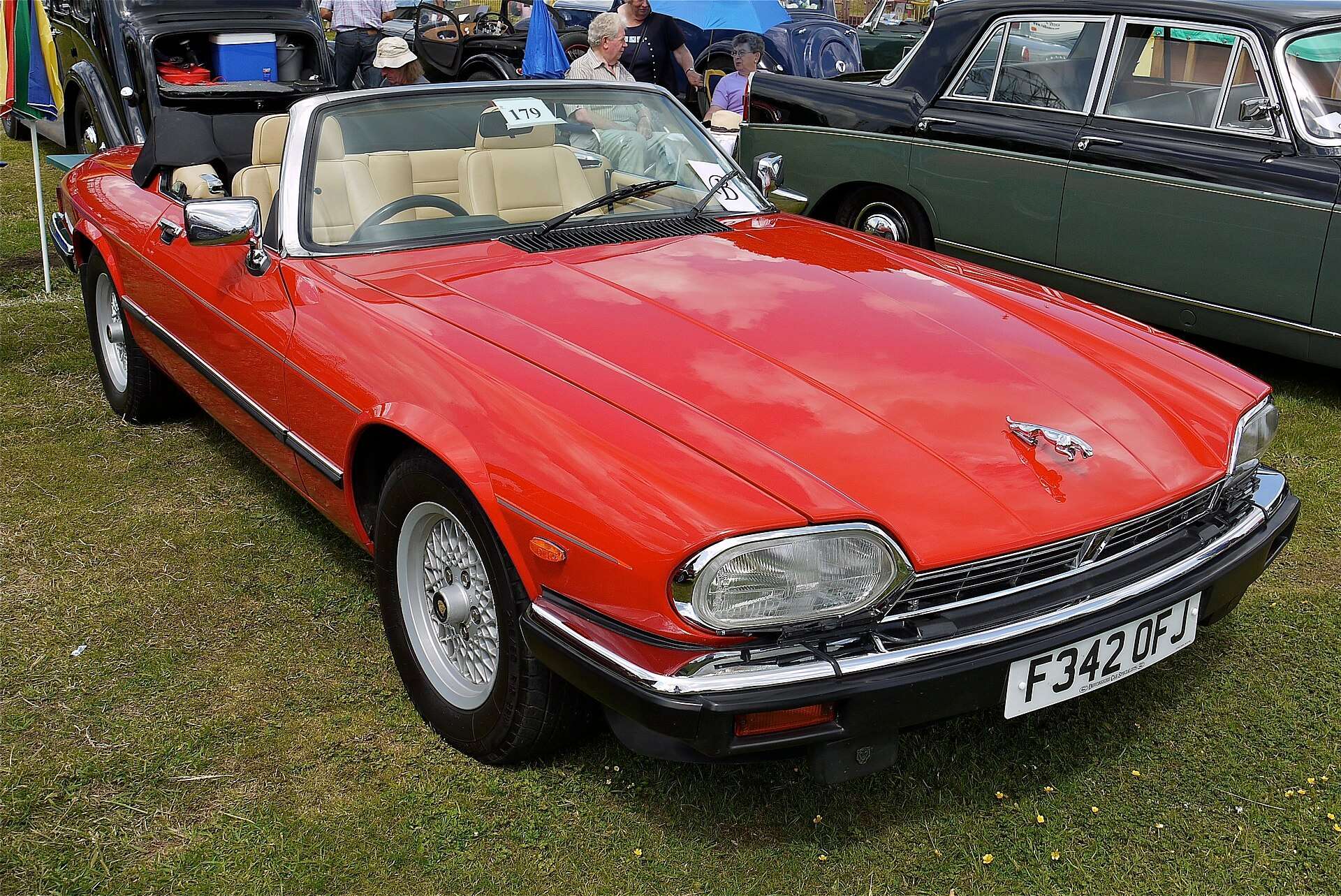
That makes the V12 convertible the lowest-volume car in this trio, although the counts are not like-for-like. The Jaguar figure covers all markets and nine model years, the 560 SL figure covers all markets over five, and the Allanté figure covers its full seven-year run. The 5.3-liter V12 was rated at 299 hp in UK trim and roughly 262 hp in U.S. trim, driving through a three-speed GM automatic. Jaguar’s own heritage trust quotes 0 to 60 mph in 8.0 seconds and a top speed of 146 mph for the original V12 convertible. In May 1992 the V12 grew to 6.0 liters and 304 hp. Our report on the TWR Supercat restomod shows how the same body and engine are being reinterpreted at the top of the market.
Side by side: specifications
| Cadillac Allanté | Mercedes-Benz 560 SL | Jaguar XJ-S V12 convertible | |
|---|---|---|---|
| Years | 1987–1993 | 1985–1989 (U.S. sales 1986–89) | Full convertible 1988–1996 |
| Production | About 21,430 (sources cite 21,106–21,430) | 49,347 (46,263 U.S.) | 30,946 convertibles, including 16,469 V12s |
| Engine | 4.1 V8 (1987–88); 4.5 V8 (1989–92); 4.6 Northstar V8 (1993) | 5.5-liter V8 | 5.3-liter V12 (6.0 from May 1992) |
| Power / torque | 170 / 235; 200 / 270; 295 hp / 290 lb-ft | 227 hp / roughly 280 lb-ft (sources cite 275–287) | About 262 hp U.S.; 299 hp UK / 318 lb-ft (UK spec) |
| Transmission / drive | 4-speed automatic / front-wheel drive | 4-speed automatic / rear-wheel drive, limited-slip | 3-speed GM automatic (4-speed from 1993) / rear-wheel drive |
| Performance | Not verified in sources reviewed | 0–62 mph in 7.7 s; 139 mph (auto-forever.com) | 0–60 mph in 8.0 s; 146 mph (UK 299 hp spec) |
| Weight | Not verified | About 3,650–3,780 lb (sources vary) | Not verified; about 100 kg heavier than coupe |
| Body | Pininfarina, Turin; final assembly Hamtramck | Steel, removable hardtop standard | Karmann-engineered convertible |
| New price | $54,700 (1987) to $59,975 (1993) | $48,000 at launch; $57,980 (1987) | £36,000 UK (1988); U.S. price not verified |
Side by side: market evidence
Market evidence for this segment is thin, and we want to be explicit about that. We could verify the following sales from public sources. Every figure is a single result, not an index.
| Car | Result | Date | Source and notes |
|---|---|---|---|
| 1993 Allanté (Northstar) | $14,405 | Oct 9, 2024 | Hagerty Marketplace; no reserve, about 64,500 miles, 30 bids |
| 1993 Allanté | $17,250 | Oct 6, 2025 | Classic.com; about 17,000 miles |
| 1992 Allanté | $24,500 | Sep 21, 2025 | Classic.com; about 2,000 miles, a low-mileage outlier |
| 1986 560 SL | $23,273 | Jan 23, 2026 | Hagerty Marketplace; 66,700 miles, 37 bids, original window sticker |
| 560 SL (Hagerty guide) | $24,900 (#3 Good) | At time of writing | Hagerty valuation page for a 1989 560 SL; page shows +8.3% trend with no period stated |
| 560 SL | $43,575 | Mar 27, 2025 | Hagerty lists this PCARMARKET sale as the most recent when we checked; mileage not stated |
| 1989 XJ-S V12 convertible | $10,754 | Dec 1, 2025 | Hagerty Marketplace; no reserve, about 45,900 miles, 35 bids |
Two reference points add context. Hagerty’s 2021 look at the Allanté recorded a 1993 car with 4,896 miles selling for $40,000 plus fees on Bring a Trailer and warned that it was an outlier; Hagerty’s concours value for a 1993 car was reported at $30,800 in early 2026. For the 560 SL, Hagerty’s 2019 analysis showed the #2 value of a 1989 car at $44,200 after falling 12.58% from January 2017 to January 2019, following a 78.7% jump in May 2015. In other words, the 560 SL has already lived through a boom and a correction, and its price history is more volatile than the “safe Mercedes” reputation suggests. We could not retrieve Bring a Trailer’s own results pages for this article, and we found only one clean U.S. dollar result for a V12 XJ-S convertible, so treat the Jaguar number as indicative rather than definitive.
Reliability, maintenance and parts
Allanté. The mechanical half of the car is the easier one: Hagerty’s author argues that GM parts are easier to source in a hurry than European parts of the era, and calls the HT4100 durable under endurance-racing abuse. The body half is not. The convertible top has a specific operating sequence that owners say is easy once learned and costly when forced, early cars used hard rubber weatherstripping that Cadillac later replaced with softer foam, and the Pininfarina-specific trim and panels are reported by owners to be rare and expensive. Owners also describe electrical gremlins and battery drain in storage. A buyer should insist on a documented top-and-seal history.
560 SL. This is the easiest of the three to live with. The Mercedes-Benz Club of America’s R107 buying guide says parts and qualified service are readily available. Its checklist is practical: inspect the frame rails, front fender drainage areas, heater blower box and trunk battery housing for rust; have the timing chain, guides, tensioner and cam lobes evaluated; note that the airbag needs replacement on a 10-year interval; and check aluminum oil pans for cracks and head-gasket weeping. Its advice that major restoration work rarely adds value is worth remembering when comparing a pristine car with a project.
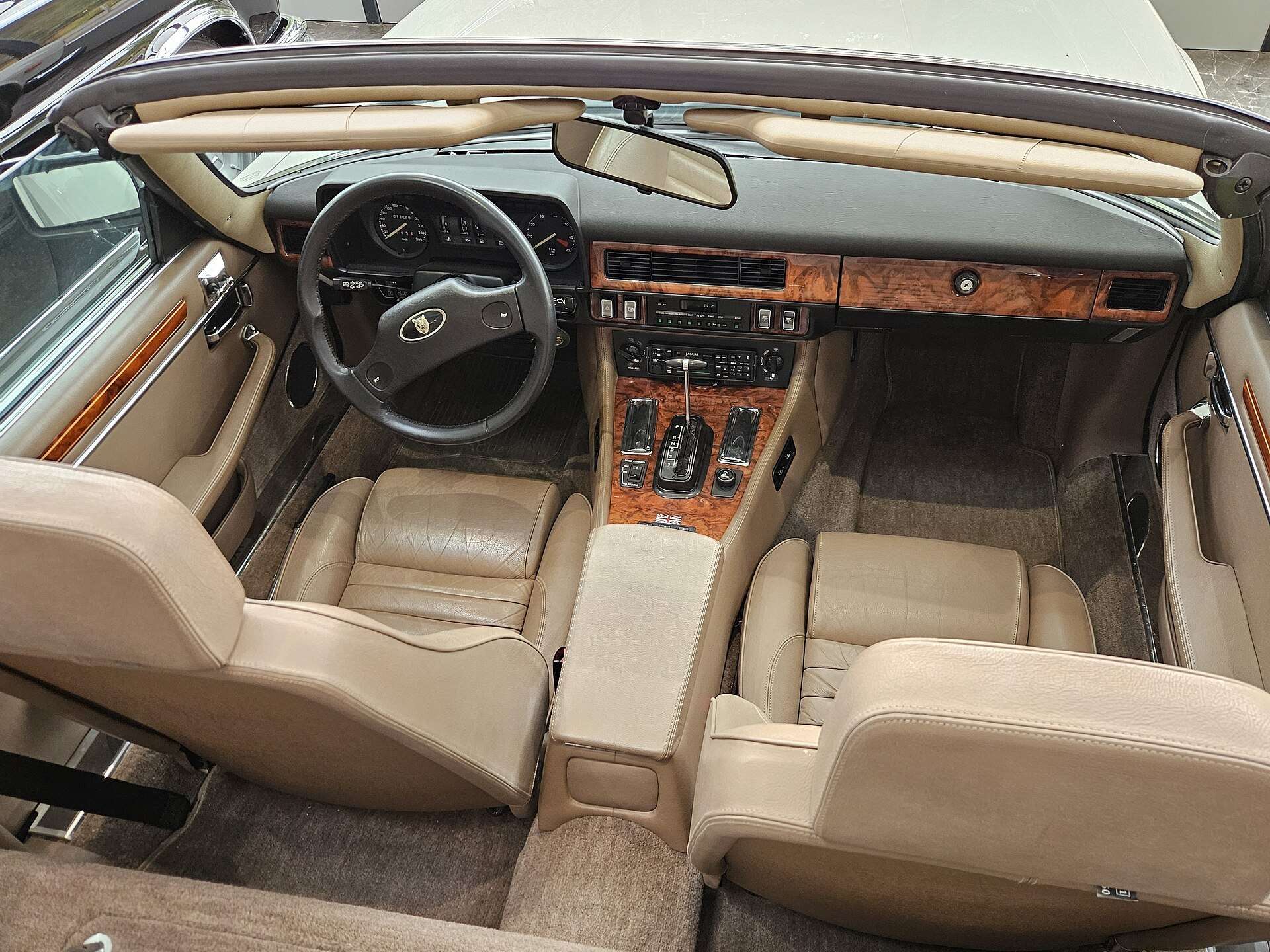
XJ-S V12. A Classics World buying guide treats the V12 as generally reliable when serviced and names a lack of service history as the main red flag. Rust checks start with the jacking points, sills, front and rear wing edges and doors; on post-1991 cars, the windscreen scuttle is common and costly. Coolant should be changed every two years because the radiator silts, a timing-chain rattle is a reason to look harder, and the front upper inner wishbone bushes tend to wear around every 50,000 miles. On convertibles, check the hood mechanism and fabric, and check the wood veneer lacquer, since repair is expensive. The guide is labeled as a sponsored editorial, so we treat it as a checklist and not as a cost estimate. Parts and labor costs on a V12 should be budgeted conservatively, and a pre-purchase inspection by a Jaguar V12 specialist is the most cost-effective money a buyer can spend.
Driving character
The published numbers show three cars of broadly similar pace. The 560 SL does 0 to 62 mph in 7.7 seconds; the V12 convertible does 0 to 60 in 8.0; the Allanté’s figures were not available to us in a source we could verify, though its 295-hp 1993 Northstar is close to the Jaguar’s 299-hp UK-spec V12 and well above the 560 SL’s 227 hp. What differs is character. The Jaguar is the tourer of the group; Autocar, quoted by Jaguar Heritage, called it “a very complete and accomplished tourer.” The Mercedes is the most solid and the most recognizably engineered. The Allanté is the odd one out: front-drive, with a hydraulic brake booster that owners disagree about, while owners who have kept them describe them as robust and enjoyable to drive. These are cars to be judged on how they cover 300 miles, not on lap times.
Which car for which buyer
| Buyer priority | Best fit | Why |
|---|---|---|
| Lowest entry price | Jaguar XJ-S V12 | The one clean U.S. result we found, $10,754 for a 45,900-mile 1989 car, was the lowest of the three. Budget for catch-up maintenance. |
| Easiest ownership and resale | Mercedes 560 SL | Largest production, widest parts and service network, and the strongest documented results. |
| Rarity and a story to tell | Cadillac Allanté | A transatlantic build process, a final-year Northstar and pace-car editions give it more narrative than either rival. |
| Most power among U.S.-spec cars | 1993 Allanté | 295 hp from the Northstar, against about 262 hp for a U.S.-spec XJ-S V12 and 227 hp for the 560 SL. Only 1993 cars have it. |
| Smoothest long-distance car | Jaguar XJ-S V12 | V12 refinement, and a contemporary road-test verdict that it is a complete tourer. |
| Lowest risk of a bad surprise | Mercedes 560 SL | Mature checklists, a large specialist base and clear condition benchmarks. |
Long-term ownership considerations
Nothing in the evidence supports calling any of these cars a safe appreciating asset. Hagerty’s own analysis of the Allanté concluded that a single $42,000 result did not establish a trend and that most owners should not expect windfalls. The 560 SL’s historical swings were larger than most buyers realize. The V12 convertible has so far been a cheap entry into twelve-cylinder ownership, but the cost of maintaining it is real. Liquidity is our judgment and not a measured statistic: the 560 SL has the broadest pool of buyers and the most comparable sales, the Jaguar attracts a smaller but loyal group, and the Allanté draws the narrowest audience, which makes a condition-led purchase and long holding period more important than any exit plan.
Bottom line
If you want a car you can buy, enjoy and sell without much drama, the 560 SL is the answer, and the premium it carries is paying for exactly that. If you want a twelve-cylinder convertible for the price of a well-optioned used hatchback, the XJ-S V12 is the bargain, provided you buy on service history and keep a maintenance fund. If you want the most interesting car, with a story no other American manufacturer has matched, the Allanté, specifically the 1993 Northstar car, is the choice, and the one buyers should research hardest before they pay. For other cross-brand comparisons from this series, see Honda S2000 vs. BMW Z4 M Roadster and Lotus Esprit V8 vs. TVR Griffith 500.
Sources and limits
Specifications and production figures come from Wikipedia’s entries on the Cadillac Allanté, Mercedes-Benz R107 and Jaguar XJ-S, the Jaguar Daimler Heritage Trust’s convertible history, auto-forever.com’s 560 SL production tables, the Mercedes-Benz Club of America’s R107 buyer’s guide, and Hagerty’s 560 SL (2019) and Allanté (2021 and later) coverage. Sales come from Hagerty Marketplace listing pages and Classic.com. Where sources disagreed (Allanté production, 560 SL torque and weight), we show the range. We could not verify Allanté performance times, an XJ-S U.S. launch price or a robust set of XJ-S U.S. dollar results, and Bring a Trailer results were not accessible to us, so none are presented. Photo credits appear in each image caption; all images are from Wikimedia Commons under the licenses shown.
The collector car market, every weekday morning.
Auction results, price moves and what’s crossing the block, read in four minutes. Free, from Modern Car Collector.
No spam, unsubscribe in one click. Or read more about the Brief.
Related Posts:
- Low-Mile 1987 Chevrolet Monte Carlo SS Aerocoupe for…
- Austin-Healey 3000 vs Sunbeam Tiger vs Triumph TR6:…
- Low-Mileage 1987 Cadillac Allanté Surfaces on Bring…

- Hagerty Says Mk2 Golf GTI Values Rose 24% in a…
- 190E Evo II vs. Sierra RS500 vs. M3 Sport Evolution:…
- BMW 850CSi vs. Maserati Shamal vs. Mercedes 600 SEC:…
 Kyle Matthews
 Eve Nowell