

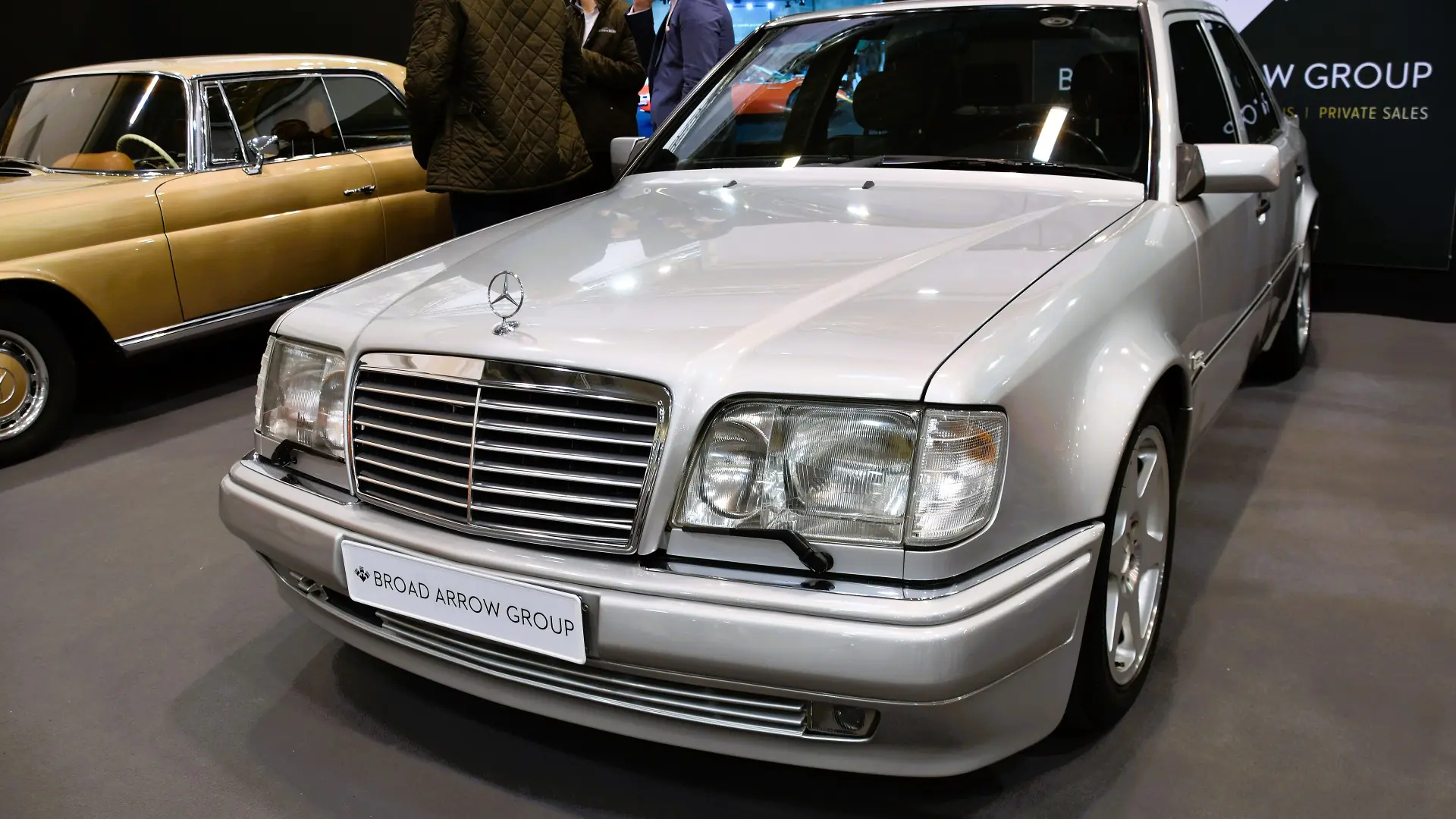
A good Mercedes 500E buying guide has to start with a price spread that mileage alone does not explain. On Bring a Trailer this year, a 55,000-mile 1993 car brought $89,500 in July, while a 144,000-mile 1993 car brought $32,250 in December 2025. A 149,000-mile 1992 car, meanwhile, made $48,000 in September, more than a 105,000-mile 1993 car that sold for $43,250 a month earlier. The 500E rewards buyers who read the service file, the underside and the wiring, because this is a Porsche-assembled sedan with a V8 in a body widened to take it, and its weak points are specific.
This guide is for buyers deciding which 500E to pursue, what to inspect before bidding and what the first years of ownership are likely to cost. It does not predict where values go. It sets out what the car is, what recent sales paid, and which examples are worth the money for which kind of owner. For the broader approach we take to these guides, see our Toyota FJ40 buying guide.
Why the 500E earns a place in collector garages
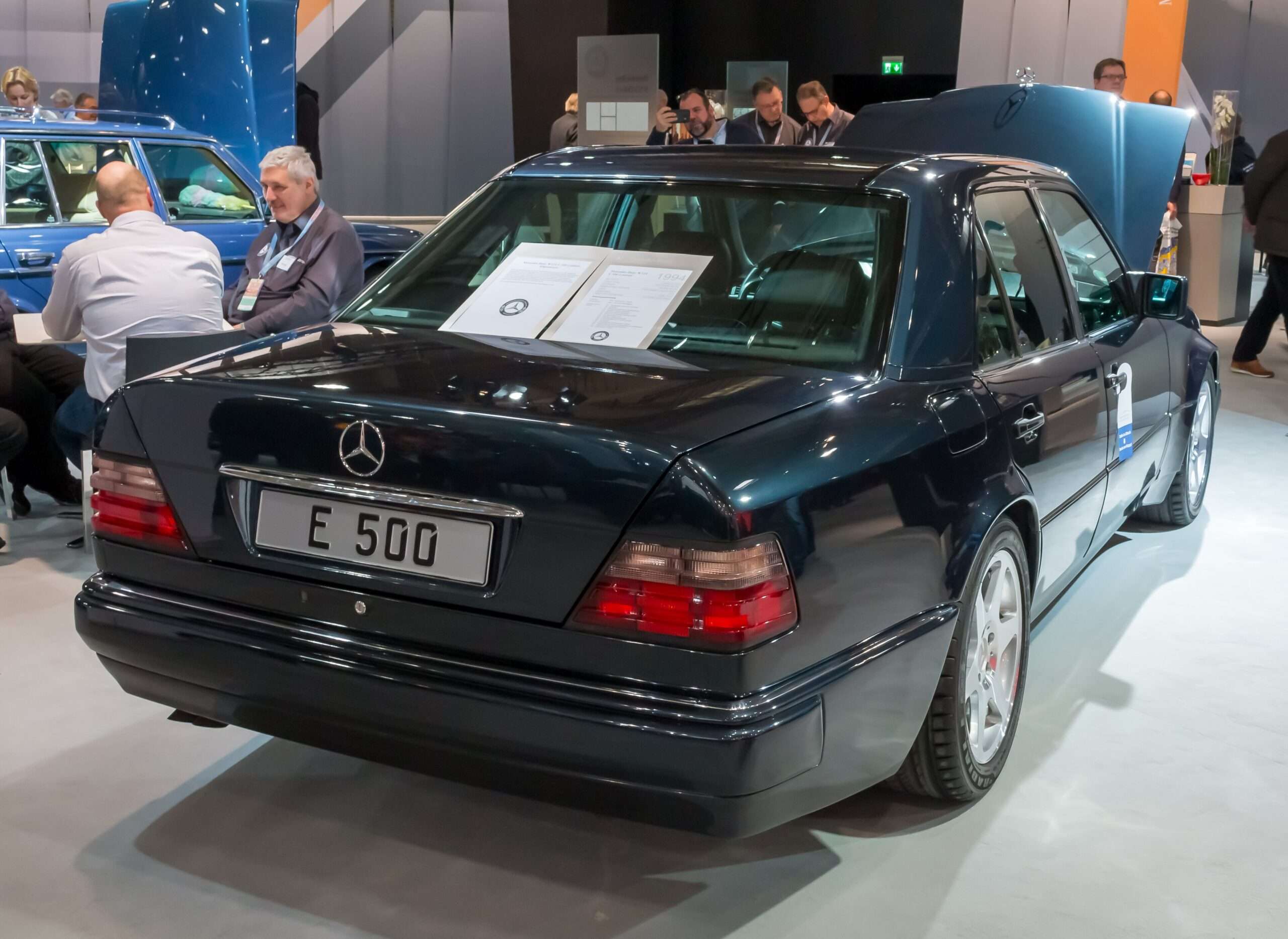
Mercedes-Benz wanted a W124 with the 5.0-liter V8 from the 500 SL. The wider body that needed was too much for its own Sindelfingen line, which was too small for the job. Porsche, which received the development contract in 1988, built the car instead. According to Porsche’s own history of the project, bodies were assembled in Zuffenhausen from Mercedes-supplied parts plus Porsche-made pieces such as the front wings, sent back to Sindelfingen for paint, then returned to Zuffenhausen for final assembly and engine installation. Each car made the trip between the two sites twice, and the process took 18 days.
The result was 56 mm wider and 23 mm lower than the standard W124, with the battery relocated to the right side of the trunk to improve weight distribution. Porsche says the car delivered 326 PS and 480 Nm through a four-speed automatic, reached 100 km/h in 6.1 seconds and was electronically limited to 250 km/h. That combination, a sleeper body with a supercar-era performance envelope and a famous second badge in its history, is what keeps collectors interested. Total output was small: Porsche puts production at 10,479 cars by April 1995.
Years and variants: the version you buy shapes the car you own
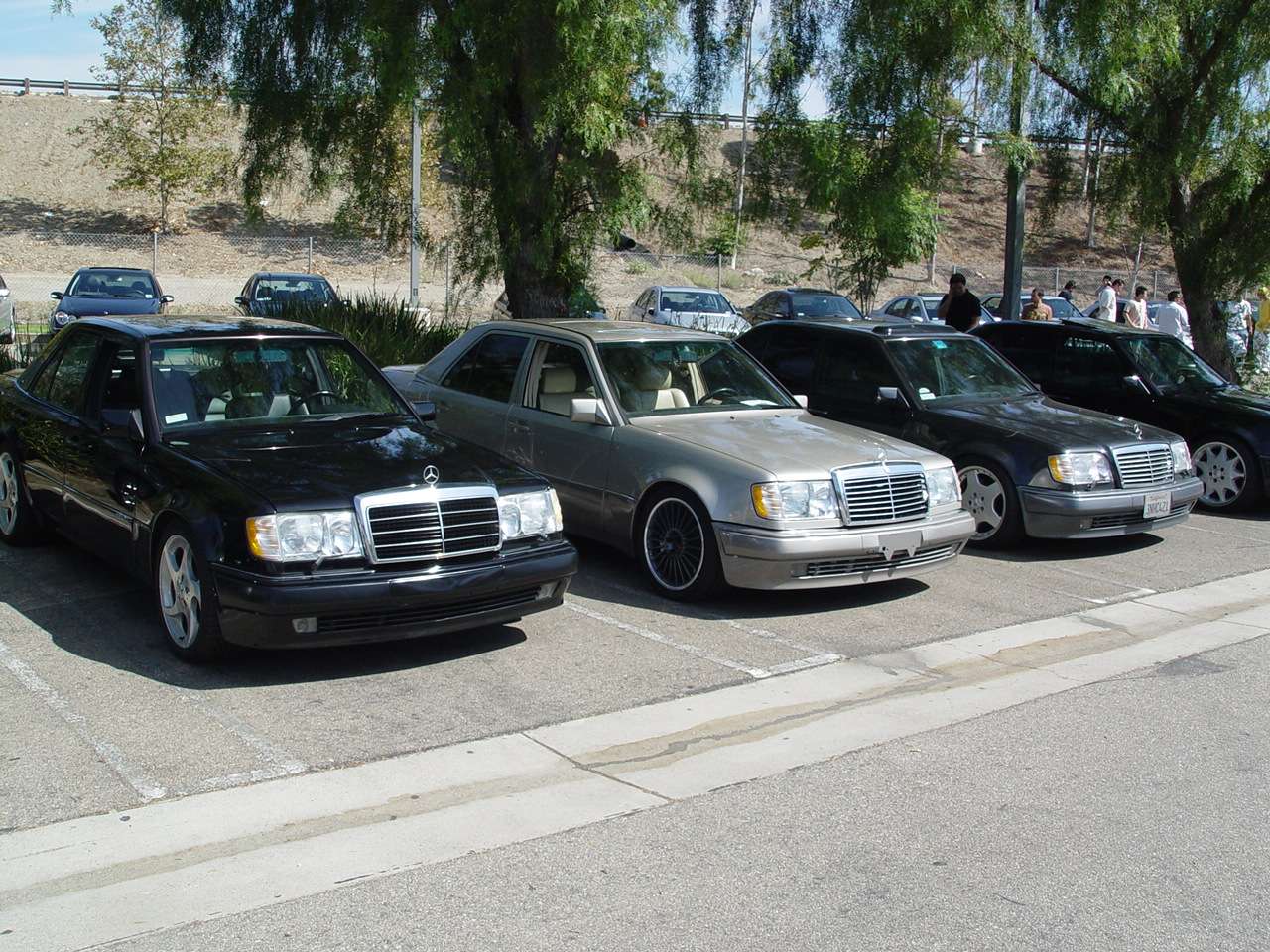
The car was sold as the 500 E through the 1993 model year and as the E 500 from 1994. Wikipedia’s production table, which does not split the two names, lists 46 cars in 1990, 2,566 in 1991, 4,416 in 1992, 1,596 in 1993, 1,735 in 1994 and 120 in 1995, which sums to the 10,479 figure Porsche cites. The same source puts US imports at about 1,528 cars, sold through May 1994, with a US price of $81,800 for the 1992 model. Treat those year counts as a guide rather than an official registry; they are calendar-year builds, not model years.
| Version | Build years | What changes | What it means for buyers |
|---|---|---|---|
| 500 E (early) | 1991–1992 | Original body and trim; 300 mm front brake discs on early cars | Largest build year and the most examples on the market; check that brakes, harness and leveling have been addressed |
| 500 E (late) | 1993 | 320 mm front discs from the 600 SL fitted to later 1993 cars, per Wikipedia | Often the sweet spot for drivers; top two 2026 Bring a Trailer results were both 1993 cars |
| E 500 | 1994–1995 | Facelift with new headlamps, grille and trunk lid; larger brakes from the 600 SL; engine unchanged | US sales ended in May 1994, so US-delivered cars are few |
| E 500 “I120” last series | Jan–May 1995 | 120 cars built as last orders, per Wikipedia | Documented provenance is the entire argument; verify with factory records |
| E 60 AMG | 1994–1995 | 6.0-liter V8, 381 bhp, widened arches and AMG-specific equipment, per Wikipedia | A separate collector proposition; no production count is published in the sources we could verify |
Two cautions apply to that table. First, the US 1993 and 1994 engines were rated seven horsepower below the 1992 cars, so the 322 hp figure applies to early cars, and Hagerty’s own specification for a US 1993 car lists 315 hp. Second, the I120 and E 60 AMG cars are best approached as specialist purchases. The AMG-built 6.0-liter V8 is a different engine from the standard 5.0, and a buyer should confirm the AMG identification, including the engine and airbox markings and the data-card option code, before paying a premium.
Engine, transmission and what Porsche changed
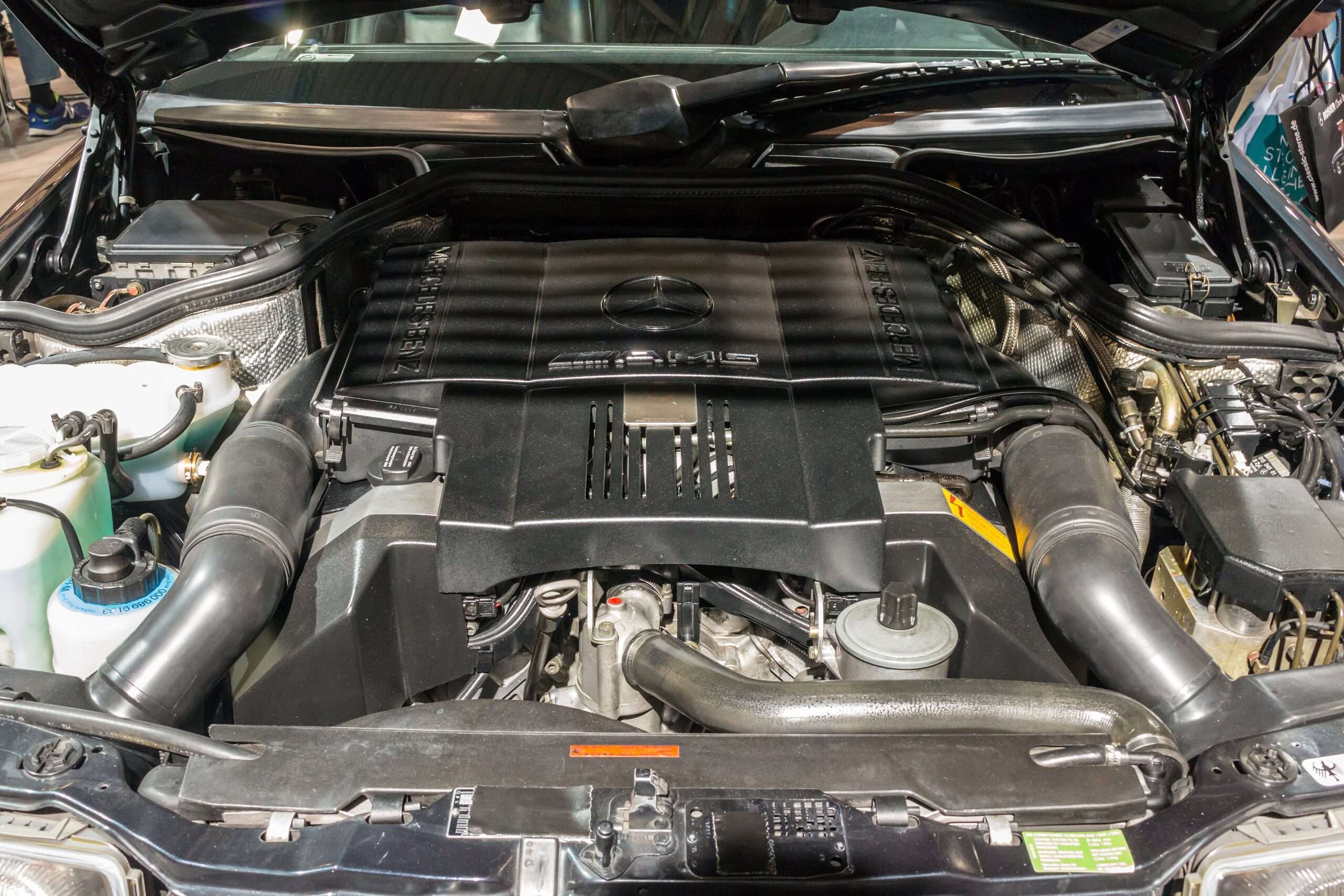
Every 500E uses the 5.0-liter M119 V8 (4,973 cc, four valves per cylinder, two overhead cams per bank) and a four-speed automatic. There is no manual and no alternative engine, so the transmission decision is not a decision. Grassroots Motorsports lists the car as a struts-front, multi-link-rear design with vented discs at all four corners, 16 x 8 wheels and 225/55ZR16 tires, at about 3,855 pounds. The car is left-hand drive in the US, and US cars were sold fully equipped; the only extras Wikipedia lists are a dealer-fitted CD changer and an integrated cellular phone.
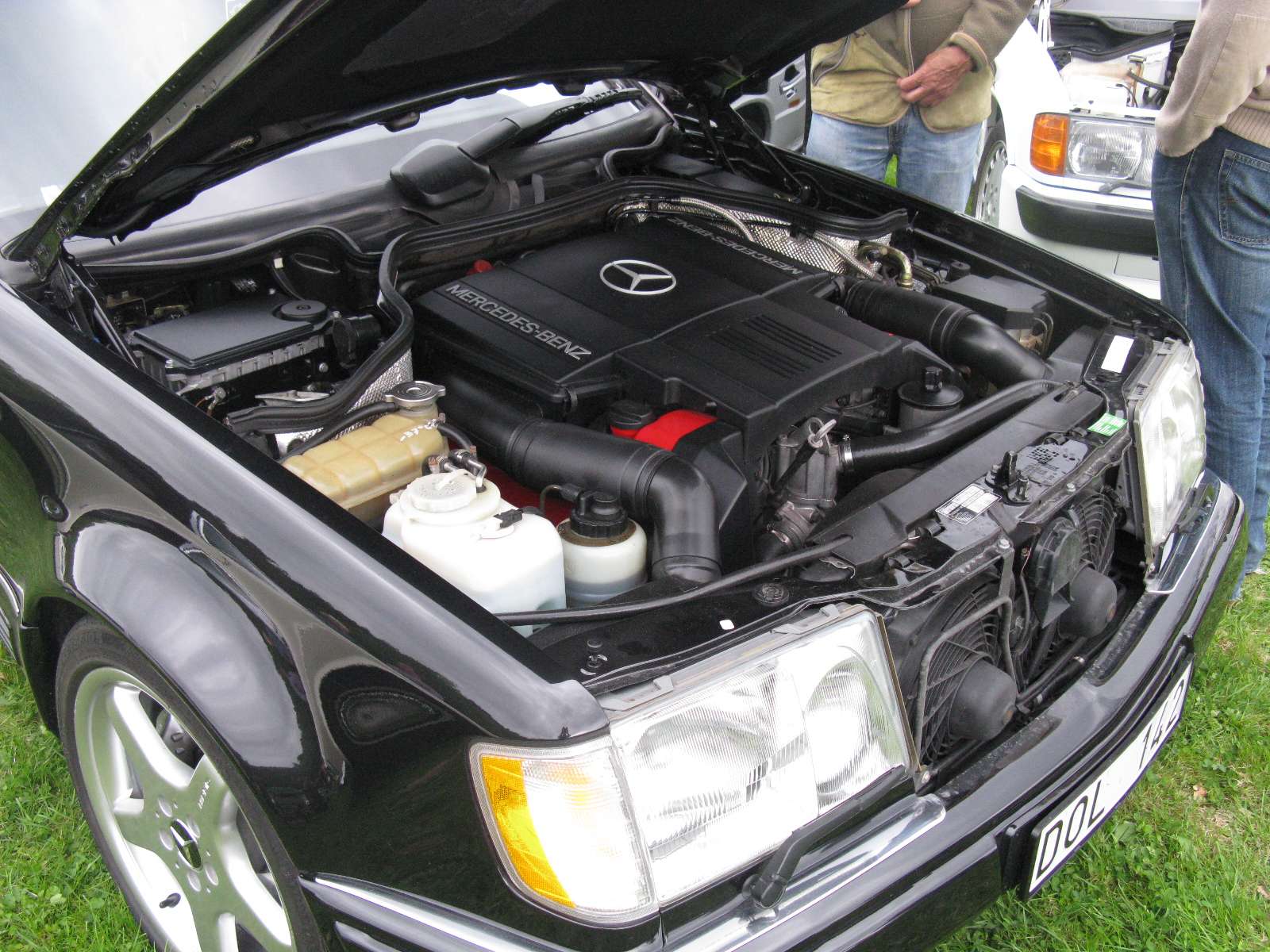
Because the M119 sits in a bay designed for a smaller engine, the layout is cramped. Grassroots Motorsports notes the lower radiator mount hangs low enough that a curb strike can push the radiator back and cause further damage in the crowded engine bay. Budget for specialist labor, and look at who has serviced it. A shop that works on W124s every week is worth more here than a general Mercedes dealer.
What recent sales actually paid
The table below uses 2025–2026 sales listed by Classic.com for the 1992–1993 US-market 500E, all on Bring a Trailer. We could not open Bring a Trailer directly from our research tools, so Classic.com’s aggregation is the source for these prices and mileage figures; confirm any single result on the original auction page before relying on it.
| Sale date | Year | Mileage | Price | Venue |
|---|---|---|---|---|
| Jul 21, 2026 | 1993 | 55,000 | $89,500 | Bring a Trailer |
| Jul 19, 2026 | 1993 | 69,000 | $76,000 | Bring a Trailer |
| Apr 7, 2026 | 1992 | 85,000 | $64,000 | Bring a Trailer |
| Sep 19, 2026 | 1992 | 149,000 | $48,000 | Bring a Trailer |
| Aug 18, 2026 | 1993 | 105,000 | $43,250 | Bring a Trailer |
| Oct 15, 2026 | 1992 | 106,000 | $36,276 | Bring a Trailer |
| Sep 10, 2026 | 1992 | 144,000 | $33,250 | Bring a Trailer |
| Dec 9, 2025 | 1993 | 144,000 | $32,250 | Bring a Trailer |
Read the table for the pattern, not the average. The two cars with under 70,000 miles brought $76,000 and $89,500; the five with more than 100,000 miles brought between $32,250 and $48,000, with the 149,000-mile car at the top of that group. Mileage clearly matters, but it does not explain a car that does 149,000 miles and out-prices two cars with 105,000 and 106,000. Condition, records and presentation account for the rest. We would also warn against treating one sale as a market: eight results from a single platform are a sample, not a trend.
Older published guidance now sits below the best 2026 results. A Grassroots Motorsports profile, for example, put Hagerty’s top value near $50,000 and noted several Bring a Trailer sales under $20,000. Check Hagerty’s current valuation tool for condition-graded numbers before you negotiate; we could not retrieve its current condition tiers.
Inspection priorities: rust, crash history and the aging systems
Start with the body, because the 500E’s special parts are the hardest to replace. Grassroots Motorsports, quoting Auto Clinic of Ormond, says to check the rocker panels and floors, and notes the floors carry a rubber coating that can hide rust. The same piece says to investigate any prior damage because so few examples exist that replacement parts are scarce. About 1,500 cars reached the US, which limits the supply of used panels in North America. A forum member on 500eboard.com put it more bluntly: in his region, rust would be his primary concern, not mechanicals.
Engine and drivetrain
Grassroots Motorsports’ mechanics list four recurring faults: brittle cam oil line fittings that can break (and if one cylinder head is opened, do both), engine mounts that sag and let drivetrain vibration into the cabin, shift linkage bushings that become brittle (one car shifted into reverse while being put in park), and the low radiator mount noted above. A 500eboard.com owner estimated the engine mounts at roughly $500 in parts and $500 in labor, and another estimated V8 driveshaft flex discs at about $400 in parts and $700 in labor with the exhaust dropped. These are forum figures from a 2014 thread, so treat them as order-of-magnitude and get a current quote.
Suspension, electrics and cabin
Two items can turn a cheap car into an expensive one. The first is the hydraulic self-leveling suspension: Flagship One’s shop blog says leaks in that system can require expensive repairs, and a prospective buyer on 500eboard.com listed the leveling air cells as a concern. Look for a rear end that sits low, and ask for invoices. The second is the wiring harness. Flagship One’s blog flags aging harnesses and window regulators as concerns on the 1993 car, and a 500eboard.com owner said a dealer would quote about $1,500 to $2,000 to replace the upper harness, against about $500 doing it yourself. An owner of a related 400E reported disintegrating harness insulation and warned that a short could damage the engine computer, although the sensor and control circuits were fused. Ask whether the harness has been replaced, by whom and when.
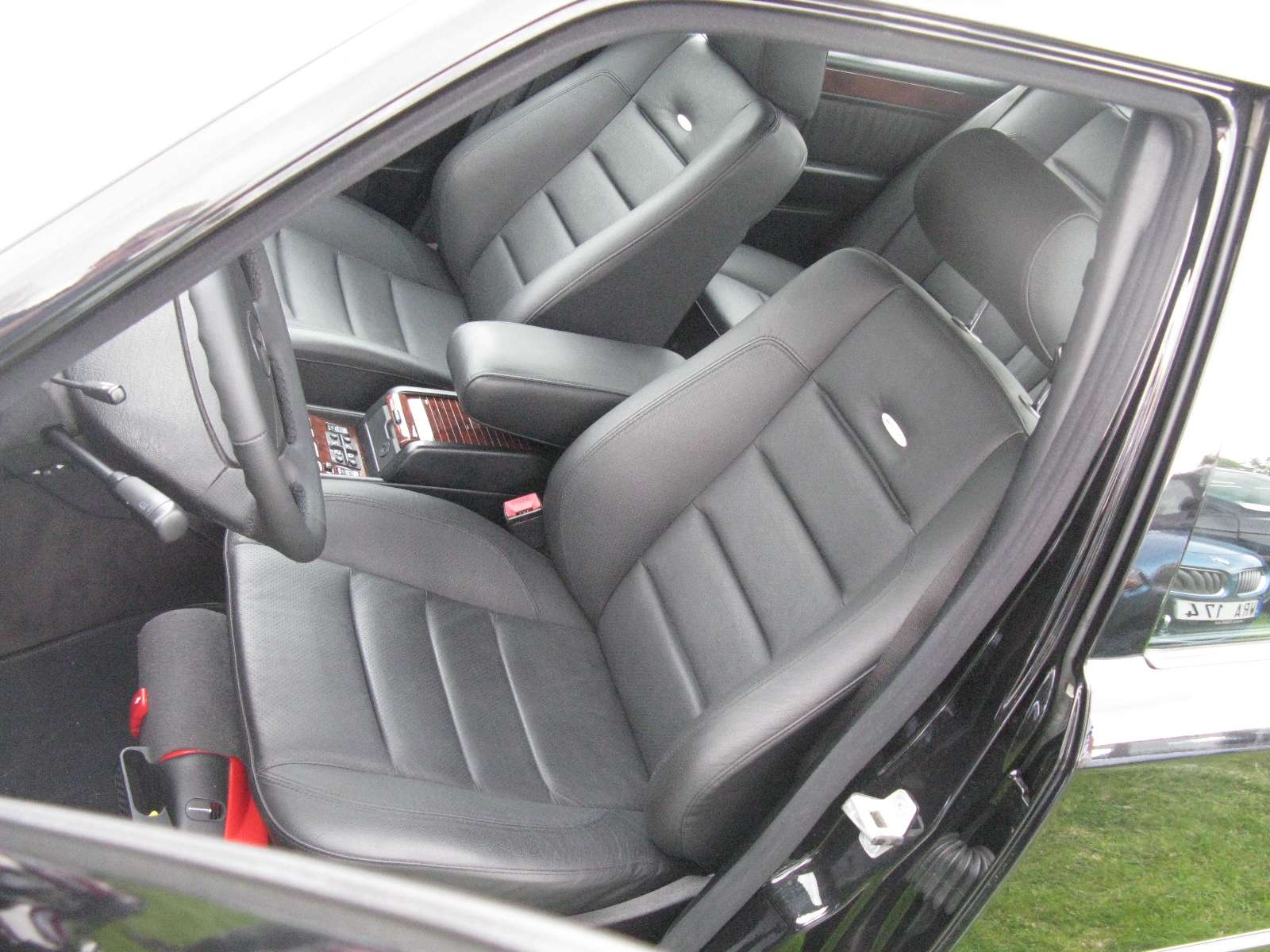
Inside, the failure modes are cosmetic but not free. Flagship One’s blog lists cracking wood trim from age and sun exposure, and the mechanic’s notes in Grassroots Motorsports describe a rubber-coated floor and tight maintenance requirements: the 100,000-mile service on the car they profiled cost about $2,000. If the seller cannot show that service, discount accordingly.
Originality, documentation and common modifications
Documentation on a 500E does three jobs: it proves the car left the factory as a 500E, it shows what has been done since, and it shields the buyer from a standard W124 dressed up as something rarer. Start with the VIN and the factory data card. Mercedes-Benz’s classic-car program can document how a car left the factory, but, as we explained in our piece on Mercedes-Benz’s factory documentation, that paper does not tell you what the car became. A data card that matches the car is the floor, not the ceiling. For how a data card can settle an originality question on a very different Mercedes, see our 300 SL Gullwing alloy-body check.
Modifications are common because the platform invites them. Wheels, exhausts and AMG- or Brabus-inspired conversions turn up, and one 105,000-mile modified 1992 car sold for $52,666 on Bring a Trailer in August. That is one result, and it does not prove modifications are rewarded. For collectors who want originality, factory wheels, standard paint and a clean service history are the priorities. If you are buying to drive, a tasteful, reversible modification with receipts can be acceptable; an undocumented engine or suspension change is a reason to walk away. For another example of a W124-platform car priced largely on its paperwork, see our look at a Lotec-turbo 300CE-24 and its TÜV papers.
Ownership costs and parts availability
Plan for specialist maintenance. The 100,000-mile service in the Grassroots Motorsports profile was about $2,000, and owners on 500eboard.com suggested holding a reserve beyond the purchase price: one recommended about $10,000, or about $5,000 if you do the work yourself, and another suggested an extra $5,000. Those numbers come from a 2014 discussion, so today’s figures are likely higher and should be treated as a starting point for your own budget.
Parts are a mixed picture. Many standard W124 items are still available, but a 500eboard.com thread notes that Mercedes has made many W124 parts no longer available, and that a price cut on a part often precedes its discontinuation. Because only about 10,500 500Es were built, 500E-specific components are the hardest to find, and owner communities such as 500eboard.com and the Mercedes-Benz Club of America, along with Pelican Parts and Mercedes-Benz Classic, are the sources Grassroots Motorsports points to. Stock a few spares if you buy one.
Which 500E for which buyer
The driver
Look for a later 1993 car with the larger brakes and a documented harness and leveling-system history. A well-kept 100,000-mile car, the segment that sold between $32,250 and $48,000 this year, is the practical entry point, but only if the service file is complete and the underside is dry. A cheap, neglected car is the most expensive way to own a 500E.
The collector who wants low miles and originality
The 55,000- and 69,000-mile 1993 cars that sold for $89,500 and $76,000 are the market’s reference for preserved examples. Pay for original paint, intact interior and a continuous record, and verify the body is straight; the price premium disappears if hidden crash repair turns up.
The buyer who wants the rarest version
The 1994–1995 E 500 and the E 60 AMG are the scarce versions, with the facelift styling and larger brakes for the former. They are also the hardest to value from public sales and the easiest to misidentify. Insist on factory documentation and a specialist inspection before paying for the rarity.
The budget buyer
The lowest sale in the set above, $32,250, is not a bargain unless the car has been maintained. A car under roughly $35,000 with unknown history should be priced as a project, with the harness, mounts, leveling system and brakes all open items. We would rather see a buyer pass than assume the cheapest car is the best deal.
What separates an exceptional 500E from an average one
An exceptional car has a straight, rust-free body with no evidence of structural repair, a complete service history from a specialist who knows the M119, documented work on the harness and self-leveling suspension, intact interior trim and a data card that matches the car. An average car has an unremarkable service record and several items from the inspection list deferred. A problematic car has hidden rust or crash repair, an undocumented harness, a sagging rear end or an unexplained modification. Price follows those differences far more closely than it follows the odometer.
The bottom line
The Mercedes 500E is a rare, well-documented piece of Mercedes-Porsche history, but a 500E purchase is an inspection decision first and a market decision second. Pay for condition and records, budget for known aging systems, confirm every comparable on its original listing, and keep a reserve for the work no inspection can promise to avoid. Browse more of our Mercedes-Benz coverage for related cars and comparables.
Sources: Porsche Newsroom history of the 500 E project; Wikipedia, “Mercedes-Benz 500 E”; Classic.com sold-listing data for the Mercedes-Benz 500E (accessed October 27, 2026); Grassroots Motorsports, “Mercedes-Benz 500 E: Like a Drug”; Flagship One, “1993 Mercedes Benz 500E Problems & Reliability”; 500eboard.com owner discussions; Hagerty valuation specifications for the 1993 500E; Stephen Mahan, “Don’t Disintegrate My Mercedes Wiring Insulation,” Design News. Forum cost estimates are owner opinions, not verified quotes.
The collector car market, every weekday morning.
Auction results, price moves and what’s crossing the block, read in four minutes. Free, from Modern Car Collector.
No spam, unsubscribe in one click. Or read more about the Brief.
Related Posts:
- Record Ferraris, Rare Icons and 15,000 RPM: The Week…

- The Collector Car Market Paid Up for Certainty This…

- Delta Integrale vs. Escort Cosworth vs. Celica…
- BMW 850CSi vs. Maserati Shamal vs. Mercedes 600 SEC:…
- 190E Evo II vs. Sierra RS500 vs. M3 Sport Evolution:…
- A 1969 Corvette L88 Convertible Is at $160,000. The…
 Shawn Henry
 Eve Nowell