

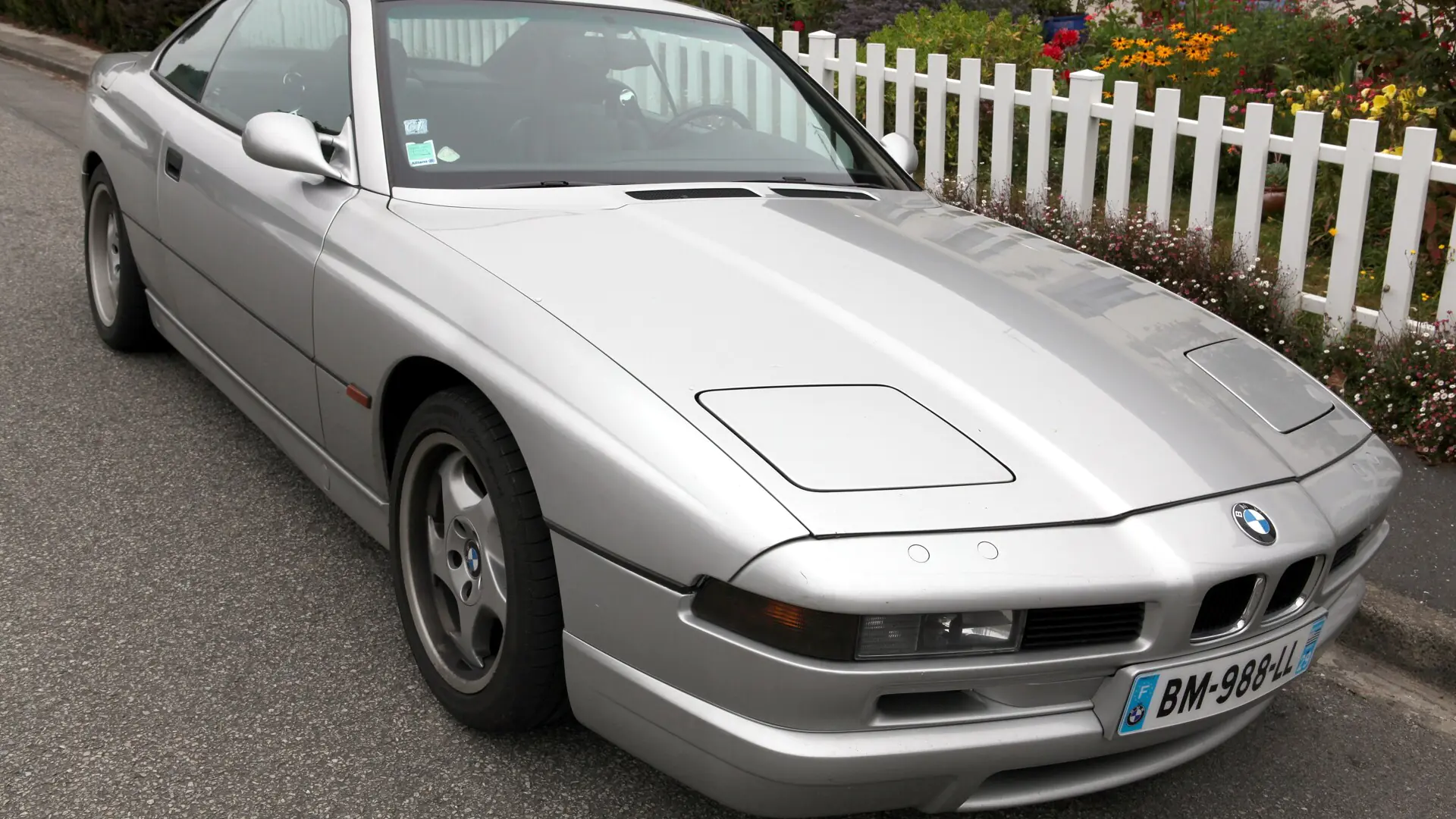
The most useful numbers in any BMW 850CSi vs Maserati Shamal debate are 1,510 and 369, the production totals of the two cars. Add the V12 versions of the Mercedes-Benz C140 coupe, which numbered 8,573 across the 600 SEC, S600 and CL600 names, and the three form a neat test of what collectors actually pay for in a 1990s grand tourer. Recent results suggest the answer is not scarcity alone. The Shamal is roughly four times rarer than the 850CSi, yet its 2026 results overlap with the 850CSi’s range rather than exceeding it. The Mercedes is far more common than either and trades at a fraction of their prices.
The thesis of this comparison is simple: rarity, pedigree and price are three separate arguments, and each of these cars leads with a different one. The Shamal is the rarity play, the 850CSi is the pedigree play, and the 600 SEC is the price play. Which is the better collector purchase depends on which argument you are buying, and on how much ownership risk you are willing to carry.
Why These Three Belong in One Conversation
All three are large, low, two-door coupes from the early 1990s, with engines the manufacturer treated as a flagship statement: a 5.6-liter V12 from BMW’s M division, a twin-turbocharged 3.2-liter V8 from a Maserati then under Alejandro de Tomaso’s ownership, and the first V12 coupe Mercedes-Benz had ever built. They were developed in Germany and Italy for the same kind of buyer, someone who wanted a fast, expensive, long-legged car with a back seat and a statement of status. Today they compete for the same garage space and often the same budget, at least at the top of the BMW and Maserati range.
This is a different comparison from our look at three ’90s Japanese turbo coupes or our Group A rally specials. Those are homologation-flavored sports cars. These are grand tourers, and the collector questions are different: how much of the car’s value rests on documentation and condition, and how much would a major mechanical bill erase.
BMW 850CSi vs Maserati Shamal vs Mercedes 600 SEC: The Numbers Side by Side
Figures below come from the sources listed at the end of this article. Where sources disagree or a number could not be verified, the table says so rather than filling the gap. Market figures are a snapshot as of October 27, 2026, not an appraisal.
| BMW 850CSi (E31) | Maserati Shamal | Mercedes-Benz 600 SEC / S600 / CL600 (C140) | |
|---|---|---|---|
| Production years | 1992–1996 (August 1992 to November 1996) | 1990–1996 | C140 coupe production ended in 1998 |
| Production | 1,510 (1,125 left-hand-drive Europe, 160 right-hand-drive, 225 US) | 369 | 8,573 V12 coupes, out of 26,022 C140 coupes in total |
| Engine | 5.6-liter S70B56 V12 | 3.2-liter AM 479 twin-turbo V8 | 6.0-liter M120 V12 (5,987 cc) |
| Power | 380 PS (about 375 hp) | 326 PS (322 hp) | 394 PS (389 hp) |
| Torque | 550 Nm (406 lb-ft) | 431 Nm (318 lb-ft) | 570 Nm (420 lb-ft) |
| Transmission | Six-speed manual only | Six-speed Getrag manual | Automatic only (four-speed early, five-speed later; sources vary on the changeover) |
| Weight | 1,865 kg DIN (about 4,110 lb) | 1,417 kg (3,124 lb), dry | About 2,248 kg (4,956 lb) per one source; about 4,700 lb per another |
| Acceleration | 0–60 mph in 5.9 seconds (Road & Track) | Claimed 0–62 mph in 5.3 seconds | About 6.6 seconds to 60 mph (single secondary source) |
| Top speed | Not verified in the sources reviewed | Claimed 168 mph (270 km/h) | About 155 mph (one secondary source) |
| Price new | DM 180,000 | 125 million lire | Not verified |
| Recent sales evidence (2026) | €97,000 (Sept.), $451,000 for a 2,800-mile car (Oct.), $142,500 (July), $87,000 (May) | $78,000 to $122,000 across four 2026 sales | $11,550 to $50,400 across eight sales of 1995 S600 coupes, Nov. 2025 to Sept. 2026 |
| Collector argument | M-built pedigree, manual, rear-wheel steering on European cars | Lowest production, Gandini design, turbo drama | Lowest entry price, V12 refinement, the most car per dollar |
BMW 850CSi: The Pedigree Pick
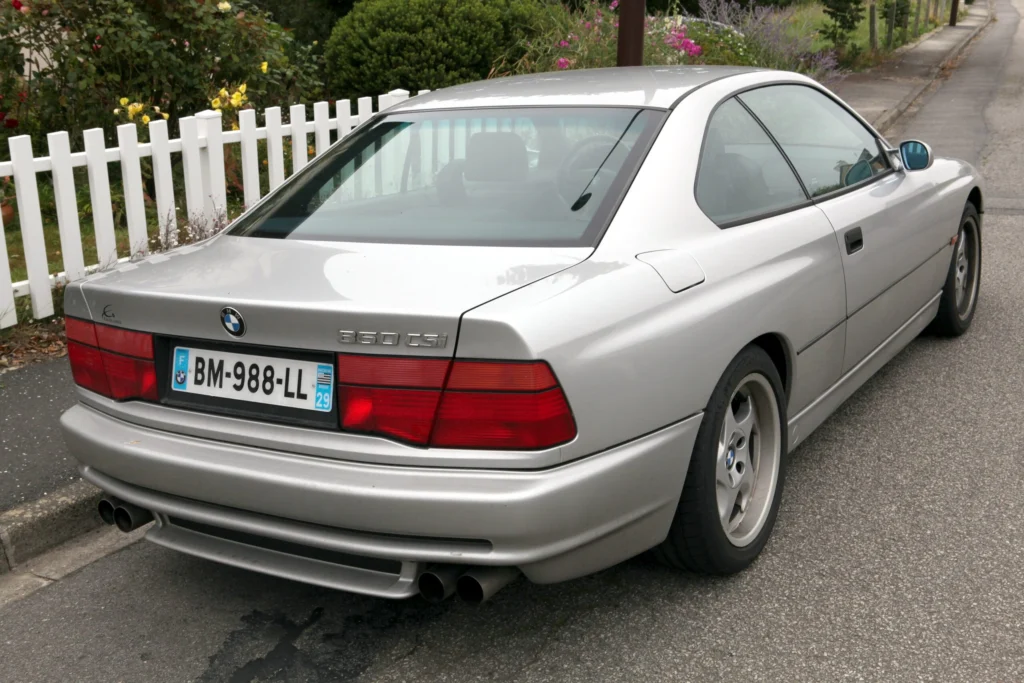
The 850CSi was not simply a hot 850i. Hagerty notes that BMW’s M division built it, pointing to the WBS VIN prefix as evidence, and that its S70B56 engine grew from the 5.0-liter M70 V12 by enlarging the bore to 86 mm and the stroke to 80 mm. BMW rated it at 380 PS and paired it only with a six-speed manual. Road & Track recorded 0–60 mph in 5.9 seconds. European cars also got hydraulic rear-wheel steering (BMW called it AHK), a roughly 15 percent quicker steering ratio, a lowered and stiffer suspension, and an engine oil cooler and rear-differential cooling that US cars lacked. The 225 cars sold new in the US carry “BMW Motorsport” lettering on the door handles instead.
The 850CSi is also scarce in context. At 1,510 cars it represents about one in twenty E31s. For collectors tracking BMW’s most coveted performance icons, it is the E31 that M GmbH actually built.
What the Market Is Saying
The 850CSi market is the most confusing of the three. A September 2026 Yahoo Autos report put Hagerty’s #3 (Good) value for a 1994 car at $90,500, with guide values down 9 percent over the past year and 22 percent over three. The same report noted a $142,500 Bring a Trailer sale in July and a three-year top result of $257,500. On Bring a Trailer in recent weeks, a 110,000-km Lagoon Green European car sold for €97,000 on September 7, a 41,000-km 1993 car stalled at a €93,500 bid on September 26, and a 4,500-km 1994 European car sold on October 17 for $451,000. That last car was a no-reserve premium listing offered on dealer consignment from a collection, and it is best read as a delivery-mile outlier, not a new baseline. We have seen the same dynamic in delivery-mile Alfa 8C results: the unused car sets its own market.
A takeaway that holds across those results: condition, mileage and specification are separating cars by multiples, while the guide-value trend shows the middle of the market has not been rising in a straight line. Buyers should treat the 850CSi’s price history as evidence of demand for exceptional cars, not as evidence that every example is appreciating.
Ownership Notes
Hagerty’s buyer’s guidance for the 8 Series says the V12 itself has little to worry about if it runs smoothly, and that the fly-by-wire throttle is reliable. It flags the cooling system (hoses, radiator, fan, water pump, expansion bottle), the extensive electrics including the slow-to-repair digital dash and pop-up headlights, the many rear Z-axle bushings, a headliner that can come unstuck, and worn manual-gearbox synchros. Good used front bumpers are rare and expensive. Hagerty also stresses service records, because high repair costs in period led to deferred maintenance. Pricing and availability for CSi-specific hardware, such as the rear-steering components and the forged wheels, were not covered in the sources reviewed, so ask a specialist before assuming they are easy to source.
Maserati Shamal: The Rarity Pick
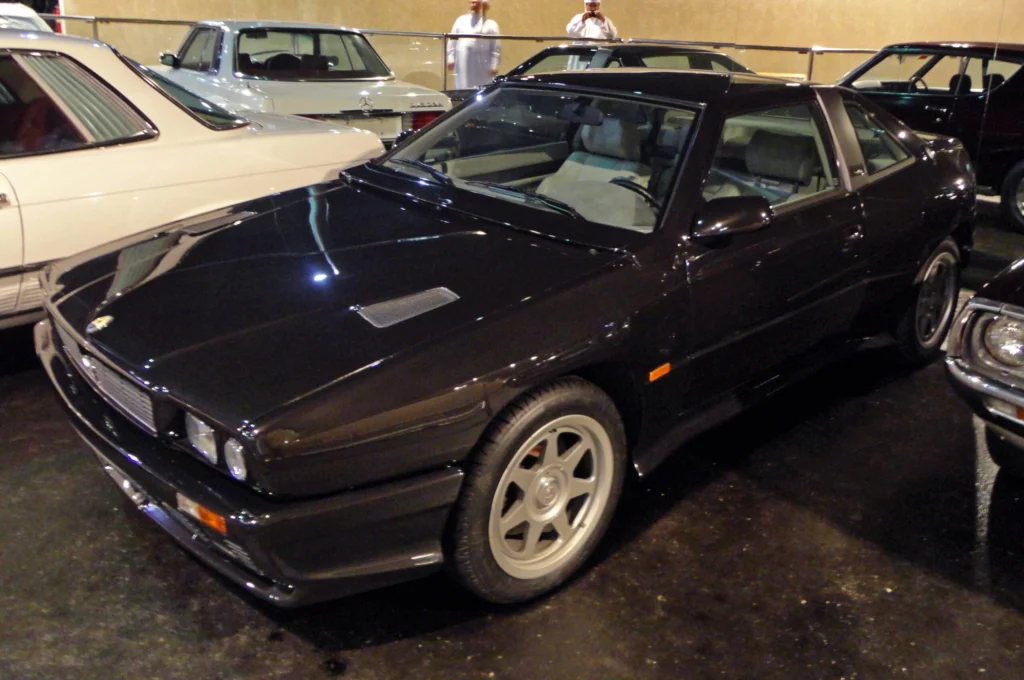
Unveiled in Modena on December 14, 1989, and priced at 125 million lire, the Shamal was the last model launched under De Tomaso’s ownership and the most aggressive car built on the Biturbo platform. Marcello Gandini, who drew the Lamborghini Countach, worked with Maserati’s in-house stylists on the body. The twin-turbo V8 makes 326 PS and sends power to the rear wheels through a six-speed Getrag manual and a Ranger limited-slip differential. Curbside Classic notes that the Getrag gearbox is the same unit used in the BMW 8 Series, which makes the rivalry with the 850CSi a little more intimate than it first looks. Other signature details include Koni electronically adjustable dampers, a black-finished roll-bar center pillar, and a dry weight of 1,417 kg. Maserati claimed 0–62 mph in 5.3 seconds and a 168 mph top speed. Those are factory claims, not independent test results.
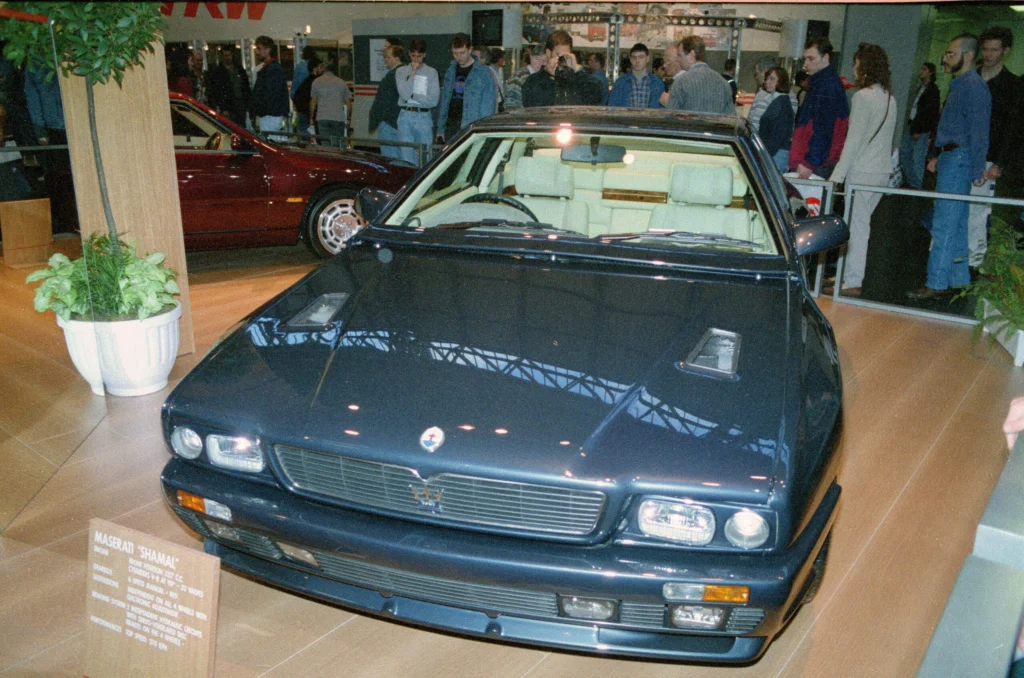
Only 369 were built. By production count alone it is the rarest car in this comparison by a wide margin, and it is about four times rarer than the 850CSi.
What the Market Is Saying
Shamals trade infrequently, so a few sales carry a lot of weight. Bring a Trailer results include $70,000 on April 29, 2025 and $85,000 on February 14, 2024, and its older records include $50,505 in November 2020. According to the hypercars.io sales aggregator, 2026 produced a $122,000 result at Gooding & Company on January 29 (a 1991 car with 18,544 miles), $88,000 at Collecting Cars on May 3, $82,000 at Car & Classic on June 1 and $78,000 at PCARMARKET on October 9. That is a range of $78,000 to $122,000, with the top result tied to a lower-mileage car at a premium auction house. Some promotional coverage has put Shamal values at $175,000 and above; the sales record we could verify does not support that level, so buyers should compare any asking price with actual results.
Liquidity is the weak point. A handful of public sales a year means a seller may wait for the right buyer, and the market has fewer comparable sales to anchor a valuation. Exposure to that thin market is part of what a Shamal buyer accepts.
Ownership Notes
The Shamal shares its basic body structure, doors and interior with the Biturbo family. Curbside Classic describes the Biturbo line generally as suffering from “myriad quality and reliability issues,” and notes that Shamal components are largely shared with those cars. It gives no Shamal-specific reliability or parts data, and the sources we reviewed did not either. That is a real limitation: a Shamal buyer should plan on a specialist pre-purchase inspection and a documented service history,, and should not assume it will behave like a contemporary German GT.
Mercedes-Benz 600 SEC: The Price Pick
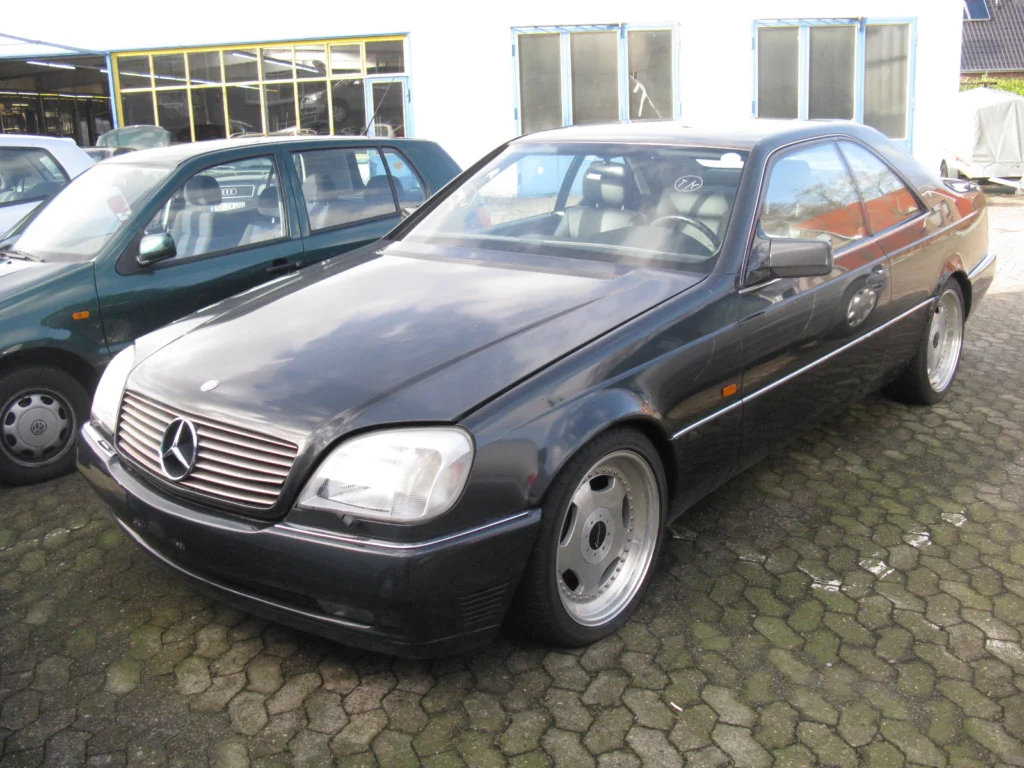
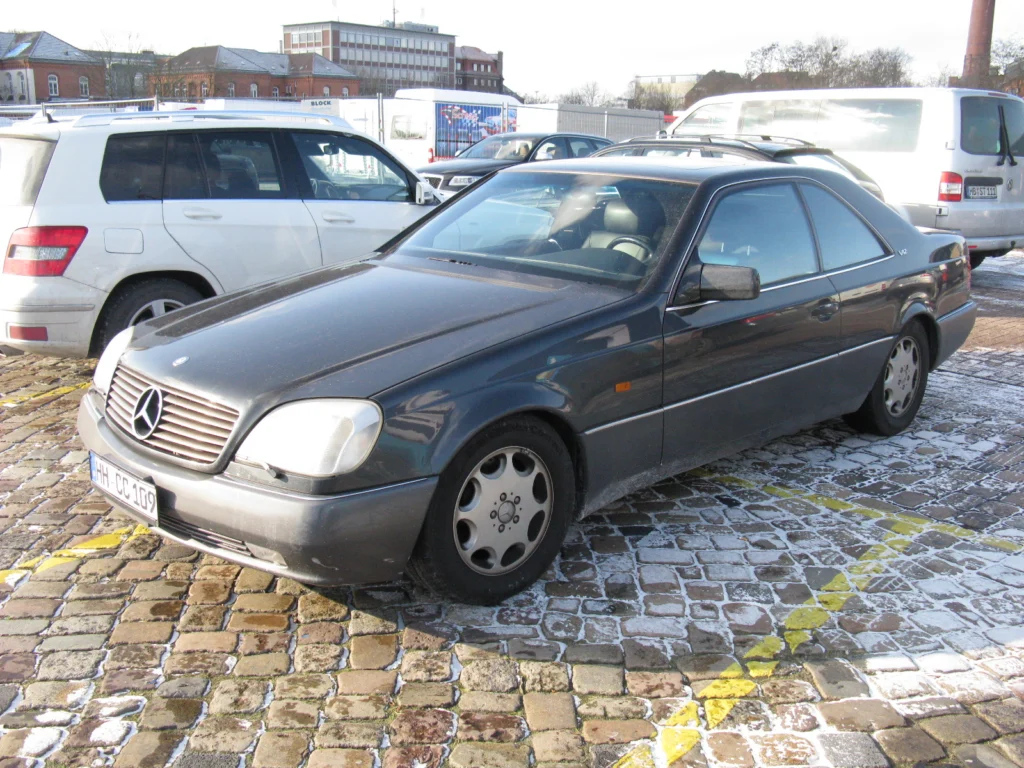
The 600 SEC arrived in the early 1990s as the first V12 coupe in Mercedes-Benz history, designed under Bruno Sacco’s direction. The name changed to S600 Coupé in 1994 and CL600 in 1996–97, and production ended in 1998. The German Wikipedia entry, citing Sindelfingen figures, counts 8,573 V12 coupes against 14,953 V8 500-series cars and 2,496 CL420-series cars. The M120 V12 produces 394 PS and 570 Nm, the largest torque figure of the three cars in this comparison, but it moves about 2,200 kg and it works through an automatic gearbox. Wikipedia reports that the CL500 was regarded as the better-handling car because it carried less weight over the front axle than the V12. If steering feel is your priority, that is worth reading twice.
What the Market Is Saying
Classic.com’s record for 1995 S600 coupes shows eight sold entries between November 2025 and September 2026. The seven dollar-priced sales ranged from $11,550 (Mecum, March 20, 2026) to $50,400 (Kruse, April 24, 2026, a car listed as modified), with $40,700 at Mecum on May 12, $35,250 on Bring a Trailer on February 16, $27,000 on November 10, 2025, $24,700 on June 12 and $15,747 on July 10. A German sale closed at €24,500 on September 1. The simple average of the seven dollar sales is about $29,300, and that spread, more than four to one, is itself a market signal: condition and history are worth more than any model-year premium.
The Mercedes is also the most liquid of the three by sale count, which matters for anyone who wants to be able to exit. It is not, on the evidence available, a scarce car, and nothing here suggests that production numbers alone will lift prices. Our read, not a measured trend, is that interest in 1990s Mercedes coupes tends to attach to unusual, tuned or well-documented cars such as the Lotec-Turbo 300CE-24, while standard cars are priced by condition.
Ownership Notes
RepairPal estimates average annual maintenance and repair of $1,431 for the S600 line (all model years, not the coupe specifically) against $908 for the Mercedes-Benz brand overall. That is a generic estimate, not a quote for a 30-year-old V12 coupe. Owner discussion of C140 cars frequently raises V12 complexity and electrical wiring concerns, but those are anecdotal and we could not verify them against a manufacturer or specialist source. The practical conclusion is the same as for the other two cars: buy the best-documented example and budget for a specialist inspection. With a cheap C140, the purchase price can be the smallest bill you pay.
Reliability, Running Costs and Parts: What the Evidence Supports
No source we found gives a reliable, like-for-like annual cost for all three. What the evidence does support is a ranking of how well understood each car’s risks are. The 850CSi has a published inspection checklist from Hagerty, although CSi-specific components are less documented. The Mercedes has generic cost data and widely discussed, but unverified, owner concerns. The Shamal has the thinnest evidence of all, which is itself a risk, because a thin market also means few specialists and few data points. For all three, a documented service history is worth more than a low odometer reading.
Which Car for Which Buyer
The driver who wants a manual and a story: the 850CSi. It is the only car here with a documented M-division build, a six-speed manual as the sole transmission, and a published road-test time. Its market shows the biggest rewards for low mileage and originality, and the biggest spread between average and exceptional cars. It is the best fit for a collector who values engineering pedigree and is willing to pay for a better example rather than a project.
The collector who prioritizes scarcity and design: the Shamal. It is the rarest, designed by Gandini, and priced in the same broad band as a good 850CSi. It is also the hardest to buy and sell, and the least documented for ownership costs. It suits a buyer with specialist support and the patience to wait for the right car.
The buyer who wants the most car for the least money: the 600 SEC. A decent S600 coupe has sold for a few tens of thousands of dollars, with a V12 under the hood. It is the easiest to find and trade. It is also the car most likely to cost more to fix than it did to buy, so it suits someone who will inspect carefully and drive it.
If limiting downside matters most, the 600 SEC puts the least capital at risk. If you want the clearest evidence of what a good car is worth, the 850CSi has it. If scarcity matters most and you accept the uncertainty, the Shamal offers the most of it per dollar.
What This Comparison Cannot Tell You
Three cautions. First, collector prices move: Hagerty’s own guide values for the 850CSi fell over the past year even as individual cars set records, so nothing in this article should be read as a forecast of appreciation. Second, several data points come from aggregators (hypercars.io and Classic.com) that republish auction results; check the original listing before relying on a number. Third, we could not verify a new price for the Mercedes, a reliable top speed for the 850CSi, or Shamal-specific reliability and parts data, and we have said so in the text rather than filling the gaps.
Sources and Methodology
- BMW 850CSi: Wikipedia, BMW 8 Series (E31); S14.de 850CSi data; Hagerty Media car profile; Hagerty 8 Series buyer’s guide; Hagerty UK buyer’s guide; Yahoo Autos report on the Lagoon Green 850CSi; Bring a Trailer E31 results.
- Maserati Shamal: Wikipedia, Maserati Shamal; Curbside Classic; Bring a Trailer Shamal results; hypercars.io sales record.
- Mercedes-Benz C140: Wikipedia, Mercedes-Benz C140; German Wikipedia, Mercedes-Benz C 140; Supercars.net 600 SEC data; Classic.com 1995 S600 coupe sales; RepairPal S600 costs; Barn Finds.
The collector car market, every weekday morning.
Auction results, price moves and what’s crossing the block, read in four minutes. Free, from Modern Car Collector.
No spam, unsubscribe in one click. Or read more about the Brief.

 Kyle Matthews
 Eve Nowell