

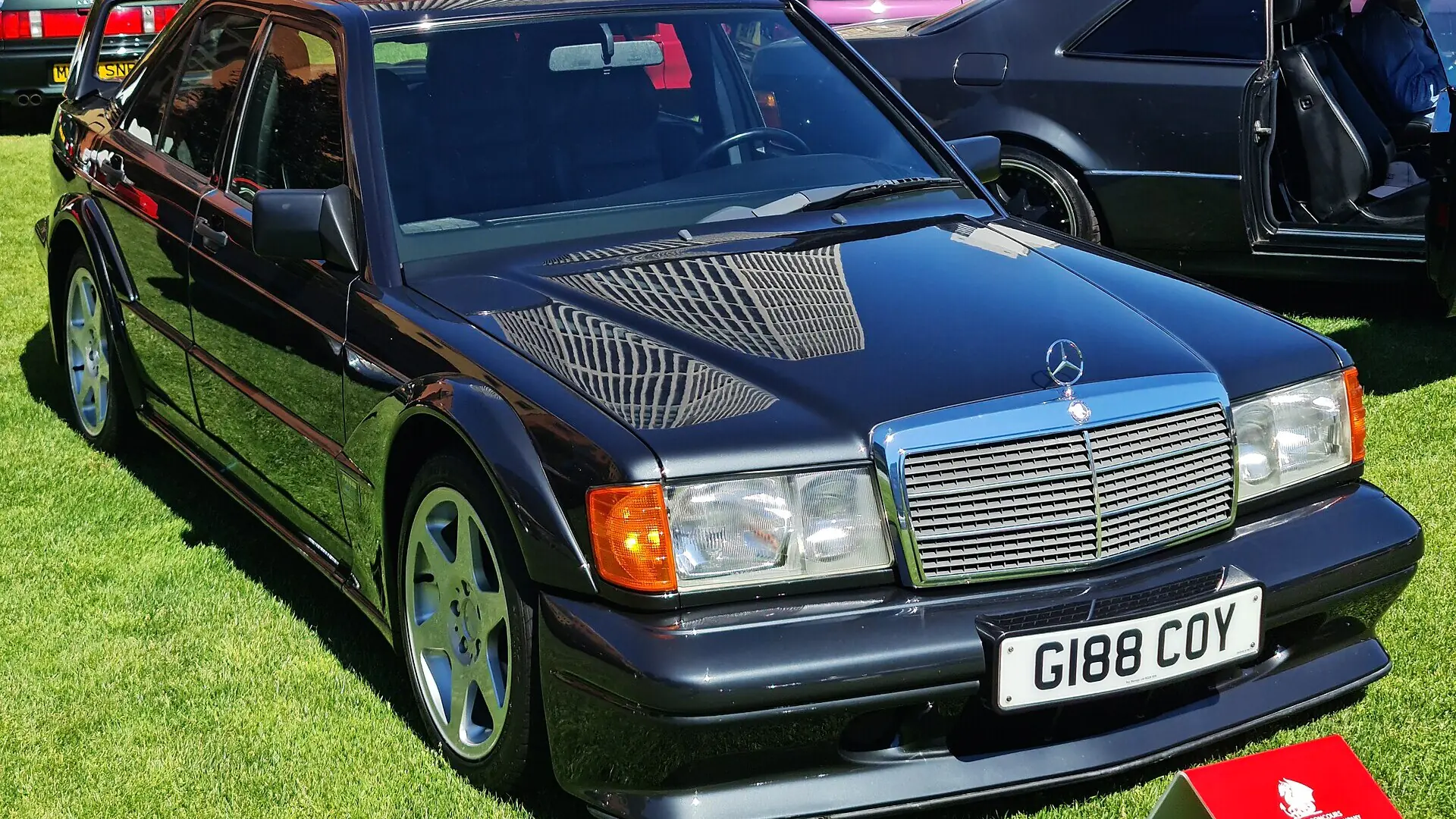
Between 1987 and 1990, Mercedes-Benz, Ford and BMW each built a few hundred road cars so that a faster racing version could line up on a touring-car grid. The result was three of the most deliberate homologation specials of the Group A and DTM era: the Mercedes-Benz 190E 2.5-16 Evolution II, the Ford Sierra RS500 Cosworth and the BMW M3 Sport Evolution. Production runs of 502, 500 and 600 put them in the same rarity bracket. In 2026 the market is pricing them on three different things, and that is the useful part of the comparison.
This is not a ranking of which car is quickest or which is best to drive. It is a look at which kind of scarcity each market rewards, what the 2026 public sales show, and what each car asks of its owner afterward. Other recent MCC comparisons have covered rally-bred Group A specials and 1990s Japanese turbo coupes; this one stays on the circuit side of homologation.
Why these three belong in the same comparison
Group A rules required a minimum run of base cars, and manufacturers could add an “evolution” batch of 500 to sharpen the racer. Ford’s RS500 was exactly that: Hagerty UK notes that the rules called for 5,000 basic cars and the RS500 was the 500-car evolution version. BMW’s M3 needed 5,000 for its original homologation, per Auto Zeitung, then built 600 Sport Evolutions at the end of the run. Mercedes homologated the Evolution II for the DTM with 502 cars, 500 in blue-black metallic and two in astral silver according to Wikipedia’s W201 entry.
All three are rear-drive, all three are four-cylinder, and all three were sold into the same type of buyer: a driver who wanted the racing car’s rulebook on public roads. Today the buyers overlap too. Hagerty says 72 percent of the people requesting Evolution II quotes are Gen X or younger, and Hagerty UK’s John Mayhead attributes the strength of 1980s and 1990s performance cars to Gen X buyers reaching peak earning years.
The three cars at a glance
Mercedes-Benz 190E 2.5-16 Evolution II (1990)
The Evolution II was shown at Geneva in March 1990. Its 2,463 cc Cosworth-developed four makes 235 PS (173 kW, about 232 hp) at 7,200 rpm and 245 N·m (181 lb-ft) at 5,000 rpm, with the AMG PowerPack as standard, per Wikipedia’s W201 entry. A Getrag five-speed dogleg gearbox and limited-slip differential come over from the 2.3-16, as Hagerty notes. What sets the Evo II apart is the body: a Richard Eppler-designed aero kit with a large adjustable rear wing, flared arches and a deep front splitter, 17-inch wheels, and a ride-height system adjusted from the cabin. Mercedes quoted a drag coefficient of 0.29. The same entry lists a 1990 price of DM 136,720, and Octane puts it at 50 percent more than a standard 2.5-16.
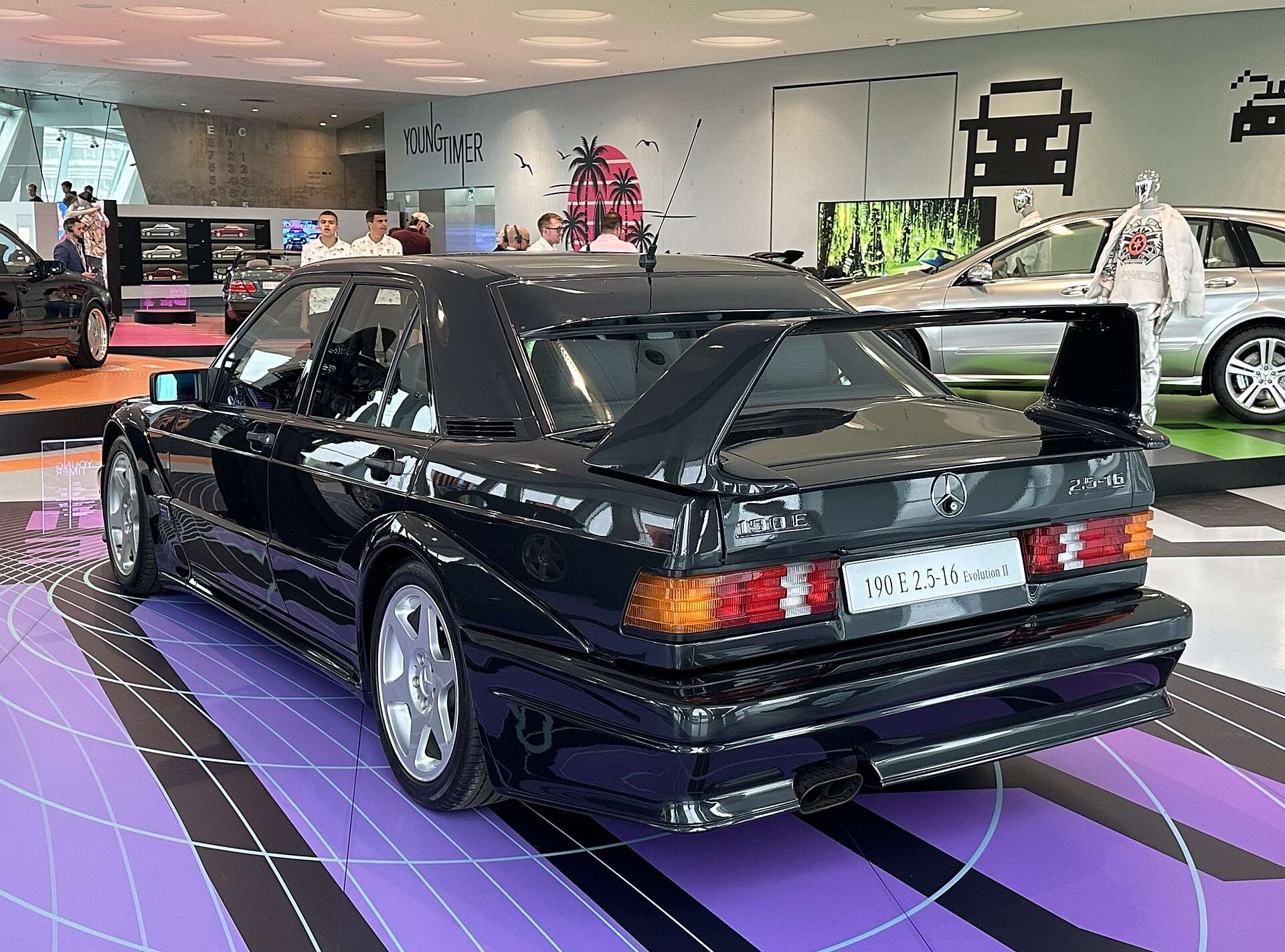
Octane records 0-60 mph in 7.1 seconds, a limited 155 mph and 1,320 kg; autoevolution lists 1,340 kg and 7 seconds. Those figures are not startling today, and the contemporary driving reports do not pretend otherwise. Hagerty found the car small, taut and civil, with an engine that pulls hard past 6,000 rpm, light but communicative steering and a clunky first-to-second dogleg shift. Octane’s verdict was that it is “a DTM racer in which you really could take the family shopping.” The Evo II won the 1992 DTM title with Klaus Ludwig, according to Hagerty.
Ford Sierra RS500 Cosworth (1987)
The RS500 began as 500 three-door Sierra Cosworths built in Genk and converted by Aston Martin Tickford; Ford announced the car in July 1987 and homologated it that August. Hagerty UK lists a larger Garrett turbocharger, a bigger intercooler, a thicker-walled block, stronger pistons and a second row of injectors that stayed inactive on the road car. Power is 224 bhp at 6,000 rpm (227 PS) and 204 lb-ft at 4,500 rpm, only about 20 bhp over the standard Cosworth. The signature piece is the double rear spoiler, which Hagerty UK says adds about 105 kg of downforce at 100 mph.
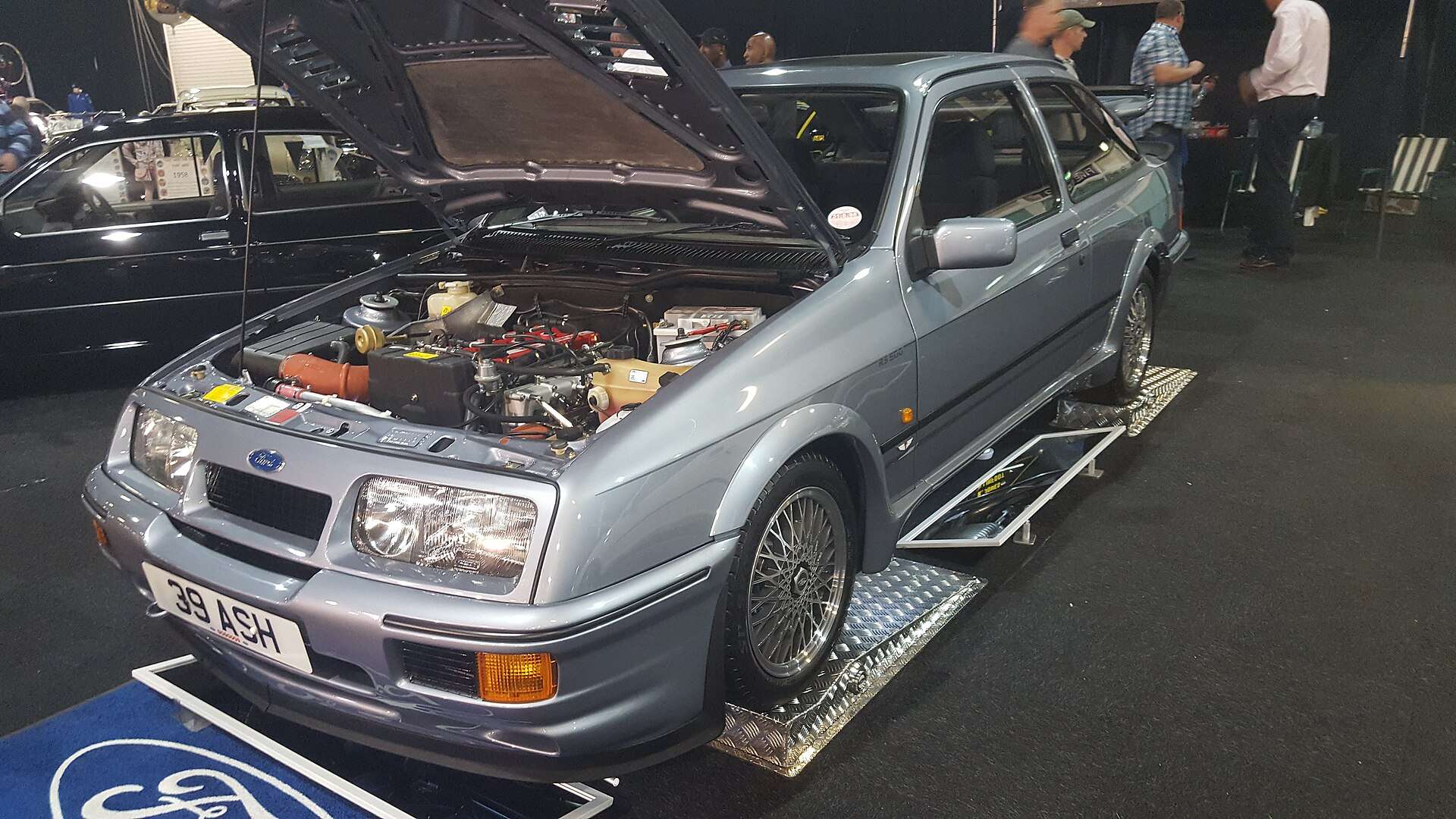
Ford did not publish separate road-car performance figures for the RS500 that I could verify. The standard three-door Cosworth is listed at 6.5 seconds to 60 mph, 149 mph and 1,217 kg, and the RS500 is not meaningfully different. Hagerty UK’s back-to-back test found the road-going RS500 disappointing next to the regular Cosworth because most of the racing hardware did nothing on the road, and it quotes a Performance Car test in which the RS500 was slower from 50 to 70 mph in fourth and fifth gears. On the track the story reverses: Ford won the 1987 World Touring Car Championship entrants’ title with Eggenberger, took the 1988 European Touring Car Championship, and Robb Gravett won the 1990 British title in an RS500.
BMW M3 Sport Evolution (1990)
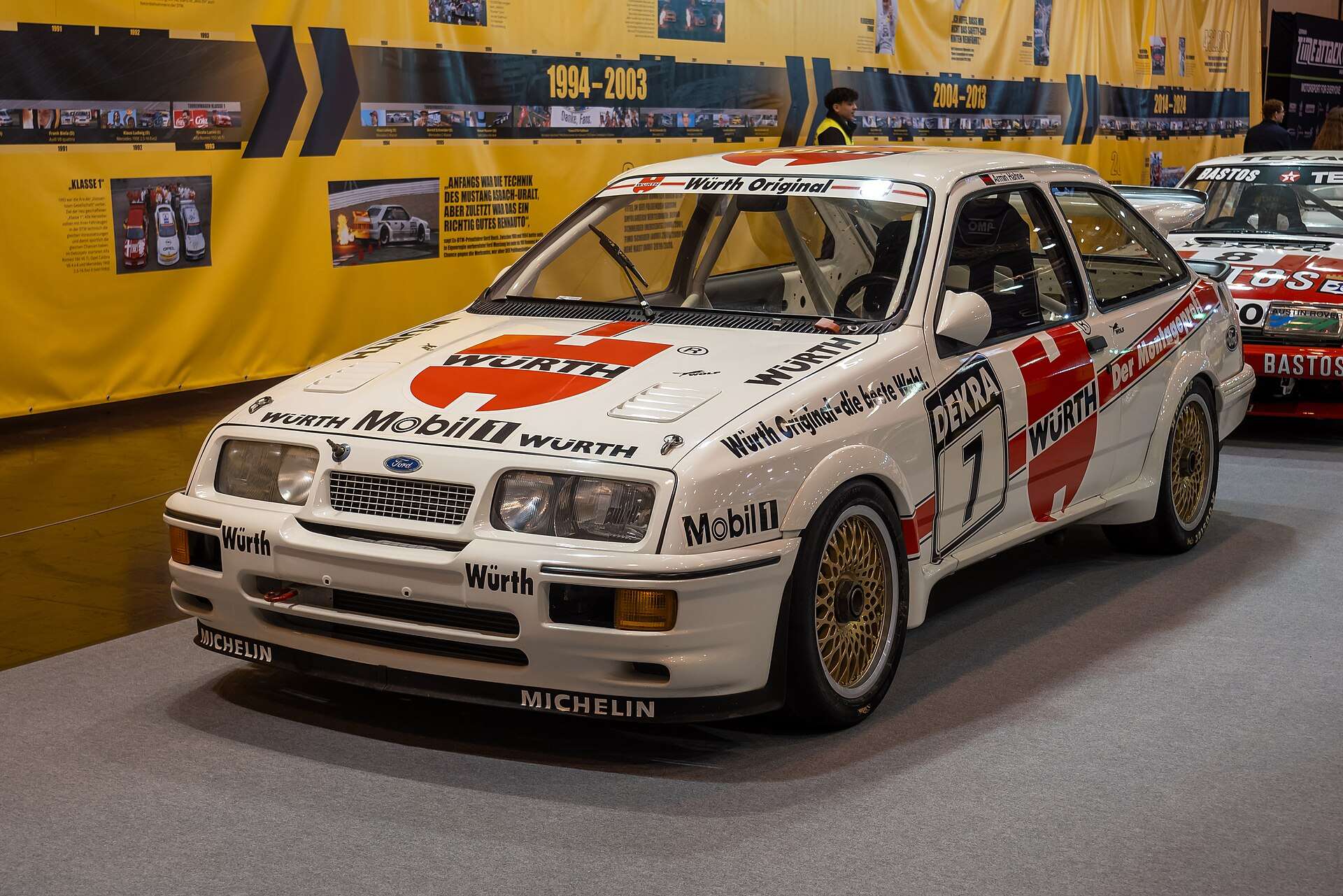
The Sport Evolution is the last of the E30 M3’s homologation steps and the only one with the enlarged 2.5-liter engine. Auto Zeitung lists 2,467 cc, 238 PS (175 kW) at 7,000 rpm, 240 N·m at 4,750 rpm, 1,200 kg, 0-100 km/h in 6.5 seconds and 248 km/h, at a 1990 base price of 85,000 marks. The body gained a flatter rear window, a higher trunk lid with a spoiler lip and an adjustable front splitter; the interior added racing seats with red belts. Only two colors were offered, Brilliantrot and Glanzschwarz. BMW built 600 Sport Evolutions of the 17,970 E30 M3s, and the model took the DTM title in 1987 and 1989.
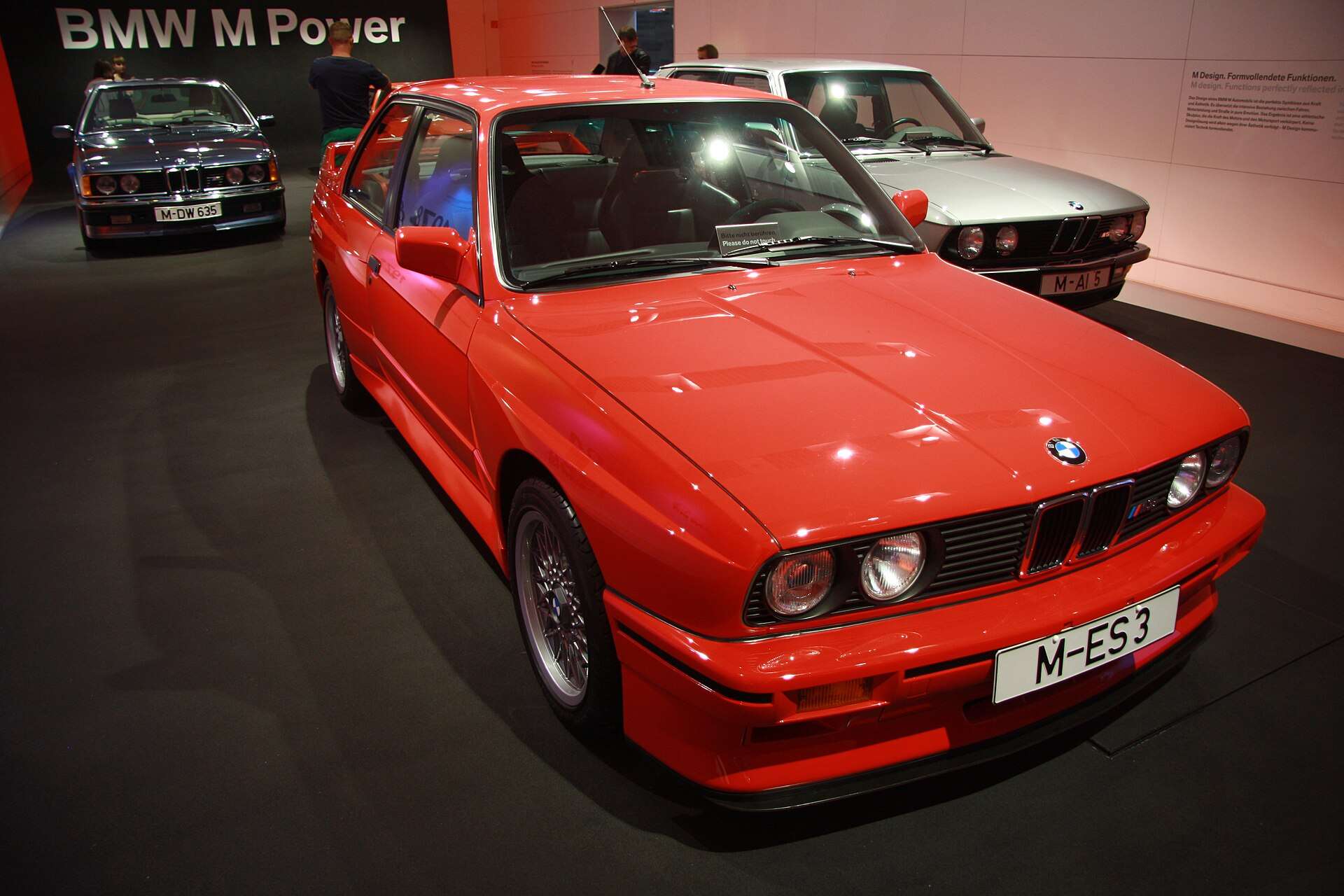
Auto Zeitung’s driving notes are the opposite of the Mercedes’. The engine builds from about 5,000 rpm and needs revs to show itself, the steering is heavy but direct, and the car turns in nimbly. Grassroots Motorsports describes the E30 M3 as buzzy, with little to offer unless the engine is worked hard, and says it takes a purist to appreciate it. For the broader E30 story, MCC’s E30 M3 collector spec sheet covers every variant.
Side-by-side specifications
| Mercedes-Benz 190E 2.5-16 Evo II | Ford Sierra RS500 Cosworth | BMW M3 Sport Evolution | |
|---|---|---|---|
| Model year | 1990 | 1987 | 1990 |
| Production | 502 (500 blue-black, 2 astral silver) | 500, all right-hand drive | 600 (of 17,970 E30 M3s) |
| Engine | 2,463 cc DOHC 16-valve four | Turbocharged 2.0-liter Cosworth four | 2,467 cc DOHC 16-valve four |
| Power | 235 PS (about 232 hp) at 7,200 rpm | 224 bhp (227 PS) at 6,000 rpm | 238 PS (about 235 hp) at 7,000 rpm |
| Torque | 245 N·m (181 lb-ft) | 204 lb-ft (277 N·m) | 240 N·m (177 lb-ft) |
| Gearbox | Getrag five-speed dogleg, limited-slip | Five-speed manual | Five-speed manual |
| Weight | 1,320-1,340 kg | 1,217 kg (standard three-door Cosworth) | 1,200 kg |
| 0-60 mph / 0-100 km/h | About 7.0-7.1 s (0-60) | 6.5 s (standard Cosworth, 0-60) | 6.5 s (0-100 km/h) |
| Top speed | 155 mph (limited) | 149 mph (standard Cosworth) | 248 km/h (about 154 mph) |
| Price new | DM 136,720 (Wikipedia) | Not verified | DM 85,000 (Auto Zeitung) |
| Colors | Blue-black, 2 silver | Mostly black (392); 56 white, 52 Moonstone blue | Brilliantrot or Glanzschwarz |
| Race pedigree | 1992 DTM title (Ludwig) | 1987 WTCC entrants’ title; 1988 ETCC; 1990 BTCC drivers’ title | DTM titles 1987 and 1989 (E30 M3) |
Note on the gaps: where a cell reads “standard Cosworth” or “not verified,” I could not find a credible figure for that specific car, and I have not filled it in. Power figures are quoted in the units each source uses.
What 2026 public sales show
The sales below come from auction houses and from Classic.com’s public listing summaries; Classic.com’s averages and sales counts were not available without a paid account, so I have not computed averages from it. Prices are as reported, with no currency conversion.
| Car | Date and venue | Result | Mileage |
|---|---|---|---|
| 190E Evo II | Sep 24, 2026, Bring a Trailer | $420,000 | About 36,000 mi |
| 190E Evo II | Aug 17, 2026, Bring a Trailer | $310,000 | About 30,000 mi |
| 190E Evo II | Jul 4, 2026, RM Sotheby’s (Germany) | €275,000 | About 47,000 mi |
| 190E Evo II | Apr 25, 2026, RM Sotheby’s Monaco | €308,750 (restored; estimate $305,000-$410,000) | 80,598 km (50,081 mi) |
| Sierra RS500 | Jul 25, 2026, Iconic Auctioneers (lot 240, car 195 of 500) | £87,188 | 44,599 mi |
| Sierra RS500 | Jul 25, 2026, Iconic Auctioneers (per Classic.com) | £180,000 and £85,500 (modified) | About 16,000 mi; 67,000 mi |
| Sierra RS500 | Mar 22, 2026 and Nov 8, 2025, Iconic Auctioneers (per Classic.com) | £76,500; £78,750 | 35,000 mi; 31,000 mi |
| Sierra RS500 | May 30, 2026, Cars & Bids (California) | Not sold, high bid $120,000 | About 49,000 mi |
| M3 Sport Evolution | Jul 8, 2026, RM Sotheby’s Woodcote Park | £404,375 | 4,503 km (2,798 mi) |
| M3 Sport Evolution | 2025, RM Sotheby’s Munich (car 80 of 600) | €325,625 | 34,447 km |
| M3 Sport Evolution | Jan 28, 2026, RM Sotheby’s Paris (per Classic.com) | €207,000 | Not listed |
| M3 Sport Evolution | Jul 16, 2026, Bring a Trailer | Not sold, high bid $191,000 | Not listed |
The three markets behave differently. The Evolution II is the deepest in the United States: Bring a Trailer sold two in six weeks, both above the roughly $296,000 five-year average transaction Hagerty tracked, and Hagerty counts 24 Evo II auction sales over five years against 60 for the 2.3-16. One caution on the top end: Car Revs Daily reported that car No. 401 sold for $425,000 on Bring a Trailer in 2022 and was bidding past $400,000 again in September. If that is the car that closed at $420,000, it changed hands for about 1 percent less four years later. That is one data point, not a trend, but it argues against treating the 2022 price as a floor that only rises.
The Sport Evolution has the widest spread, and the spread is explained by mileage and provenance. The €325,625 Munich car and the £404,375 Woodcote Park car were both low-mileage, and Hagerty’s own write-up of the Munich sale said the premium reflected low mileage, condition and provenance. The €207,000 Paris result and a Bring a Trailer car that stalled at $191,000 show what an ordinary Sport Evolution fetches. Classic.com’s benchmark across its listings is about $256,700. MCC has tracked this market before, including a Bring a Trailer Evolution II and the RM Sotheby’s Best of M collection.
The RS500 is the outlier, and it is the most instructive. In February 2023 a 5,192-mile black car sold at Silverstone Auctions for about £592,000 to £596,000 (Hagerty UK reports £592,250; other outlets report £596,250), against an estimate of £150,000 to £180,000 and a Hagerty concours value of £115,000. Hagerty UK’s John Mayhead said both bidders were unusually determined, called it a passion purchase and said it was unlikely to be repeated. The 2026 results bear that out: the best-documented sale this year was £87,188, and the highest-priced car was a 16,000-mile example at about £180,000. A low-mileage RS500 can still command a premium, but the 2023 record was a single result, not the market.
Rarity, originality and what to verify
Rarity is similar on paper, so originality does the sorting. For the RS500, Classic & Sports Car’s buyer’s guide gives chassis numbers WFOEXXGBBEGG 38600 to 39099 and engine numbers YBD 0015 to 0537, and warns that copies are common because Ford sold development parts that let owners upgrade a standard Cosworth to RS500 specification. The Iconic Auctioneers listing for car 195 notes confirmation by the RS500 Register. For the Evolution II, the number plate and chassis sequence matter, and Evo II-specific components such as the aero kit and adjustable suspension are part of the value. For the Sport Evolution, the auction catalogs lean on matching-numbers engines, original paint and the Brilliantrot or Glanzschwarz finish. Modifications complicate the comparison: a modified 67,000-mile RS500 sold for £85,500 in July, and the first Evolution II sold at a US public auction (RM Sotheby’s Arizona, January 2017, $220,000) carried a Motec engine management system, racing intake and exhaust manifolds, and DTM-spec wheels, so it is not a clean guide to an original car’s value.
Reliability, maintenance and parts
I could find the least hard data here for the Evolution II, and I am not going to invent figures. What is on the record: Hagerty described it as civil enough to drive regularly, and the RM Sotheby’s Miami 2024 catalog for a car of about 34,000 miles records more than $5,000 of service in July 2023 at a Mercedes-Benz dealer. That is one invoice, not a cost model. Ask a Mercedes specialist for a written estimate on any Evo II-specific parts before you buy.
The M3 has the best-documented ownership picture. Grassroots Motorsports reports that almost everything is available, that many parts are shared with other BMWs, and that the five-bolt hubs are unique to the car. It also lists the costs: S14 engine rebuilds are expensive, and chain guides alone were cited at $400 and a fender at about $350. Common faults are rust in the trunk, rear quarters and cowl, oil leaks and broken exhaust manifold studs. The Sport Evolution’s body pieces are harder to source than mechanical parts.
The RS500 has the most specific warning list. Classic & Sports Car’s guide flags head gasket failure from internal corrosion, turbo air leaks, a notchy Type 5 gearbox, rust and non-original modifications, and recommends a cambelt change every 30,000 miles or five years. A full engine rebuild is quoted at £3,000 to £5,000, trim is hard to find, and fuel economy runs 19 to 30 mpg. That guide is dated April 2019, so treat the costs as a baseline. As a right-hand-drive, UK-market car, an RS500 also has a thinner pool of US buyers, which is visible in the Cars & Bids no-sale.
Strengths and weaknesses
| Strengths | Weaknesses | |
|---|---|---|
| 190E Evo II | Most complete homologation package; usable, comfortable road car; deep US auction presence; strong DTM identity | Highest price of the three; limited public cost data; dogleg first gear |
| Sierra RS500 | Lowest entry price by a wide margin; Group A and BTCC history; Hagerty UK’s author considers the standard Cosworth the better driver’s car, so the premium is for the badge | Road car barely quicker than a Cosworth; clones and conversions common; RHD only; thin US market; head gasket and turbo risks |
| M3 Sport Evolution | Best parts support and documentation; strongest driver engagement per dollar of the three; widest buyer base | Price swings sharply with mileage; needs revs to feel quick; rust and engine rebuild costs; body-specific parts scarce |
Which one for which collector
If you want the most usable car: the Evolution II, with the caveat that at roughly €275,000 to $420,000 in 2026 results you may be reluctant to use it. If you want the best value of the three: the RS500, which sold for £76,500 to £87,188 in the 2026 Iconic Auctioneers results above, the only one of the three in that range, though you are buying a homologation badge more than a driving upgrade over the Cosworth. If you want the strongest support network and liquidity: the M3 Sport Evolution, because parts, documentation and buyers exist in several markets. If you care most about originality and low mileage: the Sport Evolution and the Evolution II are the cars where low mileage visibly moved the 2026 prices, and the RS500’s 2023 record shows how far one exceptional car can sit from the market.
None of these results predicts what the cars will be worth next year, and the three do not answer the same question. If your priority is a documented, supported car, buy the M3. If it is the DTM story in the most complete factory package, the Mercedes is the one, and its one-car price history above is a reason to pay for condition rather than for a headline. If it is the sharpest Group A entry for the money, the RS500 is the answer, and the Cosworth beside it is the better drive.
Limitations of this comparison
Several figures were not available from sources I could verify: a launch price for the RS500, separate performance data for it, and reliable maintenance cost data for the Evolution II. Classic.com sales counts and averages are paywalled, so the table lists individual results only. Currency figures are not converted, and the auction dates for the Munich 2025 sale were not stated in the sources I could access.
Sources
Specifications and history: Mercedes-Benz W201, Ford Sierra RS Cosworth, BMW M3, Auto Zeitung on the M3 Sport Evolution, Octane on the 190E Evo II, Hagerty on the Evo II, Hagerty UK on the RS500, Classic & Sports Car buyer’s guide and Grassroots Motorsports on the E30 M3. Sales: Classic.com, 190E Evo II, Classic.com, Sierra RS500, Classic.com, M3 Sport Evolution, Carscoops on the Monaco Evo II, Iconic Auctioneers RS500 lot, Hagerty UK on the RS500 record, RM Sotheby’s Munich Sport Evolution, duPont Registry on the Woodcote Park sale and Car Revs Daily.
The collector car market, every weekday morning.
Auction results, price moves and what’s crossing the block, read in four minutes. Free, from Modern Car Collector.
No spam, unsubscribe in one click. Or read more about the Brief.
 Kyle Matthews
 Shawn Henry