

The E30 M3 exists because BMW needed 5,000 road cars to homologate a Group A touring car. Consequently, what collectors are buying today is that paperwork made metal: a car that shares only its hood, roof panel and sunroof with an ordinary 3 Series, according to the model’s documented history. That single fact explains most of what follows. In other words, the market values an E30 M3 on how much of that purpose-built car is still there, and a badge, a body kit or a clean history report proves none of it.
Accordingly, this E30 M3 collector spec sheet collects the verified production figures, the drivetrain specifications, the identifying details that separate a real car from a converted 325i, the known weak points and the current market data. Also, where a figure comes from a single source, we name the source.
At a Glance
| Item | Specification |
|---|---|
| Production | March 1986 – June 1991 |
| Total production | 17,970 (all bodies and editions) |
| Convertibles | 786 |
| US-market cars | 5,115 (Hagerty); tallies including Canada run to about 5,300 |
| Engine | S14 DOHC 16-valve inline-four, 2,302 cc (95 x 84 mm) |
| US / catalyst output | 192 hp; 170 lb-ft (230 Nm) |
| Transmission | Getrag 265 five-speed manual |
| Differential | Clutch-type limited-slip, standard |
| US final drive | 4.10:1 |
| Redline | 7,250 rpm |
| CLASSIC.COM market benchmark (coupe) | $74,345 |
E30 M3 Production Totals
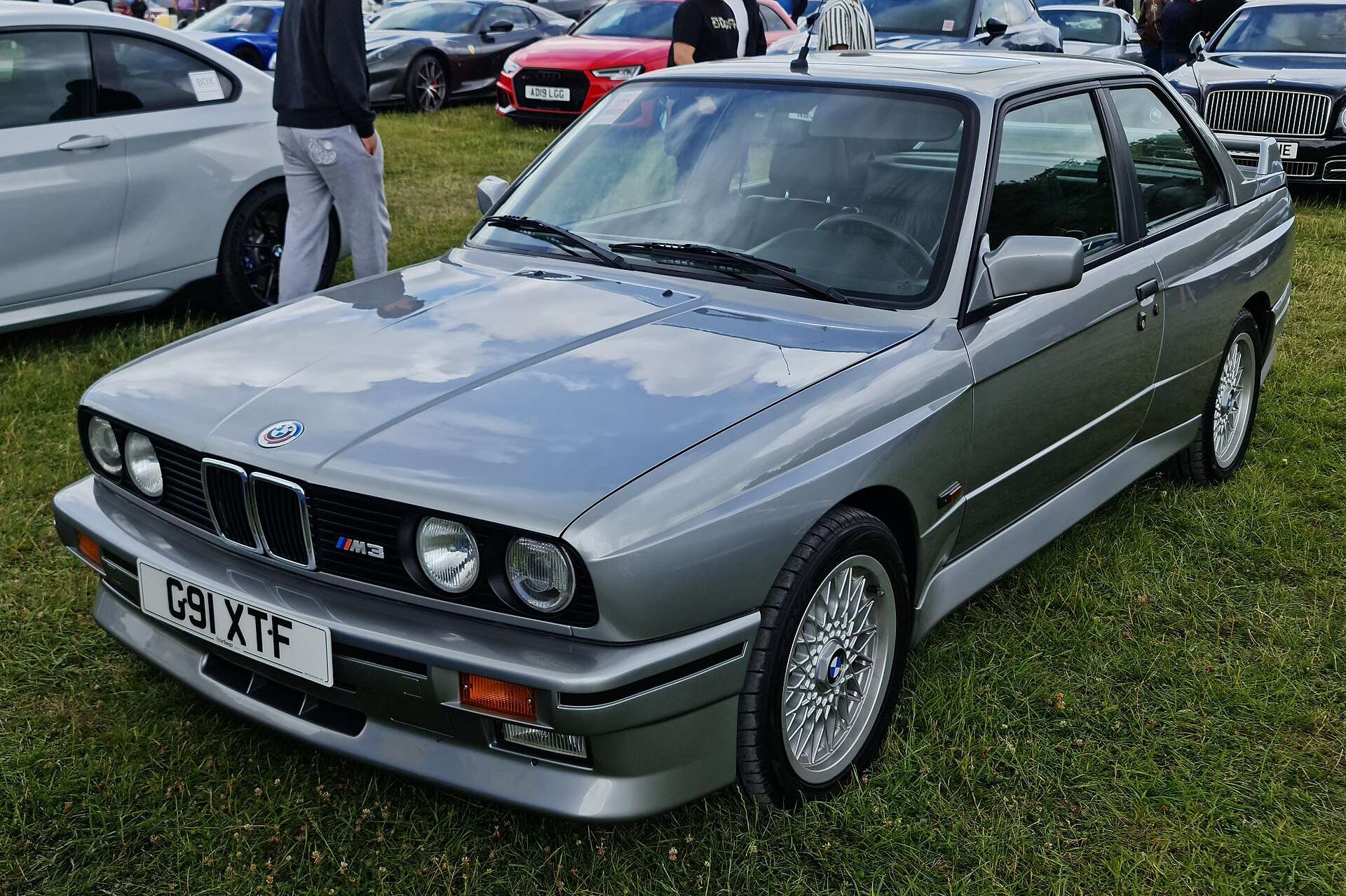
To begin with, total production of 17,970 cars includes the coupes, the 786 convertibles and the limited editions built to keep the racing program current. Hagerty’s E30 M3 buyer’s guide puts US sales at 5,115 from the 1988 through 1991 model years. Similarly, production tallies compiled by BIMMERtips list 5,300 North American 192-hp coupes, a figure that appears to fold in Canadian cars. Either way, fewer than a third of all E30 M3s were built for North America, and none of the limited editions below were sold new in the US.
| Edition | Built | Key details |
|---|---|---|
| Evolution (Evo I) | 505 | March–May 1987; homologation update |
| Tour de Corse | 50 | Evo I-based, commissioned by BMW France |
| Europameister 88 | — | Celebrated the 1987 European title; Macao Blue only |
| Evolution II (Evo II) | 501 | March–May 1988; 217 hp (220 PS) |
| Johnny Cecotto Edition | 480 + 80 | 80 Swiss-market cars detuned to 155 kW |
| Roberto Ravaglia Edition | 25 | UK market |
| Sport Evolution | 600 | 2,467 cc S14; 235 hp (238 PS) |
Figures from the M3’s published production record. However, sources do not agree on a single Europameister count, so we left it blank rather than guess.
Engine and Drivetrain
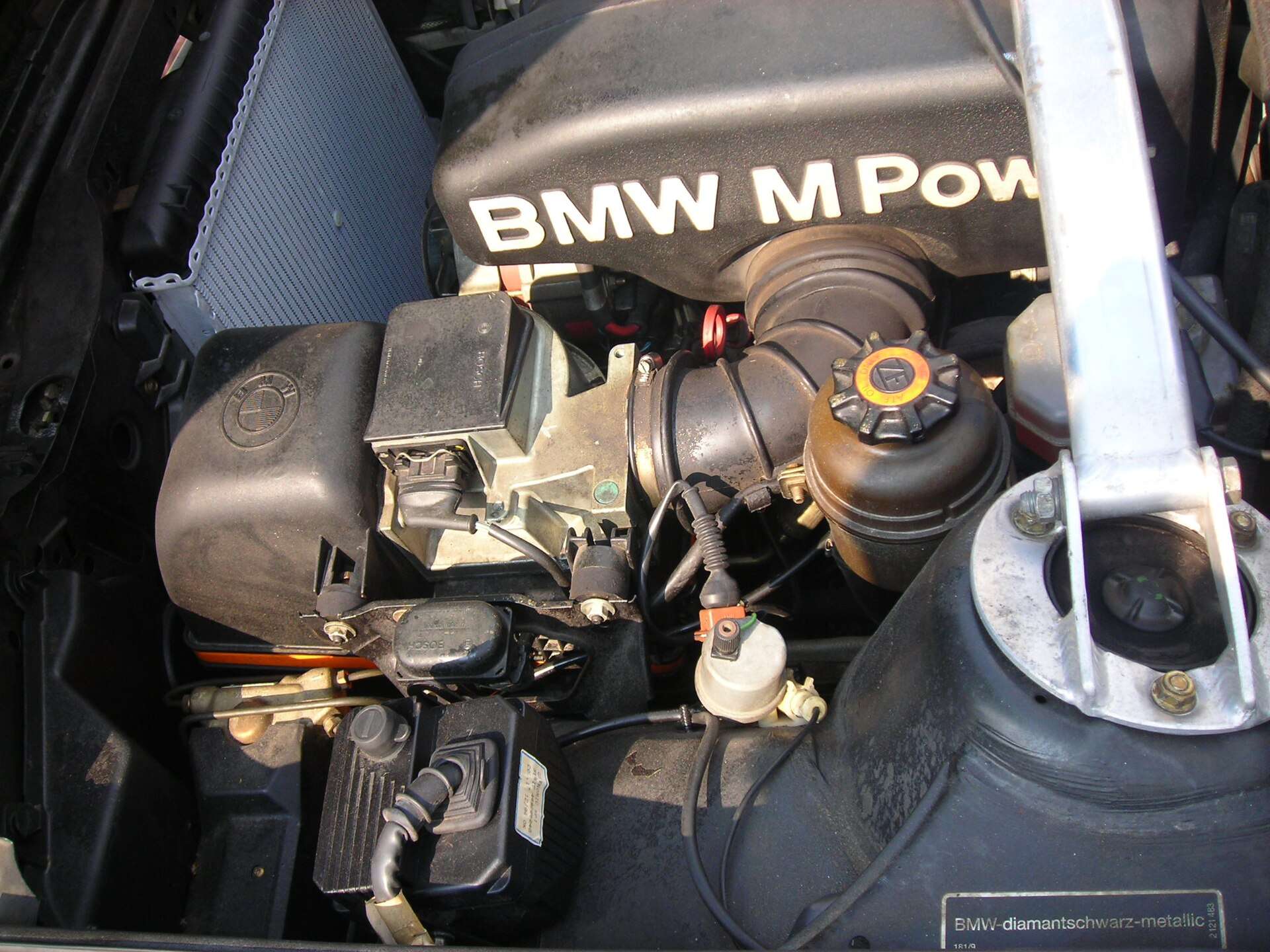
The S14 pairs a four-cylinder block from the BMW M10 family with a 16-valve twin-cam head that is essentially a shortened version of the S38 six-cylinder head, per the S14 engine record. For example, in catalyst form, which covers every US car, the 2,302-cc engine makes 192 hp and 230 Nm (170 lb-ft). By contrast, BMW rated European cars without a catalyst at 200 PS (197 hp); the Evo II reached 220 PS (217 hp), and the Sport Evolution’s 2,467-cc S14B25 made 238 PS (235 hp) at 7,000 rpm and 177 lb-ft at 4,750 rpm.
Likewise, every E30 M3 used a Getrag 265 five-speed and a clutch-type limited-slip differential. However, European cars got the close-ratio dogleg gearbox with a direct 1:1 fifth. Meanwhile, US cars used a conventional shift pattern with wider spacing and an overdrive fifth, paired with a 4.10:1 final drive. As a result, a US car with a dogleg box has had its transmission changed. That is not a disqualifier on its own, but the seller should disclose it.
Special Options and Year-by-Year Changes
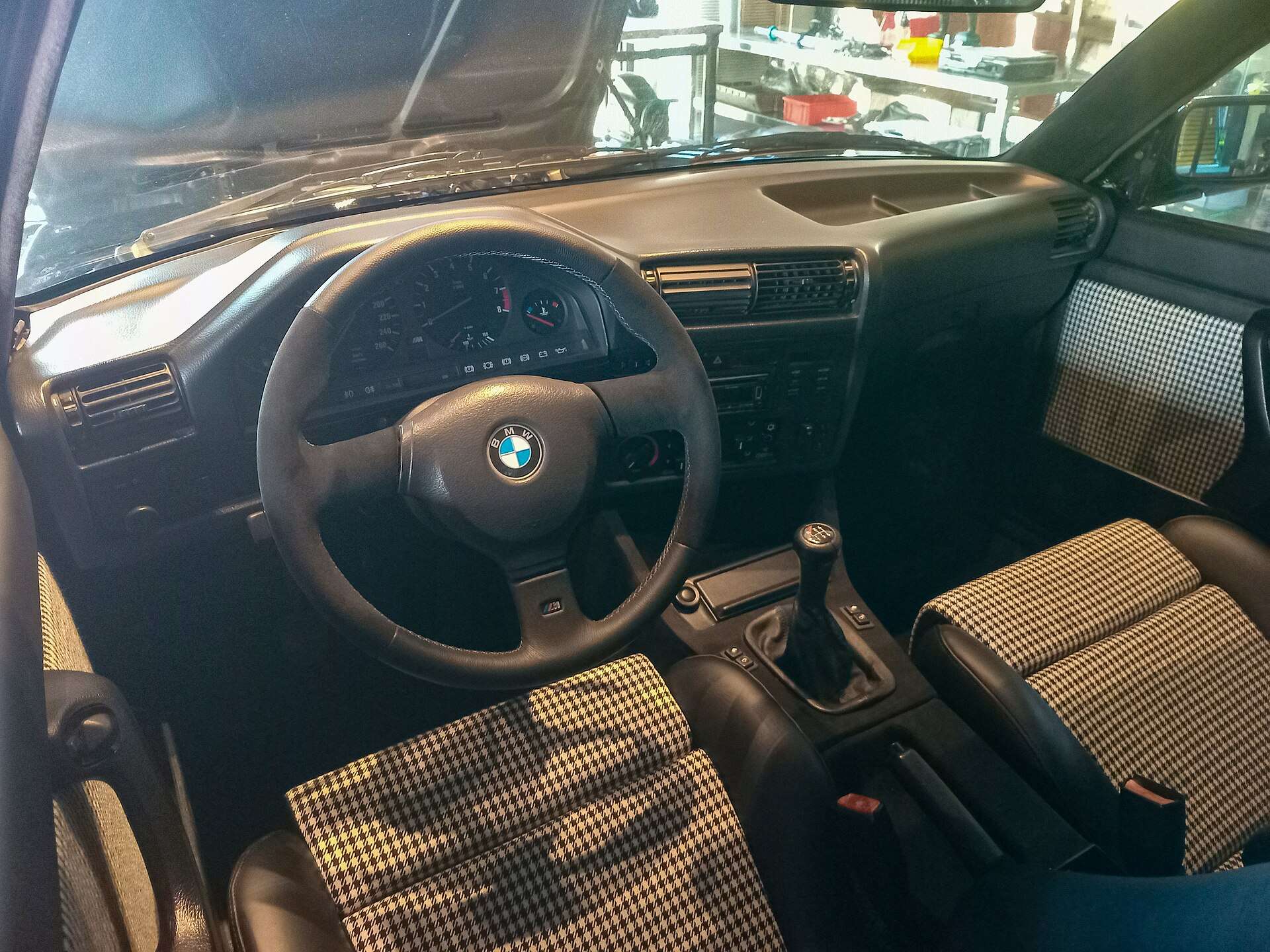
BMW built US-market M3s to nearly the same specification from 1988 to 1991, a point Classic Motorsports makes plainly. As a result, the options that matter to buyers are comfort items rather than performance hardware:
- Air conditioning, power windows and sunroof
- Leather upholstery in place of the cloth sport seats
- Heated seats and a power glass moonroof, added for 1989
- A driver’s airbag with a four-spoke steering wheel on later cars
Instead, the meaningful variation is in the European limited editions: the Evo II’s higher-output engine and the Sport Evolution’s 2.5-liter engine and revised aerodynamics. In addition, Hagerty notes BMW offered the Sport Evolution in Glossy Black or Brilliant Red, and the Cecotto in Misano Red, Macao Blue or Nogaro Silver. Furthermore, many of these cars are now eligible for US import under the 25-year rule, which is why edition-specific documentation matters in American transactions too.
Identifying Details
Because the E30 M3 differs from the standard car in so many places, most of its identity is visible if you know where to look:
- VIN: First, M3s carry BMW M’s WBS manufacturer prefix rather than the WBA used on regular E30s. US cars begin with WBSAK.
- Engine: the S14, with BMW M Power cast on its intake plenum, is the only correct engine. Also check the stamped engine number against the car’s records.
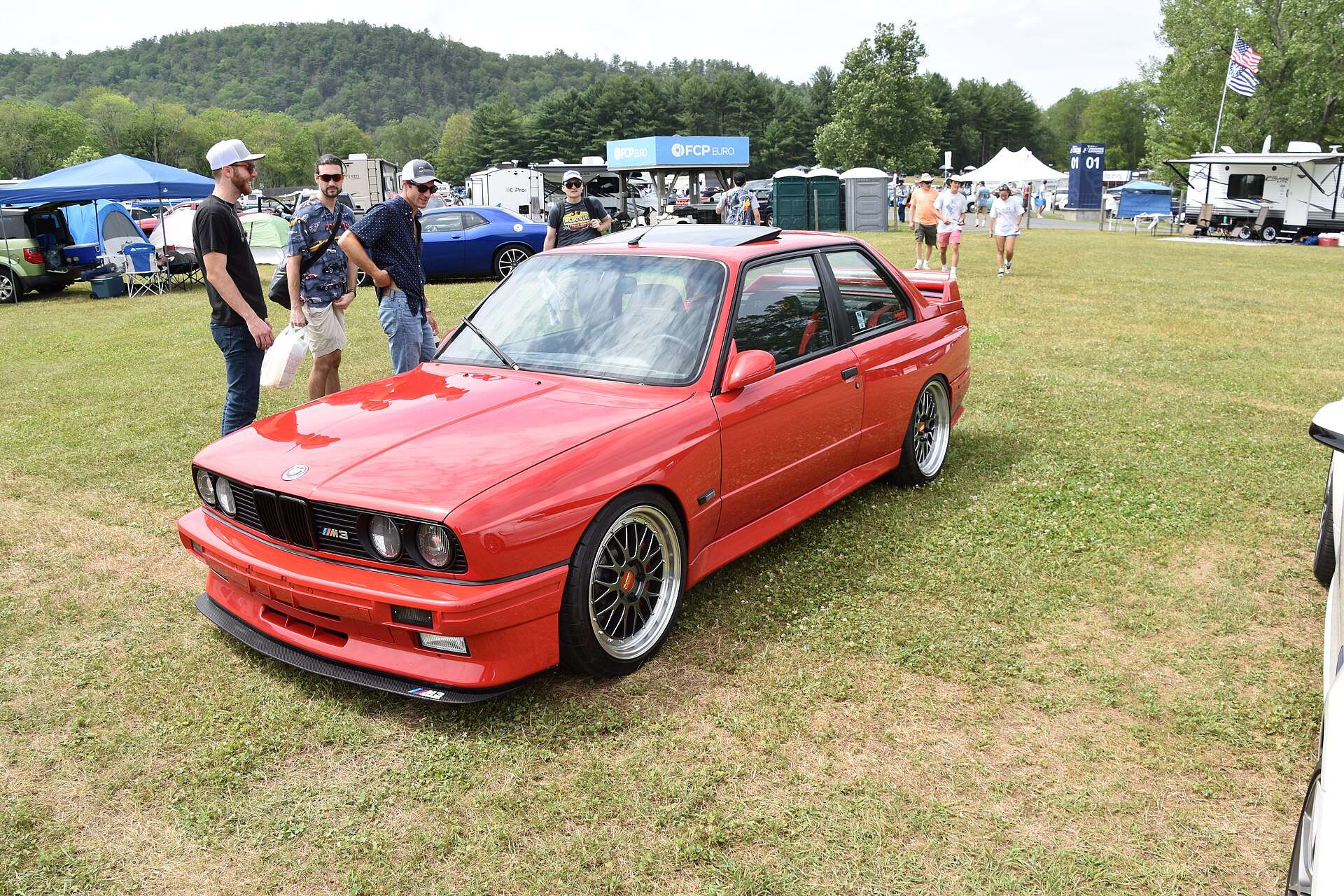
- Body: box-flared front and rear fenders, a deeper front spoiler, side skirts, and a raised decklid with its own spoiler. Moreover, the M3 shares only the hood, roof panel and sunroof with the standard 3 Series.
- Wheels and hubs: five-lug hubs, whereas standard E30s use four. Factory M3 wheels use a +24 mm offset; the special editions use +27 mm, per Hagerty.
- Drivetrain: Getrag 265 five-speed and a limited-slip differential, with a dogleg shift pattern on European cars only.
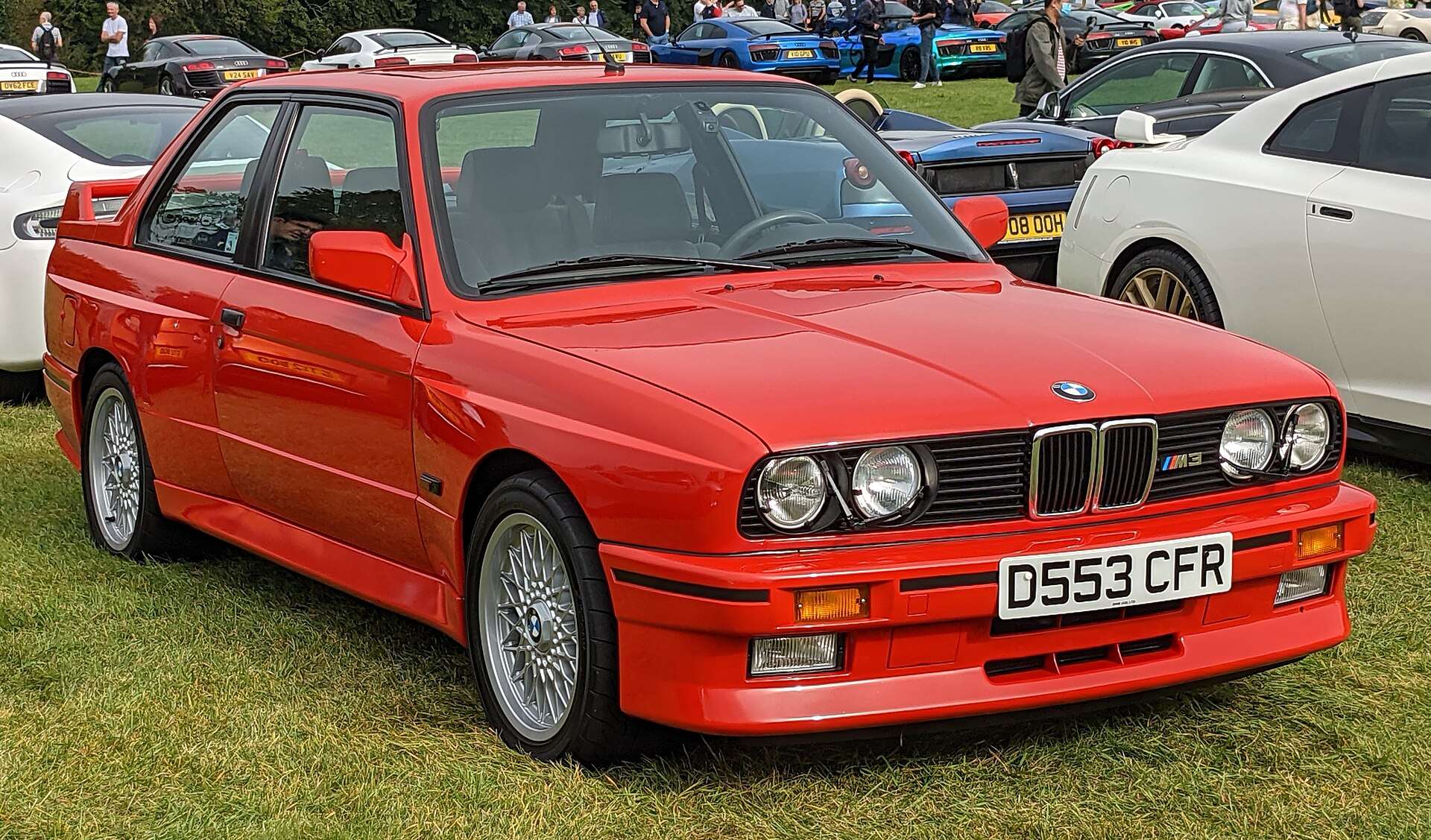
However, five-lug conversions and M3-style body kits are common on ordinary E30s, so no single visual cue is enough. In short, the VIN, the S14 engine number and the body shell have to agree.
E30 M3 Common Weaknesses
The S14 is durable when maintained. However, it is costly to maintain and very expensive to rebuild. The recurring issues cited by Hagerty and Classic Motorsports:
- Valve adjustments are due every 30,000 miles and are labor intensive, so owners often skip them. So ask for invoices.
- Porous cylinder head castings on some cars can leak coolant, so a cooling-system pressure test is worth the cost.
- Broken exhaust manifold studs are also a known problem.
- Rod bearings become a wear item once an engine has seen track use.
- Oil leaks, tired engine mounts and short-lived rear shock mounts are common.
- Rust at the license-plate lights, sunroof drains, frame rails, windshield bonding edges, wheel arches, rockers, around the taillights, rear subframe and shock towers, floorpans and battery tray. In particular, check the trunk, rear quarters and the cowl.
- Parts: most mechanical parts are shared with other E30s. However, S14-specific engine parts are expensive. A replica build documented by Classic Motorsports found bumper brackets and side skirts were the pieces it could not source.
For that reason, a compression and leak-down test belongs in any pre-purchase inspection. After all, an S14 with low compression is a rebuild, and that cost has to come out of the price.
Current Value Range
CLASSIC.COM currently sets the E30 M3 coupe market benchmark at $74,345, with an average recorded sale of $75,360. However, the spread around that number is wide:
| Segment | Current figure (CLASSIC.COM) |
|---|---|
| Coupe, market benchmark | $74,345 |
| Lowest recorded coupe sale | $18,500 (March 2025) |
| Recent top coupe sales | $189,995 (1988, 83,000 mi, September 2026); $122,990 (1988, 70,000 mi, February 2026) |
| Evo I | $89,556 benchmark |
| Convertible | $118,842 benchmark |
| Evo II | $129,312 benchmark |
| Cecotto Edition | $137,621 benchmark |
| Sport Evolution | $256,687 benchmark |
Two observations stand out. First, mileage is not the strongest variable: the $189,995 car showed 83,000 miles, and a modified 51,000-mile car sold for $120,000 the same month. Instead, condition, originality and documentation are doing the pricing work. Second, edition premiums are uneven. For instance, an Evo I benchmarks only modestly above a standard coupe, while the Sport Evolution trades at roughly three and a half times the base car. Still, edition benchmarks rest on few transactions, so treat them as directional. Finally, for where the M3 sits among BMW’s collectible cars, see our guide to the best BMW investments, and for a first-pass number on a specific car, our guide to valuing a collector car.
What Separates a Good Example From an Average One
- An original, numbers-correct S14. After all, the engine is the car. Even so, a replacement S14 is survivable; a non-S14 engine is not an M3 in any market sense.
- Valve-adjustment and cooling-system records. Consequently, a folder showing adjustments on schedule is worth more than low mileage without one.
- An unmodified body with no rust repair. Because the M3 shares so few panels with a regular E30, M3-specific replacements are harder to source and easier to spot.
- Correct wheels and drivetrain. Factory +24 mm wheels on a standard car, original intake and exhaust, the correct gearbox for its market. Period modifications are common; however, they narrow the buyer pool.
- No hidden track history. Owners raced or tracked many E30 M3s. Therefore, cage mounting holes, seam welding and rod-bearing records tell the story.
- For editions, documentation. Above all, build records and edition plaques for Evo, Cecotto or Sport Evolution cars, plus import paperwork for anything brought to the US.
Typically, an average example has a running S14 of unknown history, some rust repair and a few period modifications. In contrast, a good one has a verifiable engine, a paper trail, original paint or a documented quality respray, and nothing to explain. Moreover, the price gap between the two is often larger than the cost of fixing the average car, which is why the good ones rarely look expensive in hindsight.
E30 M3: The Collector Takeaway
Ultimately, the E30 M3 trades as a homologation car, and homologation cars are valued on authenticity. Because so little of the body is shared with an ordinary E30, verification is unusually concrete: VIN prefix, S14 engine number and body shell. First, get those three to agree. Then spend the rest of the inspection on the engine’s maintenance history. For more on the M3 line, see the 1988 M3 Evolution II No. 151, the RM Sotheby’s Best of M collection, and why Gen X and Millennial buyers are driving demand for cars like this. Other spec sheets in the series cover the C4 Corvette ZR-1, the 1987 Buick GNX and the Datsun 240Z.
The collector car market, every weekday morning.
Auction results, price moves and what’s crossing the block, read in four minutes. Free, from Modern Car Collector.
No spam, unsubscribe in one click. Or read more about the Brief.


 Shawn Henry
  Kyle Matthews