

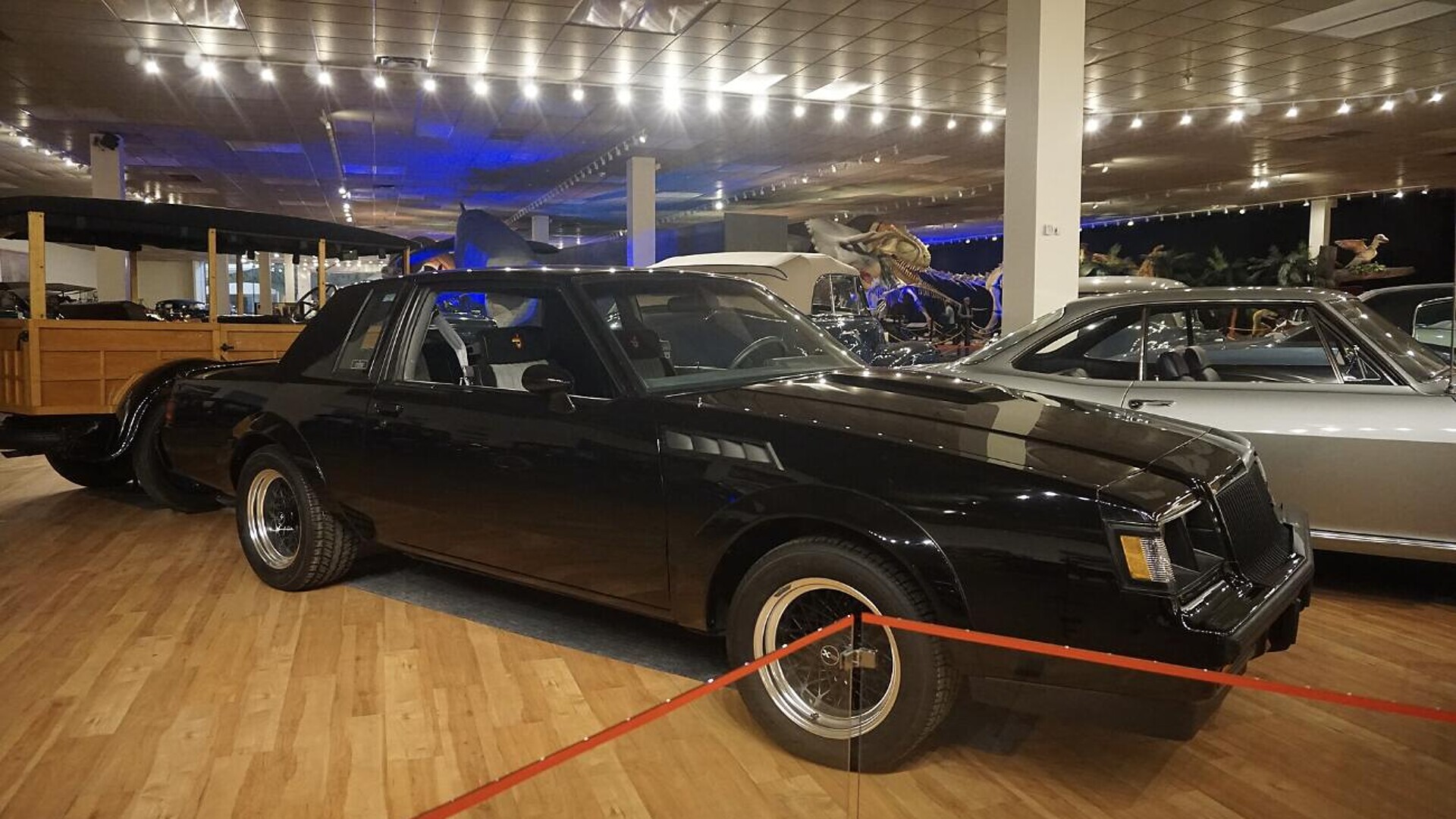
The 1987 Buick GNX is the car that turned turbocharged Buicks from a used-car curiosity into a blue-chip American collectible. Buick built it for a single model year, in a single color, in a run of 547 cars. This collector spec sheet gathers the production numbers, the drivetrain details, the identifying marks, the known weak points, and the market evidence a buyer should have in hand before committing to a six-figure car.
What the 1987 Buick GNX Actually Is
GNX stands for Grand National Experimental. Buick did not build the car alone. Finished Grand National coupes were sent to American Specialty Cars and McLaren Performance Technologies in Michigan, where the conversion work was carried out. The result was a factory-sanctioned send-off for the rear-drive turbocharged Regal, and it landed in the same year General Motors wound down G-body production.
That partnership matters to collectors for a practical reason. Because the conversion happened outside the assembly plant, the evidence that proves a car is a GNX lives in its documentation rather than in its VIN. More on that below.
Production Totals
| Figure | Detail |
|---|---|
| GNX production | 547 cars, 1987 model year only |
| Pre-production prototypes | Two, generally reported as separate from the 547-car run |
| Dash plaque numbering | Sequential, 1 through 547 |
| Colors offered | Black only |
| Body styles | Two-door coupe, fixed roof only |
| 1987 Grand National production, for context | Roughly 20,000 cars |
547 is a small number, but scarcity alone is not what holds these values up. Plenty of low-production cars trade for modest money because nobody can prove what they are anymore. That point was on clear display when a 5,068-mile GNX with a matching plaque and its original window sticker came to market, where the paperwork did more work than the production count.
Engine and Drivetrain
| Specification | Detail |
|---|---|
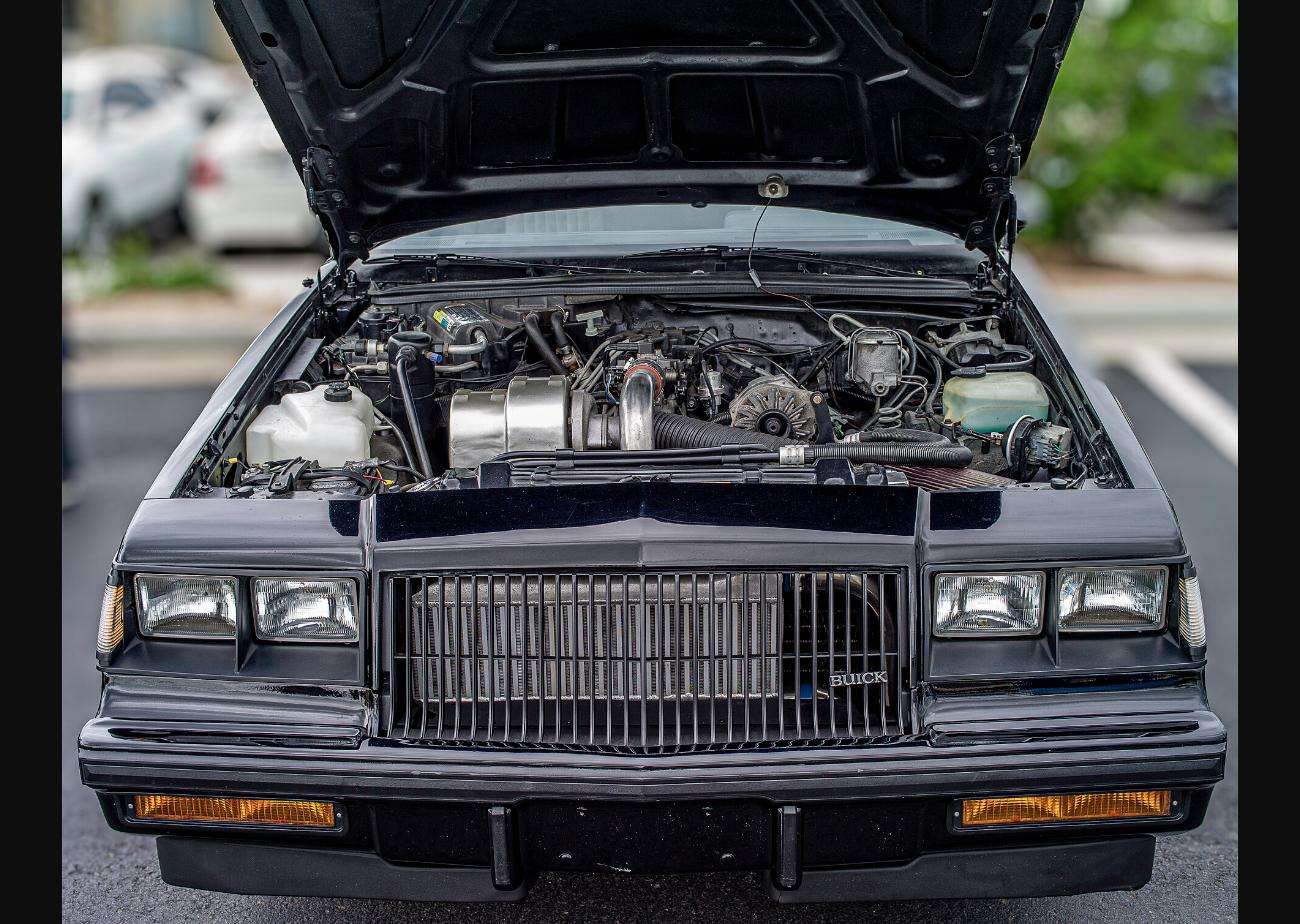
| Engine | 3.8-liter (231 cubic inch) turbocharged and intercooled OHV V6, GM code LC2 |
| Fuel system | Sequential port fuel injection |
| Turbocharger | Garrett T-3 with a ceramic turbine wheel, specified for the GNX |
| Intercooling | GNX-specific air-to-air intercooler |
| Factory output rating | 276 hp at 4,400 rpm and 360 lb-ft at 3,000 rpm |
| Transmission | GM 200-4R four-speed automatic, GNX calibration, auxiliary cooler |
| Final drive | GM 8.5-inch 10-bolt rear axle, 3.42:1 ratio, limited slip |
| Layout | Front engine, rear-wheel drive, G-body Regal platform |
| Curb weight | Approximately 3,545 lb |
| Period test results | 0 to 60 mph in the high four-second range, quarter mile in the low 13s |
| Original MSRP | Approximately $29,290 |
The factory output rating has long been treated as conservative. Period road tests put the GNX ahead of several European sports cars that cost two or three times as much, which is the comparison that built the car’s reputation and still underwrites its price. There was no manual transmission option, and no GNX was built with one.
Chassis, Brakes and Running Gear
- Revised rear suspension developed for the conversion, adding a torque arm, a Panhard bar, and an extra rear frame crossmember to control axle movement under load.
- Front disc and rear drum brakes, operated through GM’s Powermaster electro-hydraulic booster rather than a conventional vacuum system.
- 16 by 8-inch black mesh wheels unique to the GNX.
- Goodyear Eagle Gatorback tires, staggered front to rear.
The rear suspension work is the most meaningful mechanical difference between a GNX and a standard Grand National. It is also the part most often missing, modified, or quietly removed on cars that have been used hard, so it belongs high on any inspection list.
Special Options
The most useful thing to know about GNX options is that there were essentially none. Every one of the 547 cars left the conversion line equipped the same way. Air conditioning, power windows, power locks, and the GNX instrument panel were all included. Buyers could not order a different color, a manual gearbox, T-tops, or a sunroof, all of which were available on other Regals.
What does vary from car to car is everything that happened afterward. Dealer-added accessories, the markup written onto the original invoice, and the completeness of the documentation packet all differ. In a market this paperwork-driven, the packet is worth more than any accessory ever was.
Identifying Details: How to Tell a Real 1987 Buick GNX
Start with the single most important fact for authentication: a GNX does not carry its own VIN designation. It wears a standard 1987 Regal Grand National vehicle identification number. Replica risk is therefore real, and the parts needed to build a convincing tribute are available.
- A serial-numbered dash plaque, mounted on the instrument panel and numbered within the 547-car run.
- Analog Stewart-Warner instrumentation, including a turbo boost gauge, in place of the standard Grand National cluster.
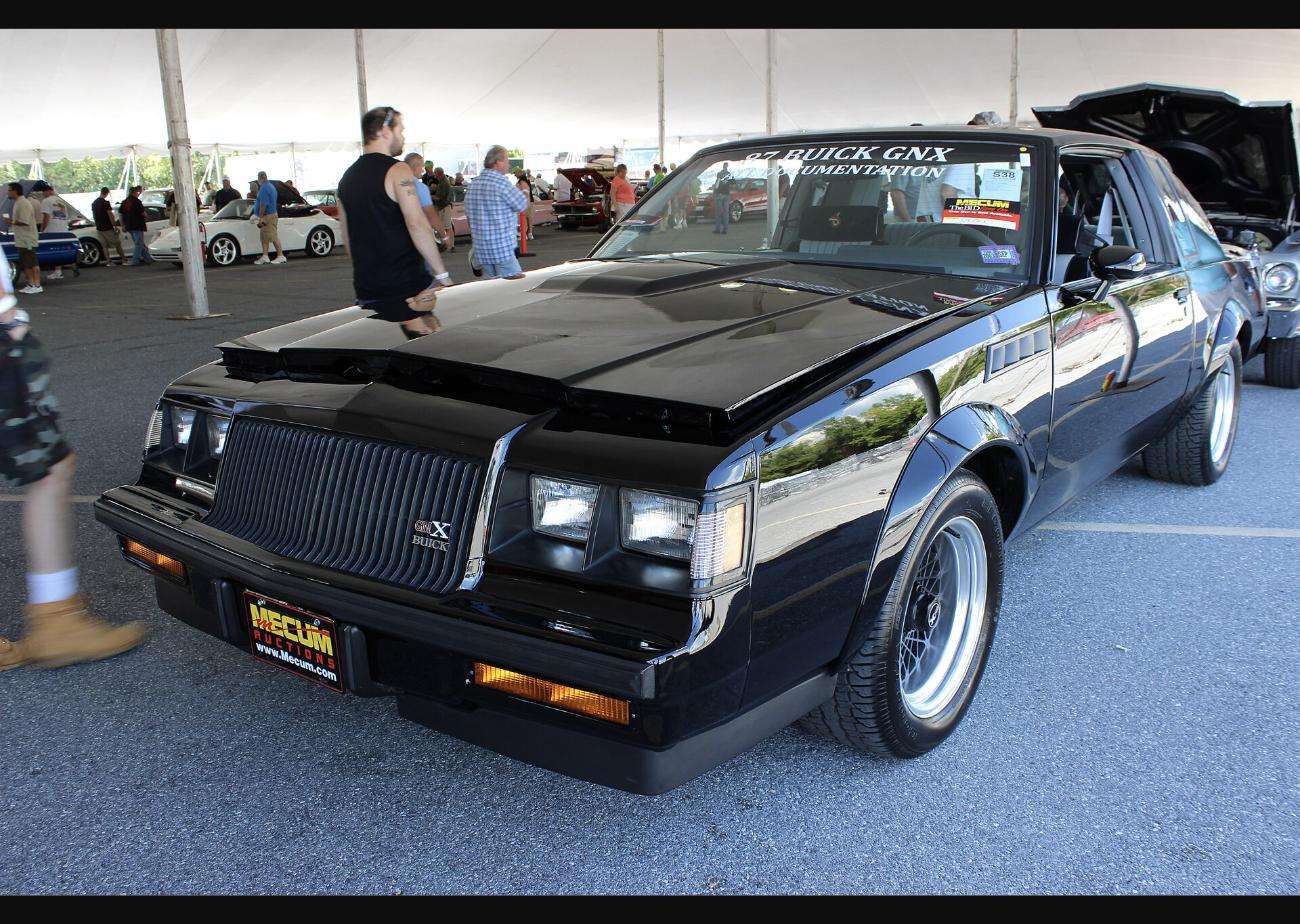
- Functional heat-extraction vents in the front fenders.
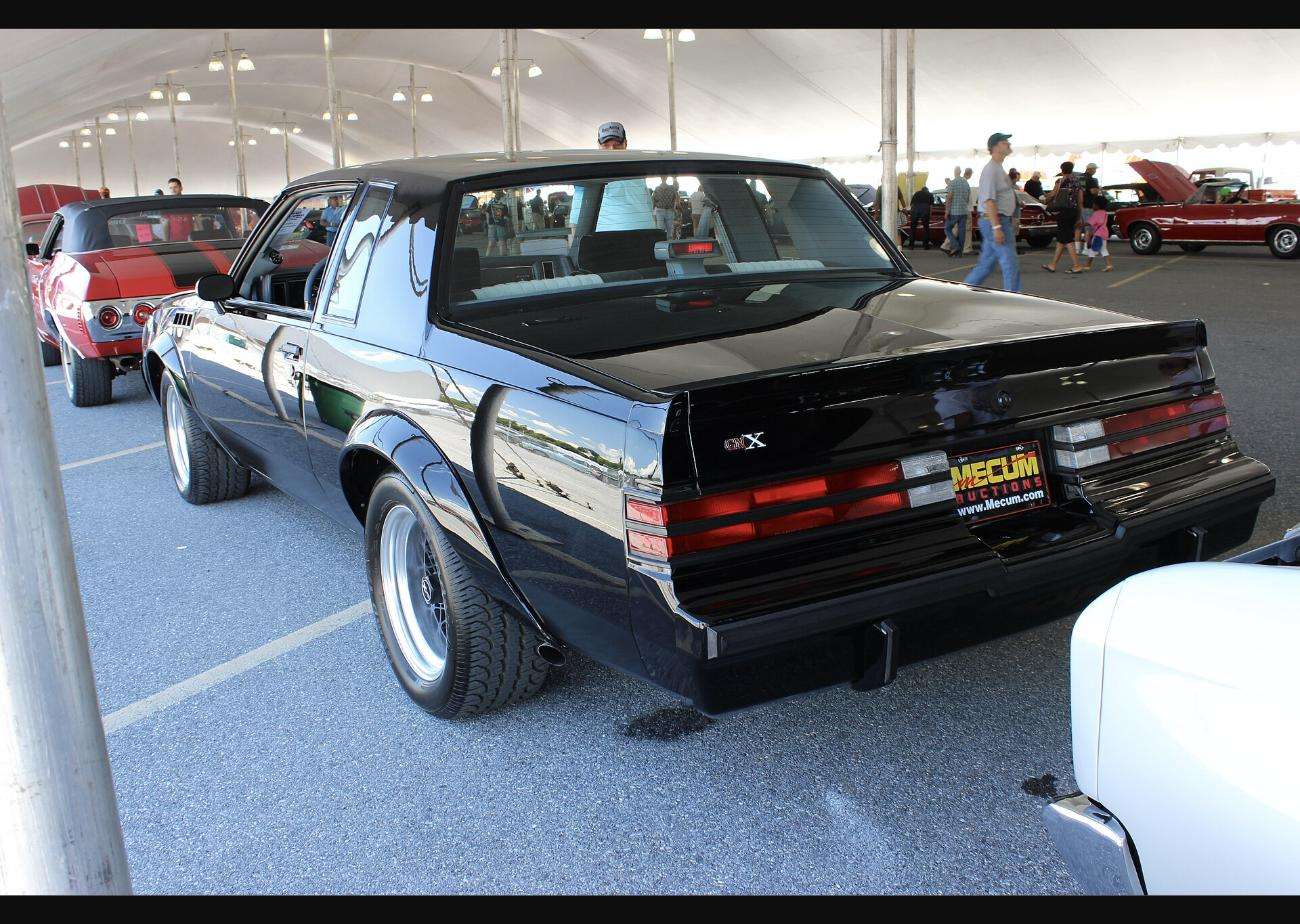
- Composite fender flares at all four corners and a GNX-specific rear spoiler.
- Blacked-out bumper and trim treatment where a standard Grand National wears brightwork.
- GNX badging on the grille and decklid.
- An original window sticker, dealer invoice, and conversion documentation that name the car.
Because the plaque is a bolt-on part and reproductions exist, treat it as a starting point rather than as proof. A plaque number corroborated by the window sticker, the original invoice, and a continuous ownership record is what actually authenticates a car. Everything else is circumstantial.
Common Weaknesses
Drivetrain
- The 200-4R automatic is the weakest link behind 360 lb-ft of torque. Rebuilt units are common, and an undocumented rebuild is a question mark rather than a selling point.
- The original ceramic-wheel turbocharger is fragile by modern standards, and many were replaced decades ago. The presence of the original unit is a genuine value factor.
- Rear main seals, valve cover gaskets, and oil pan gaskets seep on nearly every example with real hours on it.
- Fuel systems age badly. In-tank pumps, injectors, and rubber lines degrade, and ethanol-blended fuel speeds that up. A lean condition under boost can end an engine quickly.
- Factory ECM chips were frequently swapped for aftermarket performance chips, so originals are often long gone.
Brakes
The Powermaster electro-hydraulic brake booster is the best-known trouble spot on the turbo Regals. Pumps, accumulators, and reservoirs fail, correct parts are expensive, and many owners simply converted to a conventional vacuum booster. That conversion solves the problem and costs originality points at the same time, so ask what the car has before you inspect anything else under the hood.
Body, Paint and Rust
- Typical G-body rust areas include the rear window channel, the trunk gutters and floor, the lower quarter panels, and the rear frame rails.
- Composite flares can trap moisture against the metal underneath, so inspect behind and below them instead of simply looking at them.
- Mid-1980s GM black paint is thin and marks easily. Hood and roof fade is common, and full resprays are frequent enough that verified original paint has become a distinguishing feature.
Interior and Storage Damage
- Cracked dash pads, sagging headliners, and collapsed driver’s seat bolsters are the usual complaints.
- Decades-old original tires on preservation cars are display items, not driving equipment. Keep them, store them, and fit modern rubber if the car is going to move.
- Very low mileage is not the same as good mechanical health. Long dormancy produces flat-spotted tires, dried seals, varnished fuel, and seized brake and suspension components.
Current Value Range
GNX pricing separates almost entirely along two axes: odometer reading and quality of documentation. The tiers below reflect where recent public sales have clustered. They are market observations rather than appraisals, and an individual car can sit outside them in either direction.
| Tier | Typical range |
|---|---|
| Delivery mileage, under roughly 100 miles, fully documented | $250,000 to $350,000 and up |
| Under 1,500 miles, original and documented | $200,000 to $275,000 |
| Roughly 1,500 to 10,000 miles, original, strong paperwork | $150,000 to $200,000 |
| Roughly 10,000 to 30,000 miles, driven, original, documented | $125,000 to $175,000 |
| Higher mileage, modified, repainted, or thinly documented | $90,000 to $130,000 |
The supporting results are worth knowing by heart. Barrett-Jackson sold an 8.5-mile car for more than $300,000 in January 2022, and that number still anchors the top of the market. A 1,200-mile example then brought $215,000 on Bring a Trailer during 2023. By September 2026, a 5,068-mile car had bid to $165,000, while cars showing 10,000 miles or more have routinely cleared $150,000.
The low-mileage end of the market has been tested repeatedly. A 584-mile car arrived with expectations of a new benchmark, a 26-mile survivor pushed the idea of preservation about as far as it can go, and a 2,200-mile example showed what the next tier down looks like. Taken together they map the curve better than any single result does.
How the Standard Grand National Frames the Number
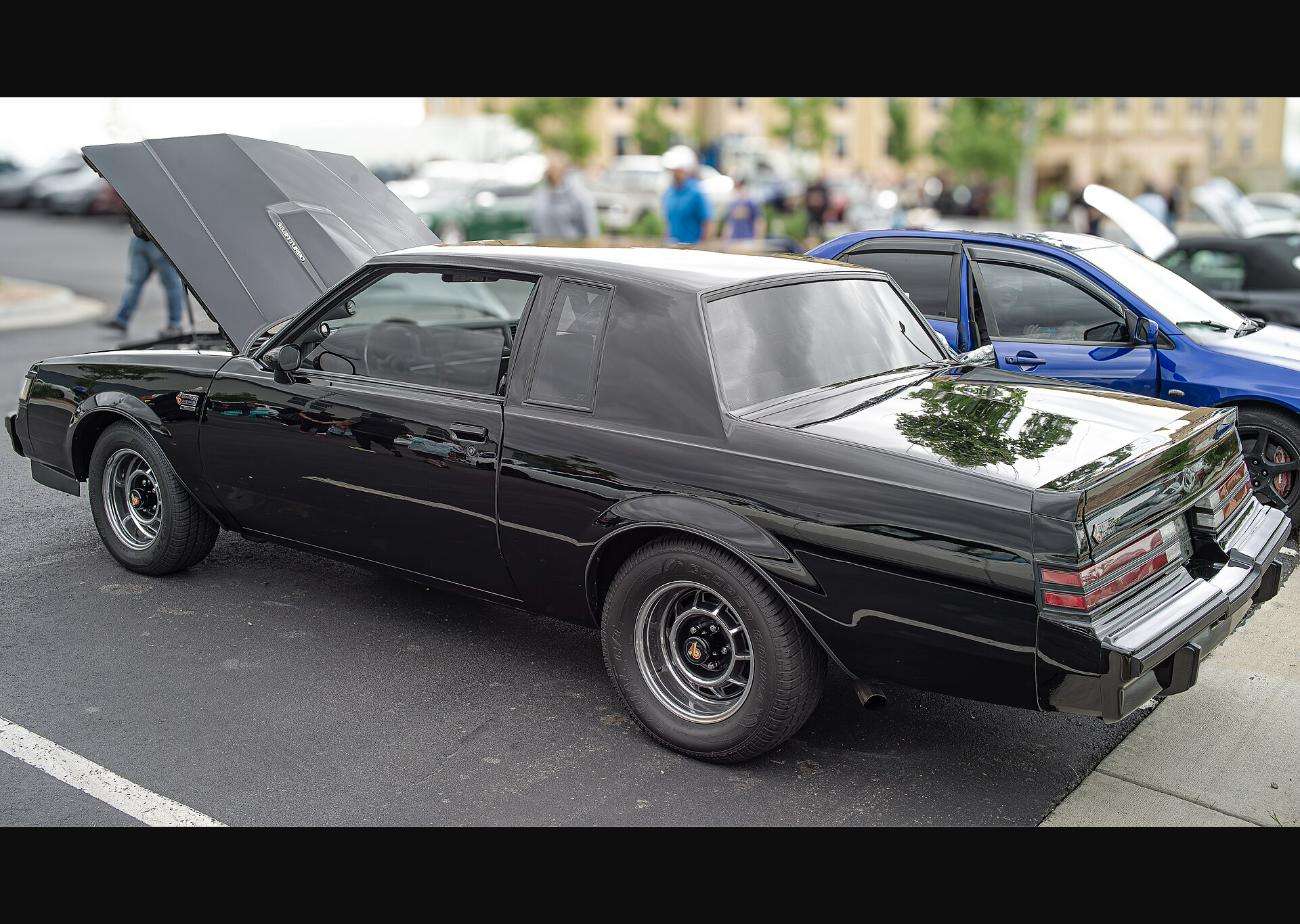
The best way to understand what buyers pay for the GNX conversion is to look at what the base car does. A 77-mile Grand National sold for $91,500, and a preserved Grand National at Henderson Auctions showed steady demand further down the mileage scale. The delta between those cars and a comparable GNX is the value the market assigns to 547 cars, a plaque, and the ASC and McLaren chassis work.
What Separates a Good Example From an Average One
| A good example | An average example |
|---|---|
| Plaque number corroborated by the original window sticker and dealer invoice | Plaque present, supporting paperwork absent |
| Original turbocharger, intercooler, ECM chip, and air cleaner still fitted | Replacement turbo, aftermarket chip, upgraded exhaust |
| Conversion rear suspension hardware untouched and verifiable | Suspension pieces removed, substituted, or unaccounted for |
| Powermaster brake system intact and recently serviced | Powermaster deleted in favor of a vacuum conversion |
| Original paint, consistent panel gaps, matching glass date codes | Full or partial respray, refinished flares, mismatched glass |
| Documented recommissioning with receipts for fuel, cooling, and seal work | Long dormancy with no mechanical recommissioning |
| Short, traceable ownership chain and a clean history report | Gaps in ownership and unexplained time off the road |
| Mileage supported by service records and inspection history | A low odometer reading with nothing to corroborate it |
| Original wheels on the car and original tires preserved separately | Reproduction wheels or incorrect tire sizes |
The pattern is consistent. Almost every line in the left column is a record rather than a part, and almost every line in the right column is a repair or a replacement that nobody wrote down. Originality and documentation compound in this market, quietly, and mostly to the benefit of whoever secured them earliest.
The Bottom Line
The 1987 Buick GNX is a rare car with a short, well-understood list of failure points and a market that prices paperwork as heavily as mileage. A buyer who inspects the rear suspension, asks hard questions about the turbo, the transmission, and the brake booster, and then reads the documentation packet line by line will know more about the car in front of them than the odometer will ever tell them. If you are trying to place a specific car inside these ranges, our valuation resource is a reasonable next stop.
Specifications listed here are the figures most commonly published for the model. Verify any individual car against its own documentation before purchase.
The collector car market, every weekday morning.
Auction results, price moves and what’s crossing the block, read in four minutes. Free, from Modern Car Collector.
No spam, unsubscribe in one click. Or read more about the Brief.

 Kyle Matthews