

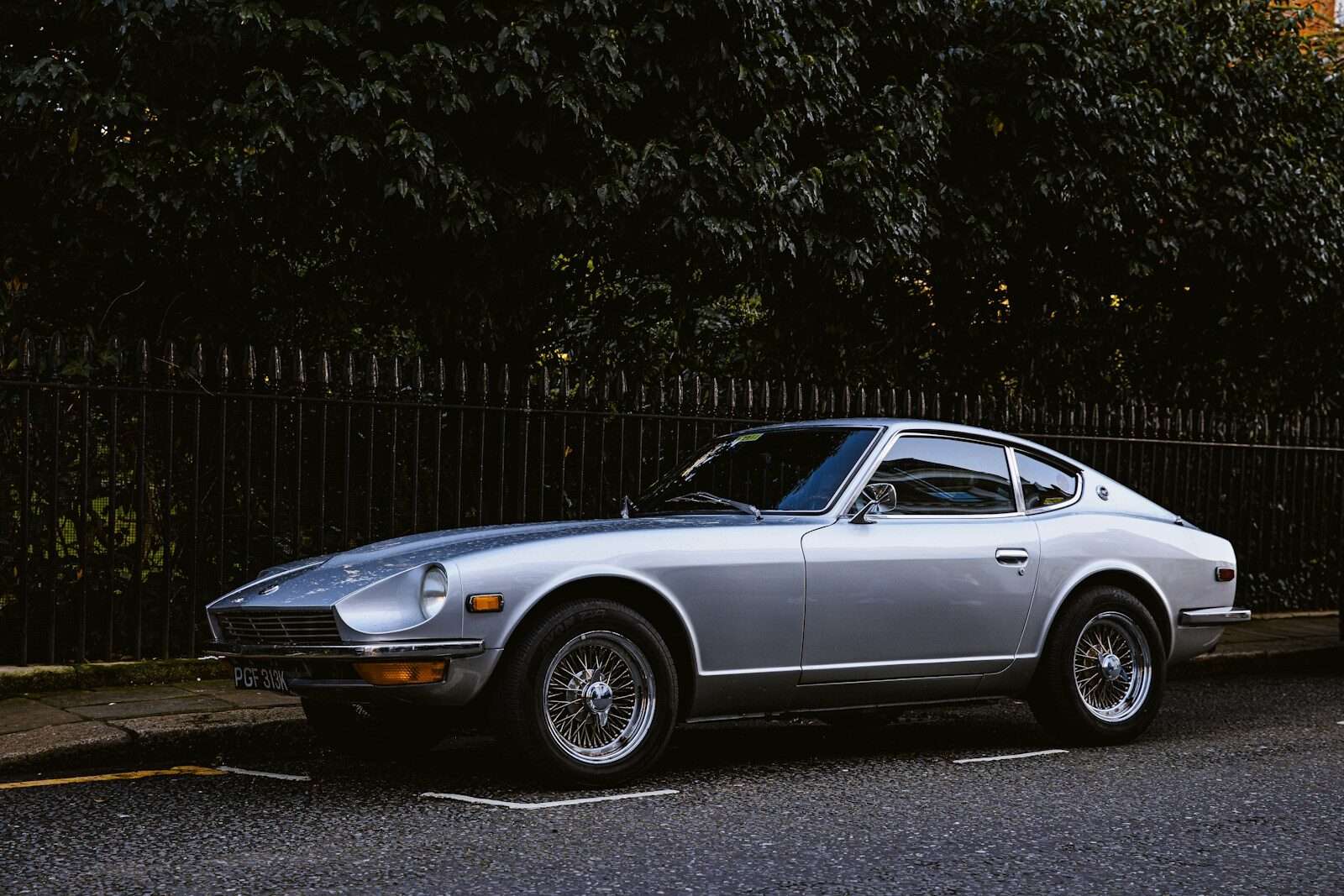
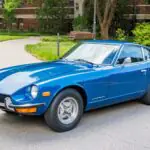
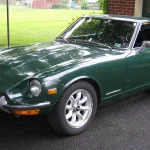
The Datsun 240Z reshaped what an affordable sports car could be when it reached American showrooms for the 1970 model year, pairing European-influenced styling with Japanese reliability at a price far below its closest rivals. More than five decades later, clean examples of the S30-chassis Z are among the most sought-after Japanese collector cars, and knowing exactly what to look for separates a smart purchase from an expensive lesson. This spec sheet covers the factual details a buyer needs before writing a check.
Production Totals
Nissan built the 240Z, badged as the Fairlady Z in its home market, from October 1969 through 1973 before the model was succeeded by the larger-engined 260Z. Widely cited production figures put total 240Z output at roughly 148,000 units, the vast majority of which were exported as left-hand-drive HLS30 cars for the United States, historically the model’s largest market. Because Nissan’s own record-keeping and third-party registries don’t always agree on exact figures, treat any single number as an approximation rather than a certified count. The earliest cars, generally referred to by collectors as Series I, were built for roughly the first year of production and are noticeably scarcer than the later Series II and III cars that followed.
Engine and Drivetrain
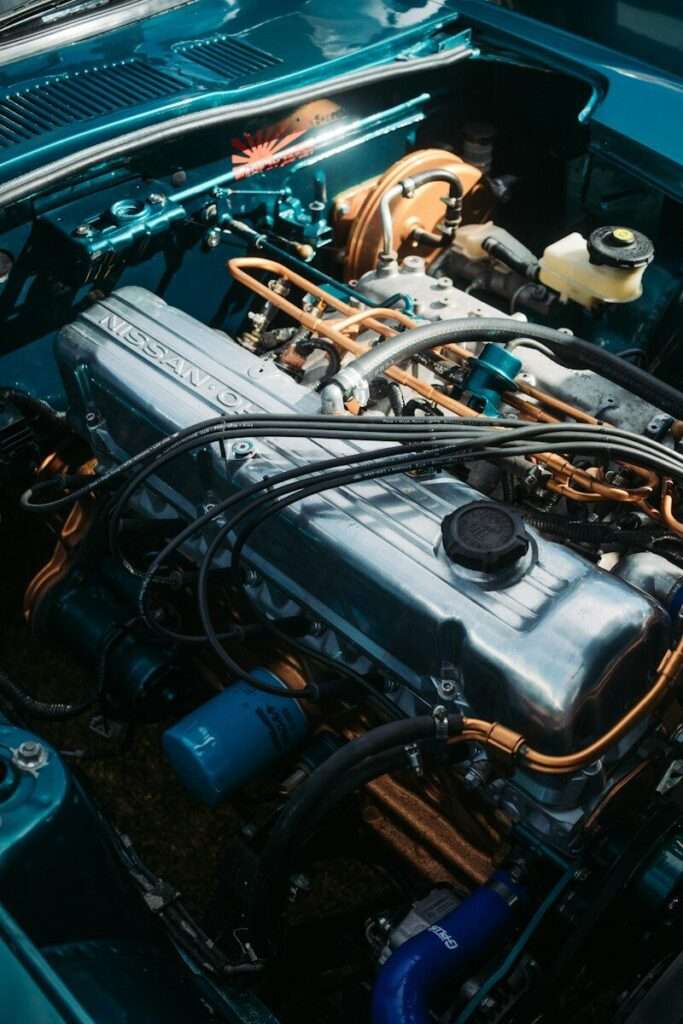
Every 240Z left the factory with the L24, a 2.4-liter SOHC inline-six with a cast-iron block and aluminum head, feeding through a pair of Hitachi SU-type carburetors on U.S.-market cars. Output was rated at 151 horsepower (SAE gross) when the car launched, though later cars carried lower published figures as Nissan added emissions equipment and testing standards shifted toward net ratings. Power went to the rear wheels through a fully synchronized 4-speed manual as standard equipment, with a 3-speed automatic offered as an option starting in 1971. Suspension was independent at all four corners, using MacPherson struts up front and a strut-type independent setup in the rear, a relatively sophisticated layout for the car’s price class, paired with front disc and rear drum brakes.
Special Options and Notable Variants
Factory options on the 240Z were limited by design, since Nissan kept the car light and mechanically simple. Air conditioning was available but rare and adds meaningful weight, an AM radio was optional on early cars, and a 3-speed automatic transmission became available partway through the run for buyers who didn’t want the standard manual. The car’s biggest variance comes from production timing rather than a checkbox list of options: Series I cars, built into calendar year 1970, have a flat, vent-free hood, different hatch louvers, and lighter overall construction than cars built after federal safety rules forced heavier bumper overriders onto 1973 models. Beyond factory production, the 240Z’s competition record, particularly the Trans-Am and SCCA C-Production cars fielded by Peter Brock’s BRE team and driven by John Morton, has made race-connected and race-inspired examples a distinct and closely watched corner of the market.
Identifying Details
U.S.-market cars carry a chassis code beginning HLS30, stamped on a data plate in the engine bay and repeated on the driver’s door jamb, followed by a sequential serial number; Japanese-market right-hand-drive cars used the HS30 prefix instead. The engine block carries its own stamped number near the distributor, and buyers pursuing an originality claim should confirm that the engine number is consistent with the chassis plate’s build date rather than assuming a match. The same data plate lists the factory paint code, which is useful for verifying whether a car still wears its original color. Small trim details, such as hood vent style, grille material, and bumper design, shift across the production run and can help place a given car within the Series I, II, or III timeline even when paperwork is incomplete.
Common Weaknesses
Rust is the defining mechanical risk on any S30-chassis Z. The floor pans, the torque boxes around the rear hatch, the rocker panels, the front fenders just behind the wheel lip, and the frame rails near the battery tray are the classic failure points, and a car that looks solid in photos can still hide serious corrosion in these areas. Mechanically, the L24’s timing chain and its nylon guides wear over time and can fail if neglected, the original Hitachi SU carburetors develop throttle-shaft wear that causes rough idle and vacuum leaks, and the factory wiring harness insulation grows brittle with age, leading to intermittent electrical faults. The stock front-disc, rear-drum brakes were adequate for 1970 but fade quickly under hard modern driving, and factory air conditioning, when fitted, is generally weak and often removed by prior owners.
Current Value Range
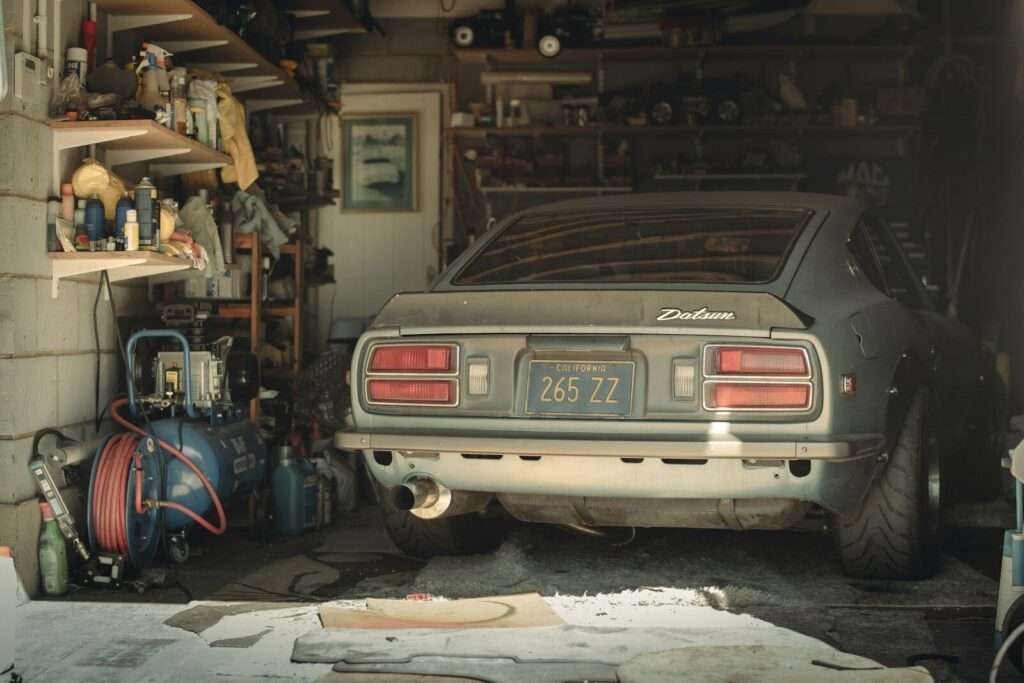
Values for well-documented 240Zs have climbed substantially over the past decade, and the spread between a rough car and a concours example is wide. Top-condition, correctly restored or exceptionally original Series I cars have traded in the neighborhood of $60,000 to $90,000 or more, particularly with documented history or a low-mile survivor status. Good driver-quality cars with sound bodies and mostly original mechanicals more commonly land in the $25,000 to $40,000 range, while project cars needing floor pans, mechanical work, or a full respray can still be found for well under $15,000. As with any collector vehicle, published guide values are a starting point rather than a guarantee, and recent auction results are the best real-world check on where the market actually sits.
What Separates a Good Example From an Average One
A genuinely good 240Z is defined less by shiny paint than by what’s underneath it. That means rust-free floor pans and torque boxes verified in person rather than taken on faith, a chassis and engine number that are consistent with each other and with the data plate, and trim details that match the car’s actual build date instead of a mismatched mix of Series I, II, and III parts. Documented service and ownership history matters just as much on a 50-year-old sports car as it does on a modern one, since it fills in the gaps that a visual inspection alone can’t. An average or below-average car typically shows patched or hidden rust repairs, a drivetrain swapped in without paperwork, aftermarket flares cut into the fenders to fit wider wheels, and deferred maintenance that shows up as chain rattle, carburetor hesitation, or a spongy pedal. None of those flaws necessarily rule a car out, but each one should move the price down and the pre-purchase inspection up the priority list.
For a real-world look at how originality and ownership history play out at auction, see our coverage of a 1971 240Z that stayed with one owner for 51 years before crossing the block on Bring a Trailer. Buyers weighing a 240Z against other future classics may also want to read our breakdown of the collector cars we expect to appreciate over the next five years, as well as our look at how younger buyers are reshaping who’s actually driving today’s collector market.
The collector car market, every weekday morning.
Auction results, price moves and what’s crossing the block, read in four minutes. Free, from Modern Car Collector.
No spam, unsubscribe in one click. Or read more about the Brief.

 Kyle Matthews