
On the evening of September 17, 1964, a crowd so large it broke the glass doors of the Odeon Leicester Square packed into London for the world premiere of Goldfinger. The screening started ten minutes late and introduced audiences to Sean Connery’s James Bond driving a Silver Birch Aston Martin DB5 fitted with revolving number plates, an ejector seat, a smoke screen, an oil-slick dispenser, and retractable tire-shredding blades. Six decades later, that single night remains the most consequential event in the collector history of any postwar British sports car — not because of anything Aston Martin’s engineers did, but because of what a film production did to the car after it left the factory.
A Very Good GT Car, Before It Was a Legend
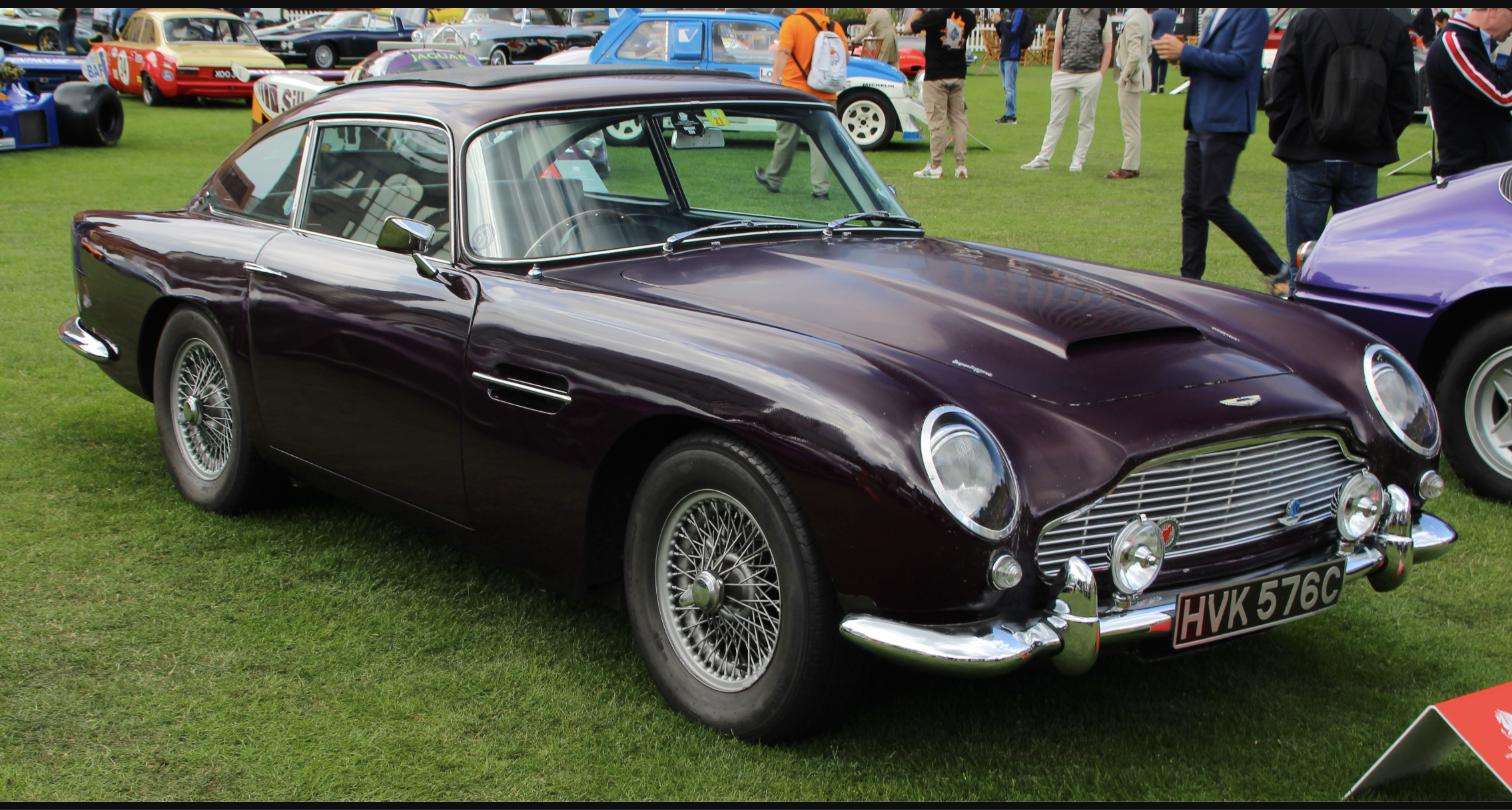
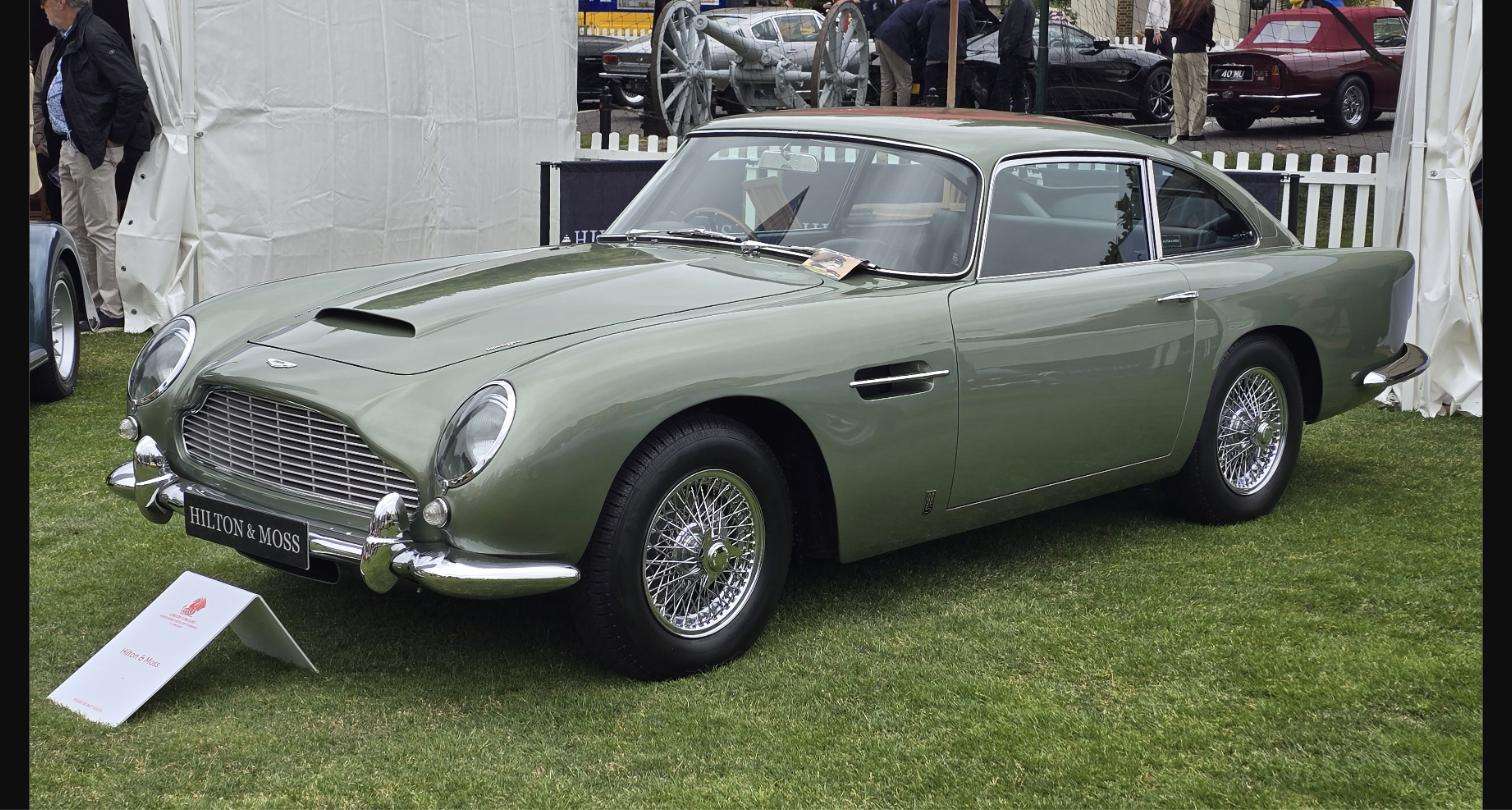
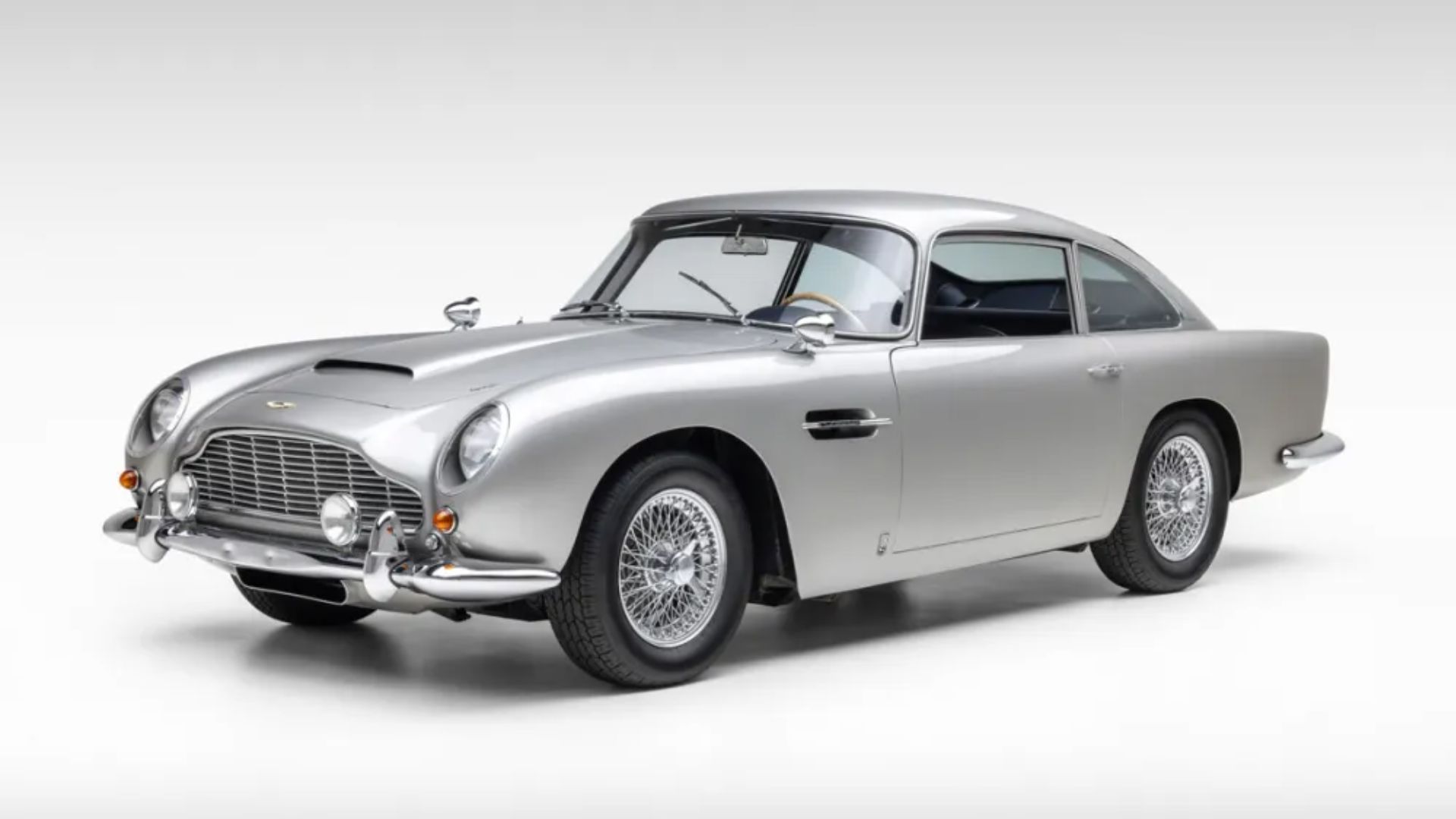
Strip away the gadgets, and the DB5 was already a serious car in its own right. Introduced in 1963 as the successor to the DB4, it paired Carrozzeria Touring’s superleggera aluminum bodywork over a steel chassis with a 4.0-liter straight-six producing 282 bhp (325 bhp in Vantage tune), good for a top speed near 145 mph and 0-60 mph in about 8 seconds. At a UK launch price of £4,175 — roughly double what a contemporary Jaguar E-Type cost — it was one of the fastest and most expensive production grand tourers in the world, of which only 1,021 were built over a two-year run. Production designer Ken Adam chose the DB5 for Goldfinger simply because it was Aston Martin’s newest model; Ian Fleming’s novels had actually put Bond behind the wheel of a DB Mark III. Left alone, the DB5 would likely be remembered today much as the DB4 and DB6 are: a superb, sought-after British GT, but a specialist’s car rather than a household name.
Six Weeks in the Workshop That Changed the Car’s Destiny
That changed during roughly six weeks of preparation, when EON Productions’ effects team, led by John Stears, fitted the DB5 with its now-inseparable arsenal of Q Branch equipment. Only three DB5s were built to that original film specification during the Bond series’ early years, and the finished cars did double duty as working props and international publicity vehicles — one toured the 1964 New York World’s Fair billed as “the most famous car in the world,” months before most audiences had even seen the film. Corgi’s die-cast toy of the car became the best-selling toy in Britain that year, and Aston Martin’s own dealers reported a rush of orders from buyers who wanted to own Bond’s car, gadgets or not — sales history credits Goldfinger with helping the DB5 outsell its otherwise similar DB4 predecessor. No factory option list or motor show unveiling has ever done more for a single model’s reputation than one night at the cinema.
How a Movie Prop Became a Multimillion-Dollar Auction Category
The clearest evidence of that reputation is in the auction record. Chassis DB5/2008/R — originally built for Thunderball publicity duties before spending 35 years on static display at a Tennessee car museum — sold for $2,090,000 when RM Sotheby’s first offered it in 2006. After a comprehensive restoration by Switzerland’s Roos Engineering, the same car returned to RM Sotheby’s Monterey sale in August 2019 and brought $6,385,000 with premium: a standing auction record for the model, and roughly triple its own result from thirteen years earlier. Nothing about the car’s mechanical specification changed in that gap — what changed was the strength of its documentation as one of the three surviving, functioning Bond cars. It’s a pattern of story-driven appreciation echoed elsewhere in the market, such as when a Ferrari F50 set a new auction record purely on the strength of rarity and provenance rather than any change to the car itself.
That premium exists in sharp relief against the market for standard DB5s, which is itself healthy but trades on entirely different numbers. Ordinary coupes have sold recently in the roughly $650,000 to $1.3 million range depending on originality and condition — a 1964 example brought $1,350,000 in July 2026, while a 1965 Vantage-spec coupe sold for $1,116,000 in October 2025 — with project cars occasionally dipping below $350,000. It’s the same scarcity-and-story dynamic that has shaped other Aston Martin values this decade, from bidding on the numbered 2021 Aston Martin V12 Speedster to the brand’s own Vanquish relaunch trading heavily on V12 heritage. In the DB5’s case, the ceiling created by Goldfinger now sits roughly five times higher than the floor set by an otherwise identical, undocumented car.
Aston Martin Closed the Loop Itself
The most telling recent chapter in this story is one Aston Martin wrote on purpose. In 2018, the factory announced it would build 25 new “Goldfinger” DB5 Continuation cars — the first new DB5s constructed in more than fifty years — each requiring roughly 4,500 hours of work and fitted, in collaboration with EON Productions, with faithful, non-lethal reproductions of the film car’s gadgets. Priced at more than $3 million apiece, all 25 sold before deliveries began in the second half of 2020, generating well over $100 million for cars that, strictly speaking, cannot be registered for road use in most markets. As Chief Creative Officer Marek Reichman put it when the first customer car was completed, the DB5 had become “the most famous car in the world by virtue of its fifty-plus-year association with James Bond” — and Aston Martin built an entire limited series on the strength of that sentence alone. It’s a rare instance of a manufacturer building brand-new cars specifically to sell nostalgia for a fictional character’s car, and it now functions as a live pricing signal for how far the Bond premium extends beyond the three original film cars.
What Collectors Should Know Today
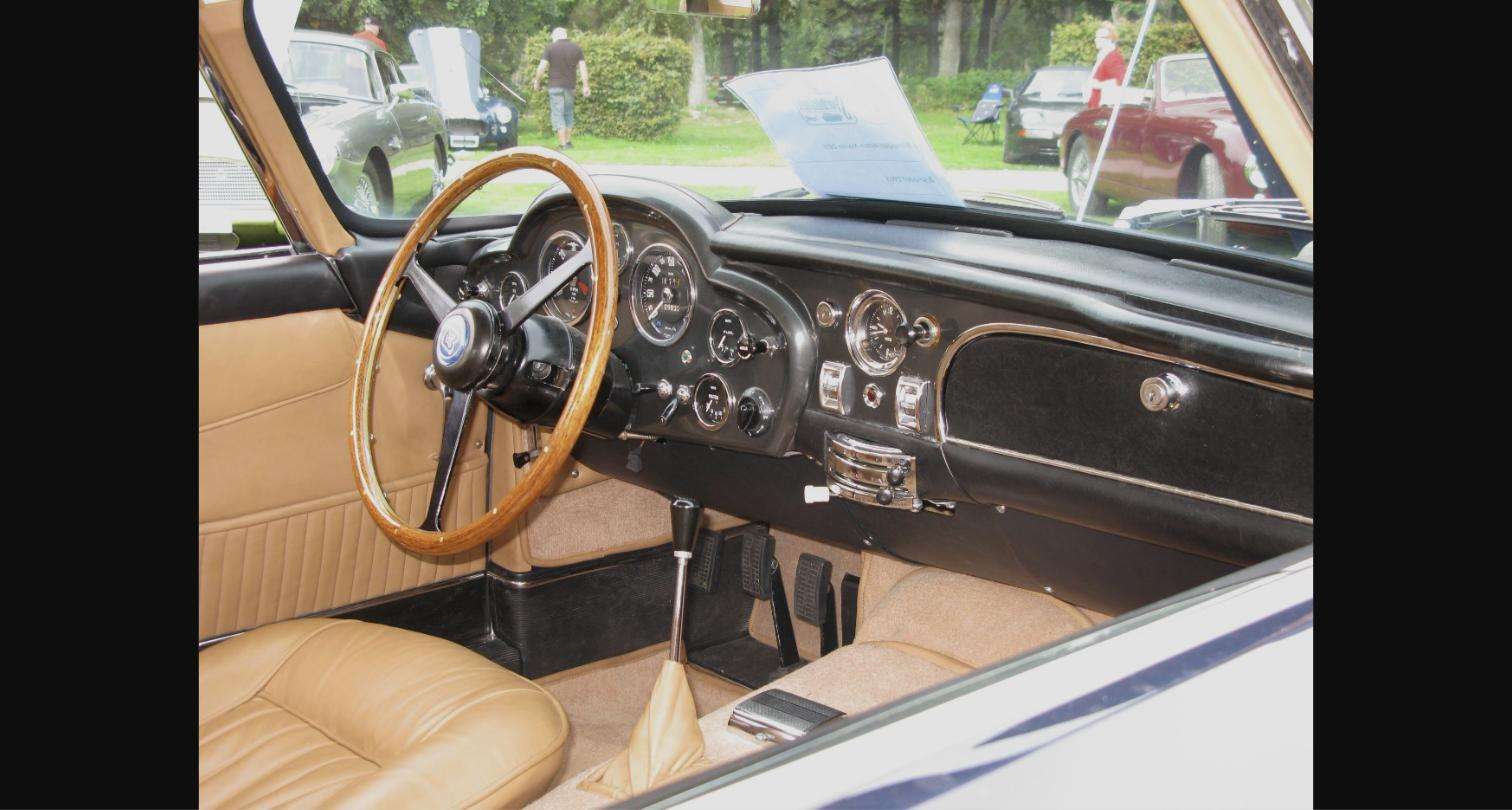
For anyone pricing a DB5 in 2026, the practical lesson of September 17, 1964, is that paperwork, not gadgetry, is what actually separates these two markets. Aftermarket “Bond-spec” conversions and replica gadget kits have circulated for decades, and none of them carry anything close to the premium that verified EON provenance or genuine Goldfinger Continuation status commands; documented chain of custody, not visual similarity, is the only thing worth paying for. Within the ordinary DB5 market, condition, matching numbers, and coachwork variant — standard coupe versus Vantage-spec versus the rarer convertible — continue to drive most of the price spread, and that market has been comparatively stable rather than speculative. The Continuation cars are worth watching separately, as a cleaner read on Bond-car sentiment: with only 25 in existence and no path to public-road registration in most countries, their resale activity reflects demand for the association itself, independent of anything a buyer could actually drive to a cars-and-coffee meet. Bond-linked consignments keep surfacing elsewhere in the hobby, too — MCC has previously covered a James Bond-inspired Land Rover Defender crossing the auction block — and anniversary moments like a new Bond film or a round-number birthday for the Goldfinger premiere have historically coincided with renewed inquiry volume for anything wearing the association.
If there’s one insight worth carrying away from this date, it’s this: the Aston Martin DB5 is likely the only production car whose original survivors and brand-new factory continuation cars now trade within shouting distance of each other, built decades apart, because one evening at the Odeon Leicester Square gave a very good British GT car a story no amount of engineering could have manufactured on its own.
The collector car market, every weekday morning.
Auction results, price moves and what’s crossing the block, read in four minutes. Free, from Modern Car Collector.
No spam, unsubscribe in one click. Or read more about the Brief.
Related Posts:
- Aston Martin Unveils DB12 Goldfinger Edition to…
- Rare 1965 Aston Martin DB5 Convertible Expected to…
- Rolls-Royce Unveils Bespoke Phantom Honoring Bond…
- Collector Market Morning Watch: Hershey Sold 99%,…
- Why This 1962 Aston Martin DB4 Vantage Convertible…
- Rare 1965 Aston Martin DB5 Vantage Could Reach $1…
 Shawn Henry
  Kyle Matthews