

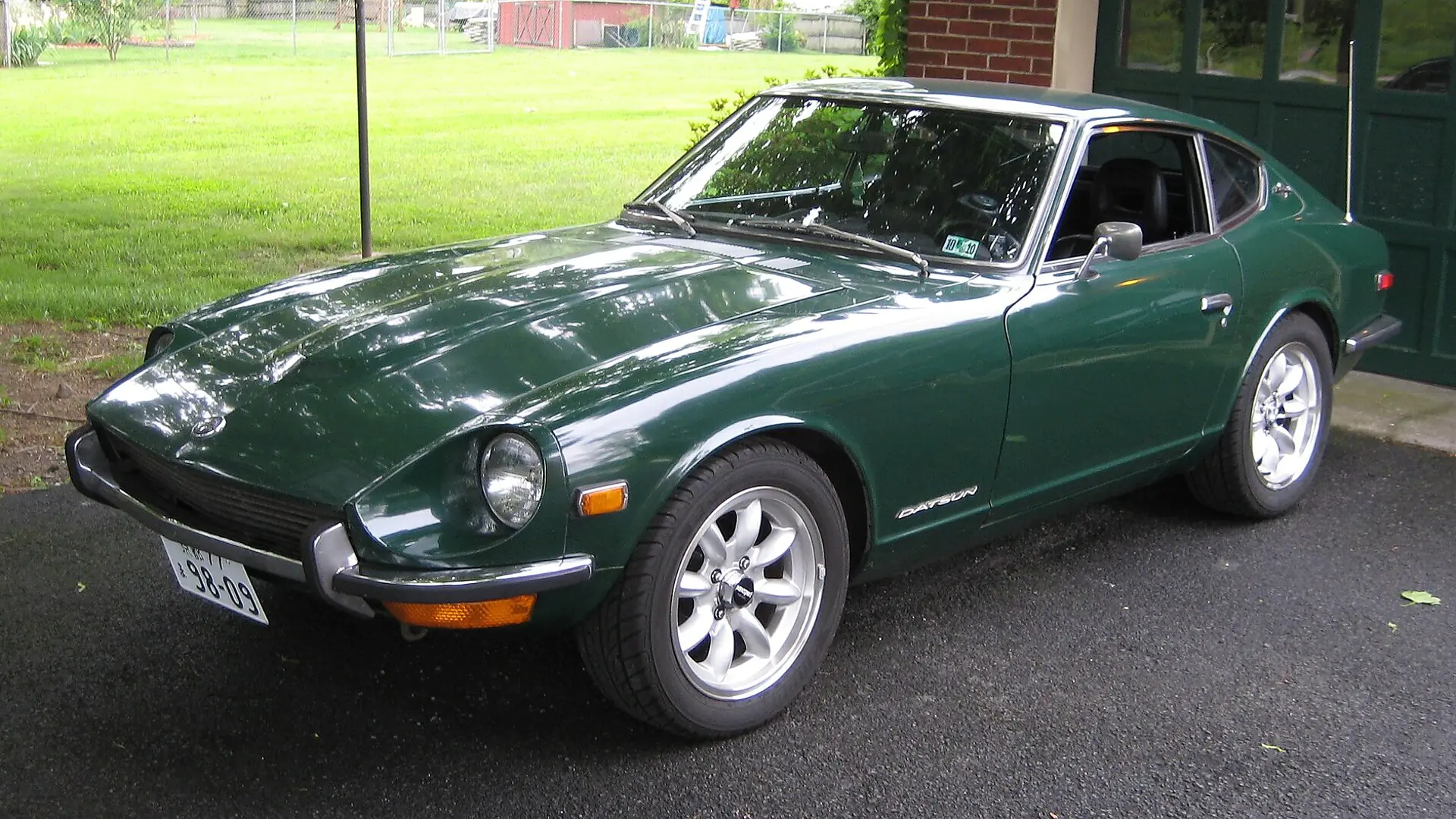
A Datsun 240Z is easy to love and hard to verify. The earliest cars, the Datsun 240Z Series I built from late 1969 into 1970, are the most collectible, yet the numbers that prove a car’s identity sit in several places and are easy to mismatch. The originality detail that most affects value is the one buyers check last: whether the car’s numbers agree with each other and with its claimed build, and whether the early-production features are really there.
Why it matters: what the market is paying
The evidence is thin but suggestive. Classic.com puts its benchmark for the 1970–1973 240Z at $34,729. Eight recent results, from September 17 to October 6, 2026, ran from $19,800 to $71,740, which averages about $35,849 by our calculation. The one 1970 model-year car among them, in Hall County, Georgia, sold on Bring a Trailer on September 23 for $71,740, more than double the benchmark. We do not know whether that car was a Series I or numbers-matching, so it is a data point, not proof.
One buyer’s guide at Classic Cars Arena puts the Series I premium at 10 to 15 percent, a figure that one sale well above that range does not support, though a single sale proves little. For scale over time, Sports Car Market reported in 2015 that a Series 1 car, chassis HLS3006116, sold for $40,700 at Motostalgia’s Austin sale on November 1, 2014, while its valuation for the model then ran $8,200 to $14,000. The model has moved a long way since; whether the early cars moved furthest is the open question.
Where the numbers are, and where sources disagree
A numbers-matching 240Z means the VIN and engine number agree in more than one place. The sources agree on the principle and differ on some locations, so treat the list below as a map to check against a Z-car club reference, not as a final authority.
- Dash VIN: on the driver’s side, visible through the windshield, beginning HLS30- on a US-market 240Z (Z Car Guide).
- Firewall: XenonZcar places the serial on the firewall above the brake booster, while Sports Car Market’s profile says the chassis number is on the right-side firewall.
- Engine-bay ID plate: it lists car type, engine capacity, maximum horsepower, wheelbase, engine serial and car serial. Z Car Guide puts it on the passenger-side strut tower, and XenonZcar on the left side of the engine bay.
- Engine number: stamped on the right side of the block at the rear, per Z Car Guide, and it should match the number on the plate.
- Door-jamb plate: shows the production month and the VIN, with the year printed.
- Color code: XenonZcar places the body color label on the radiator core support, while Classic Cars Arena says to confirm the code on the door jamb.
The early-production tells
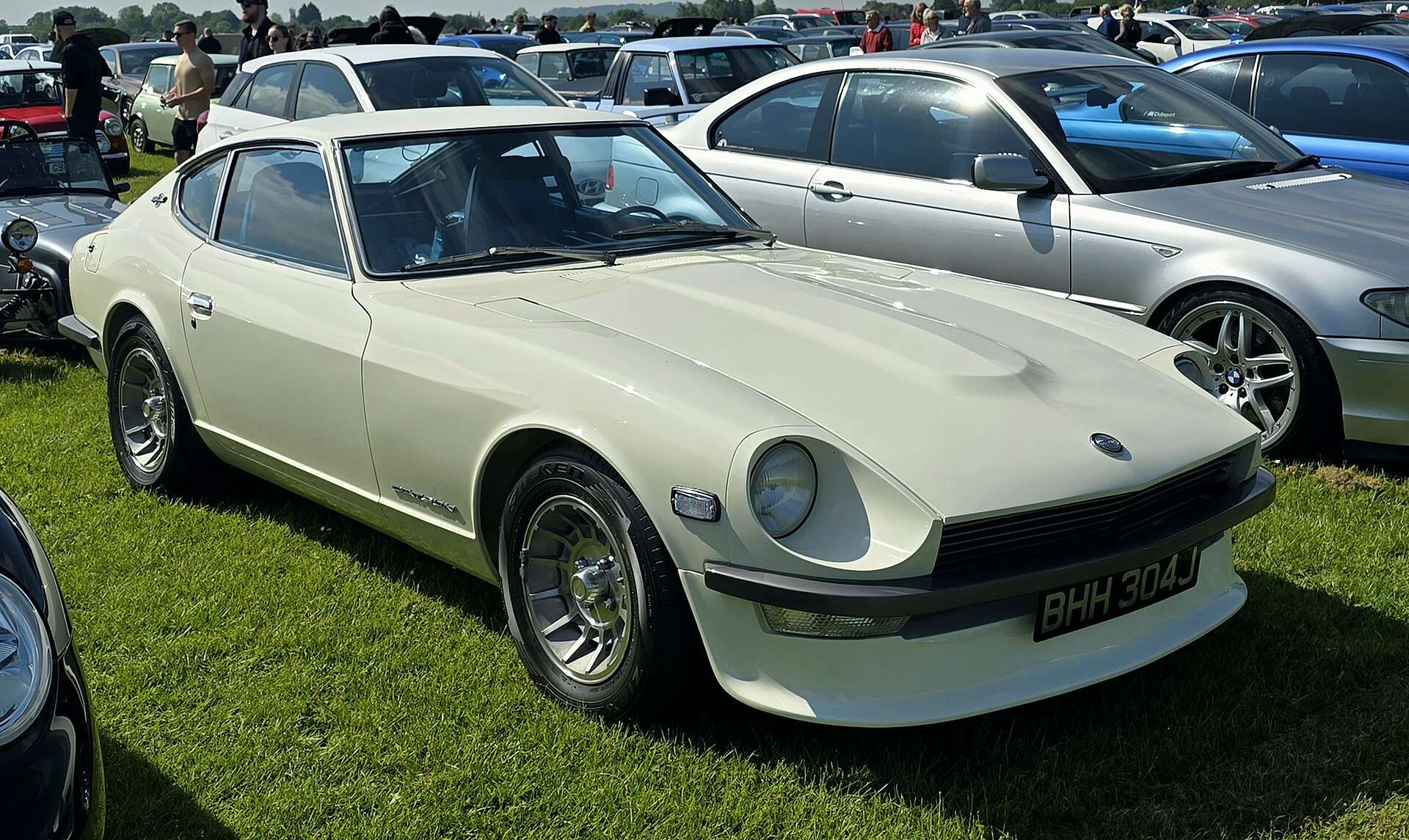
Sports Car Market says the first Series 1 cars, built from late 1969 to early 1970, have fresh-air exhaust vents on the rear hatch. Classic Cars Arena lists further Series I details, including chrome window surround trim and a rear-hatch badge in a font that later changed. We could not corroborate those extra details independently, so confirm them against Z Car Club references before paying for them. SCM also shows how judged originality works: it noted that a 2014 restored car with period-correct aftermarket dish wheels instead of factory wheels and hubcaps could not qualify as a ZCCA gold-medallion car.
What buyers should verify before purchase
- The dash VIN plate against the firewall stamping, checking the HLS30- prefix and common misreads of digits.
- The engine-bay plate and the block. The engine number on the plate should match the number stamped on the engine. Classic Cars Arena’s rule is that if one number does not match, a major component has likely been replaced.
- The door-jamb plate. If the car is sold as a Series I, the production month and year should fit a late-1969 or early-1970 build.
- The color code against the paint on the car, to see whether the car has been refinished.
- The early features, including the rear-hatch vents, and whether they appear original to the car rather than a later modification.
- Wheels, hubcaps and trim against factory specification, since SCM’s example shows that non-factory wheels can cost a restored car its judging status.
- The paperwork, comparing every number above with any documents that come with the car, as Z Car Guide recommends.
- The structure. Rust is structural on these unibody cars. Check the rear strut towers, floors, rocker panels, quarters and hatch frame, and squeeze the rockers: if they flex, they are rusted through (Classic Cars Arena).
Our reading
This is interpretation. The market tends to pay for proof, and on a 240Z proof is a set of numbers that agree. A car that matches and carries the correct early features can plausibly trade far above the benchmark, as the one 1970 result may suggest, while a car with a replaced engine or an unexplained plate is priced as an ordinary driver whatever its year. The lesson is the same one we draw on every marque: verify first, then pay.
For the same discipline on other cars, see our originality guides to the Boss 429 KK number, the Mercedes Pagoda’s body number, the Jaguar E-Type Heritage Certificate and the Ferrari 308 GTB Vetroresina. For more Japanese collectibles, see our spec sheet on the first-generation Acura NSX, our report on an unmodified 1993 Supra Turbo, our look at a 1969 Datsun Fairlady Z432 and our guide to the best JDM cars to invest in. This is analysis for collectors, not an appraisal.
Ever pulled the plates on a 240Z and found numbers that didn’t agree? What gave it away: the engine, the door jamb or the paperwork?
Sources
- Classic.com, Datsun 240Z market page
- Sports Car Market, 1970 Datsun 240Z Series 1 Coupe profile, February 1, 2015
- Z Car Guide, Vehicle Identification Numbers for Datsun S30
- XenonZcar, S30 VIN decoding
- Classic Cars Arena, Datsun 240Z buyer’s guide
The collector car market, every weekday morning.
Auction results, price moves and what’s crossing the block, read in four minutes. Free, from Modern Car Collector.
No spam, unsubscribe in one click. Or read more about the Brief.

 John Lloyd