

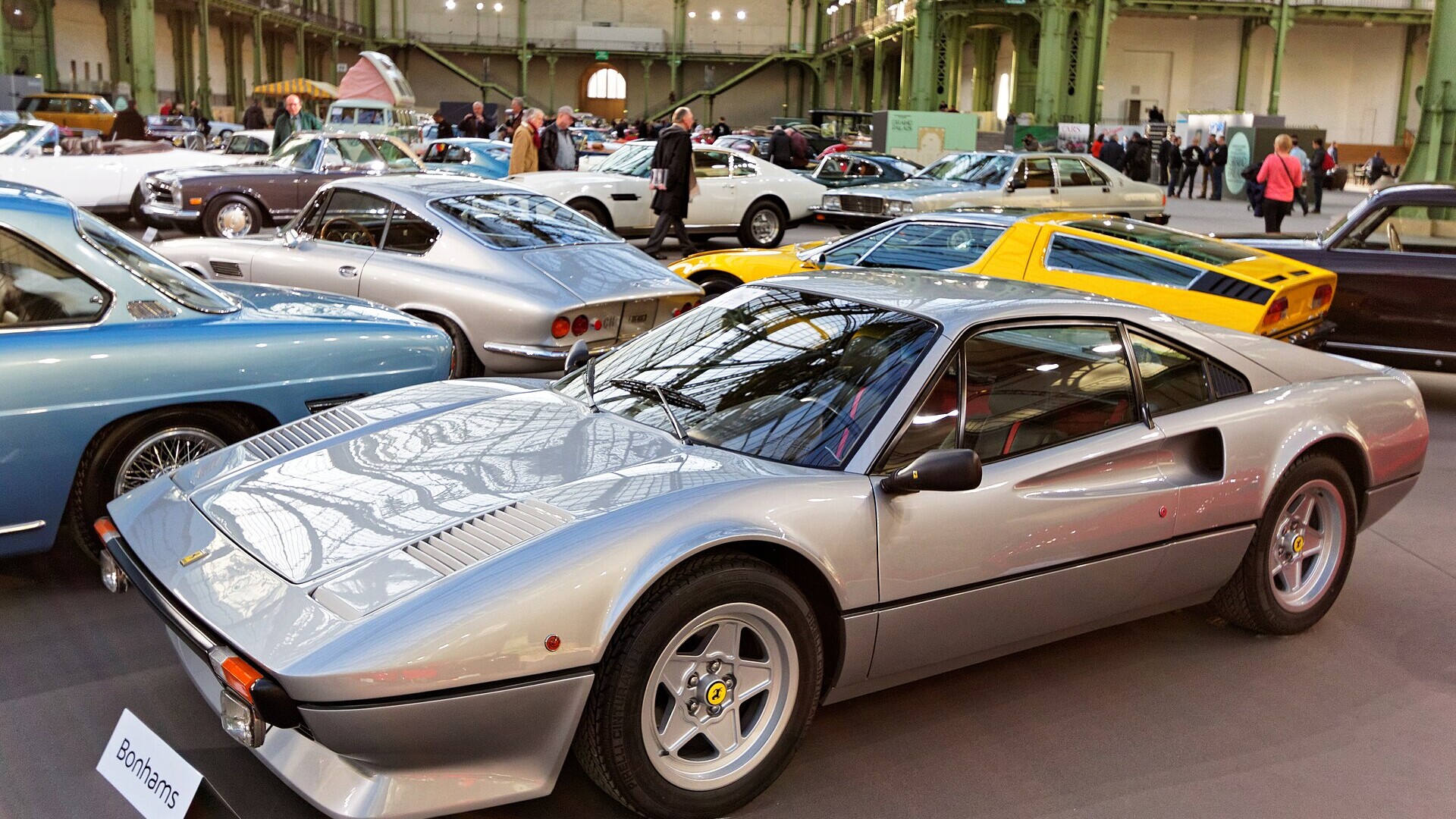
Every Ferrari 308 GTB built before mid-1977 invites the same question from a serious buyer: is it a Vetroresina? The Scaglietti-built fiberglass cars are the most sought-after of the 308 line, lighter than the steel-bodied cars that followed and, in European dry-sump form, more powerful than the US versions. But a fiberglass body is not a line on a title, and published totals for how many were built run from 712 to 808. That gap is the lesson. On a Vetroresina, the originality detail that matters is not the badge or the catalog description. It is whether the body, the specification and the numbers can be proven to belong together.
What makes a Ferrari 308 GTB Vetroresina different
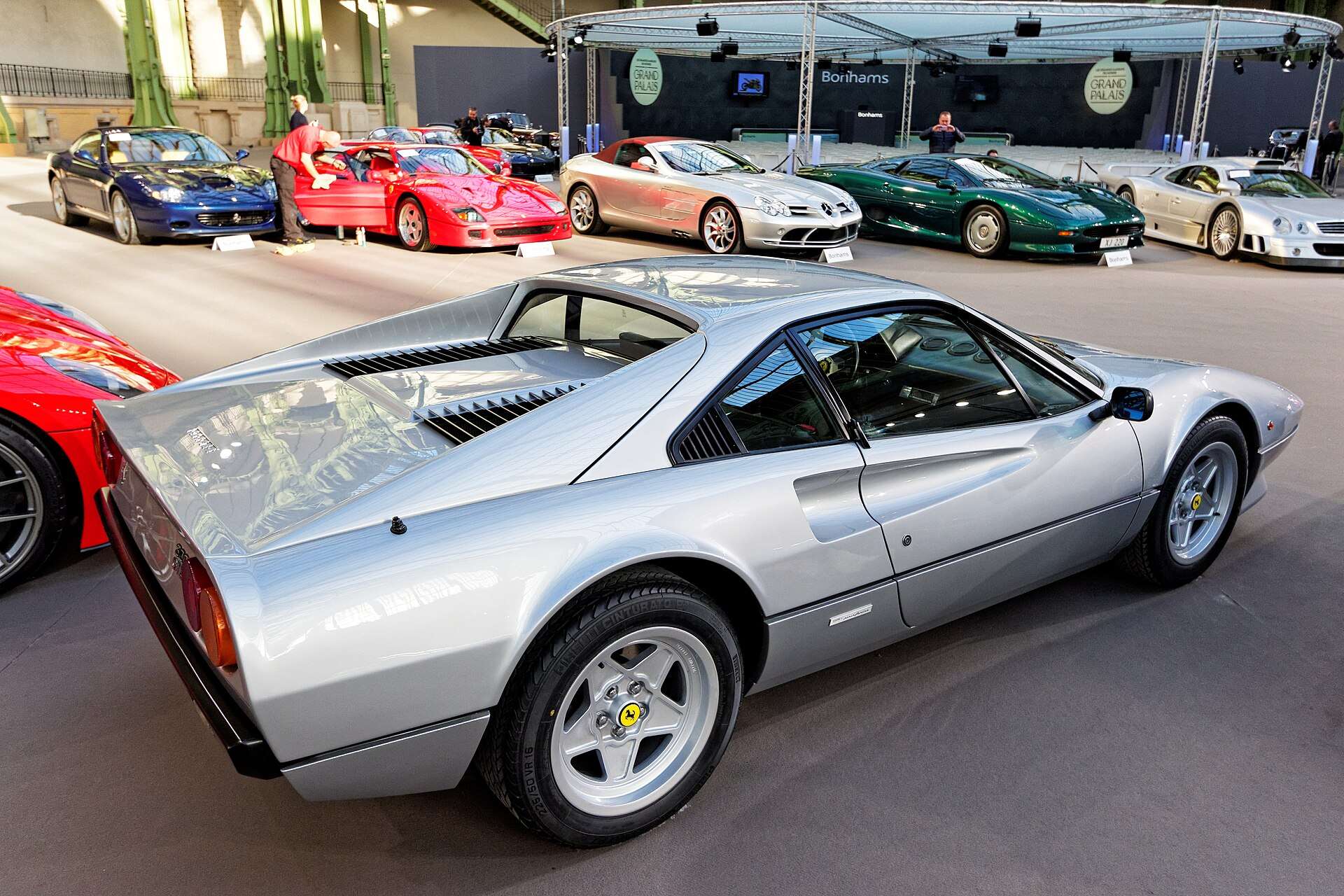
- Body: glass-reinforced plastic by Scaglietti over a tubular steel chassis, with the aluminum hood the only non-fiberglass panel (Supercars.net). Steel bodies replaced it during 1977, with sources placing the change between April and June, adding roughly 150 kg (331 lb) to a car that weighed about 1,050 kg (Wikipedia).
- Engine: the 2,926 cc Tipo F106 V8 with four twin-choke Weber carburetors. European cars made about 252 bhp and used dry-sump lubrication, while US cars made roughly 237 to 240 bhp with a wet sump.
- Production: 712 is the figure used by Sports Car Market and by RM Sotheby’s, while Wikipedia and Supercars.net’s text give 808. About 100 Vetroresina cars were delivered new in the US.
Why the detail matters to value
Two 2025 results show how wide the spread can be:
- RM Sotheby’s Munich, 2025: a 1976 car, chassis 19185, sold for €218,500. Ferrari Classiche certified it in February 2025 and confirmed matching-numbers chassis, engine and gearbox. It came with the Italian estratto cronologico, original manual, dealer directory, warranty and service booklet and the Classiche Red Book, and had spent about 45 years with one owner.
- Gooding Amelia Island, 2025: a 1976 US-delivered car, chassis 019735, with 240 bhp, was offered without reserve at an estimate of $180,000 to $220,000 and sold for $128,800. The lot page calls it highly original with long-term ownership and records, and does not mention Classiche.
These are not a controlled experiment. They differ in market, specification, venue, currency and fees, so we cannot say how much of the gap comes from certification or sump type. But they fit a pattern: the best result went to the Italian-delivered car with documented numbers, and a US-spec car described as highly original still sold below its low estimate. For context on the range, The Classic Valuer lists £116,084 for an average-condition car and recorded sales from £44,774 to £259,488. Earlier results show the range over time: a 1976 car sold for $69,962 at Bonhams Monaco in 2012, which Sports Car Market called a likely record at the time, and Supercars.net lists $247,500 at Pebble Beach and $192,500 at Amelia Island, both in 2015.
What buyers should verify before purchase
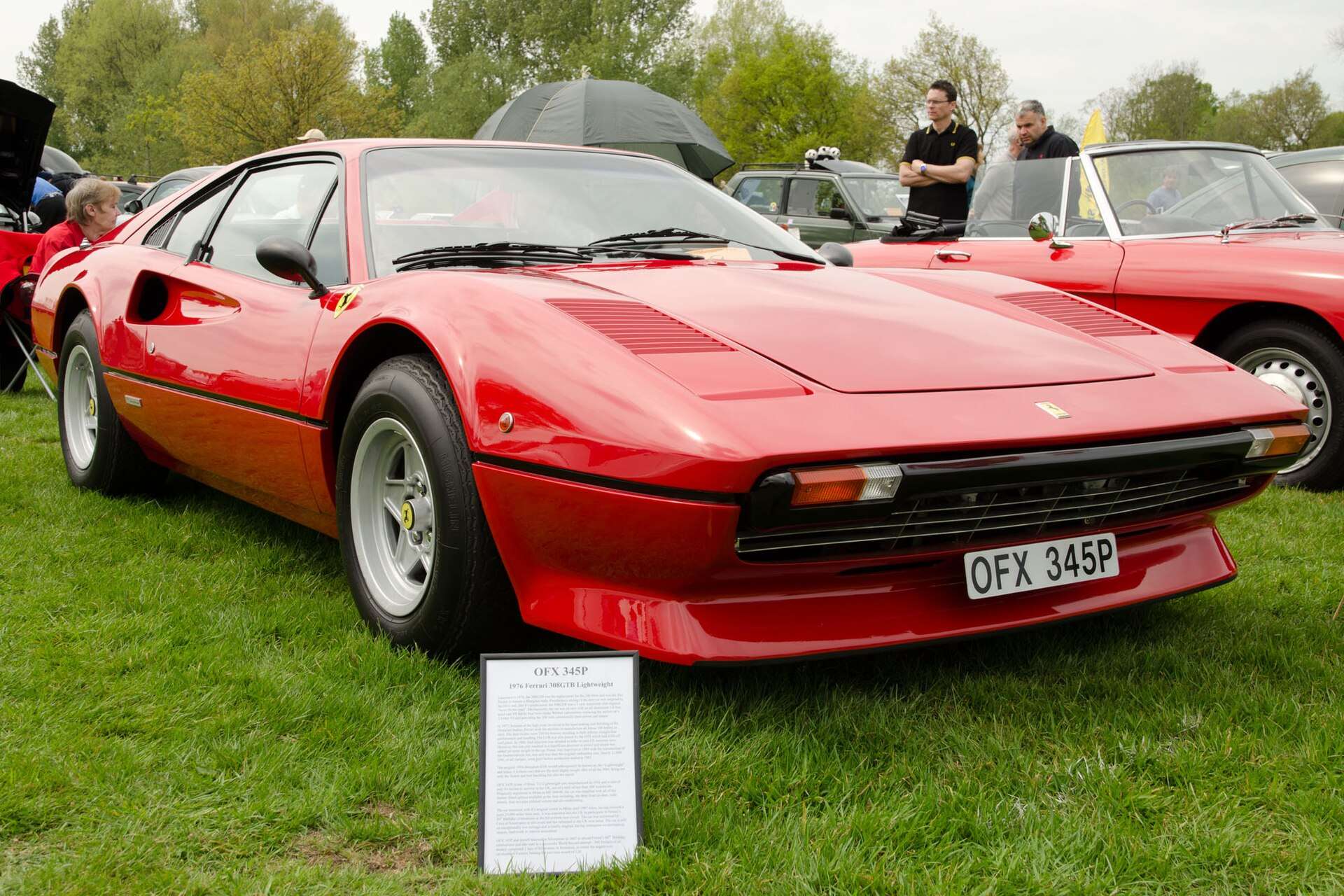
- The body material. One published tell is an indent line between the front screen pillar and the roof panel, according to Supercars.net, and the hood should be aluminum. Have a Ferrari specialist confirm fiberglass and look for repairs, replaced panels or repaint.
- The three numbers. Chassis, engine and gearbox numbers should match each other and the factory record. The Munich car is a useful model: chassis 19185, engine 00158 and gearbox 149, all confirmed by Ferrari Classiche.
- Classiche certification and the Red Book. Ask to see the certificate and book, not a seller’s description of them.
- The sump and market specification. Confirm dry or wet sump and whether the car matches its original market. Catalogs get this wrong: Sports Car Market reported that one car, chassis 19755, was a wet-sump US model despite its original catalog listing.
- The document chain. Look for the estratto cronologico or US title history, original manuals, warranty and service booklet, dealer directory, tool kit and continuous service invoices.
- The structure under the skin. Supercars.net notes that early cars often have more corrosion under the skin, that removing the body can reveal rotted structure, and that cars sitting unused can suffer clutch plate corrosion and a seized differential. Inspect the sills on a lift and listen for differential noise.
- The paint and finish. Ask whether the paint is original and request restoration invoices. Sports Car Market flagged worn or incorrect valve-cover and air-cleaner finishes on a 2012 car whose restoration claims were questioned.
- The rarity claim. Do not accept a seller’s production figure as proof of anything. With 712 and 808 both in circulation, the car’s own documents are the evidence.
Restored, replaced or original: what each choice does to value
This section is interpretation. A documented car with its fiberglass body, original specification and matching numbers is the benchmark, and the 2025 Munich result suggests the market pays for that proof. A well-documented restoration can be a sound purchase if invoices show what was done. The weak position belongs to a car whose story cannot be verified: a Vetroresina that has lost its fiberglass panels, its original sump or its number continuity has lost much of what the premium is paying for, and a buyer cannot tell that from a catalog description.
The bottom line
The Vetroresina earns its reputation for lightness and rarity, but reputation is not a certificate. The same discipline applies across marques, as our guides to the Boss 429 KK number, the 1963 Corvette engine stamp, the Mercedes Pagoda’s body number, the Carrera RS wheels and the Jaguar E-Type Heritage Certificate show. For how Ferrari values are moving at the top of the market, see our coverage of the F50 record and the Monza SP2. This is analysis for collectors, not an appraisal.
Which would you rather own: the Classiche-certified car that made €218,500, or the “highly original” US car that made $128,800 with no certificate?
Sources
- Supercars.net, Ferrari 308 GTB Vetroresina ultimate guide
- Sports Car Market, 1976 Ferrari 308 GTB Vetroresina profile, September 1, 2012
- Wikipedia, Ferrari 308 GTB/GTS
- RM Sotheby’s Munich 2025, Lot 169, 1976 Ferrari 308 GTB Vetroresina by Scaglietti
- Gooding Christie’s Amelia Island 2025, Lot 162, 1976 Ferrari 308 GTB Vetroresina
- The Classic Valuer, Ferrari 308 GTB Vetroresina price guide
The collector car market, every weekday morning.
Auction results, price moves and what’s crossing the block, read in four minutes. Free, from Modern Car Collector.
No spam, unsubscribe in one click. Or read more about the Brief.
 Eve Nowell