

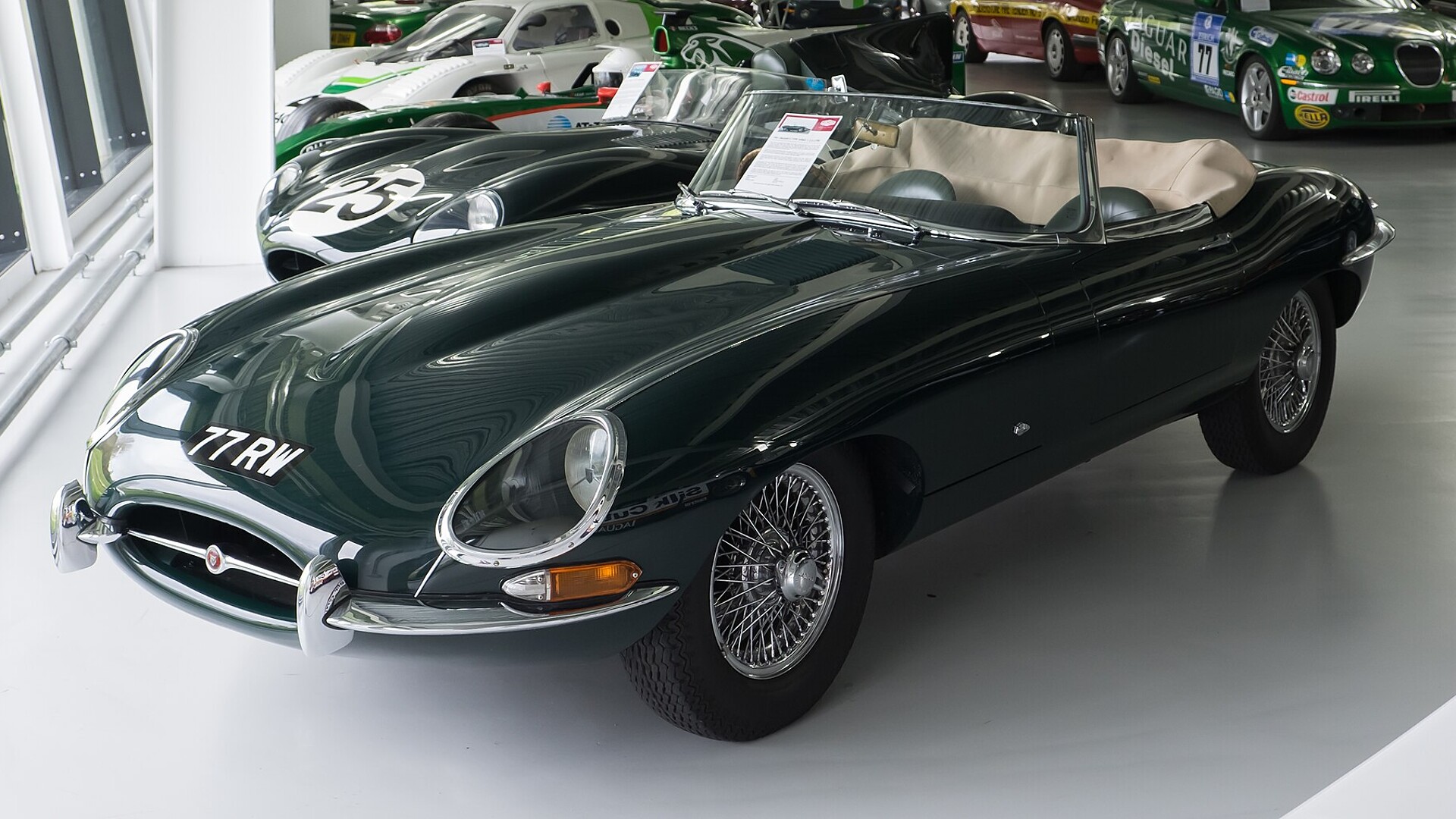
Every Series 1 Jaguar E-Type left Browns Lane with four identities: a chassis number, an engine number, a body number and a gearbox number. All four were recorded in the factory ledgers, and all four were stamped into metal on the car. When a seller says “matching numbers,” those four are what the phrase is supposed to mean, and on an E-Type the difference between a car that still carries all four and one that has lost one along the way is often the biggest single variable in its value after condition.
The trap is that the document most buyers lean on, the Jaguar Heritage Certificate, does not answer the question they think it does. It tells you what the car was. Only the stamps tell you what it is. Treat those as two separate checks and Jaguar E-Type matching numbers stop being a slogan and become something you can verify.
What the Heritage Certificate Proves, and What It Explicitly Doesn’t
The Jaguar Daimler Heritage Trust issues certificates for Jaguar and SS cars more than ten years old, drawn from the original production records. For an E-Type that typically means the original exterior colour, trim, build date, dispatch date, original destination and, where the archive has it, the first registration. The Trust currently charges £65 plus VAT and postage.
Here is the part that matters to a buyer. To order one, the applicant supplies the chassis, engine, body and gearbox numbers. The Trust then reports what its ledger says for that chassis. Its own terms state that a certificate does not confirm identity, provenance, originality or present condition, and it is not proof of ownership. In other words, a certificate showing the right engine number beside the right chassis number proves only that those two numbers belonged together in 1962. It does not prove that the engine now in the car is that engine.
That is why a certificate is the start of an originality check, not the conclusion. It gives you the reference numbers. The inspection tells you whether the car still matches them. The same logic applies to other marques we have covered, from the Porsche 911 engine number and Kardex to the Hemi ‘Cuda broadcast sheet: the paperwork sets the standard, and the metal has to meet it.
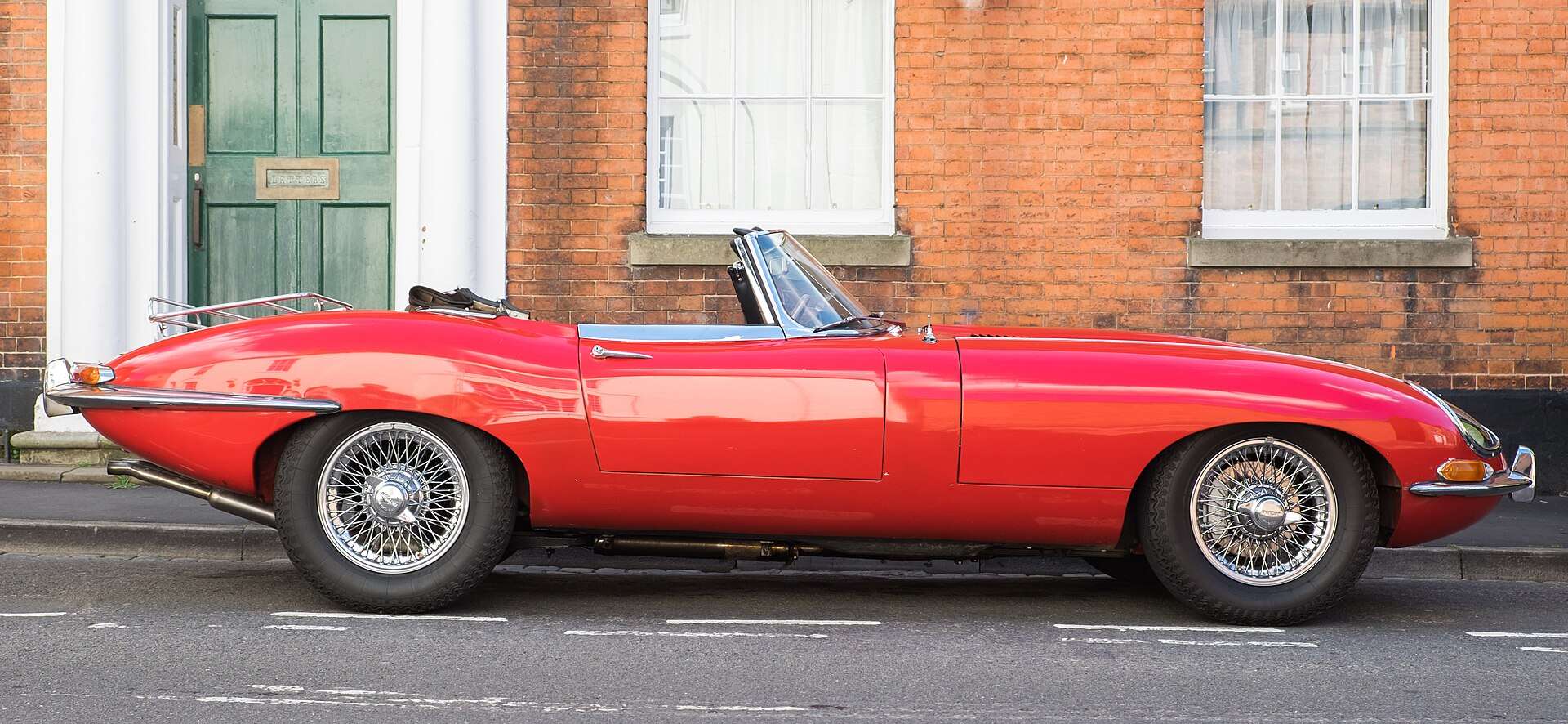
The Four Numbers, and Where They Live on a Series 1
All four numbers appear together on the builder’s plate on the engine bulkhead. Plates can be swapped or reproduced, so the plate is a reference point, not proof. The stamped locations below are what an inspector should read directly. Locations and formats here follow the XKEdata E-Type numbers guide and Jaguar Heritage’s own vehicle numbers locator guide.
- Chassis number. On the builder’s plate, and stamped on the front “picture frame” subframe near the right front wheel. 3.8-litre cars use plain six-digit numbers (roadsters and coupes in separate series, left- and right-hand drive in separate ranges); 4.2-litre Series 1 cars add a “1E” prefix.
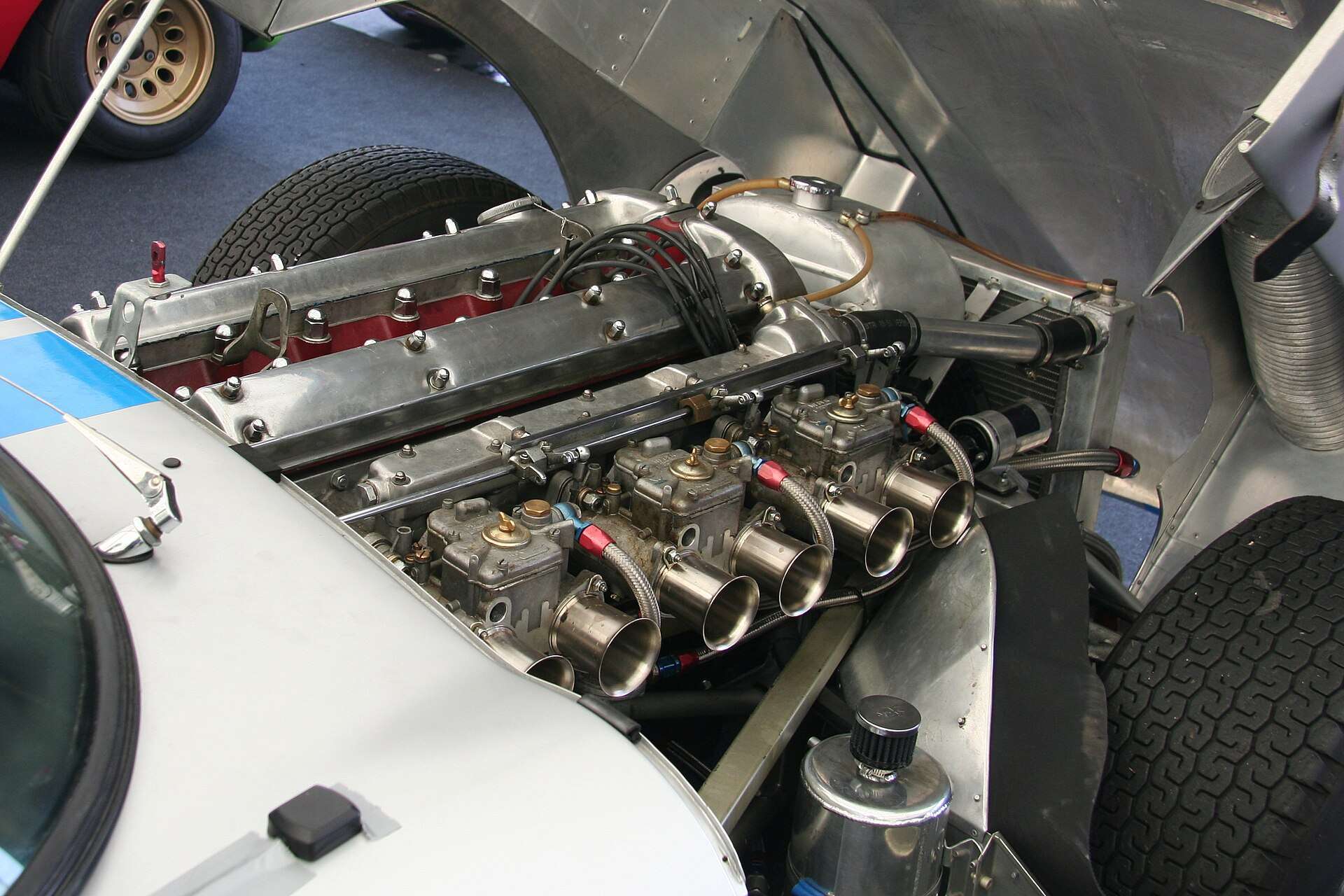
- Engine number. Stamped on the block just above the oil filter housing and on the flywheel flange near the dipstick. 3.8-litre engines use an “R” or “RA” prefix, 4.2-litre Series 1 engines “7E.” The suffix, “-8” or “-9,” records the compression ratio (8:1 or 9:1). The flywheel and crankshaft are also numbered, and on earlier cars the cylinder head carries the engine number as well.
- Body number. On most cars, on a tag riveted to the body behind the rear number plate. Early fixed-head coupes carry it inside, riveted to a vertical member on the fuel-tank side.
- Gearbox number. Stamped on the transmission casing. 3.8-litre cars used the Moss box with an “EB” prefix; 4.2-litre cars used Jaguar’s all-synchromesh box with an “EJ” prefix.
The compression suffix is an underrated check. An engine number that agrees with the certificate but carries the wrong suffix, or a head that shows a different number from the block, tells you the engine has been apart and possibly re-assembled from more than one unit. Neither is automatically disqualifying. Both need an explanation.
Why the Stamps Are Where Deals Go Wrong
E-Types were raced, crashed, rebuilt and re-engined for decades before anyone thought of them as investments. Blocks cracked and were replaced. Gearboxes were swapped for stronger or more convenient units. The market’s response has been to reward the survivors that still carry their original components, which in turn created an incentive to make a car look like a survivor when it isn’t.
The tell is usually in the stamping itself. Factory numbers were struck with a consistent set of dies at a consistent depth and spacing. Restamped numbers tend to show uneven spacing, digits that sit at different heights or depths, overlapping characters, or a surface that has been dressed flat before the new number went on. Experienced marque specialists on forums such as Jag-Lovers also cross-check the block’s casting number against the model it is supposed to belong to. A block casting intended for a different E-Type variant, carrying the “right” engine number, is one of the clearest signs that the number was put there later.
The honest version of a replaced engine is common and not a scandal. A correct-type replacement engine, disclosed and priced accordingly, can make a perfectly good E-Type to own and drive. The problem is only ever the undisclosed one, because the buyer pays a matching-numbers price for a car that will be marketed as something less the day they try to sell it.
What Buyers Should Verify Before Purchase
Work through these in order. The first two are paperwork, the rest require the car on a lift and, ideally, an independent E-Type specialist rather than the seller’s mechanic.
- Get the Heritage Certificate yourself, or see the original. A photocopy supplied by the seller can be altered. If there is time, order one using the chassis number and compare it with any certificate that comes with the car.
- Record all four numbers from the certificate, plus colour, trim, build date and destination. A left-hand-drive export car now in right-hand-drive form, or a car in a colour the ledger never lists, is a conversion that should be disclosed and priced.
- Read the chassis number on the picture frame, not just the bulkhead plate. Front frames were often replaced after accidents; a replacement frame may be unstamped or restamped.
- Read the engine number on the block above the oil filter housing and confirm both the prefix (R/RA for 3.8, 7E for Series 1 4.2) and the compression suffix against the certificate.
- Check the secondary engine numbers: the flywheel flange, and on earlier cars the cylinder head. All should agree with the block.
- Examine the stamping quality under good light and magnification. Look for inconsistent spacing, depth or alignment, or signs the surface was ground or filed.
- Confirm the block casting number is correct for the model and year. An E-Type specialist or the marque clubs can tell you what should be there.
- Read the gearbox number and confirm the prefix suits the car (EB for 3.8 Moss, EJ for 4.2 all-synchro), then compare it with the certificate.
- Find the body number tag behind the rear plate, or inside on early fixed-head coupes, and match it to the certificate.
- Ask for the restoration file. Photographs of the numbers taken during a bare-shell restoration are strong supporting evidence. Their absence on a recently restored car is a question worth asking.
How to Read the Result
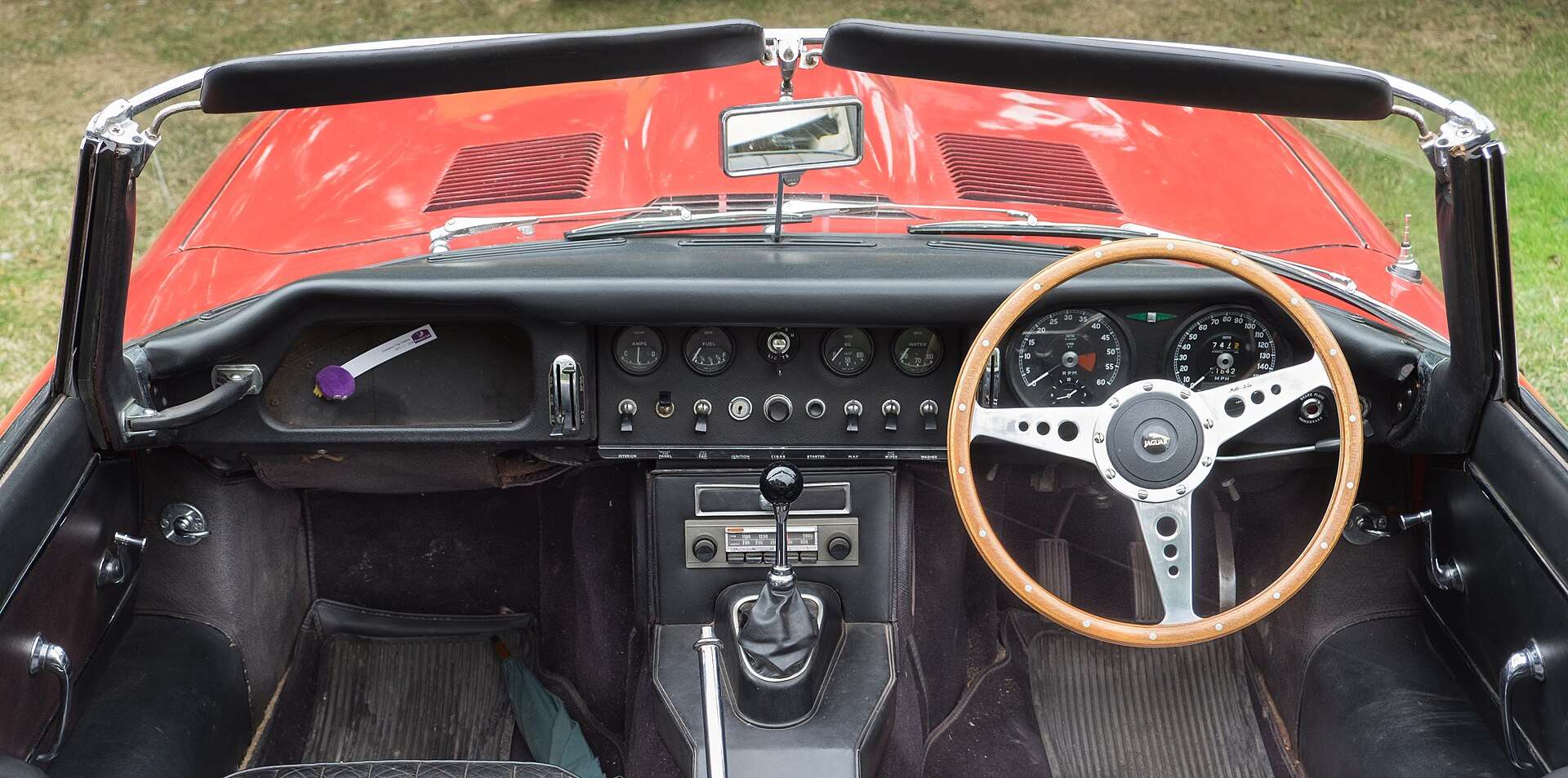
Not every mismatch is equal. On most E-Types, the engine is the number that carries the heaviest weight with buyers, followed by the gearbox and body. A car with matching chassis, engine and body but a replacement gearbox is usually described exactly that way in a good catalogue, and the market prices it accordingly rather than dismissing it. A car whose engine is a correct-type replacement is a different product from a matching-numbers car, and it should be priced as one.
What collectors should take away is this: on an E-Type, “matching numbers” is a claim with four parts, and each part can be verified. When a listing uses the phrase, ask which numbers it means and how the seller confirmed them. The same discipline applies to American cars, where we have walked through how to check matching numbers on a C2 Corvette, and to Jaguars from the same era, such as the 1956 XK140 roadster we covered at the Saratoga Automobile Museum sale. If you are weighing a car you already own, our car valuation guide explains how originality factors into value.
Sources: Jaguar Daimler Heritage Trust certificate terms; Jaguar Heritage Research Guide No. 002 (vehicle numbers locator); XKEdata E-Type car numbers catalogue; Jag-Lovers E-Type forum discussion of altered engine numbers.
The collector car market, every weekday morning.
Auction results, price moves and what’s crossing the block, read in four minutes. Free, from Modern Car Collector.
No spam, unsubscribe in one click. Or read more about the Brief.



 Elizabeth Puckett
  John Lloyd