
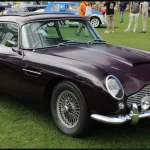
Every auction has a car that is supposed to top the sale. At Mecum‘s inaugural Nashville auction, held September 22–26 at Nashville Superspeedway, that car was easy to pick: a 1965 Aston Martin DB5, the definitive British grand tourer of the 1960s and a reliable fixture at the top of results sheets wherever it appears.
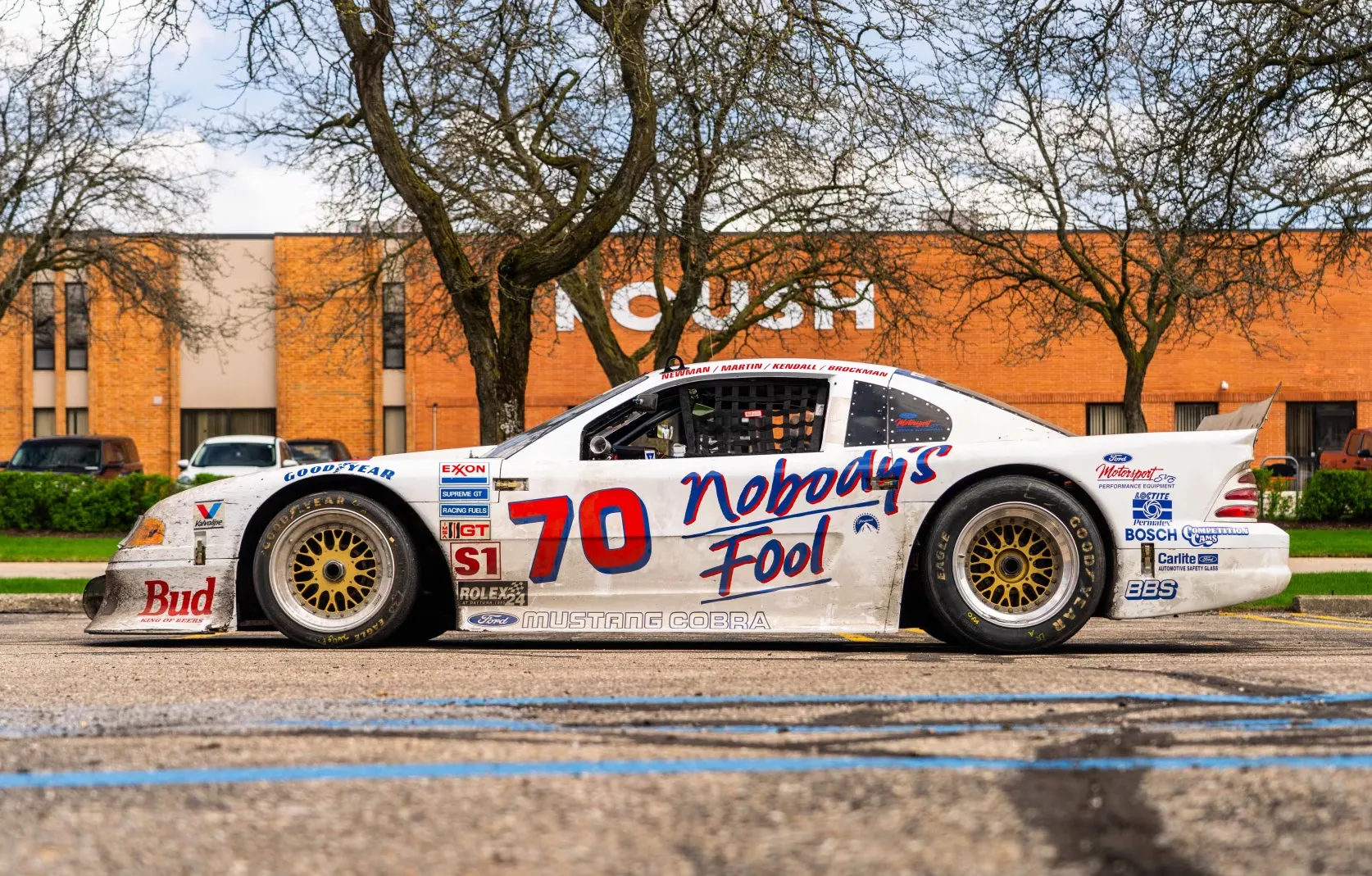
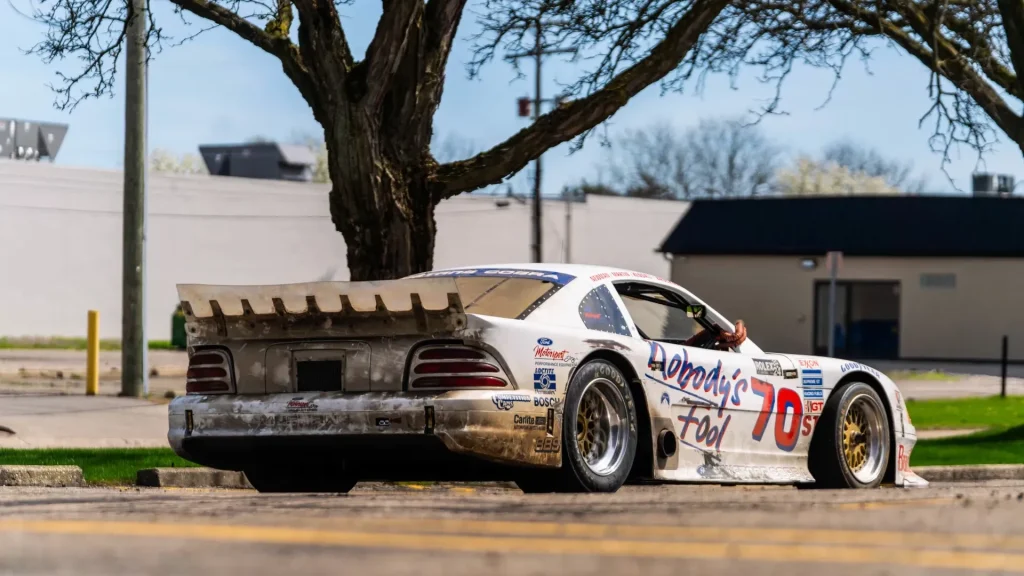
It finished second. The top sale of the week was a 1995 Ford Mustang Cobra. Not a Boss 429, not a Shelby, but a purpose-built IMSA race car campaigned as “Nobody’s Fool,” and it sold for $935,000. That is $330,000 more than the $605,000 paid for the Aston.
That gap is the most instructive number to come out of Tennessee. The Mustang did not win on marque, age, coachwork or production figures. It won on one weekend at Daytona, and on the fact that there is exactly one of it. Mecum Nashville will be remembered as a successful debut in a new market. It should also be remembered as a clean, public demonstration of how the collector market prices provenance.
A Race Car That Cannot Be Duplicated
“Nobody’s Fool” came to the sale from the Roush Automotive Collection. According to Roush, the car won its class at the 1995 Rolex 24 at Daytona with Paul Newman, Tommy Kendall and Mark Martin among its drivers. Newman had turned 70 that January.
Consider what the buyer actually acquired. A car built and raced by one of the most successful organizations in American motorsport. A class win at the country’s most important endurance race. A driver lineup that spans sports cars, Trans-Am and NASCAR. And at its center, a Hollywood icon who was also a serious, accomplished racing driver. Newman was not a celebrity lending his name to a program; he was a competitor, and this car is part of the record of that career.
Just as important, the car never drifted through anonymous hands. It came from the organization that built and ran it. For a competition car, that is the strongest chain of custody there is. Questions that shadow many race cars, such as which chassis ran which event, what was replaced after an accident, and whether the history belongs to this car or to a sibling, are far easier to answer when the builder has owned the car all along.
Now consider the DB5. Aston Martin built more than a thousand of them across coupe, convertible and shooting-brake form. That is not a criticism. A deep base of comparable sales is exactly why the DB5 remains a benchmark: buyers know what a good one is worth, and they know another will come along. That liquidity is a strength. It also limits urgency. When a car’s only true comparable is itself, the bidders who want it have one chance, and they bid like it.
Rarity is a count. Provenance is a story, and a story has no substitutes.
The Newman Premium Is Real, and It Is Earned
The market has priced Paul Newman’s association at a premium before. His own Rolex Daytona sold at Phillips in New York in 2017 for $17.75 million, a result that reset expectations for what personal provenance can do to an object’s value. The Newman premium works because it is not built on fame alone. Newman raced for decades, won in period, and co-owned a championship-winning IndyCar team. Enthusiasts regard him as one of their own.
That distinction matters for buyers. Celebrity ownership on its own is among the most volatile forms of provenance in the collector market. It fades as audiences age and tends to reward the story more than the car. Celebrity competition history is different. It is anchored in results, entry lists and timing sheets. It can be verified, and it does not depend on a movie still being in circulation. The Nashville result reflects that more durable kind of value.
Why a 1990s Race Car, and Why Now
Timing plays a part as well. Collectors who watched Roush Mustangs contest IMSA and Trans-Am in the late 1980s and 1990s are now in their peak buying years. The cars they remember are moving from used race equipment to historic artifacts, the same transition 1960s Trans-Am and Can-Am cars made a generation ago. Documented examples with major results are the first to make that move, and the Nashville sale suggests the market is ready to pay for them.
For anyone assessing a competition car from this era, the lesson is simple. A period race car’s value lives in its history. Period results, team records and chassis identification are the asset. Condition is secondary to authenticity, and the history, once lost, cannot be restored.
Mecum Read the Room in Music City
None of this happened by accident. Mecum brought its first Nashville sale to a working speedway, a 1.3-mile oval with 13 degrees of banking, and assembled roughly 1,750 vehicles across 17 featured collections, including the Johnson’s Horsepowered Garage Collection and the Steve Meadows MSM Global Collection. Live coverage ran on ESPN+. For a region with a deep motorsport culture and a large enthusiast base, it was the right stage.
The most telling sign of confidence came from the consignors. Jack Roush chose Mecum Nashville for the first public offering from his private collection of more than 150 vehicles, timed to Roush Industries’ 50th anniversary. A founder does not hand his legacy to just any venue. Roush explained the decision plainly: “I’ve always believed cars are meant to be driven, experienced and appreciated, and this felt like the right time to share some of that history with people who truly love automobiles and racing.” Two of the Roush cars, Greg Biffle’s 2004 Ford Taurus and Matt Kenseth’s 2012 Ford Fusion, were offered to benefit charity, which says something about the spirit in which the collection came to market.
The top of the sale was a race car. The venue was a racetrack. The consignor was one of American racing’s great builders. Mecum matched the cars to the audience, and the audience responded.
The Depth Beneath the Headline
Mecum’s model has always rested on breadth, and Nashville delivered it. The sale totaled roughly $66 million, about three in four lots found new owners, and the median sale landed at $40,700. As we noted in our early coverage, trucks and restomods set the tone from the first day: a Coyote-powered 1968 Ford Bronco brought $115,500, and an LS-swapped 1978 Chevrolet K10 made $110,000. A 1959 Cadillac Series 62 convertible matched the Bronco at $115,500.
That is a healthy market. A first-year sale in a new region can easily draw a curious crowd that watches more than it bids. Strong sell-through at an accessible median points to genuine buyers transacting across the whole range, with a handful of significant cars at the top. For a debut event, that is the result that matters most, because it is the result that brings consignors back.
It also fits a year in which Mecum has shown range at both ends of the market. Just weeks earlier, Mecum Monterey reached $114 million, headlined by a record $14.575 million Ferrari F50. Nashville proves the company can open a new regional market at scale in the same season.
What Serious Buyers Should Take From Nashville
- Provenance outranks marque. A documented, singular history can carry a less prestigious badge past a blue-chip one. The DB5 is the safer benchmark; the Mustang was the scarcer opportunity.
- Chain of custody is part of the car. Continuous ownership by the original team removes the doubts that often discount competition cars. Ask who has owned a race car since it last raced, and what paperwork survives.
- Competition history outlasts celebrity. Fame fades. Results do not. Weigh what a famous name actually did in the car.
- Regional sales create opportunity. As Mecum builds out its calendar, consignors can place cars in front of the audiences most likely to value them. Nashville’s race-car result is a case in point.
A DB5 is a car you can buy again next month. There is only one Mustang that carried a 70-year-old Paul Newman to a class win at Daytona. The bidders in Nashville understood that difference, and Mecum gave them the right place to act on it.
The collector car market, every weekday morning.
Auction results, price moves and what’s crossing the block, read in four minutes. Free, from Modern Car Collector.
No spam, unsubscribe in one click. Or read more about the Brief.
 Eve Nowell