

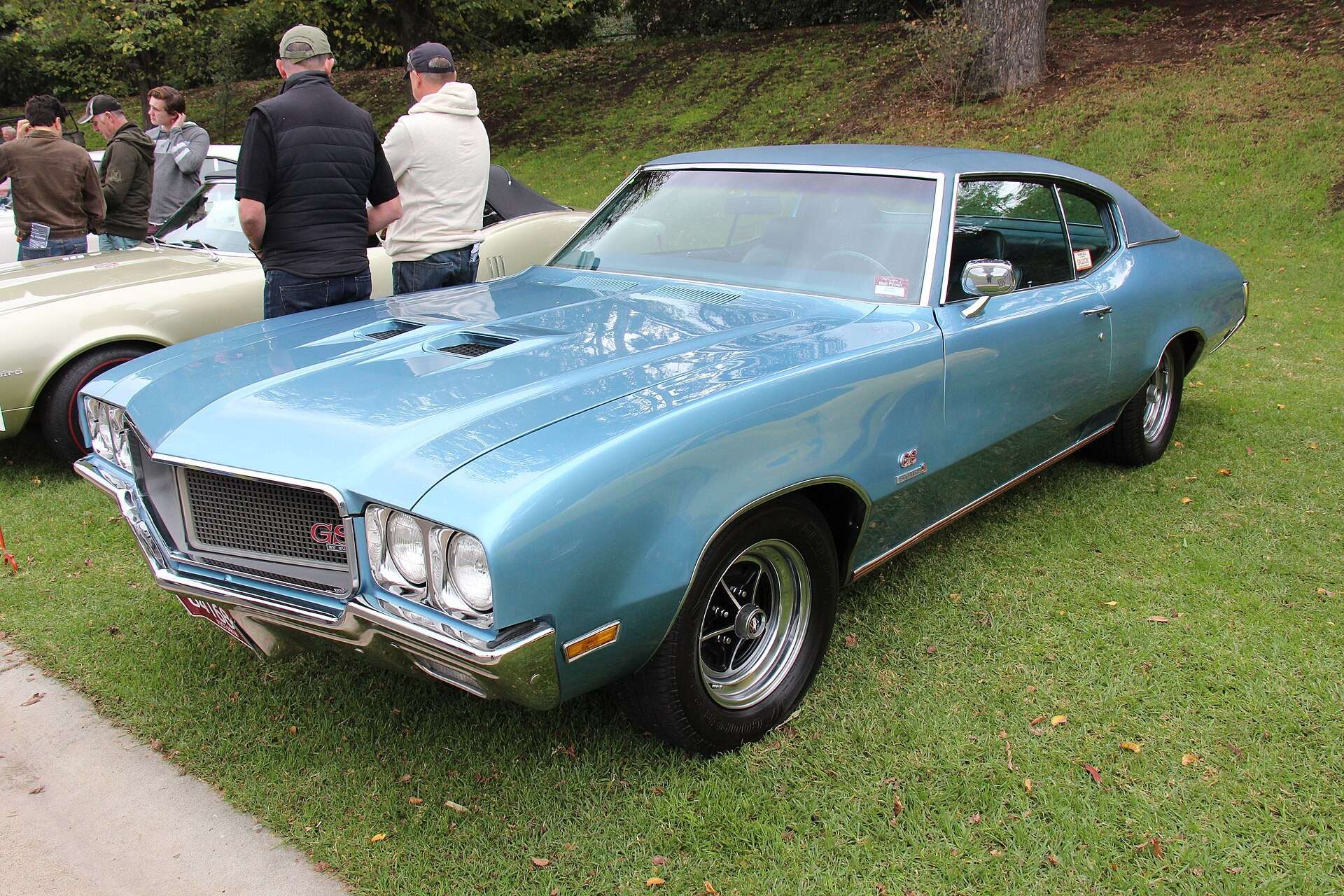
Buick’s Gran Sport is the muscle car the market keeps forgetting to price. In its October Price Guide update, Hagerty reports 1968–72 Buick GS 400 and GS 455 values up 4% on average, the first meaningful gain after several quarters of declines. A single quarter is a modest signal. But it lands on a family of cars whose spread, from entry level to trophy, may be the widest in the segment.
Our view: the GS is the clearest example of a muscle car that was priced for what it was not. It was never a Hemi or a Boss. It was a fast, heavy, torque-rich car from a company that did not shout, and the market is slowly learning to read that as a virtue.
A spread worth studying
According to Hagerty’s review, #2 (excellent) values across the 1968–72 GS 400 and GS 455 run from $27,700 for a 1972 GS 455 Sport Coupe to $129,000 for a 1970 GS 455 Stage I convertible. That is a spread of more than four and a half times inside one model family. Few cars in the hobby offer a collector a seat at the table for under $30,000 and a blue-chip option at more than $120,000 without changing badges.
Why the top of the family is not the whole story
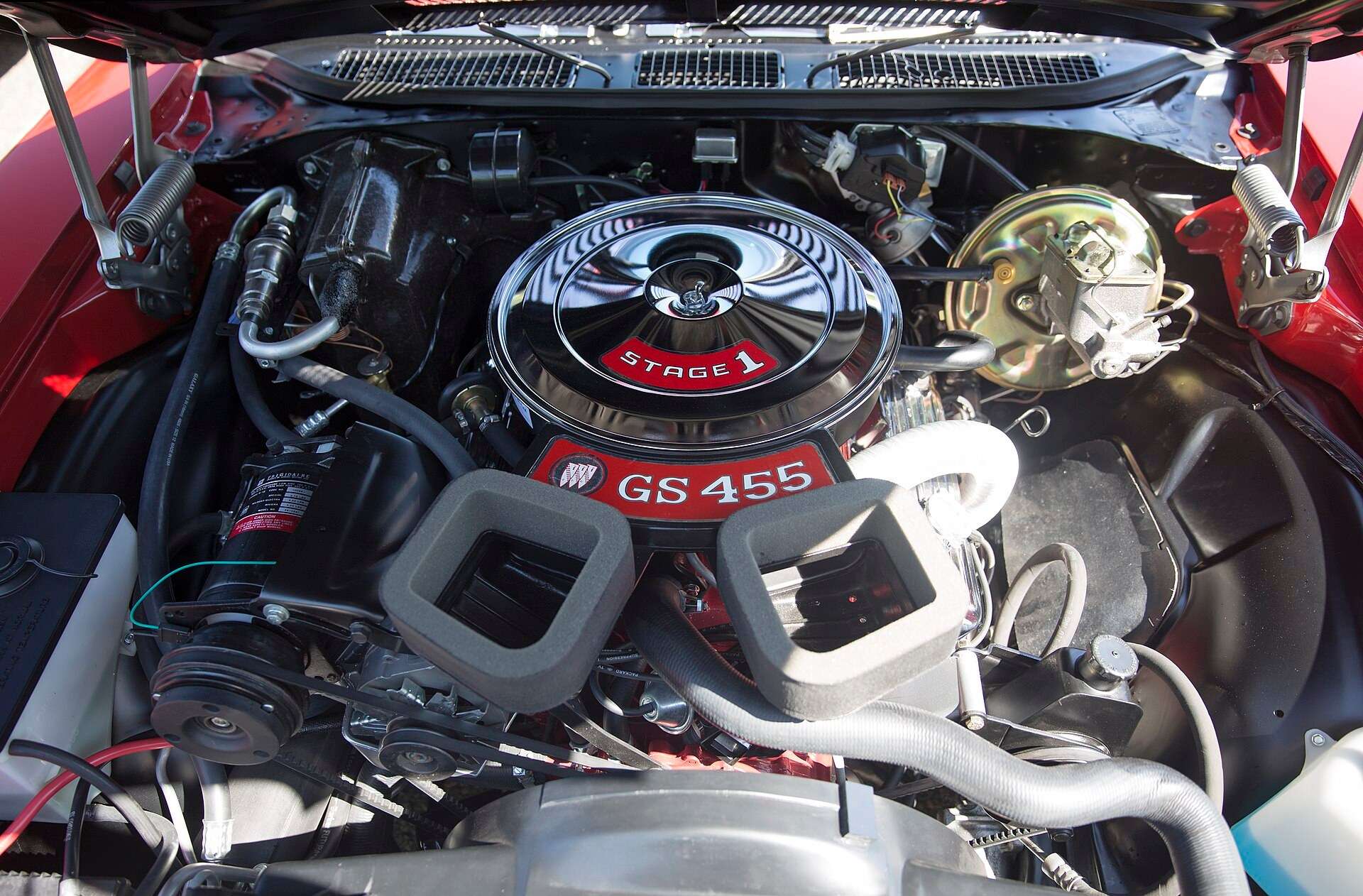
The expensive end of the GS range is governed by the same forces as every other muscle car: engine, body style, documentation. A Stage 1 convertible is a different asset from a 1972 coupe, and the gap in Hagerty’s numbers reflects it. That is why buyers should be careful about reading the 4% as a rising tide. It is an average over cars that behave very differently.
We have seen how much the details matter. As we explained in our report on a 1970 Buick GSX with no VIN of its own, a GSX cannot be proved from the VIN alone, and a genuine Stage 1 GS is a valuable car but not a GSX. The Stage 1 decal on an air cleaner is not proof of anything. The verification lies in the block code, casting numbers and carburetor number.
Why now
Two readings are reasonable. The first is simple recovery: after several quarters of declines, buyers see a car with a strong build story priced well below its Detroit rivals. The second is the broader pattern we describe in our look at the October Price Guide, where cars with a verifiable story hold up while those depending on a single feature slip. The Buick sits between those camps. Its story is real but quiet.
There is also the Buick halo. The turbocharged era that followed, led by the Grand National and GNX, gave the brand a performance credibility that older Gran Sports can borrow. Our list of the most expensive Buick GNXs ever sold shows how seriously collectors take that lineage once a car carries the right paperwork.
What serious buyers should do
Be skeptical of any claim of Stage 1 or GSX without documentation, and look to the numbers on the engine rather than the decal. Decide whether you are buying a driver or an asset; at the low end, a clean GS 455 is among the least expensive entries to real big-block torque in the segment, while the top of the range demands a paper trail. And do not treat a 4% quarter as a trend. Hagerty’s own data shows a rebound after several quarters of losses. The market has yet to prove it is more than a pause.
Muscle car collectors have a habit of paying for noise. The Buick GS may be the first place the market stops.
The collector car market, every weekday morning.
Auction results, price moves and what’s crossing the block, read in four minutes. Free, from Modern Car Collector.
No spam, unsubscribe in one click. Or read more about the Brief.
Related Posts:
- Riviera Gran Sport vs. Toronado vs. Eldorado: Three…
- Depreciation and Market Comparison of the Pontiac…
- Scout II vs. K5 Blazer vs. Bronco: Three 1970s 4x4…

- A 1970 Buick GSX Has No VIN of Its Own. Here's How…
- On a Boss 429 Mustang, the KK Number Is the…
- 190E Evo II vs. Sierra RS500 vs. M3 Sport Evolution:…
 John Lloyd
 Eve Nowell