

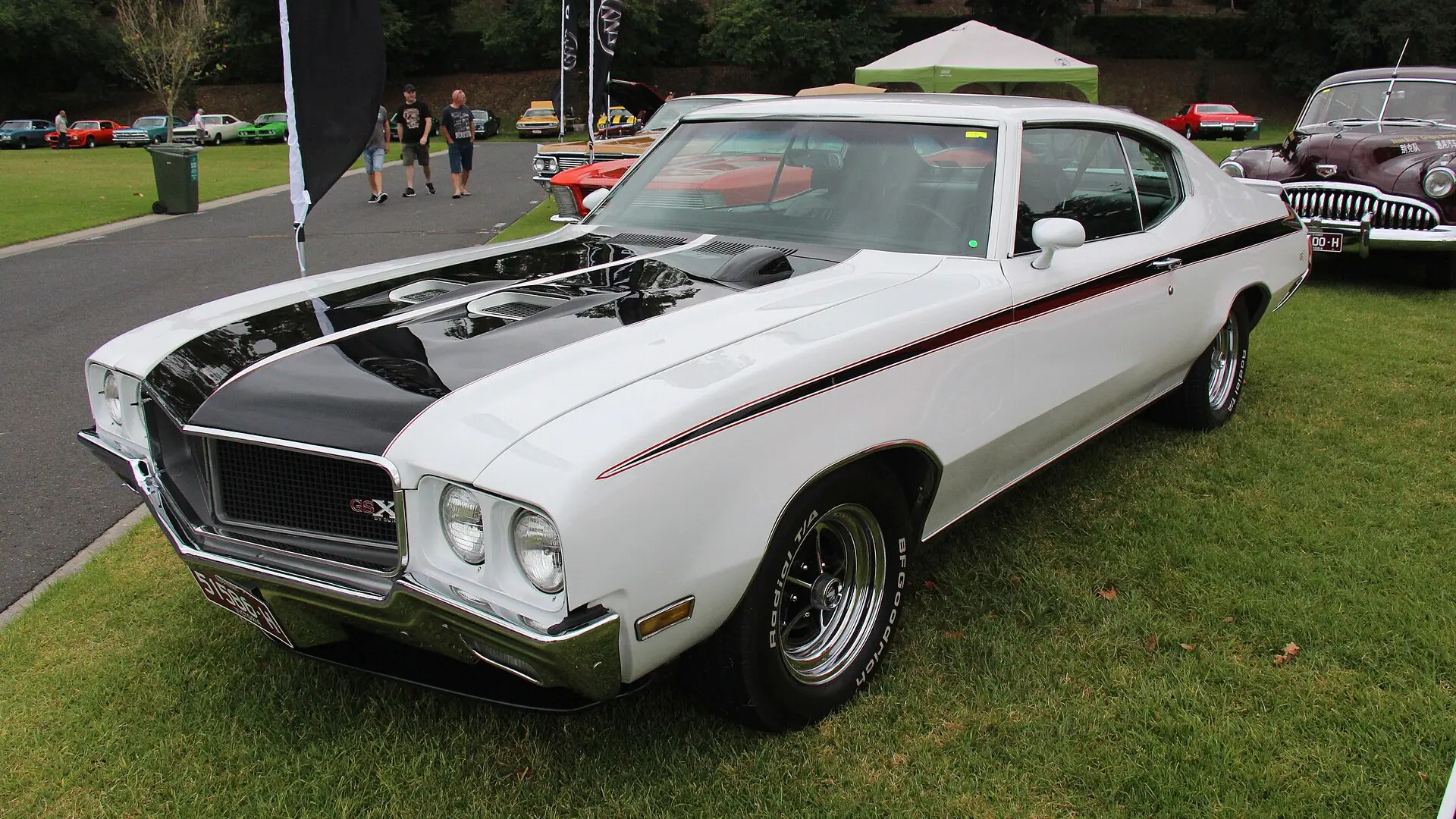
Almost everything that makes a 1970 Buick GSX look like a GSX can be bought or reproduced. The black stripes, the rear wing, the hood-mounted tachometer and the Saturn Yellow or Apollo White paint are all within a restorer’s reach, and sellers know it. What cannot be reproduced is the factory record, and that is where the value sits. This installment of our originality series takes up the 1970 Buick GSX and the two questions under it: is this a real GSX, and is it a real Stage 1?
The thesis is simple. On a GSX, the cosmetics are the cheapest evidence and the paper is the most expensive. Our earlier checks of the Hemi ‘Cuda broadcast sheet and the Boss 429 KK number reached the same conclusion for other marques, and the Buick version is sharper because the GSX has no number of its own to check.
Why this detail moves the price
Buick built 678 GSXs between February and July 1970, according to Sports Car Market’s profile of the model. Hagerty’s valuation guide splits them 491 Saturn Yellow and 187 Apollo White. SCM reports that 400 buyers paid $115 for the Stage 1 engine option, which Buick rated at 360 horsepower against 350 for the standard 455, with 510 lb-ft of torque in both cases. One buyer’s guide, Garage Cherries, puts the Stage 1 count at 488 instead, so the exact figure deserves caution even though 400 is the number most sources repeat.
The market treats Stage 1 as a separate car. In 2012, SCM estimated that the Stage 1 engine could add up to about 50 percent to a GSX’s value and a four-speed manual another 20 percent or so. ConceptCarz’s auction database shows the same gap in its all-years medians: $117,500 for 455/360-hp GSXs against $81,350 for 455/350-hp cars, a difference of roughly 44 percent. At the top, autoevolution reported a frame-off Saturn Yellow Stage 1 with two build sheets, a numbers-matching drivetrain and registry listing selling for $198,000. ConceptCarz recorded four 2025 sales ranging from $88,000 to $236,500. A spread that wide shows how much rides on exactly which car is on the block.
The GSX has no VIN of its own
A 1970 GSX wears an ordinary GS 455 hardtop VIN. The Stage 1 Registry lists Flint-built 1970 coupe VINs as beginning 446370H, and the GSX that SCM profiled carries chassis number 446370H273985, stamped on a plate at the top of the instrument panel at the base of the windshield. Barn Finds makes the consequence explicit: GSXs had no special VIN, so verification is difficult.
That makes the VIN necessary but not sufficient. It can tell you the car began life as a GS 455 hardtop. It cannot tell you the GSX package was ordered, and the check weakens after 1970: according to the Collector Car Market Review, the GSX package could be added to any GS from 1971, including the GS 350. Hagerty counts 124 GSX packages in 1971 and 44 in 1972. We made the same point about the GM VIN problem in our check of the 1964-65 Pontiac GTO: when the number cannot carry the claim, the documentation has to.
What the GSX package included, and what it proves
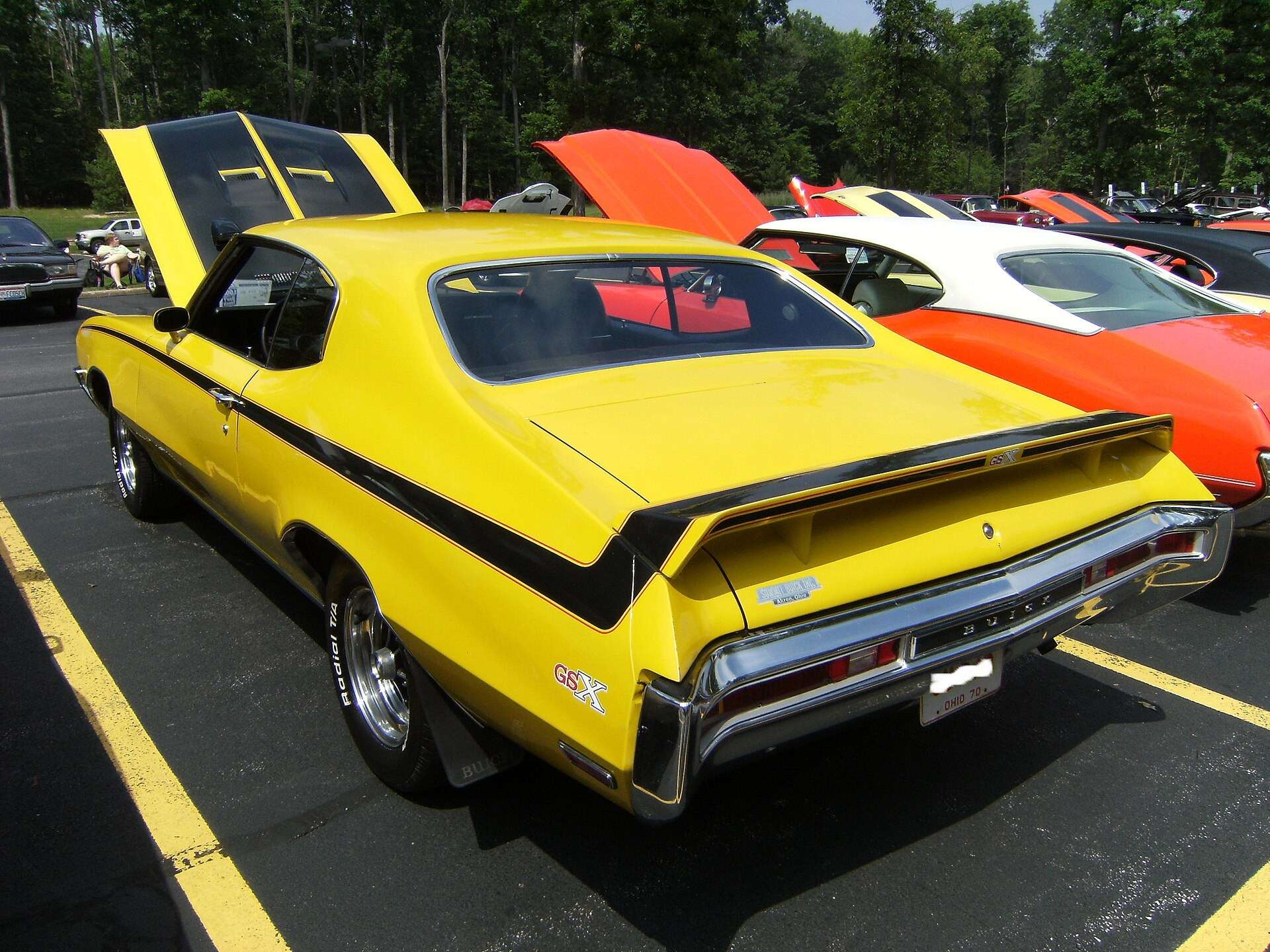
Period equipment is the first thing buyers see and the least reliable thing they can rely on. SCM lists the hood-mounted tach, rear wing, and black trim and graphics. Moto Gallery adds front and rear spoilers, a blacked-out hood treatment, broad body-side striping and sport mirrors, and the Collector Car Market Review mentions 15×7 Rallye wheels, power front disc brakes and a positive-traction rear. The only colors were Saturn Yellow and Apollo White, and SCM says black trim and interior were the only options with either.
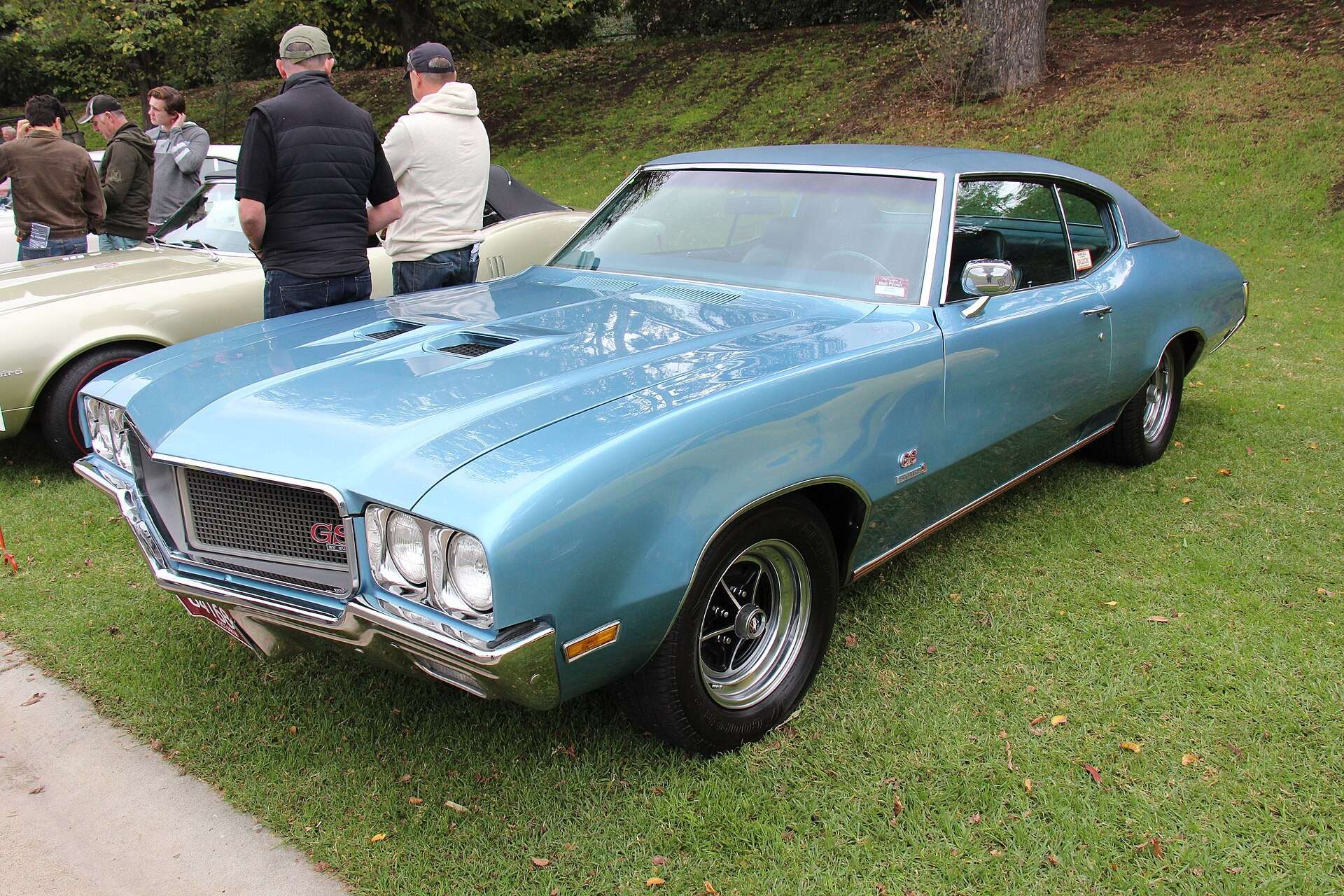
All of it is visible, and much of it is reproducible. Moto Gallery notes that reproduction stripe kits and components exist and that standard GS cars have been visually converted, warning that a GSX is “not defined by stripes alone.” Garage Cherries is blunter: Stage 1 cars are frequently faked with stripes and badging. The color rule is a useful screen. A 1970 GSX in a color Buick never offered with the package does not have to be a fake, since cars get repainted, but it removes any presumption of originality.
Proving Stage 1: the engine and drivetrain
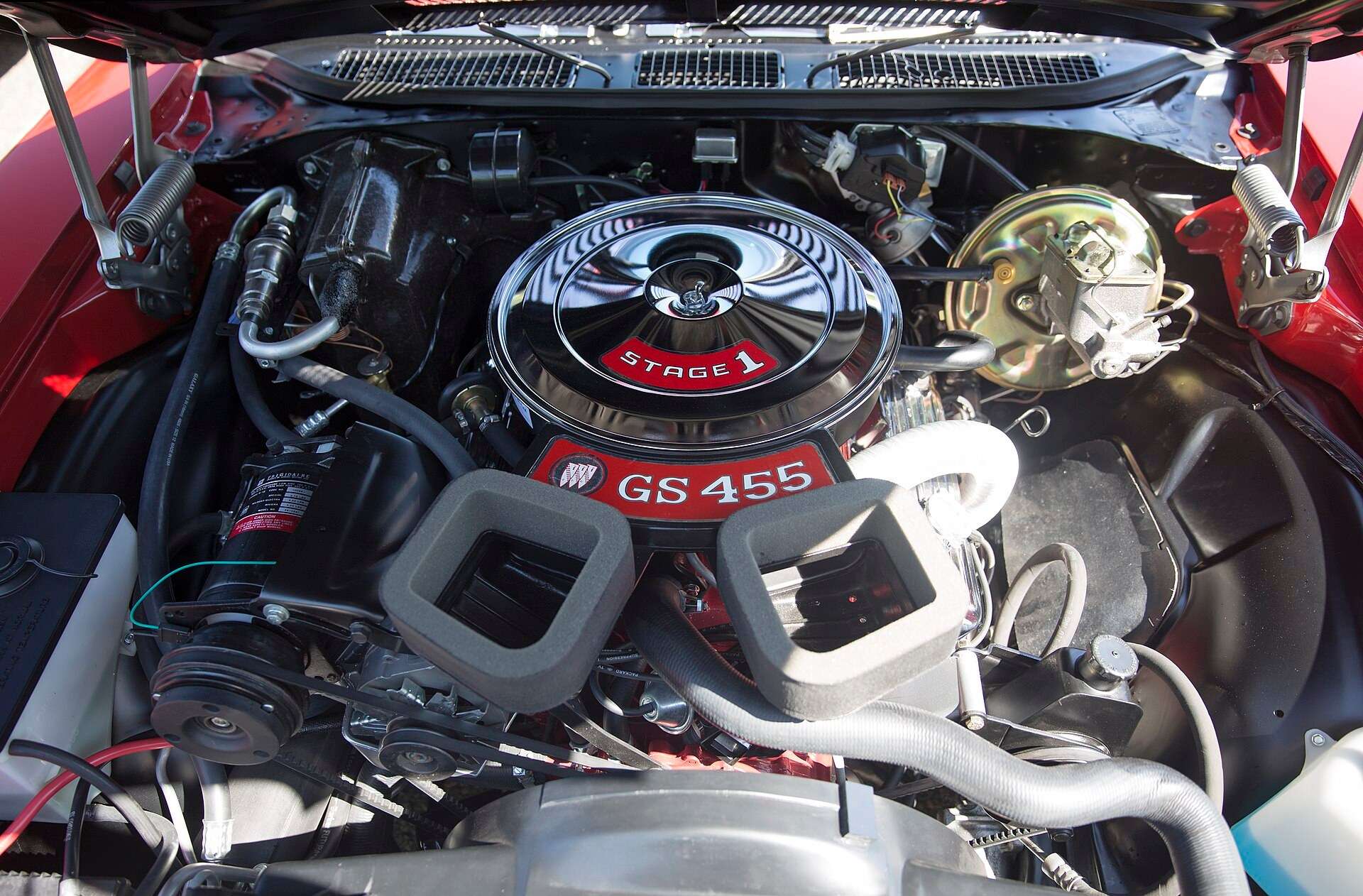
Stage 1 is not a trim level. It is a package of parts under the hood, and the checks are specific. The Stage 1 Registry, a community compilation that is the most detailed public source we found, lists these for 1970:
- Engine code. The 1970 Stage 1 production code is “SS,” stamped on the block between the number 5 and number 7 spark plugs on the driver’s-side rear, just below the head. The second character must be an S.
- Block casting. 1231738 for 1970. Stage 1 heads carry no special casting number, so the registry says confirming them means pulling a head and inspecting the valves.
- Carburetor and distributor. Carburetor number 7040246 and distributor number 1112016. These parts are easy to swap, so treat them as supporting evidence only.
- Engine serial. The registry describes the original engine’s serial as a nine-digit number beginning with 4 that follows the car’s VIN. It should be compared against the car and the paperwork.
- Transmission. A Turbo Hydra-matic 400 from a Stage 1 car carries a tag code of “BB” for 1969 through 1974, according to the registry, but manual transmissions have no code that proves Stage 1. SCM says 499 GSXs had the automatic, and autoevolution reports only 120 Stage 1 four-speed cars, which it calls the rarest configuration. Treat that last figure as reported, not confirmed.
- Rear axle. All Stage 1 cars had a 10-bolt positive-traction rear, per the registry.
Decals and badges are a separate matter. The registry notes a “Stage 1” air cleaner decal and fender badges for 1970, and both are the easiest items on the list to fake. The registry also warns that drivetrain stampings and documentation can be forged, so matching numbers and paperwork have to be read together. No single code settles the question.
The paper that settles it
Moto Gallery’s advice is to verify a GSX through documentation, not appearance, and the best-documented cars show why. The SCM-profiled GSX came with its original build sheet, owner’s manual, warranty papers, delivery package and ownership registration cards, and its owner was a registered entrant with the GSX historical society. Sources variously call that group the GSX Historical Society or the GSX Historic Society, so ask a seller exactly which registry holds the car and confirm it directly. Barn Finds recommends relying on the build sheet plus a recognized verification report, confirming them independently, and arranging a professional inspection before money moves, particularly on long-distance purchases.
The most useful thing a build sheet can do is disagree with the car. A sheet that lists the GSX and Stage 1 but sits on a car with a different engine tells you what left Flint and what it has since become. That distinction is the whole difference between a restoration and a recreation, and a recreation is priced like a GS 455.
Common misrepresentations
- A GS 455 dressed as a GSX with stripes, wing, tach and spoilers.
- A non-Stage 1 car, or a replacement 455, carrying Stage 1 decals and badges. SCM’s $88,000 sale of a documented non-Stage 1 GSX in 2012 sat well below the $128,700 paid for a top Stage 1 car in 2010.
- A correct-looking car in a color the package was never offered in, passed off as an unusual original.
- “Numbers matching” claims with no build sheet or window sticker behind them.
What buyers should verify before paying
- Get the original build sheet and any window sticker or delivery paperwork. Confirm they list the GSX package and, for a Stage 1 claim, the Stage 1 option.
- Read the VIN plate at the top of the dash. A 1970 GS 455 hardtop built at Flint should begin 446370H. Remember that this does not prove GSX.
- Confirm the paint is Saturn Yellow or Apollo White with black trim and interior, and look for signs of repaint if it is not.
- Check the engine: the “SS” code at the rear of the driver’s-side block, the 1231738 casting, and a serial that follows the VIN.
- Record the carburetor and distributor numbers, and treat them as supporting evidence only.
- On an automatic, look for the “BB” transmission tag. On a four-speed, lean on the paperwork.
- Confirm the positive-traction rear and the GSX hardware: hood tach, rear wing, spoilers, Rallye wheels and power front discs.
- Ask which registry holds the car, then contact it yourself, and hire a specialist who knows Buick GS cars before sending money.
- Price the car against what is proven, not what is claimed. The documented Stage 1 and the unproven one are different cars.
The bottom line
The most valuable claim on a 1970 Buick GSX is also the cheapest to fake: a decal. The stripes sell the car in photographs, and the paper sells it in the auction room. Buyers who want a sense of how Buick’s other performance halo handles the same question can read our 1987 Buick GNX spec sheet, and anyone weighing a matching-numbers claim on a GM muscle car can start with our guide to C2 Corvette matching numbers.
Figures come from the sources linked above and, where they conflict, are flagged as such. Registry and market data are community-compiled or reported, so confirm any number with a Buick GS specialist before buying.
The collector car market, every weekday morning.
Auction results, price moves and what’s crossing the block, read in four minutes. Free, from Modern Car Collector.
No spam, unsubscribe in one click. Or read more about the Brief.




 Shawn Henry
 Kyle Matthews