

Jacques Swaters was born on October 30, 1926, in Woluwe-Saint-Lambert, outside Brussels, and the yellow Ferraris his team ran deserve a collector’s attention for a reason that has little to do with his lap times. Swaters never won a World Championship Grand Prix. What he built was a dealer-entrant model: the man who sold the cars also raced them, prepared them and kept the paperwork. That is why Belgian-yellow Ferrari history still reads as a chain of evidence rather than a paint color.
That is the thesis of this anniversary. Swaters matters to collectors less as a driver than as the person who turned a privateer racing Ferrari into a documentable object.
A Law Student Who Wanted a Ferrari
According to Motor Sport’s 1998 profile, Swaters came from a family that owned fine cars, studied law, and drifted toward racing instead, tuning Fiat 1100s in a small Brussels garage. Seeing Luigi Chinetti’s Ferrari 166 at the 1948 Spa 24 Hours set the ambition. His own racing debut came at that same race, in an MG shared with Paul Frère, and by 1951 he owned a 166 that had once belonged to Gianni Agnelli.
The business followed in 1953. A customs problem with a Ferrari at the Brussels Motor Show led to a call from Ferrari’s general manager, Gerolamo Gardini, and Swaters sold his first car there. Wikipedia records that he was named Ferrari importer for the Benelux countries that year, and Motor Sport reports that he worked with Enzo Ferrari on a handshake, with no written contract, for about thirty years. The partnership lasted more than fifty years.
Ecurie Francorchamps and the Belgian Yellow
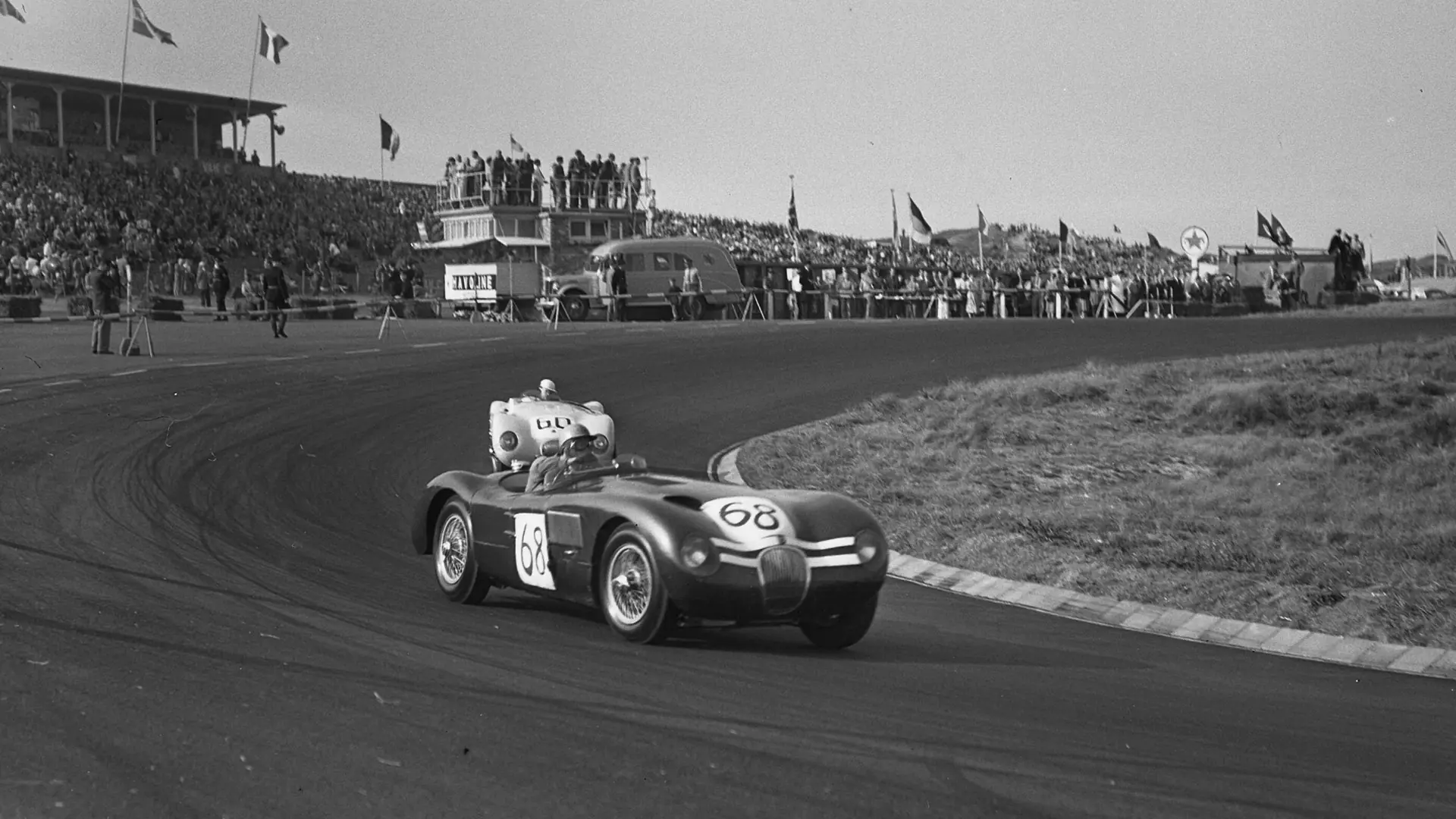
Swaters restarted Ecurie Francorchamps in 1952 with Charles de Tornaco and Geoff Richardson, and the team’s cars wore Belgian yellow. He won the non-championship 1953 Avusrennen in a Ferrari 500 Formula 2 car, then moved to sports cars, running Jaguar C-types and D-types alongside Ferraris. The team finished fourth at Le Mans in 1954 and third in 1955 with a D-Type, and in 1957 a Ferrari 500 TRC took seventh overall and a class win, according to Wikipedia’s Ecurie Francorchamps entry. Swaters retired from driving after 1957.
The logic is the same one that gives Walt Hansgen’s Cunningham Jaguars their value: the premium attaches to a verifiable chain of events tying a specific chassis to a specific race. A Ferrari entered in the 1953 Mille Miglia by Swaters and Charles de Tornaco appears in MCC’s look at race winners at the Pebble Beach auctions.
Le Mans, June 1965: The Result Behind the Premium
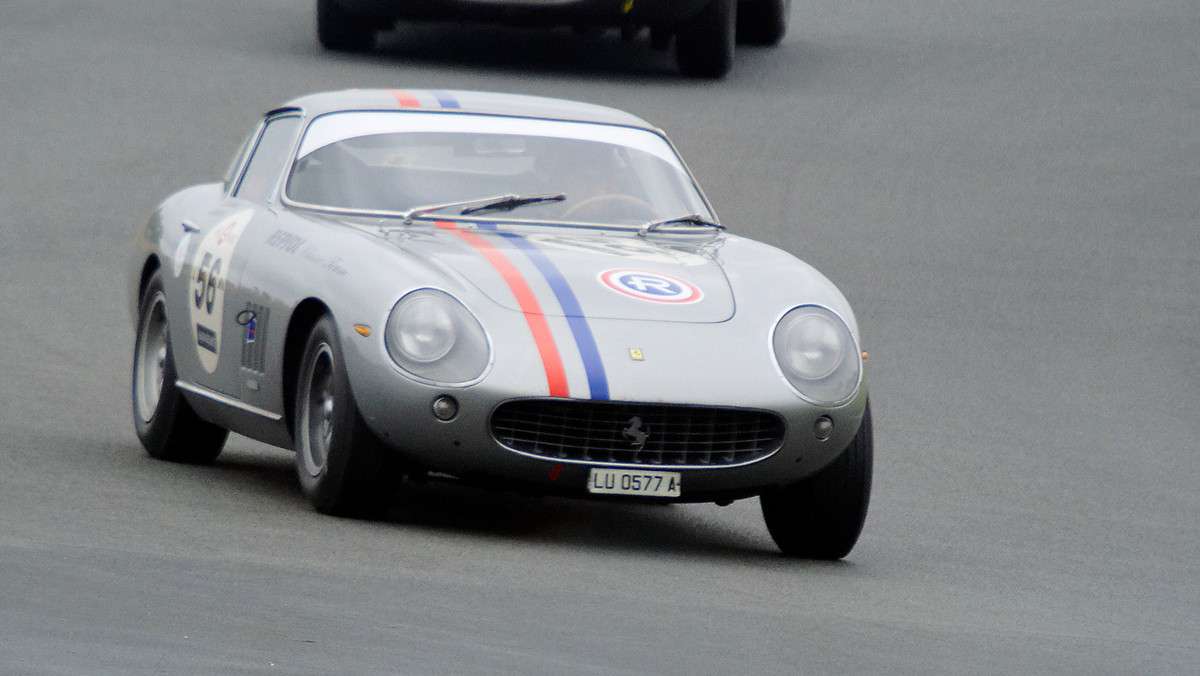
The race ran on June 19 and 20, 1965. Ecurie Francorchamps’ number 24 Ferrari 275 GTB, driven by Willy Mairesse and Jean Blaton, who raced under the name “Beurlys,” completed 340 laps for third overall and the GT 4.0-litre class win, per the official classification summarized on Wikipedia. Ahead of it were the winning 250 LM of Chinetti’s North American Racing Team (Masten Gregory and Jochen Rindt, 348 laps) and Pierre Dumay’s 250 LM (343 laps); behind it came the Porsche 904s. Motorious identifies the car as chassis 6885, painted Belgian racing yellow.
The rivalry between the importers is part of the story. Chinetti’s NART is the same organization behind the 275 NART Spider that MCC examined in its analysis of the Steve McQueen car, and 24h-lemans.com describes Swaters as the second-largest Ferrari importer after Chinetti.
The Collection, the Pinin and the Paper Trail
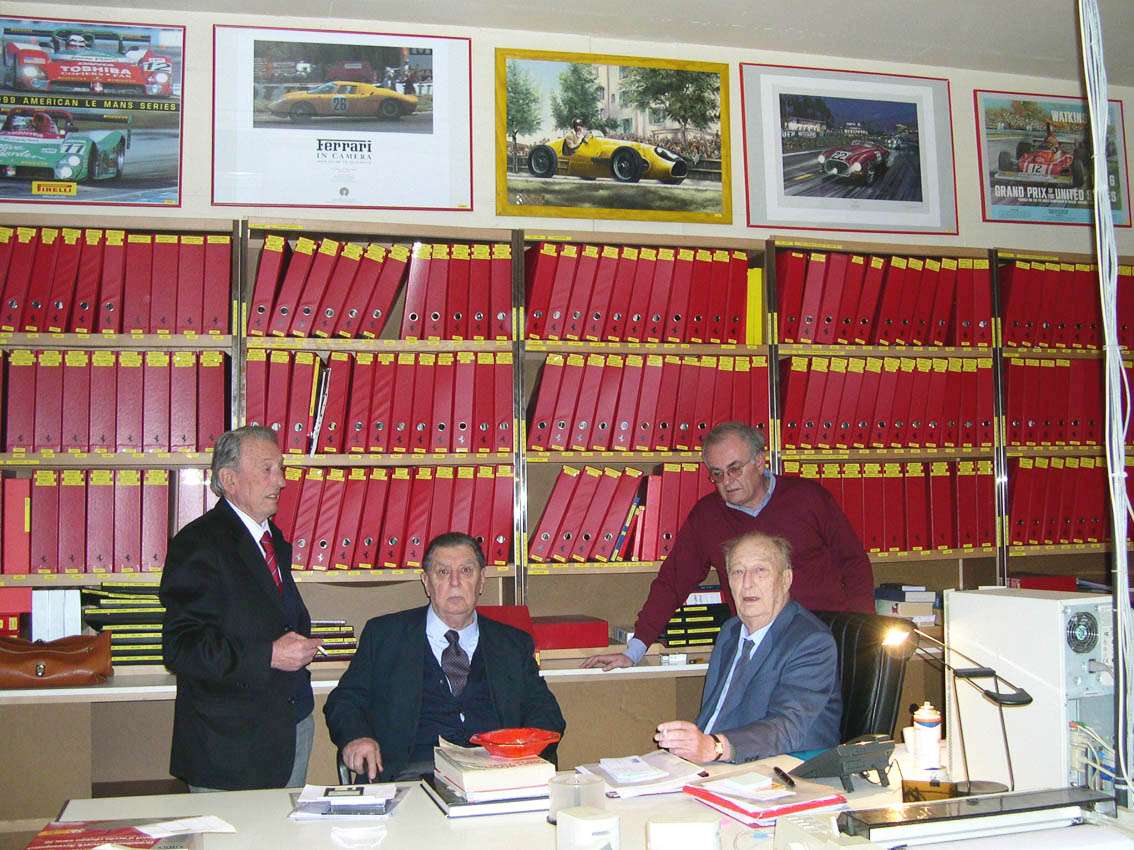
Swaters kept a Galleria Ferrari he called “the bunker,” holding documents, cars, sculpture and gifts from Enzo Ferrari himself. In May 2008 he sold a large part of it at RM Auctions’ Ferrari Leggenda e Passione sale at Fiorano. Sports Car Digest’s results report puts the weekend near $45 million including memorabilia, with ten cars above $1 million. The top lot from the Swaters collection was the one-of-a-kind 1980 Ferrari Pinin four-door prototype, which sold for $272,360, and several lots were signed by Swaters, who sat in the front row.
He also appears at the edges of other stories. In 1992 Ferrari unveiled the 456 at Garage Francorchamps and marked 40 years of partnership with a paint color called “Blue Swaters.” During the 1970 filming of Le Mans he rented a Ferrari 512S to the production company, and he told the 24h-lemans.com profile that the payment rescued him from near-bankruptcy. And when a dispute over the stolen 1954 Ferrari 375 Plus reached an Ohio courtroom, he testified that he had bought it as a burnt-out chassis; MCC covered that case in The Stolen Ferrari 375 Plus: A Legal Battle Spanning Decades.
What a 275 GTB Costs Today, and What We Do Not Know
I found no public auction record for chassis 06885, so there is no verified price for the Francorchamps car, and any figure for it would be speculation. What can be documented is the market for standard 275 GTBs, where condition and paperwork set the price:
| Sale | Car | Result |
|---|---|---|
| Gooding & Company, Pebble Beach 2021 | 275 GTB, chassis 07675; estimate $1.8–2.2 million | Sold, $1,792,500 |
| RM Sotheby’s, Monterey 2026 | Short-nose 275 GTB, chassis 06899; restored 2017, Ferrari Classiche certified 2026 | Sold, $2,177,500 |
| RM Sotheby’s, Paris 2026 | Short-nose 275 GTB, chassis 07723; Classiche certified 2021; estimate €2.175–2.375 million | Not sold |
| RM Sotheby’s, London, Oct. 31, 2026 | Alloy long-nose 275 GTB, chassis 08059; estimate £1.75–2 million | Not yet offered |
Those are the facts. The interpretation is that the market is paying for documented originality: the Monterey car’s Classiche certification, the Paris car’s matching numbers, the London car’s Massini history report. A 275 GTB with a Le Mans class win in Belgian yellow would be judged on a different axis, race provenance, and that is exactly the axis Swaters spent his career documenting. For the later four-cam cars, see MCC’s coverage of the ex-Eric Clapton 275 GTB/4.
What Collectors Should Take From the Anniversary
When a privateer Ferrari is offered with a racing history, the useful questions are the ones Swaters’s career makes visible. Does the claimed result appear in the official classification? Can the chassis be tied to the entry through a Massini report or Ferrari Classiche documentation? Does the livery match the period, or was it repainted to suit the story? Swaters’s own legacy, a dealer who raced, collected and signed his own archive, is a reminder that in this corner of the market the paperwork is part of the car.
Sources: Wikipedia (Jacques Swaters; Écurie Francorchamps; 1965 24 Hours of Le Mans); Motor Sport, May 1998; 24h-lemans.com; Sports Car Digest; Motorious; RM Sotheby’s and Gooding & Company lot pages. Estimates are labeled as estimates; sale prices are as reported by the auction houses and publications cited.
The collector car market, every weekday morning.
Auction results, price moves and what’s crossing the block, read in four minutes. Free, from Modern Car Collector.
No spam, unsubscribe in one click. Or read more about the Brief.


 John Lloyd
 Shawn Henry
 Kyle Matthews