

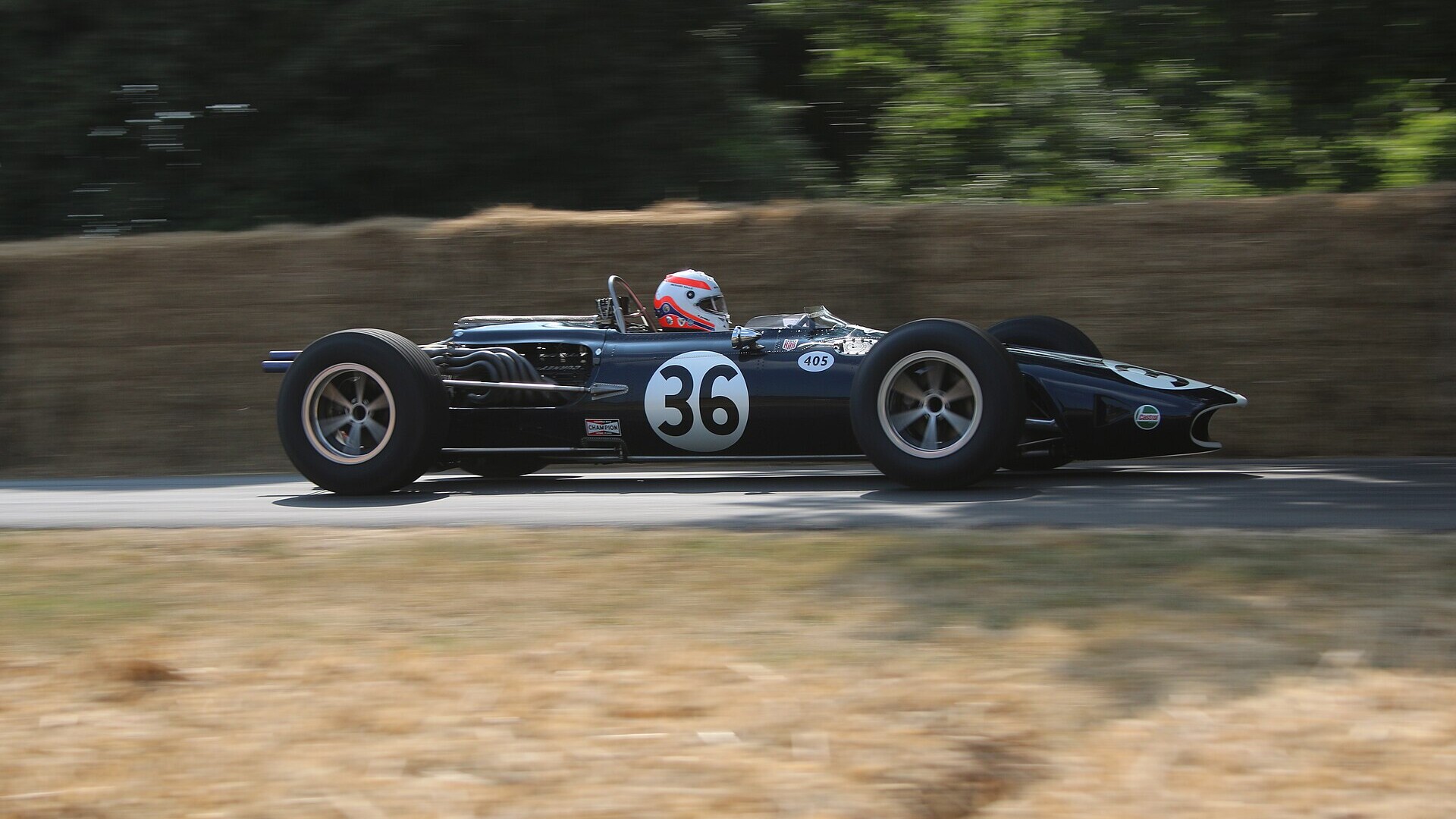
Nine of the ten cars in RM Sotheby’s Sealed September sale are modern or postwar road cars whose values track well-worn markets. Lot 6 is the outlier: a 1967 AAR Eagle Mk I Gurney-Weslake, chassis 103, estimated at $7 million to $9 million, with sealed bids due September 30. It is not the Eagle that won the 1967 Belgian Grand Prix. That car, chassis 104, has been in the Miles Collier collections since 1986 and is not coming back to market. That is exactly why chassis 103 matters.
Our thesis: chassis 103 is being priced less on what it won than on what it stands for: one of only two V-12 Eagles in private hands, and the closest a private buyer can get to Dan Gurney’s 1967 season. Whether bidders accept that premium, without seeing each other’s numbers, is the whole story of this lot.
The Lot at a Glance
- Car: 1967 AAR Eagle Mk I Gurney-Weslake, chassis 103 (the third of four Mk Is built; the second of three with V-12 power)
- Sale: RM Sotheby’s Sealed September, Lot 6. Bidding opened September 23; this lot closes September 30, 2026, at 3:15 p.m. EDT
- Estimate: $7,000,000–$9,000,000
- Current bid: Not public. Sealed is a blind format: bidders see only their own bid and ranking, not the high bid
- Buyer’s premium: 0%, per RM’s sale terms, so the winning bid is the price
- Location: Culver City, California
- Paperwork: Bill of sale only (normal for a racing car)
- Source listing: RM Sotheby’s Sealed lot page
Specifications
The Eagle Mk I was All American Racers’ Formula 1 car for the first season of the 3-liter rules, built at the team’s Anglo American Racers shop in Rye, England. Four were made. Chassis 101 started with a four-cylinder Coventry Climax as a stopgap. Chassis 102, 103 and 104 got the engine the car was designed around: the Gurney-Weslake V-12, a 2,997-cc, 60-degree, DOHC unit. RM’s catalog rates it at 390 bhp at 10,500 rpm. For 1967, those are competitive numbers. The engine’s reliability never matched them, and the car’s record shows it.
What Chassis 103 Actually Did in 1967
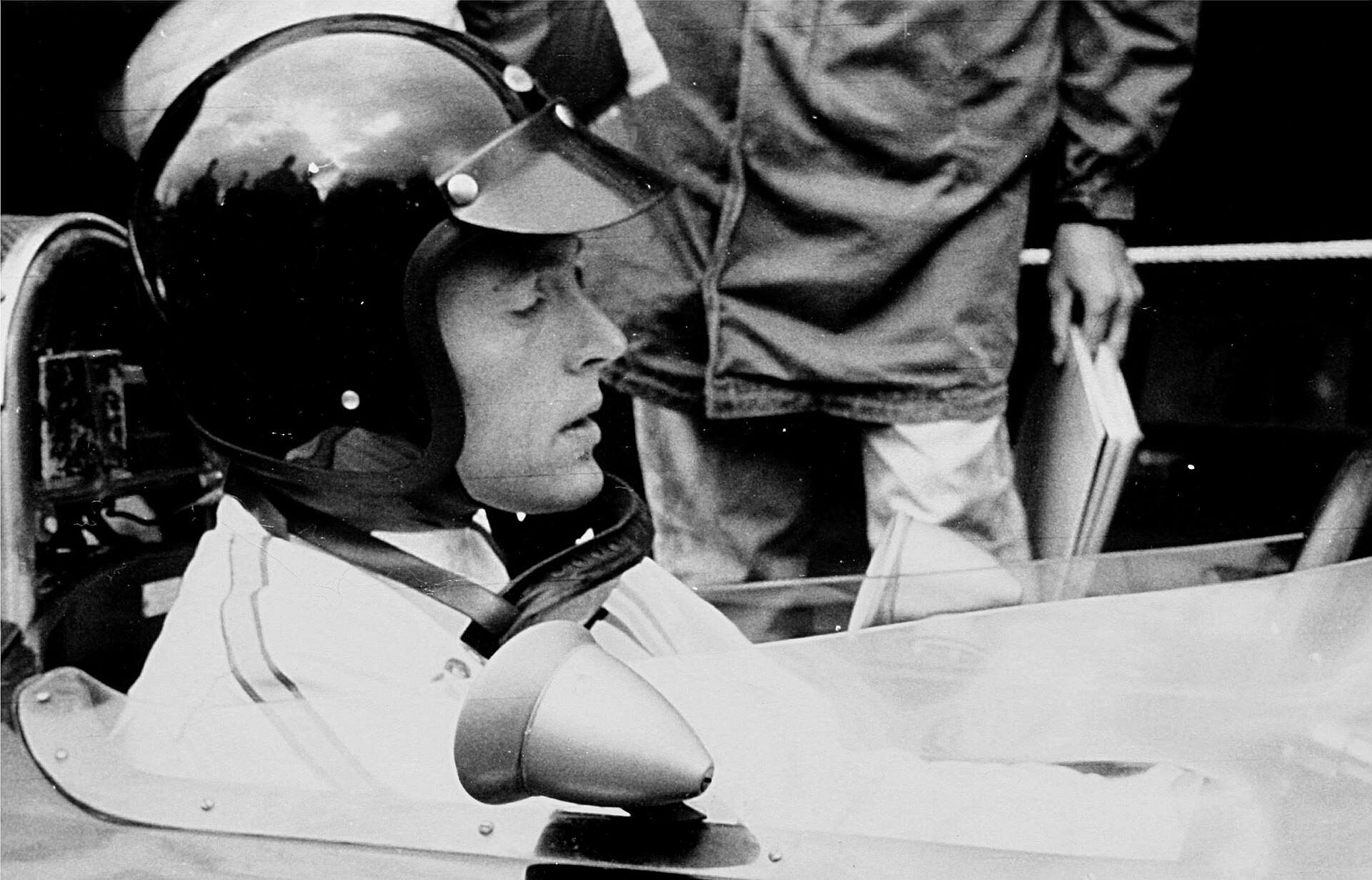
The race history below comes from RM Sotheby’s lot description. Chassis 103 made its debut at the non-championship Race of Champions at Brands Hatch on March 12, 1967, with Richie Ginther driving. Gurney won the event in chassis 102. Ginther finished third and second in the two heats but retired 103 from the final with brake trouble four laps from the end. He was still classified 10th.
At Monaco, the team swapped cars after first practice because Gurney preferred 103’s throttle response. He qualified seventh, and a failed fuel-injection pump belt put him out after four laps. Ginther failed to qualify in the other car and retired from driving right after. 103 then sat out the season until the Canadian Grand Prix at Mosport on August 27. There, running titanium suspension parts from the lightweight chassis 104, Gurney qualified fifth and finished third in heavy rain, behind the two Brabham-Repcos. That is 103’s best result. At Monza, Ludovico Scarfiotti qualified it 10th, and the engine failed after five laps.
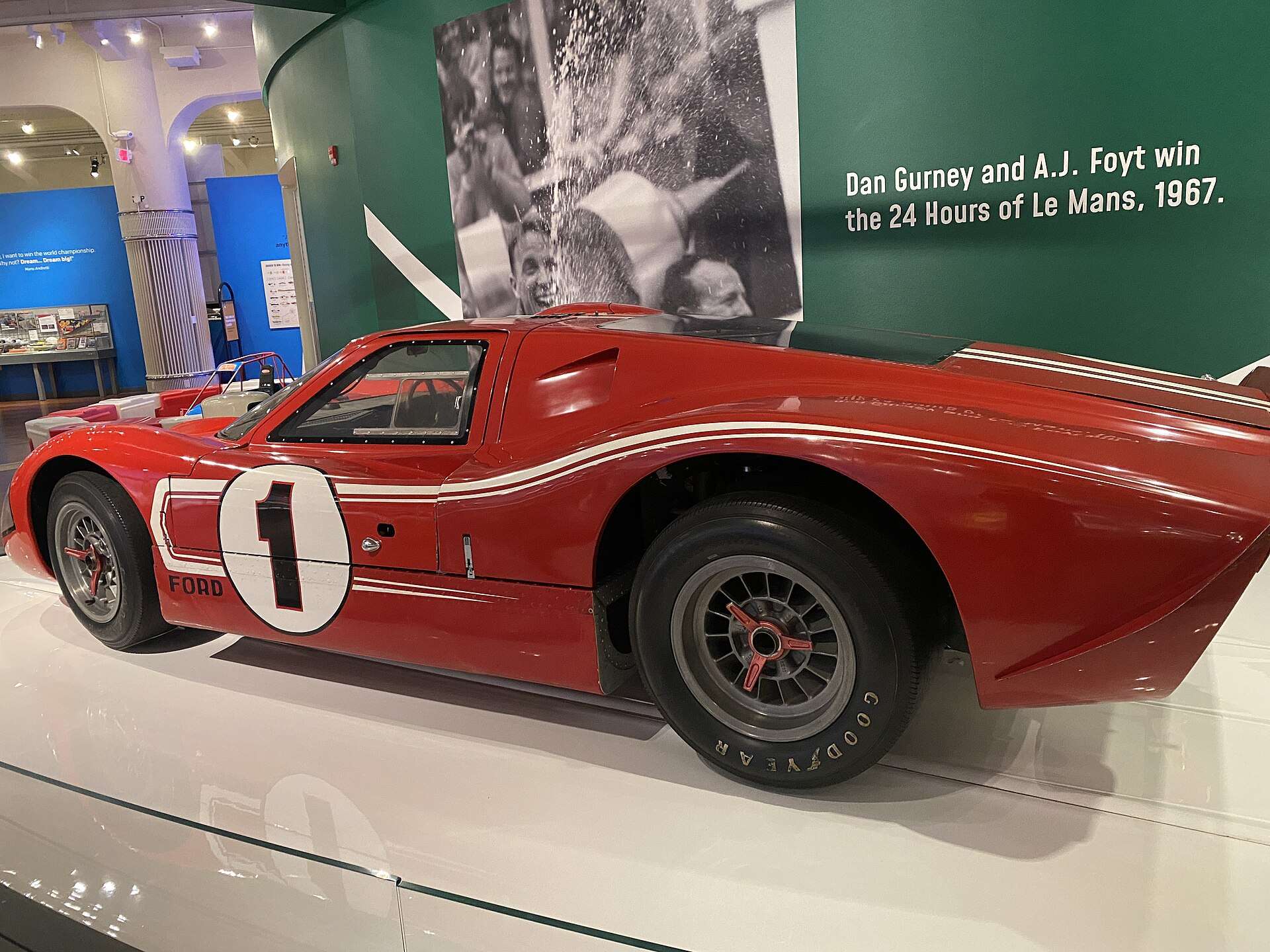
The part collectors remember happened in a different car. In June 1967, Gurney and A.J. Foyt won Le Mans for Ford. A week later, Gurney won the Belgian Grand Prix at Spa in chassis 104, the “Mag-Ti” lightweight Eagle. RM notes that it was the first Grand Prix win for an American constructor since Jimmy Murphy won the 1921 French Grand Prix for Duesenberg. RM also calls the Eagle the only American-built Formula 1 design ever to win a race. Across 1967, AAR finished just two of the 15 Grands Prix it started. Gurney scored all 13 of the team’s championship points, nine of them at Spa. (For another Gurney car whose value comes from the details rather than the headline, see MCC’s analysis of the Gurney-modified Lola T70.)
Provenance: An Unbroken, Documented Chain
After AAR shut down its Formula 1 program in late 1968, RM’s catalog records the following ownership chain:
- October 1969: Sold to Danny Ongais, who planned an SCCA Formula A conversion that never happened, so the car was never modified for that series.
- 1974: Traded to Chuck Jones of Costa Mesa, California, for his Lola T300. Jones kept it until 1981.
- 1981: Acquired by broker Mark Leonard of La Jolla, California.
- 1985: Sold to IMSA figure Dick Barbour, then later that year to Jeffrey Keiner of Orlando, Florida, who prepared it for historic racing and owned it until 1998.
- 1998: Returned to Britain with historic racer Ben Liebert. He ran it at the 1999 Goodwood Revival and the 2000 Festival of Speed, and in 2002 at the Monaco Historic Grand Prix, where he finished 11th overall and first in class.
- 2002 to today: In the consignor’s collection. RM says it ran at the 2006 Festival of Speed and has not been raced since.
Our read: the provenance has no gaps, which matters more than it might seem. The sale in 1969 came before period racers were collectible, so there was no reason to fake anything. The planned Formula A conversion is the one change that could have altered the car, and it never happened.
Condition: Not Ready to Race
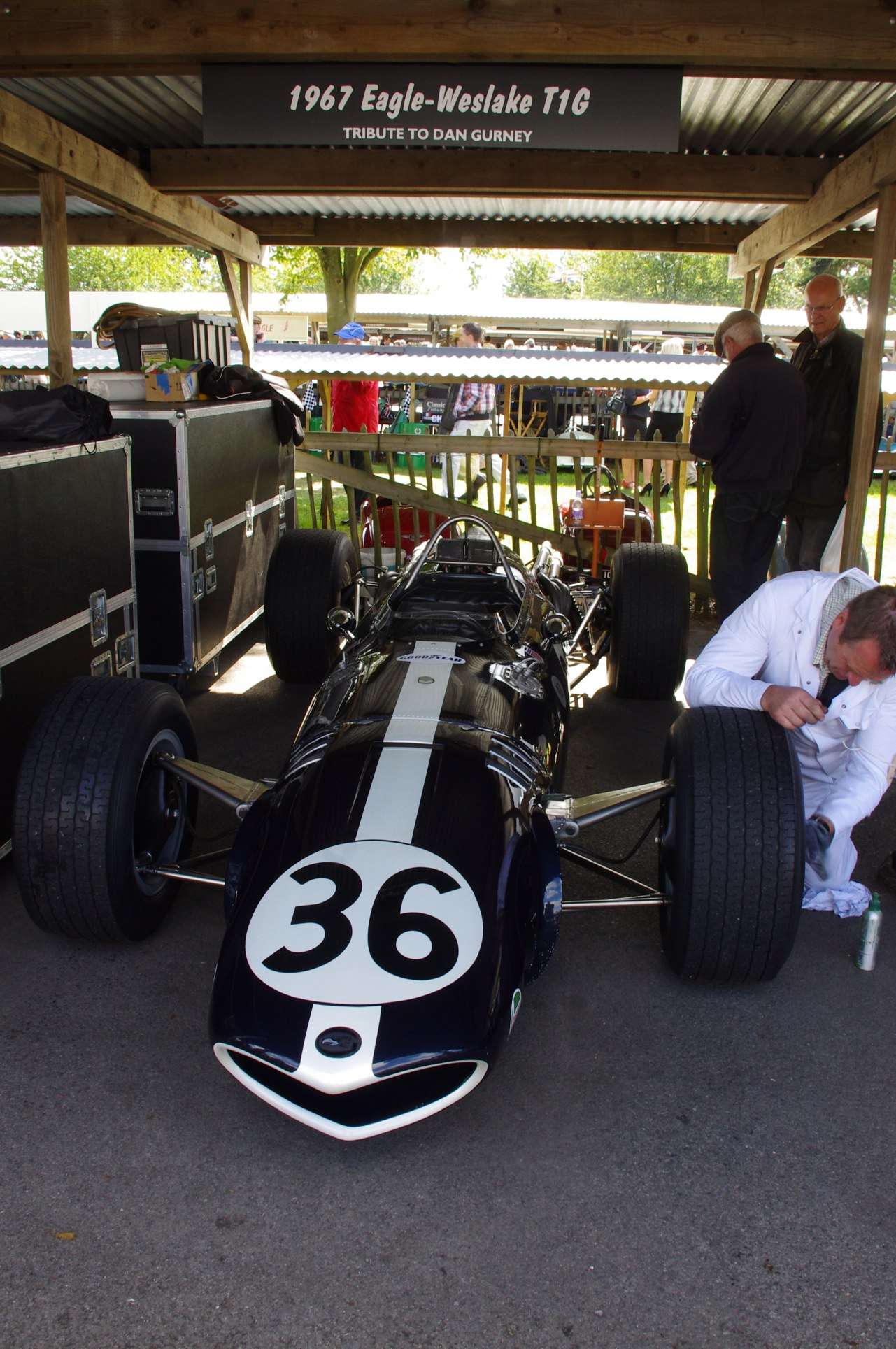
RM is open about condition. According to the lot description, a recent inspection by Hall & Hall found that the car “would benefit from proper race preparation prior to further use.” RM markets it as eligible for the Monaco Historique and the Rolex Monterey Motorsports Reunion, but a buyer who wants to use it should budget for a full rebuild of a rare 1960s V-12 before it runs in anger. RM’s public listing gives no detail on how original the engine is or on the condition of the chassis tub. Serious bidders should ask for both, along with the Hall & Hall report.
The Estimate, and the Bid Nobody Can See
Sealed is RM’s online blind-bid platform. According to the sale terms, bidders see only their own bid and where it ranks, bids can’t be withdrawn once placed, a bid in the last 90 seconds extends the close, and RM charges no buyer’s premium. So no current bid is public, and no one can honestly report one. Only the consignor and RM know where the $7 million–$9 million estimate stands against the offers. RM has promoted the car widely, showing it at Sotheby’s New York in the “250 Years of American Art & Culture” exhibition in July and at Monterey Car Week in August.
Comparable Sales
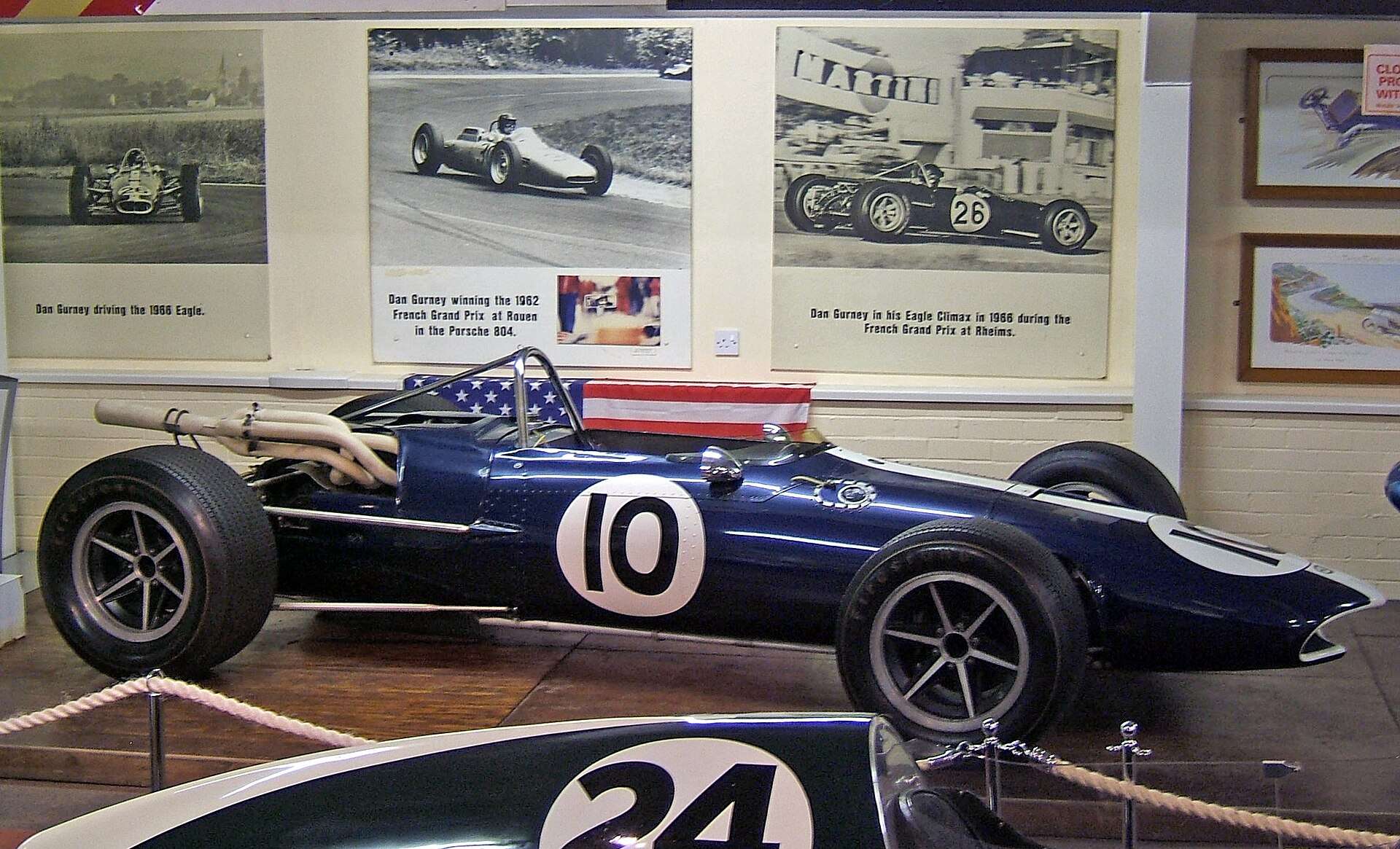
Four Eagle Mk Is were built. One is in a museum and two have public market records, so the comparables are unusually direct:
- Chassis 102 (V-12): Sold for $3,740,000 at Gooding & Company’s 2013 Pebble Beach sale. This is the closest comparable: the same V-12 specification, with Gurney and Bruce McLaren in period and a win in the non-championship Race of Champions. At the time, Sports Car Market set it against early BRM V-12s at around $600,000 and Ferrari 312 F1 cars at around $3 million.
- Chassis 101 (Climax four-cylinder): Offered at Gooding’s 2023 Amelia Island sale with a $3 million–$4 million estimate. OldRacingCars.com lists it as shown at Pebble Beach in 2025 by Bruce Meyer.
- Chassis 104 (“Mag-Ti,” the Spa winner): Has been in the Miles Collier collections, now the Revs Institute, since December 1986, according to OldRacingCars.com. It isn’t for sale, and it caps what the other three can be.
- Outside the Eagle family: The ex-Graham Hill Lotus 49B R8, from a far more successful Formula 1 program, sold for £673,500 at Bonhams’ 2014 Goodwood Festival of Speed sale. At the other extreme, RM sold the 1954 Mercedes-Benz W 196 R Stromlinienwagen for €51,155,000 in Stuttgart in February 2025. It is the most valuable Grand Prix car ever sold (MCC’s preview; where it ranks).
Our read: the low estimate is almost double what chassis 102 made in 2013. Some of that is 13 years of growth in the blue-chip racing car market. The rest is RM betting that 103 is a scarcer asset now than 102 was then. With 104 in a museum and 102 held privately, 103 may be the last V-12 Eagle to come up for many years. The Lotus 49B result shows that racing success by itself doesn’t get a 1960s Formula 1 car to these prices. What gets the Eagle there is the American story.
The Key Factor: Who Is Bidding
Chassis 103’s record won’t change before Wednesday: one podium and a string of retirements. The factor most likely to decide the price is whether the bidders include buyers who see it as a piece of American cultural history rather than as a vintage racer. A historic-racing buyer will price it against 102’s result and deduct for the Hall & Hall rebuild. A buyer shopping for Americana in the country’s 250th year, the audience RM targeted by showing the car at Sotheby’s New York, will pay for Gurney, the design and its scarcity, and won’t care whether it ever races again. The sealed format makes the difference larger. Without an open room, a single committed crossover bidder can set the price, and if none turns up, there’s no open bidding to push it toward the estimate.
RM is using the same sealed format for two other cars MCC has covered: the only matte black Ferrari Enzo, and a very-low-mileage Gordon Murray T.50 (see our look at why an unused T.50 at auction matters). How the three do together will show whether blind bidding holds up at the top of the market. The Eagle is the hardest test of the three.
What Collectors Should Know
- This is not the Spa winner. Its best result is third at the 1967 Canadian Grand Prix, and Gurney started just two championship Grands Prix in it (Monaco and Mosport).
- It is one of two V-12 Eagle Mk Is in private hands. Chassis 104 is in a museum.
- The ownership chain is unbroken from 1969, and the planned Formula A conversion never happened.
- Plan for a professional rebuild before any racing, and ask RM for the Hall & Hall findings.
- With no buyer’s premium, the winning bid is the full price. It won’t be public until RM reports the result.
Sources: RM Sotheby’s Sealed lot listing and sale terms; RM Sotheby’s press release, July 13, 2026; Gooding & Company lot record for chassis 102; OldRacingCars.com chassis histories. The race history and ownership chain are as stated by the auction house. Market interpretation is MCC’s.
The collector car market, every weekday morning.
Auction results, price moves and what’s crossing the block, read in four minutes. Free, from Modern Car Collector.
No spam, unsubscribe in one click. Or read more about the Brief.
Related Posts:
- Car Collector News Round Up: Ferrari F50 Values,…
- This No-Reserve Ferrari 458 Speciale A Is Priced for…
- The Collector Car Market Paid Up for Certainty This…
- Two T.50s Have Sold at Auction, $2.4 Million Apart.…
- Record Ferraris, Rare Icons and 15,000 RPM: The Week…
- Collector Car Market Brief: A Belgian Record at…
 Kyle Matthews
  John Lloyd
  Shawn Henry