

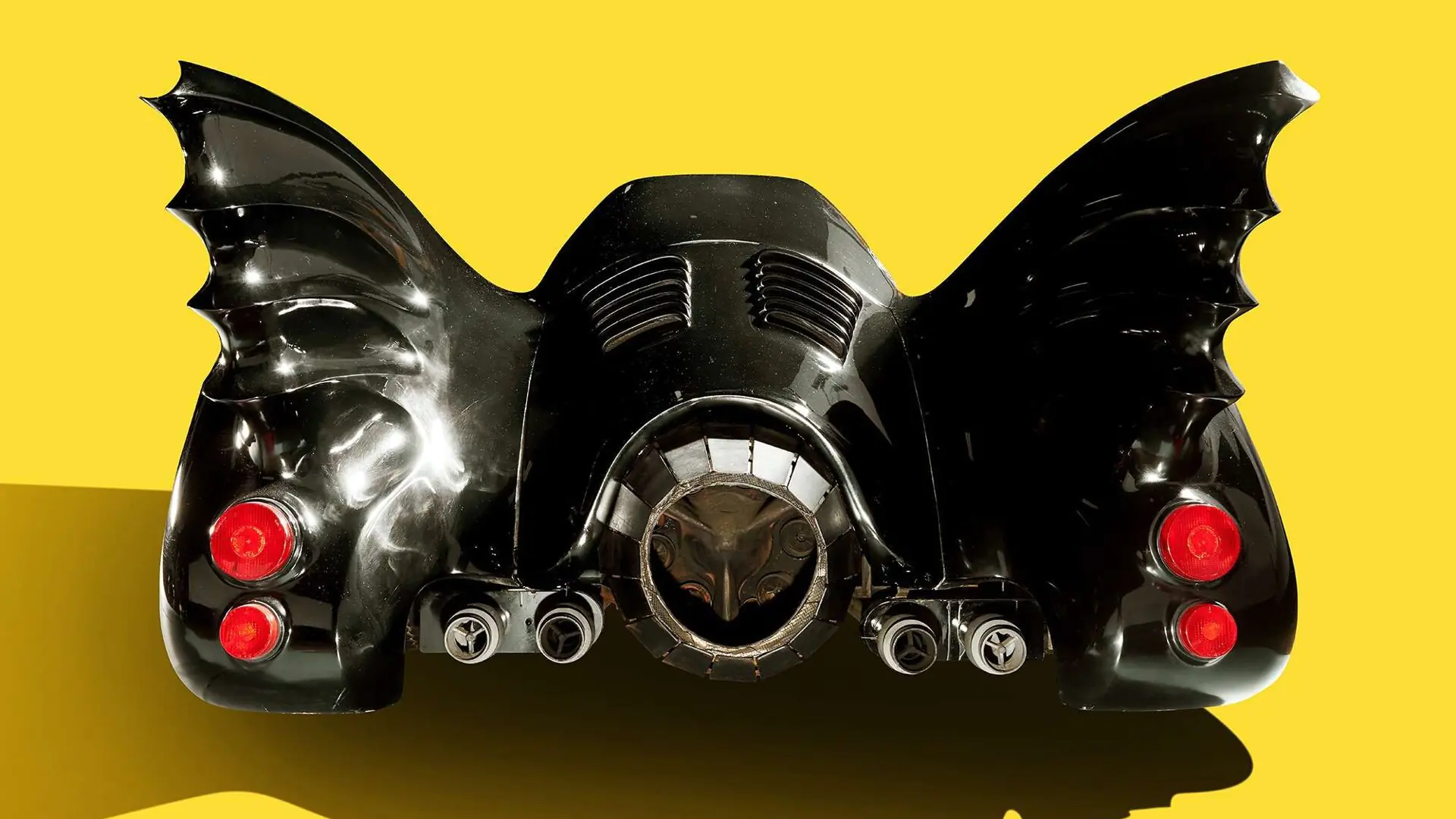
Most collector cars come with a title and a folder of paperwork. The Batman Returns hero Batmobile, Lot 13 in Julien’s Auctions’ Nov. 23 Ultimate Batmobile Auction, comes with something less common: a rulebook.
The $5 million to $7 million estimate will draw the attention. It is not the most consequential line in the listing. That distinction belongs to a single section of the lot description, which states that acquiring the car “includes a formal agreement” with Warner Bros. Consumer Products, the representative of DC Comics’ intellectual property rights. In our earlier look at what the sale says about the next generation of collectors, we argued that bidders are buying screen time rather than steel. The agreement adds a second point: they are also buying terms.
What the Agreement Says, According to Julien’s
Julien’s describes the agreement as providing “clarity and continuity” and a framework for preservation, exhibition and future ownership. The practical terms it lists are specific. The car may be exhibited as part of the owner’s permanent collection and at qualifying auto shows and similar public venues. With appropriate approvals, it may also appear at other venues, including museum exhibitions and charitable or nonprofit events.

The limits are just as specific. The car must remain stationary when exhibited to the public. It may not be leased to third parties. Display, operation, commercial use and future transfer are all governed by the agreement, and a later buyer can take ownership only in accordance with it, including by signing a similar agreement with Warner Bros. Consumer Products. Julien’s says a copy is available to registered bidders on request, which means the full text is not public. Everything here rests on the auction house’s summary.
Why It Matters: Ownership With a Licensor Attached
A conventional collector car is valuable partly because of what the owner is free to do with it: drive it, lend it, show it, sell it to anyone. This Batmobile is sold on different terms, and the difference shapes both ends of the transaction.
On the way in, the buyer pool is filtered. Julien’s says additional registration qualifications apply to this lot, that pre-sale bids are subject to approval and will be removed if the bidder is not approved, and that on sale day it will accept only pre-approved absentee, phone or room bids. On the way out, every future buyer must accept the same framework, which narrows the market for resale. Julien’s presents that as a benefit, and there is a fair argument for it: a documented arrangement with the rights holder removes a cloud that hangs over many pop-culture vehicles. Intellectual property claims can follow a car long after it leaves the set, as the court fight behind the Miami Vice Daytona Spyder illustrates. Both things can be true. Certainty has a price, and so does a smaller field of eventual buyers.
That is an interpretation, not a finding. What it suggests is that this car should be valued less like a Ferrari and more like a licensed object with an extraordinary physical authenticity attached. We saw the licensed end of the spectrum when Joe Burrow bought a Batmobile-inspired Tumbler. We saw how provenance alone can move a result when Michael Jordan’s Ferrari 550 Maranello sold for $2.7 million. This lot sits between them, and the contract is what places it there.

What the Live Bidding Does and Doesn’t Tell Us
As of Nov. 3, Julien’s showed three absentee bids: $1 million on Oct. 30, $2 million and then $2.25 million on Nov. 3. The starting bid is $1 million, and the reserve is listed as not met. Those figures are verified. Reading them as a trend would be a mistake. Early absentee bids on a marquee lot are often placeholders, and with the reserve undisclosed, the number that matters will be set by approved bidders in the final days and on Nov. 23, not by this ladder.
What Serious Bidders Should Ask Before Nov. 23
First, read the full agreement, ideally with counsel, and test it against the buyer’s real plans. The summary refers to guidelines on “operation” and “commercial use” without detailing either. Second, ask Julien’s to reconcile a discrepancy in its own listing. The lot description says the car is currently located in Tustin, California, while a separate notice says it will be available for pick-up from a storage facility in Burbank, with a $35-per-day storage fee at the winning bidder’s expense immediately after the auction. Third, request the condition report, which Julien’s provides only on written request by email. The house says the Chevrolet V8, transmission and mechanical parts have been tested a limited number of times since filming, and that the car is custom-made and not street legal. Fourth, confirm the title path. The lot lists a VIN, and the buyer is responsible for completing the transfer under state and federal regulations, along with the Warner Bros. contract.
The Real Story
Collectors usually pay for what they can do with a car. Here, a meaningful part of the bid is for what the owner has been permitted to do. If this Batmobile reaches its estimate with those terms attached, it will show that buyers value authenticated screen use enough to accept someone else’s rules. If it falls short, the contract is the first place worth looking.
Most collector cars come with a title. This one comes with a rulebook, and the rulebook is part of the price.
The collector car market, every weekday morning.
Auction results, price moves and what’s crossing the block, read in four minutes. Free, from Modern Car Collector.
No spam, unsubscribe in one click. Or read more about the Brief.





 Kyle Matthews