

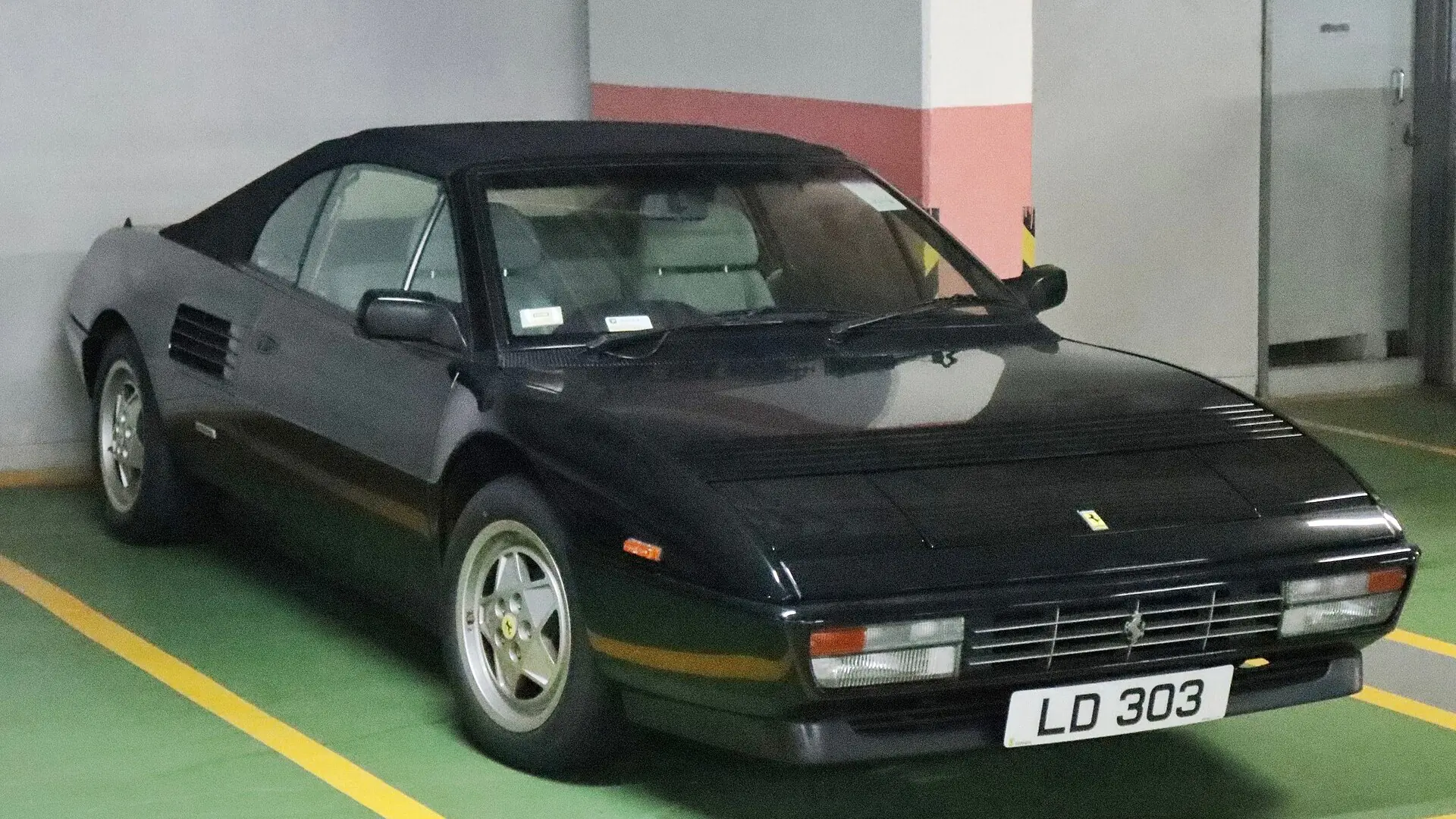
Ferrari reportedly spent about $1 million in 1987, roughly $3 million in today’s money, to turn a Mondial into a one-off pace car for the PPG Indy Car World Series. In 2004, a Mondial that Hagerty’s sales database lists as one of the PPG pace cars, VIN ZFFED32X9J0076390, sold at Christie’s in Le Mans for $85,330. It was a no-reserve lot. That is roughly 8.5 percent of the reported build cost, and the gap is the whole story.
This is not an argument that a factory one-off must be worth its build cost. It rarely is. It is an argument that a one-off is only as valuable as the documentation that proves what it is, and that the market learns to read that documentation slowly.
What Ferrari actually built
According to Forza magazine’s feature on the car, the project was developed with I.DE.A of Turin. A full-size styling model was complete in April 1987, body and chassis were mated that September, and the car was presented at Laguna Seca on October 9, 1987. Ercole Spada’s proposal was chosen over those of Carlos Sánchez and Justyn Norek, and the result had a stretched wheelbase, large glass areas, an oval grille, a NACA duct and a rear window with three flaps that opened automatically as engine-bay temperatures climbed. Inside was a Kevlar dashboard wrapped in suede and leather.
The engineering matters more than the styling. Forza reports that CART required floor tie-down points, an engine that fired in five seconds or less, and the ability to idle indefinitely at 100°F without overheating. The car carried two high-capacity batteries for its lighting, water nozzles to cool the brakes above 35 mph, an integral roll bar and a Pirelli safety fuel tank, and its composite bodywork was made in-house without an autoclave, unusual outside Formula 1 at the time.
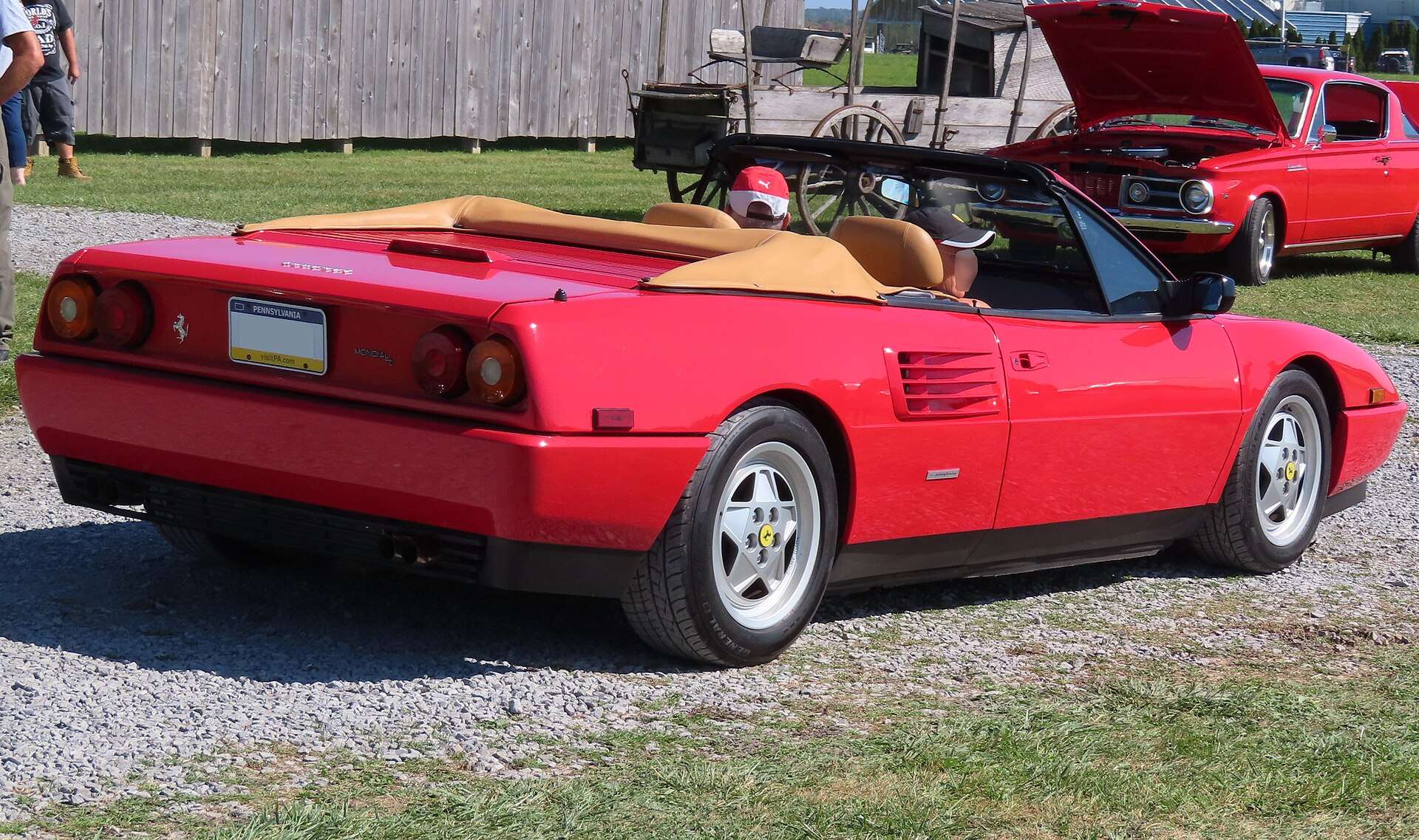
It was also a test bed. Forza says Ferrari used the project to try a Motronic 3.4-litre Tipo F119D V8 of about 300 horsepower, the engine destined for the 348 tb, along with a transverse ZF five-speed gearbox and an electronically adjustable suspension. Forza does not confirm which engine the finished car carried, so treat the powertrain details with care. The transverse layout, however, is the one the production Mondial t adopted when it reached customers in 1989. The pace car previewed Ferrari’s next generation of V8 cars while wearing a PPG livery.
The car served as a CART pace car from 1988 through 1991 and was delivered to PPG in the United States in late June 1988. Forza notes that it was displayed at the Galleria Ferrari in Maranello in 2013.
What the 2004 sale tells us
Two sources describe the 2004 sale. The PPG Pace Cars registry records it as sold for €70,500. Hagerty’s past-sales record lists Christie’s Le Mans on July 23–24, 2004, lot 76, a no-reserve sale at $85,330. The two figures are consistent once currency is accounted for, though neither source gives an estimate or a high bid, and the lot description is brief. It mentions black stripe graphics, a reinforced roll bar, an extended rear window and custom show paint, and describes a car that had been used on track and was not street legal.
That sparse description is instructive. A lot catalogued as a modified Mondial, with no estimate and no reserve, attracts Mondial money. The same chassis, presented with the build file, the I.DE.A drawings and the CART paperwork, is a different object. The 2004 price did not measure the car. It measured how little of the car’s story was on the page.
This is a pattern collectors should know. We saw the reverse in the case of the Ferrari 499P Modificata that never raced, where buyers pay explicitly for the program behind the car, and in the Daytona SP3 press car, which asks for a premium on its biography. Provenance is not an extra. It is the asset.
From a private collection to the Caretakers Collection
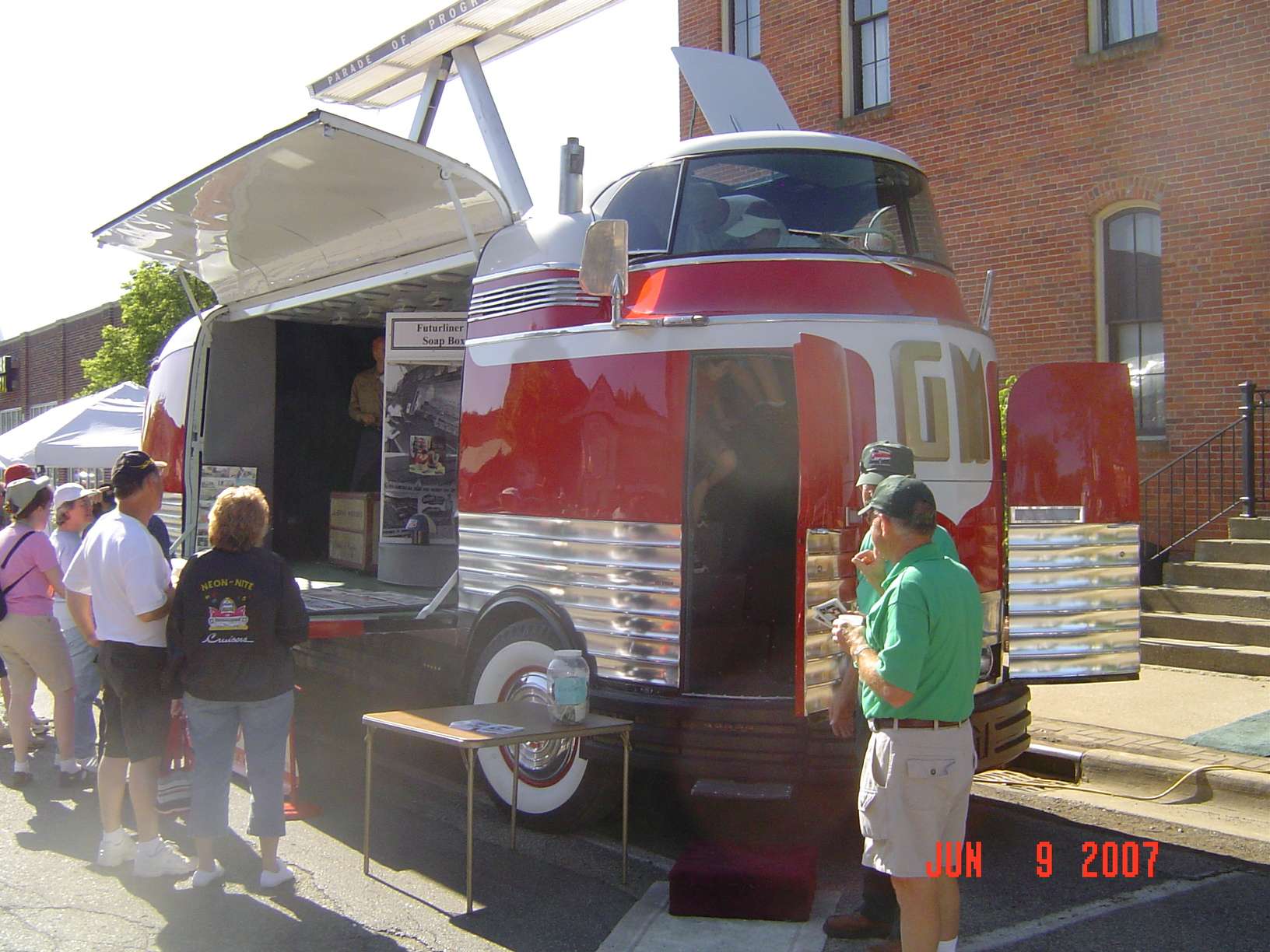
Forza places the car in a private collection in Seattle after the 2004 auction. It has since been reported as part of The Caretakers Collection, which is also reported to hold a Tucker sedan, said to be number 29 of 51 built, and one of the 12 GM Futurliners. No restoration work has been reported; what has changed is that the car has resurfaced, and it is reportedly not for sale.
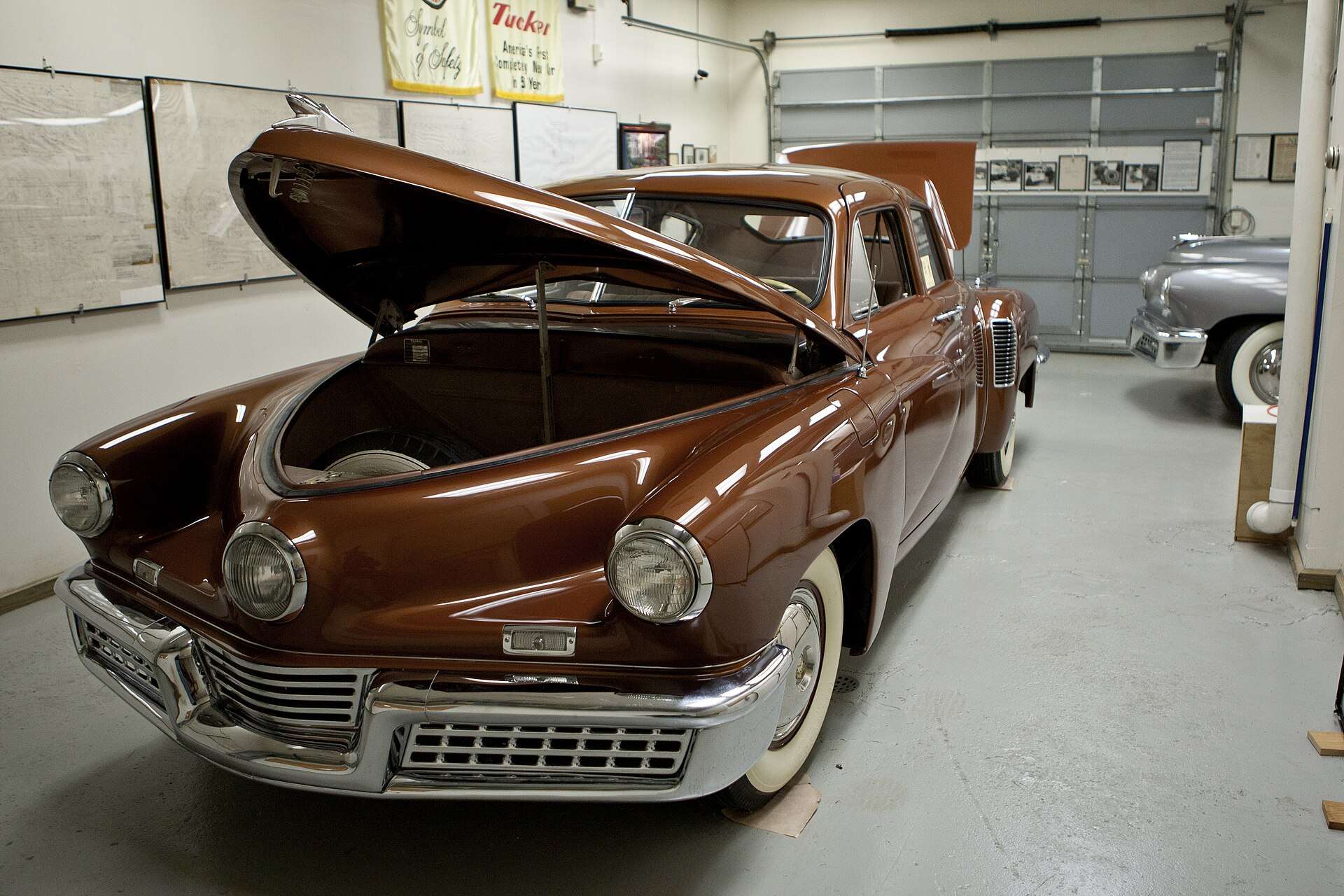
The company it keeps is telling. A Tucker and a Futurliner are both industry what-ifs: machines built to show what a manufacturer believed the future might look like, produced in tiny numbers, and valued today largely because someone kept them intact. The Ferrari belongs in that group. It is a corporate statement in metal, made at a moment when Ferrari was deeply engaged with American open-wheel racing. This is the same logic that makes the Simeone collection valuable: preservation of the unglamorous, undocumented-by-the-market object, rather than polish.
What serious buyers should take from it
First, a one-off’s value rests on three things that can be verified: the build records, the chassis identity, and the continuity of the chain of ownership. Here the chassis number and the reported 2004 sale are recorded, but the lot description is thin, so any future transaction would depend on reconciling the car as it is today with Ferrari’s own file.
Second, originality for a car like this is not about matching numbers in the usual sense. It is about whether the pace-car equipment, the bodywork and the livery are what left Turin. The reported absence of restoration is therefore an asset to protect, not a gap to fill.
Third, the price history is not the valuation. A $1 million build cost and an $85,330 hammer are both true. Neither sets a market, because the car has not been tested by a well-documented, properly presented sale. Until it is, the sensible position is to admit that nobody knows.
Collectors rarely pay for the cost of making a car. They pay for the certainty that it is the car.
The collector car market, every weekday morning.
Auction results, price moves and what’s crossing the block, read in four minutes. Free, from Modern Car Collector.
No spam, unsubscribe in one click. Or read more about the Brief.
Related Posts:
- Low-Mile 1987 Chevrolet Monte Carlo SS Aerocoupe for…
- Hagerty Says Mk2 Golf GTI Values Rose 24% in a…
- Auction Lot of the Day: A 1,100-Mile 1987 Shelby…
- 190E Evo II vs. Sierra RS500 vs. M3 Sport Evolution:…
- Austin-Healey 3000 vs Sunbeam Tiger vs Triumph TR6:…
- Buick GNX #450 Has Traveled Four Miles in Two Years.…
 Eve Nowell