

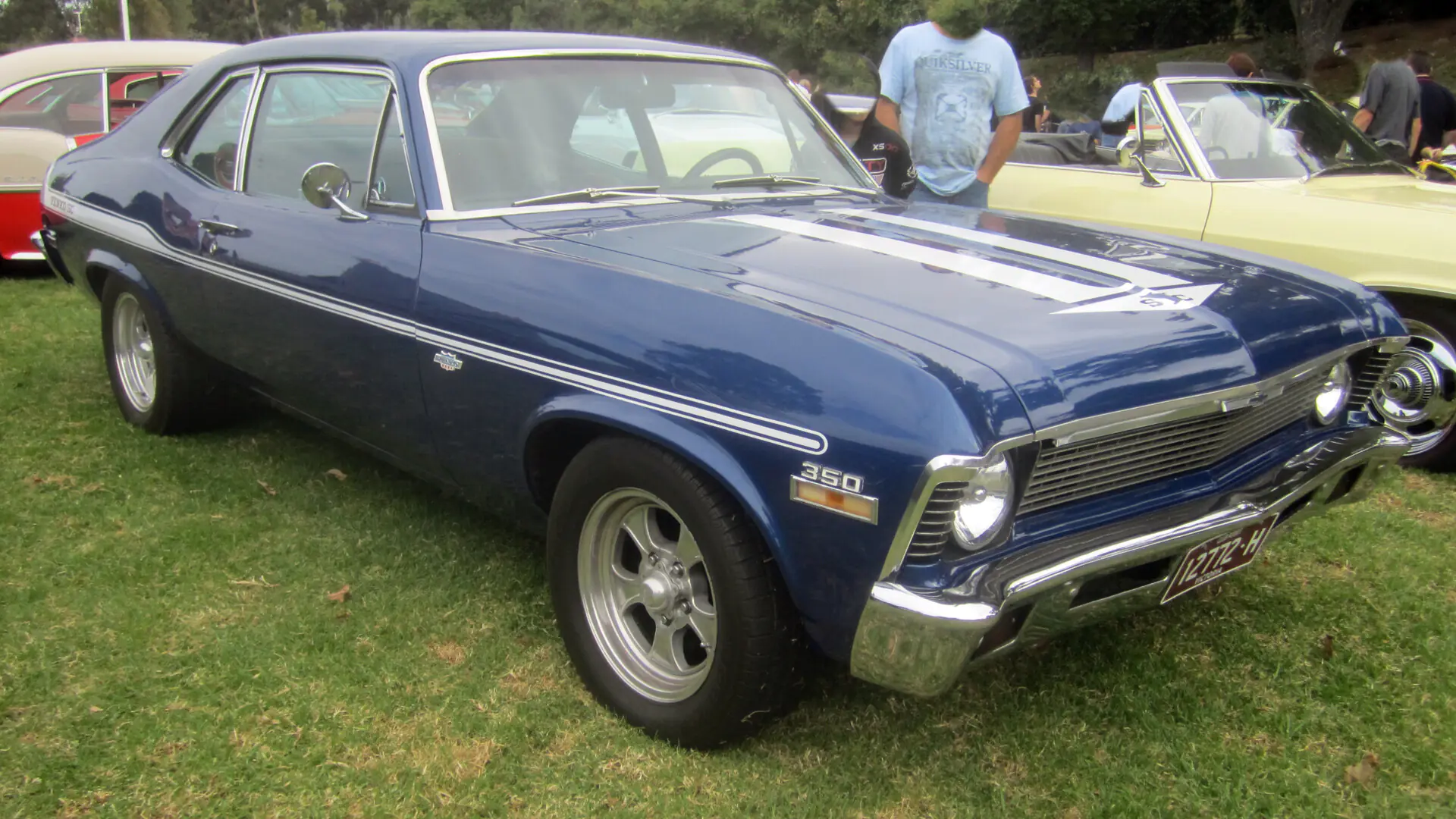
Mecum has not put an estimate on Lot S101. For a 1970 Chevrolet Nova Yenko Deuce, one of 175 built, that silence says less about price than about the question the car raises. Finished in Cortez Silver with black Yenko graphics and a Muncie M21 four-speed, the Nova is described in the Mecum lot listing as “re-bodied to factory specifications.” It crosses the block in Las Vegas on Saturday, Nov. 14.
That phrase deserves more scrutiny than the paint. A Deuce is a small-block car whose value rests on its paper trail, and a replacement body tests how much of a COPO car lives in the steel and how much lives in the record. Our view: the record has to carry the whole argument.
What a Deuce actually is
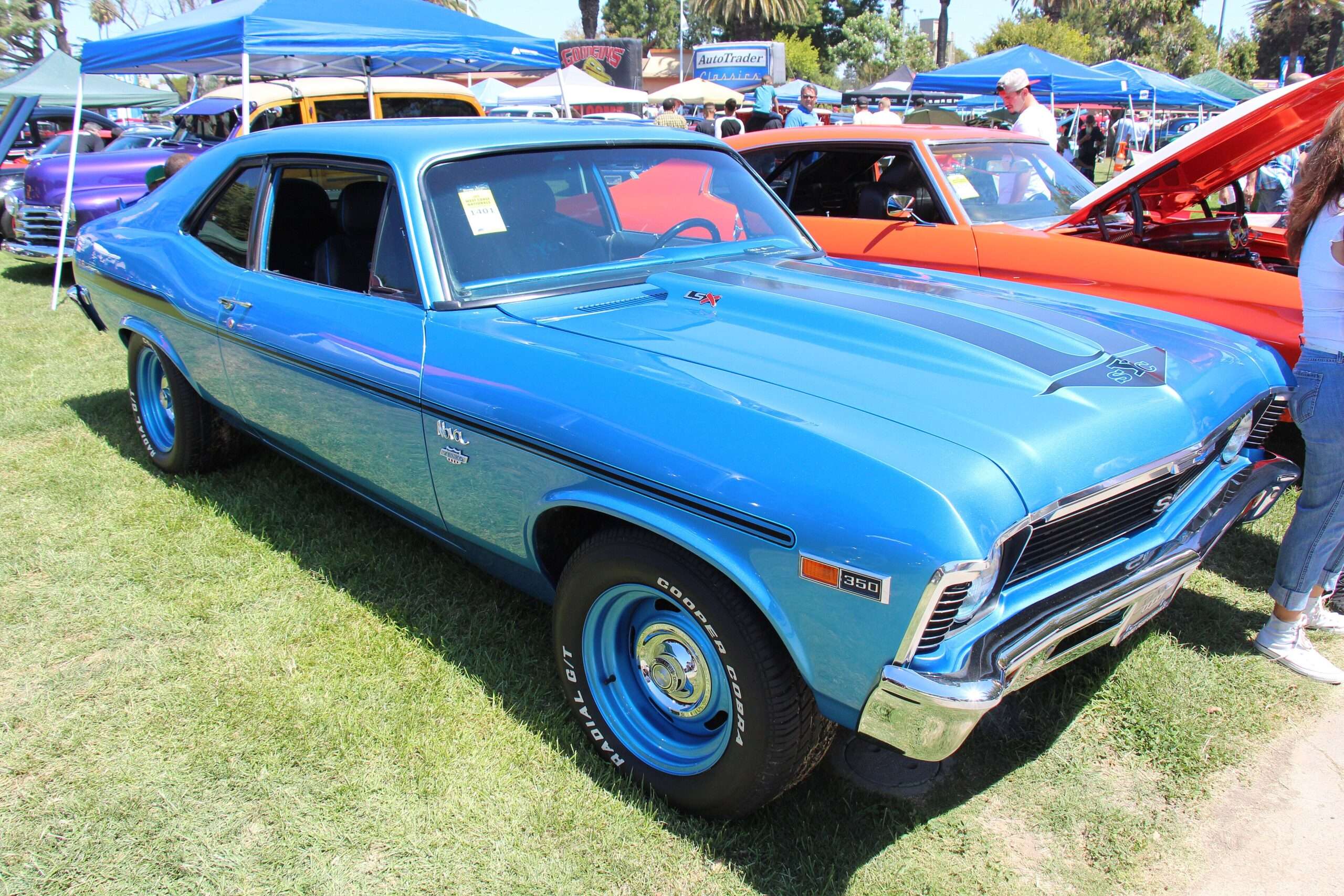
Don Yenko built his reputation on big-block Camaros, a story we trace in our guide to the Yenko Camaro. The 1970 Nova was a different answer to a different market. Insurance surcharges and tightening emissions rules were strangling big-block muscle cars, so Yenko persuaded Chevrolet to build Novas around the 350-cubic-inch LT1, the 360-horsepower small-block shared with the Z/28 Camaro and the Corvette, as the Audrain Automobile Museum explains. The cars were ordered through the COPO system with a 12-bolt Positraction rear, power front discs, heavier springs and sway bars, then finished at Yenko’s Canonsburg, Pennsylvania, dealership with stripes, badges and a hood-mounted tachometer.
The foundation was deliberately plain: a base Nova coupe, not an SS. Of the 175 built, 122 carried the four-speed, the configuration Lot S101 is reported to have. That plainness is the point. A Deuce is a sleeper in factory form, which means its identity rests on build records rather than on obvious visual cues.
What “re-bodied” does and does not tell you
A rotisserie restoration refinishes the shell the car left the factory with. A re-body replaces it. Mecum’s description, as reported, says the car was rebuilt to factory specification and refinished in its original color; what it does not settle is where the original shell went, what moved across to the new one, and who verified the transfer. Reported documentation includes a COPO Connection record, a letter of authenticity and a Yenko Vehicle Verification Certificate. Those are the right papers, but the date and scope of each matter more than their titles. A certificate written before the body swap describes a different object than one written after it.
The instinct is the same one we applied to a 1963 Nova SS, where the body tag told the real story. Serious bidders will want to know whether the replacement is a genuine 1970 Nova coupe shell, how the car’s identifying numbers were handled, and whether the engine, transmission and rear axle are the units the car wore when it left Canonsburg. None of that is knowable from outside the file, and none of it is a reason to dismiss the car. It is the reason the file is the lot.
The comparison set
The nearest benchmark is the car we covered when it sold: the award-winning Cranberry Red Deuce from the Ron and Sarah Jury collection, a Turbo-Hydramatic car with Concours Gold and AACA Grand National credentials and a 2024 Certificate of Authenticity, which RM Sotheby’s sold for $126,500. A four-speed car with 42,000 miles that was listed as highly original sold at Mecum Kissimmee in January 2025 for $151,250, according to auction-record data. Aggregator records also show a yellow Deuce that failed to sell at Mecum Indianapolis in 2021 with a high bid of $105,000, a reminder that this is a market where reserves are tested.
Those cars bring original-body credentials to the table. Lot S101 brings a better transmission than the Jury car and a different kind of risk. Our read is that the four-speed buys it attention and the re-body decides the discount, and that the room on Nov. 14 will show how wide that discount is.
What serious buyers should watch
Watch the first bids more than the last. Collectors who understand COPO cars will test the file early, and the pace of bidding will tell you whether the paperwork convinced them. A late rush from a buyer who wants a driving four-speed Deuce is a different signal than a slow climb that stalls below the comps. Either outcome is informative about how the market treats replacement bodies on rare factory-built cars.
A Yenko is a sequence of records that happens to have a car attached. On a COPO Nova, the steel is replaceable. The record is not.
The collector car market, every weekday morning.
Auction results, price moves and what’s crossing the block, read in four minutes. Free, from Modern Car Collector.
No spam, unsubscribe in one click. Or read more about the Brief.




 Kyle Matthews