

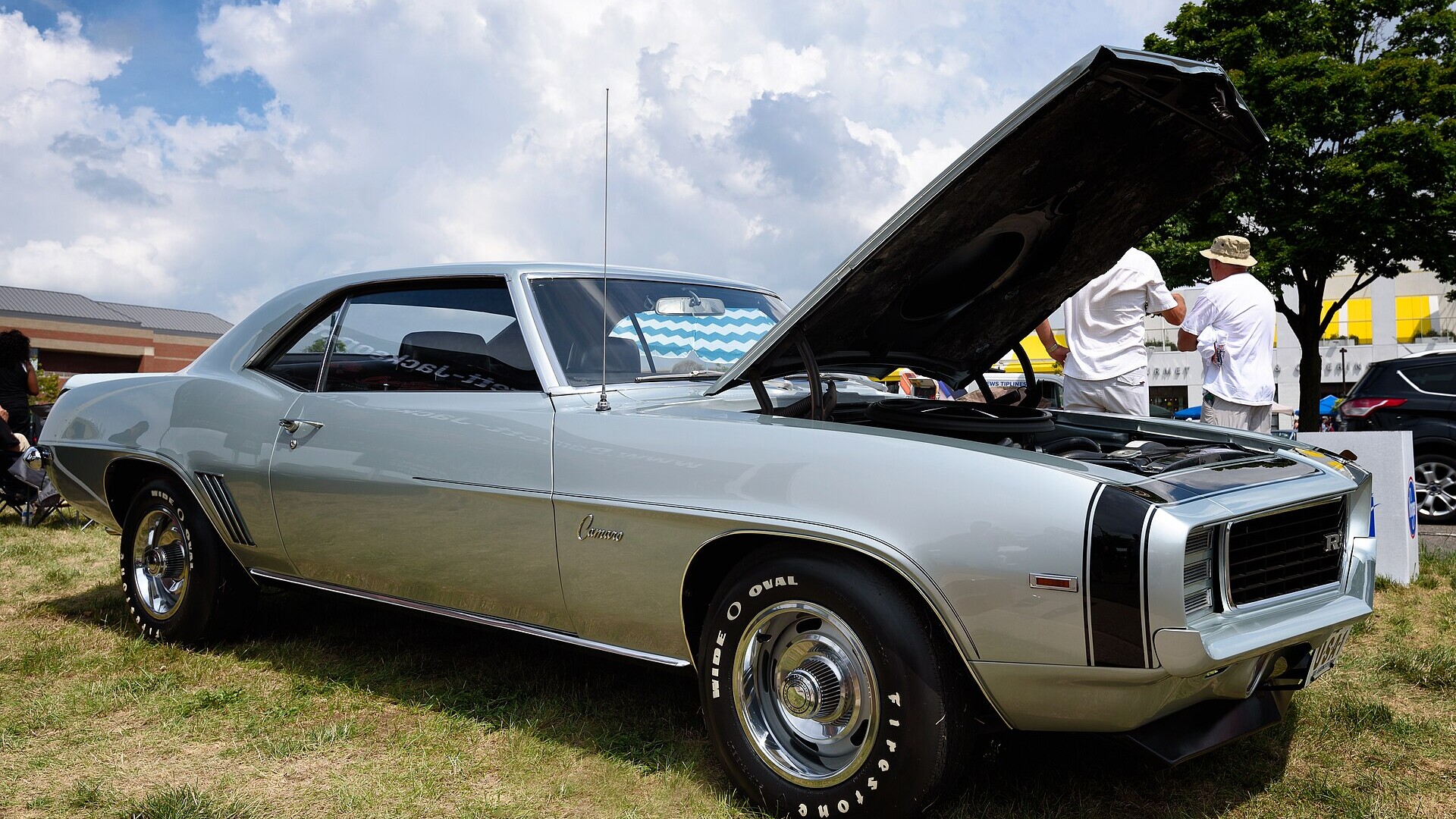
Sixty-nine production cars, one all-aluminum 427 and a factory rating that undersold the engine by a wide margin: the 1969 Camaro ZL1 is the rare muscle car whose value story is also an authenticity story. Below: the verifiable numbers, where sources contradict each other, and what separates a great ZL1 from a very expensive story.
1969 Camaro ZL1 spec sheet at a glance
| Item | Detail |
| Production | 69 production cars built under COPO 9560; Sports Car Market adds two prototypes. Fred Gibb Chevrolet ordered 50 and other dealers ordered 19. |
| Origin | Package conceived by drag racer Dick Harrell and ordered through Fred Gibb Chevrolet of La Harpe, Illinois, for NHRA Super Stock racing (Wikipedia). |
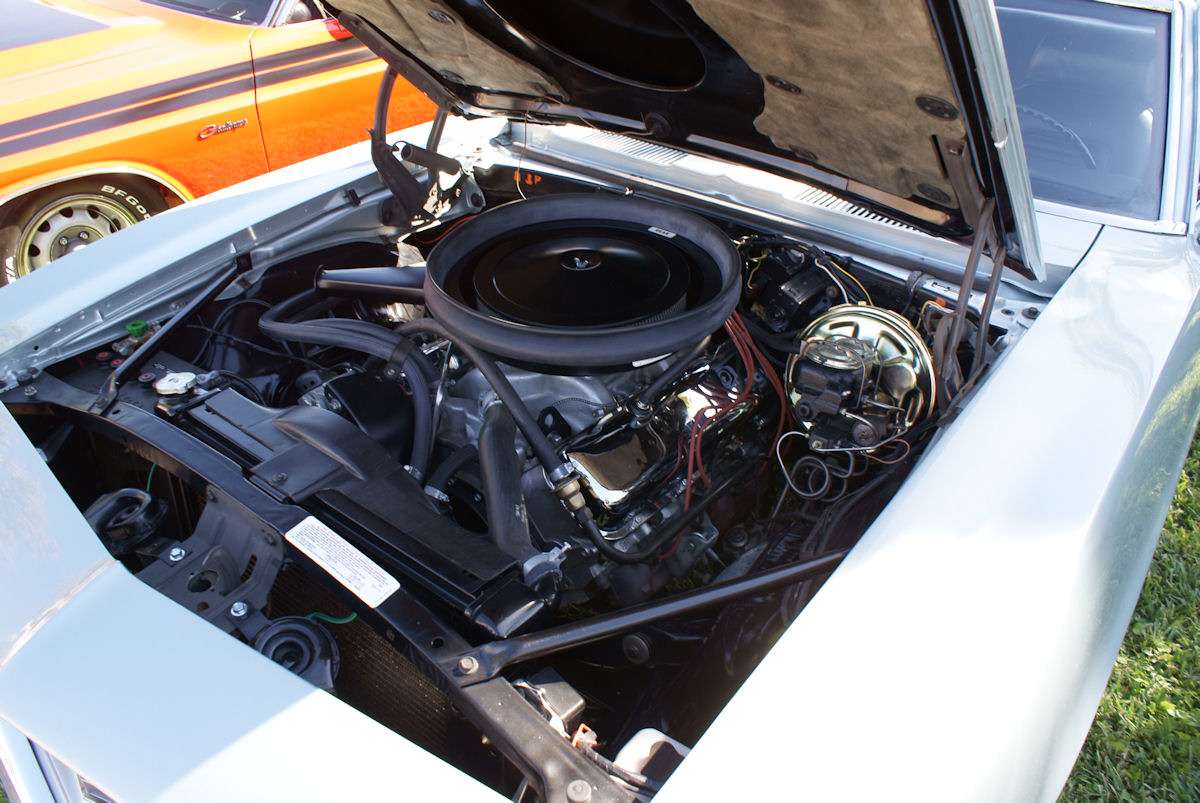
| Engine | All-aluminum 427 cu in (7.0 L) V8 with steel cylinder liners, L88-style heads and a single 780-cfm Holley four-barrel (Supercars.net). Each engine took 16 hours of hand assembly at Tonawanda (Wikipedia). |
| Rated output | 430 hp (SAE gross) at 5,200 rpm and 450 lb-ft at 4,400 rpm (Wikipedia). Real output is widely reported as well above 500 hp. |
| Compression | About 12:1; sources give both 12.0:1 and 12.5:1. |
| Transmission | Muncie four-speed manual. The M21 close-ratio and M22 “Rock Crusher” both appear on documented cars. |
| Rear axle | 12-bolt Positraction with 4.10:1 gears; one report says this was standard on all 69 cars (Racecar.com). |
| Equipment | Functional ZL2 cowl-induction hood, F41 suspension, heavy-duty front springs and brakes, heavy-duty radiator and transistorized ignition (Supercars.net, Sports Car Market). |
| Original price | The ZL1 option added $4,160 to the base price, for a total of roughly $7,300 (Sports Car Market). |
| VIN examples | Two documented cars carry VINs beginning 124379N6: #53 at 124379N634918 (Sports Car Market) and a Bonhams lot at 124379N610413. The N is GM’s Norwood, Ohio, plant code. |
| Number locations | VIN on the driver-side dash, visible under the windshield; engine number on the pad on the passenger side of the block, forward of the cylinder head (Sports Car Market). |
Identifying a real ZL1
Because the VIN records of all 69 cars are a matter of record, the checks that matter are the ones a clone cannot easily fake together:
- The COPO 9560 order trail and the car’s place in the known VIN records of all 69 cars, which Sports Car Market treats as the baseline for authenticity.
- The aluminum block, verified against the engine-pad number and the car’s build documentation.
- Paperwork of the period. One 2017 report on car #30 cited its original Manufacturer’s Statement of Origin and Protect-O-Plate (Racecar.com).
- Hardware that belongs: the functional cowl-induction hood and transistorized ignition.
Where the sources disagree
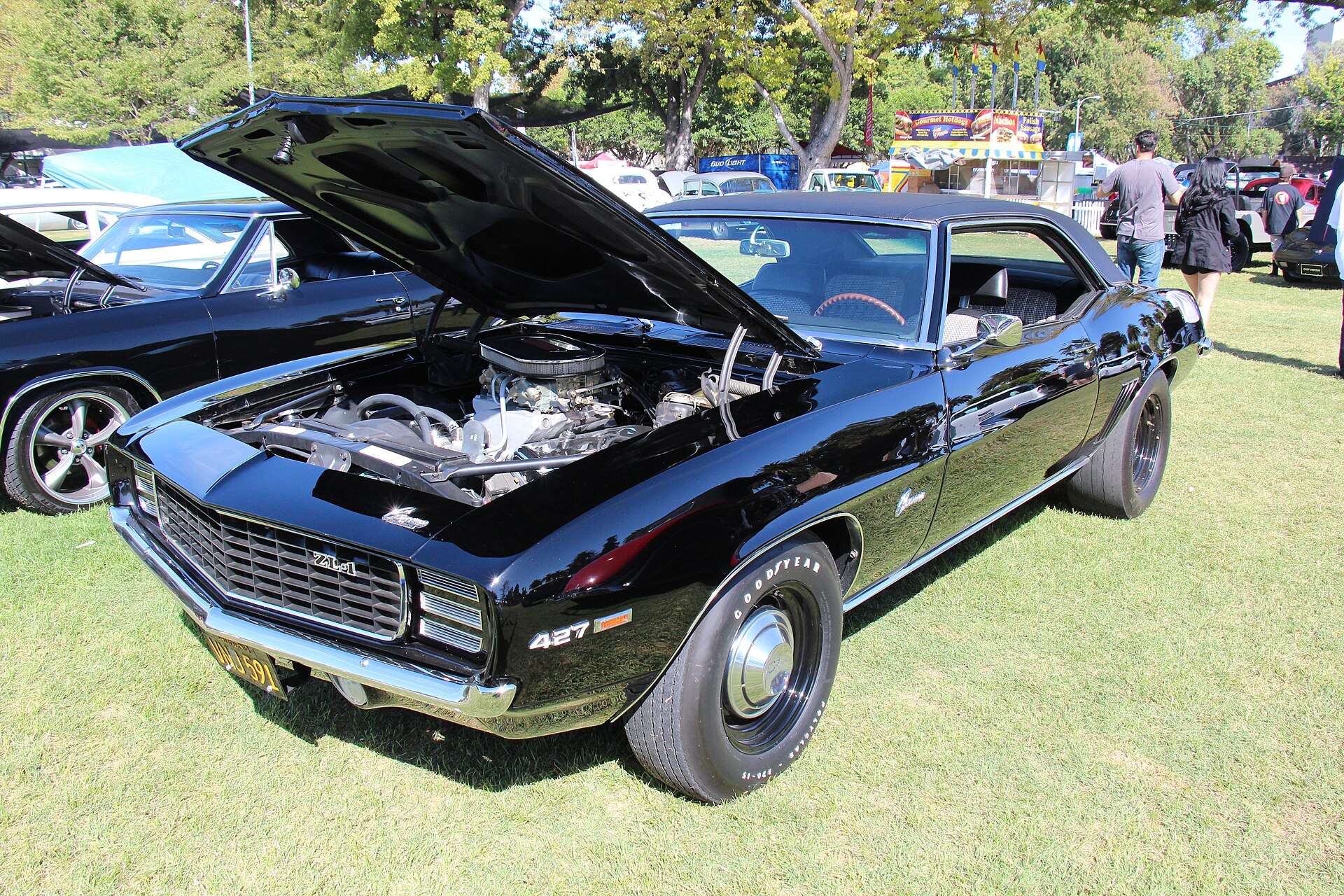
Spec sheets for rare cars inherit the errors of their sources, and this one is no exception. Published horsepower runs from the 430 rating to 500-plus and, on one dynamometer report, about 550. Compression is given as both 12.0:1 and 12.5:1. One report calls a chambered-exhaust car the only ZL1 built with that option, while Sports Car Market describes car #53 with chambered exhaust as well. Those conflicts do not change a car’s identity, but they are a reason to ask for documents instead of repeating a number from a listing.
Common weaknesses
The sources we reviewed do not catalog ZL1-specific mechanical failure patterns, and we will not invent any. The recurring risks in the record concern authenticity and engine originality:
- Tributes and clones. A December 2023 Barn Finds report on a restored aluminum-427 car described its VIN as bogus and the car as likely not a factory ZL1.
- Engine substitution. Car #59 ran an engine that was not numbers-matching until its owner located the original (GM Authority, citing Hagerty). Car #53 carries a correct replacement ZL1 block, per Sports Car Market.
- Competition history. The cars were built for NHRA Super Stock, so some were raced. Documented race history can add to a car’s story, but as with any competition car, undocumented use deserves a careful inspection.
Current value range
Public results in the record we reviewed span more than a decade:
- May 2011, Mecum Indianapolis: car #53 sold for $323,300 including premium (Sports Car Market).
- 2012, Barrett-Jackson Scottsdale: restored car #9 sold for $451,000 (Supercars.net).
- 2017: car #59 sold for $770,000, according to Hagerty as cited by GM Authority.
- January 2020, Barrett-Jackson Scottsdale: car #59, in Hugger Orange with chambered exhaust, sold for $1,094,500, a record for a ZL1 at auction at the time (GM Authority).
- May 16, 2026, Mecum: a ZL1 from Indianapolis sold for $1,430,000, according to Classic.com, which also lists a market benchmark of $894,749.
Reading these together, serious buyers should expect the high six figures to roughly $1.5 million for a documented car with its original engine, with the top of that range reserved for strong provenance, color and originality. That is our synthesis of public sales, not an appraisal or a Hagerty valuation, and these are different cars sold in different venues and conditions.
What separates a good example from an average one
- The original engine. GM Authority credits the return of car #59’s original engine for much of its move from $770,000 in 2017 to $1,094,500 in 2020. A correct replacement block is acceptable to many buyers, but it is a different asset.
- A documented chain. COPO order records, Manufacturer’s Statement of Origin, Protect-O-Plate and a clean title history separate a registry car from a story.
- Rarity within the rarity. Sports Car Market notes that car #53 is one of only three Dover White ZL1s with an M22 gearbox, and color and option combinations like that add to desirability.
- Provenance and use. Period photographs, time slips and a known ownership chain support a car’s value. Car #30 was reported in 2017 as retaining its factory engine and showing 328 miles after a 2004 restoration at 8.4 miles (Racecar.com).
- Correct restoration. Quality work on the right parts holds value, while a car that cannot document what was replaced is priced as an unknown.
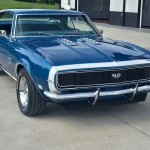
An average example, by contrast, is one whose block, paperwork or VIN trail leaves a question open. For related originality questions on other models, see our guides to the 1963 Corvette split-window engine stamp and the Boss 429 KK number, and our other spec sheets on the Plymouth Superbird and the 2005–2006 Ford GT. Further context on the muscle market is in our guide on whether pre-1973 American muscle is a good investment, our ranking of the most expensive Corvettes ever sold at auction and a recent big-block 1968 Camaro SS that crossed the block.
Would you pay ZL1 money for a car with a correct replacement block, or only for the one that left Tonawanda with its own engine?
Sources
- Sports Car Market, 1969 Chevrolet Camaro ZL-1 COPO Coupe profile (Mecum Indianapolis, May 2011)
- Supercars.net, 1969 Chevrolet Camaro ZL1 COPO 9560
- Wikipedia, Chevrolet Camaro (first generation)
- GM Authority, “1969 Chevrolet Camaro ZL-1 Sells For $1.1M At Auction, Setting Record,” January 21, 2020
- Classic.com, Chevrolet Camaro ZL-1 (1st gen) market page
- Racecar.com, “No. 30 of 69 Produced,” May 24, 2017
- Barn Finds, “Aluminum 427: 1969 Chevrolet Camaro ZL1,” December 8, 2023
The collector car market, every weekday morning.
Auction results, price moves and what’s crossing the block, read in four minutes. Free, from Modern Car Collector.
No spam, unsubscribe in one click. Or read more about the Brief.

 John Lloyd