
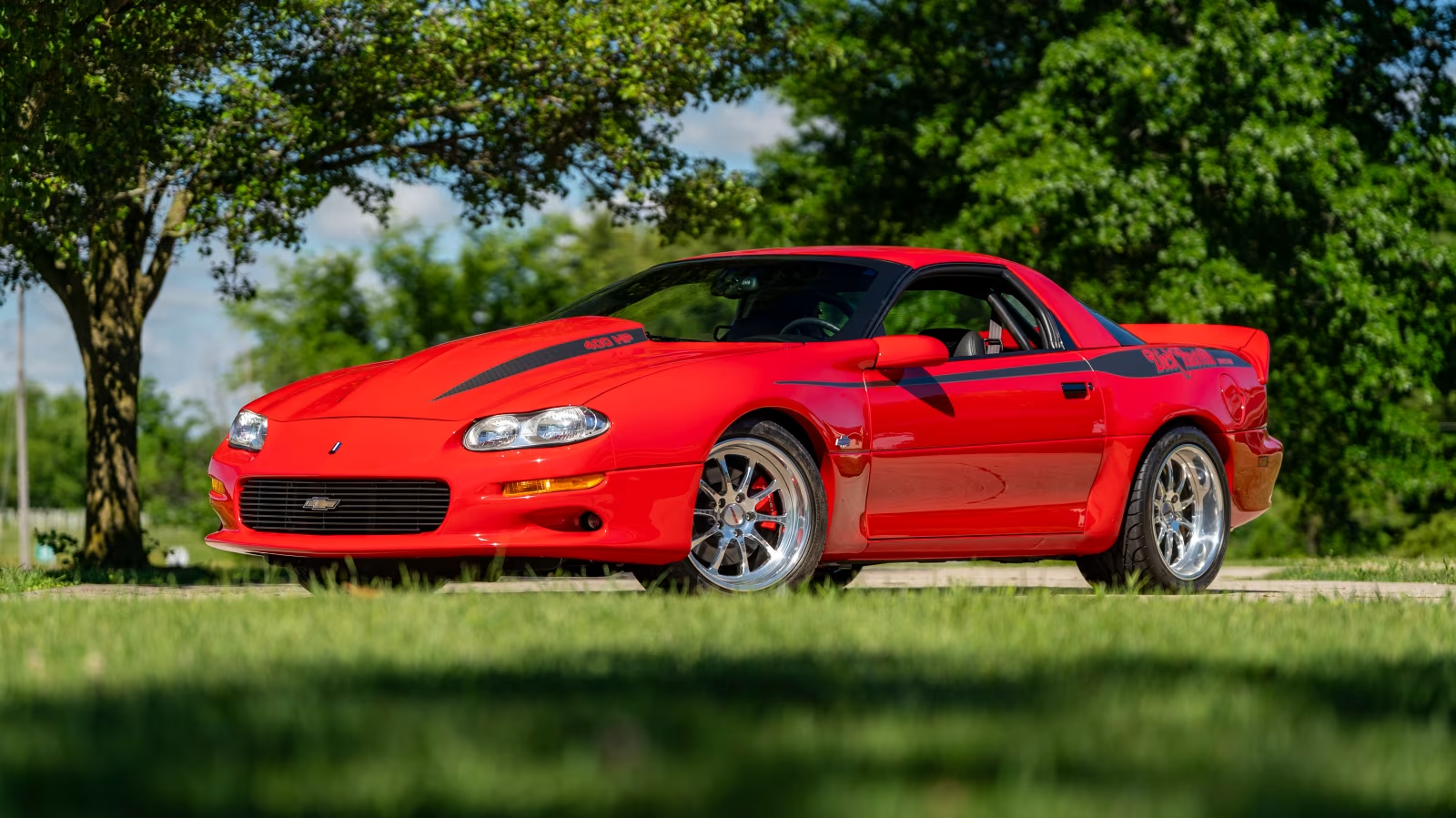
Certain cars earn their prices. Others earn something more valuable: a paper trail. The 2002 GMMG Dick Harrell Edition Camaro crossing the block at Mecum’s Harrisburg sale this month, chassis No. 9 of just 30 built, shows 146 miles and carries a level of chassis-specific documentation most modern muscle cars never receive. That distinction matters more than the $60,000-to-$80,000 estimate attached to it.
On the surface, this is a story about a low-mileage widebody Camaro built in the final days of the fourth-generation F-body. Look past the auction listing and the real story is about how a 30-car run of dealer-built tribute cars, honoring a drag racer most casual buyers have never heard of, developed the kind of chassis-by-chassis record keeping — an active owners’ registry, individually numbered door plates, a dealer letter of authenticity — that collectors typically associate with Shelby Mustangs and Yenko Camaros, not with aftermarket tribute builds. That infrastructure, not the hammer price, is what separates a genuine collector car from merely an expensive one.
Richard “Dick” Harrell earned the nickname “Mr. Chevrolet” the hard way. Born in Phoenix in 1932, Harrell became one of the most recognizable match-race and funny-car drivers of the 1960s, campaigning big-block Chevrolets for Nickey Chevrolet in Chicago before becoming closely associated with the same dealer-tuner network that produced Don Yenko’s cars. He died on September 12, 1971, in a fuel funny-car crash at Toronto International Raceway — a detail that matters because it means Harrell never saw his name attached to a modern car. Everything built in his honor came from other people’s memory of what he represented: a Chevrolet performance culture built by dealers and independent tuners rather than by the factory itself.
That culture is exactly what GMMG Inc. and Berger Chevrolet — the Grand Rapids, Michigan dealership with its own long history of high-performance special orders — set out to revive in 2002. Chevrolet had just discontinued the Camaro and Firebird after that model year, and rather than let the F-body disappear quietly, the two companies developed a send-off edition built around a widebody kit, hood, and front fascia lifted directly from the Sunoco-liveried Penske/Donohue tribute Camaro that General Motors had unveiled at the Woodward Dream Cruise weeks earlier. The result was not a styling exercise. Underneath the flares sat Corvette Z06 front brakes, Eibach lowering springs, Koni adjustable shocks, a chambered exhaust, and a Hurst short-throw shifter — a specification list assembled by people who intended these cars to be driven hard, not simply displayed.
Thirty numbered Dick Harrell Edition Camaros were built, alongside a small handful of prototypes and one convertible that never entered the numbered series. That figure alone would make the car scarce. What makes it more interesting to a serious buyer is that the thirty cars are not identical. Several received 427-cubic-inch stroker engines built well beyond factory output; others, including No. 9 offered at Harrisburg, retained the standard 5.7-liter LS6 V-8. Most left GMMG on Fikse Profil13 wheels, but No. 9 is the only car in the series built on staggered Forgeline 18×11 and 18×12 wheels. In a production run this small, that kind of chassis-specific variation is not a footnote — it is the entire basis for how these cars should be evaluated, and it echoes a lesson collectors have already learned from modern COPO Camaro continuation carsrs: no two low-volume specials are automatically alike, and documentation has to do the work that a VIN decoder can’t.
That documentation now exists in a form usually reserved for far older and more expensive collector cars. The GMMG Registry tracks each of the thirty Dick Harrell Camaros individually, by serial number, current owner, and history, in the same spirit as a Ferrari or Shelby registry. This particular chassis carries a Berger Chevrolet letter of authenticity, its original GMMG-numbered door jamb plate, a Dick Harrell dash plaque, and a clean CarFax showing 146 miles from new. For a car built two decades ago by a dealership and an aftermarket shop rather than a storied coachbuilder, that level of chassis-specific record keeping is unusual — and it is precisely what allows a tribute car like this to trade with the confidence of a documented original.
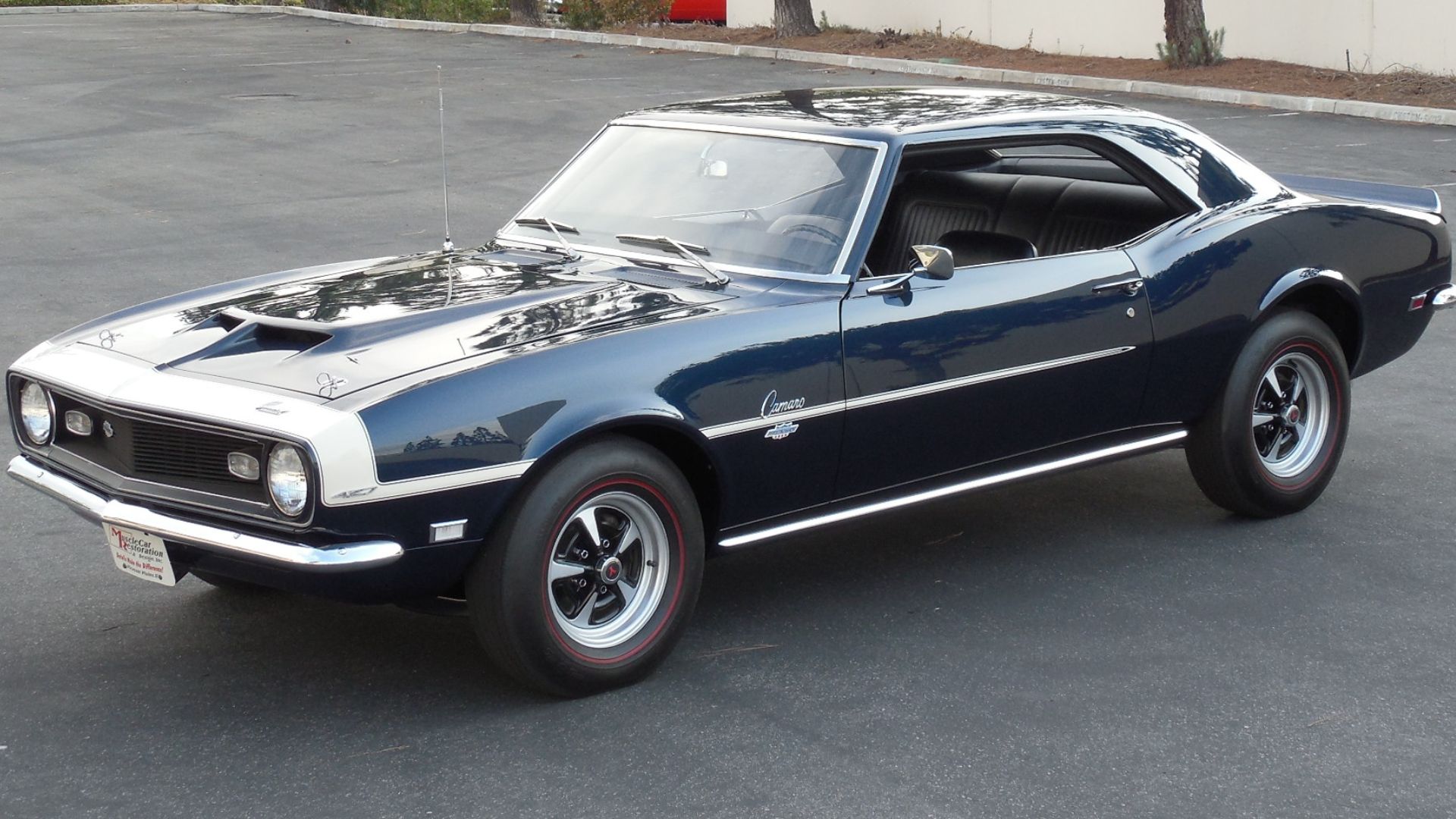
Mecum is offering the car at no reserve against a $60,000-to-$80,000 estimate, a range that sits well above a stock LS1 Camaro of the same vintage and comfortably alongside results for other documented, small-batch performance specials. Modern Car Collector has tracked that pattern before: a numbers-matching 1969 Yenko Camaro built a strong case for verified provenance, a trio of Yenko cars anchored a recent Kissimmee sale, and the Hendrick Motorsports 40th Anniversary ZL1 showed that modern limited-production Camaros can command real premiums when the story behind them is airtight. It also lines up with what our own depreciation study comparing Camaro and Firebird values found: cars with a clear, verifiable story hold their ground far better than cars that merely share a nameplate.
None of this makes every tribute car a future blue-chip. Plenty of homage builds exist with no registry, no factory-adjacent paperwork, and no meaningful production discipline behind them, and they trade accordingly. What makes the GMMG Dick Harrell Camaro different is that it borrowed the one thing that actually built the Yenko and Nickey legends in the first place: a dealer willing to put its name behind a small, accountable production run. Collectors rarely pay a premium for a widebody kit or a bigger engine alone. They pay for a documented moment in a specific dealer’s history — and on that measure, No. 9 of 30 has earned its place in the conversation, no reserve required.
The collector car market, every weekday morning.
Auction results, price moves and what’s crossing the block, read in four minutes. Free, from Modern Car Collector.
No spam, unsubscribe in one click. Or read more about the Brief.

 Eve Nowell