
Every restomod arrives with an argument to settle, and it is almost never about horsepower. It is about what the build cost the world. Strip a matching-numbers car and you have converted an artifact into a toy. Strip the right car and you have rescued something the factory never bothered to make interesting in the first place.
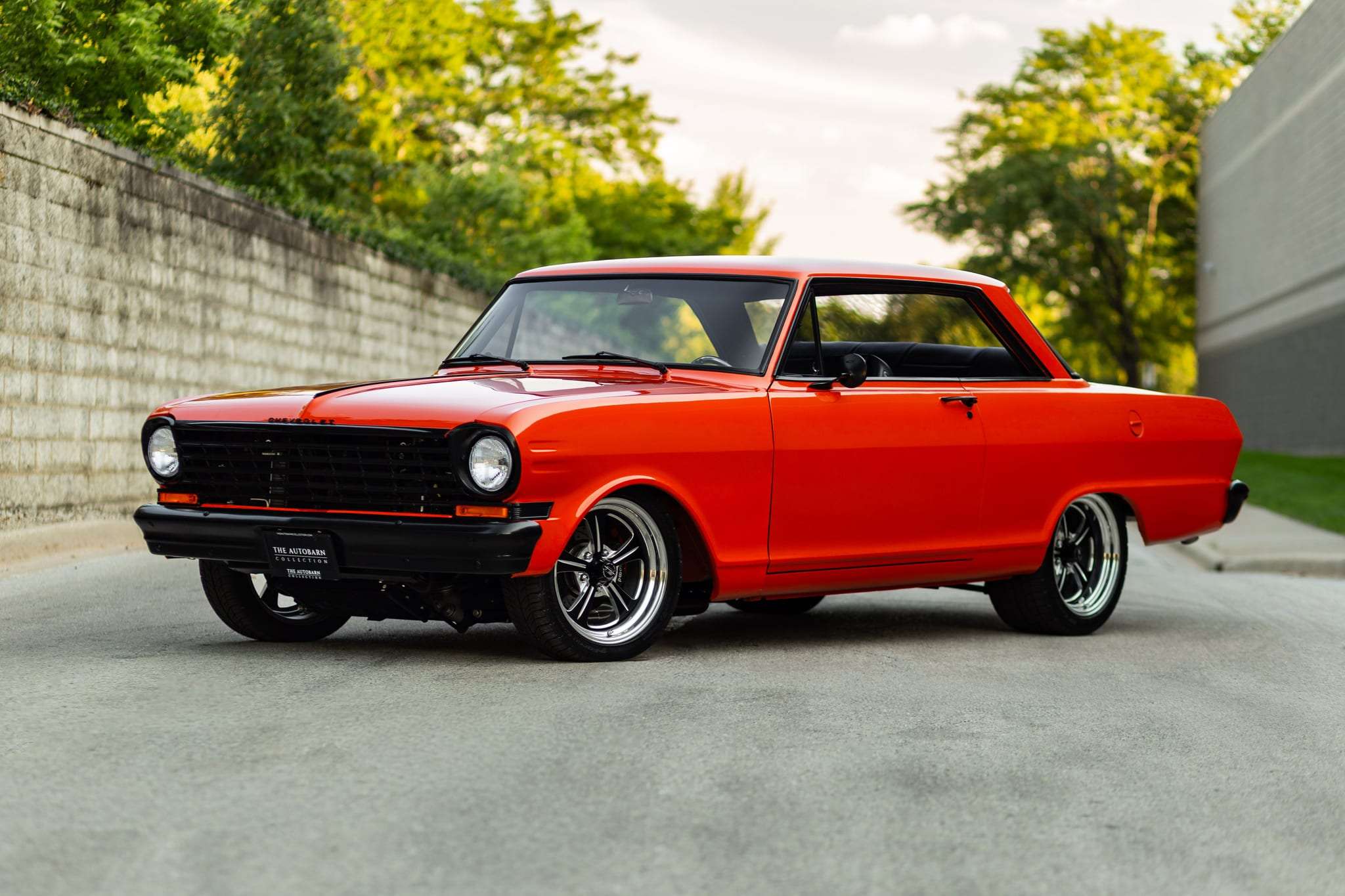
The most useful piece of information in this 1963 Chevrolet Chevy II Nova SS Sport Coupe now on Bring a Trailer is not the 809 horsepower. It is four characters on a Fisher body tag: F-M-Z. Tinted windshield, Powerglide, Super Sport. That tag is the whole story, and it is the reason this car deserved exactly what happened to it.
What a 1963 Nova SS Actually Was
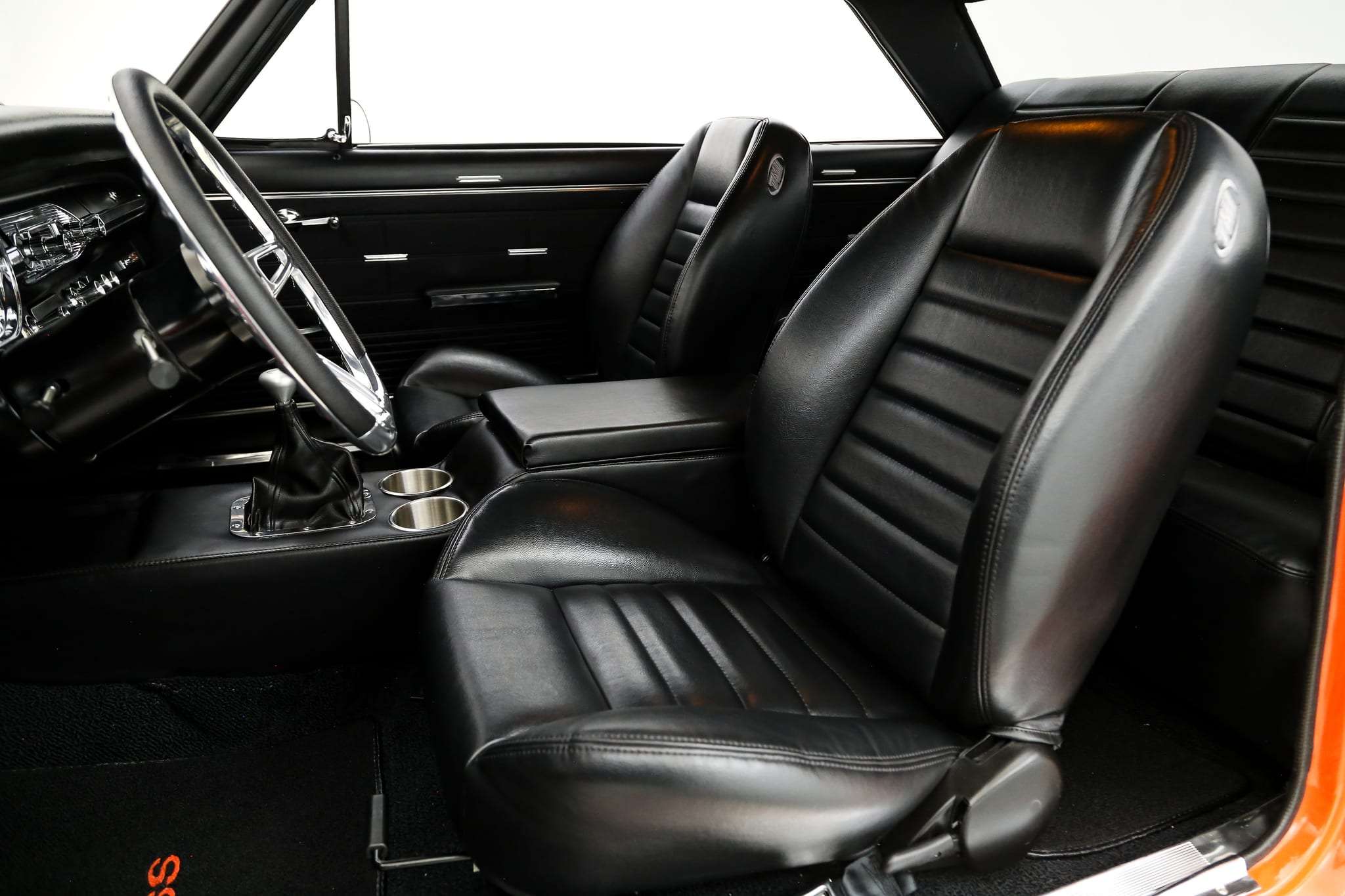
Collectors who came to the hobby through the 1968–1972 Nova tend to assume the SS badge has always meant something mechanical. On a 1963 car, it did not. The Super Sport arrived that year as an option package on the top-line Nova 400 Sport Coupe, priced at roughly $161. For the money, a buyer received bucket seats, a deluxe steering wheel, upgraded instrumentation, wider bodyside moldings, aluminized rear trim, finned wheel covers, and badges on the quarters and deck lid.
What the buyer did not receive was an engine. Chevrolet offered exactly two powerplants in the 1963 Chevy II: a 153-cubic-inch four rated at 90 horsepower and a 194-cubic-inch six rated at 120. There was no factory V8 anywhere in the catalog. The 283 did not appear until 1964, when the SS also graduated from option package to standalone model. For its first two years, the Chevy II was a sensible economy compact wearing an occasional costume.
This particular car’s tag confirms it in plain language. Style 63-0437, a two-door Sport Coupe built in the fourth week of January at Norwood, Ohio. Trim 740, blue vinyl with buckets. Paint 959, Ermine White over Silver Blue. Accessory codes for a tinted windshield, an M35 Powerglide, and the Super Sport package. A two-speed automatic behind a 120-horsepower six, dressed for a night it was never equipped to attend.
The Permission Slip in the Body Tag
Here is where the analysis turns. Originality is only worth protecting when the factory gave you something worth protecting. A documented 1963 Powerglide six-cylinder Nova SS in unrestored condition is a pleasant, slow, historically minor automobile. Preserved perfectly, it is a five-figure car with a narrow audience and thin liquidity. There is no provenance to destroy, no rare drivetrain to orphan, no numbers-matching premium to forfeit.
That is not a knock on the car. It is a clear-eyed reading of what the factory built, and it is the single most important question a buyer should ask before writing a check on any restomod. The builds that age badly are the ones that consumed something scarce. This one consumed a Powerglide.
There is a second, subtler value in that tag, and the market consistently underrates it. A great many cars advertised as Nova SS restomods began life as 300-series cars with badges added somewhere along the way. Documentation that the shell actually left Norwood as an SS does not add performance, but it removes the clone discount and it removes the argument. In the modified market, where nothing else can be authenticated, the one thing that can be verified carries disproportionate weight. We saw the same dynamic in a restored 1962 Chevy II Nova convertible fitted with modern V8 power, where the underlying car’s identity did more work than the drivetrain.
Reading the Build Sheet Like an Appraiser
Appraising a build means reading the parts list for intent rather than for total. Judged that way, the specification here is disciplined in the ways that matter and conventional in the ways that do not.
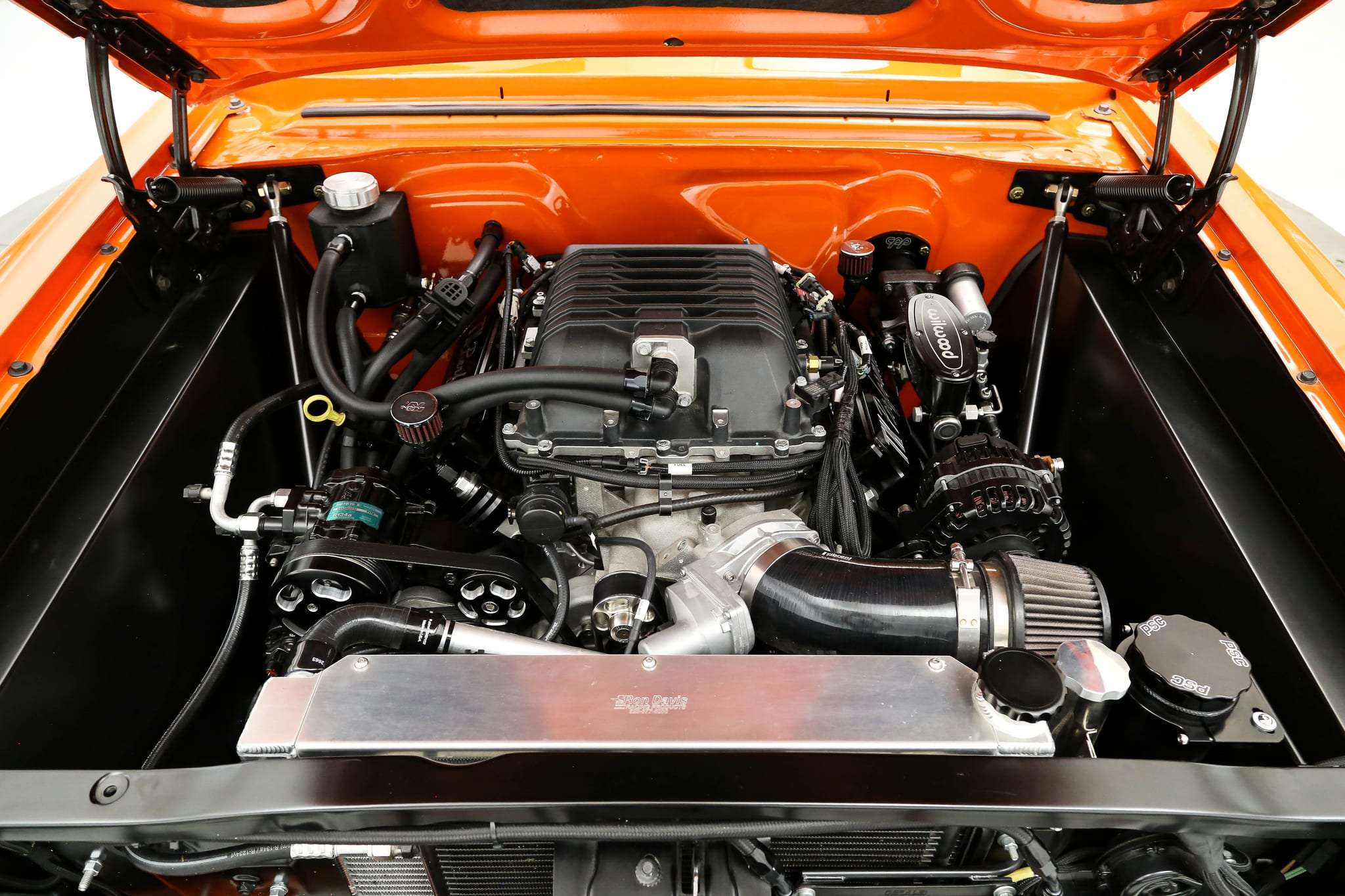
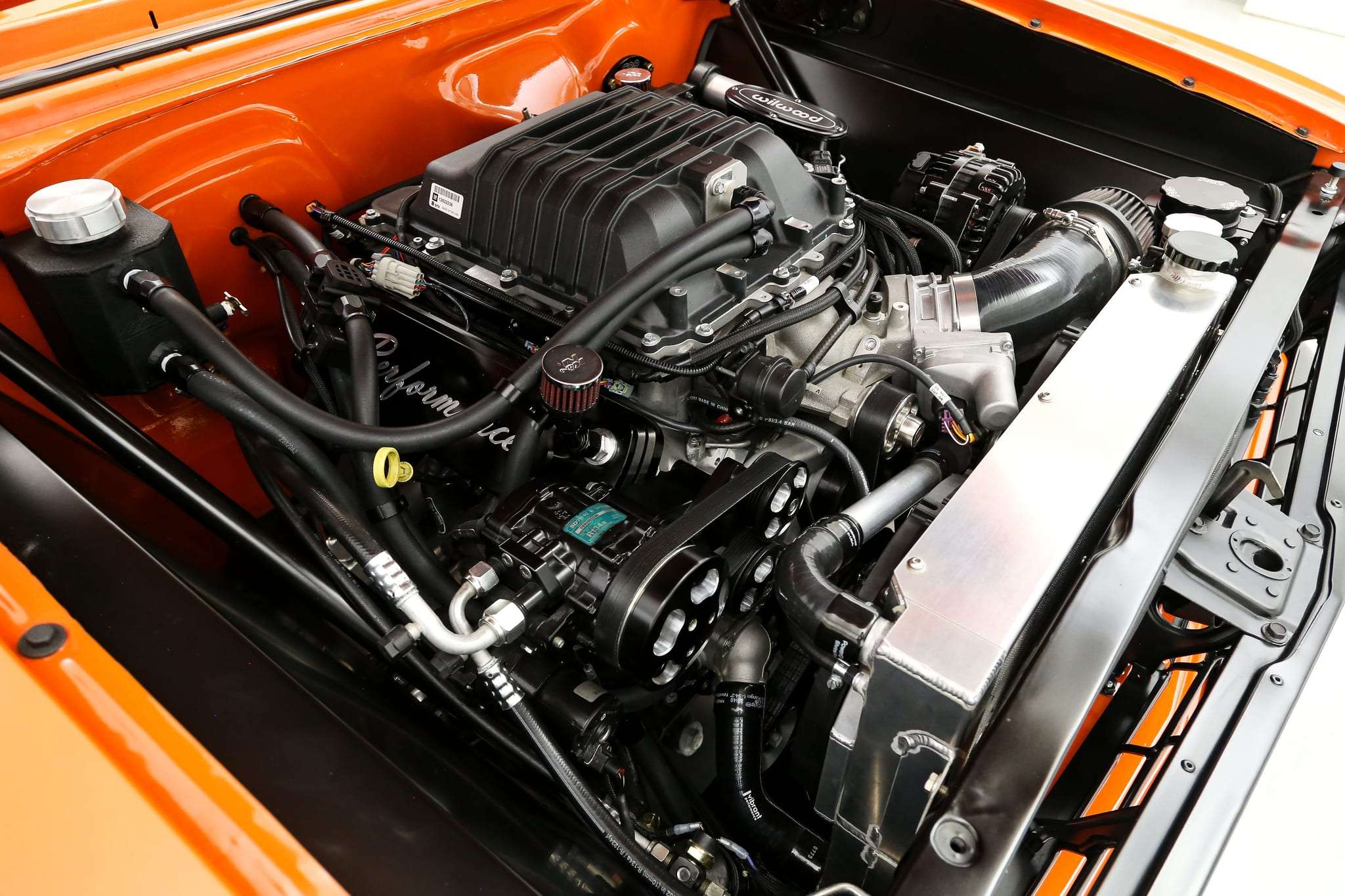
The engine is the headline and it is a serious piece. Wegner Automotive of Markesan, Wisconsin assembled the supercharged 376ci LSA around billet steel main caps, a forged eight-bolt crankshaft, Wegner I-beam rods, Mahle supercharger-specification pistons, CNC-ported LS3 heads, and ARP head studs, with a Holley Terminator X managing it. The dyno sheet in the gallery reports 809 horsepower and 748 lb-ft. Wegner is not a mail-order label; it is a shop with real credibility in the pro-touring and racing worlds, and its name on the engine is a meaningful data point.
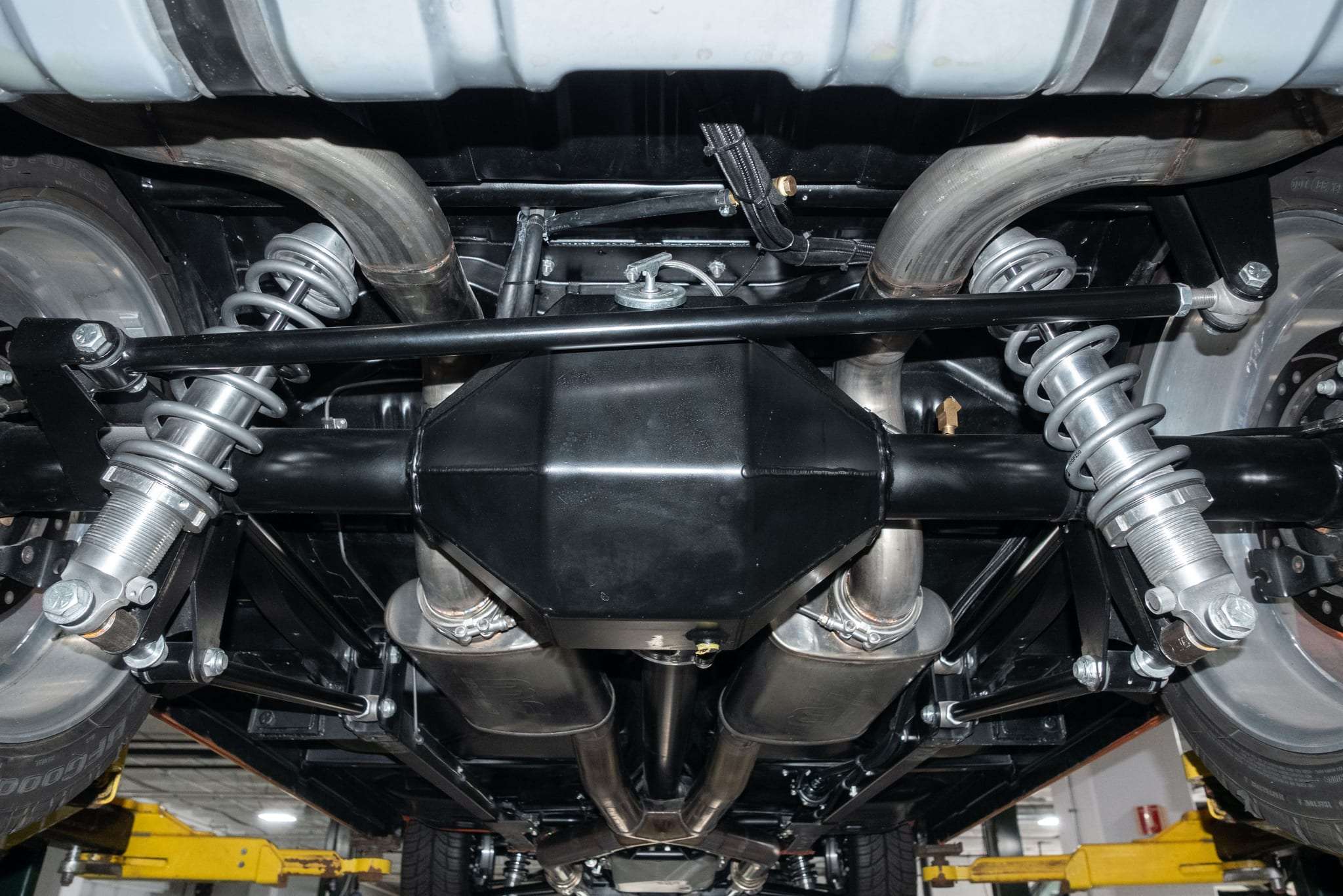
The driveline behind it was specified by someone who understood the arithmetic. A Level 5 4L80E with a PTC 10-inch converter is the truck-derived, brutally durable answer rather than the fashionable one, and a fabricated nine-inch with a Moser center section, 3.50 gears, a Wavetrac torque-biasing differential, and Strange axles is correctly sized for 748 lb-ft. Nothing in that combination is exotic. All of it is survivable, which is the harder achievement.
Pay attention to the wheels, because they are the most revealing detail on the car. Forged Billet Specialties measuring 17 inches, wrapped in 215/45 and 275/40 BFGoodrich g-Force Comp-2 all-seasons. A 2015-vintage build of this ambition would have worn 19s and 20s on summer rubber. Seventeens on all-seasons are a driver’s choice, and they signal a car meant to be used rather than trailered. The rest of it agrees: hydroboosted Wilwood four-piston brakes on 11-inch drilled and slotted rotors, Vintage Air climate control, Lizard Skin and X-Mat insulation, Detroit Speed Select-a-Speed wipers, and Holley RetroBright LED headlights. This was assembled to cover distance.
The metalwork deserves equal weight and usually gets none. The body was media-blasted and epoxy-primed before receiving a replacement trunk floor, firewall, fenders, quarter panels, and floor pans, with in-process photographs included in the gallery. Buyers routinely pay for paint and ignore what is underneath it. On an early Chevy II — a unibody compact with a well-earned reputation for rot at the cowl, floors, and rear frame rails — the sheet metal work is the expensive, invisible part of the build and the part that determines whether the car is sound in fifteen years.
The Missing Line on the Spec Sheet
Now the observation that should shape any bid. The listing names the engine builder. It does not name the shop that built the car.
That absence is the most consequential fact in the entire presentation, because in the restomod market the builder’s name is the provenance. Original cars carry history, documentation, and ownership chains. Modified cars cannot. What replaces them is a signature. A Ringbrothers car, a Roadster Shop car, a Detroit Speed or Schwartz Performance or Timeless Kustoms car resells against a reputation, a body of prior work, a service relationship, and a buyer pool that already knows what the shop’s cars drive like. That signature commands a substantial premium, and it is the only durable form of provenance the modified market has managed to invent.
The chassis architecture points the same direction. A Heidts front subframe and four-link rear with Viking coilovers, combined with Detroit Speed mini-tubs, is a capable mixed-catalog assembly rather than an integrated chassis from a single engineering house. Both approaches can produce an excellent car. Only one of them appraises with a name attached. That is a pricing distinction, not a quality judgment, and buyers should hold the two apart in their heads.
What the Market Is Actually Telling You
Bidding stood at $51,000 with three days remaining as this was written, and the number is less interesting than the structure behind it. As we noted in this week’s market brief, the 2026 collector market is narrowing rather than softening. Capital is concentrating in cars with unquestionable provenance and complete documentation, while everything else is being asked to justify itself. Builds are still clearing real money in no-reserve rooms. That is not the same as builds holding value on resale.
A specification like this one — a Wegner engine, a full metal restoration, premium catalog underpinnings, and a fresh 2025 completion — represents a sum of receipts that runs well into six figures. Bidding at this level, whatever the final number, is unlikely to approach it. That gap is not a failure of the car. It is the standing condition of the modified market, and it has held for a decade: the second owner of a restomod buys the labor at a discount the first owner pays for in full.
The dynamic is not unique to Chevrolets. We made a related point about the Jensen Interceptor GTX and what a heritage name is actually worth, and the same arithmetic governed an LS2-swapped 1959 El Camino that showed where the middle of the collector market is really heading. The pattern holds across marques and price points. Builders capture craft value. Buyers capture it back on the secondary market. It is worth noting that the exception proves the rule: a SEMA-debuted 638-hp 1963 Corvette split-window restomod carries a show pedigree and a public build history that this car, however well executed, does not.
Supply matters here too. Early Chevy II customs are not scarce. We have covered two custom Novas heading to Mecum Houston, a custom 1966 Nova wagon, and a 1964 Nova custom shown alongside a genuine Chevelle LS6 within the past year alone. The platform is abundant, the parts catalog is deep, and competent builds appear constantly. Abundance is precisely why execution and identity have to do the differentiating.
What Serious Buyers Should Watch
Four items deserve attention before the hammer falls on Lot #263,521.
- Shakedown miles. The digital odometer shows roughly 1,600 miles, all accumulated after completion. On an 809-horsepower build, that is enough to have surfaced the obvious faults and not enough to have proven the cooling, fuel, and transmission packages over a full summer. Budget for sorting.
- The title notation. The Illinois title reads “mileage not required.” On a 1963 car this is routine — vehicles of this age are exempt from federal odometer disclosure — and it should not be confused with a branded or problematic title.
- The paperwork that travels. A build sheet accompanies the car. Ask also for dyno documentation, component invoices, alignment specifications, and the tune file. On a modified car the receipt file is the closest thing to a history file, and it is exactly what the next buyer will ask you for.
- Insurance and coverage. Agreed-value policies on an unnamed-builder car are written against receipts rather than reputation. Assemble that file before you need it, not after.
The Bottom Line
This is a well-chosen platform, a well-specified build, and an honestly presented car. It will be quicker than almost anything on the show field and it will cross a state without drama. For a buyer who wants a usable, documented, seriously fast early Chevy II and who is buying to keep rather than to trade, the economics of the modified market are working in their favor rather than against them.
What it will not be is an appreciating asset, and nothing in the specification pretends otherwise. That distinction is the whole discipline of buying builds. A documented L71 427/435 Corvette is an investment with a driving experience attached. A car like this one is a driving experience with a receipt file attached. Both are legitimate. Confusing them is how collectors get hurt.
The 1963 Nova SS spent its first sixty years as a costume without a character. It finally has the engine the badge always implied. That the factory never offered one is not a footnote to this build — it is the justification for it.
The auction for this 1963 Chevrolet Chevy II Nova SS ends September 17. Full photography, the seller-provided build sheet, and dyno documentation are available on the Bring a Trailer listing.
The collector car market, every weekday morning.
Auction results, price moves and what’s crossing the block, read in four minutes. Free, from Modern Car Collector.
No spam, unsubscribe in one click. Or read more about the Brief.

 Shawn Henry
  Kyle Matthews
  Eve Nowell