

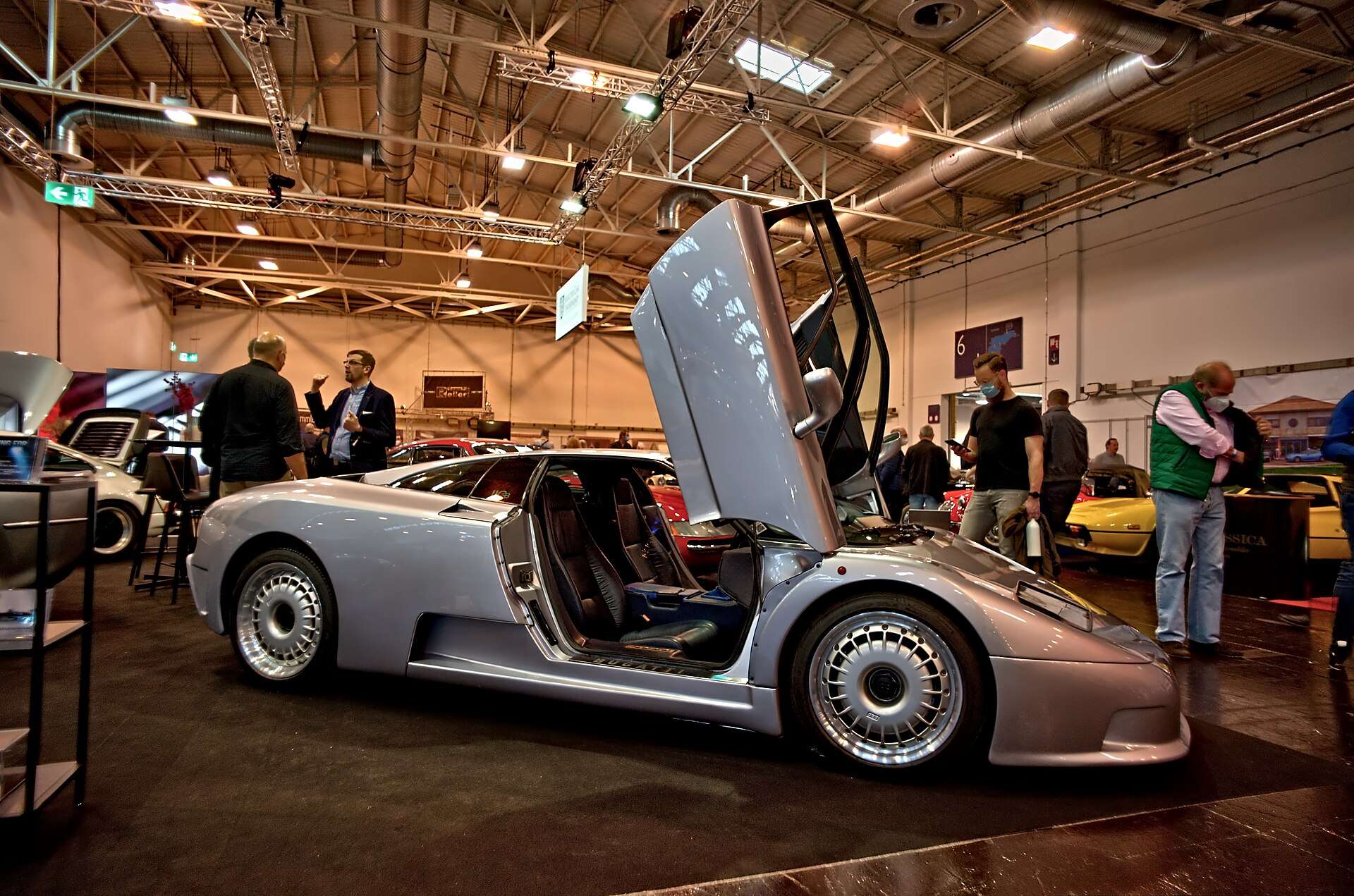
On 15 September 1881, Ettore Bugatti was born in Milan. On 15 September 1991 — his 110th birthday, to the day — a consortium led by Italian entrepreneur Romano Artioli presented a car named for the anniversary itself: the Bugatti EB110. It was the most technically ambitious road car in the world, and within four years it had bankrupted the company that built it.
Thirty-five years on, the EB110 is a seven-figure blue-chip asset. That rehabilitation is a familiar story. The more useful story for collectors is what has happened inside the model over the last four years: series-production cars have gone broadly flat, while a single documented factory prototype nearly doubled. The EB110 market has stopped paying for the car and started paying for the file that comes with it.
What happened on 15 September 1991
Artioli bought the dormant Bugatti trademark in 1987 and built a new factory at Campogalliano, outside Modena — a deliberately extravagant facility whose blue development building, the Fabbrica Blu, was the symbolic heart of the operation. The launch was staged to match. Roughly 2,000 guests were hosted across a two-day programme built around the Grande Arche de la Défense in Paris and a gala at Versailles, and an EB110 was run down the Champs-Élysées. A second presentation was held at Molsheim in Alsace, the site of Ettore Bugatti’s original works.
Sources split on which day carried which event — some accounts place the Défense presentation on the 14th — but Bugatti itself dates the unveiling to 15 September, and the reason is the entire point of the exercise. The car was called EB110 because it launched on the 110th anniversary of the founder’s birth. Artioli was not selling a new supercar. He was selling continuity with a marque that had been dead as a car manufacturer since 1963, and the calendar was the argument.
That is worth holding onto, because it explains the car’s later market problem. The EB110 arrived carrying a name it had to justify, in a market about to collapse.
The engineering had no precedent, and no descendant
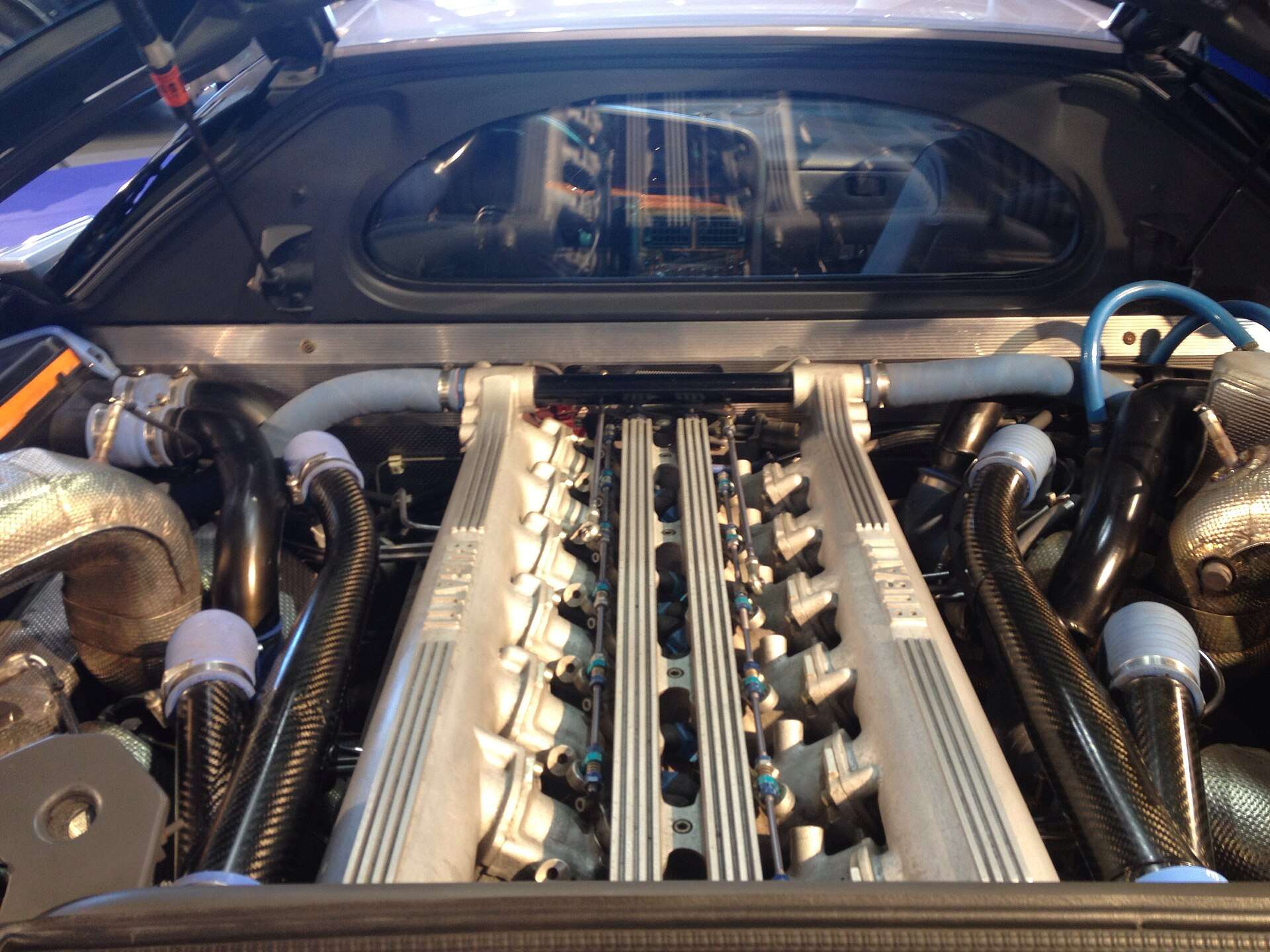
The specification still reads strangely. A 3.5-litre V12 — small for the class, deliberately — with five valves per cylinder for sixty valves in total, four intercooled turbochargers, dry-sump lubrication and an 8,250 rpm limit. Output was 560 PS (553 hp) in the GT and 612 PS (603 hp) in the Super Sport. Drive went through a six-speed manual to all four wheels via a viscous centre coupling with a rear limited-slip differential and a rearward 27:73 torque split.
Underneath was the genuinely radical part: a carbon-composite monocoque weighing about 125 kg, supplied by the French aerospace group Aérospatiale. Bugatti describes it as the first carbon chassis in a road-going production car. The nuance collectors should know is that the production structure was a compromise — carbon skins bonded to an aluminium honeycomb core, rather than the full carbon tub originally intended. It was still years ahead of anything else on sale, and it is the single hardest thing to assess on a car of this age.
Performance was period-leading: roughly 3.2 seconds to 100 km/h and a 351 km/h top speed for the Super Sport, which stood as a production-car record. But the EB110 was never really about the numbers, and neither is its market today — a pattern we have written about in the context of how little raw output now moves collector values.
Why it failed, and why the failure is now an asset
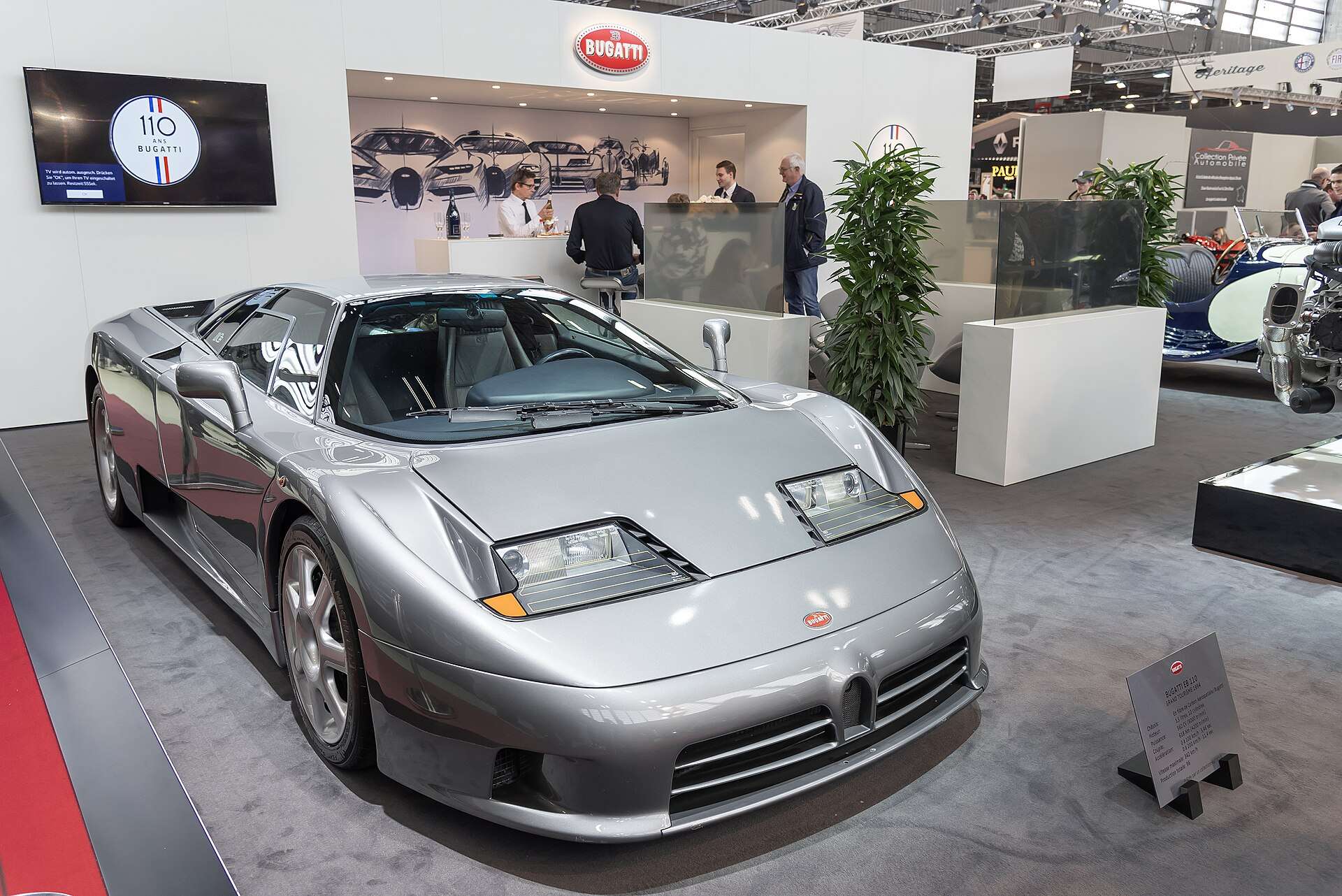
The EB110 was designed twice. Marcello Gandini — Miura, Countach, Diablo — produced the original wedge. Artioli found it too severe for a car meant to signal luxury as much as speed, and the production body was reworked by the factory’s architect, Giampaolo Benedini. Engineering leadership fractured along the same line: Artioli’s insistence on the carbon chassis and the car’s luxury brief put him at odds with Paolo Stanzani, the engineer behind the Miura and Countach.
Then the timing turned. The EB110 launched directly into the early-1990s supercar crash, against a Diablo and a 959-shaped memory and, from 1992, the McLaren F1. Artioli compounded the exposure by buying Lotus in 1993 and funding development of the EB112 saloon. Suppliers went unpaid. Bugatti Automobili collapsed in 1995, with Campogalliano abandoned mid-production; Jochen Dauer’s Dauer Racing and, later, B Engineering acquired remaining stock and completed additional cars.
Total production is genuinely contested, which matters when you are buying. Bugatti cites roughly 95 GT and 39 Super Sport examples, about 134 including prototypes. Auction databases more commonly use 139 road and race cars. Wikidata records 126. Anyone quoting you a single confident figure is rounding someone else’s estimate.
What a Bugatti EB110 is worth today
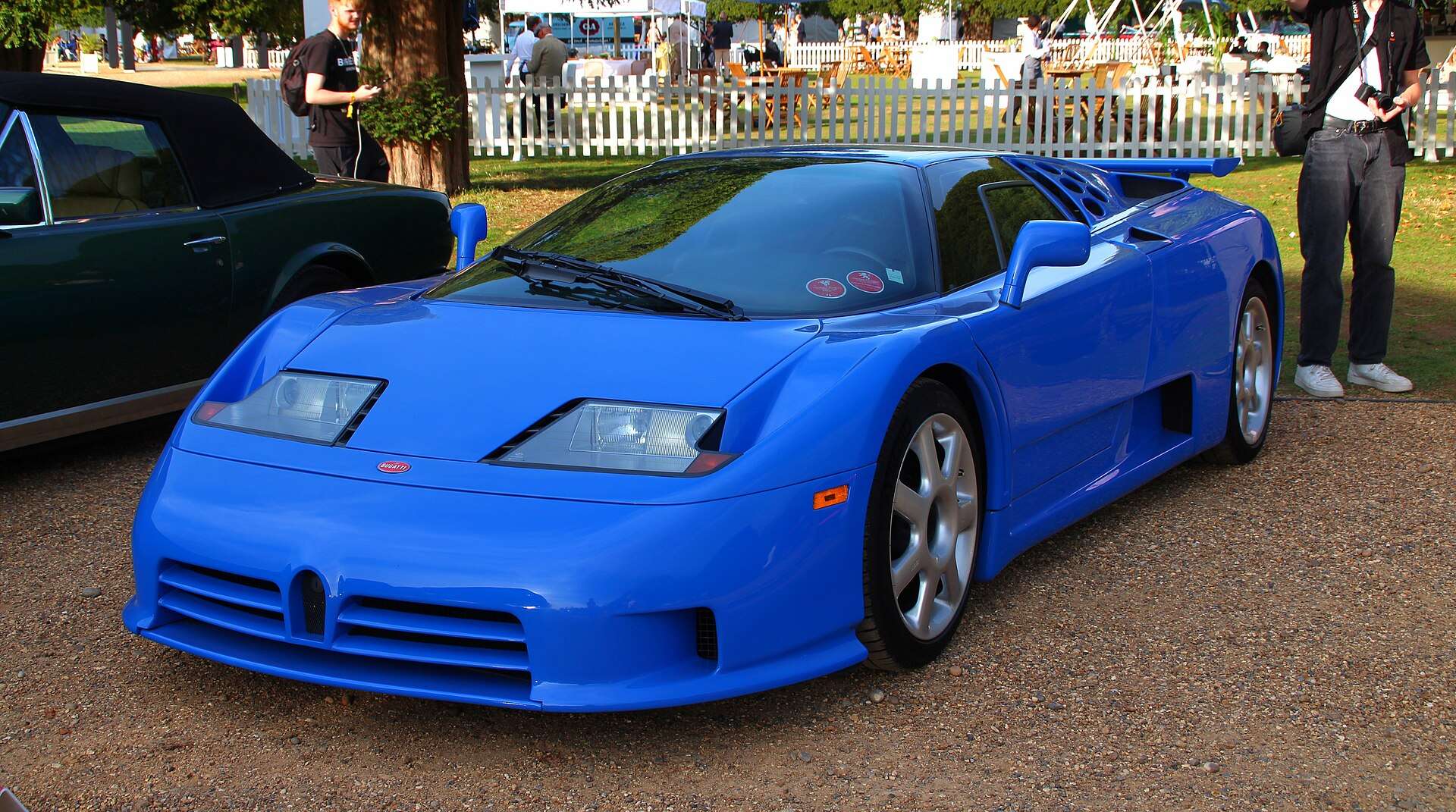
CLASSIC.COM puts the model-wide average sale price at about $1.96 million, with a market benchmark near $1.78 million for the GT and $2.40 million for the Super Sport. The lowest recorded public result in the current data set is $1.15 million for a 1994 GT in October 2023.
Recent public comparables cluster tightly:
- 1993 EB110 GT — $1,847,500, RM Sotheby’s, 15 August 2026
- 1995 EB110 Super Sport — $1,870,000, Mecum, 16 May 2026
- 1992 EB110 GT — €1,581,250, Broad Arrow, 10 October 2025
- 1998 Super Sport Lightweight (Dauer) — $5,500,000 high bid, not sold, Mecum, 15 August 2026
Two things stand out. First, a standard GT and a standard Super Sport traded within $23,000 of each other three months apart — the 52 hp spread is not currently worth much. Second, the Dauer Lightweight failed to sell at $5.5 million — a result we examined in detail at the time — which tells you where the market draws the line on post-bankruptcy completion cars. That divergence between headline results and genuine clearing prices is the same pattern we flagged in our analysis of the 2026 Monterey results and in this week’s market brief.
The prototype premium is now the whole story
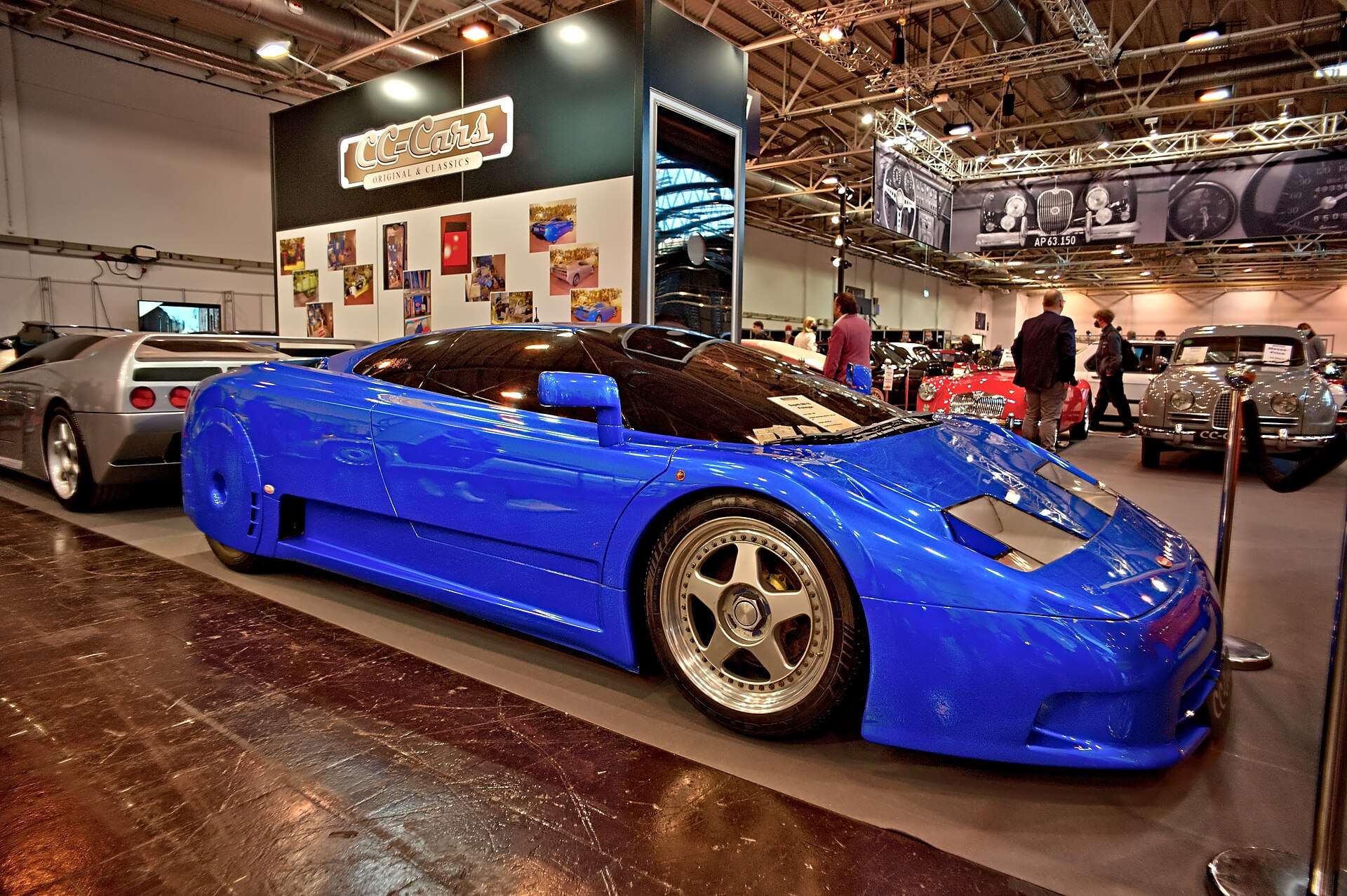
In July 2026, a 1994 EB110 GT factory prototype — chassis 39012, known as C13, one of roughly 15 prototypes and the 1992 Bologna Motor Show display car, with 712 miles — sold on du Pont Registry Live for $3,625,000 hammer, $3,806,250 with premium. It is the highest public price recorded for an EB110, ahead of the $3,167,500 a Super Sport brought at Gooding & Company’s Pebble Beach sale in 2022.
The instructive number is not the record. It is the same car’s history: C13 sold at RM Sotheby’s Amelia Island in 2022 for $2,100,000. It appreciated roughly 71% in four years. Over the same period, series-production GTs moved from the mid-$1 millions to the mid-$1 millions.
So the EB110’s appreciation is not really the model’s appreciation. It is a documentation premium, concentrated in a handful of cars whose paperwork is unrepeatable. That is a specific, repeatable market behaviour, and it is the same mechanism that priced Corvette Grand Sport chassis 003 and that explains why a one-off Porsche 918 is valued for who commissioned it rather than what it is.
Celebrity ownership, notably, has not been the lever here. Michael Schumacher bought a yellow EB110 Super Sport — chassis 39020 — in June 1994, at the peak of his first championship season, and kept it until 2003. It has changed hands quietly among German specialists since. Compare that with the McQueen NART Spider or the wider pattern we examined in Grace Kelly’s Rover P6: celebrity provenance pays enormously when the car is otherwise ordinary, and adds comparatively little when the car is already extraordinary. The EB110 is already extraordinary. What it lacked was a record of which car did what — and the cars that have one are being paid for accordingly.
There is a useful parallel in Koenigsegg’s CCGT1: an orphaned programme from a small manufacturer, where the surviving development hardware carries the story the production cars cannot.
What collectors should know today
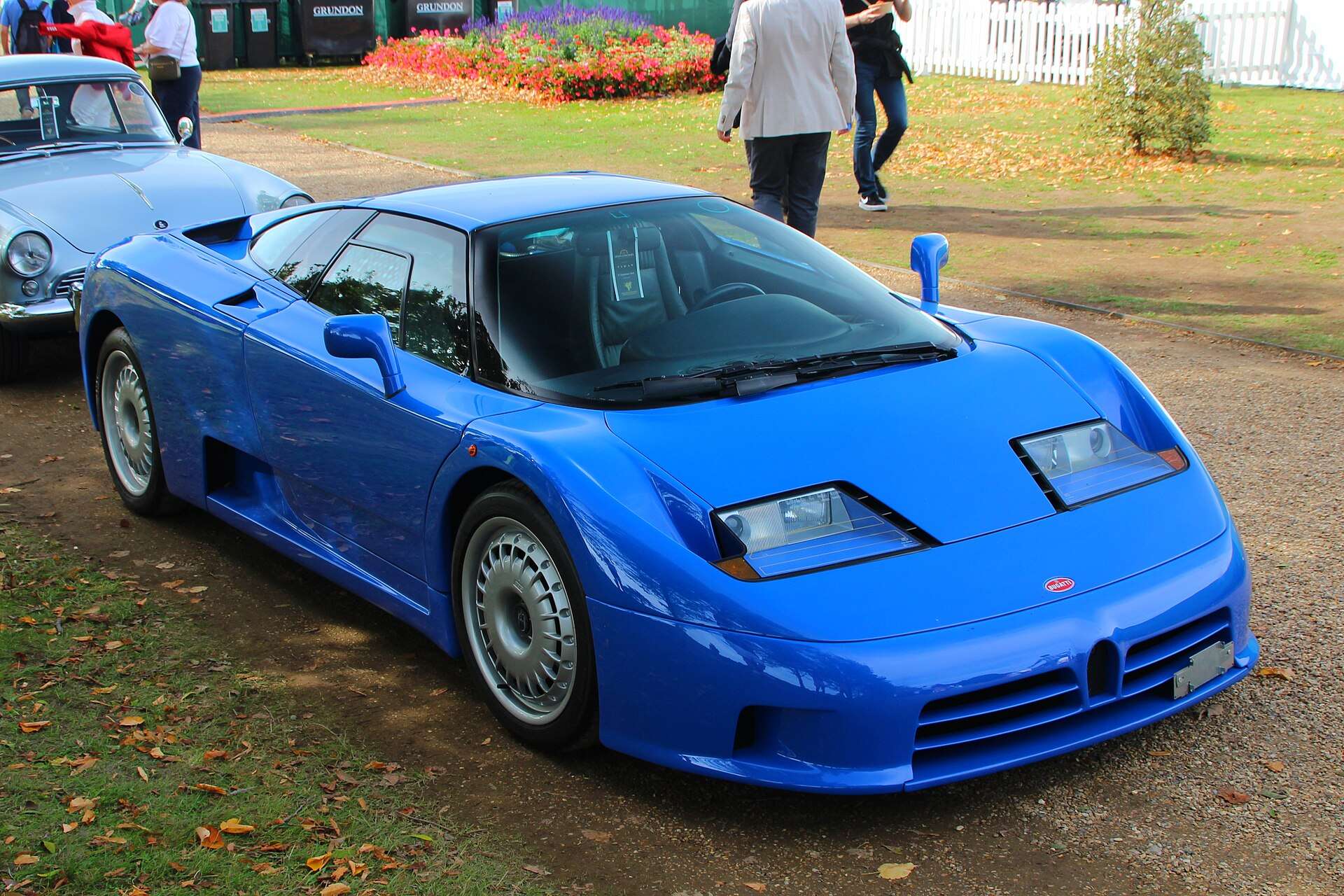
- Establish where the car was completed. Bugatti Automobili cars, Dauer-completed cars and B Engineering cars are not interchangeable. The Lightweight no-sale at $5.5 million suggests the market discounts post-bankruptcy completion more sharply than sellers expect. Get the build date relative to the 1995 collapse in writing.
- Treat prototype claims as claims until proven. Roughly 15 prototypes exist against 130-plus cars, and the premium is now measured in millions. Demand factory build records, period show documentation and continuous chain of custody — not an anecdote.
- The GT–SS spread is currently thin. Two 2026 results landed within $23,000 of each other. Buy the better-documented, better-preserved car rather than the higher-output badge.
- Budget for the chassis, not just the engine. A 30-year-old bonded carbon-and-aluminium-honeycomb structure cannot be assessed the way a steel tub can. Insist on a specialist inspection for delamination and prior accident repair; a compromised monocoque is not economically repairable.
- Confirm parts and service access before you buy. Four turbochargers, sixty valves and a bespoke all-wheel-drive system on an orphaned marque means a very short list of competent shops. Identify yours first.
- Preservation is outrunning restoration here. C13’s 712 miles were central to its result. Low-mileage originality is currently worth more than a cosmetically perfect rebuild, and a recommissioned car with documented history reads better than a repainted one.
The EB110 was conceived as an argument about a name. Thirty-five years later, the market has decided that names are cheap and files are not — and it is pricing individual chassis, not the badge on them.
Sources
- Bugatti Newsroom — 30 Years of the Bugatti EB 110
- Wikipedia — Bugatti EB 110
- Wikipedia — Ettore Bugatti
- CLASSIC.COM — Bugatti EB 110 market data
- du Pont Registry — Market Spotlight: Bugatti EB110
- The Supercar Blog — EB110 GT sells for a record $3.8 million
- Supercar Nostalgia — EB110 SS chassis 39020, Michael Schumacher
The collector car market, every weekday morning.
Auction results, price moves and what’s crossing the block, read in four minutes. Free, from Modern Car Collector.
No spam, unsubscribe in one click. Or read more about the Brief.


 Shawn Henry
  Kyle Matthews
  Eve Nowell