
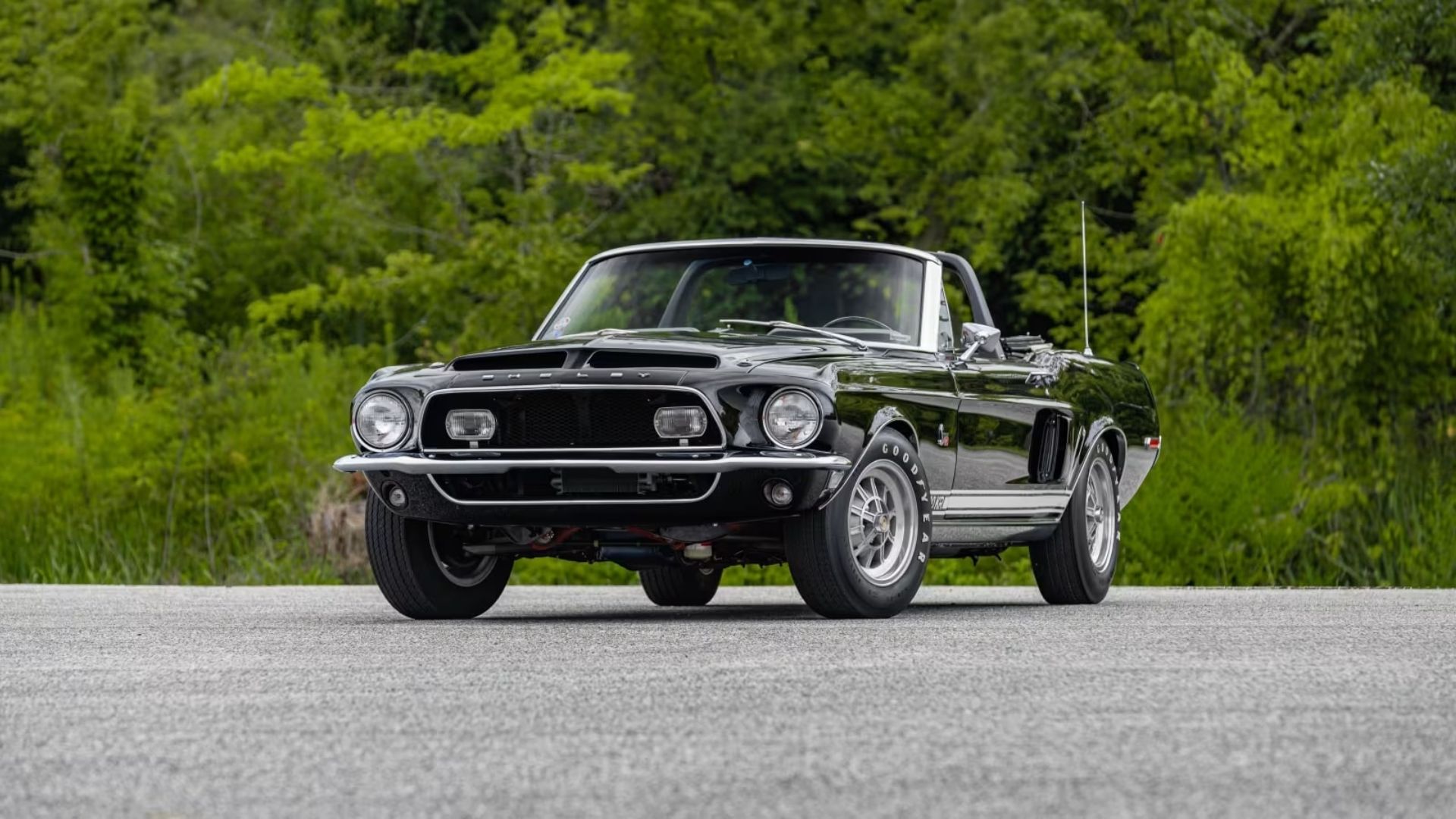
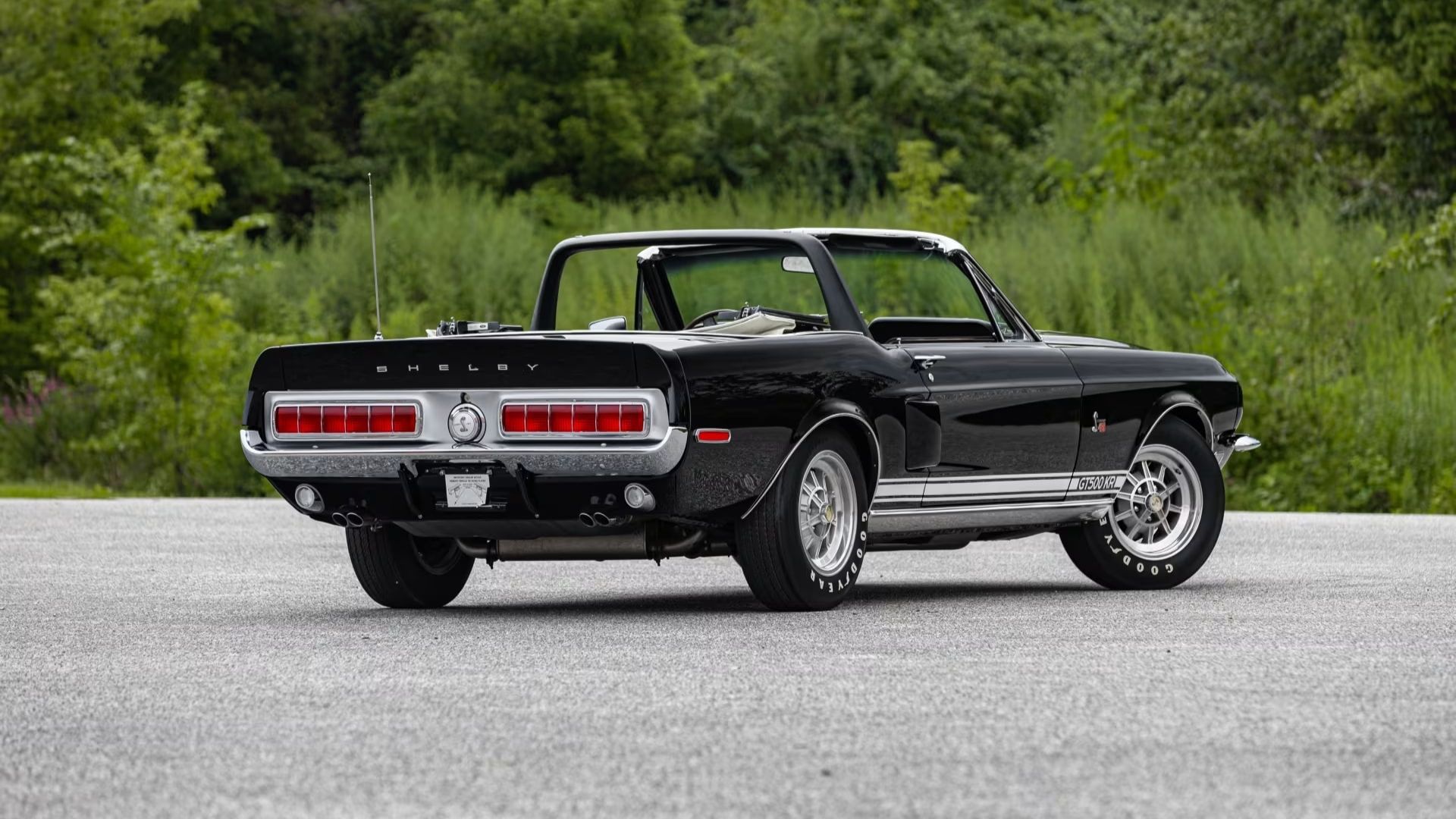
The convertible body style is not what made this Shelby expensive. On September 26, an Acapulco Blue 1968 GT500KR convertible crossed the block at Mecum’s inaugural Nashville sale and was hammered at $385,000, a new high for the body style and $55,000 above the $330,000 convertible we reported in 2024. The headline invites a rarity argument. The better explanation is a stack of decisions made at the Ford order desk in 1968 and preserved on paper ever since.
Rarity Is the Least Interesting Thing About It
Roughly 1,450 GT500KRs were built for the 1968 model year, and by the Shelby registry’s commonly cited count about 518 of them were convertibles. That makes the open car the scarcer body, but scarcity alone has never held a price. Plenty of rare Mustangs trade quietly. What collectors pay for is a car that makes a clean, defensible argument that it is exactly what it claims to be.
The KR itself carries real historical weight. “King of the Road” arrived midway through the 1968 model year as the Cobra Jet–powered successor to the GT500, and Ford’s 335-horsepower rating for the 428 has long been regarded as a polite understatement. For anyone assembling a Shelby narrative, the KR is where the Cobra Jet enters the story. That is the foundation, but it applies to every KR, not just this one.
The Four-Speed Is the Quiet Variable
According to Mecum’s lot listing, this car pairs the numbers-matching 428 Cobra Jet with a Toploader four-speed and a Traction-Lok differential. Our earlier record holder, a Raven Black convertible, was an automatic. Both were air-conditioned, both were numbers-matching, and the later car still brought $55,000 more. Differences in color, provenance and condition always muddy a single comparison, so treat that gap as a signal rather than a coefficient. The signal is consistent with what the market has been telling us for years: in the Shelby world, the manual car is the one buyers argue over.
The logic is not sentimental. A four-speed Cobra Jet convertible is the version that best matches how people imagine a Shelby being driven, and it is the version that tends to be preserved by owners who understood that. Automatics are not disqualifying, but the best money is increasingly reserved for specifications that read as unambiguous.
Air Conditioning, Options and the Anatomy of a Premium
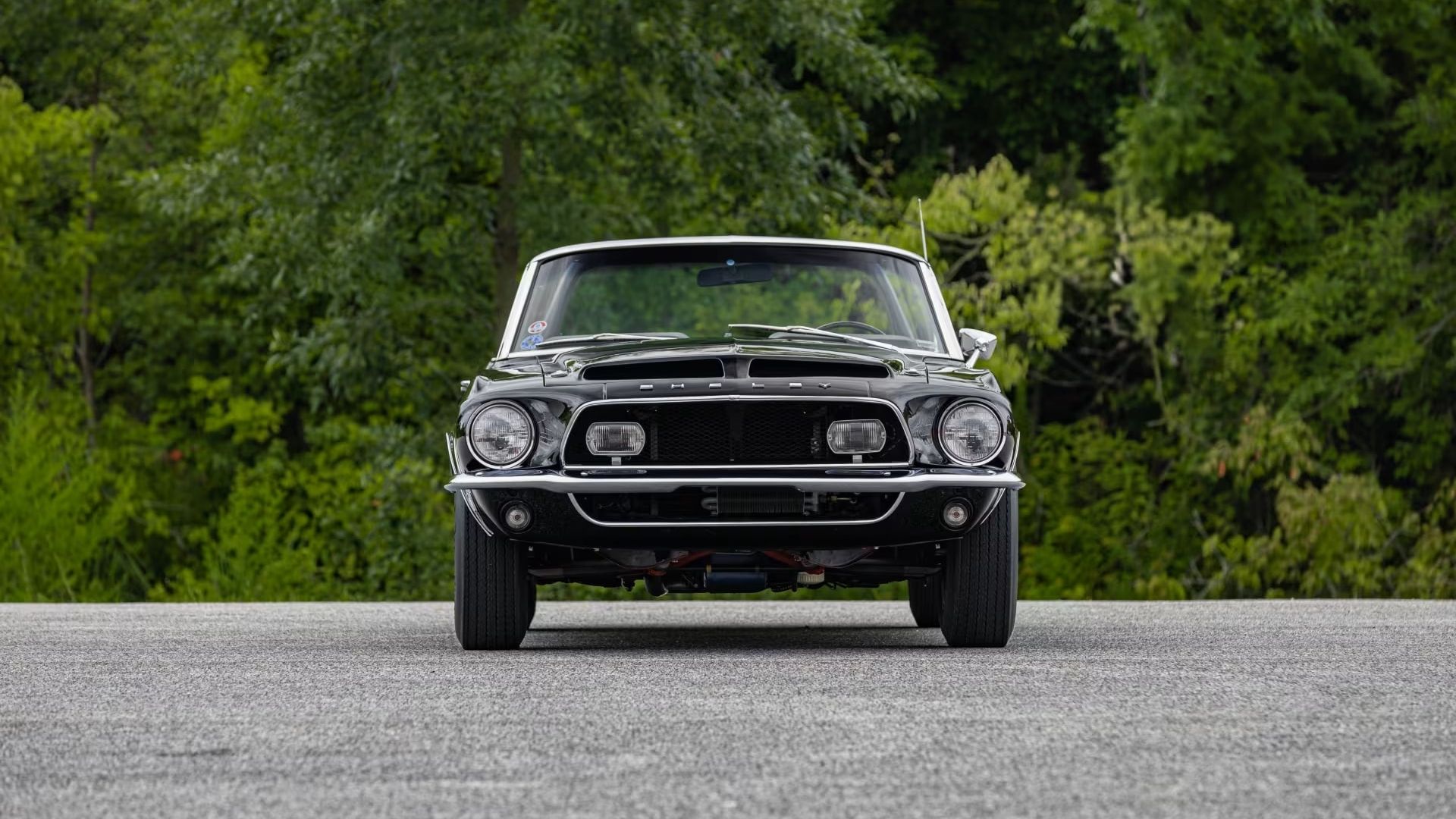
The option sheet on the Nashville car reads like a deliberate checklist: power steering, power brakes, power top, tilt-away steering column, tinted glass and the interior Decor Group, plus factory air conditioning. Air conditioning on a convertible sounds contradictory, and that is precisely why it matters. Uncommon options on an already low-production body are what turn “rare” into “specific,” and specificity is what lets a buyer justify paying beyond the established band. As reported, the car also carries a build sheet and a Marti report, which confirm the factory configuration against Ford production records.
This is the most useful lesson in the result. Rarity tells you how many cars exist. Documentation tells you whether this is one of them. In a segment where re-creations and re-stamped cars are a real hazard, a build sheet and a Marti report are not accessories to the car. They are part of the asset.
What the Result Says About the Shelby Market
Mecum reports results as hammer figures, so the buyer’s all-in cost sits above $385,000. Even so, the sale is a data point for the upper tier of the GT500KR market, not a repricing of the model. Most KRs trade well below this level, and the premium here was paid for the combination of convertible body, manual gearbox, factory air, and documentation rather than for the nameplate. That also means it is not a safe benchmark for an average car.
It also fits a wider pattern. Buyers with serious budgets are concentrating on cars that remove doubt, which is the same dynamic behind the strength of collectible Mustangs across the entire 1965-to-today range. Our coverage of this sale also looked at the 1966 Shelby GT350H fastback that crossed the block at Mecum Nashville and the early results from the same sale.
What Serious Buyers Should Take From It
First, verify the numbers before the sheet metal: engine, transmission and chassis identity should reconcile with the build sheet and registry records. Second, understand that originality compounds. A well-documented car’s value tends to build on itself, while a questionable one has to keep re-proving its case at every sale. Third, be careful with single results. One strong hammer price in a debut sale does not make a trend, and anyone reading this as a blanket move in KR values is reading too much into it. For broader context on separating value from enthusiasm, see our guide to smart buys versus emotional buys.
If the price disappeared from this story, the lesson would remain: in the muscle car market, the paper trail is the second engine.
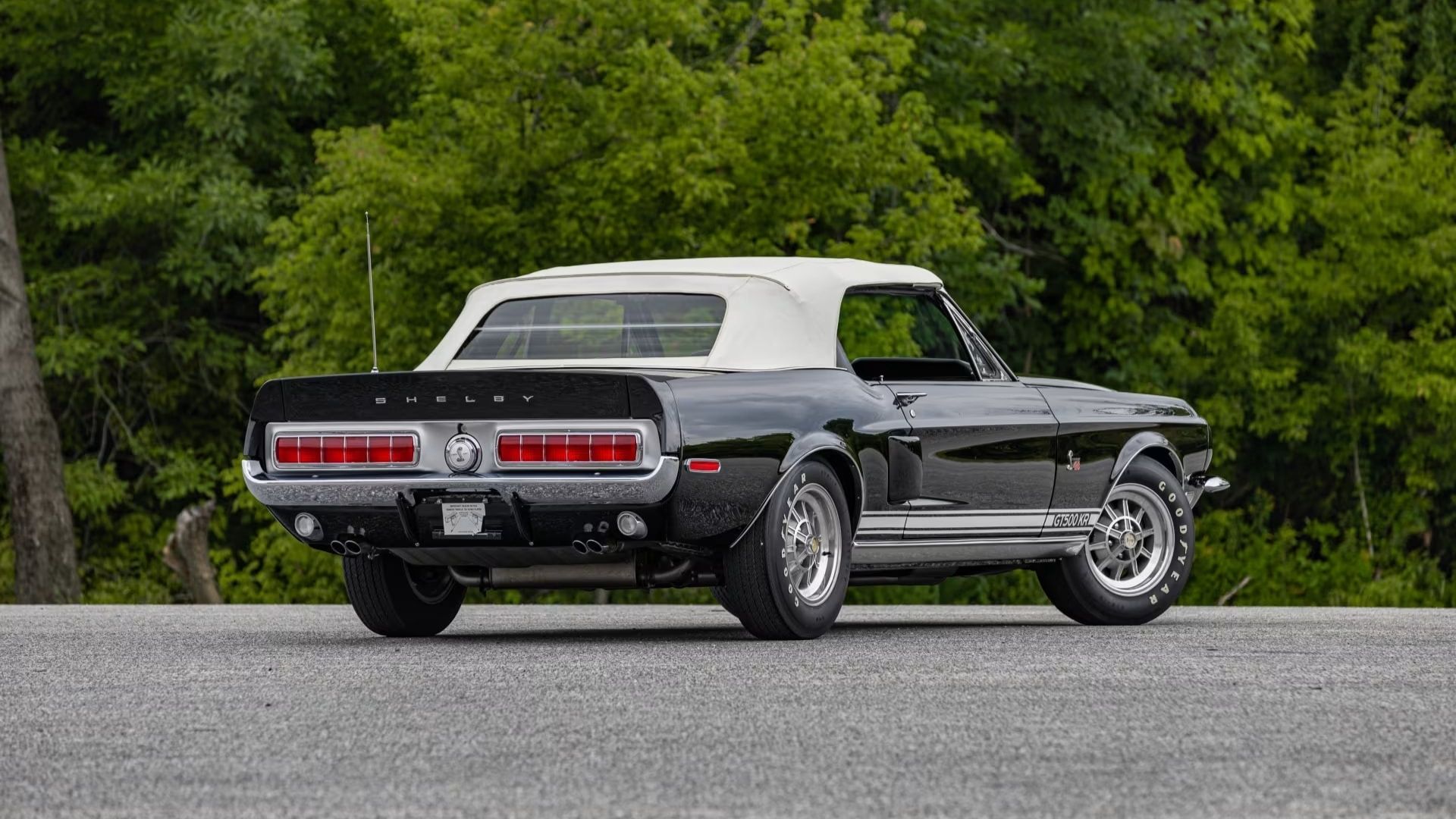
Lead image: Mecum
The collector car market, every weekday morning.
Auction results, price moves and what’s crossing the block, read in four minutes. Free, from Modern Car Collector.
No spam, unsubscribe in one click. Or read more about the Brief.


 EL Puckett
  Kyle Matthews