

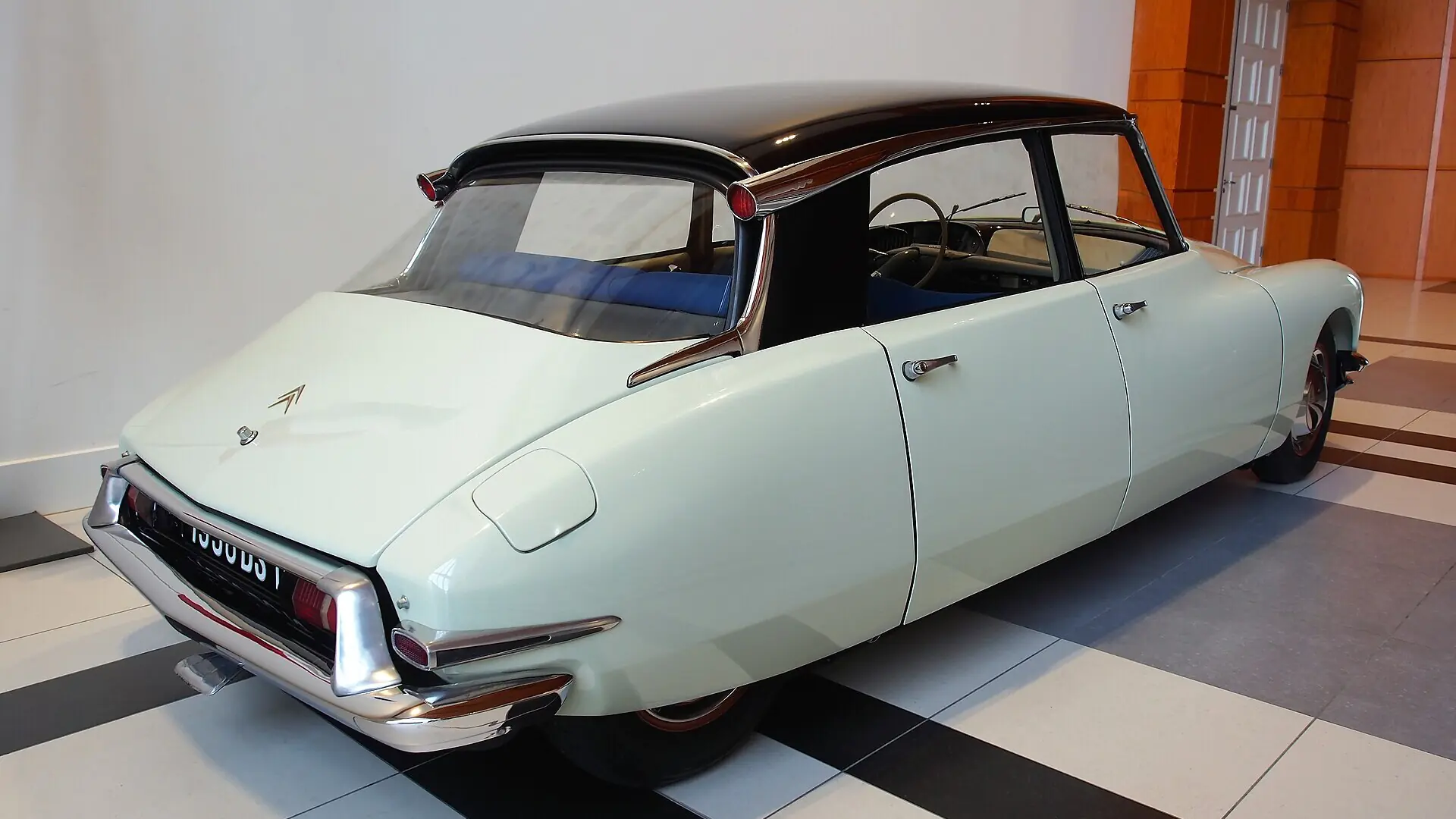
On Nov. 11, 1950, Pierre-Jules Boulanger, the president of Citroën, died when his Traction Avant struck a tree on a road in central France. He was 65. Boulanger never saw the car that would carry his thinking into the 1950s and beyond, the DS, and the 2CV had been on sale for barely two years. Yet the cars that defined Citroën after its 1934 collapse, the 15-Six, the 2CV and the DS, all trace through his desk. For collectors, that makes the date worth marking.
What happened on Nov. 11, 1950
Boulanger was returning with his wife from a week of work in Paris to their home at Lempdes, near Clermont-Ferrand, when the car left the road near Broût-Vernet in the Allier department. Most accounts say he was driving a Traction Avant 15-Six. He was killed, and his wife was seriously injured but survived. He is buried at Lempdes, and a stone marker was later placed beside the road at the crash site. Accounts differ on the circumstances: one Citroën-community history describes fog and rain on a straight road, while the French-language Wikipedia article says he lost control while overtaking.
A note on the date: the Nov. 11 date appears in several Citroën-community histories, in a French regional-press reference cited by French Wikipedia and in motoring-history calendars. The English-language Wikipedia biography gives Nov. 12, citing a Chicago Daily Tribune report dated Nov. 13. Because most of the sources we found point to Nov. 11, we are using that date, and we flag the discrepancy so readers can weigh it themselves.
The people and cars behind the story
Boulanger was born in 1885 at Sin-le-Noble in northern France, studied fine art, worked in the United States for a time and returned to France in 1914. After service in the First World War as an aerial photographer, he joined Michelin in 1918 and reached its board in 1922. He was not a car designer by training. He was a hard-headed manager with strong opinions about what a car should do for the people who bought it.
In December 1934, Citroën filed for bankruptcy, and Michelin, its largest creditor, became its principal shareholder. Boulanger moved in as assistant to Pierre Michelin and head of engineering and design. When Pierre Michelin died in an accident in 1937, Boulanger became president, a post he held until his own death.

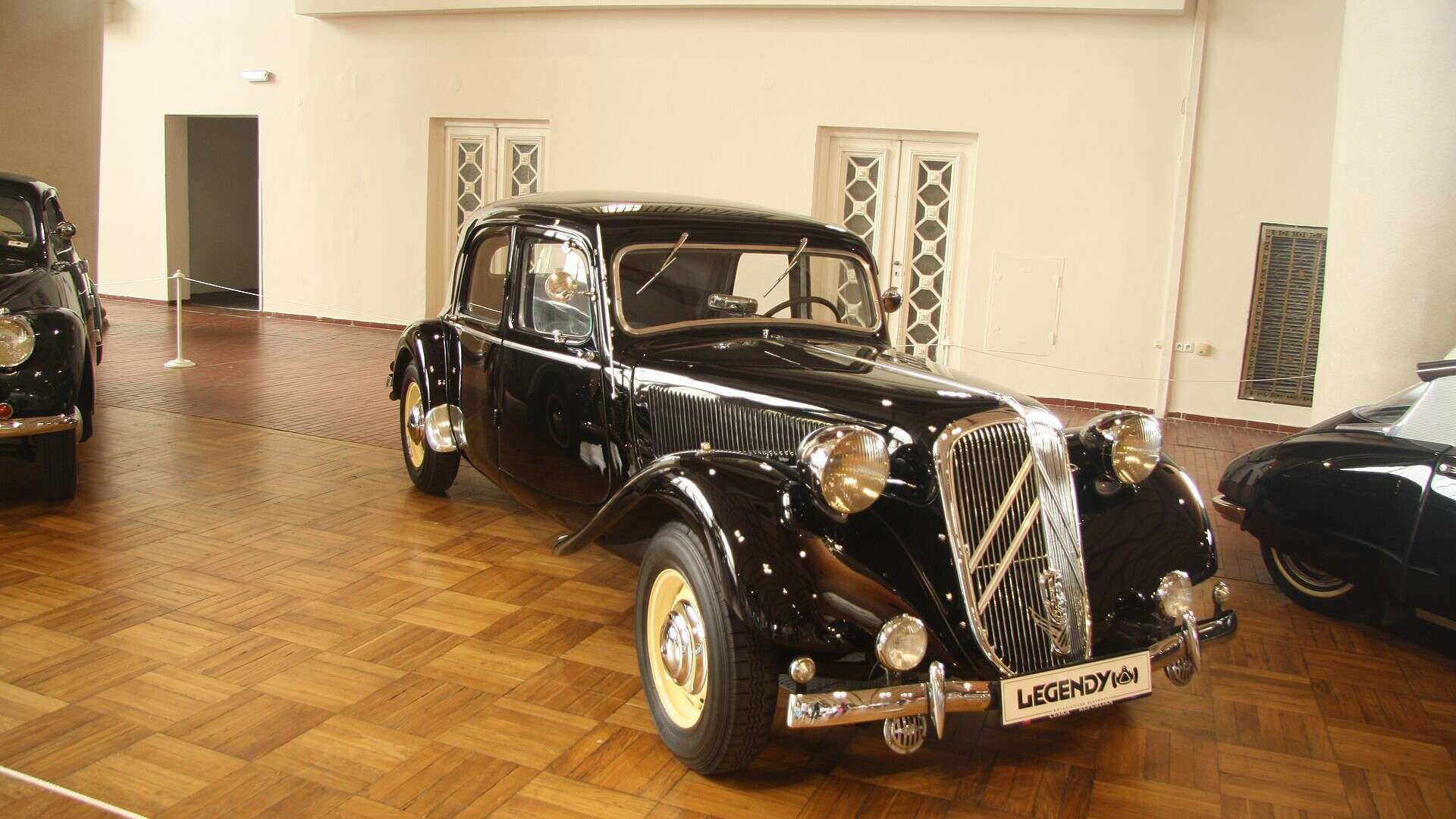
The best-known result of his tenure began in 1936 as the TPV, short for Très Petite Voiture, or very small car. His brief was famously practical: four wheels under an umbrella, room for four people and a load of farm goods, low fuel use, and a ride soft enough to carry a basket of eggs across a plowed field. Looks were an afterthought. By 1939 the design was ready after 47 experimental prototypes, and a pilot run of 250 cars was under way when the war intervened. Several TPVs were buried at secret locations and others were destroyed. Until three were found in a barn in 1994, it was believed that only two had survived.
The Traction Avant itself predated Boulanger. It was presented in Paris on April 18, 1934, and is described as the world’s first mass-produced front-wheel-drive car with a semi-monocoque body. But the six-cylinder 15-Six arrived in June 1938 on his watch, and the first one was delivered to him on June 25 of that year. A later hydropneumatic variant, the 15/6 H of 1954, served as a field trial for the DS suspension.
The historical context
Citroën’s early reputation rested on bold engineering funded by borrowed money, and the Traction Avant helped push the company into the 1934 collapse. Boulanger’s Citroën was a different animal: Michelin-owned, cost-conscious and focused on a small number of well-considered products. Biographical accounts also say he refused to deal directly with German authorities during the occupation and that his name appeared on a 1944 German blacklist of “Enemies of the Reich.”
The 2CV finally appeared at the Paris Salon on Oct. 7, 1948. The company that Boulanger rebuilt was also working on a larger project, the VGD, or Voiture à Grande Diffusion. It was still unfinished when he died. After his death, control passed to others, and the project was redefined and became the DS, which Flaminio Bertoni and André Lefèbvre styled and engineered.
Why it mattered at the time
Boulanger’s death ended the era in which one strong-willed executive, with Michelin behind him, set Citroën’s product direction. His successors did not abandon his ideas. They finished them. The DS 19 was introduced on Oct. 6, 1955, at the Paris Motor Show, with 12,000 orders on the first day and 743 in the first 15 minutes. The 2CV stayed in production until July 27, 1990, when the last one left the Mangualde plant in Portugal, after 3,867,932 saloons had been built.
Why Boulanger still matters to collectors
Collectors rarely buy a car because of its executive, but Citroën is a marque where the executive’s priorities are visible in the metal. The 2CV is a car designed around a farmer’s checklist. The Traction Avant 15-Six is the six-cylinder flagship of an engineering landmark. The DS is the project Boulanger approved and did not live to see. Documentation that ties a car to its factory records, build date and early ownership carries real weight in this market, because so many of these cars were used hard and modified over the decades.
If you follow Citroën on this site, the story connects to several others. Our look at the Eendenmuseum’s 300-plus 2CVs shows how a single collection can reset a niche market. Our Citroën SM buying guide covers the later Maserati-powered flagship the company built after the DS. We also covered a 1953 Peugeot 203 cabriolet, a French postwar contemporary, and the story of another founder-led independent, Carl Borgward.
Citroën market context: what recent results show
Recent figures from the auction-data aggregator Old Cars Data, which tracks results from sources including Bring a Trailer, give a rough sense of the market. The samples are small, so a single sale can move the numbers noticeably.
- 2CV: 19 completed sales over the past 12 months, with a median of $13,750 and a middle range of $10,110 to $16,625. The highest recent result listed was $18,000 for a 1965 car sold on Bring a Trailer on Aug. 26, 2026.
- Traction Avant: only four sales in the past 12 months, with a median of $10,100 and a middle range of $7,650 to $16,375. The top sale in that window was $32,500 for a 1954 car on Bring a Trailer on May 27, 2026. The page’s all-time high was $48,000 for a 1952 car in February 2025.
- DS: 10 completed sales, with a median of $36,500 and a middle range of $25,000 to $54,875. The strongest results were $215,000 for a 1969 DS21 on Feb. 17, 2026, and $196,500 for a 1967 DS21 on April 21, 2026, both on Bring a Trailer.
Hagerty’s valuation guide adds that DS19 station wagons are worth more than the standard sedan and that the DS19 is rarer than the later DS21 and DS23. The 2CV market faces a supply event of its own: our report on the Eendenmuseum describes a collection of roughly 450 vehicles, more than 300 of them 2CVs, that is expected to be offered at auction in the spring of 2027.
What collectors should take from Boulanger’s anniversary
Boulanger’s career is a reminder that the Citroëns collectors prize, from the humble 2CV to the DS that Citroën presented five years after his death, were shaped by a manager’s clear brief as much as by a designer’s flair. The market data suggest the range is wide: the typical 2CV sale sits around $13,750, while strong DS21 results have passed $190,000. Buy the documentation, the originality and the story, and treat any single auction result as one data point rather than a verdict.
Sources for this article include biographical and model histories on Wikipedia, Citroën-community histories at Citroënvie and Passionnement Citroën, Hagerty’s valuation tools and Old Cars Data auction statistics. This article is for historical and informational purposes and is not investment advice.
The collector car market, every weekday morning.
Auction results, price moves and what’s crossing the block, read in four minutes. Free, from Modern Car Collector.
No spam, unsubscribe in one click. Or read more about the Brief.




 Eve Nowell
 Kyle Matthews