

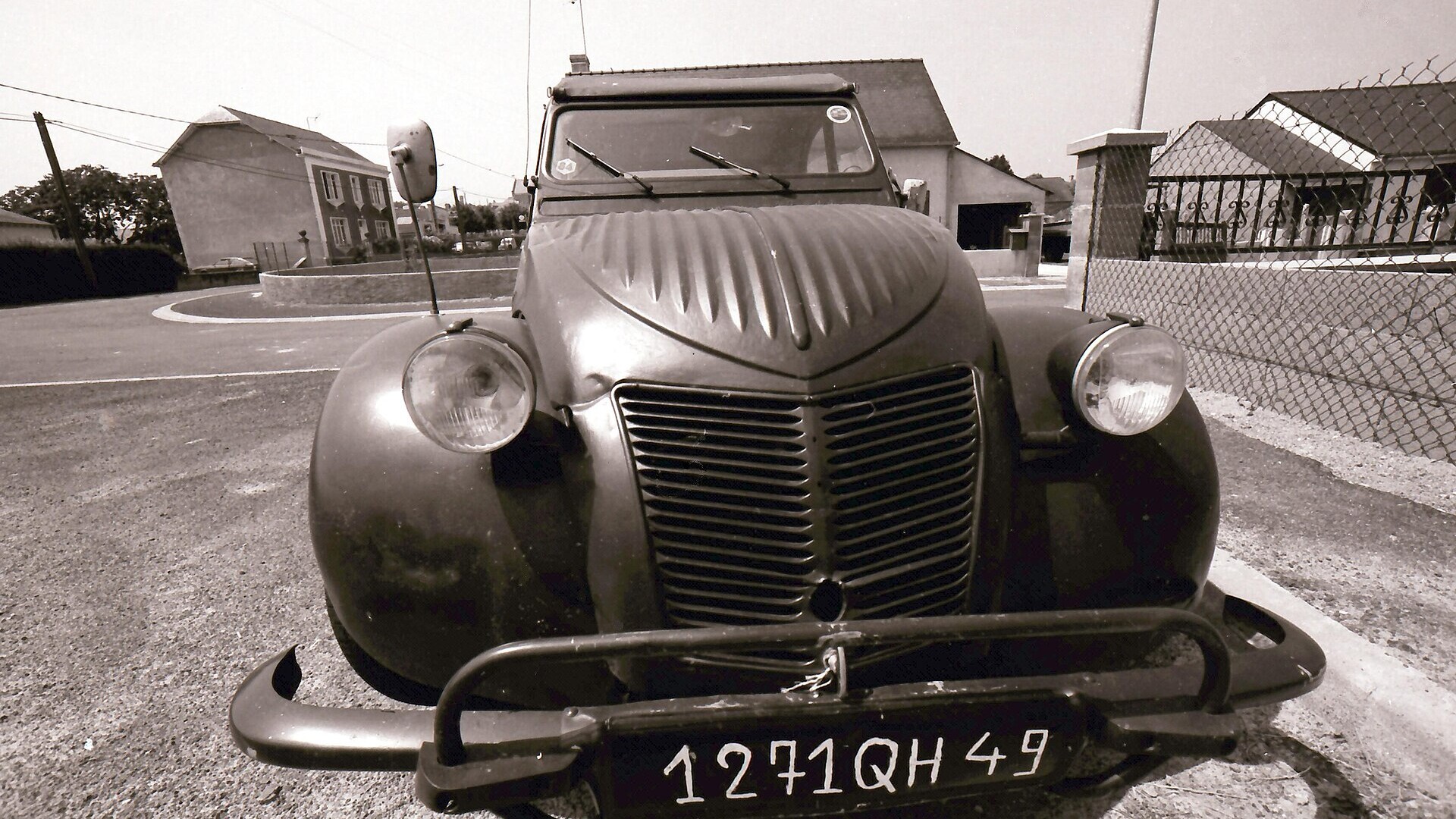
Collections are worth the most while the person who built them still owns them. The moment they change hands, they stop being a collection and become inventory. That is the quiet lesson inside the news from Andijk, in the Dutch province of North Holland, where the Eendenmuseum—home to what its owner has long described as the largest Citroën 2CV collection anywhere—closed its doors on September 27 after its entire contents were sold in a single transaction.
Roughly 450 vehicles are involved, more than 300 of them 2CVs, along with mopeds, scooters and toys. According to regional newspaper Rodi, the buyer is Nico Aaldering, founder of Gallery Aaldering in Brummen, one of Europe’s largest classic car dealers. The cars are expected to be offered at auction in April or May 2027, Hart van Nederland reports. No auction house, format or reserve policy has yet been announced.
The headlines have focused on the trophies: a Sahara or two, a very early car, a car said to be the last 2CV built. Those cars will find their buyers. The real story is the other 290-odd. This sale will be one of the clearest tests in years of how deep the market for a genuinely mass-produced icon actually is—and of what happens to a lifetime’s single-marque collection when the next generation says no.
A collection built on excess
Edwin Groen, 66, began collecting in 1992, and in 2018 moved the cars into a 5,000-square-metre former furniture store in Andijk that became the museum. He has been candid about why it is ending. “My health is increasingly troubling me,” he told Rodi. Speaking to broadcaster NH Nieuws, he added that he did not want to leave the collection to children who have no interest in it, and described himself as someone who has always wanted a great deal of everything.
That candour deserves attention, because it describes the succession problem facing a whole generation of collectors. A collection shaped by one person’s obsession rarely survives that person intact. Heirs who do not share the passion inherit a storage bill, an insurance schedule and a maintenance burden, and they usually sell under less favourable conditions than the founder would have chosen. Groen chose his own timing and his own buyer. In collector terms, that is a disciplined exit, not a distressed one—and it is worth noting that he sold to a trade buyer as one lot rather than consigning 450 cars piecemeal. Very few buyers can absorb a collection of this size in a single cheque, and he knew it.
Five million cars, and why that number matters
The 2CV is one of the most important cars of the twentieth century and one of the least rare. Citroën’s own heritage figures put total production at 5,114,969 units, 1,246,335 of them vans, across a 42-year run that began with the car’s unveiling at the Paris Motor Show on 7 October 1948 and ended at the Mangualde plant in Portugal at 4 p.m. on 27 July 1990. The design brief—a car for the French countryside that could carry farmers and their produce across a ploughed field—produced a machine of radical simplicity: air-cooled flat-twin, interconnected suspension, a roll-back canvas roof. As Groen put it to NH, anyone can work on one.
That simplicity is precisely why the 2CV occupies an unusual place in the market. It has cultural weight far beyond its price, an enormous and loyal club scene, and an almost bottomless parts supply. What it lacks, for most examples, is scarcity. When a museum releases several hundred of the same model at once, the question is not whether the 2CV is loved. It is whether there are enough active buyers, at the same moment, to take them all without the ordinary cars softening each other’s prices.
Rarity is a count. Liquidity is a crowd. The 2CV has never lacked a crowd, but a crowd that buys one car every few years behaves very differently from a sale room asked to clear hundreds of lots in a weekend. We have seen the same dynamic in large single-owner dispersals such as the Don Henley collection heading to Aumann Auctions, and in sales where the real story was what sold around the headline car. The top lots set the tone; the middle of the catalogue tells you the truth.
The Saharas: where rarity is real
If there is a blue-chip 2CV, it is the 4×4 Sahara, and the Andijk collection holds several. Built for oil and mineral exploration in France’s North African territories, the Sahara carried a second 425cc, 12-horsepower air-cooled twin in the tail driving the rear wheels, with a separate fuel tank under each front seat, according to the Lane Motor Museum, which keeps a 1962 example. Either engine could run alone. The spare wheel migrated to the bonnet. About 694 were built.
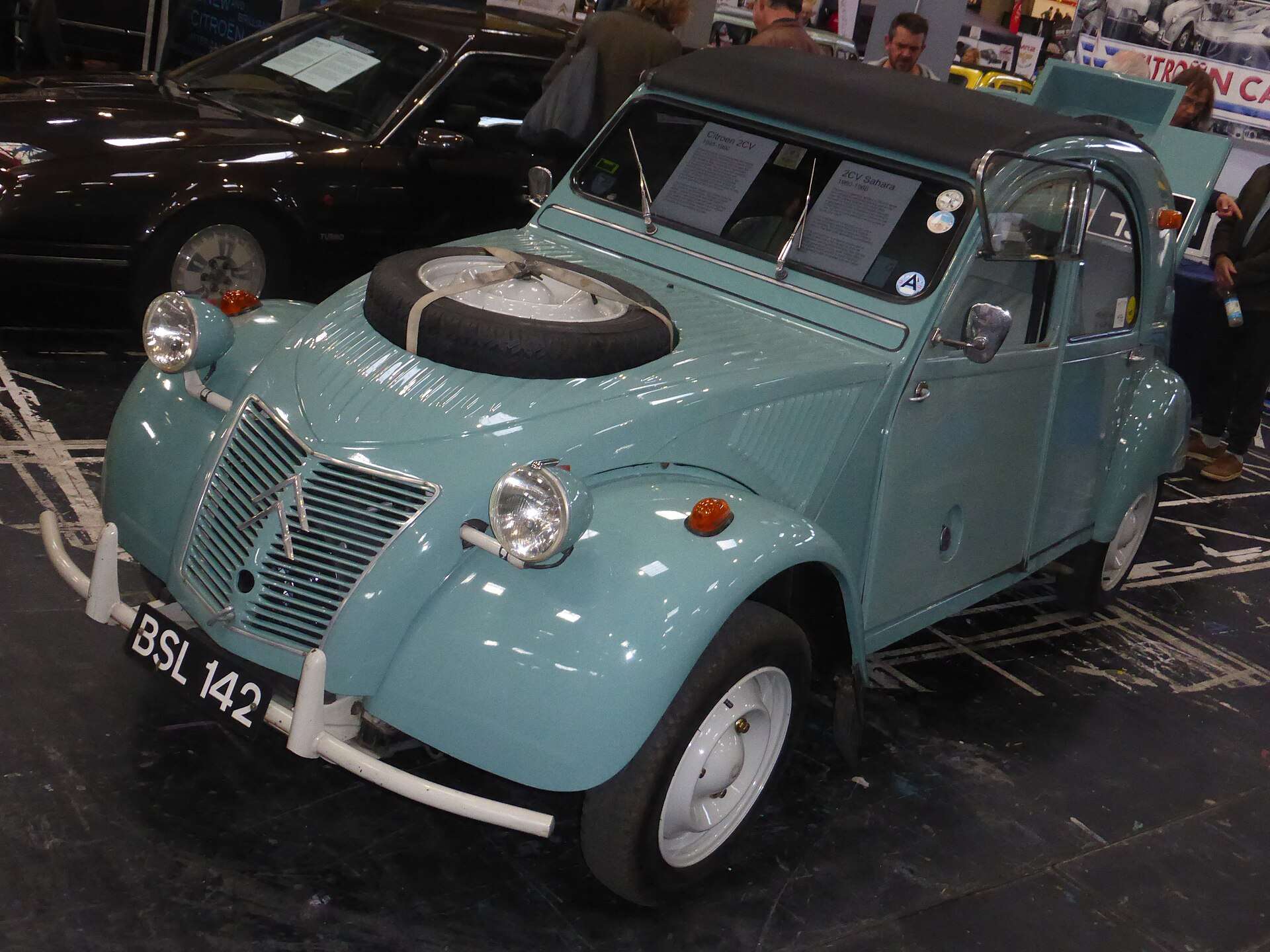
Survival estimates vary. Groen cited roughly 100 worldwide; the Lane Motor Museum gives a similar figure; some enthusiast sources put it far lower. What is not in dispute is that genuine Saharas are scarce, heavily documented within the specialist community, and increasingly international in their appeal. When RM Sotheby’s offered a 1965 Sahara in Monaco in 2024, the car—a three-owner example with matching numbers for body, chassis and both engines, restored between 2021 and 2023 with photographic documentation—sold for €143,750. Note what the catalogue emphasised: not the twin engines, but continuity of ownership and the survival of both original power units.
That is where the Andijk Saharas will be judged. A Sahara is a car that was built to be used hard in remote places, and many were. Serious buyers should expect to see both engine numbers verified, a clear account of when and where the car was restored, and some trail of its history before it reached the Netherlands. A Sahara with an unbroken story is a museum-grade object. A Sahara assembled from parts of several is a different proposition entirely, and the price difference should be large.
“Oldest” and “last”: check the claims
Press coverage has described the collection as containing both the oldest 2CV in the world and the last one ever built. Both claims deserve careful reading before anyone bids on them.
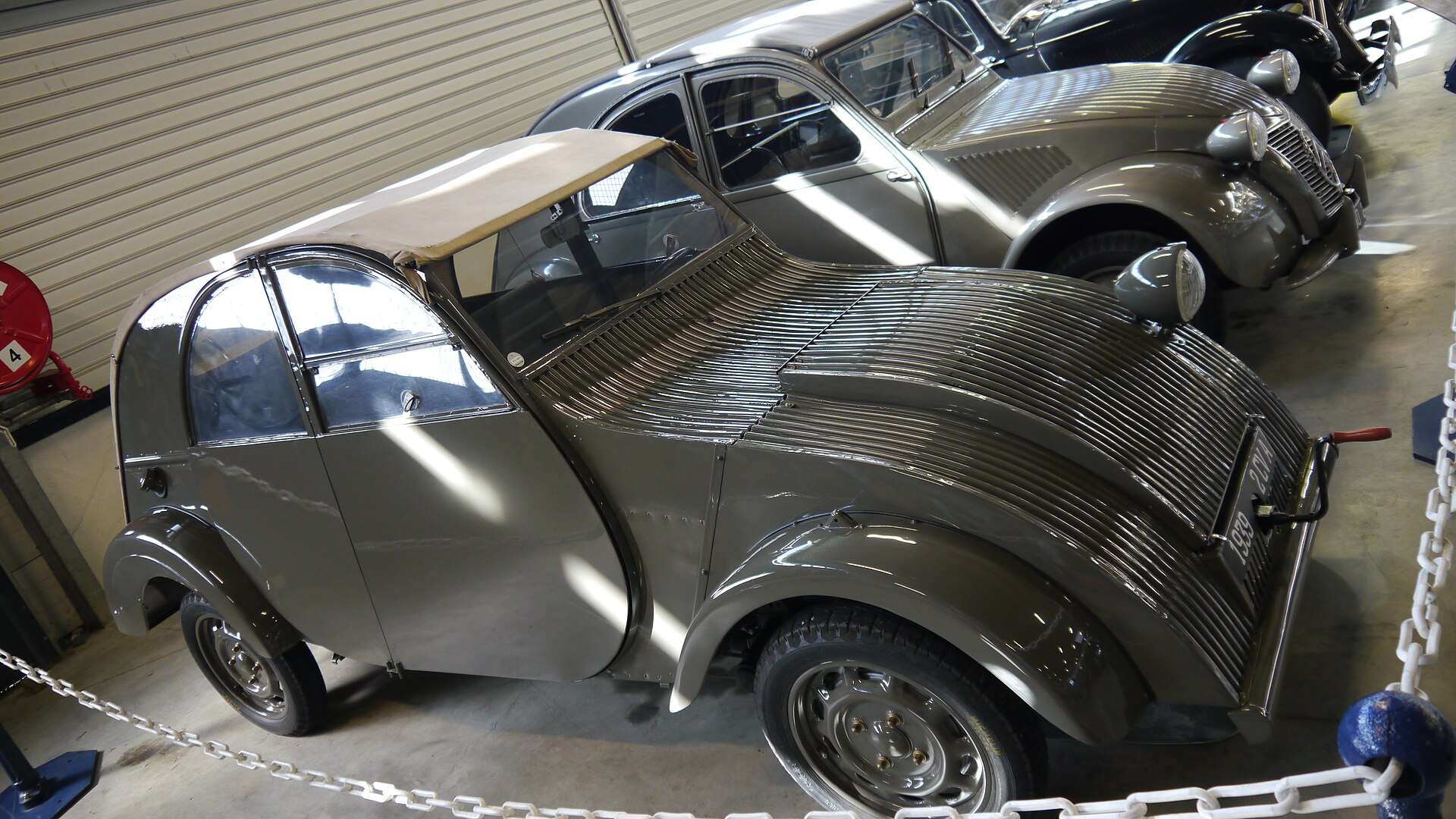
Groen’s best-known early car is a 1949 example, chassis 000458, which he bought at an Osenat auction in Paris in January 2018 for €75,600 including premium—at the time reported as a record for a standard 2CV. It is, without question, one of the earliest production cars. But the very oldest 2CVs are the pre-war TPV prototypes: Citroën planned 250 for the 1939 Paris show, most were destroyed during the war, and a handful survived hidden at the company’s La Ferté-Vidame test centre. One of those survivors remains in Citroën’s own Conservatoire. “Oldest” in Andijk almost certainly means oldest surviving production car in private hands, which is significant enough without embellishment.
“Last” needs even more care. The final 2CV built in France left the Levallois plant outside Paris on 25 February 1988. Production then continued in Portugal until 27 July 1990, when the last car of all rolled off the Mangualde line. A collection could legitimately hold the last French-built car and still not hold the last 2CV. The distinction may sound pedantic. In the collector market, it is the difference between a footnote and a headline, and buyers should expect a catalogue that states plainly which car this is and how that status is documented.
Zero kilometres, and the cost of never driving
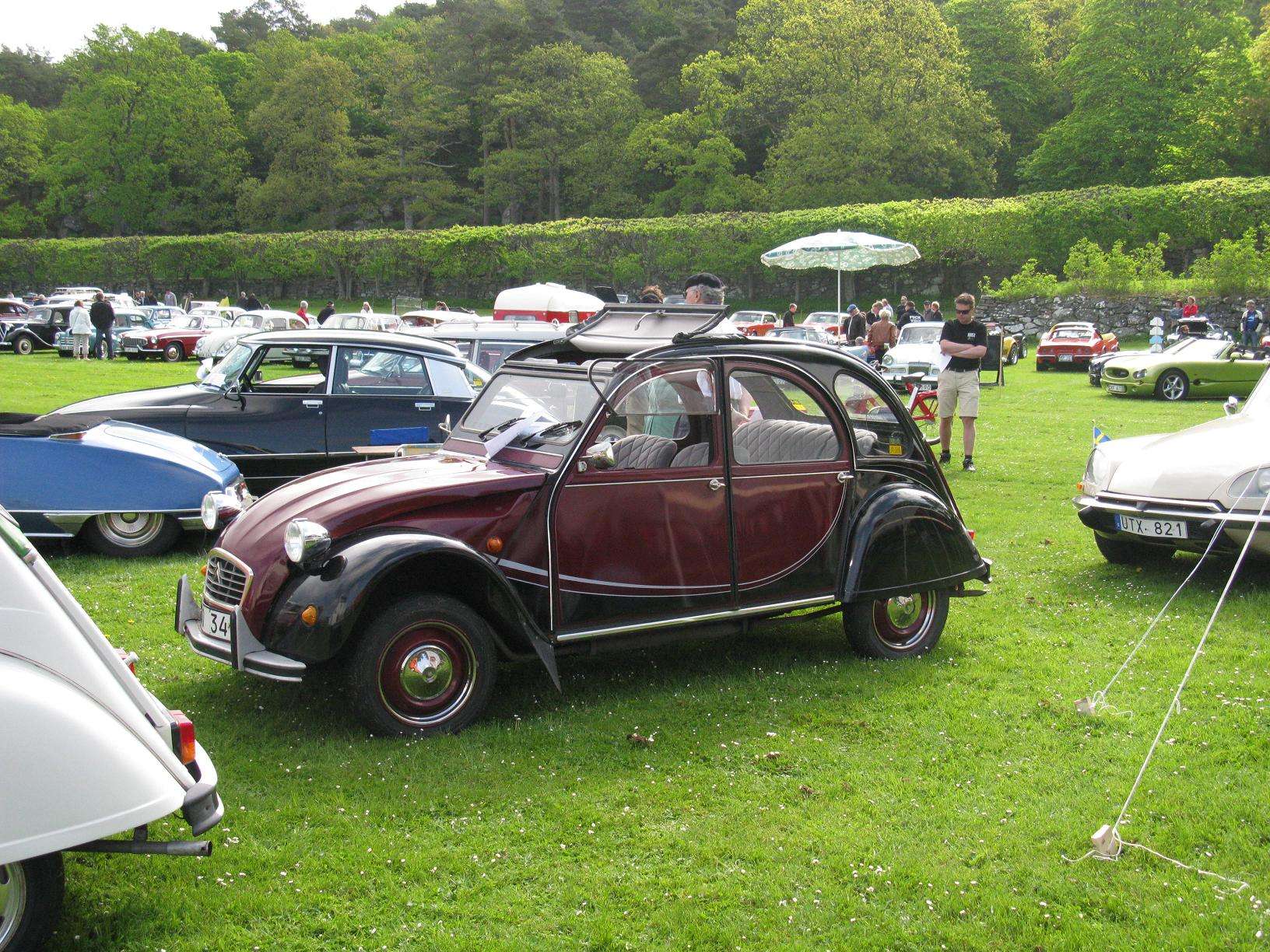
Among the less-discussed cars are several reported to show zero kilometres, including a 1985 example still carrying its factory wax protection, and the green 2CV that appeared in the Dutch film and television franchise Flodder—a car whose value in the Netherlands will owe as much to popular culture as to engineering.
The delivery-mileage cars are the most interesting test of modern collector behaviour. The market now pays real premiums for untouched, unmodified examples of ordinary cars, as we saw with an unmodified 1993 Supra Turbo and with Buick GNX #450 and its handful of miles. A never-registered 2CV is a factory document on wheels. But it is also a car whose rubber, seals and fuel system have aged without use, and any buyer who recommissions it to drive it will consume the very thing that makes it special. These are objects for keeping, not cars for touring, and they should be priced by people who understand that trade-off.
What serious buyers should watch
Because the collection passed through a dealer before reaching auction, the 2027 sale will be a trade sale, not a museum dispersal. That changes the calculus. Expect the best cars to be researched, presented and possibly reserved accordingly. Expect the ordinary cars to be the ones that tell the market’s story. A few points deserve attention as the catalogue emerges:
- Lot sequencing. How hundreds of similar cars are spread across sessions will shape prices as much as condition. Clustered lots of near-identical cars invite bidders to wait.
- Documentation on the headline cars. Chassis and engine numbers for the Saharas, provenance for chassis 000458, and a precise account of which “last” car this is.
- Museum storage versus use. Cars displayed for years will need recommissioning. Budget for it, and ask what was done before the sale.
- Cross-border costs. Buyers outside the EU should confirm buyer’s premium, VAT treatment and export paperwork with the auction house before bidding. Every 2CV is comfortably past the US 25-year import threshold, which widens the potential audience for the rare variants.
The verdict
This is not a story about expensive cars. Even the Saharas sit well below the prices that dominate most auction coverage. It is a story about what the collector market does with abundance. The Saharas and the documented early and late cars are genuinely significant, and they will trade as such. The ordinary 2CVs—honest, charming, historically important and plentiful—will reveal whether the enthusiasm that has carried this car for 78 years runs deep enough to absorb a museum’s worth of supply in one go.
Our expectation is that it does, but selectively. Condition and originality will separate the field sharply, and patient buyers will find fair entry points into an important car. Groen built something no one else had built. What happens next spring will show what it was worth to everyone else.
For more on how collections come to market, see our coverage of the Swafford Auction classic indoor sale and European icons at Lucky Collector Car Auctions.
The collector car market, every weekday morning.
Auction results, price moves and what’s crossing the block, read in four minutes. Free, from Modern Car Collector.
No spam, unsubscribe in one click. Or read more about the Brief.

 Elizabeth Puckett
  Kyle Matthews