
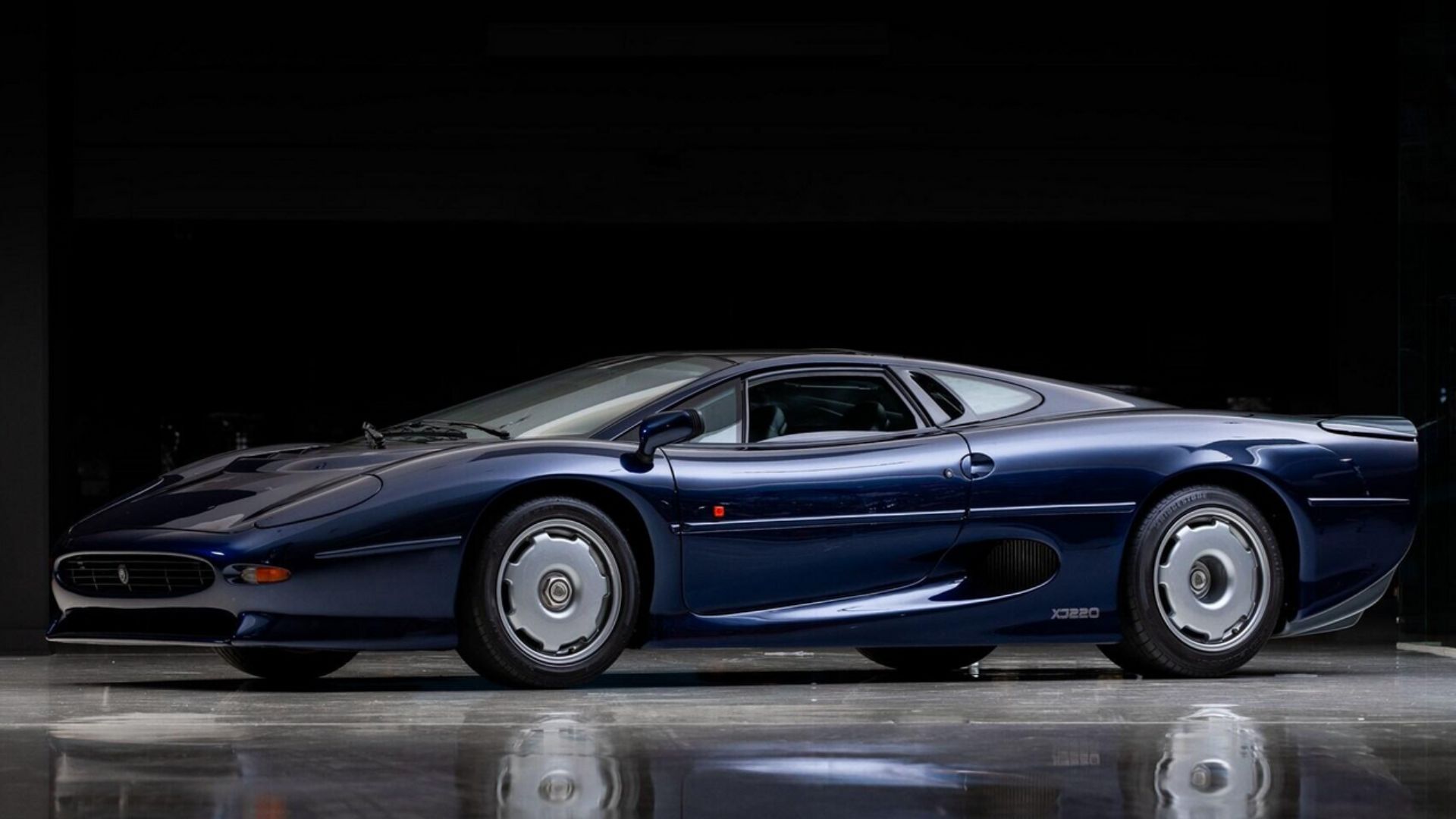
On paper, the headline out of Silverstone was simple: a low-mileage Jaguar XJ220 from Anthony Hamilton’s personal collection sold for £506,250 at The Iconic Sale at the BRDC Classic, a new UK live-auction record for the model. But the more interesting number from that Saturday isn’t the half-million-pound Jaguar. It’s eight — the number of live-auction records set across a single 164-lot sale, spanning everything from a Group B-era rally car to a modern Japanese homologation special. That spread, not any one result, is the real story.
Iconic Auctioneers staged the two-day sale on 24 and 25 July as part of the BRDC Classic at Silverstone Circuit, offering 164 lots split between competition cars and road-going collectors’ cars. More than 700 bidders registered, with interest arriving from as far as Australia, the United States and Japan. The combined total reached £8.2 million. Eight lots didn’t merely sell well; they reset live-auction benchmarks outright — four UK records and four world records — across a strikingly wide range of marques, eras and price points.
The marquee result came from a 1994 Jaguar XJ220, one of only 69 examples built to UK, right-hand-drive specification. Jaguar built 275 XJ220s in total between 1992 and 1994 at its purpose-built Bloxham facility, a run that fell well short of the deposits taken when the car debuted as a four-wheel-drive, V12 concept at the 1988 British Motor Show. By production, Tom Walkinshaw Racing had reworked it into a twin-turbocharged V6 driving the rear wheels only — a change that cost Jaguar a wave of cancelled orders and, on track, didn’t stop a TWR-built XJ220C from winning its class at Le Mans in 1993, only to be disqualified in a post-race technical dispute. It’s a car whose reputation was shaped almost entirely by controversy rather than by what it actually was.
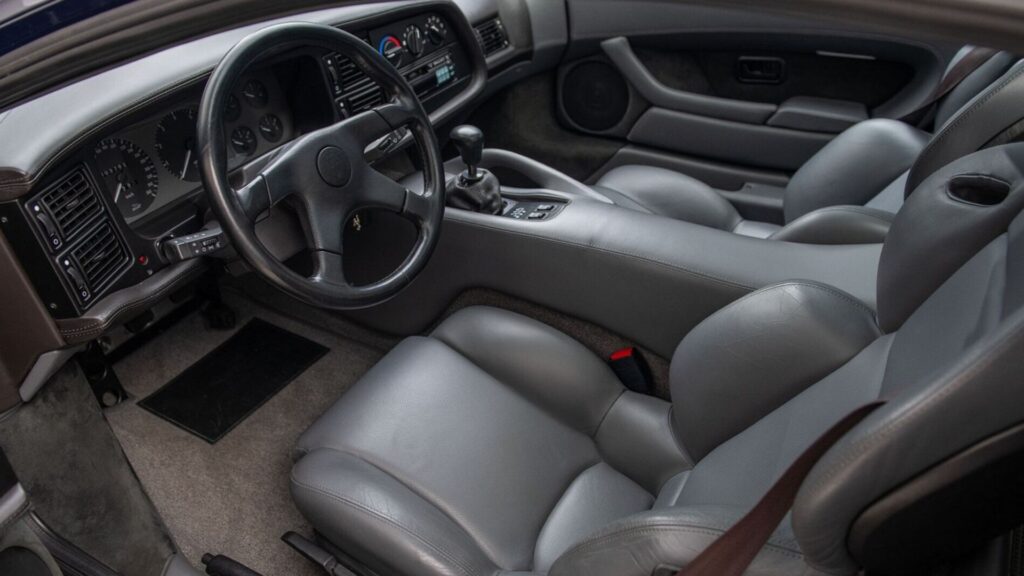
This particular example tells a calmer story. Its previous owner held it for 25 years before the car passed into the Hamilton collection, and it has covered just 3,277 miles from new, accompanied by a complete service history. In a market where XJ220 values have long carried the weight of that troubled launch narrative, unbroken, single-family stewardship like this is worth more than any spec sheet. It’s the difference between buying a car people once argued about and buying a piece of history nobody touched.
The Jaguar was the standout of a 27-car collection assembled over decades by Anthony Hamilton — a name familiar to any Formula 1 follower as the father of seven-time World Champion Lewis Hamilton, but notable here on its own terms as a genuinely considered body of work. What sold under the Hamilton name wasn’t a trophy case of obvious blue-chip metal. It was deliberately broad: early Austin-Healey and Triumph sports cars, a run of Mini variants, Jaguar E-Types alongside tool-room C-Type and XKSS recreations, Mercedes-Benz SLs, Aston Martins spanning the V8 Series 3 to the Lagonda, and modern David Brown Automotive restomods. Taken as a whole, it reads less like an investment portfolio and more like the working library of someone who has spent decades actually driving British motoring history, not just storing it — a distinction worth remembering, and one we explored in depth inside the Estate of John Harrah, a collection built on the same principle of depth over trophy-hunting.
Three more UK records fell alongside the Jaguar: £241,875 for a 9,201-mile, first-registered-keeper 2007 Porsche 911 (997.1) GT3 RS making its first appearance on the open market since new; £104,625 for a painstakingly recreated ‘Eleanor’ Mustang built around an original 1967 390 GT; and £72,000 for a matching-numbers 1973 Citroën SM. None of those cars compete in the same category as the XJ220, and that’s the point. Bidders weren’t chasing one type of car that afternoon — they were paying record money across driver-focused Porsches, replica-built movie icons and idiosyncratic Franco-Italian grand tourers alike.
The four world records make an even sharper argument. A pair of ex-works 1985 Opel Manta 400s, campaigned in period by rally stars including Russell Brookes and Jimmy McRae, each sold for £157,916 — serious money for Group B-era rally saloons that most collectors outside British rallying circles would struggle to place. A David Brown Automotive Mini Remastered brought £92,250. A 2015 Subaru Impreza WRX STI S207 NBR, one of just 100 Yellow Edition examples built and believed to be the only one in the UK, made £43,875. And a 1985 BMW Alpina B10 3.5 — a factory-built E28 that most casual enthusiasts have never heard of — sold for £48,375.
None of those four cars would have been called “collectible” by the standards that governed this hobby a generation ago. They’re being bought now by buyers who grew up wanting them, rather than inheriting a taste for them — the same generational shift we’ve tracked as Gen X and millennial buyers reshape the market. What’s changed isn’t the cars. It’s who gets to decide what counts as significant.
A caveat belongs here, in the interest of precision: “world record” claims for niche models like a Group B Manta or a UK-market Impreza S207 reflect a shallow pool of comparable public sales, not necessarily deep, liquid demand. A single determined underbidder can manufacture a record in categories this thin. But eight records in one sale, spread across four genuinely different genres of car, is not noise. It’s a pattern, and patterns are what serious collectors should be reading for.
For buyers moving into these segments — a shift we’ve tracked in our own coverage of the best JDM cars worth investing in and the most collectible modern BMWs — the lesson from Silverstone is that the fundamentals haven’t changed even though the price tiers have. The Impreza that set a record wasn’t just rare; it was a documented, single-market example in a colour and specification few surviving cars share. The Alpina wasn’t just an obscure BMW; it was factory-built, UK-supplied and maintained with real paperwork. Rarity opened the door. Documentation and originality decided the price.
The £506,250 Jaguar will be the number that travels furthest from this sale, and it deserves to: a 3,277-mile XJ220 with a quarter-century of single ownership is a genuinely significant car, Hamilton name or not. But collectors reading the full results sheet will notice something else. The market’s centre of gravity is widening, not shifting — blue-chip British sports cars and rally-bred hot hatches setting records in the same afternoon, bought by an increasingly global and increasingly generationally diverse pool of bidders. That’s a more durable story than any single price, and it’s the one worth remembering the next time an “Iconic” sale rolls back into Silverstone.
The collector car market, every weekday morning.
Auction results, price moves and what’s crossing the block, read in four minutes. Free, from Modern Car Collector.
No spam, unsubscribe in one click. Or read more about the Brief.
Related Posts:
- Everything Modern Car Collector Covered Last Week
- Record Ferraris, Rare Icons and 15,000 RPM: The Week…
- Weekend Wrap-Up: Collector Car Auctions of July 24–26, 2026
- The Collector Car Market Paid Up for Certainty This…
- The Complete Guide to the Yenko Camaro
- Collector Car Auctions July 9-12: Bugatti Chiron,…
 Elizabeth Puckett
  John Lloyd