

On June 13, Bonhams sold cars inside the museum that holds the Harrah Collection, and the headline number is the least interesting thing about it. The National Automobile Museum in Reno announced the no-reserve sale in February as 110 motorcars, more than 80 from the Harrah Collection and 30 from the Minden Automobile Museum in Minden, Nevada. Bonhams reported that every lot it offered sold, for a combined $5,256,664. But the sale matters less as a market event than as an act of editing: a museum deciding which parts of a legendary collection still belong in its story.
A collection built on originality
Bill Harrah made his fortune in Nevada hotels and casinos, and by the museum’s account he assembled roughly 1,400 vehicles, one of the largest and most historically significant collections in the world. By several accounts he started in the late 1940s. The museum identifies his first collector car as a 1911 Maxwell AB Runabout. What separated him from other wealthy accumulators was a refusal to settle for tired cars: he insisted on restoration to original condition, opened his own restoration shop and hired restorers from around the world. The result was a collection weighted toward experimental cars, one-offs and sole survivors rather than the usual roll call of famous nameplates.
It was also personal. The museum lists Harrah’s own 1956 Continental Mark II among its Harrah cars, along with a 1977 “Jerrari,” a Jeep Wagoneer he fitted with a Ferrari V-12 and transmission. Harrah’s personal cars sit in the collection alongside its rarities, a reminder that this was a working enthusiast’s accumulation as well as a historical one.
Scattered once, saved in part
Harrah died in 1978, and Holiday Inns acquired his company and the car collection. The plan to sell the cars set off a public outcry in Nevada. According to the museum, Holiday Inns responded by donating 175 cars and the research library to a future nonprofit museum, a gift it describes as the largest corporate philanthropic gift in American history at that time. The rest of the collection was sold, mostly at record-setting auctions in 1984, 1985 and 1986. The National Automobile Museum opened on November 5, 1989.
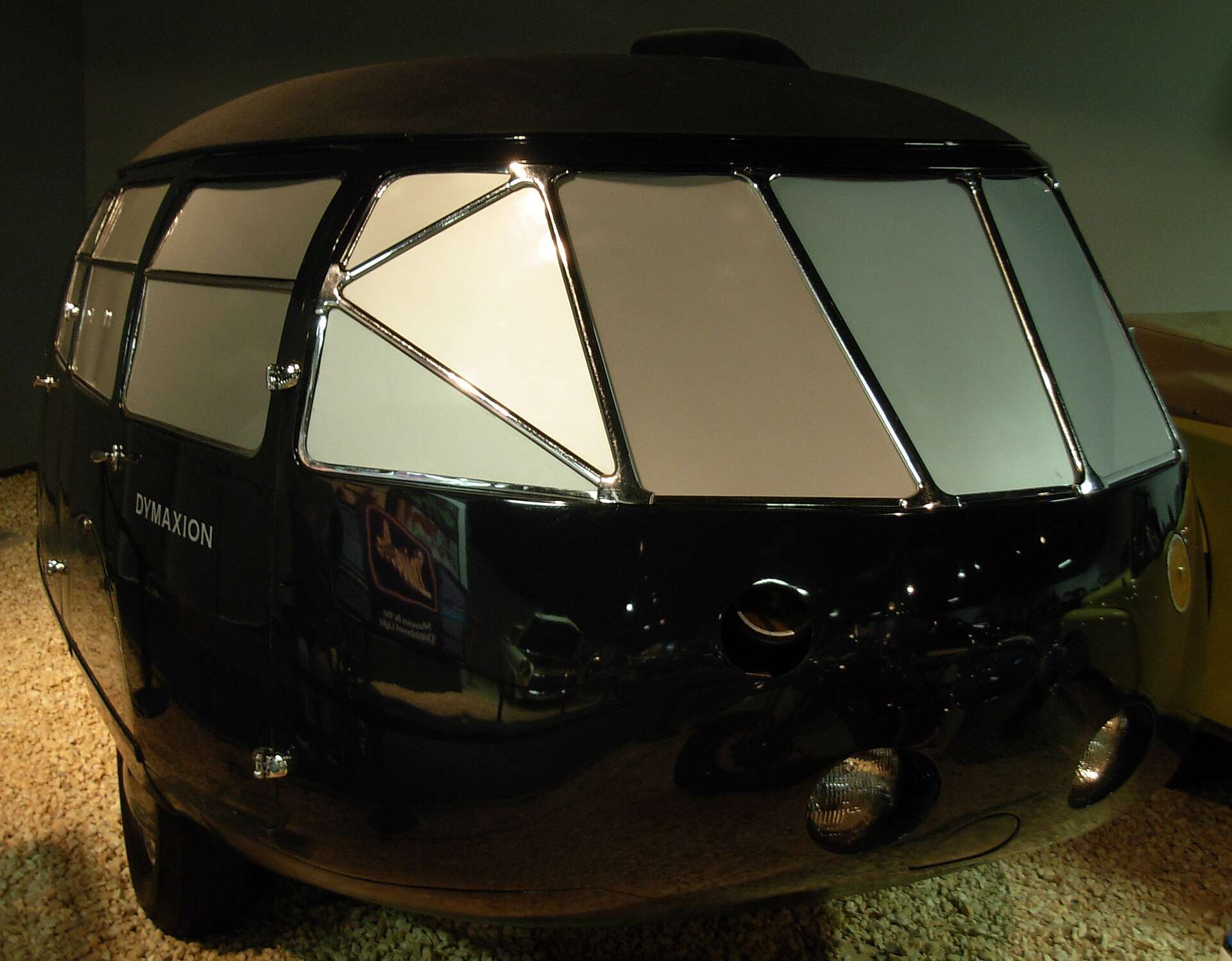
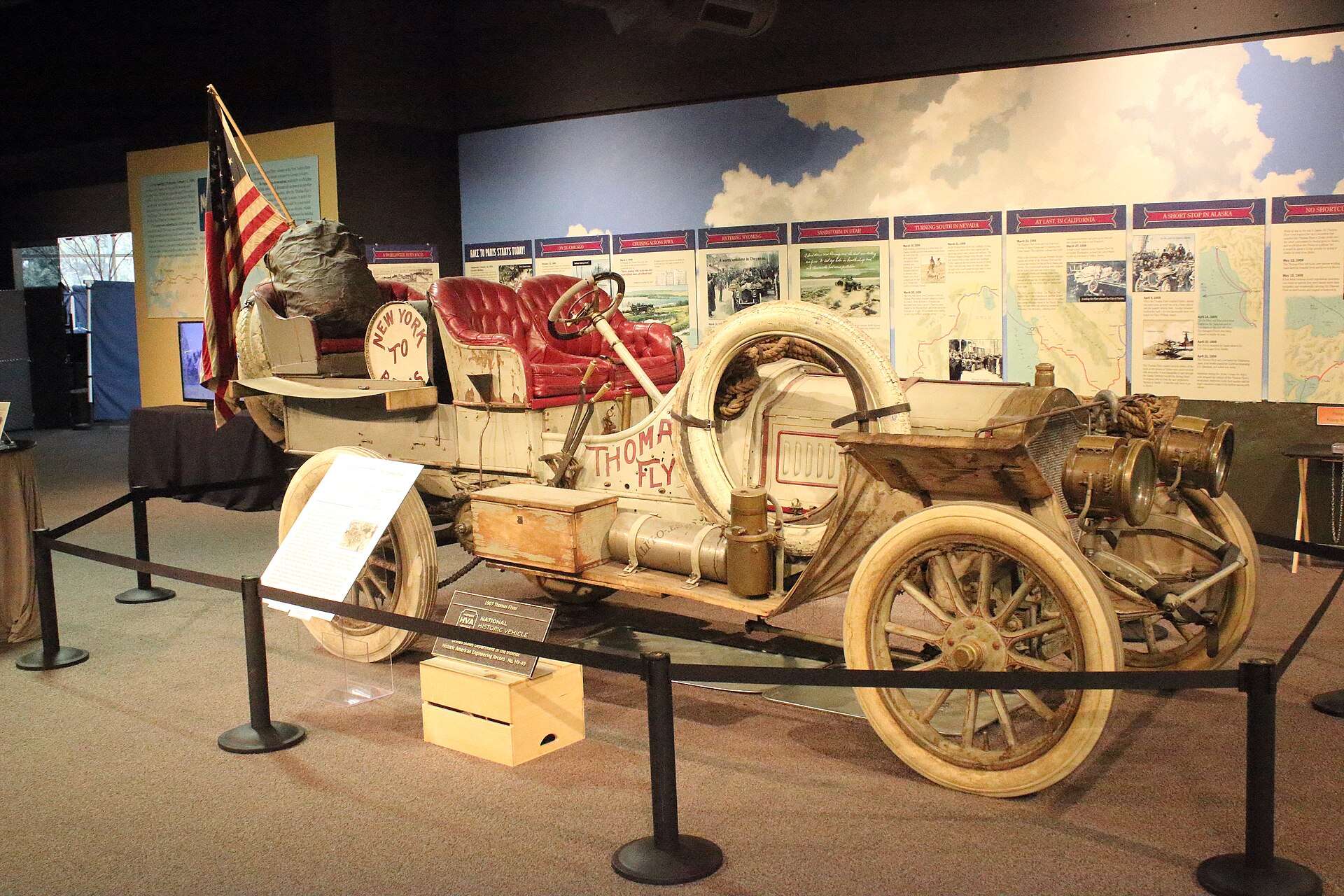
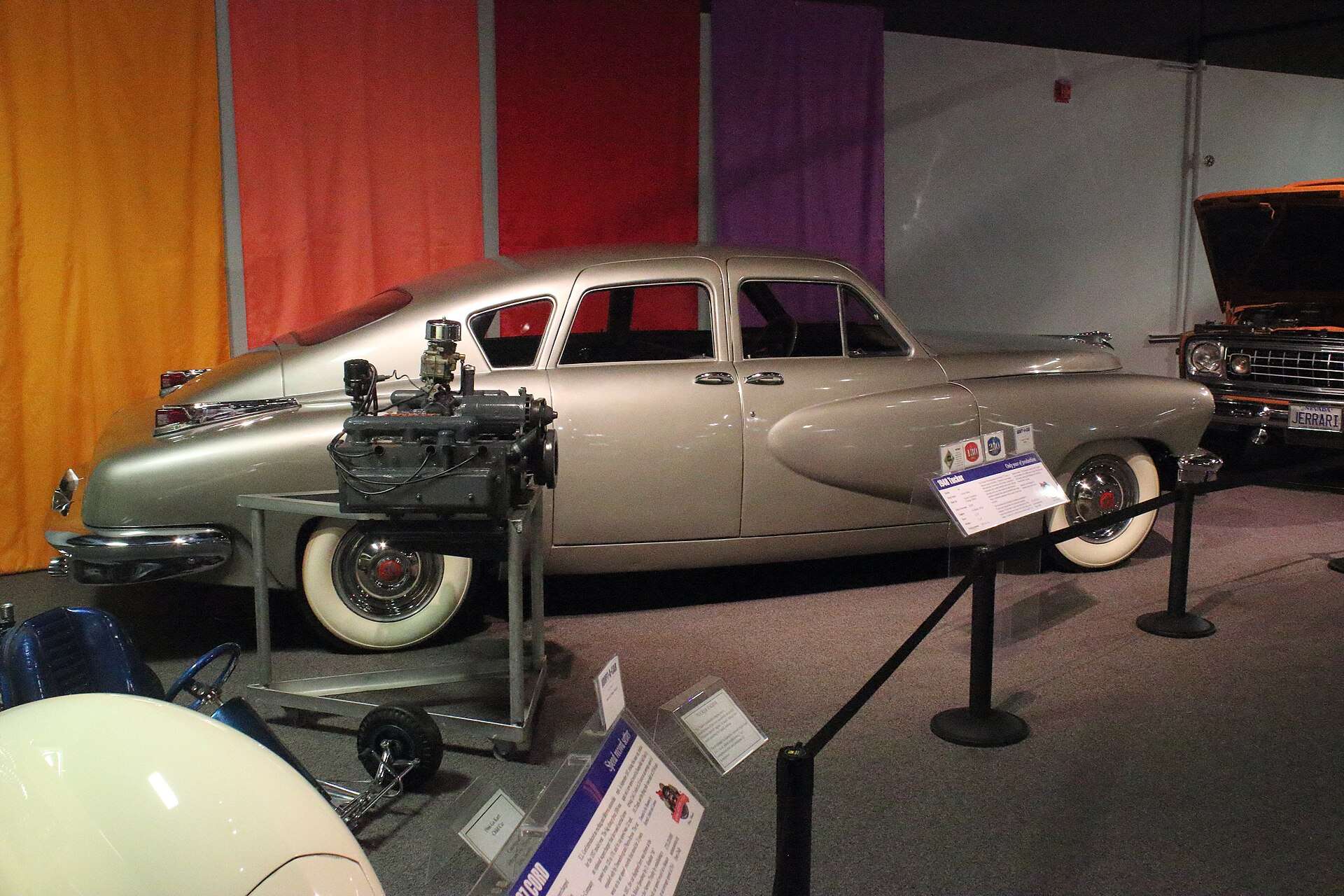
That history is why June 2026 reads differently from 1984. The first dispersal was a corporate liquidation. This one was a curatorial decision, made after a multi-year, $4 million renovation, with the museum saying it wanted to streamline the collection and create more room for education, events and rotating exhibits. The museum added that it intends to remain one of the world’s leading automobile museums, and its online vehicle inventory continues to list cars such as the Dymaxion, the 1907 Thomas Flyer and a 1948 Tucker 48.
What the lots actually said
The top of the results sheet is a useful read on what the Harrah name was worth. Prices below include buyer’s premium and come from Bonhams’ results as reported by Motor Sports NewsWire and Old Cars Weekly.
| Lot | Price | Why it mattered |
|---|---|---|
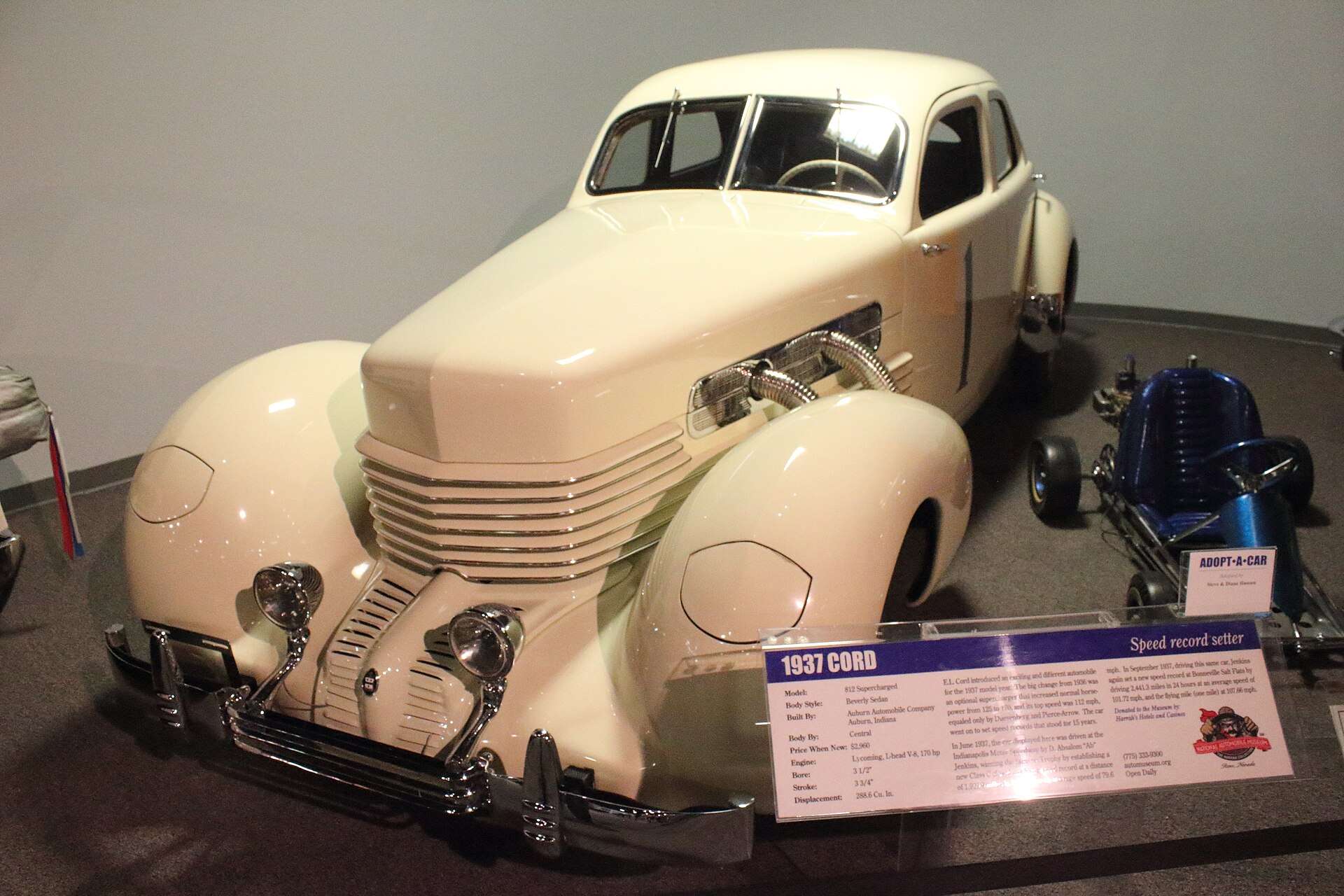
| 1936 Experimental Supercharged Cord | $358,400 | One of five or six prototypes; formerly E.L. Cord’s own car |
| 1933 Franklin Series 17-B Club Brougham | $313,600 | Estimated at $90,000–$130,000 |
| 1960 Fiat Pininfarina “Y” | $268,800 | Experimental aerodynamic study, a gift from Sergio Pininfarina to the museum |
| 1971 Duesenberg II SSJ Roadster | $156,800 | Originally bought by Harrah’s Club; later owned by Sammy Davis Jr. |
| 1959 Scimitar Station Sedan Experimental | $156,800 | One of three Brooks Stevens concepts; the only retracting-roof wagon |
| Ex-Carrera Panamericana Lincoln Capri Custom Coupe | $117,600 | Only known survivor of Lincoln’s 1954 Mexican road race program |
Read as a group, the sale rewarded story density over marque heat. The best-selling car was a prototype, not a production Cord; for context, MCC has recently looked at a restored 1937 Cord 812 Supercharged Phaeton and the Tom Mix Cord 812 Phaeton, for a look at production Cords. The Cord prototype was used by the Cord family in Chicago and Beverly Hills between 1936 and 1940, according to Bonhams. A prewar Franklin finished at more than double the top of its estimate. Our interpretation: buyers paid for singular objects with documented purpose, and a museum paper trail that stretches back decades.
The Scimitar is the sale in miniature. Designer Brooks Stevens created three concepts for Olin Mathieson Chemical Corporation to showcase aluminum in car construction, and Reutter of Stuttgart built the station sedan on a 1959 Chrysler New Yorker chassis. The trio was shown at the 1959 Geneva Motor Show and the 1961 New York International Automobile Show. It is exactly the kind of car that rarely trades privately because few people know it exists. The Lincoln tells a similar story: Ray Crawford and Enrique Iglesias drove it to a large stock car class win and ninth overall in the fifth and final Carrera Panamericana, averaging 92.22 mph over more than 20 hours.
The jet car that did not sell
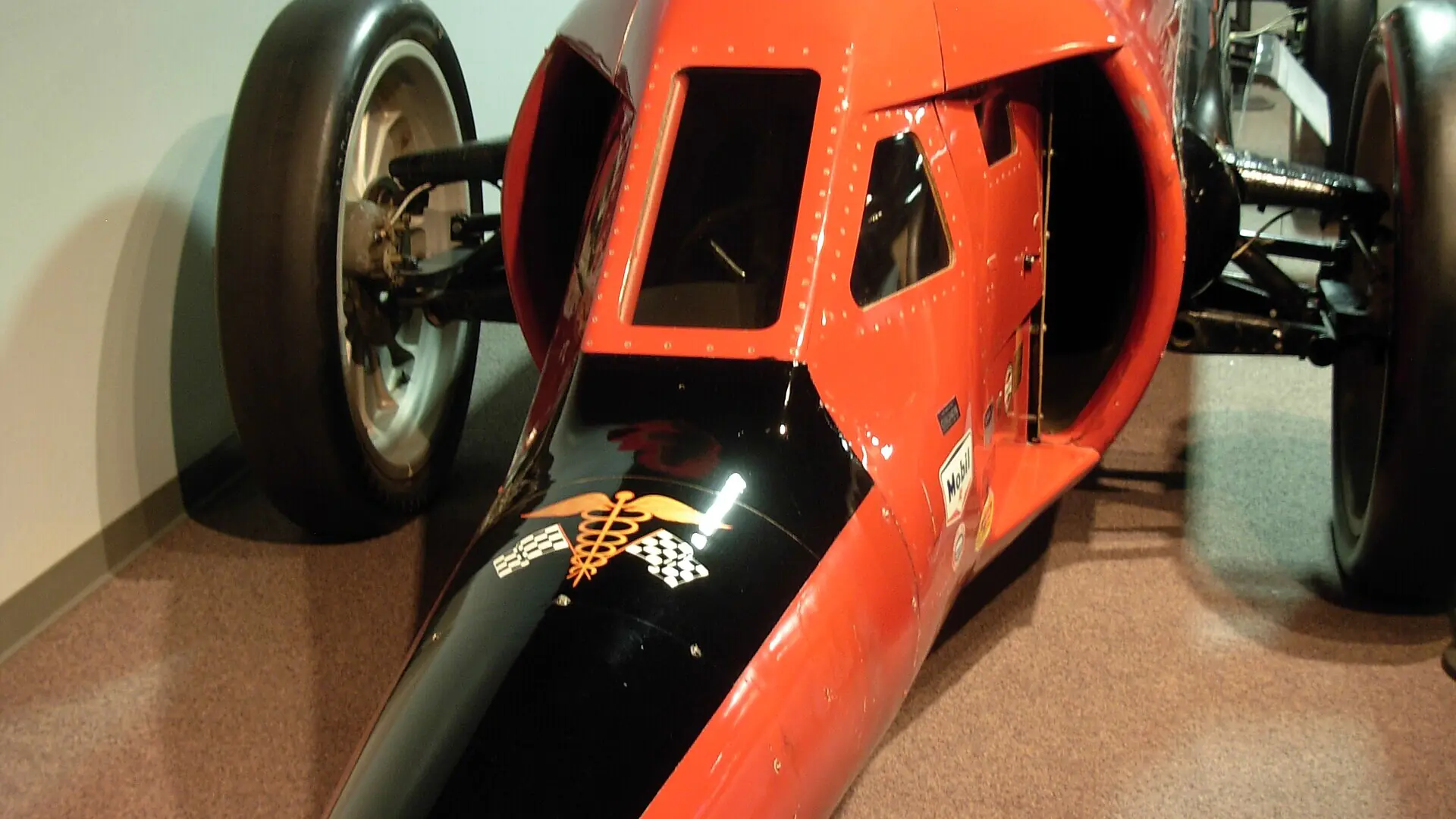
The most extreme car in the Harrah group was also the one that did not change hands in Reno. Dr. Nathan Ostich, a Los Angeles physician, built the 1960 Flying Caduceus around a surplus General Electric J47 turbojet rated at 5,200 pounds of thrust. Firestone developed special aluminum wheels and tires for it, and it is widely regarded as the first purpose-built jet-powered land speed record car. It reached 359.7 mph in 1963 but never held the record. Bonhams carried an estimate of $70,000 to $90,000. The lot was withdrawn before the sale and later consigned to Bonhams’ Laguna Seca auction in August. MCC has not verified a result for that second offering, so the “every lot sold” figure should be read as every lot offered, not every car announced.
Why a museum sale is not the end of a collection
Museum deaccession is becoming a recognizable pattern in the collector market. MCC has followed the Eendenmuseum’s 300 Citroën 2CVs and the Mullin Collection’s French cars coming to market without reserve, and each raises the same question: what is a collection for once it has been preserved? Reno’s answer is that a collection should be an argument, not an inventory. Whether or not collectors agree with every cut, keeping the Dymaxion and the Thomas Flyer in the galleries while releasing other cars is a recognizable curatorial choice.
For collectors, the practical takeaway is provenance. A car that spent decades in a museum with Harrah-era records is a different proposition from one with a thin ownership story, and our reading of the Bonhams results is that museum provenance was rewarded. The caution is equally plain: long static display is not the same as active maintenance, so any buyer should budget for recommissioning, and the Harrah name should support a purchase rather than justify one. One unrelated note for searchers: MCC also covered the Estate of John Harrah sale in Reno, which has no documented connection to Bill Harrah or the museum.
The most interesting number in this story is not $5.26 million. It is 175: the cars Holiday Inns gave away in the 1980s, when it could have sold them, which gave Reno a collection to edit four decades later. The Harrah Collection was scattered once and rescued in part. In 2026 it was refined, and what remains in the galleries is now a deliberate statement rather than a leftover.
The collector car market, every weekday morning.
Auction results, price moves and what’s crossing the block, read in four minutes. Free, from Modern Car Collector.
No spam, unsubscribe in one click. Or read more about the Brief.
Related Posts:
- The 8 Most Expensive Cars for Sale at Bonhams Right Now
- Record Ferraris, Rare Icons and 15,000 RPM: The Week…

- Inside the Estate of John Harrah: A No-Reserve Reno…
- The Collector Car Market Paid Up for Certainty This…
- 18 Steve McQueen Cars and Motorcycles That Have Sold…
- Seven Cars Hidden Since 1939: Why the Somerset…
 Shawn Henry