

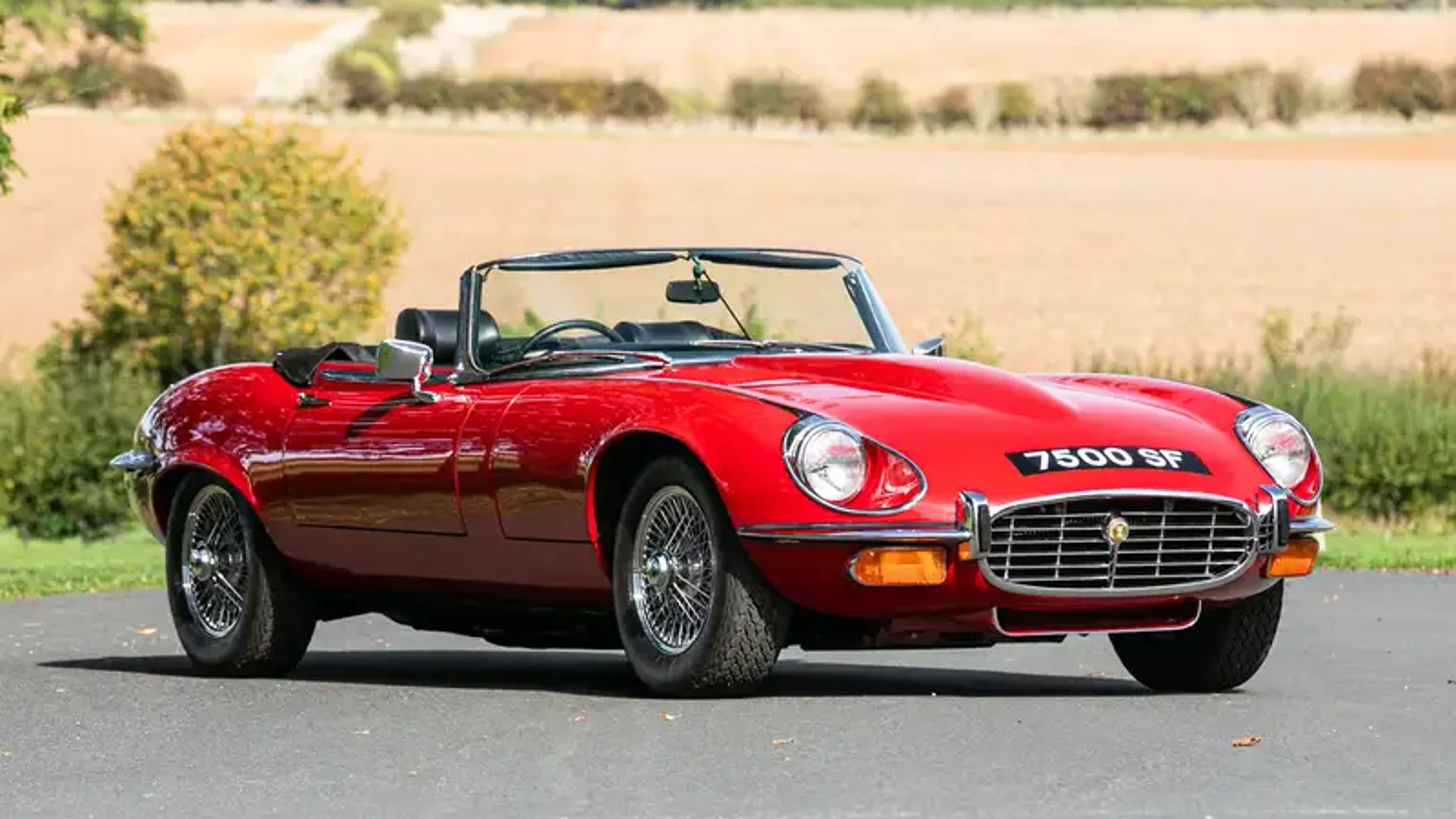
Celebrity provenance usually inflates an estimate. Here it does something more interesting. Iconic Auctioneers will offer a 1973 Jaguar E-Type Series 3 V12 roadster at £60,000 to £70,000 and a 1928 Morgan Supersport 8-valve Anzani three-wheeler at £35,000 to £40,000 at the NEC Classic Motor Show on Saturday, Nov. 14, as Lots 137 and 138. Both come directly from the Ten Tenths Collection of Pink Floyd drummer Nick Mason, and both are priced as cars to be driven rather than trophies to be admired. That is the story, and it is a better one than the name on the consignment.
Mason is one of the rare famous collectors whose reputation rests on use as much as ownership. He has raced at Le Mans, and his cars have a habit of turning up on tracks and rallies instead of behind velvet ropes. The catalogue language is consistent with that: the E-Type is described as “used and enjoyed rather than simply displayed.” For a buyer, that distinction matters more than any liner-note connection.
The Series 3 that the market still discounts
The E-Type is a 1973 Series 3, the final iteration, introduced in 1971 with Jaguar’s 5.3-litre V12 and a longer wheelbase, wider track and flared arches. Purists have always preferred the leaner Series 1, and the market has mostly agreed with them: the early cars command the headlines, the documentation obsession and, as we have seen with Rowan Atkinson’s 1963 car, the provenance premiums. The V12 roadster has been left to the drivers. It is the easiest E-Type to use at modern speeds, and it is the one that rewards a buyer who prefers a good history to a famous one.
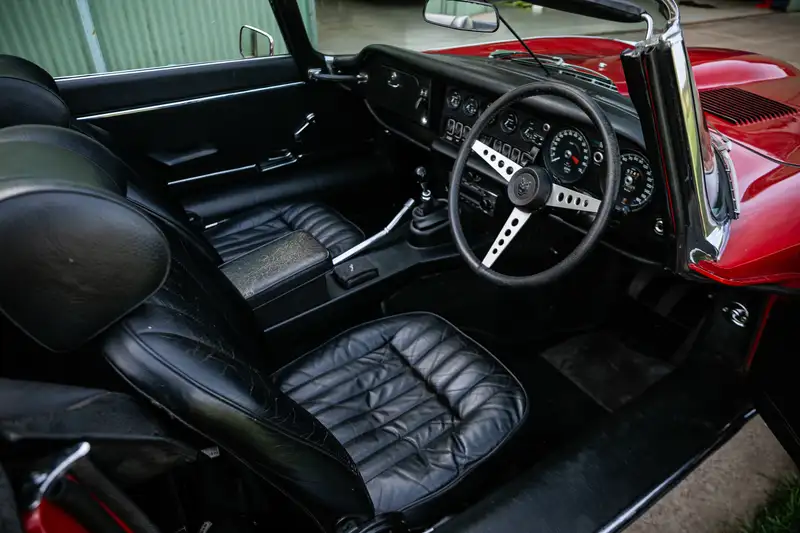
This example is in Signal Red over black, right-hand drive with a manual gearbox, the specification most enthusiasts want. It shows 24,087 recorded miles, was supplied new in the UK, and the registration document lists three former keepers. Mason acquired it from Lord Litchfield in 2007, so the car has been in one set of hands for nearly two decades. It entered a Spanish regularity rally in 2024.
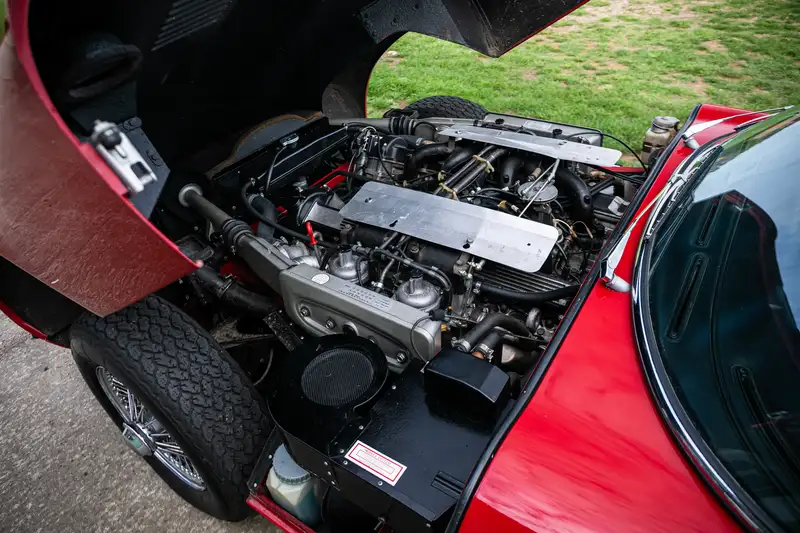
What a serious buyer should examine is on the lot page itself. The paint is older and the seller says it contributes to the car’s “honest, used character,” which is a fair way of saying it is not a concours finish and should not be bid as one. Recent work went into the cooling system, the V12’s traditional pressure point, and the invoices for that work belong at the top of the history file, whose contents are not itemised in the listing. Chassis 1S1505 and engine 7S8044SB should be checked against the Jaguar Heritage Trust certificate, the same exercise we outlined for Series 1 cars. Anyone new to the twelve-cylinder cars should also read our XJ-S buying guide, since the engine and its cooling and fuel-system quirks are shared. Jaguar itself marked 50 years since the E-Type’s final production in 2024, which keeps the model in the conversation without lifting the Series 3 above its station.
A three-wheeler with a documented life
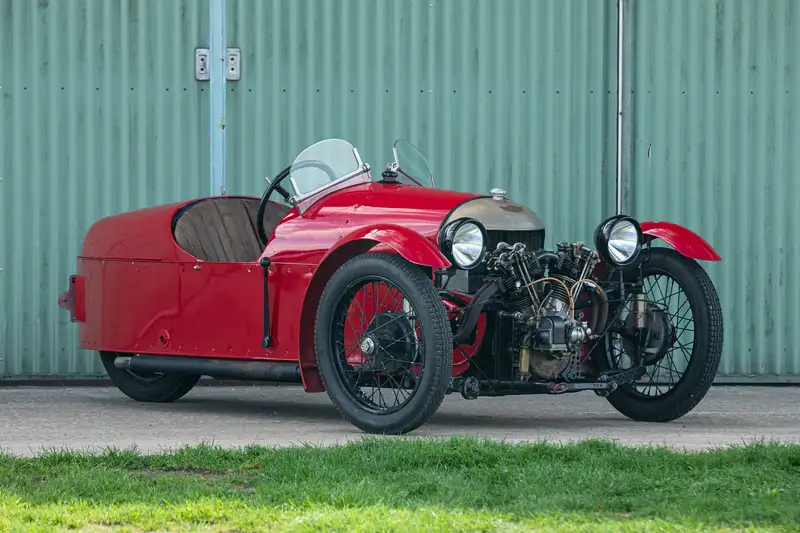
The Morgan is the more interesting car, and the harder one to value. Its chain of ownership is unusually complete. Jim Thoms of Five Docks, Sydney, bought it new around September 1928 through Williams Brothers, and in January 1929 it won at Penrith Speedway, beating Ford and Alvis entries. It stayed in Australia through the Finglass brothers, whose motorcycle collection reportedly ran to some 150 machines, and then to Joe Wilson, who bought it in March 1972 for $200, restored it, and raced it for years in historic and vintage events. Photographs from 1979 show the restored car with Thoms and his friend Mitch Marks, about fifty years after the Penrith win. Mason acquired it in 2014.
The compromises are as instructive as the history. The original JAP engine was gone by the 1960s. After a cylinder barrel broke at Lakeside in 1987, Phil Spencer rebuilt the unit as a 1,320cc Anzani with a concentric supercharger and a large SU carburettor. The car is no longer supercharged, the blower needs reconditioning and is included in the sale, and the car is running but needs recommissioning. The Morgan Three Wheeler Club inspected it in August 2014 and its registrar found the chassis, steering, suspension and axles appear original, recommending an age-related 1928 registration. The vendor puts the included spares at roughly £4,000 to £5,000. It is not a matching-engine car, and the estimate says so.
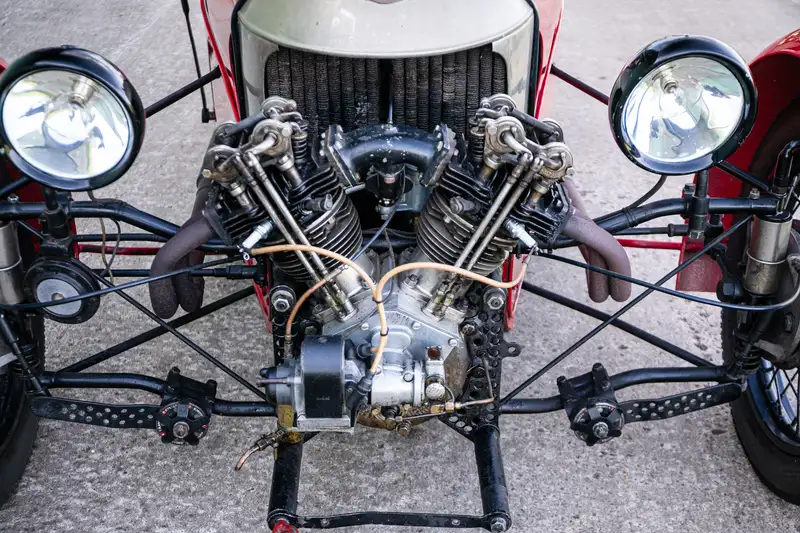
Interest in Morgan’s performance models has not faded; our recent analysis of the Morgan Supersport 400 traced how the name still carries weight. The 1928 car is where that weight comes from.
What the numbers say
The buyer’s premium is 12.5 percent plus VAT, or 15 percent inclusive. At estimate, the E-Type therefore costs roughly £69,000 to £80,500, and the Morgan roughly £40,250 to £46,000, before transport. Collection from the NEC is required by 2 p.m. on Monday, Nov. 16, and Iconic’s listed uplift to storage is £195 plus VAT. For a buyer outside the UK, the right-hand-drive E-Type and the Australian-delivered Morgan raise their own registration questions, which are best answered before bidding.
The test of this sale is simple. If both cars sell inside their estimates, the market is paying for the cars: a usable V12 E-Type with a documented single-ownership stretch, and a competition-proven Morgan with an unbroken paper trail. If they sell well above, it is paying for the name, which is a different and less durable kind of value. Provenance from a collector who drives is worth more than provenance from one who stores, because the first leaves a record of how the car behaved and the second leaves only a record of who owned it. On Nov. 14 we will learn how much the room agrees.
The collector car market, every weekday morning.
Auction results, price moves and what’s crossing the block, read in four minutes. Free, from Modern Car Collector.
No spam, unsubscribe in one click. Or read more about the Brief.


 EL Puckett