

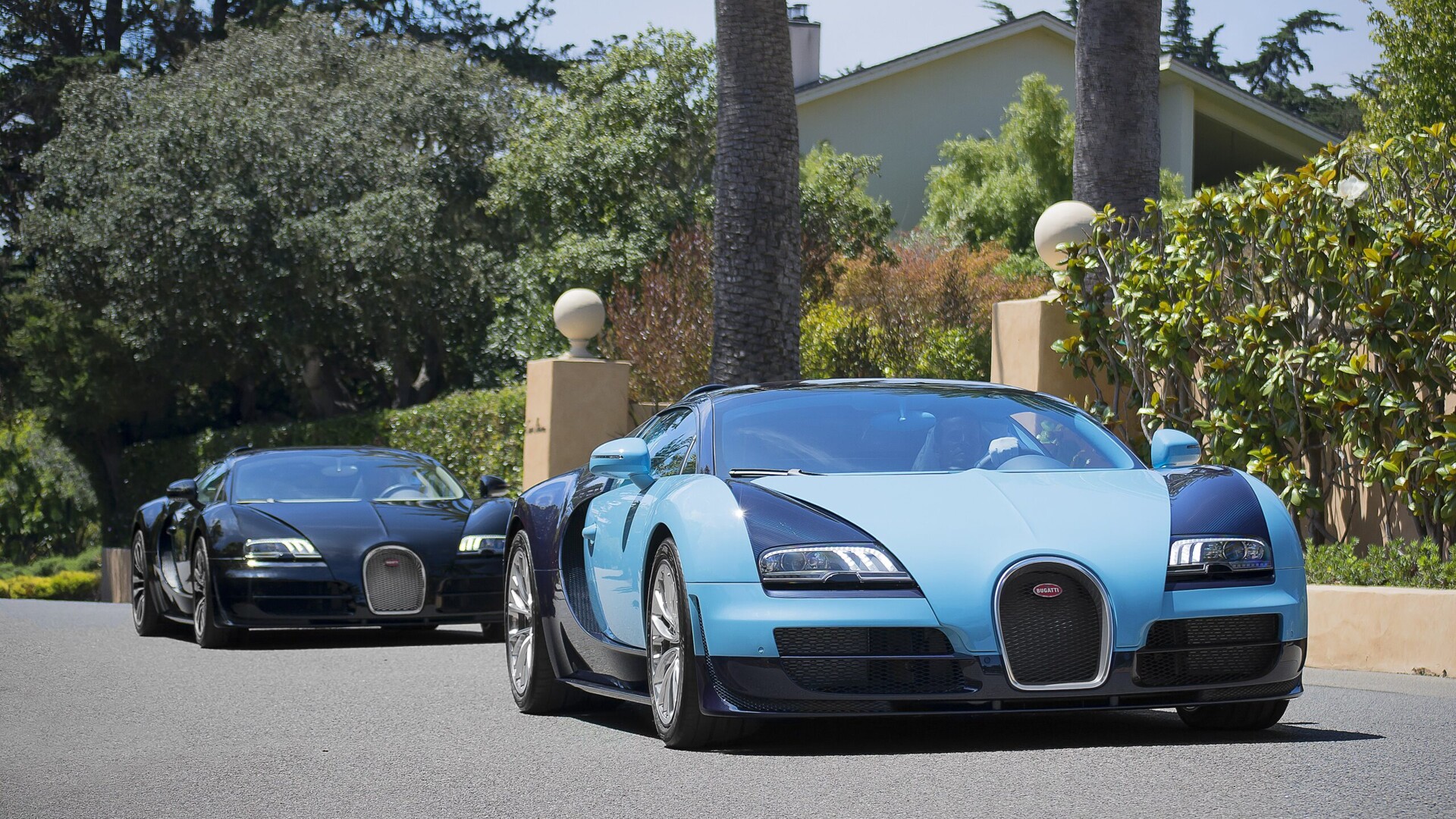
In August 2020, in the middle of a pandemic and with no live audience, Bonhams sold a Bugatti Veyron 16.4 Grand Sport Vitesse ‘Meo Costantini’ through its online Quail sale. It was one of three built and the only one made to US specification, and it had covered fewer than 400 miles. It sold for $1,750,000 including premium. That was less than Bugatti had charged for it new.
Six years later, on September 26 at the Park Hyatt in Zurich, another car from the same series crossed the block. The ‘Jean-Pierre Wimille’ Grand Sport Vitesse sold for CHF 4,505,000, about $5.44 million. RM Sotheby’s called it a world auction record for a Veyron. The two cars share the same basis, the same 1,200 PS quad-turbocharged W16, the same targa roof and the same three-car production run. The Wimille car brought more than three times as much.
We have already covered why the Wimille car itself commanded that money. The bigger question is what the result means for the other seventeen Bugatti Veyron Legends cars. Our answer is that it means less than their owners might hope, and more than the series ever meant as a whole. Zurich did not re-rate Les Légendes de Bugatti. It re-rated one chapter of it. Collectors don’t buy series. They buy chapters.
What the Bugatti Veyron Legends Series Actually Was
Bugatti built Les Légendes in 2013 and 2014, as Veyron production neared its end. There were six editions of three cars each, 18 in total. All were based on the Grand Sport Vitesse, the open Veyron with the 1,200 PS engine. RM Sotheby’s catalogues put Grand Sport Vitesse production at 92, out of the 150 open cars in a total Veyron run of 450. Bugatti then launched each edition at a different venue: Pebble Beach, Frankfurt, Dubai, Geneva, Beijing, and finally The Quail during Monterey Car Week in August 2014.
The prices were set at launch. Bugatti said in February 2014 that the first three editions had sold out at roughly €2.2 million net each. The ‘Black Bess’ was listed at €2.15 million, and the final ‘Ettore Bugatti’ at €2.35 million. According to Bugatti, all 18 cars were sold before the last edition was shown, and a set of all six carried a combined net price of €13.18 million.
In 2014 it was easy to see these cars as very elaborate trim packages: a new paint colour, a signature on the fuel cap, a racetrack outline on the rear wing. The 2020 Bonhams result shows that for years the market largely saw them that way too. A Legends car was valued as a Veyron with a story attached, and the Veyron was valued as a used hypercar.
What Changed Between Quail 2020 and Zurich 2026
Some of the gap comes from circumstance, and the comparison should be read with that in mind. The Costantini sold online in a market still working out how to trade seven-figure cars without a room full of bidders. It is also a different edition from the Wimille car. The price gap cannot be explained by mileage either, since the Costantini was essentially new and the Wimille car had covered 3,766 km.
Most of the gap comes from how the market now views the Veyron itself. The W16 era is over. Bugatti has built the final road-going W16, and its successor uses a different engine. That makes the Veyron the first chapter of a finished story rather than an ageing flagship. The standard cars have moved as well. Broad Arrow sold a low-mileage 2010 coupé for $2,205,000 in Las Vegas last October, which it called a record for a standard Veyron. The same thing happened with the EB110 once collectors began pricing individual cars on their paperwork and specification rather than on the model name.
When a model moves from the used-car market to the collector market, buyers stop asking what it does and start asking what it means. The Legends cars were built to answer that second question. For most of their life the market wasn’t asking it. Now it is.
Not Every Legend Borrows the Same History
This is where owners of the other editions should read Zurich carefully. Each Legend is a tribute, and a tribute edition is only worth as much as the history it can credibly borrow. The six editions borrow very different kinds of history.
Jean-Pierre Wimille. This edition has the strongest claim, and not only because Wimille won Le Mans for Bugatti twice. In 1937 he won with Robert Benoist in the Type 57G Tank, which inspired the car’s Bleu Wimille and exposed dark-blue carbon finish. In 1939 he won again in a Type 57C Tank, and his co-driver was Pierre Veyron, the man the modern car is named after. It is the only Legend where both the tribute and the car carrying it are named after drivers from the same winning Bugatti. That is a very hard story to repeat.
Meo Costantini. This is also a competition story, and a strong one. Bartolomeo Costantini ran the factory team and won the Targa Florio twice in a Type 35, the most successful racing Bugatti. Bugatti based the car on the Type 35: Bugatti Dark Blue Sport carbon, polished aluminium panels, the Madonie circuit outline under the wing, and racing scenes laser-engraved into the door leather. The main difference from the Wimille story is familiarity. Collectors know Le Mans far better than they know Sicily.
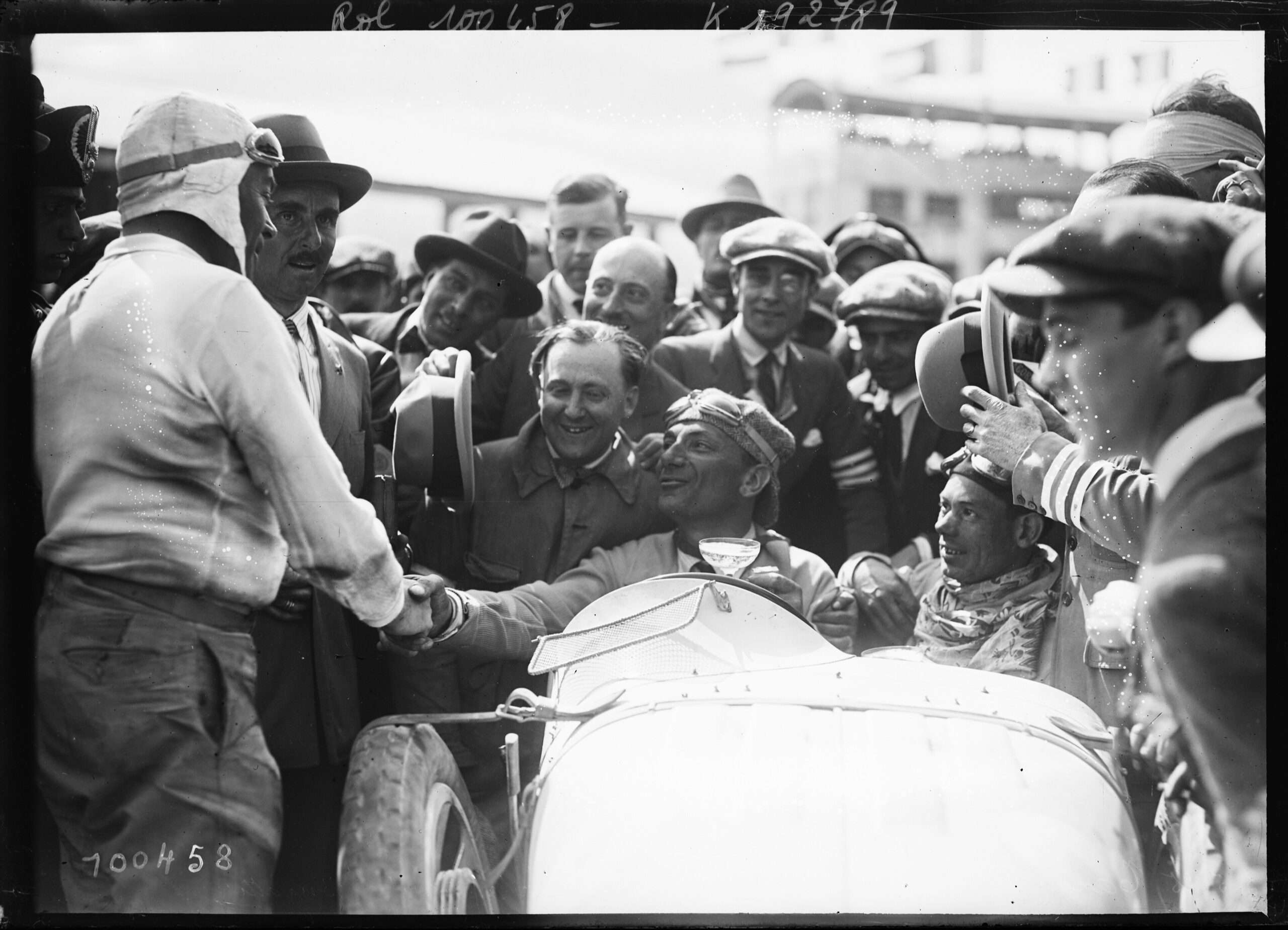
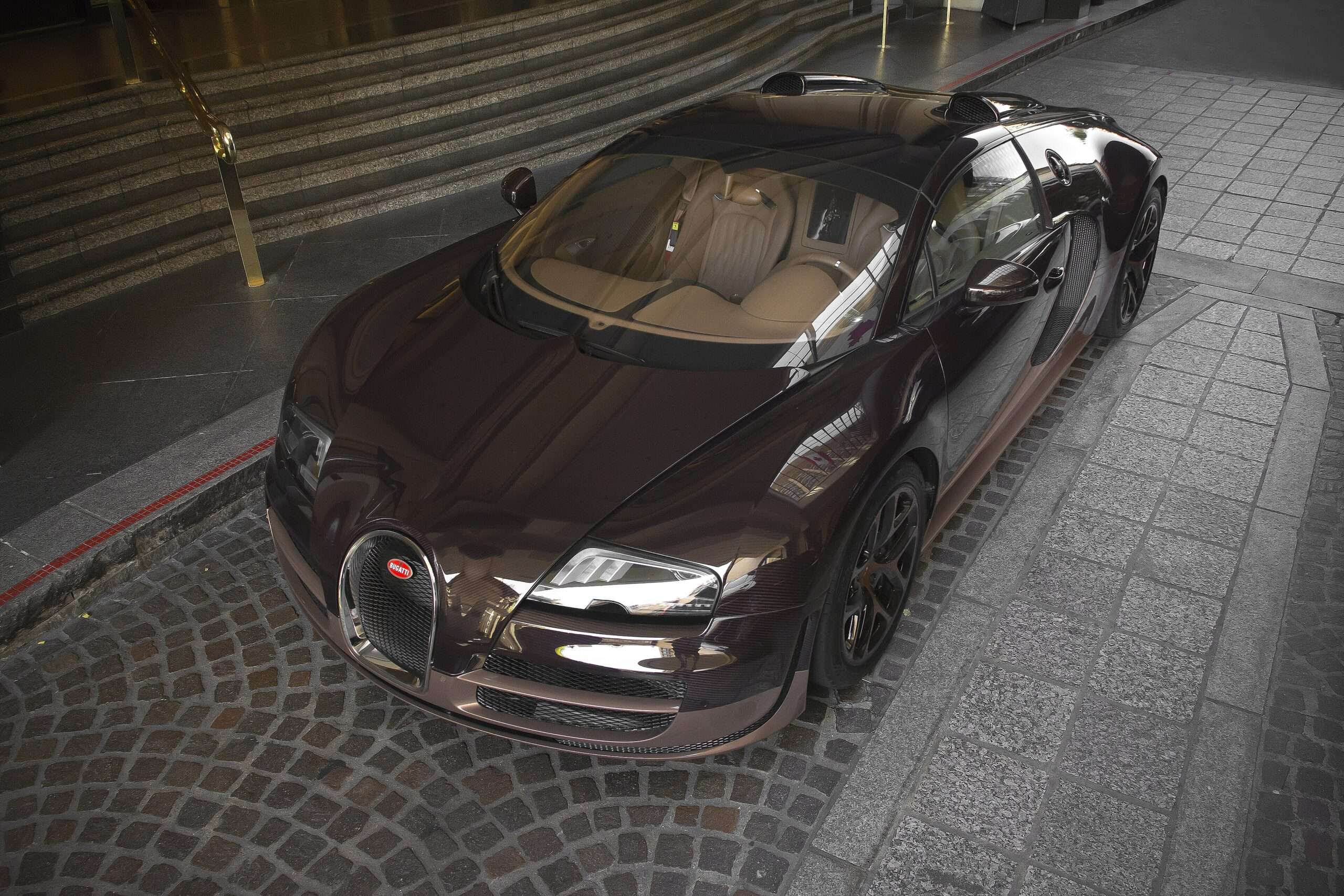
Jean Bugatti. This edition pays tribute to the Type 57SC Atlantic ‘La Voiture Noire’, which has been missing since the Second World War. It has jet-black exposed carbon, platinum-finished badges and a rosewood gear selector. It borrows from the most romantic mystery in the marque’s history. That is a design story rather than a racing one, but few design stories are stronger.
Ettore Bugatti. The final edition pays tribute to the founder and the Type 41 Royale. It has hand-polished aluminium at the front, dark-blue carbon at the rear, and cordovan leather on the parts the driver touches. It was the most expensive Legend when new, which reflects the importance of its subject.
Rembrandt Bugatti and Black Bess. These two borrow from art and early aviation. The Rembrandt car honours Ettore’s sculptor brother, the man behind the dancing elephant, and has a cast bronze elephant set into the console. Black Bess recalls the Type 18 that aviator Roland Garros bought in 1913. It carries 24-carat gold trim and door panels hand-painted with the Type 18 and Garros’s Morane-Saulnier monoplane. Both are among the most highly crafted cars Bugatti built in the Veyron era. Neither has a racing victory behind it.
What follows is our interpretation, not market data, and it should be read that way. We would expect the competition editions, Wimille first and Costantini second, to lead any future ranking of the series, with the Atlantic tribute close behind because of the legend it draws on. The art and aviation editions will depend on a different kind of buyer, one who values craftsmanship over a racing record. Those buyers exist, but at this level there are fewer of them. That does not make those cars weaker objects. It makes them less liquid ones.
What the Wimille Car Brought Besides Its Name
The story did not do all the work. RM Sotheby’s catalogue gives a clear history. The car was delivered new to Dubai on May 21, 2014. Bugatti Dubai serviced it in May 2016 at 655 km and again in October 2017 at 2,553 km. It later had owners in Germany and Switzerland. It showed 3,766 km when catalogued and came with its owner’s guides. It was sold on a bill of sale, and it sat in Switzerland on a temporary import bond, so the buyer must either export it or pay Swiss VAT and duties. These are the details behind the headline figure. Our earlier analysis of the lot covers them in more depth.
The car also had the right setting. Zurich was a focused sale that grossed CHF 16.3 million. The Wimille car led the results, ahead of a 1991 Ferrari F40 at CHF 3,323,750 and the René Arnoux Miura P400 S at CHF 1,805,000. As our market brief noted, several newer hypercars in the same sale did not sell. On that evening, history outsold performance.
What Owners and Buyers of the Other Seventeen Should Take From This
Don’t value your car from Zurich. One public result for one edition is a data point, not a price guide. Each edition has three cars, most change hands privately, and the next public sale of any given edition may be years away. The honest comparisons for a Costantini are a single 2020 result and whatever private sales its owners are willing to disclose.
The bespoke details are the car. On a standard Veyron, a damaged interior panel is expensive but replaceable. On a Legend, the hand-painted leather, the engraved door panels, the gold and platinum trim and the cast elephants are the difference between it and an ordinary Grand Sport Vitesse. Buyers should confirm that every edition-specific part is original, undamaged and documented. Any replacement should be traced to Bugatti itself.
Specification and market still matter. The Costantini that Bonhams sold was the only US-specification example of its edition. That is useful to an American buyer and a complication for everyone else. Registration status, import history and the tax position where the car currently sits all affect the real cost of buying it. That is especially true of cars sold under temporary admission, as the Wimille car was.
Service history is not optional. A Veyron that has barely moved still needs its time-based maintenance. A service record that ends years before a sale needs an explanation. With only three cars per edition, the next buyer will compare your file with the other two.
The Lesson Without the Price
Remove the CHF 4.5 million and Zurich still teaches something useful. Bugatti’s first owners bought a set of six stories at roughly equal prices. The market now prices them one by one. Over the long run, a limited series does not keep the value it had at launch. It keeps whatever value each chapter can support on its own.
The Wimille car had the best chapter: a double Le Mans winner whose 1939 co-driver’s name is written on the car. The other seventeen Legends are still exceptional objects, still among the rarest Veyrons, and still tied to a closed period of Bugatti history. But each will be judged on the strength of its own story, not on what the Wimille car made in Zurich.
The collector car market, every weekday morning.
Auction results, price moves and what’s crossing the block, read in four minutes. Free, from Modern Car Collector.
No spam, unsubscribe in one click. Or read more about the Brief.
Related Posts:
- Collector Car Market Brief: A One-of-Three Veyron…
- The Record Veyron in Zurich Wasn't Bought for 1,200…
- The Collector Car Market Paid Up for Certainty This…

- Collector Car Market Brief: A Belgian Record at…
- 18 Steve McQueen Cars and Motorcycles That Have Sold…

- Record Ferraris, Rare Icons and 15,000 RPM: The Week…

 John Lloyd
  Shawn Henry