

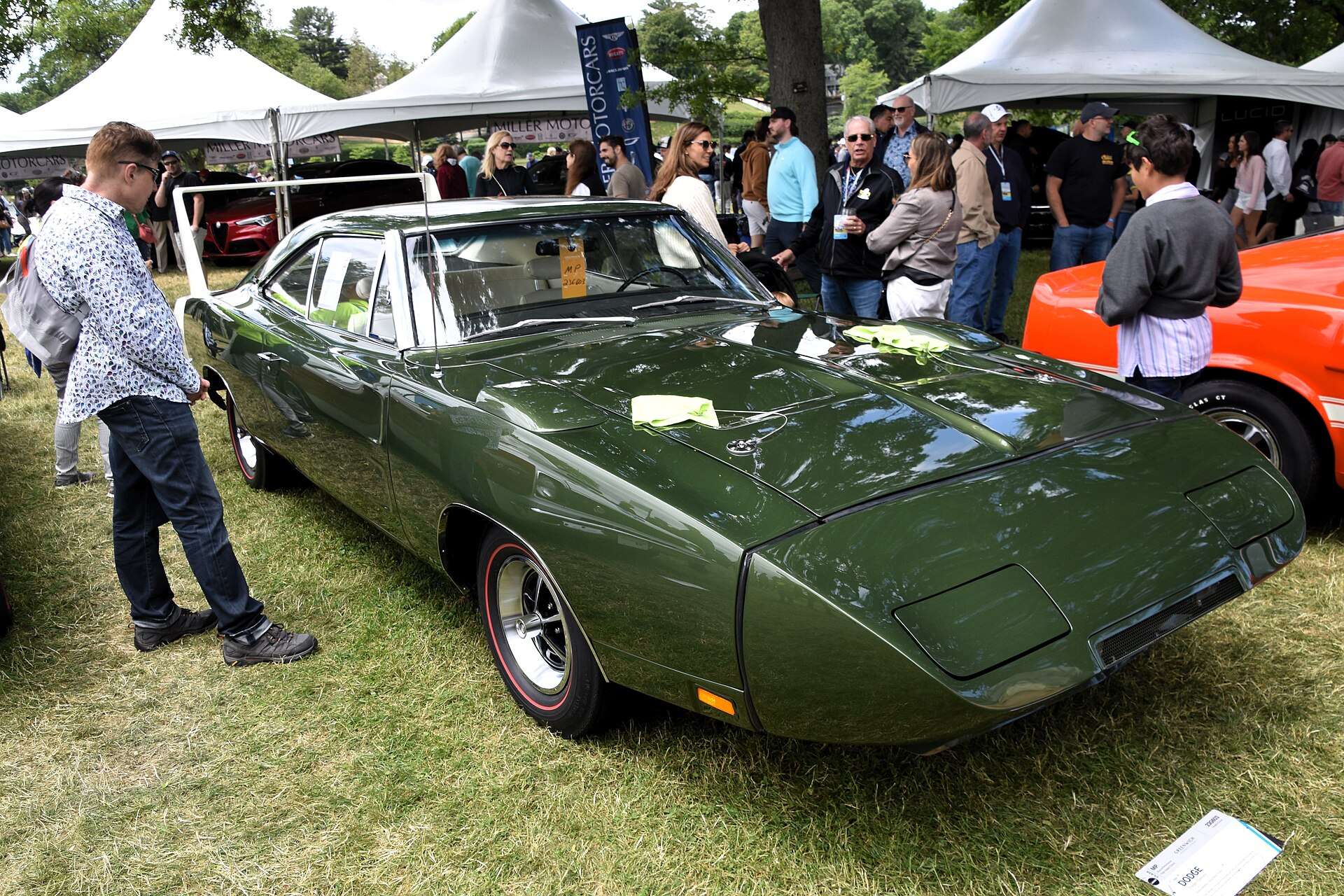
Collector car headlines this autumn have split into two camps: muscle cars are cooling, or muscle cars are surging. Hagerty’s October Price Guide update says both are true, which is the point. The muscle car market is not cracking. It is sorting, and it is sorting by the quality of each car’s story.
The numbers come from Hagerty’s quarterly Price Guide review, published Oct. 29. They are average changes in condition #2 (excellent) values over the prior quarter, which makes them valuation data rather than a tally of sales. Read that way, the spread between the best and worst performers is wider than the market’s overall direction.
Three cars up, three down
On the rise: the 1968–70 Dodge Charger with the 426 Hemi, up 15% on average, with #2 values now running from $160,000 to $189,000. Hagerty ties the move to strong summer sales. The 1968–72 Buick GS 400 and GS 455 gained 4% after several quarters of declines, and the 2005–14 Mustang GT is up 7% for the quarter and 34% since January.
On the way down: the 1970 Plymouth Road Runner Superbird, off 9%; the 1965–68 Mustang GT, off 4%; and the 1968–71 Pontiac GTO, off 3%. Hagerty notes that Ram Air IV GTOs held flat because there is too little reliable sales data to move them, which is an absence of evidence rather than a sign of strength.
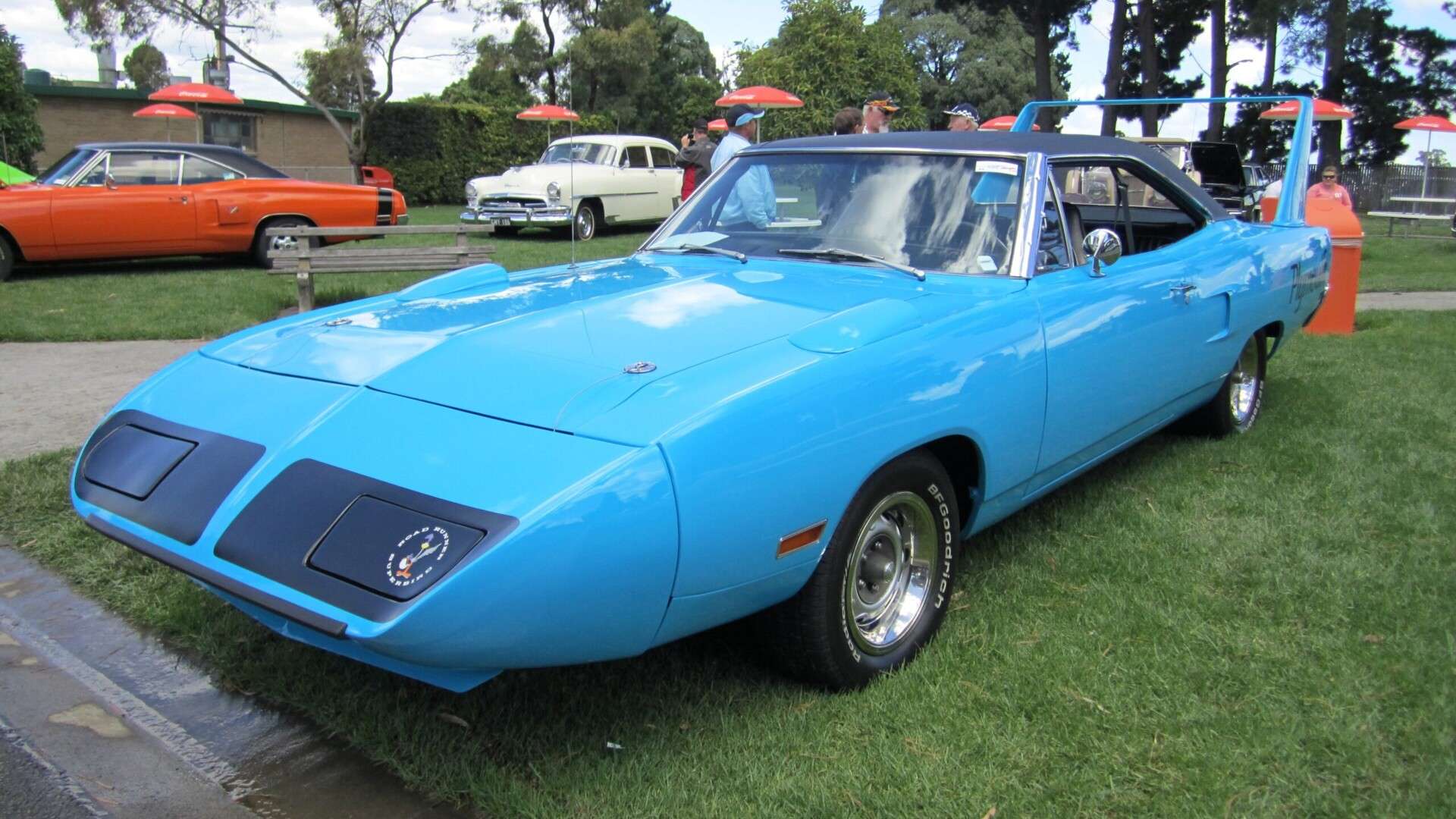
The Superbird tells the real story
Look inside the Superbird’s 9% decline and the pattern is hard to miss. Hemi cars fell 4%, to $384,000. The 440 cars rated at 390 horsepower fell 9%, to $265,000. The 440/375 cars fell 14%, to $154,000. The less rare the powertrain, the harder the fall. In a softer market, buyers keep paying for the car with the strongest claim and walk away from the one that leans on the wing alone.
That is consistent with how Superbirds trade when paperwork is in question. As we noted when a Superbird with a replacement nose reached Hagerty Marketplace, the nose is replaceable and the documentation is not. Our Fall Carlisle report reached a similar conclusion about where buyers put their money.
Why the Charger is moving the other way
The Charger’s rise is not a Hemi story alone. Hagerty’s 2026 Bull Market List called the 1968–70 Charger the “undisputed pop culture heavyweight” of its picks and reported that 52% of Charger owners in its database are Gen X or younger. A car that a new generation of buyers grew up watching has a deeper bench of bidders than one built to win a homologation race. For more on how far Chargers and their relatives have come, see our list of the most expensive Mopars ever sold at auction.
The wider market is sorting, too
This is not unique to muscle. In June, Hagerty reported its Blue Chip Index at 75.54 and its Hagerty Hundred, the most commonly insured vehicles, at 48.32. The 27.22-point gap had widened, and Hagerty called them two different markets. Earlier in the year, the Hagerty Market Index hit a four-year low even as the top end set records. Muscle cars are following the same script inside their own segment.
What serious buyers should take from this
Three things. First, treat a quarterly percentage as a direction, not a price; Hagerty’s own flat Ram Air IV figure shows how thin the data can be. Second, the cars losing ground are not bad cars. They are cars whose story is carried by an option, a nose cone, or a sheet of paper that can be questioned. Third, rebounds tend to start where values have already fallen for several quarters, which is the Buick GS case. One quarter is a signal, not a verdict.
Collectors do not pay for muscle. They pay for evidence that a particular car matters. This autumn, the market is simply charging more for the evidence.
The collector car market, every weekday morning.
Auction results, price moves and what’s crossing the block, read in four minutes. Free, from Modern Car Collector.
No spam, unsubscribe in one click. Or read more about the Brief.
Related Posts:
- Record Ferraris, Rare Icons and 15,000 RPM: The Week…

- For Sale at Freije & Freije Auctioneers: 2017…
- Depreciation and Market Comparison of the Pontiac…
- Scout II vs. K5 Blazer vs. Bronco: Three 1970s 4x4…
- Big-Block 1968 Chevelle SS Convertible With Air Ride…
- Black 1996 Dodge Viper RT/10 Roadster With a Dyno…
 Kyle Matthews
 Eve Nowell