

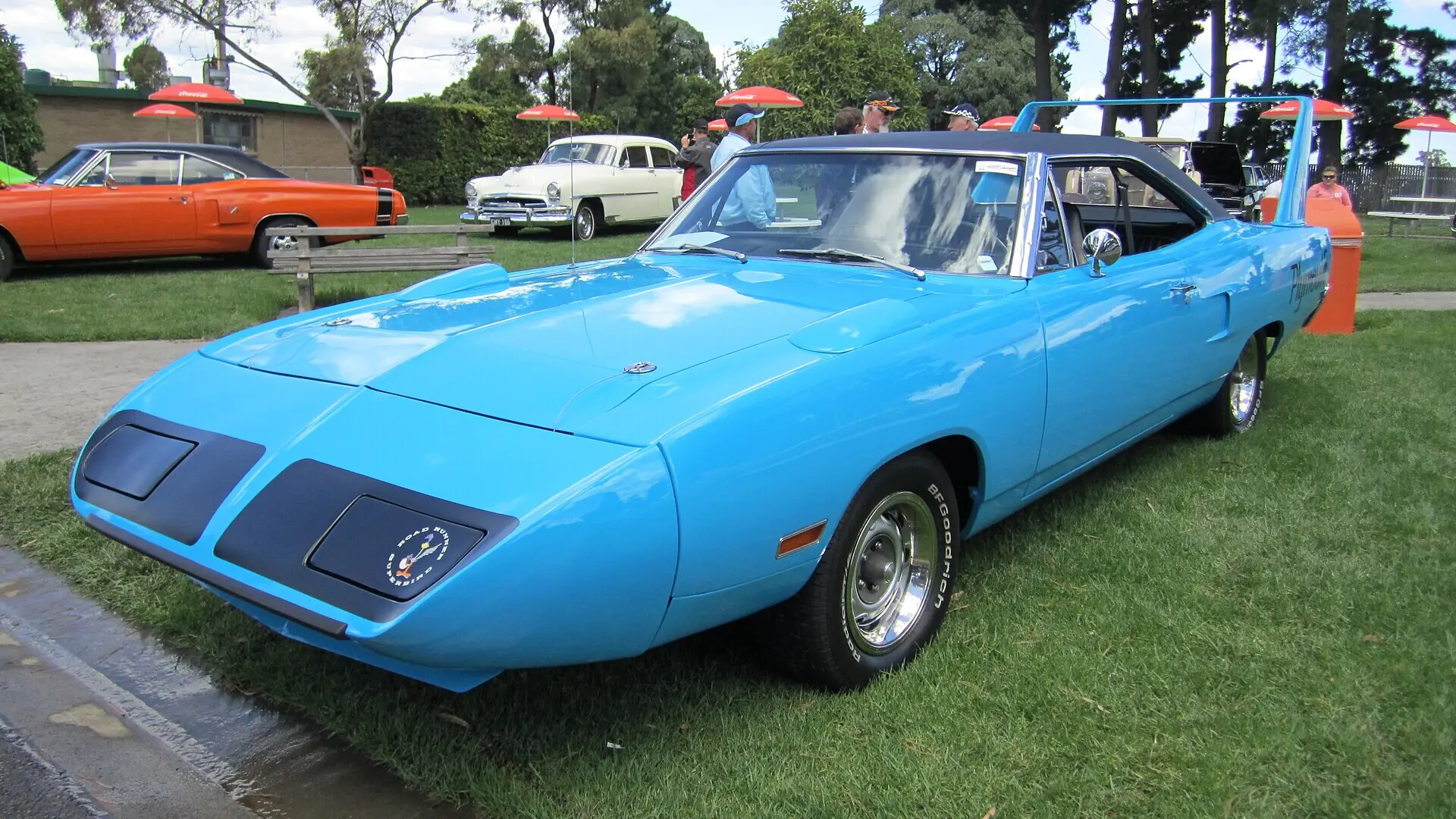
A 1970 Plymouth Superbird with 22 years of single ownership, a replacement nosecone and a 2005 repaint finished on Hagerty Marketplace on October 13 at $181,900. As a number, that is a fair, unremarkable result for a 440-powered automatic car. The more useful story is what the car’s file reveals about how the market now sorts wing cars: it forgives repair, provided the repair is disclosed, correct and documented. It does not forgive silence.
The part that defines the car
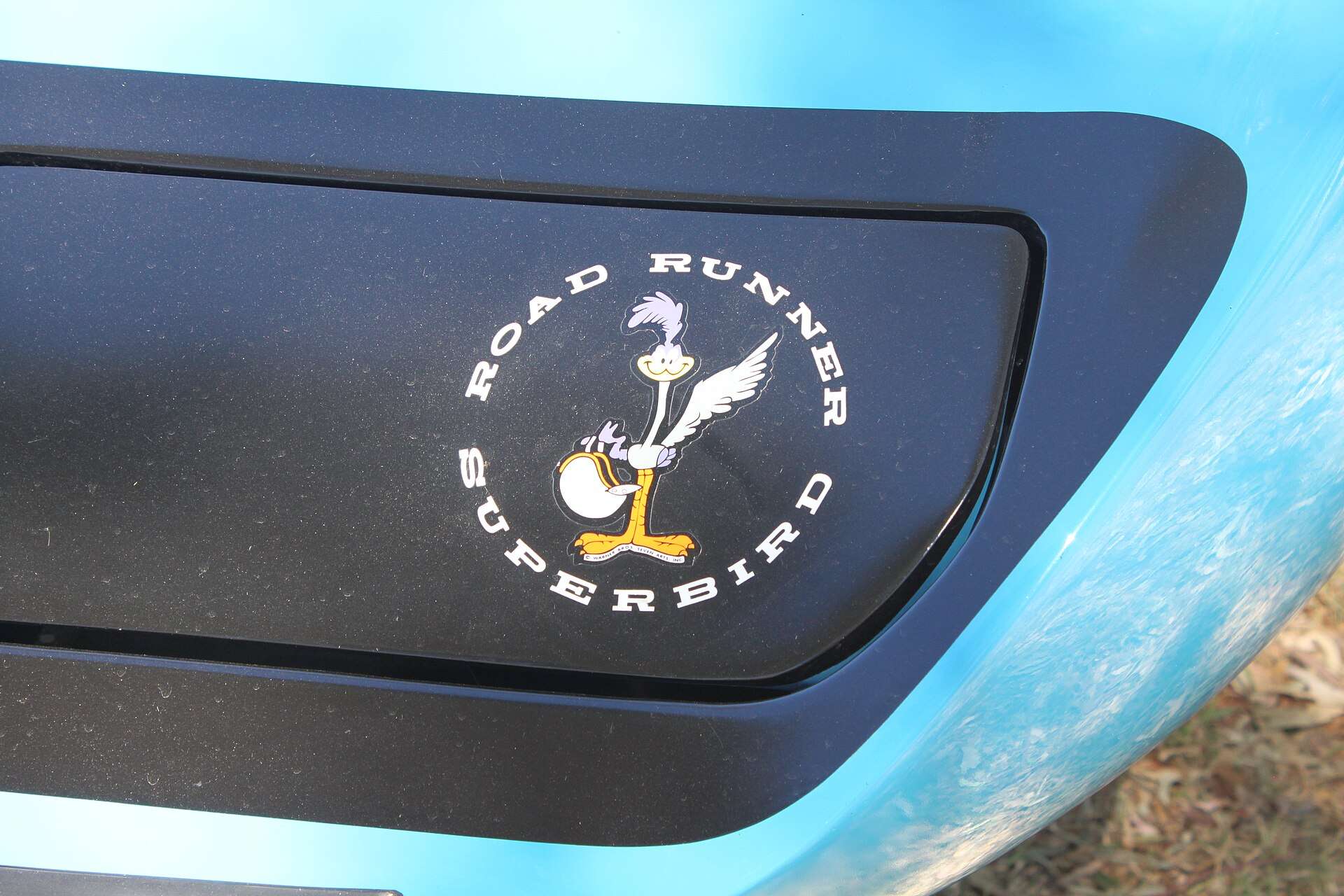
The Superbird exists because NASCAR changed a rule. Homologation went from 500 cars to one for every two manufacturer dealers, which for Plymouth meant roughly 1,920 street cars, built in part to bring Richard Petty back to the marque for 1970. Our Superbird collector spec sheet walks through the numbers and where the sources disagree. The point here is simpler: the nosecone is not trim. It is the car.
It is also the most exposed part of the car. According to the seller’s listing, this Superbird’s original nose was damaged at a car show and replaced with a new-old-stock unit sourced from Superbird specialist Doug Schellinger, then fitted and painted by Mike Mancini’s American Muscle Car Restorations. The listing does not say what the repair cost or who paid for it, and we have not treated figures reported elsewhere as established.
What can be said is this. A factory-made nose, correctly fitted and openly disclosed, is close to the best outcome of a bad afternoon. Purists will note that it is not the nose the car left the factory with. But one result is not a rule, and this one suggests that buyers at this level will price a documented, correct-part repair as a known quantity rather than a stain.
What the paper says
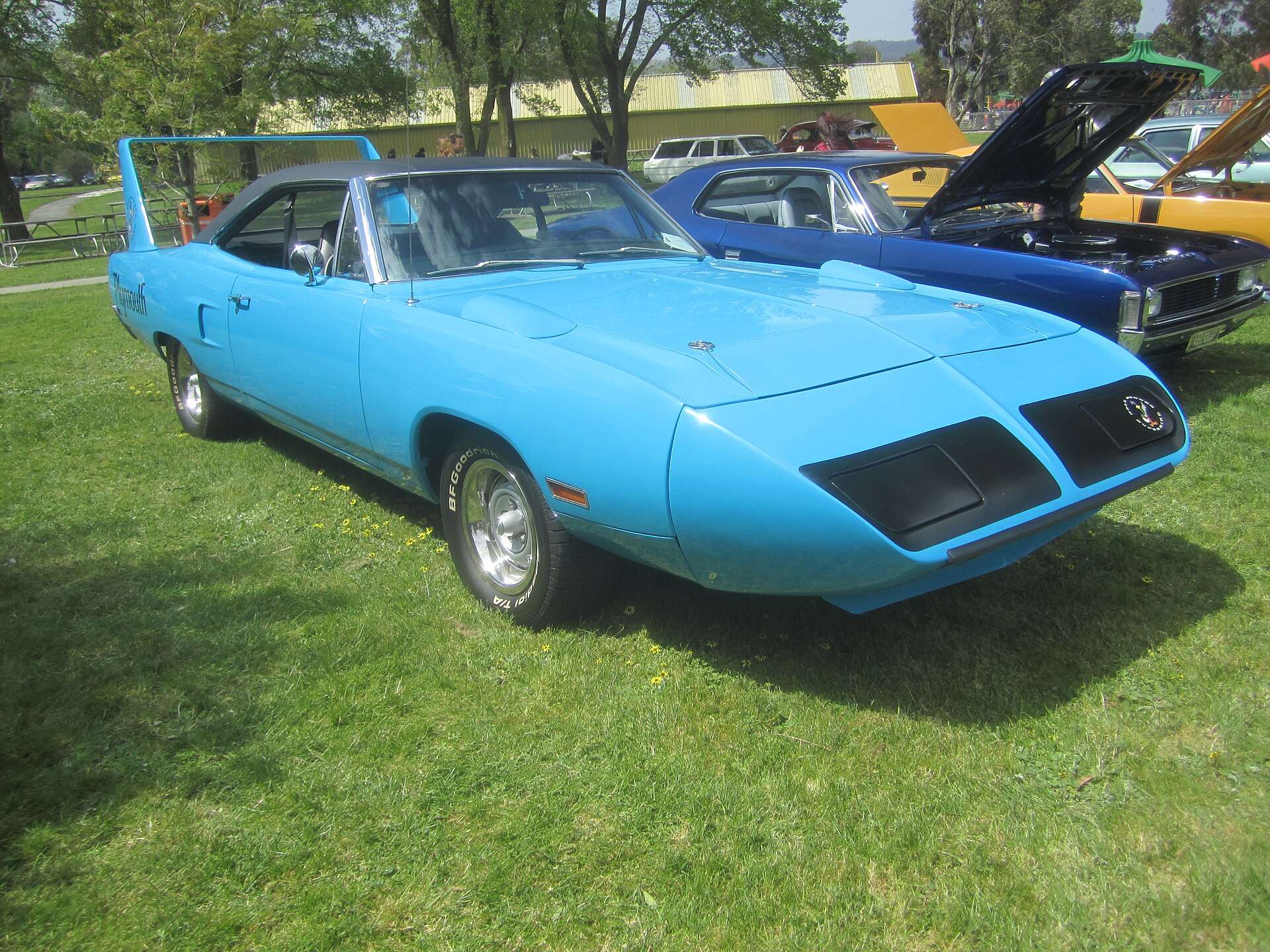
The listing reproduces the broadcast sheet details: the car was sent to Creative Industries, the Detroit contractor that converted Road Runners into Superbirds, on November 28, 1969, and shipped December 1. It lists a base price of $4,298 and describes the car as the 993rd of 1,969 built. That total sits above the 1,935 figure most commonly cited and the 1,920 Chrysler planned, a reminder that Superbird production counts remain disputed. For collectors the sequence number on the paperwork matters more than any contested total, because it is the number tied to this specific car.
Mechanically this is the foundation tier of the model: the U-code 440 four-barrel with a column-shifted three-speed TorqueFlite, in Vitamin C over a white vinyl bench, with the factory vinyl top. The listing says about 278 Superbirds were ordered in that color. The 440 four-barrel is the most common Superbird configuration (roughly 1,084 cars by the usual breakdown, against 716 Six Barrels and 135 Hemis, figures that are themselves debated). Its appeal is color, condition and candor, not configuration.
What “survivor” means here
The chain of custody is clear from 1980, when a previous owner bought the car from Car Village in Lebanon, Pennsylvania. It was stored indoors in Maryland from 1981 to 2004 and still carries an expired 1981 windshield sticker. The current seller acquired it in April 2004 and sold it with a clean Delaware title. What happened in the car’s first decade is not documented in the listing, and that gap is worth a buyer’s attention.
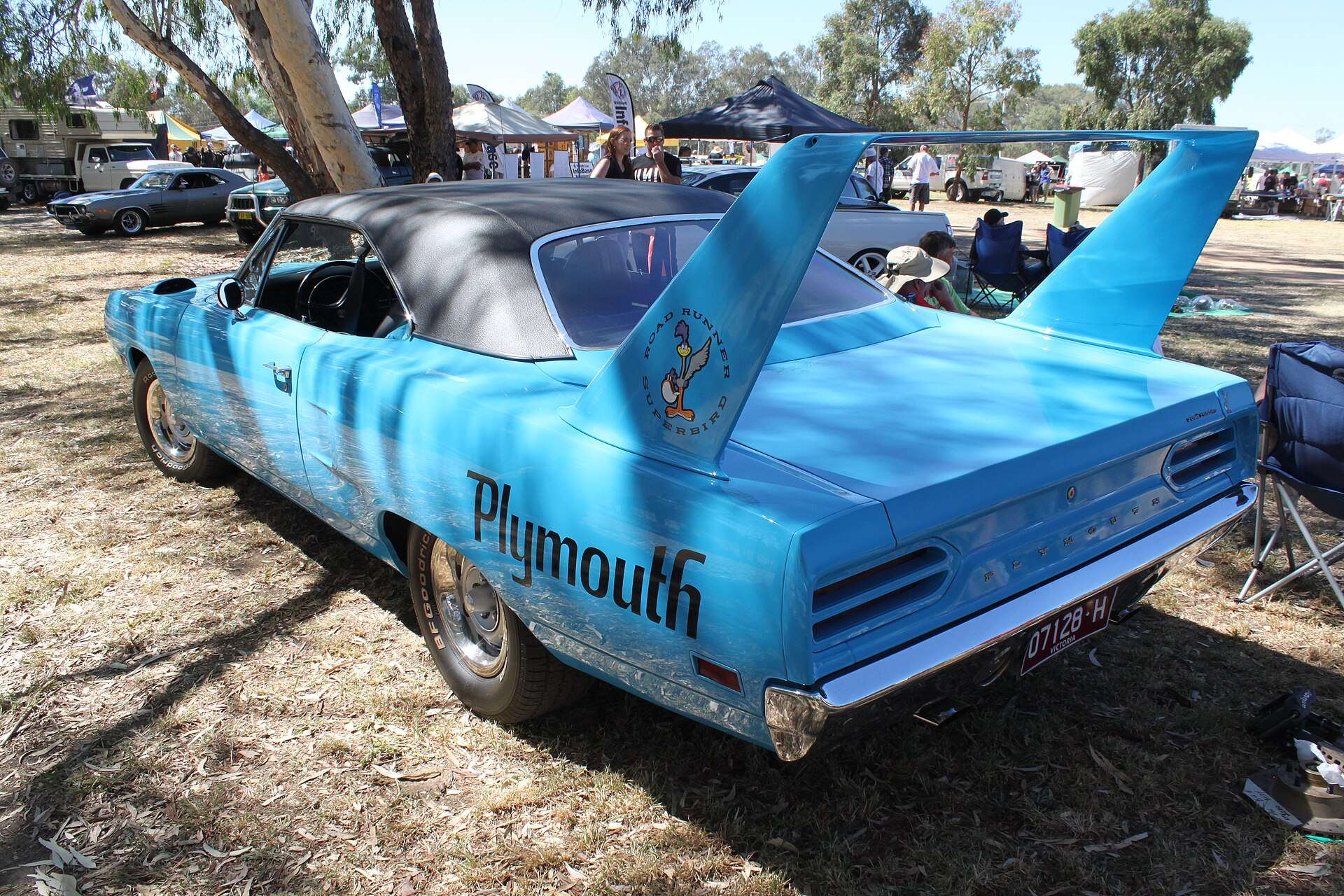
This is not a time capsule, and the listing does not pretend it is. The body was repainted in factory Vitamin C in 2005, along with new decals, and the fuel system, brakes, cooling system and exhaust were replaced. An Edelbrock carburetor and MSD ignition were added, though the listing says the removed original components were retained. The odometer reads 45,600 miles but is flagged TMU, “true mileage unknown,” so treat it as an indication rather than a certification. Known flaws are disclosed: a three-inch hairline crack in the dash, loose stitching on the bench, paint bubbling at the driver’s rear quarter and some rust in the center of the trunk, which sits awkwardly beside the seller’s description of a largely rust-free body.
That candor is part of what the car sold on. A well-sorted, well-documented driver with its flaws listed is a more bankable object than an “original” car whose story cannot be tested. Collectors who prize preservation have long learned to read the word survivor with caution; the better listings do the reading for them. Originality questions like these decide value on far more than Mopars.
How the auction behaved
The Hagerty bid history is a useful piece of market evidence in itself. Bidding opened at $25,000 on September 29, reached $105,000 by the morning of October 1 and $148,000 that evening, and then went quiet for eleven days. It resumed at $149,000 on October 12. In the final ten minutes two bidders traded five bids, from $165,510 to $170,000. The listing drew 20 bids and more than 40,000 views. The $181,900 sale price shown equals the $170,000 high bid plus 7 percent, consistent with a buyer’s premium.
Interpretation, not fact: price discovery at the top came down to two bidders. That is a data point, not a consensus, and a third underbidder of equal conviction could have moved the number meaningfully. Eleven days of silence followed by a late sprint is how serious collector-car auctions tend to behave, and it says that attention here was broad but conviction was narrow.
Where it sits
The nearest comparables from the same month cut in different directions. A 1970 Superbird brought $275,400 with fees at Fall Carlisle, though the results report did not name its engine; we had previewed a factory four-speed example ahead of that sale. A documented, Alpine White 440 automatic on Bring a Trailer stood at $150,000 with three days remaining when we examined what documentation does for a Superbird. Read together, those numbers describe a market that is paying for specific cars, not for the model. For context on where the top of the Mopar market sits, see our look at the most expensive Mopars ever sold at auction, and for earlier Superbird coverage, Richard Petty’s own 1970 Superbird and a low-mileage California car.
What buyers should verify
On a car like this, the checklist is short and specific. Confirm that the broadcast sheet, fender tag and radiator-support stamping agree. Ask for the invoice and photographs of the nose replacement, and inspect the structure behind it, since the listing reports only a bent lower passenger quarter as additional metalwork. Check the trunk rust personally. Treat the mileage as unknown. And make sure the retained original parts are physically in the boxes, because reversibility is only valuable if the parts exist.
The Superbird’s nose can be replaced. Its paper cannot. A repair disclosed is a footnote; a repair discovered is a verdict.
Source: Hagerty Marketplace listing and bid history for the 1970 Plymouth Superbird, ended October 13, 2026. Listing information was provided by the seller; buyers are responsible for their own due diligence.
The collector car market, every weekday morning.
Auction results, price moves and what’s crossing the block, read in four minutes. Free, from Modern Car Collector.
No spam, unsubscribe in one click. Or read more about the Brief.
Related Posts:
- A Documented 440 Superbird Tests What Wing-Car…
- The 10 Most Expensive Mopars Ever Sold at Auction
- Record Ferraris, Rare Icons and 15,000 RPM: The Week…

- The Porsche Carrera GT Doubled in 2026. The $6.7…

- The Collector Car Market Paid Up for Certainty This…

- Win Richard Petty’s 885-HP Outlawed Hellcat – The…

 Kyle Matthews