

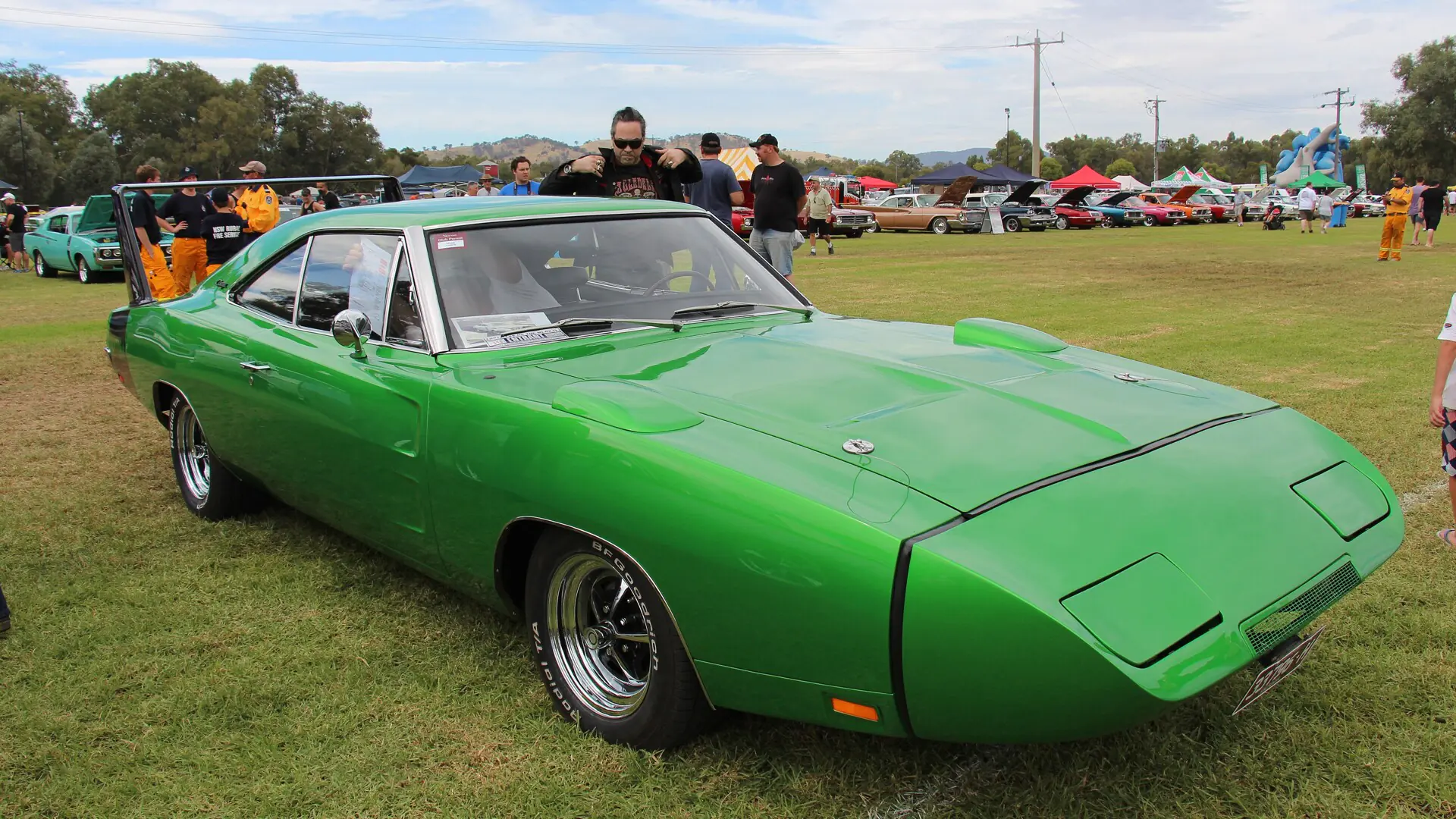
The 1969 Dodge Charger Daytona exists because Dodge needed a faster car on NASCAR’s superspeedways and the rules required it to sell the shape to the public. That origin explains almost everything a collector needs to know: why only 503 street cars were counted, why the 70 Hemi cars sit in a different price universe from the 440 cars, and why nose cone, wing and paperwork decide value more than any option box. Below: the numbers, the tells, and the places where the sources disagree.
Production and background
- Years built: 1969 model year only, assembled on the Charger line at Hamtramck, Michigan, with aero parts fitted afterward by Creative Industries, according to the Hyman Ltd. listing.
- Total production: 503 street cars is the standard figure, and it is the one used in coverage of the unrestored $605,000 sale and in Wikipedia. A few sources print 505. The Aero Warriors production notes cite Chrysler records for 503 and add that Galen Govier has estimated about 560 for the U.S. and Canada once Canadian shipments (roughly 51 cars) are counted, so treat 503 as the accepted count rather than a settled one.
- Engine split: Chrysler’s figures, as relayed by the Aero Warriors production notes, show 70 Hemi cars and 433 with the 440 four-barrel. The same page notes that a separate list of 385 known serial numbers contains only 22 Hemis, which is a reminder that registry work is incomplete.
- Four-speed Hemis: 22 cars, per Hagerty Media. By subtraction that leaves about 48 Hemi cars with the automatic, a figure to verify against a car’s own documents rather than quote.
- Why it was built: after the 1968 Charger 500 underperformed in NASCAR, Dodge built a more aerodynamic car. Buddy Baker became the first driver to exceed 200 mph in a closed-course race, at Talladega on March 24, 1970, and the Daytona won the inaugural Talladega 500 in 1969, according to Wikipedia. The same homologation logic produced its Plymouth cousin, covered in our 1970 Plymouth Superbird collector spec sheet.
Engine and drivetrain
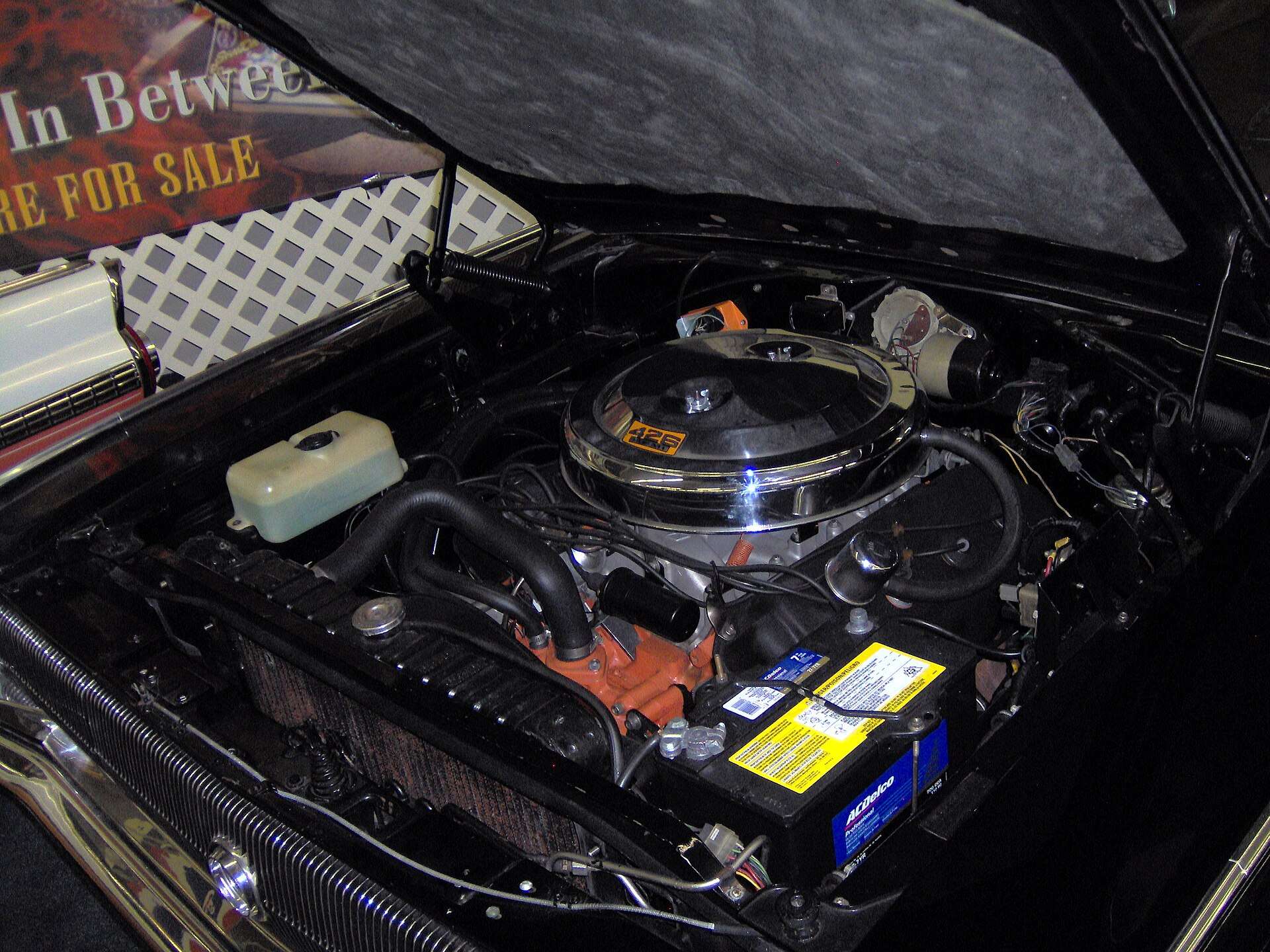
- Standard engine: 440 Magnum V8, 4-barrel carburetor, rated at 375 hp. The VIN’s fifth character is L for this engine; the RK Motors listing confirms the L code on a fender tag.
- Optional engine: 426 Hemi V8, two four-barrel carburetors, rated at 425 hp and 490 lb-ft of torque, per Supercars.net. Hemi cars carry J as the VIN engine code in the examples listed by Hagerty’s past-sales records.
- Transmissions: 727 TorqueFlite three-speed automatic or four-speed manual. Both the 440 and Hemi were sold with the automatic; the four-speed Hemi is the rarest combination at 22 cars.
- Rear axle: 8¾-inch Chrysler unit. One documented 440 car carried 3.55:1 gearing under option code A36, while another listed the A33 Performance Axle Package with Sure Grip. Axle ratio and limited-slip should match the broadcast sheet or fender tag.
- Chassis: built on the Charger R/T specification with heavy-duty suspension and brakes, according to Wikipedia.
Special options and equipment
Most Daytonas were ordered with a long list of comfort and appearance items, so the option list helps separate a documented car from a copy. Items seen on documented cars include:
- A11: the Charger Daytona package itself, which appears as the special-model code on the fender tag.
- Axle and brake codes: A33 Performance Axle Package, A36 rear gearing, and B51 power brakes.
- Interior and convenience: console (C16), bucket seats (C55), tinted glass (G15), tachometer with clock, light group (A01), remote driver’s mirror and AM radio (R11).
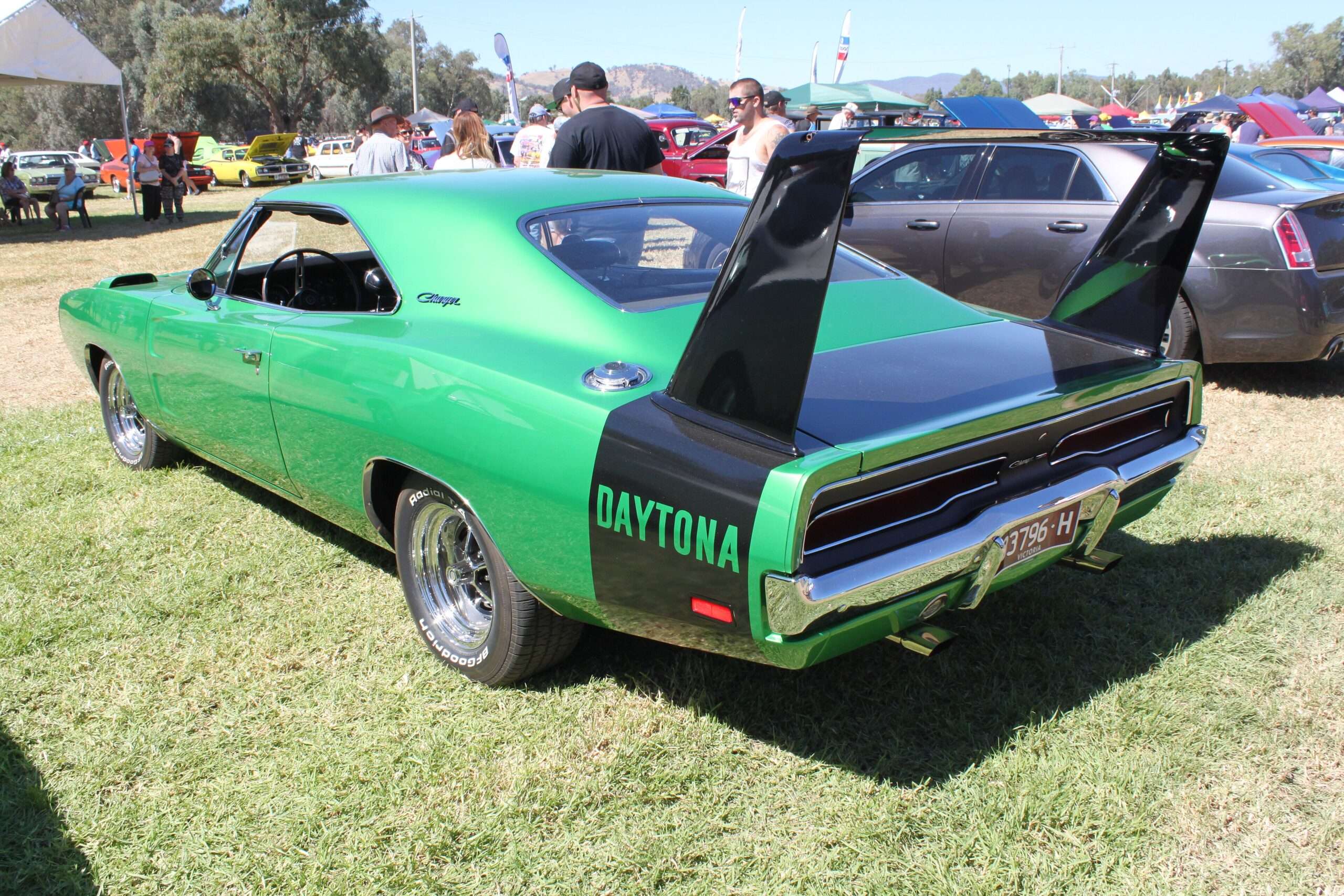
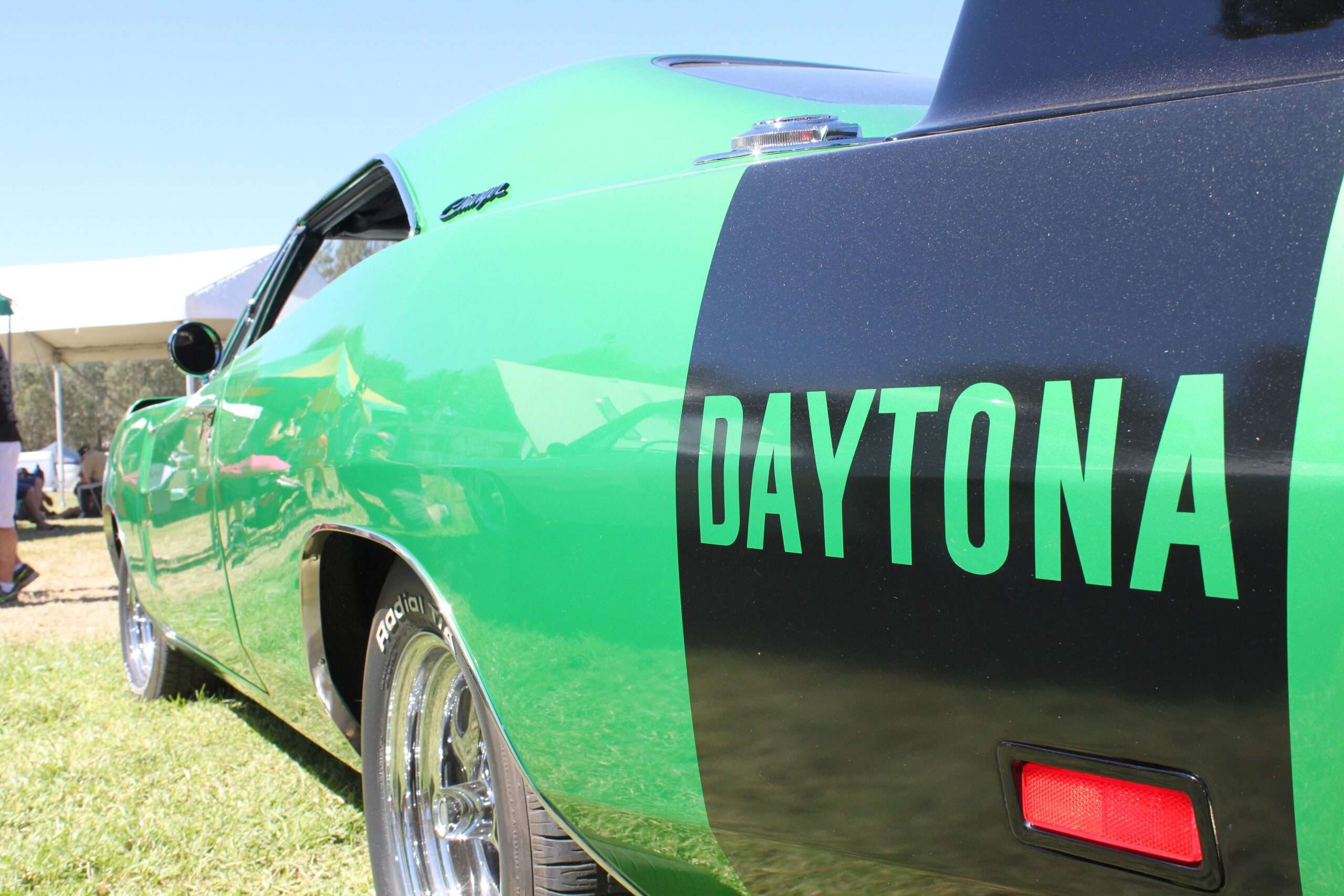
- Trim and stripe: the R/T bumblebee stripe was deleted and a Daytona side stripe added (V88 on the car in the RK Motors listing), with roof drip rail (M21) and belt moldings (M31).
- Special-order codes: the Hyman Ltd. listing shows a Y39 special-order trim tag on a 440 car. The Pat Harper Hemi car covered by Hagerty was a special order with nearly every option and build code checked.
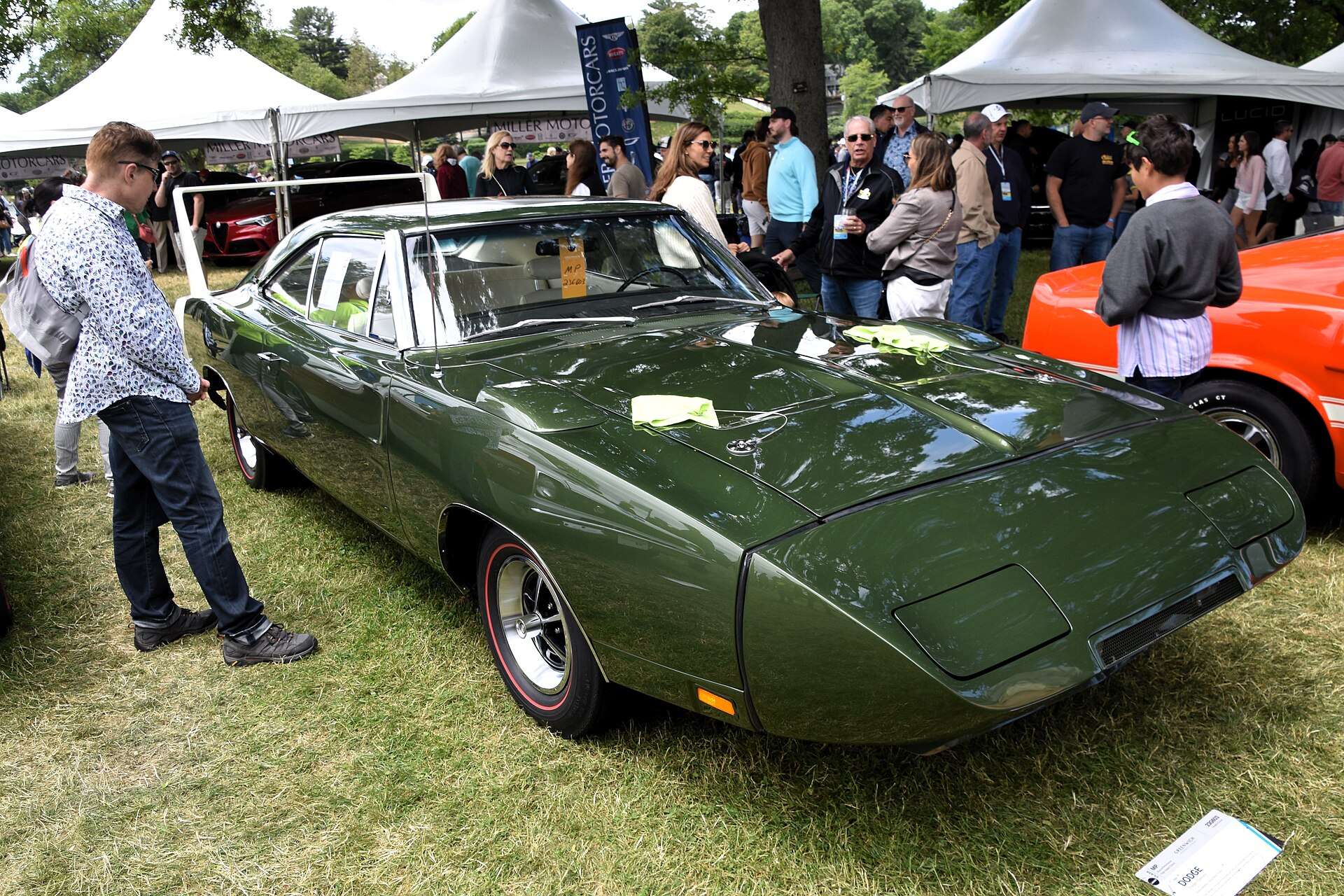
- Colors: documented examples include Y2 Yellow, R4 Red, black, Copper Metallic and Dark Green Metallic. autoevolution’s report on the Monterey 2026 no-sale says a Spring Green Hemi was one of two Hemi Daytonas in that color.
Identifying details
The Daytona’s look is distinctive, but looks are exactly what clones copy. These are the identifiers to check, in order:
- VIN: Daytona VINs in published listings begin XX29. The fifth character is the engine code (L for the 440 four-barrel, J for the Hemi), the sixth is 9 for 1969, and the seventh is B for Hamtramck. Sequence numbers in the examples we reviewed run from the 350000s to the 410000s, such as XX29L9B400603 in the RK Motors listing.
- Fender tag: the A11 code, engine code, transmission, axle and paint, with the sequence number matching the VIN.
- Engine and transmission stamps: the engine casting and pad stamping should partially match the VIN; the RK Motors listing cites a casting dated February 22, 1969 with a partial VIN match.
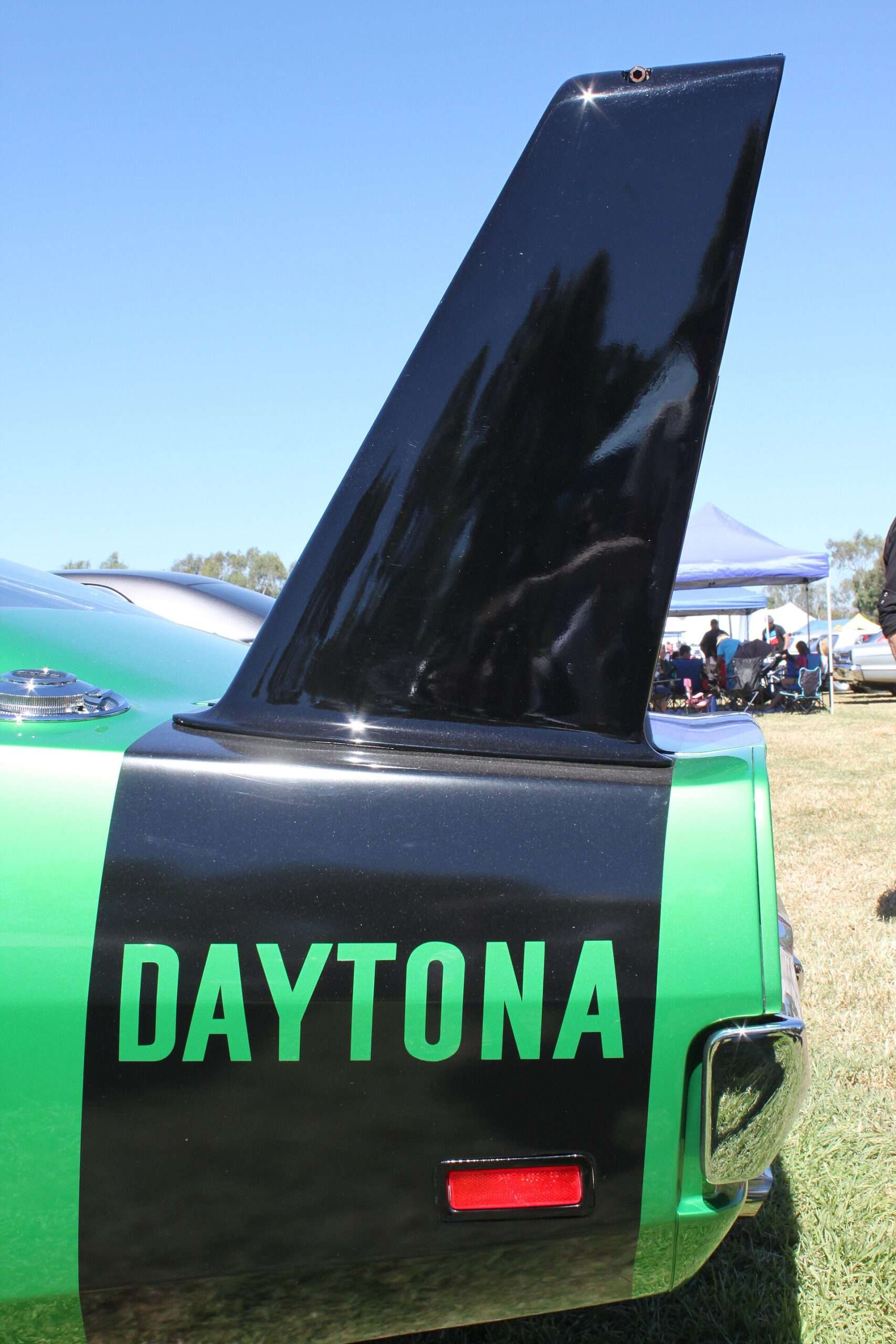
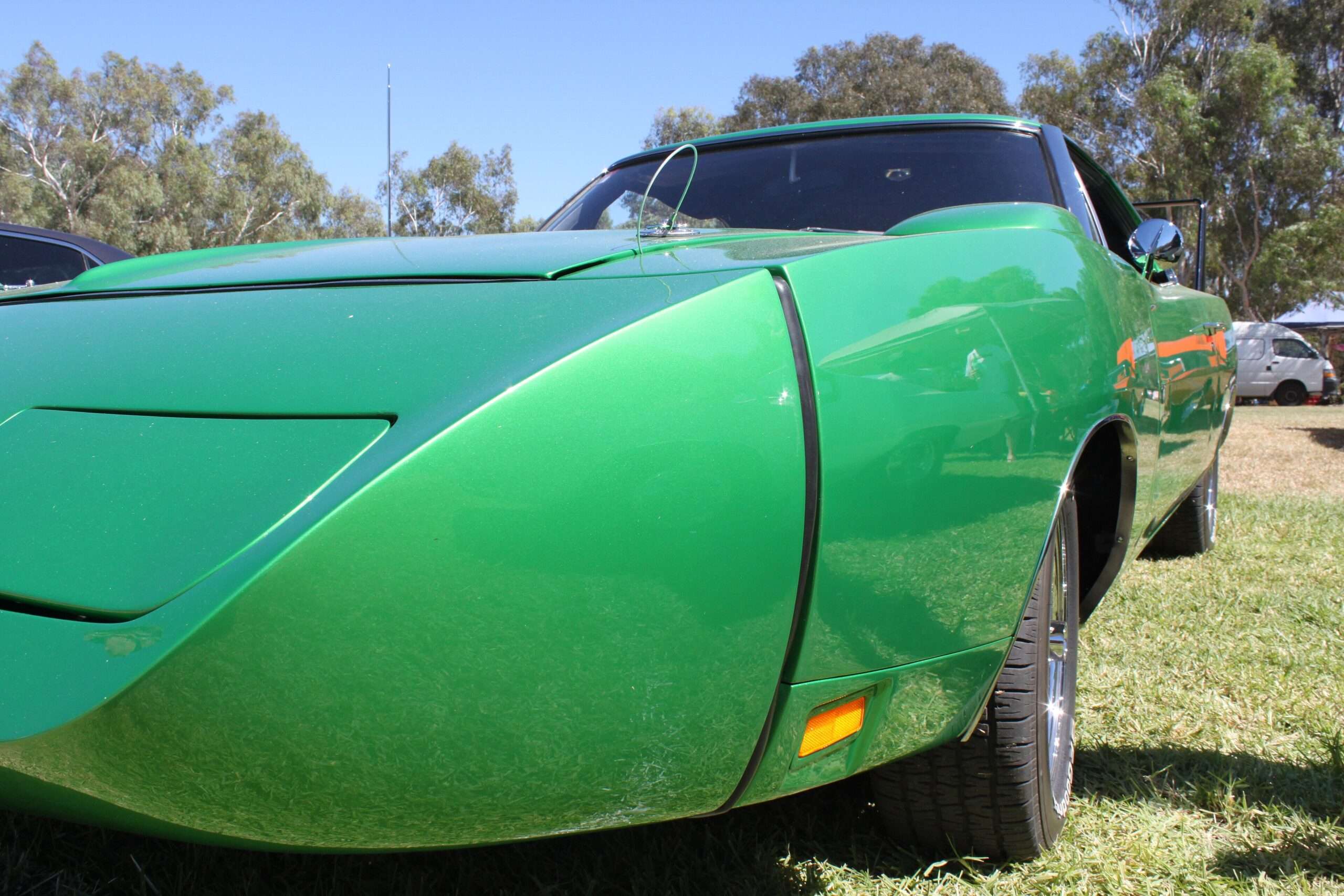
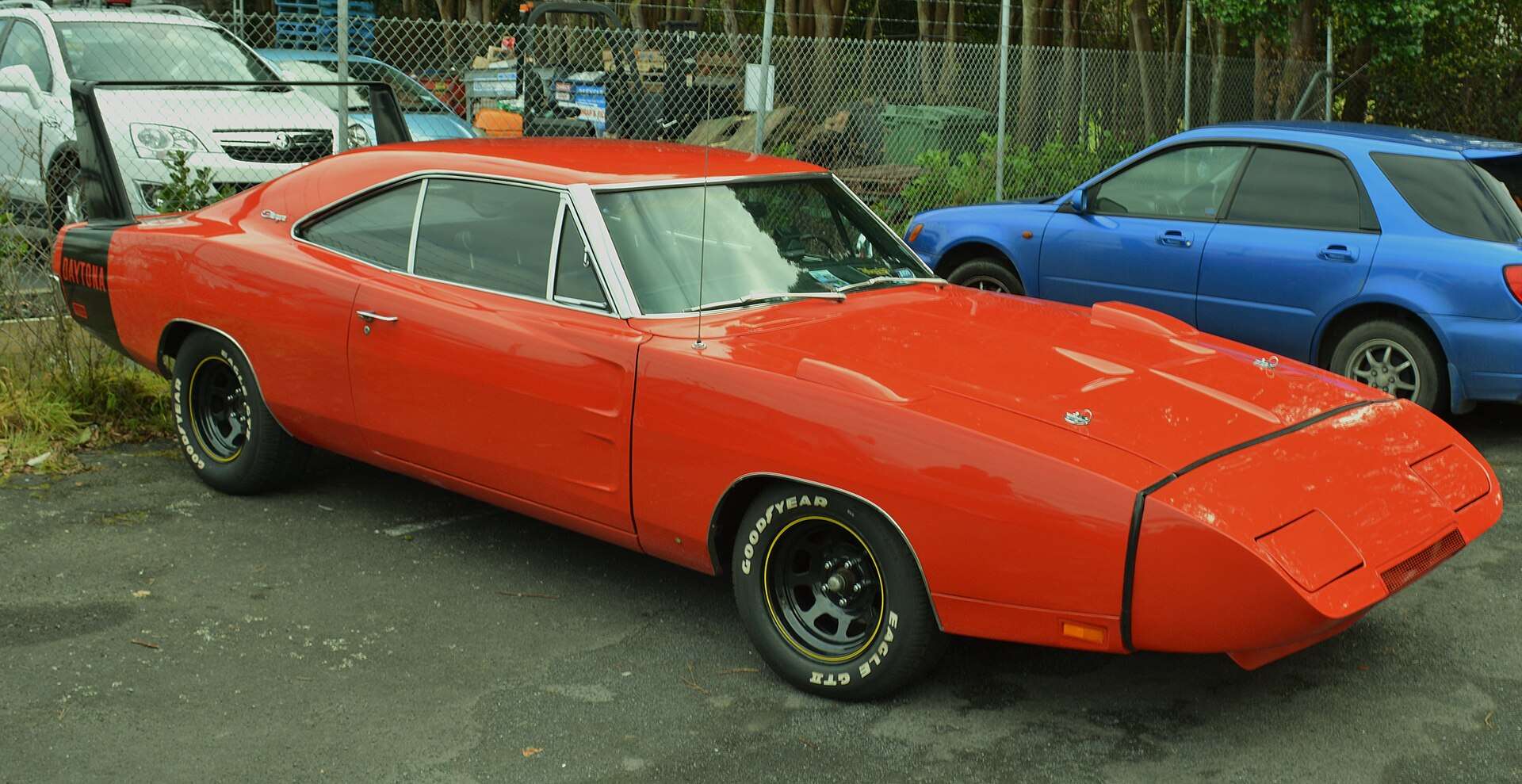
- Aero body: a pointed nose cone in place of the Charger’s grille, a rear wing about 23 inches tall, a flush rear window cap and fender-mounted scoops, per Wikipedia.
- Paperwork: broadcast sheet, Chrysler Registry paperwork, a Galen Govier inspection or a Wise Wing Car Report. The Hyman Ltd. listing cites a Wise Wing Car Report rating of 1.3, and the RK Motors listing cites a Govier tag breakdown.
Common weaknesses
- Clones and tributes: a Charger R/T can be converted with reproduction aero parts. Hagerty Media ran a case of a “filthy, fake” Daytona that sold for as much as a real one, which shows how much a convincing story can earn. Confirm the VIN and fender tag before the body.
- Missing or replaced nose cone: the Harper car lost its nose cone in a minor accident and ran a standard grille, per Hagerty Media. Check that the nose cone is the original piece and that the panel gaps at the fenders are consistent.
- Wing and decal accuracy: wing mounting, wing color, stripe style and roof applique have changed over the decades on many cars. Photos from the build era are the best reference.
- Restoration quality: a multi-year restoration with receipts, like the Hodge Mopar Restorations work in the RK Motors listing, is a plus; undocumented restoration is a variable.
- Rust and body repair: as a unibody Charger, structural rust and accident repair around the aero panels deserve a lift inspection.
- Mixed drivetrains: a replacement engine or transmission turns a documented 440 into a lesser car and a Hemi into a very different one.
Current value range
Values split cleanly by engine, and sales are thin, so use ranges and not a single number. Figures below come from named auction results and ConceptCarz auction data, and they are not a price guide.
- 440 cars: ConceptCarz lists four public sales in 2025 with a $275,000 low and a $308,000 median across all engines, and a $330,000 low in 2026 so far. An unrestored survivor with 3,693 miles reached $605,000 at Richmond Auctions in November 2025, which we covered in our report on the unrestored Daytona sale. A restored 440 car was advertised at $350,000 in the Hyman Ltd. listing. Our read is that a documented, correctly presented 440 car sits roughly between $300,000 and $450,000, with benchmark originality above that. That range is our interpretation of these results, not a published guide value.
- Hemi cars: a Spring Green Hemi automatic sold for $1.32 million at Monterey 2026, and a Copper Metallic Hemi made $1.43 million in 2023, per autoevolution’s report on the Monterey 2026 no-sale. The record is about $3.3 million for a Dark Green Metallic four-speed Hemi at Monterey 2024. A black four-speed Hemi stalled at a $2.2 million high bid at Monterey 2026 and was not sold on the block.
- Context: see our list of the most expensive Mopars sold at auction for where the top Daytonas sit among Mopar sales.
- Caveat: small samples, special-color and provenance premiums and a few headline results mean the median is more useful than the high. Check live listings and comparable sales before buying or insuring.
What separates a good example from an average one
- Documentation: a broadcast sheet, fender tag and registry or Wise Wing Car report that all agree. This is the largest single spread in value.
- Matching drivetrain: original engine and transmission confirmed against the casting, pad and VIN. For the Hemi, the four-speed is the premium combination.
- Original aero parts: the original nose cone, wing and window cap, with no accident history around them.
- Correct restoration or preservation: a benchmark unrestored car, as in our Richmond Auctions coverage, or a correctly restored car with receipts.
- Color and option rarity: unusual factory colors and heavily optioned cars carry a premium, but only when the tag proves them.
- Structure: a straight, rust-free body without cut-and-shut repair around the aero panels.
Where it fits
The Daytona is the first of the Chrysler wing cars and the one that made the aero idea real, though the Superbird ended up better known and far more numerous. A wing-car buyer should read both and also look at how documentation drives price in our piece on a documented 440 Superbird. For another small-run Mopar built to a racing rule, compare the 1970 Dodge Challenger T/A.
Sources include the named linked pages above. Production and value figures differ by source; verify any specific car through its own paperwork. This article is general information and not an appraisal.
The collector car market, every weekday morning.
Auction results, price moves and what’s crossing the block, read in four minutes. Free, from Modern Car Collector.
No spam, unsubscribe in one click. Or read more about the Brief.

 Elizabeth Puckett