

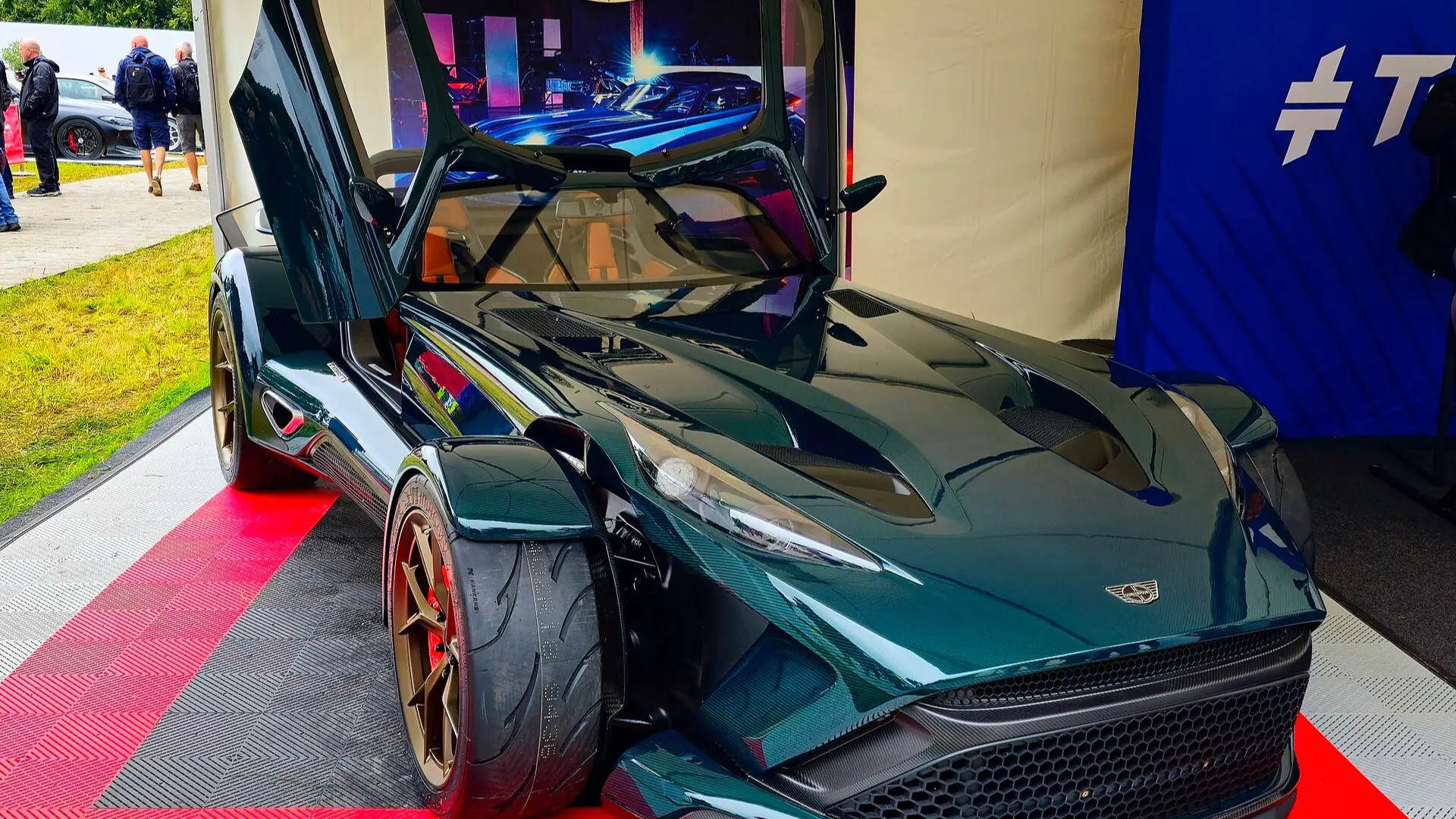
Most new boutique sports cars are collectible on the day they are announced. The harder question is whether they stay that way. The Donkervoort P24 RS, unveiled on January 24, 2026, is a useful test case: a hand-built, lightweight, manual-transmission car limited to 150 units, powered by a twin-turbo Ford V6, and priced from €298,500 before taxes (roughly $353,000). It is rare, it is analog, and it is deliberately uncompromising. Whether it becomes a blue-chip modern collectible depends less on those facts than on what happens after delivery.
Our thesis is simple: the P24 RS has the scarcity and the story, but not yet the proof. Collectors should treat it as a promising candidate, not a settled one.
Production numbers and price
Donkervoort plans to build 150 P24 RS cars by hand in the Netherlands. According to reporting at the January debut, more than 50 had already been allocated to buyers in Europe, the United States and the Middle East. That is a larger run than the 75-car F22 it replaces, which matters: scarcity is the first lever of collectibility, and doubling the run halves the per-car rarity. Still, 150 cars worldwide is a small number by any measure, and Donkervoort has a history of selling its limited runs quickly.
The starting price of €298,500 (about $353,000 at the time of the announcement, before taxes) places the car well above conventional lightweight track toys and into territory shared with serious exotics. A right-hand-drive version announced in July, for markets including the United Kingdom, Japan and Australia, reportedly marks the first right-hand-drive Donkervoort in 49 years, which suggests the company expects demand beyond its core European buyers. We have not seen a published delivery schedule, and we have no secondary-market result yet to anchor value.
What makes it mechanically unusual
The headline is the drivetrain. The P24 RS uses a 3.5-liter twin-turbocharged V6 that Donkervoort describes as heavily developed in-house from Ford’s EcoBoost architecture, the same family that powered the second-generation Ford GT. Output is selectable at 400, 500 or 600 metric horsepower (591 hp in the US), with 800 Nm (590 lb-ft) of torque at the top setting. Power goes to the rear wheels through a mid-mounted five-speed manual with rev-matching and a Torsen limited-slip differential.
Donkervoort quotes a dry weight of 780 kg (1,720 lb), which works out to roughly 770 hp per tonne at full output; reports differ slightly on the weight with fluids, so buyers should confirm the final specification. The car uses an alloy-tube and carbon-fiber structure, double-wishbone front and multi-link rear suspension, active dampers and dry-sump lubrication. It deliberately omits stability control and offers only adjustable traction control, with no power steering. The claimed figures are 0 to 124 mph in about 7.4 seconds and a top speed above 186 mph. Those are manufacturer claims, not independent tests.
Historical context
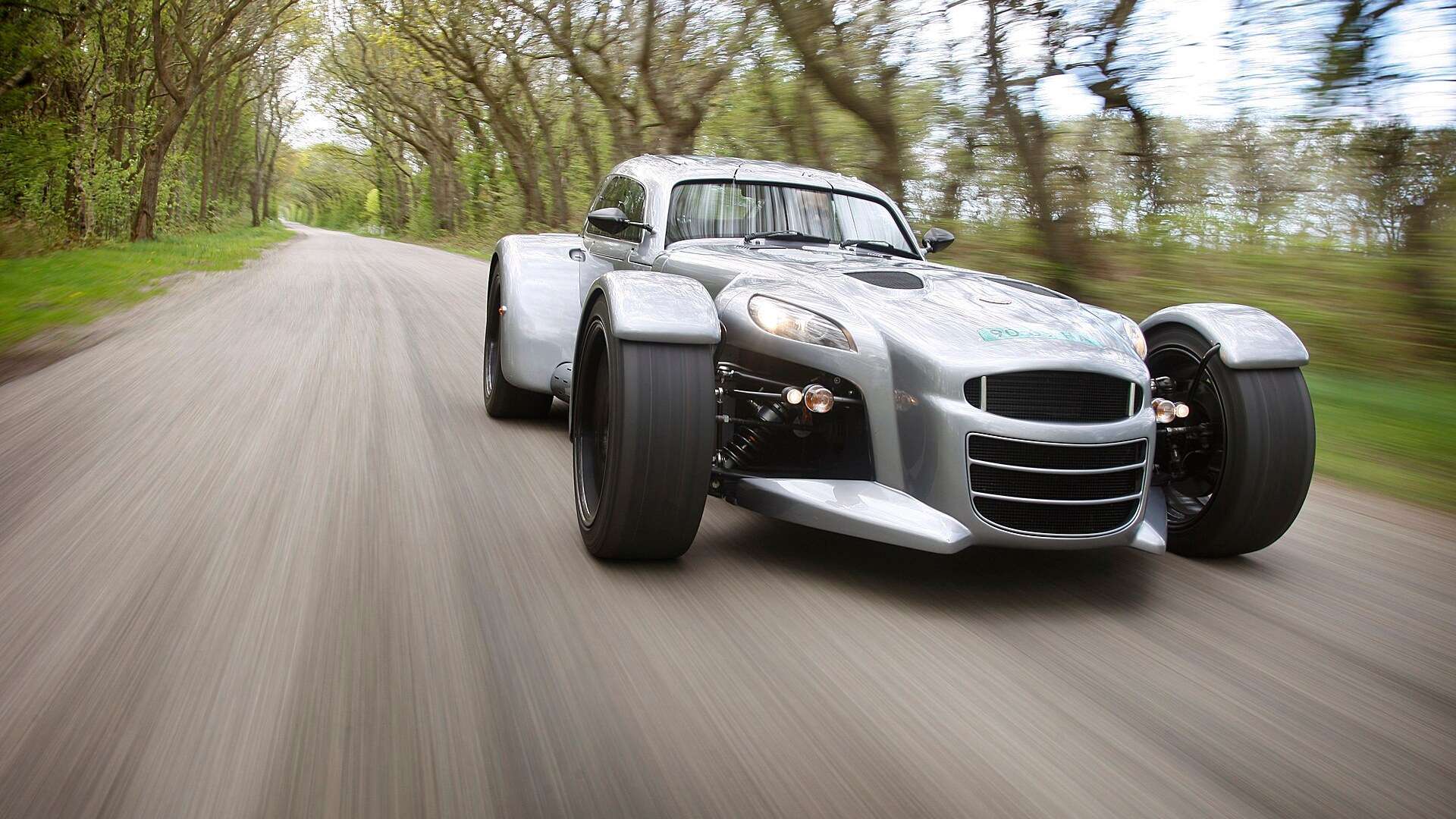
Joop Donkervoort founded the company on July 1, 1978, building the S7, a car derived from the Lotus Seven. If that lineage interests you, our look at the 409-powered “Lotus Seven” that is not a Lotus at all shows how deep the Seven-inspired tradition runs. Ford engines powered Donkervoorts through 1998, the D8 arrived in 1993, and Audi turbocharged engines took over from 1999, eventually the 2.5-liter five-cylinder used in the D8 GTO and the F22. The D8 series ended in 2022, and the F22 closed the Audi era with 75 cars.
That makes the P24 RS the first Ford-powered Donkervoort since 1998, which is the quiet piece of history here. The company has closed a loop that began with Ford power in 1978. We covered the car’s lead-up in our earlier preview of the January debut.
The alternatives
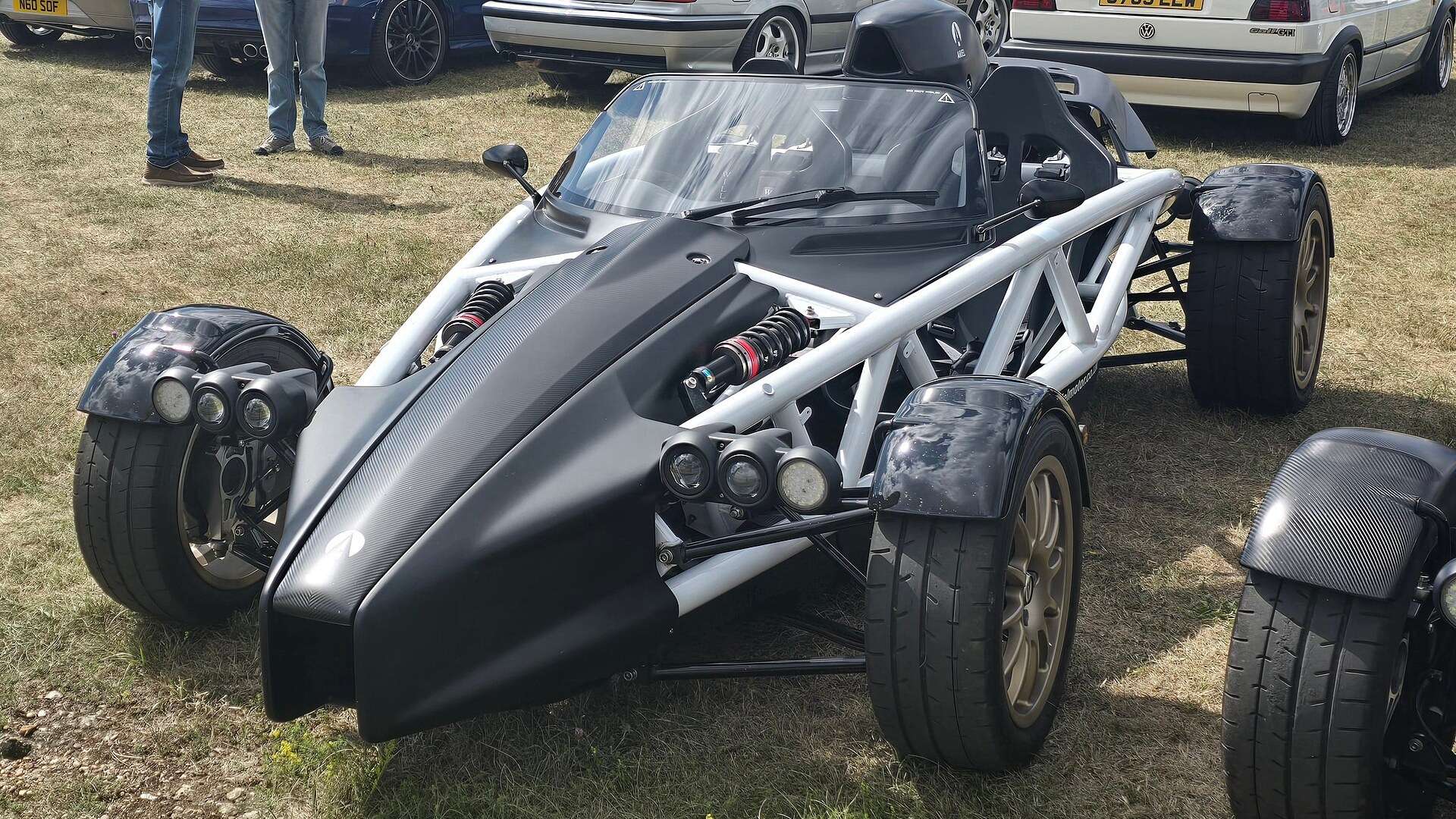
The closest philosophical rival is the Ariel Atom. According to evo, the Atom 4R costs about £78,000 with 400 bhp, while the extreme 4RR starts at £249,600 with 525 bhp and a 669 kg weight. The Atom is lighter and faster to its first 62 mph, but it is an open, track-focused machine with a Honda Civic Type R engine. The Donkervoort offers more power and a Ford V6 with a manual gearbox, at a price that sits above the 4R and in the same neighborhood as the 4RR.
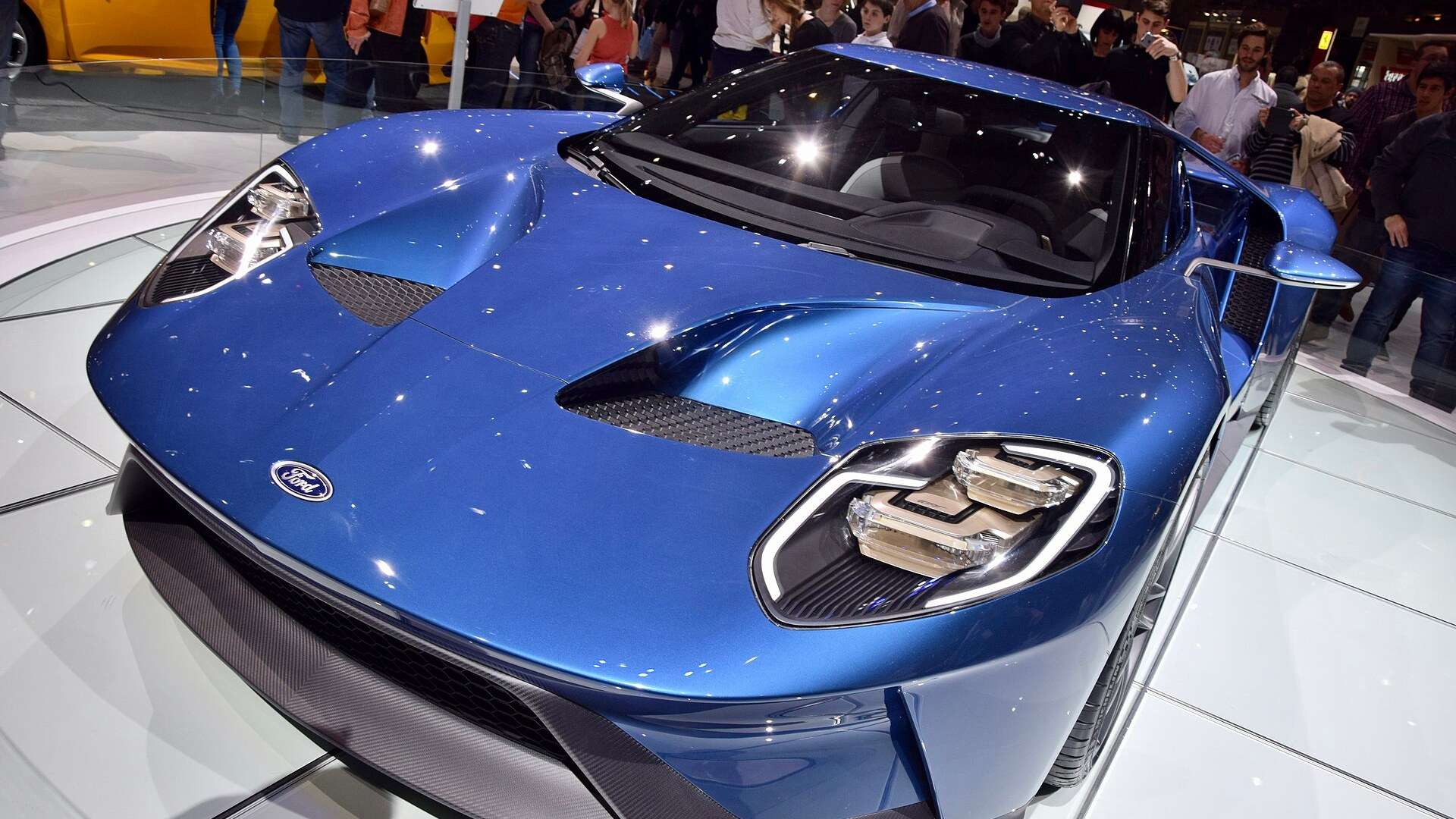
There are also precedents for how a manual-gearbox, low-volume car can earn its place. The 2005-2006 Ford GT has become a benchmark for modern American collectibility, and the market is already rewarding it; see how a modern Ford GT outbid a genuine Boss 429 in Las Vegas. At the other end of the spectrum, the coachbuilt Morgan Midsummer Coupe approaches rarity from a very different direction, with a wooden frame and a tiny run. For analog supercars with three pedals more broadly, consider the Glickenhaus 004 and the manual Pagani Huayra Epitome.
The risks
- Unproven in the field. Everything above comes from the manufacturer and launch coverage. Independent testing and owner experience with the new engine do not yet exist.
- Run size. At 150 cars, it is twice the F22’s run. Rarity is real but not extreme.
- Usability and regulation. No stability control and no power steering narrow the buyer pool. Coverage we reviewed said US buyers have reserved cars but gave no detail on US homologation or import path, so that remains an open question.
- Small-manufacturer risk. A collector car’s value relies on parts and factory support decades from now. Donkervoort has built cars since 1978, but any boutique builder carries continuity risk.
- Price starts high. A buyer paying near €300,000 needs the market to move well beyond list price before the car can be called an appreciating asset.
What would need to happen
For the P24 RS to graduate from rare to collectible, several things would have to go right. Independent road and track tests would need to confirm the claimed weight and performance. Early deliveries would need to prove the engine and gearbox hold up under real use. Resale prices on the earlier cars, particularly the F22, would need to show that Donkervoorts hold or gain value. Cars would also need to be preserved with low mileage and complete documentation, and not used solely as track tools. Finally, the car would need an accessible path into the United States, where much of the collector demand for analog performance cars sits.
If those boxes are checked, the combination of a manual gearbox, a combustion engine tuned without electrification, and a closed-loop Ford connection could give the P24 RS durable appeal as one of the last of its kind. If they are not, it will still be a thrilling and rare car, but its price may track depreciation like any other low-volume exotic.
Our view
The Donkervoort P24 RS is a credible future collector car, with the caveat that credibility is not the same as appreciation. Its strongest card is not the horsepower. It is a manufacturer with a 48-year track record willing to ship a manual, stability-control-free, lightweight car at a time when almost nobody else will. Watch the first resale and the first independent tests. Those will tell the real story. As always, this is analysis and not investment advice.
The collector car market, every weekday morning.
Auction results, price moves and what’s crossing the block, read in four minutes. Free, from Modern Car Collector.
No spam, unsubscribe in one click. Or read more about the Brief.
Related Posts:
- The Collector Car Market Paid Up for Certainty This…

- Record Ferraris, Rare Icons and 15,000 RPM: The Week…

- The Porsche Carrera GT Doubled in 2026. The $6.7…
- The Complete Guide to the Yenko Camaro

- Is the Alpine A110 a Future Collector Car? Only Some of Them

- Donkervoort Previews P24 RS Ahead of January 2026…

 John Lloyd
 Shawn Henry