

Most Formula 1 cars that reach the market have passed through several hands before a buyer ever sees a catalog. Teams sell them, collectors trade them, restorers reassemble them, and somewhere along the way a chassis plate, a gearbox or an engine cover acquires a story no one can fully audit. The five McLaren cars now being offered through Tom Hartley Jnr are different, and that difference, more than any famous driver, is what makes this sale significant.
According to Reuters and the dealer’s announcement, McLaren has owned all five since their racing careers ended. The seller is the constructor itself. That is the thesis of this sale: for a grand prix car, the question that matters most is not who drove it, but who kept it.
Five cars, five different reasons to own one
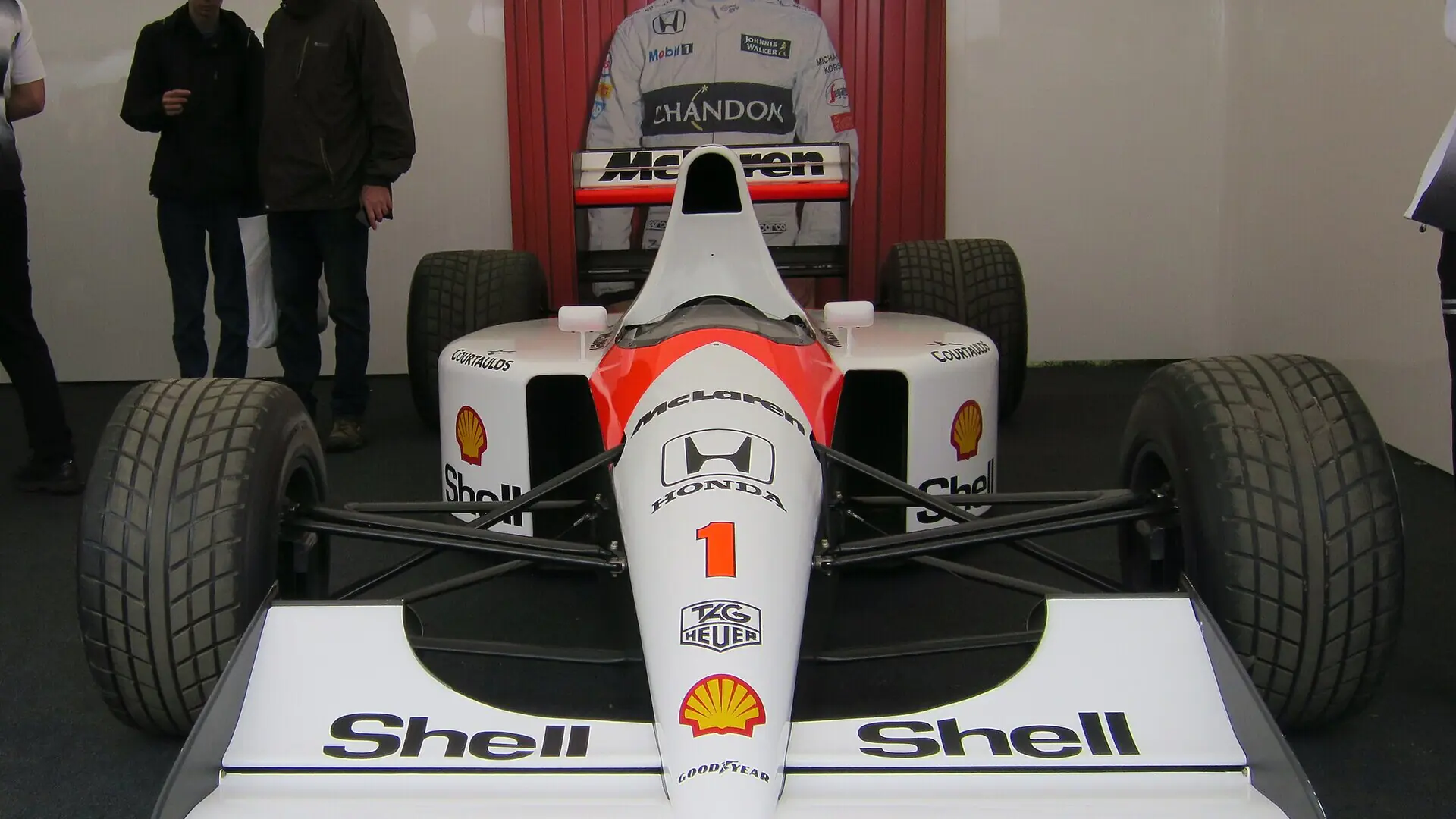
The group spans more than three decades and three engine formulas. The two 1991 MP4/6A chassis, numbers 04 and 07, carry the naturally aspirated Honda V12 from the season Ayrton Senna won his third and final title and McLaren its fourth consecutive constructors’ championship. Both were raced by Gerhard Berger and tested by Senna. Chassis 04 finished second at the San Marino Grand Prix in a McLaren one-two that lapped the rest of the field; chassis 07 was second at the British Grand Prix and, according to McLaren, has never been crashed.
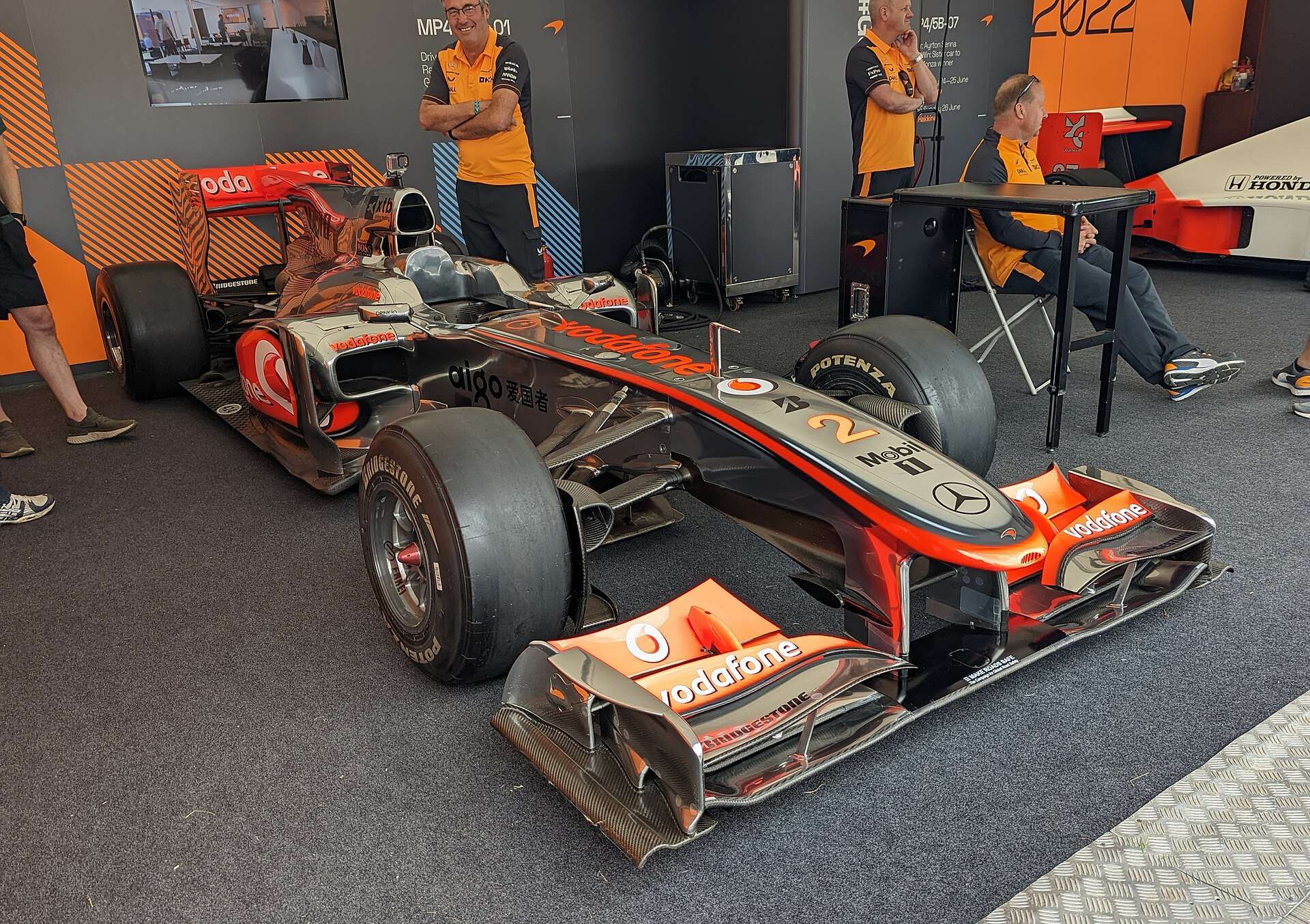
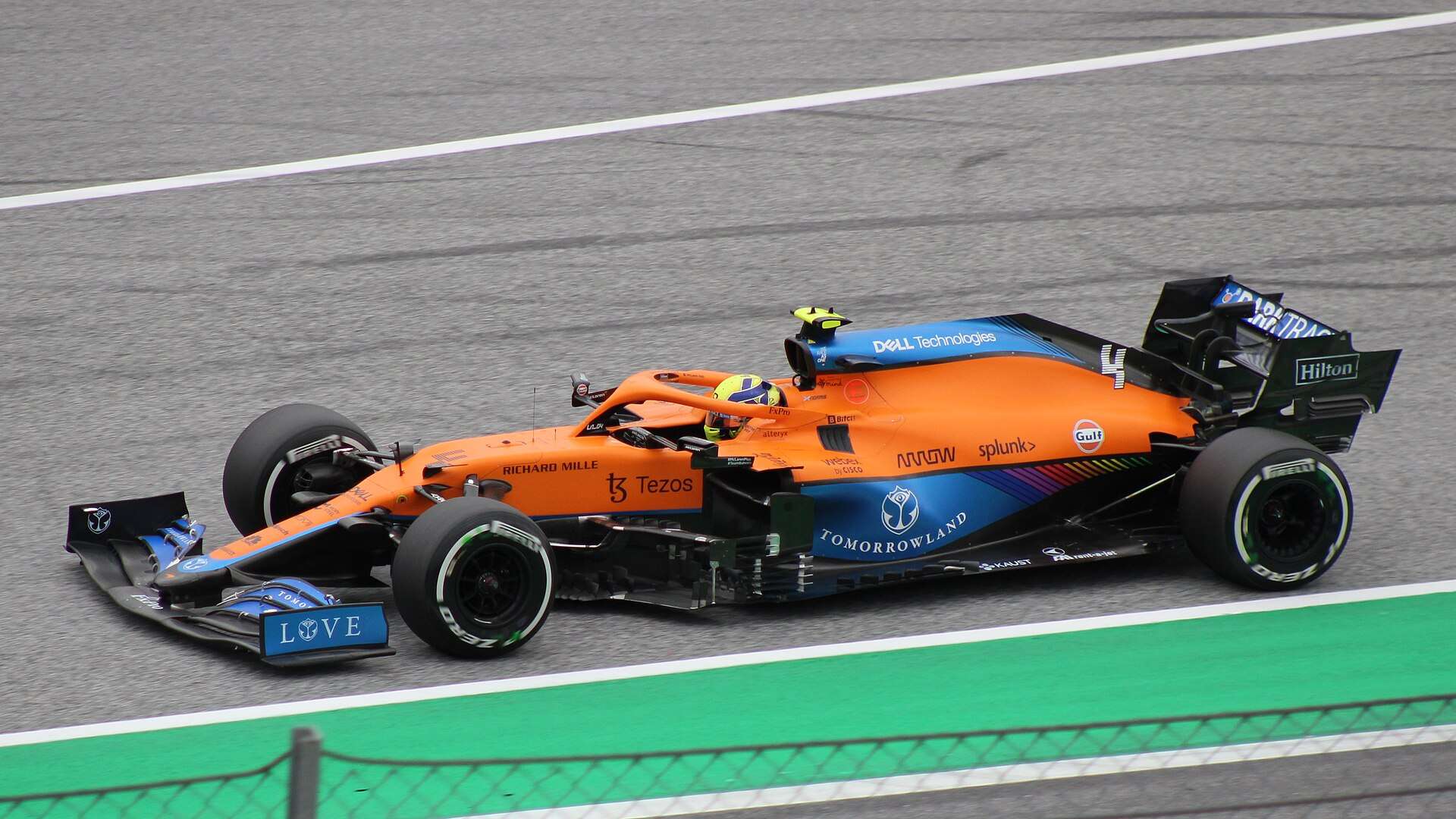
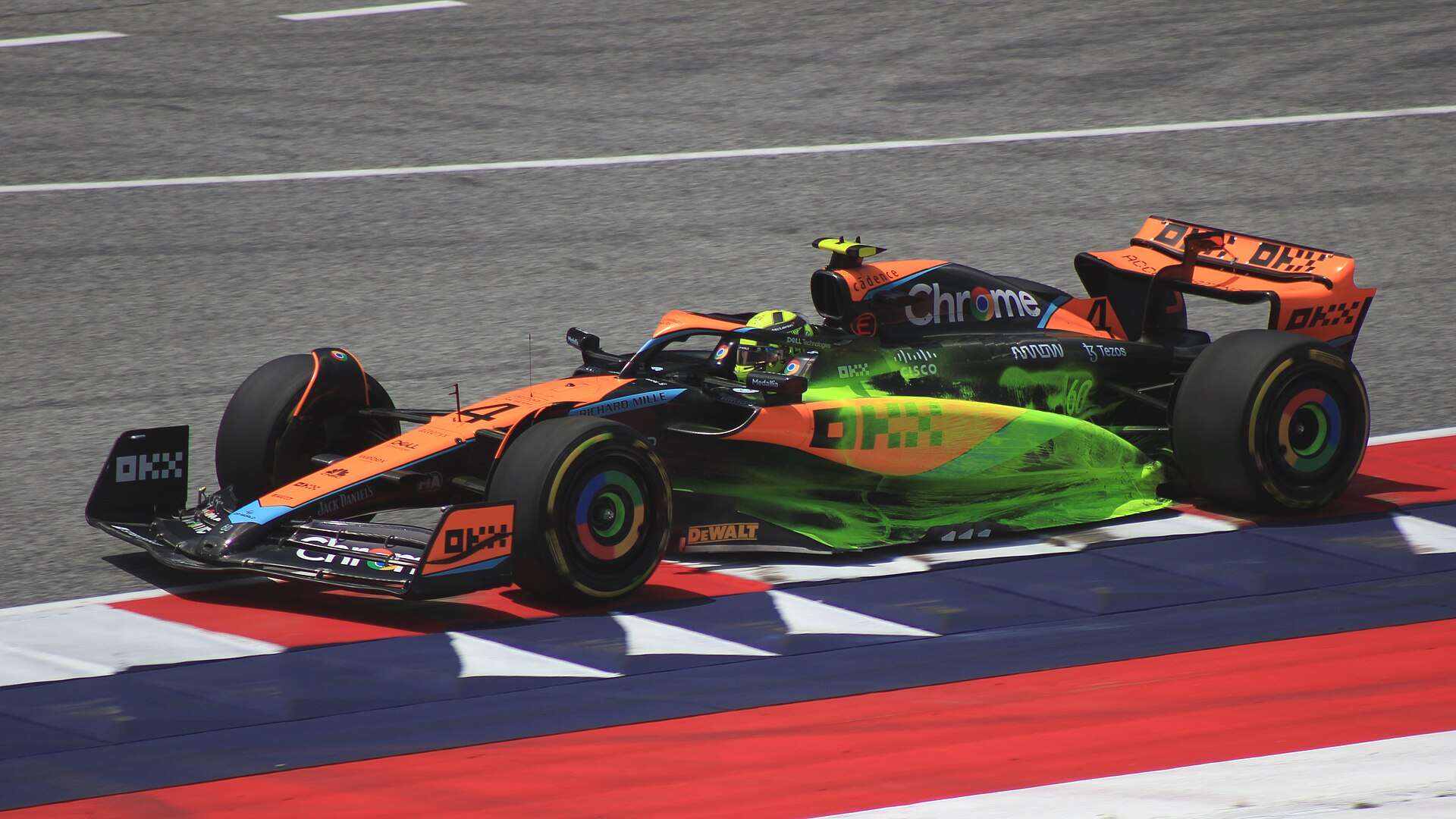
The 2012 MP4/27A, chassis 01, was raced by Jenson Button and tested by Lewis Hamilton, and represents the V8 interlude between McLaren’s Honda era and the turbo-hybrid age. The 2021 MCL35M was Lando Norris’s car for podiums at Imola, Monaco and Monza, where Norris finished second behind teammate Daniel Ricciardo in McLaren’s first one-two since 2010 and first win since 2012. It wore a Gulf-inspired livery at Monaco. The fifth, the 2023 MCL37A-03, took Norris to second place in both Singapore and Japan, was later tested by drivers including Oscar Piastri and Mick Schumacher, and was driven by Brad Pitt in a private session at Circuit of the Americas in 2025 connected to F1 The Movie. McLaren describes it as the newest Formula 1 car ever offered to a private buyer.
Why factory provenance is the asset
Race cars are consumables. Tubs are repaired, crash structures replaced, components rotated between chassis. A car that stayed in the team’s custody has a documentary chain that independent owners rarely match: build records, run logs, parts histories and the institutional memory of the people who prepared it. Buyers of cars from other sources spend heavily on verification. Here, the seller is the verification.
That advantage carries a question McLaren has not yet answered publicly: what “prepared for their new owners” means. Reporting indicates the older cars will undergo full restorations, while the MCL35M will be returned to race-ready condition. For a collector, restoration scope is a value decision, not a housekeeping detail. The strongest cars in this category retain period-correct components and record what was replaced and why. Serious buyers should ask for the work scope in writing, and for removed parts to be retained and inventoried, before committing.
The price range tells you what is being priced
No asking prices have been published. Reuters puts expected values at roughly £5 million ($6.7 million) to about £10 million per car, and notes two reference points: the McLaren MP4-25A in which Hamilton won in Turkey in 2010 sold for £4.8 million in 2021, and a 2001 Ferrari raced by Michael Schumacher fetched $7.5 million in New York in 2017. The Senna-driven MP4/6 that won the 1991 Brazilian Grand Prix was offered by RM Sotheby’s Sealed in December 2025 with an estimate of $12 million to $15 million.
Set against that estimate, the spread is informative. A car raced by Berger and tested by Senna sits well below the chassis Senna won in, and the logic is sound: the market pays for the winning drive, then for the champion’s hands, then for everything else. These MP4/6As are therefore not the cheapest route to a Senna connection so much as a way to own the same engineering moment, the V12 at its peak, at a meaningful discount to a winner. The discount reflects the absence of a victory, not any weakness in the car.
Which one makes sense?
For a collector thinking in decades, the Honda V12 cars are the conservative choice. Naturally aspirated V12 grand prix cars from the Senna era are a closed chapter that cannot be repeated, and they belong at the historic events where such machinery is meant to be seen. Between the two, chassis 04’s second place in a team one-two at Imola gives it the stronger racing résumé; chassis 07’s never-crashed history and Senna’s Silverstone test appeal to the originality-minded.
The Norris cars are a different bet. Norris later won the 2025 drivers’ championship, so cars from his early McLaren years now read as the foundation of a title-winner’s career, a category the market has historically rewarded. The Gulf-liveried MCL35M adds a visual story and the Monza result has real historical weight for the team. The 2023 car carries the Pitt association, which broadens its audience, but celebrity use is a footnote, not a foundation: its standing rests on its racing record and its status as the most modern F1 car available to a private owner. Buyers should also ask what ongoing support a recent car requires, since newer machinery tends to depend on its maker for software, parts and expertise.
What this says about the market
Tom Hartley Jnr has handled Bernie Ecclestone’s grand prix collection, reportedly worth £500 million, and 20 road cars from the late McLaren co-owner Mansour Ojjeh, so the dealer has the client list for this kind of sale. Hartley says the cars will be offered individually with “no time pressure whatsoever,” and McLaren Racing chief executive Zak Brown has said that keeping them in storage “is a disservice to what they represent.”
That posture is worth noticing. A seller in no hurry is signaling confidence that patient buyers exist, and selling privately rather than through a single auction lets McLaren protect pricing across five distinct cars instead of exposing all five to one room on one day. It also fits a pattern we have followed: strong demand for factory-backed McLaren material, as in McLaren’s Triple Crown auction in Abu Dhabi, the team’s sale package that included a 2026 F1 car and the factory-rebuilt Royal McLaren F1, and a market appetite for Senna-linked machinery, seen in Senna’s Lotus F1 car.
The reasonable reading is that grand prix cars are no longer treated as curiosities. They are being sold, scrutinized and compared like any other blue-chip asset, with provenance, originality and documentation doing the work that horsepower once did. Collectors rarely pay a premium for speed alone. They pay for a car whose story nobody can dispute, and in this sale the story comes with the seller.
The collector car market, every weekday morning.
Auction results, price moves and what’s crossing the block, read in four minutes. Free, from Modern Car Collector.
No spam, unsubscribe in one click. Or read more about the Brief.

 Shawn Henry