

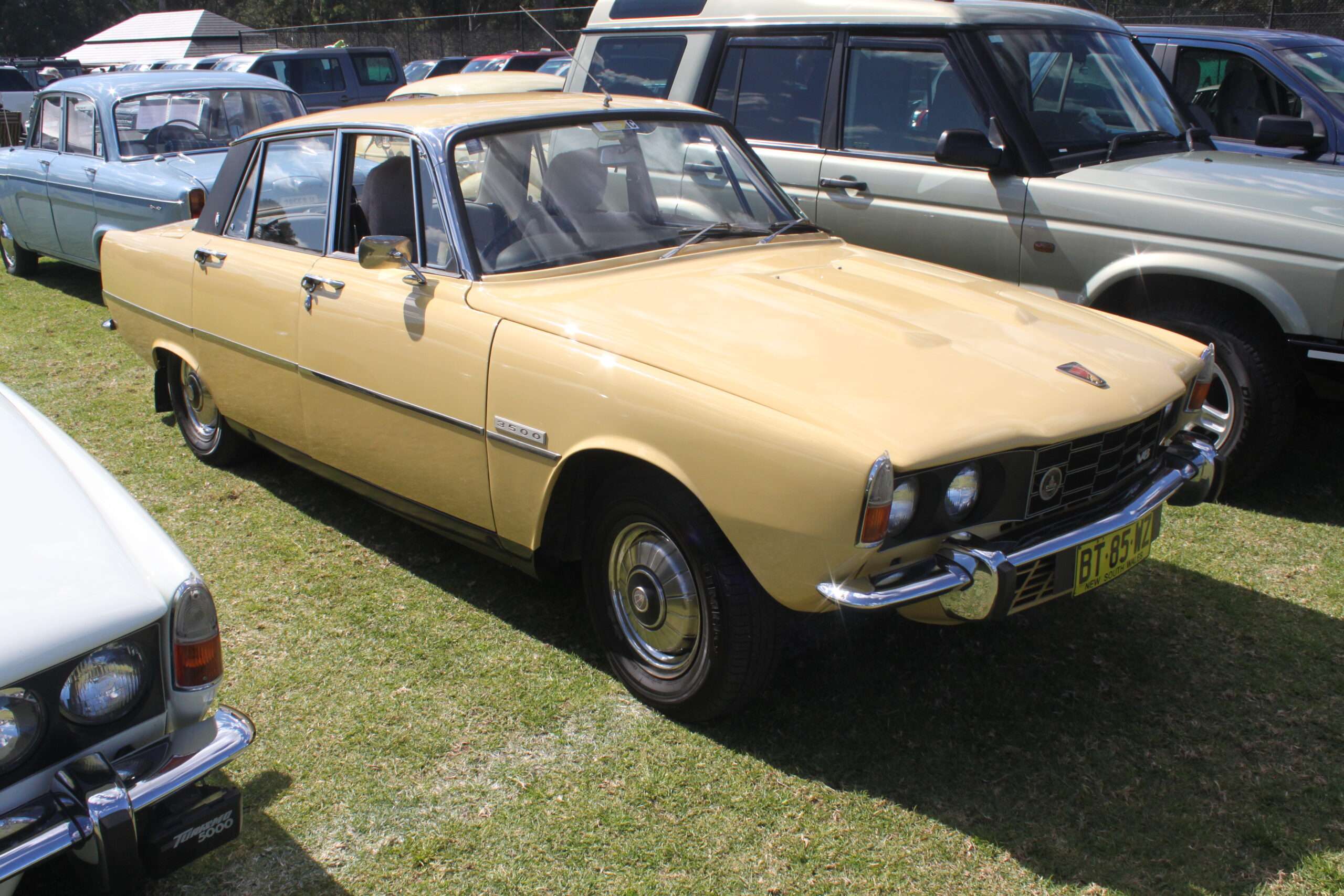
Most dates in collector car history belong to a debut or a record-breaking hammer price. September 14 belongs to a loss — and to one of the most instructive provenance lessons the hobby has. On the evening of September 14, 1982, Princess Grace of Monaco died in a Monaco hospital, a day after the Grace Kelly Rover P6 3500 she was driving left a mountain road above Monte Carlo. It is a car no collector will ever own, and that single fact explains more about how celebrity provenance actually prices than any auction result this year.
What happened on September 14, 1982
On the afternoon of September 13, 1982, Grace Kelly — by then Princess Grace of Monaco — was driving from the family’s country property at Roc Agél down toward Monaco, with her 17-year-old daughter, Princess Stéphanie, in the passenger seat. According to the accepted account, she suffered a cerebral hemorrhage at the wheel. The car left the steep, switchbacked road and fell roughly 100 feet (30.5 metres) down the hillside. Stéphanie tried without success to regain control and survived the crash.
Princess Grace was hospitalized with injuries to the brain and thorax and a fractured femur. She appeared briefly stable, then suffered a second and far more severe hemorrhage. Life support was discontinued and she died at 10:55 p.m. on September 14, 1982. She was 52.
The car was a Rover P6 3500. Published accounts differ on whether it was a 1971 or 1972 example, and no authoritative chassis record has ever been made public. What is not in dispute is that it never returned to the world: rather than being repaired, preserved or displayed, it was destroyed. The most widely repeated account holds that the wreck was crushed and disposed of at sea — a claim that has fuelled four decades of speculation but has never been documented by Monaco’s authorities. Either way, the most provenance-laden Rover P6 that will ever exist is not a car anyone can buy.
The Rover P6 was a radical car long before it was a famous one
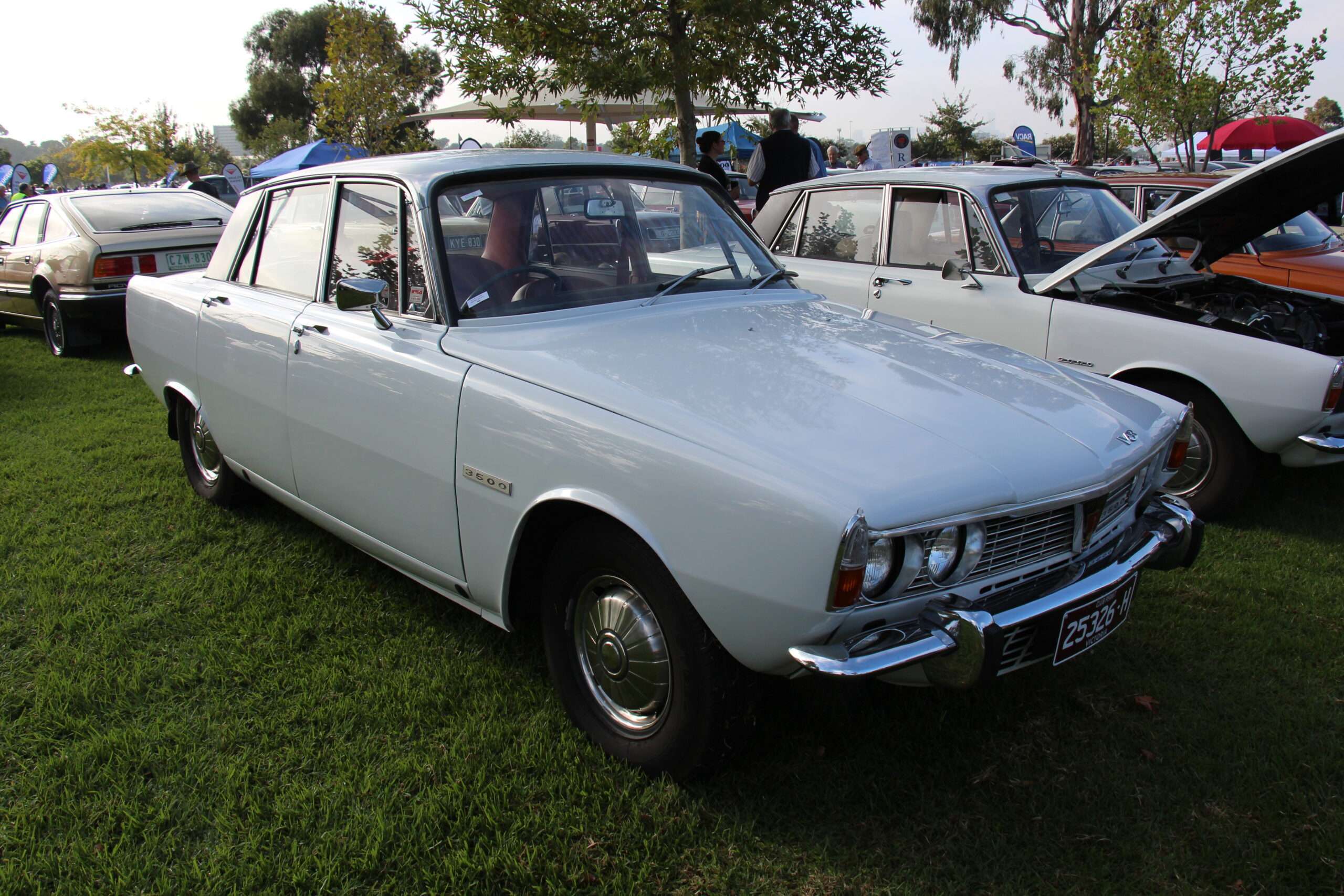
Launched in 1963 as the Rover 2000, the P6 was one of the most advanced mid-size saloons in the world and won the very first European Car of the Year award. Rover built it around a “base unit” skeleton with unstressed outer panels bolted on, a layout that made crash repair and restyling easier and that still shapes how these cars are bought and inspected today. Underneath sat a de Dion rear axle, four-wheel disc brakes with the rear discs mounted inboard, and a long list of small safety and packaging ideas that rivals did not have.
Across the 1963–1977 run Rover built 322,302 P6s: 208,875 four-cylinder 2000 SC and 2000 TC models, 32,370 2200s, and 81,057 of the V8-powered 3500 and 3500S. The V8 cars are the ones collectors chase.
The Buick-born V8 that made the 3500 collectible
In April 1968 Rover dropped a 3,528cc all-aluminium V8 into the P6 — the ex-General Motors design that had been developed for Buick’s compact cars and that Rover bought outright. It produced 144 bhp, gave a 114 mph top speed and a 0–60 mph time of 10.5 seconds, and Rover pointed out that the light-alloy V8 weighed about the same as the four-cylinder unit it replaced. A Series II revision arrived in 1970 with the battery relocated to the boot, a plastic front intake, revised bonnet pressings and new rear lamps; the 150 bhp manual-gearbox 3500S followed shortly after.
That engine is the reason the P6 3500 sits at the head of a very long story. The same basic Rover V8 went on to power the original Range Rover, the MGB GT V8, TVRs, Morgans and Land Rovers for decades. Buy a P6 3500 and you are buying the passenger car where the Rover V8 era begins.
North American buyers should know the federalized 3500S “NADA” cars are genuinely scarce. U.S.-specification imports ended in 1971, with 571 cars sold in that final year. A P6 3500S is a car most American collectors have never seen in person.
What a Rover P6 3500 is worth today
For a car with this much engineering and this much cultural weight, the P6 remains remarkably affordable. The Hagerty UK price guide runs the automatic 3500 from roughly £3,300 to £14,000, with an excellent example around £10,500, and the manual 3500S from about £4,100 to £15,000, excellent around £11,000. Four-cylinder 2000 SC cars start near £2,000. Classic.com puts the average P6 sale price at about $6,794 across all variants.
The top of the market is meaningfully higher than the averages suggest. A 1974 Rover 3500 S sold in London for £25,750, and in the United States a 103,000-mile 1970 3500S NADA car has been offered at $17,999. The pattern is familiar: the best-documented, rust-free, manual-gearbox cars have separated from the pack, while tired automatics remain cheap enough to be a genuine first classic.
What Grace Kelly’s Rover tells us about the provenance premium
Royal and celebrity ownership is the single most violent multiplier in this market. The clearest modern proof is Diana, Princess of Wales’ 1985 Ford Escort RS Turbo Series 1, which sold for £722,500 at Silverstone Auctions on August 27, 2022 — roughly twelve times the previous auction record for any Escort, around £60,000.
But that premium is specific, not general. Diana’s 1994 Audi Cabriolet made £54,000 in 2016, and an earlier, higher-mileage Escort she used made £52,000 in June 2021. Same owner, three wildly different results. Condition, mileage, documentation and the car’s place in the owner’s story did the work — not the name by itself. We have watched the same dynamic play out in Steve McQueen’s NART Spider, where the value tracks what McQueen actually did to the car, and in a $40,000 McQueen Husqvarna that priced a name rather than a machine.
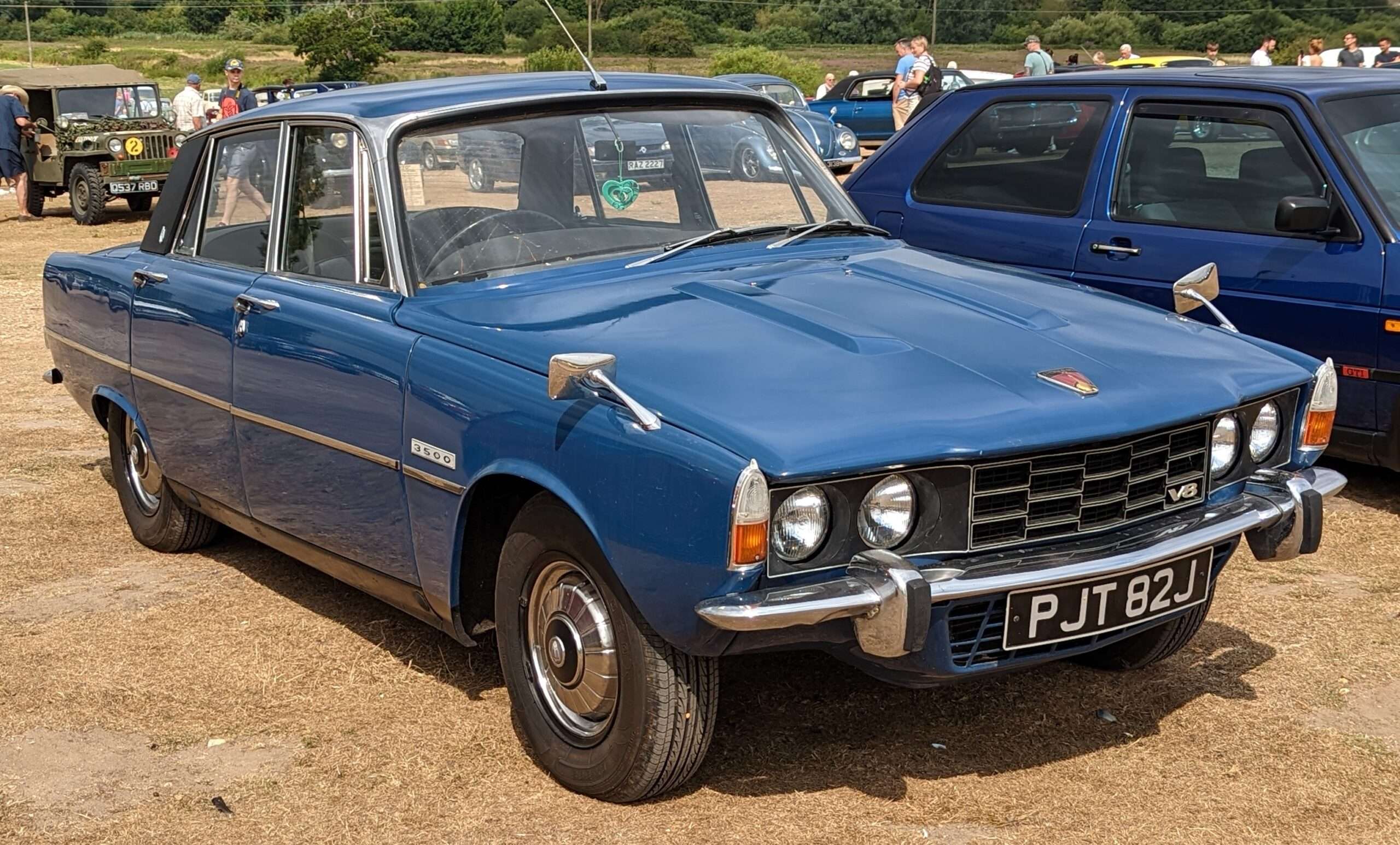
Grace Kelly’s P6 is the limit case. It carries the maximum possible provenance and has no market at all, because the object itself was deliberately erased. No line in the P6 price guide moves because of it. That is the cleanest available demonstration that provenance attaches to a specific car and its paperwork — never to a model, a marque or a story. When provenance is contested, as in the disputed Bernstein Mercedes sale, or manufactured after the fact, as with Range Rover’s matched pair at Monterey, the premium gets thin fast.
What collectors should know today
- Buy the car, not the anecdote. An undocumented “owned by” claim is worth close to nothing at resale. Cars with continuous registration documents, period photographs and factory build records — like Rowan Atkinson’s documented E-Type or the Facel Vega with Kuwaiti prime ministerial history — are what actually clear a premium.
- Provenance does not transfer to the model. A famous P6 does not lift ordinary P6 values, and a famous Escort did not lift ordinary Escort values. Price the car in front of you against normal comparables first, then decide what the story is worth on top.
- On a P6, the base unit is the value. Outer panels unbolt; the skeleton does not. Inspect the front subframe mounts, bulkhead, sills, floors and boot floor before anything else. Cosmetics are cheap on these cars; structure is not.
- Prefer the manual 3500S. It carries both the price premium and the better driving character, and it is the variant showing the most consistent upward movement.
- In North America, the federalized 3500S is the smart target. Imports ended in 1971 and survivors are rare, which supports values in a way the UK-market cars do not enjoy.
- Be careful with tragedy provenance. Cars connected to a fatal crash carry real ethical weight and unpredictable resale. Collectors are increasingly wary of them, and the Monaco authorities’ decision to destroy this Rover is worth remembering as a statement in its own right.
Sources
- Death and funeral of Princess Grace of Monaco
- Rover P6 production figures and specifications
- Hagerty UK — Buying guide: Rover P6 (1963–1977)
- Classic.com — Rover P6 market data
- Iconic Auctioneers — Princess Diana’s Ford Escort sold at auction
- ClassicCars.com Journal — Pick of the Day: 1970 Rover 3500S
The collector car market, every weekday morning.
Auction results, price moves and what’s crossing the block, read in four minutes. Free, from Modern Car Collector.
No spam, unsubscribe in one click. Or read more about the Brief.
Related Posts:
- Low-Mile 1987 Chevrolet Monte Carlo SS Aerocoupe for…
- Five Built, Three That Count: How to Read the MCA…

- Today on MCC: Every Story We Published on September 14
- Rainier III's Garage Outgrew the Palace. The Prince…
- Kim Basinger’s Defender 90 Stalled at $91,000. The…
- Lot of the Day: A Factory-Converted 1983 Lancia 037…
 Shawn Henry
  Kyle Matthews
  Eve Nowell